Manta Ray Night Snorkel Big Island: Complete Guide

You may be comparing boat schedules, wondering whether you need to be an excellent swimmer, or trying to decide if a nighttime wildlife tour is suitable for your family. The manta ray night snorkel on the Big Island is often described as an easy, magical encounter, but the best experience begins with understanding what's happening beneath the surface and how a responsible operator manages people, boats, lights, and animals in the dark.
Kona's mantas aren't trained, fed, or kept in an enclosure. They arrive because underwater lights concentrate the tiny animals they eat. Once you understand that relationship, you'll know where to position yourself, what questions to ask before booking, and how to observe these threatened marine animals without disrupting their feeding.
Table of Contents
Booking Your Kona Manta Encounter - Questions to ask before paying - Compare the wider trip budget
Frequently Asked Questions About Manta Snorkeling - Are the mantas being fed? - Should I dive beneath a manta for a better view? - Can I touch a manta if it swims close? - Do I need to be a strong swimmer? - Is nighttime crowding a real concern? - Will I definitely see a manta? - Can I combine this with daytime snorkeling?
Floating Above the Feeding Zone
As the last light fades over the Kona coast, the boat settles into a quieter rhythm. You enter the warm Pacific, adjust your mask, and hold the flotation structure while the guide checks the group. Beneath you, underwater lights form a pale column in the dark.
At first, the beam may contain only drifting particles. Then a broad wing shape appears. A reef manta ray glides beneath the snorkelers, rolls slowly, and leaves the edge of the light. Its movement is controlled and efficient, like a filter-feeder working through a moving patch of food. There is no chase and no performance to direct.
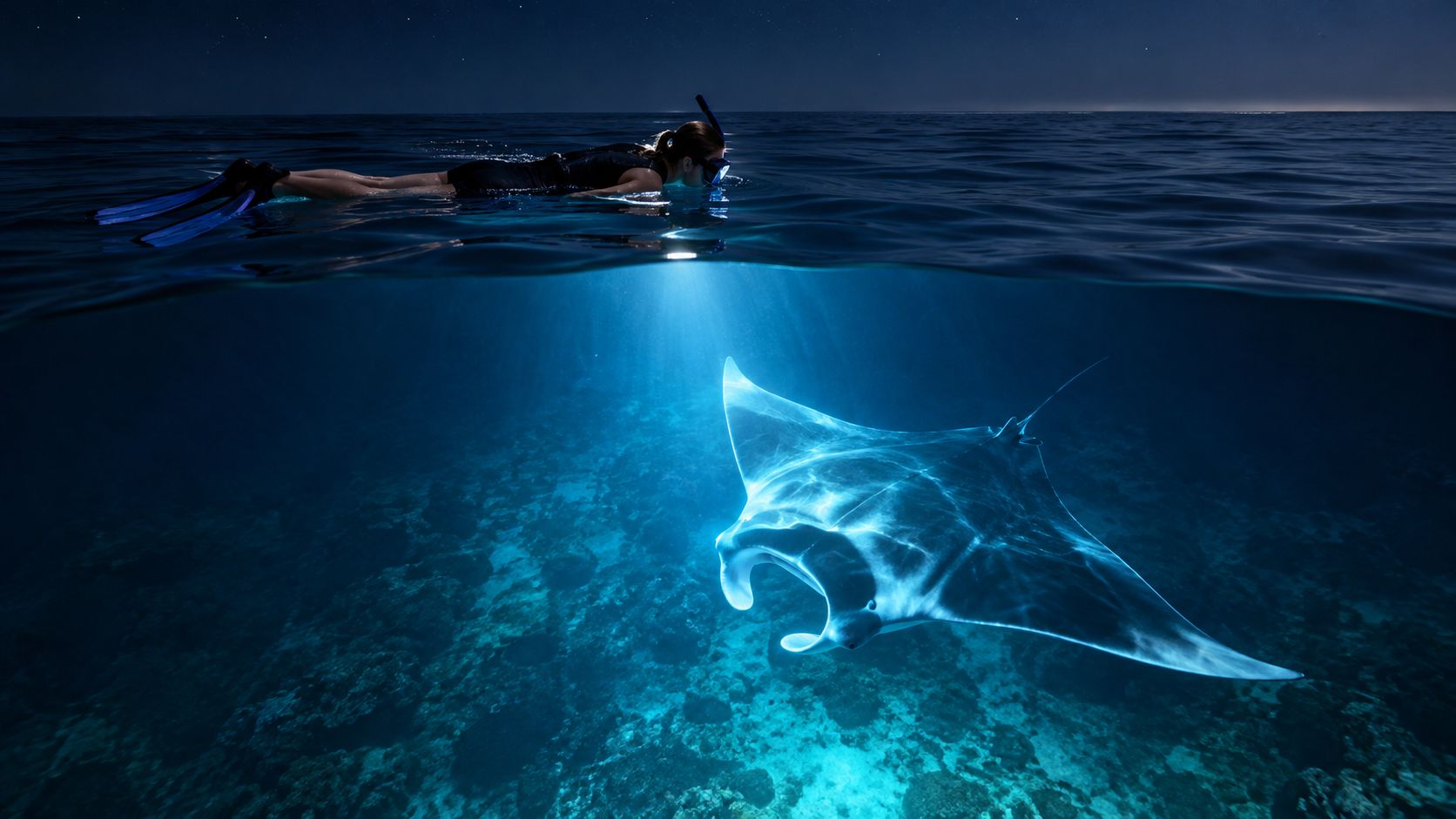
The encounter can feel remarkably close because mantas sometimes pass near the surface. Close observation still requires space. Keep your body steady, control your fins and camera, and allow the ray to choose its route. Predictable movements help preserve the feeding pattern and reduce the chance of collisions between animals, swimmers, and equipment.
Manta Ray Night Snorkel Hawaii reports a 90% manta sighting success rate. That historical figure describes past outings, not a promise for every night. Wind, swell, visibility, current, and manta activity can alter the conditions, while crowded nighttime operations add another reason to follow flotation, spacing, and guide instructions carefully.
For practical details about the encounter, read this guide to manta ray viewing on the Big Island. Enter a feeding area, not a staged show. Careful observation means staying calm, protecting the animals' route, and noticing how light and prey shape the encounter.
Understanding the Light and Prey Dynamic
As evening settles over Kona, underwater lamps turn a small part of the water column into a feeding station. The light does not attract manta rays because they seek the lamp. It gathers the animals they eat.
Many zooplankton respond to light, a behavior called phototaxis. Lamps shining into the upper water column can concentrate these drifting animals into a denser patch. Reef manta rays, Mobula alfredi, then sweep through that patch, filtering water with their mouths and gill rakers.
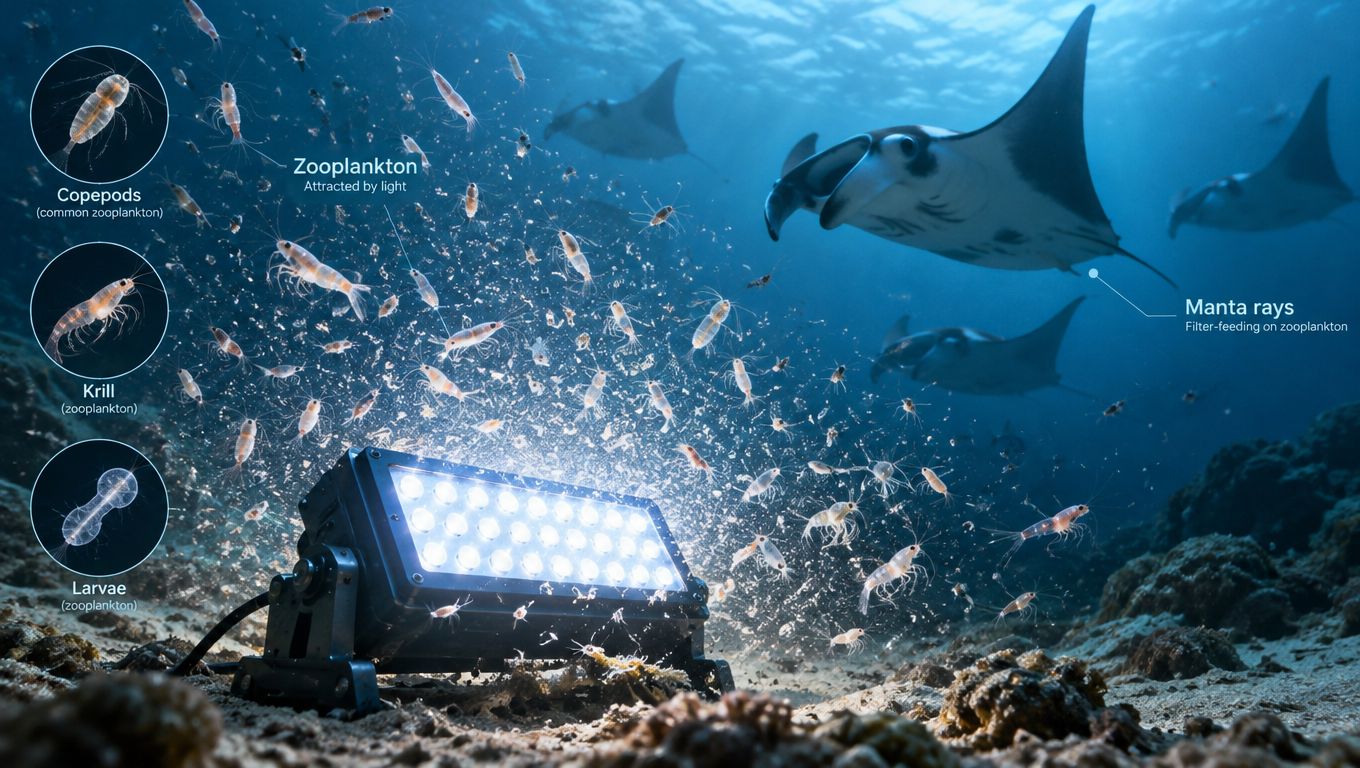
The relationship works like a dinner table with a spotlight above it. The lamp changes where the meal collects, while the mantas choose how to approach it. Guides do not need to bait the animals, and swimmers are not the target. The chain is:
Light changes prey distribution. Zooplankton gather in the illuminated upper water.
Prey density creates a feeding opportunity. Mantas follow the food, not the swimmers.
Surface positioning protects the corridor. Guests stay above or beside the light field as the animals pass through.
Mantas feed by continuously drawing water through their mouths and gill structures. For that reason, the useful viewing position is not directly beneath a ray or in the center of its route. Stay at the surface, above or beside the illuminated feeding zone, where you can observe without entering the feeding corridor.
Practical rule: Stay on the surface, keep your body still, and never dive into the water column where a manta is feeding.
NOAA guidance recommends remaining at the surface, avoiding dives into feeding water, and using downward-facing lights. Guides should stay in the water, while groups of four or more should use a snorkel ring or comparable flotation structure. A stable formation limits fin turbulence and gives the animals a more predictable path. For further context, read this guide to manta ray swimming and nighttime behavior.
A newly illuminated site may not produce dependable encounters immediately. Experts consider several years of use necessary before a location develops a consistently high sighting record above 70%, as explained by Hawaii Ocean Watch's information on Kona viewing sites. Kona's reliability comes from an established prey-and-predator relationship, not just from pointing a lamp into the ocean.
Safety Protocols for Nighttime Operations
Swimming ability is only one part of readiness. Darkness changes how people judge distance, where boats can operate, and how easily a guide can identify a tired or anxious guest.
A Hawaiʻi County safety assessment identified severe hazards associated with manta-viewing operations at principal Kona sites because boating and snorkeling activity can become congested at night. That doesn't mean every outing is unsafe. It means the operator's procedures deserve as much attention as its sighting claims.
Use this checklist before confirming a reservation:
Ask about guide coverage. Find out how guides supervise the group in the water and how they assist someone who becomes cold, nervous, seasick, or fatigued.
Request a clear boat-lane explanation. The crew should explain how the snorkeling area is separated from moving vessels, divers, and other groups.
Look for controlled entry and exit. Boarding ladders, swim platforms, and exit points should be illuminated and actively managed by crew members.
Confirm flotation arrangements. Ask what equipment is supplied and whether guests can remain supported without continuously swimming.
Check emergency communication. The boat should have a clear way to communicate with crew and emergency services if conditions change.
Ask how weather decisions are made. Wind, swell, current, and visibility may differ from the conditions you saw when booking.
You should also tell the crew about motion sensitivity, medical concerns relevant to swimming, or discomfort with dark water. A professional briefing isn't a formality. It teaches you where to hold on, how to keep your fins away from other guests, and what signal to use if you need help.
Read this manta snorkeling safety and tour preparation guide before comparing operators. A calm surface and a strong historical sighting record don't prove that a tour has good nighttime traffic control. Operational discipline is the meaningful safety test.
Choosing Between Sunset and After-Dark Tours
Tour timing changes the character of the evening, even when both options visit the same type of feeding area.
A sunset departure gives you a gradual transition from daylight to darkness. You can watch the coastline change color, orient yourself on the boat before entering the water, and enjoy the ride as part of the excursion. Some travelers also value the chance to observe other marine life from the boat while traveling along the coast, though wildlife sightings are never guaranteed.
An after-dark departure puts the emphasis on the encounter itself. The sky is darker, the light field stands out more sharply, and the atmosphere feels quieter and more focused. Travelers who prefer fewer scenic diversions or who want to spend their attention on the feeding behavior may find this format more suitable.
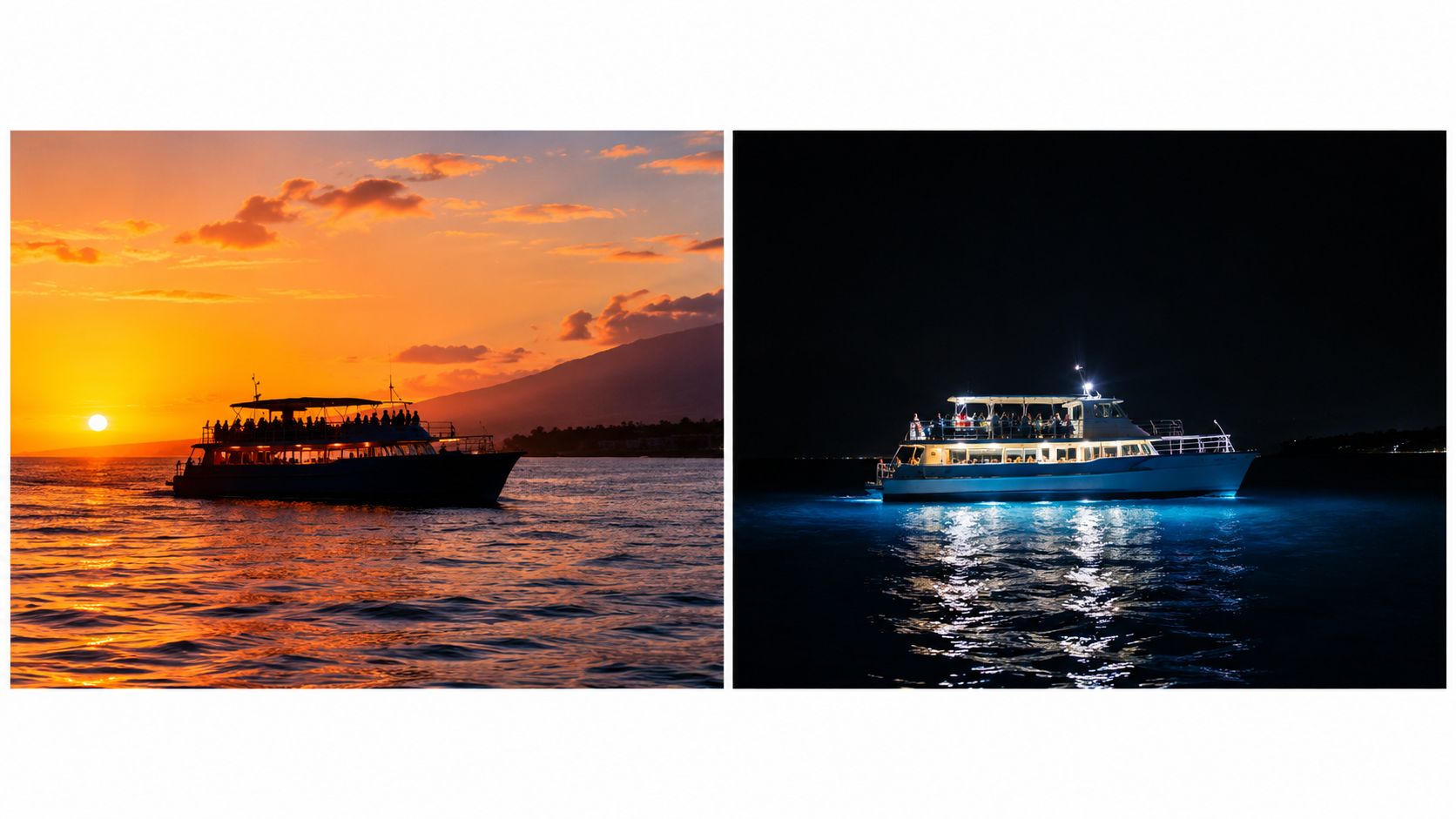
Choose a sunset departure if you value | Choose an after-dark departure if you value |
|---|---|
Coastal scenery before entering the water | A focused nighttime wildlife experience |
More visual orientation before the swim | A stronger contrast between darkness and the light field |
A relaxed boat ride as part of the outing | Less interest in daylight sightseeing |
Time to settle into the gear before the encounter | A fully nighttime atmosphere |
Photographers should think about comfort as well as darkness. A sunset trip may make it easier to organize equipment and check camera settings, while an after-dark trip may create a more dramatic background. In either case, a stable flotation position matters more than swimming toward a ray.
Temperature tolerance also affects the choice. Even tropical water can feel cool after sunset, especially when wind reaches wet skin on the return ride. Ask whether thermal protection is included, and bring a light layer for the boat.
Photography and Conservation Best Practices
A good manta photograph usually comes from patience, stability, and distance, not pursuit. The light gives you a visual stage, but your camera won't improve the scene if you kick toward an animal or block its route.
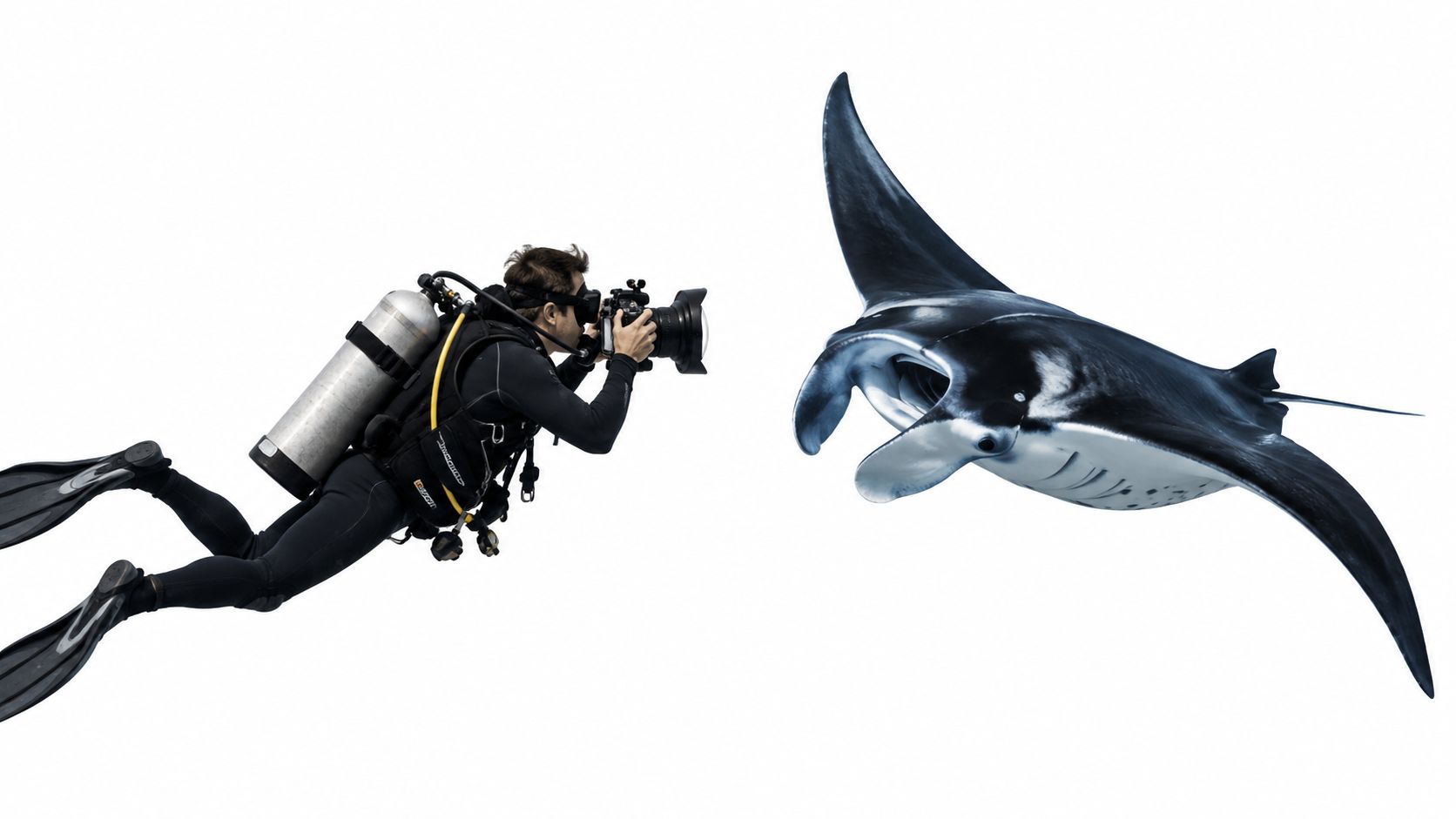
Set your camera before entering the water. Use a wrist strap or secure housing, keep both fins behind you when possible, and hold the camera close to your body while moving through the group. Once you reach the viewing position, let the flotation structure support you so your hands can remain steady.
A simple approach works well:
Face the light field. Watch the area where the prey concentrates rather than searching randomly through the darkness.
Keep your movements small. Slow breathing and relaxed arms create fewer sudden disturbances.
Frame the pass, not the chase. Start recording when a manta approaches, then allow it to move through the composition.
Follow the guide's spacing. Other swimmers may be adjusting position, and a careless fin movement can affect both people and animals.
Use light thoughtfully. Follow the crew's directions about personal lights and camera settings so you don't interfere with the viewing formation.
Hawaiʻi classifies the giant manta ray, Mobula birostris, as a threatened marine species, and NOAA lists the giant manta ray as threatened under the U.S. Endangered Species Act. You can read the relevant protection information in NOAA's guidance on marine protected species in the Hawaiian Islands.
The legal and ethical rule is the same: don't touch, grab, chase, block, ride, or redirect a manta. An accidental brush can happen when an animal changes direction, but swimmers should never position themselves to cause contact. The best image is one that documents natural behavior while leaving the animal's behavior unchanged.
Booking Your Kona Manta Encounter
As darkness settles, two boats may look similar on a booking page while creating very different experiences in the water. Match the tour format to your comfort and interests, then confirm how the crew manages lighting, spacing, currents, and guests who need extra support. A direct conversation can reveal operational details that a departure time and duration do not show.
Questions to ask before paying
Ask whether the tour supplies a mask, snorkel, thermal layer, flotation device, and lighting. Confirm the entry point and how the crew responds to seasickness, anxiety, changing weather, strong swell, poor visibility, current, or limited manta activity. These questions address safety beyond swimming ability, because nighttime crowding can affect boarding, flotation, sightlines, and the space mantas need to turn.
Ask about charter availability and group size if you prefer more room around the viewing area. Travelers planning several water activities can compare a night encounter with a daytime Captain Cook or Kealakekua Bay outing instead of expecting one tour to suit every interest.
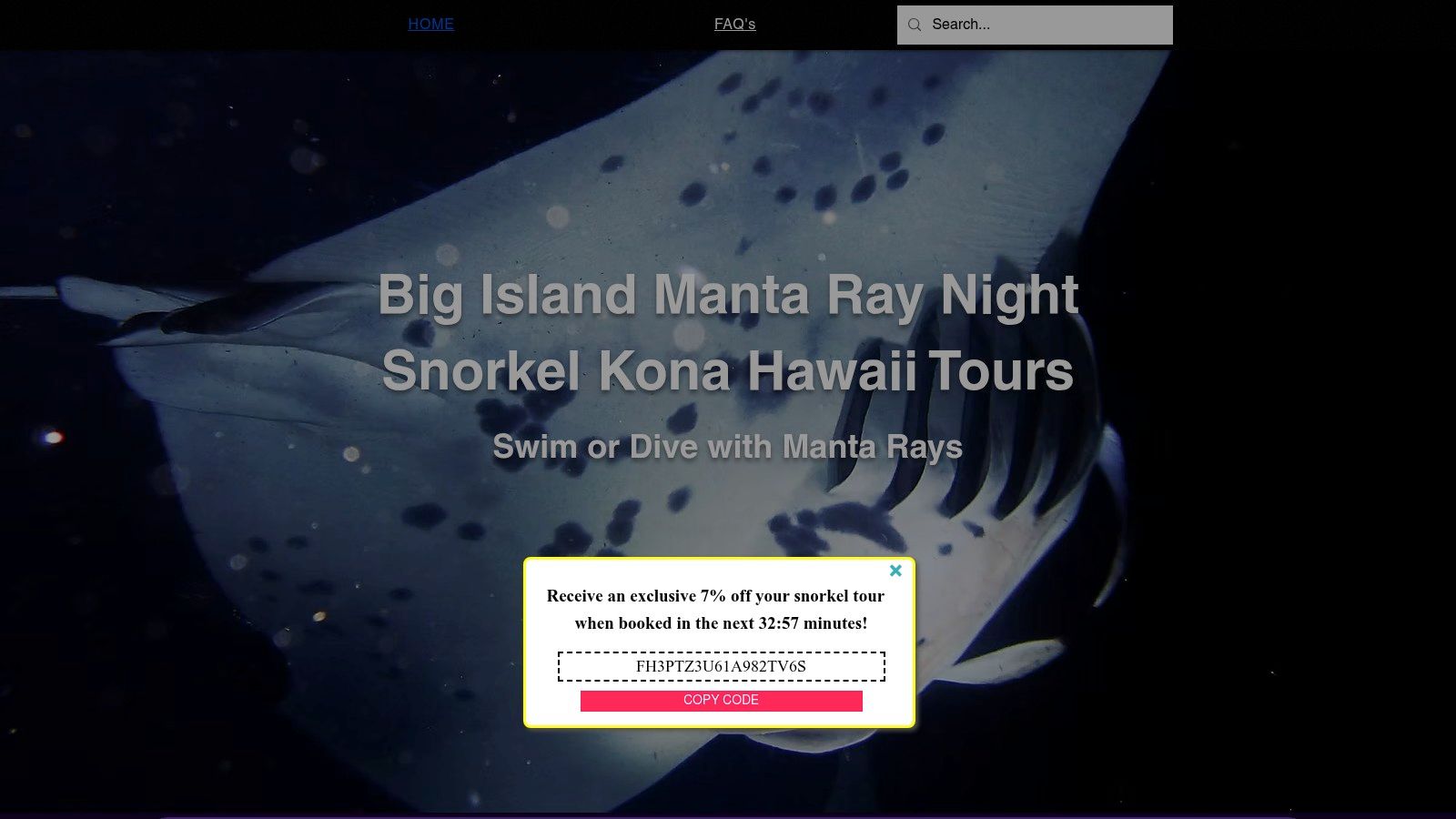
Manta Ray Night Snorkel Hawaii provides nighttime guided snorkeling from the Kona area, with a biology briefing, equipment, flotation support, thermal protection, and high-powered lights that concentrate plankton. Shared sunset and after-dark outings, private trips, and combined excursions are available.
Compare the wider trip budget
The tour is one part of a Big Island itinerary. Compare lodging, transport, meals, and other activities with this Hawaii travel cost comparison before choosing dates.
For educational and logistical details, read this Kona manta ray adventure guide. Then compare departure times through Check Availability. Kona Snorkel Trips offers another Manta Ray night snorkel tour for comparing boat and group arrangements.
The History of Kona Manta Ray Viewing
Kona's nighttime manta tradition began through an accidental meeting of resort lighting and marine ecology. In the early 1970s, the former Kona Surf Hotel used bright floodlights along the shoreline. Those lights concentrated plankton, and reef manta rays followed their zooplankton prey into the shallow water.
The activity became formal wildlife viewing in 1991, when Kona Coast Divers became the first operator reported to schedule regular nighttime manta dives. What began with approximately one boat visiting once a week eventually expanded to several boats operating nightly.
The important point isn't only that lights bring mantas closer. The lights create a predictable feeding opportunity, while the animals remain wild and free to leave. Artificial illumination doesn't nourish the rays directly, and responsible operations don't rely on captive animals or baiting.
Kona's long-running viewing sites also help explain their reliability. Repeated use allows guides and researchers to document patterns rather than treating every new illuminated site as an instant attraction. The encounter is therefore part of an established local relationship between prey movement, manta behavior, tourism, and management.
That history gives the experience a different meaning from an animal show. Guests are observing a natural feeding response that developed around a human-made light source, and their behavior helps determine whether the site remains suitable for wildlife viewing.
Frequently Asked Questions About Manta Snorkeling
Are the mantas being fed?
No. The lights gather zooplankton, and manta rays arrive to filter-feed on that natural prey. Operators do not train the rays to perform or hand food to them. Their presence reflects a feeding opportunity created by concentrated prey.
Should I dive beneath a manta for a better view?
No. Stay at the surface, above or beside the illuminated area. The feeding corridor is the manta's working space. Entering it can interrupt the animal's path and make it harder for the guide to maintain safe spacing between swimmers.
Can I touch a manta if it swims close?
Do not touch it. Avoid chasing, grabbing, blocking, riding, or redirecting a manta, even when it comes within arm's reach. The giant manta ray is threatened in Hawaiʻi and is listed as threatened under the U.S. Endangered Species Act. A passive encounter gives the animal control of the distance.
Do I need to be a strong swimmer?
You should be comfortable following water instructions, but swimming ability is only one part of readiness. Ask about flotation support, guide supervision, entry and exit procedures, seasickness, cold, anxiety, and the plan if you need to leave the water.
A calm guest who communicates clearly may be better prepared than a strong swimmer who ignores directions.
Is nighttime crowding a real concern?
Yes. A Hawaiʻi County assessment identified severe hazards linked to congestion among boats, snorkelers, and divers at principal viewing sites after dark. Before booking, ask how the operator separates boat traffic, divers, and surface swimmers, and how guides respond when the viewing area becomes crowded.
Will I definitely see a manta?
No wildlife encounter is guaranteed. Kona has a strong historical record, and organized nighttime viewing offers more than a 70% chance of seeing at least one manta, according to Hawaii Ocean Watch's Kona viewing information. Conditions, water movement, and animal behavior can still change the experience on a particular evening.
Can I combine this with daytime snorkeling?
Yes. Some operators offer combined excursions. For daytime snorkeling at Captain Cook or Kealakekua Bay, Kona Snorkel Trips offers a Captain Cook and Kealakekua Bay snorkel tour. You can also compare Captain Cook Snorkeling Tours and review Check Availability for a daytime departure.
Manta Ray Night Snorkel Hawaii offers guided Kona night snorkeling with flotation support, thermal protection, equipment, and an educational briefing about manta biology and local viewing history. Compare sunset and after-dark options, then choose an operator that explains its safety procedures and lets the mantas control the encounter.
Comments