Manta Ray Snorkel in Kona: The Complete Guide

You've probably got the question in your head already, maybe after seeing a manta video or hearing a friend rave about Kona, will it feel magical in person, or just crowded and rushed? A good manta ray snorkel in Kona is neither a stunt nor a zoo visit, it's a slow nighttime wildlife encounter built around plankton, light, and timing. When it goes right, you're floating on the surface while giant shadows glide underneath in calm, deliberate loops.
Table of Contents
Why Kona Is the World Capital for Manta Snorkeling - The feeding mechanism that makes the trip work
The Night Step by Step From Briefing to Boating Home - From dock to viewing site - A typical shared-tour sequence
How Often You Actually See Mantas and What Changes the Odds - What a real success rate means
Choosing Between Shared, Private, and Combo Tours - Booking formats compared
Gear, Packing List, and Photography in Low Light - What actually earns space in your bag - Low-light photography that doesn't get in the way
Real Safety Risks and How Responsible Operators Handle Them - What responsible operators do differently - What nervous swimmers should look for
What a Kona Manta Ray Snorkel Actually Feels Like
The boat leaves near sunset, and the first thing you notice is how ordinary everything feels before the water lights up. Salt hangs in the air, reef-safe sunscreen mixes with diesel and wet neoprene, and the deck rocks while the crew runs through the briefing under a sky that still holds warmth. Then the engines quiet down, the lights go overboard, and the whole trip shifts from transit to waiting on wildlife.
The first sighting usually starts with a point into the dark and a quiet call from the rail. A first-time guest leans over, sees a bright oval on the surface, and then catches the shape of a manta turning through it. You are not watching from a distance. You are floating just above a feeding lane, close enough to see broad wings, open mouths, and the steady control of each pass.
Patience matters here. Mantas follow plankton, and plankton moves with light, current, and local conditions, so the encounter is never a scripted routine. Some nights the action comes fast, some nights it stays sparse, and a sighting guarantee usually means the operator will keep trying within the limits of that night's conditions, not that the animals will appear on command. Good crews read the water, adjust the light setup, and keep guests calm when the mantas take their time.
What stays with people is the pace. The boat barely moves, the water glows below you, and the mantas glide through that light without hurry. They often come close enough that everyone on the float board goes quiet at once.
If you want to see how operators structure the night format before booking, the home page for Manta Ray Night Snorkel Hawaii lays it out plainly.
Why Kona Is the World Capital for Manta Snorkeling
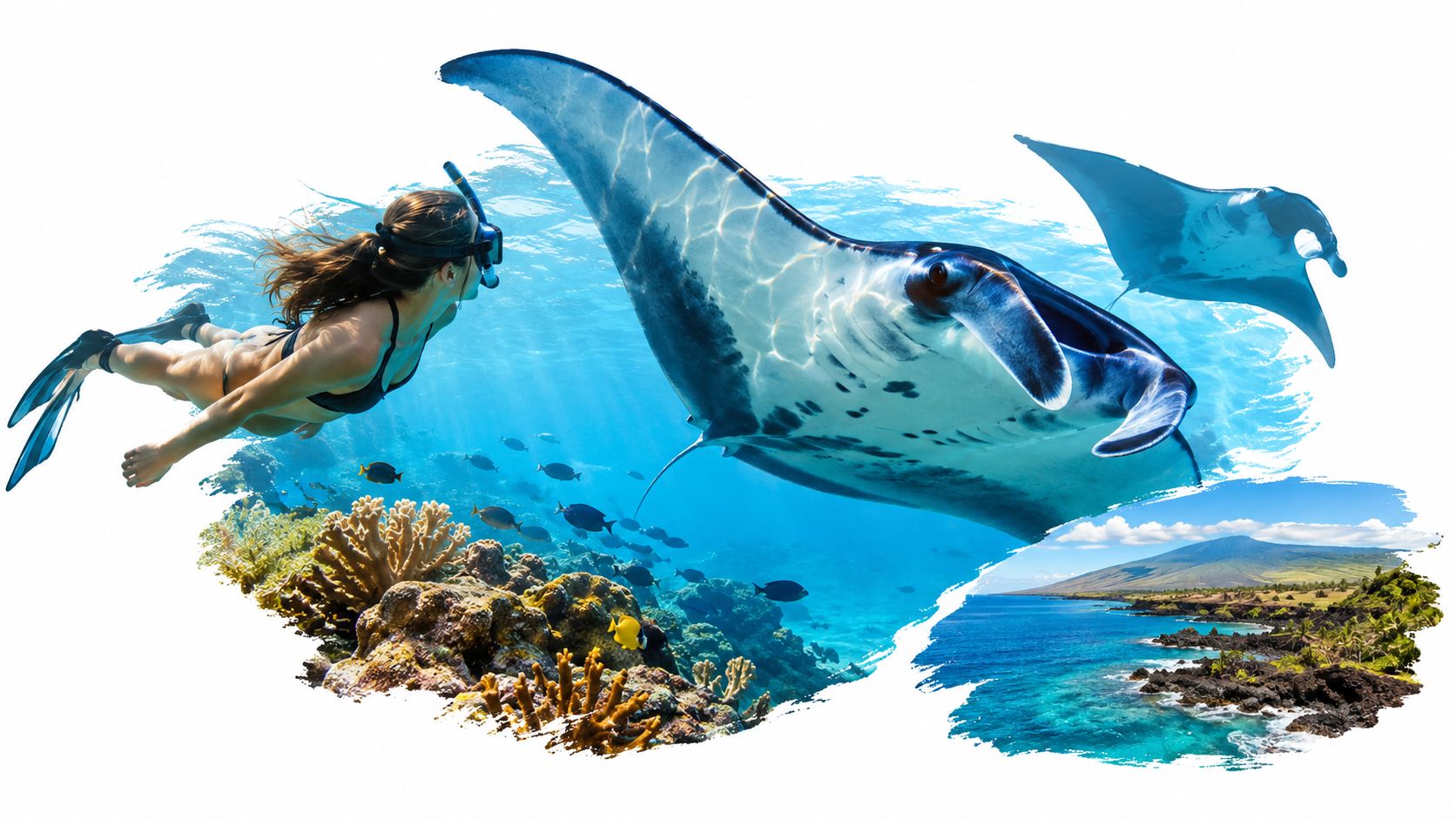
Kona didn't become famous for manta encounters by accident, even though the original setup was accidental. Shoreline floodlights tied to hotel construction in the 1970s pulled plankton toward the surface, mantas followed the food, and visitors started noticing a repeatable nighttime feeding pattern along the coast. That accident turned into a durable tourism milestone because the animals were doing what they already do, feeding where the prey is concentrated.
The feeding mechanism that makes the trip work
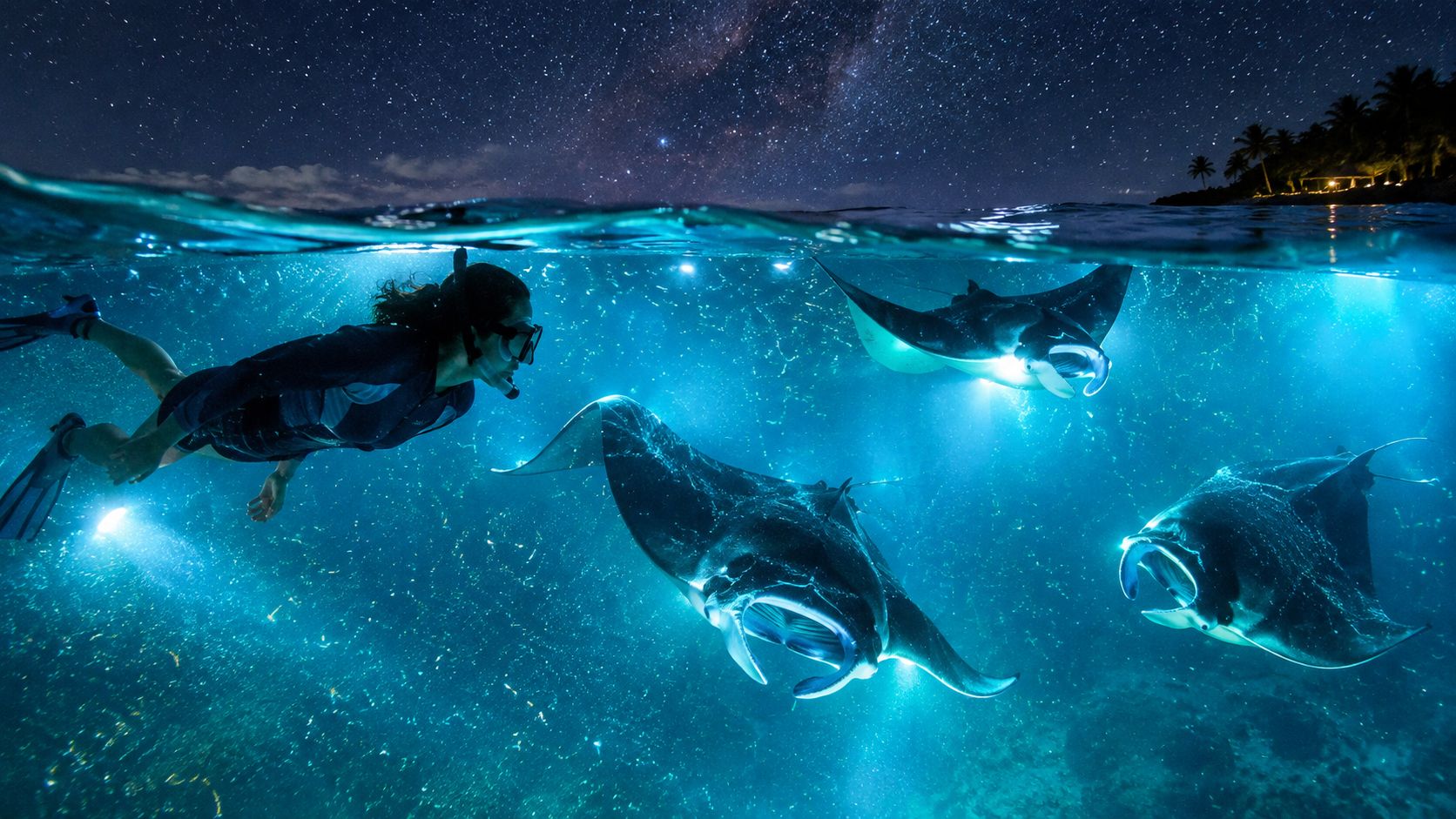
Reef manta rays are filter-feeding zooplanktivores, which means they swim with their mouths open and use cephalic fins to direct plankton-rich water toward their filtering structures. Scientific research describes them foraging in tropical and subtropical waters where prey can be patchy, so localized concentrations matter a lot. Under Kona's underwater lights, zooplankton gathers in a way that gives the mantas a predictable feeding lane.
That's the reason the encounter works so well after dark. The light doesn't “call” the manta in a mystical sense, it changes the distribution and visibility of the plankton the manta is already looking for. In practice, the animal follows prey density, not a fixed path.
Underwater lights create a feeding opportunity, not a performance schedule.
Photo-identification work along the Kona coast has documented hundreds of individual mantas, and local catalogues include more than 300, with some noncommercial summaries reporting over 450. Those animals are identified by their unique ventral spot patterns, which let researchers track individuals over time and separate repeat visitors from one-off sightings. That's why Kona isn't just a scenic place to snorkel, it's also a long-running observation site for a resident or regularly visiting manta community.
If you want the broader background on the night-snorkel setup, the biology and encounter logic are laid out in the field research summarized at PMC on Kona manta behavior, and the feeding dynamics are explained further in research on manta foraging and prey density.
The Night Step by Step From Briefing to Boating Home
The evening starts before you're ever near the water. You check in, get fitted for mask, snorkel, fins, wetsuit, and flotation, and listen to the crew explain how the night works and where everyone should be positioned. That early briefing matters because the whole experience depends on staying calm, staying together, and keeping the water column clear.
From dock to viewing site
The boat ride out is part of the value, especially if you like watching the Kona coastline fade into dusk. Some nights bring spinner dolphins or, in season, humpback whales on the way out, but those are bonuses, not promises. Once the boat reaches the viewing site, the crew anchors or holds position and gets the light system running.
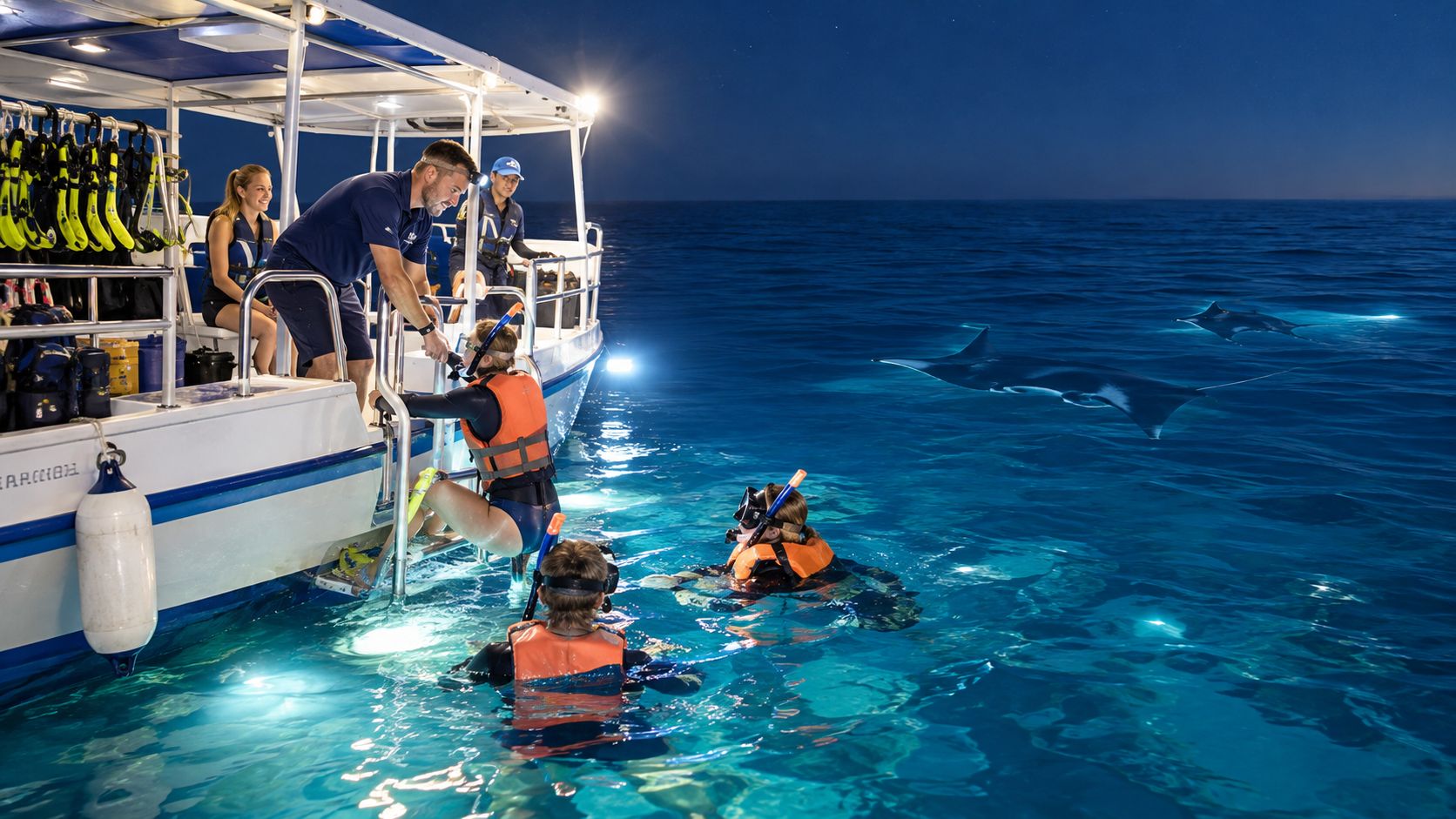
Then the water turns bright below and dark above. Guests enter from the surface, settle onto the float or ring, and stay put while the crew keeps the light field centered. That surface protocol is the whole point, manta rays need an unobstructed water column, and snorkelers free-diving through the feeding lane would only make the animals work around human bodies instead of through open water.
A typical shared-tour sequence
Time | Activity | What to Expect |
|---|---|---|
Before sunset | Check-in and gear fitting | Wetsuit, mask, snorkel, fins, and flotation get sorted |
Sunset | Boat departure | Smooth run along the Kona coast with briefing on board |
After dark | Anchor or hold at viewing site | Lights go in, plankton gathers, crew sets the surface setup |
Night viewing window | Snorkel session | You stay on the surface while mantas make repeated passes |
Return trip | Boat back to shore | Towels, warm layer, and a quiet ride after the water time |
Most shared tours finish with the same familiar end, a towel-off, a warm drink if the operator offers one, and a ride back that feels a little surreal because the water is still on your skin and the mantas are still fresh in your head. If you're booking a shared outing or private charter, the operational details for the night snorkel are usually summarized on the Check Availability page for the manta ray snorkel tour.
How Often You Actually See Mantas and What Changes the Odds
The honest answer is simple. Kona gives you strong odds, not a fixed show. Sightings shift with plankton density, swell, moonlight, site choice, and season, so a calm night can still be quiet if the food is not concentrated where the lights are. A sighting guarantee is a promise about access and effort, not a literal wildlife guarantee.
The clearest research point here comes from a 2025 University of Hawaiʻi analysis of long-run field records at Garden Eel Cove and Keauhou. It found that seasonal and year-to-year changes in manta aggregation size tracked zooplankton density, which matches what crews see on the water when one site turns productive and another stays thin. The same work also showed site differences, with Garden Eel Cove generally supporting larger aggregations and Keauhou showing strong female site fidelity.
What a real success rate means
A high success rate means the operator has enough history, route flexibility, and site familiarity to give you a real chance. It does not mean every departure brings the same number of mantas, the same site, or the same viewing time. When one location is slow, experienced crews adjust timing or shift to the site that is feeding better.
That is why the better booking question is, “What happens when the usual site goes quiet?” A fair no-sighting policy should say whether you get a refund, a credit, or a rebook, and it should spell out the conditions that trigger that option. If the policy stays vague, the operator is selling certainty instead of wildlife.
Timing matters too. For practical seasonal guidance, best time to see manta rays in Kona gives a useful frame for reading the odds without treating any night as locked in.
Choosing Between Shared, Private, and Combo Tours
The right format depends on who is going, how much control you want, and whether cost, quiet, or schedule flexibility matters more. Shared sunset tours usually fit first-timers who want the full boat experience. Shared after-dark tours suit guests who want to skip the sunset run and head straight to the water. Private charters make sense when the group needs a calmer pace, and combo days work best when you want a daytime reef trip plus the manta night in one plan.
Booking formats compared
Format | Typical Group Size | Best For | Trade-Off |
|---|---|---|---|
Shared sunset tour | About 10 to 14 guests | First-timers, social travelers, sunset fans | Less control over pace and positioning |
Shared after-dark tour | About 10 to 14 guests | Guests who want to focus on the night snorkel | You skip the sunset portion |
Private charter | Custom, smaller group | Families, photographers, nervous swimmers | Higher cost and more planning |
Combo day | Varies by operator | Travelers who want a Captain Cook morning plus manta evening | Longer day and more moving parts |
A shared tour usually gives the best balance of value and atmosphere. A private trip works better when someone in the group needs extra attention, whether that is a child, a cautious swimmer, or a photographer who wants more room to work. Combo days make sense if you want to turn one booking into a full ocean day instead of splitting your activities across multiple trips.
The trade-off is control. Shared boats can still deliver a strong manta encounter, but you give up some flexibility on timing, deck space, and how closely the crew can tailor the pace to one group. Private charters reduce that friction, though they only make sense if the added cost matches the experience you want.
For a side-by-side comparison, see the guide to Kona manta ray snorkel tours. If you want a broader booking reference, Manta Ray night snorkel tour is another useful option to compare against.
Gear, Packing List, and Photography in Low Light
Most of the gear should already be on the boat, and that's how it should be. You don't want to duplicate mask, snorkel, fins, wetsuit, or flotation if the operator provides them, because extra gear just adds clutter in a low-light setting. What helps most is a simple layer under the wetsuit, reef-safe sunscreen applied well before boarding, and a warm top for the ride home.
What actually earns space in your bag
Bring a small dry bag for your phone, ID, and anything that can't get wet. Motion sickness medicine belongs in your pre-departure plan if you need it, not as an afterthought once the boat starts moving. A light layer for the return trip matters more than people expect, because the wind feels colder after you've been in the water.
If you want a separate place for towels and damp clothes before you board, keep your gear dry at the shore is a practical reference for choosing a beach bag that doesn't turn into a soggy mess halfway through the night.
Low-light photography that doesn't get in the way
Phones rarely do this scene justice in the dark unless they're sitting close to the surface and held very steady. A GoPro on a short pole can work better, especially with a red filter and settings tuned for low light, but the main rule is simple, keep the camera calm and don't chase the animals for a better angle. Flash photography and lateral light sweeps can distract both mantas and other guests.
Good etiquette: Hold still, keep your lights pointed the way the crew asks, and let the mantas come through the frame on their own.
The reason this matters is the same one that governs the snorkel protocol, contact and harassment can interfere with the manta's protective mucus layer. If you want a concise prep list before you go, the operator's 10 manta ray snorkel tips page is the kind of quick-reference most guests use the day before departure.
Real Safety Risks and How Responsible Operators Handle Them
The manta isn't the main danger. The genuine risk comes from darkness, boat traffic, drifting swimmers, fins, and people who get pulled out of position while trying to get closer. Mantas aren't predators of humans, so the conversation should stay focused on accidental contact, crowd movement, and how the crew controls the water around the lights.
What responsible operators do differently
Small groups matter because they reduce the chance of collisions and keep the viewing lane clean. An in-water guide, a surface ring or float line for groups of four or more, and clear no-touch rules all point to the same standard, a controlled environment instead of a free-for-all. Lights should point down for snorkelers, boat lights should be disciplined on approach, and a clear weather cancellation policy should be visible before you pay.
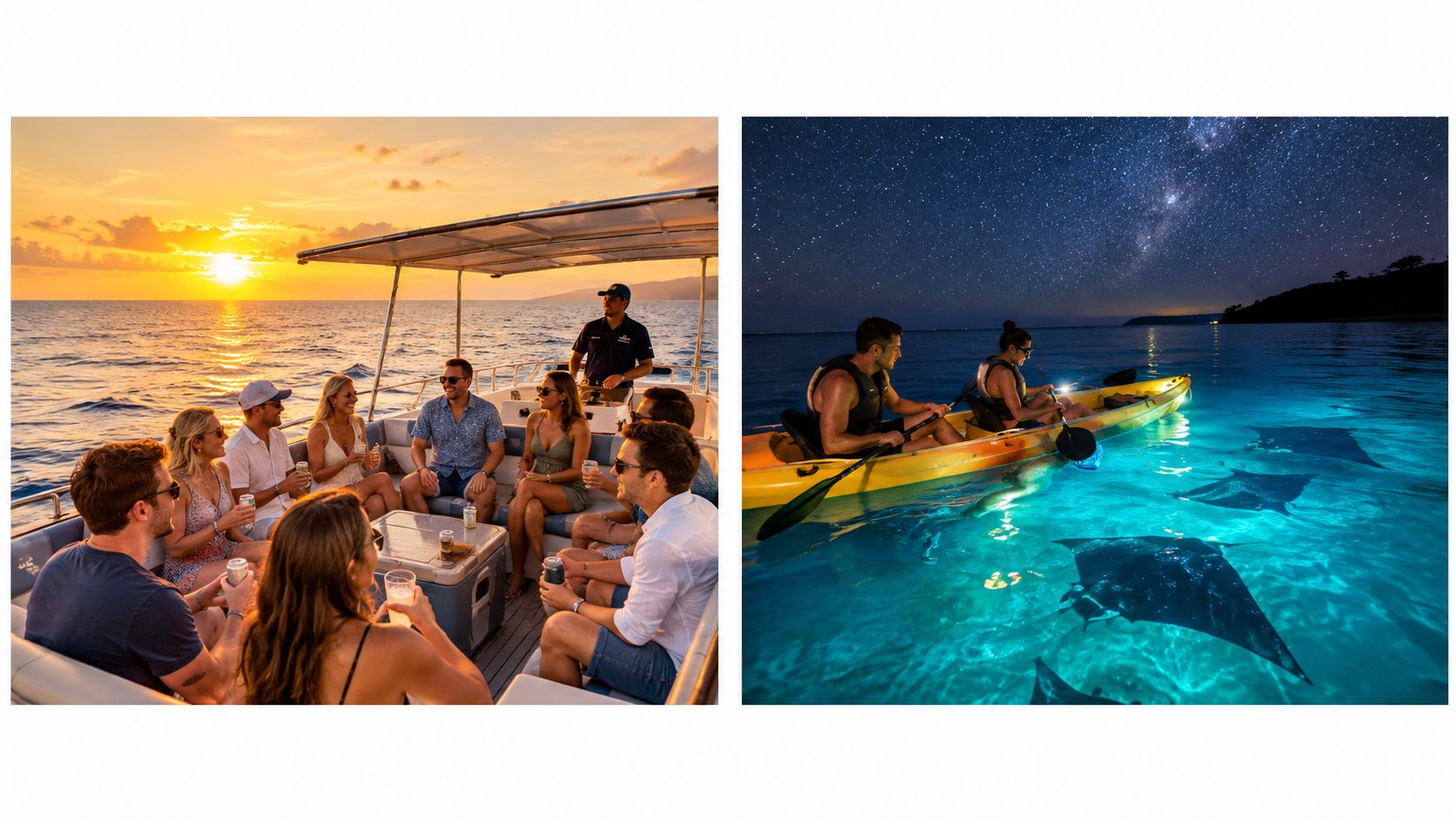
The independent safety assessment in the booking research flagged vessel and participant numbers as major factors in accident likelihood, which is why overbooked boats are a real warning sign. If the listing leans harder on “party atmosphere” than on procedures, that's not a plus in a night snorkel.
What nervous swimmers should look for
Families and first-timers do best with operators who explain the flotation setup plainly and offer support in the water without making guests feel rushed. The good crews also know how to keep non-swimmers calm, because the issue is usually confidence, not skill. If you're still comparing styles, the page on Kona snorkel safety tips is a useful benchmark for what a thoughtful booking flow should mention up front.
If the booking page talks about photos before it talks about flotation, ask more questions.
Booking Checklist, What to Confirm, and Conservation Notes
Before you pay, confirm the group cap, in-water guide coverage, wetsuit inclusion, and what happens if the mantas don't show. Ask where to meet, whether transportation is included, and how weather cancellations are handled. If you're planning a full Kona ocean day, a Captain Cook morning paired with the manta evening can make sense, while an evening-only manta trip is the cleaner choice if your schedule is tight.
For visitors who want a second snorkel style in the same trip, Kona Snorkel Trips is an exceptional alternative when looking for a Captain Cook snorkel tour or Kealakekua Bay snorkel tour, and the Check Availability page is the place to verify that combined-day timing works for you.
The conservation piece is simple. Kona's mantas are individually cataloged, the encounter works because plankton is concentrated naturally, and guest behavior affects whether the site stays healthy. No touch, no chase, light discipline, and staying on flotation when you're unsure all help keep the encounter predictable enough for the next group of visitors and the same resident animals.
If you want a night snorkel that respects the wildlife, keeps the logistics straightforward, and makes the timing clear before you ever step on the boat, Manta Ray Night Snorkel Hawaii is a solid place to start. Review the manta tour details, compare the shared and private options, and book the night that fits your pace before your Kona dates fill up.
Comments