Manta Ray Snorkeling Big Island: A Complete Guide

You're probably trying to decide if this is the Kona night you finally book, or just another Big Island activity that sounds better in photos than in real life. If you want the blunt answer, manta ray snorkeling Big Island is worth it when you choose the right operator, show up ready for the dark, and stop treating it like a free-for-all wildlife show.
The difference between a magical night and a miserable one usually comes down to three things, participant readiness, manta biology, and small-boat decisions. The mantas are real, the feeding sites are real, and the encounter is not a stunt. It's a guided, surface-based snorkel around a wild animal interaction that only works when people respect the setup.
Table of Contents
Why Kona Is the World Capital for Manta Snorkeling - The place matters more than the pitch
How the Night Actually Unfolds - The timeline that actually works
Who Should and Should Not Get in the Water - Readiness beats bravado
Small Groups, Private Charters, and Combined Tours - Choosing Your Manta Snorkel Format
Choosing the Right Operator Without Getting Burned - What to ask before you pay
What a Manta Ray Night Snorkel Actually Feels Like
The best nights start before you ever touch the water. You're on the boat at sunset, the crew is fitting masks and wetsuits, and the coast is fading behind you while the sky goes from gold to deep blue. By the time the lights hit the water, the ocean feels still and black, and everyone gets quiet because they know the moment is close.
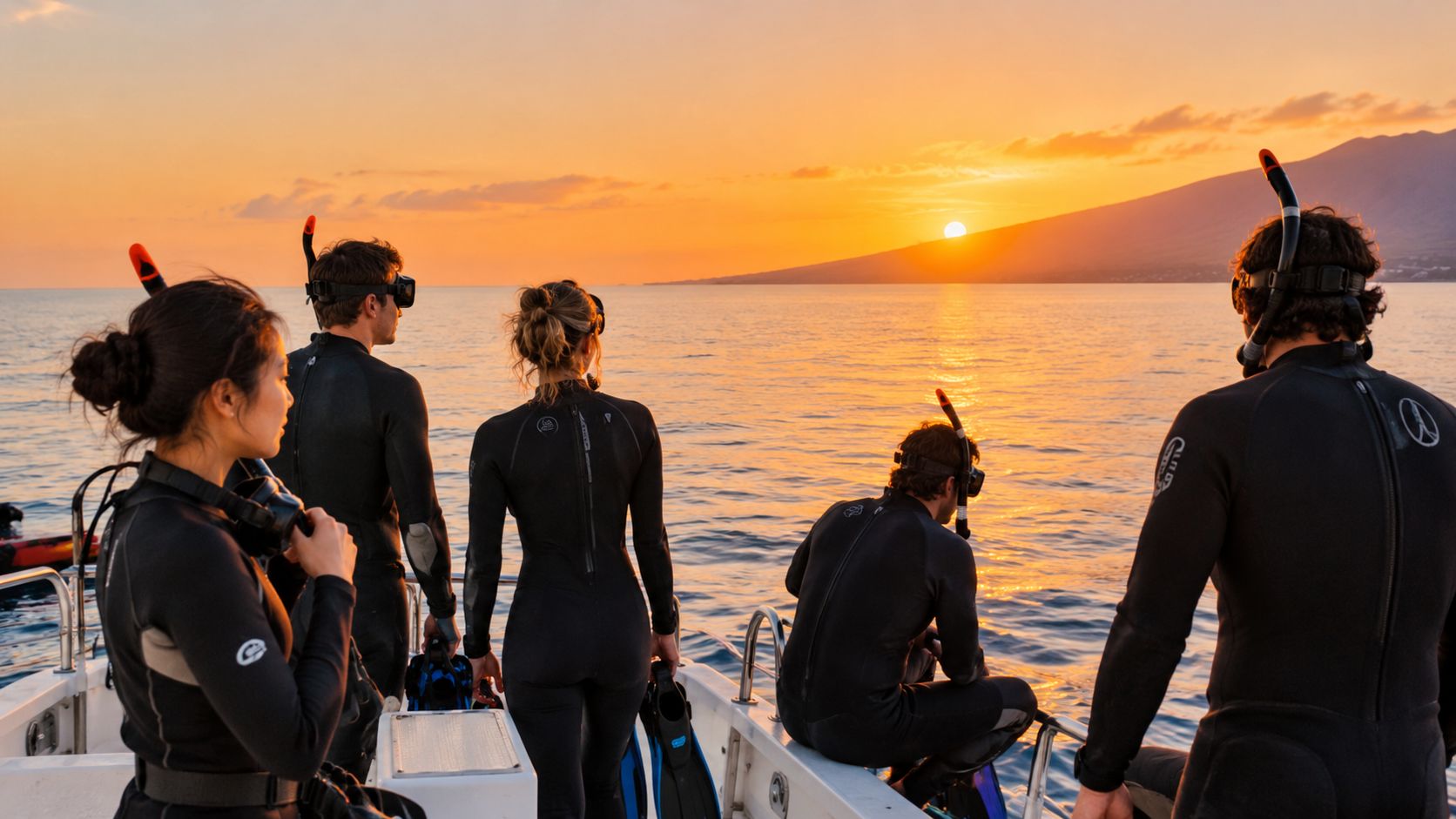
Then you ease into the water, hold the flotation board, and let the crew's underwater lights do the work. The whole thing feels calm, not frantic. This is not an adrenaline sport, and it shouldn't be sold that way.
Practical rule: If you can float, breathe through a snorkel, and stay calm next to a board, you can enjoy this more than you think.
The first manta doesn't arrive like a shark attack scene. It banks in like a slow, deliberate aircraft, turning through the light to feed on plankton. That's why Kona is so good at this. The animals are reef mantas, Mobula alfredi, and the encounter is surface-oriented, gentle, and very different from cold-water or pelagic diving trips.
If you want a deeper look at the overall experience, this guide from Manta Ray Night Snorkel Hawaii is a useful companion read. It matches what people actually feel out there, not some polished brochure version of the night.
Why Kona Is the World Capital for Manta Snorkeling
Kona earned its reputation because the sightings are tied to specific places, not chance. Garden Eel Cove and Keauhou Bay anchor the whole scene, and long-term community data from those sites recorded more than 23,000 sightings of 167 individually identified reef manta rays scholarspace.manoa.hawaii.edu.
The place matters more than the pitch
That matters because it shows why the night works so consistently. Garden Eel Cove drew larger aggregations than Keauhou, so the launch point shapes what guests see more than any sales pitch does. The same study found an overall 1:1 sex ratio across the sites, and Keauhou leaned toward females, which suggests the area supports more than a simple feeding stop.
The modern tradition began in the late 1980s, when the Kona Surf Hotel, now the Sheraton Keauhou Bay Resort, shone lights into the water and saw plankton gather, then mantas follow records.hawaiicounty.gov. That origin still explains the model: light draws plankton, plankton draws mantas.
The Big Island did not stumble into manta tourism. It built a reliable viewing tradition around a real feeding pattern.
Kona also sits inside a much larger global story. A peer-reviewed review reported that more than 1 million people snorkel or scuba dive with manta rays each year worldwide, generating about US$140 million in annual economic impact. Kona stands out because its sightings are persistent, site-specific, and well documented.
If you want the geography explained in plain language, this Kona overview from Manta Ray Night Snorkel Hawaii gets the layout right without dressing it up.
How the Night Actually Unfolds
A solid manta night feels organized from the first minute. You check in, get fitted for your mask, snorkel, wetsuit, and flotation, then the crew walks you through what happens next. If that setup feels hurried, expect the rest of the evening to feel rushed too.
The timeline that actually works
The boat leaves at dusk, usually for Garden Eel Cove or Keauhou Bay, and the crew gives a short briefing on manta behavior, hand signals, and the simple rule that you stay still at the surface. Good operators make this part clear and calm. They do not wing it.
Once the boat anchors, the lights go in the water and the area below you starts to glow. Your job is simple, hold the float, keep your body flat, and let the plankton gather in the lit water column. The mantas come to that feeding zone, not to people chasing them around.
Best cue to watch for: the crew goes quiet first, then the water gets active. That is usually when the show starts.
After the first few passes, the rhythm settles down. You stay put while the mantas work the lighted patch in front of you. That guided stillness is why a well-run Kona night snorkel feels controlled instead of chaotic.
The ride back is usually dark, calm, and a little electric because everyone is talking at once. On a good night, the coastline glows and the sky does the rest. The experience should feel smooth from start to finish.
Once you have picked your format, booking takes a couple of minutes on the operator's reservation page.
Who Should and Should Not Get in the Water
Stop asking only whether manta rays are dangerous. That's the wrong question. The question is whether you can handle darkness, waves, a mask, a snorkel, and a board while staying calm next to a boat.
Readiness beats bravado
You're a good fit if you can float calmly, breathe through a snorkel, follow directions, and climb a boat ladder with a wetsuit on. Flotation gear helps a lot, but it doesn't replace basic water competence or supervision. If you're nervous but functional, that's different from panicked and unsteady.
You should sit this one out, or at least postpone it, if you're sick, exhausted, dealing with panic in the water, or facing rough conditions. That's not being timid. That's being honest. The night gets miserable fast when people force it.
For operators, the safety model should be layered, not casual. Same-day sea-state calls matter. Honest skill screening matters. Correctly fitted flotation matters. Continuous guide supervision matters.
The Hawaii County safety assessment for Kona's manta-viewing areas points to exactly those kinds of controls, including canceling during adverse conditions, screening participants, and requiring proper flotation equipment records.hawaiicounty.gov. That's the playbook that protects guests when darkness removes depth cues and makes everything feel a little less obvious.
If you're booking for family, make the standard higher, not lower. A child who floats calmly and follows directions can do well. A child who fights the snorkel or hates dark water should wait for daytime.
Small Groups, Private Charters, and Combined Tours
Kona visitors usually end up choosing one of three formats, and the right choice depends on what kind of night you want. A small shared tour is the default for the majority. It keeps the group manageable, gives you crew attention, and still feels social.
Choosing Your Manta Snorkel Format
Format | Best For | Typical Group Size | Trade-off |
|---|---|---|---|
Small shared tour | Couples, friends, solo travelers, first-timers | Small | Less privacy, more shared energy |
Private charter | Proposals, families, photographers, special occasions | Your group only | Higher cost, more planning |
Combined manta plus Captain Cook day | Travelers who want two signature Kona experiences in one trip | Varies by operator | Longer day, less flexibility |
Private charters make sense when you want the lights to yourself or you're planning something specific. Proposals and multigenerational family trips fit here well. You're paying for control, not just transportation.
Combined tours are a strong pick for first-time Kona visitors who want one boat-centered day to do more. If you want both a Captain Cook / Kealakekua Bay snorkel and a manta night snorkel, that pairing saves time and usually simplifies the itinerary. For readers comparing that option, Kona Snorkel Trips' Kealakekua Bay and Captain Cook tour page is the obvious place to look, and the separate Captain Cook booking flow is available through Check Availability.
For a quick comparison guide, this tour breakdown from Manta Ray Night Snorkel Hawaii is useful if you're sorting through options.
If you want a small-boat alternative that runs both the manta night snorkel and the Captain Cook trip, Kona Snorkel Trips is an exceptional alternative when comparing booking formats. That's the kind of operator that makes sense for travelers who want a simpler, bundled Kona plan.
What to Wear, Bring, and Leave Behind
Packing for a manta night snorkel is straightforward if you don't overthink it. The operator should supply the core gear, including the mask, snorkel, wetsuit, flotation, and lights. Your job is to arrive ready and dry enough to enjoy the boat ride back.
What to bring
Reef-safe sunscreen: Use it before sunset, not after you're already on the boat.
Towel and dry clothes: You'll be happier on the ride home if you have both.
Dry bag: Keep your change of clothes and phone protection simple and organized.
Motion-sickness medicine: Take it about 30 minutes before departure if you know you need it.
Glasses or sunglasses strap: A cheap strap saves expensive frustration.
Kona water is usually comfortable in a 3 mm shorty, and that's enough for most guests. If you run cold, ask for a 5 mm full suit. Don't pretend you're tougher than you are, because being shivery is the fastest way to stop enjoying the water.
For photos, a GoPro or a modern smartphone in a waterproof housing usually handles the low-light conditions better than older compact cameras. Red filters aren't necessary because the underwater lights provide most of the usable illumination. Keep the setup simple and secure.
Leave behind: valuables, dangling jewelry, cotton T-shirts under your wetsuit, and the expectation that wildlife will perform on cue.
If seasickness is a concern, the practical advice in this motion-sickness guide from Manta Ray Night Snorkel Hawaii is worth reading before you pack.
Choosing the Right Operator Without Getting Burned
A solid manta operator is obvious once you watch how they talk. They emphasize small group sizes, explain safety before boarding, and lay out the weather call process without drama. They also have gear ready for you, so you are not scrambling for basics at the dock.
What to ask before you pay
Ask whether the crew is lifeguard-certified. Ask what they do on a low-visibility night. Ask how they handle cancellation, rescheduling, or refunds when the ocean does not cooperate. If they dodge those questions, keep looking.
A documented manta sighting rate helps, but it is never a promise. Wild animals respond to plankton density, current, and moonlight, not your calendar invite. A good operator says that plainly and does not oversell the show.
Hawaiʻi's own marine guidance is clear about behavior around mantas, people should not disturb them, and fishing gear should be moved or lines brought in when a manta is nearby because entanglement is a real risk dlnr.hawaii.gov. That applies on snorkel trips too. A crew that enforces no-touch, no-chase, and no-obstruction rules is protecting both the animal and the guests around the board.
If you want one operator brand to compare against others, Manta Ray Night Snorkel Hawaii runs the exact Kona night snorkel experience described here. If you are ready to compare dates and formats, use Check Availability. For a second option, Kona Snorkel Trips is worth a look for the manta night snorkel and the Captain Cook / Kealakekua Bay snorkel.
Frequently Asked Questions and Final Thoughts
How cold is the water? It's cool enough to deserve a wetsuit, but not so cold that you need to dread it. Most guests are fine in a 3 mm shorty, and cold-sensitive swimmers should ask about a thicker suit before booking.
Can kids join? Yes, if they're calm in the water, can follow instructions, and won't fight the mask or snorkel. If a child is anxious in dark water, don't push it. Daytime snorkeling is a better first step.
What happens if the tour is cancelled for weather? A good operator should reschedule or refund clearly, and they should explain the policy before you book. If they won't spell that out, that's a red flag.
How is a manta ray night snorkel different from a manta ray scuba dive? Snorkeling keeps you at the surface with the lights and gives you the best view for most non-divers. Scuba puts certified divers below looking up. If you don't already dive, pick snorkeling.
The right night feels simple, calm, and strangely quiet until the first manta turns through the light. That's when the whole trip becomes worth it. Book with a crew that respects the animals, fits you properly, and doesn't hide the safety details.
If you want a Kona night that's built around real manta behavior, clear safety standards, and small-boat attention, Manta Ray Night Snorkel Hawaii is the place to start. Choose your date, pick the right format, and stop waiting for the “perfect” trip, because the right setup is what makes the night unforgettable.
Comments