Kona Manta Ray Snorkel A Guide to Hawaii's Best Night Swim
- Byron
- Jan 28
- 12 min read
Picture this: you're floating in the warm, dark Pacific Ocean as giant manta rays, some with wingspans stretching up to 18 feet, perform an incredible underwater ballet just inches below you. This isn't some rare, once-in-a-lifetime sighting; it's the world-famous Kona manta ray snorkel, one of the most magical wildlife encounters you can have anywhere on the planet.
Welcome to the Manta Ray Capital of the World
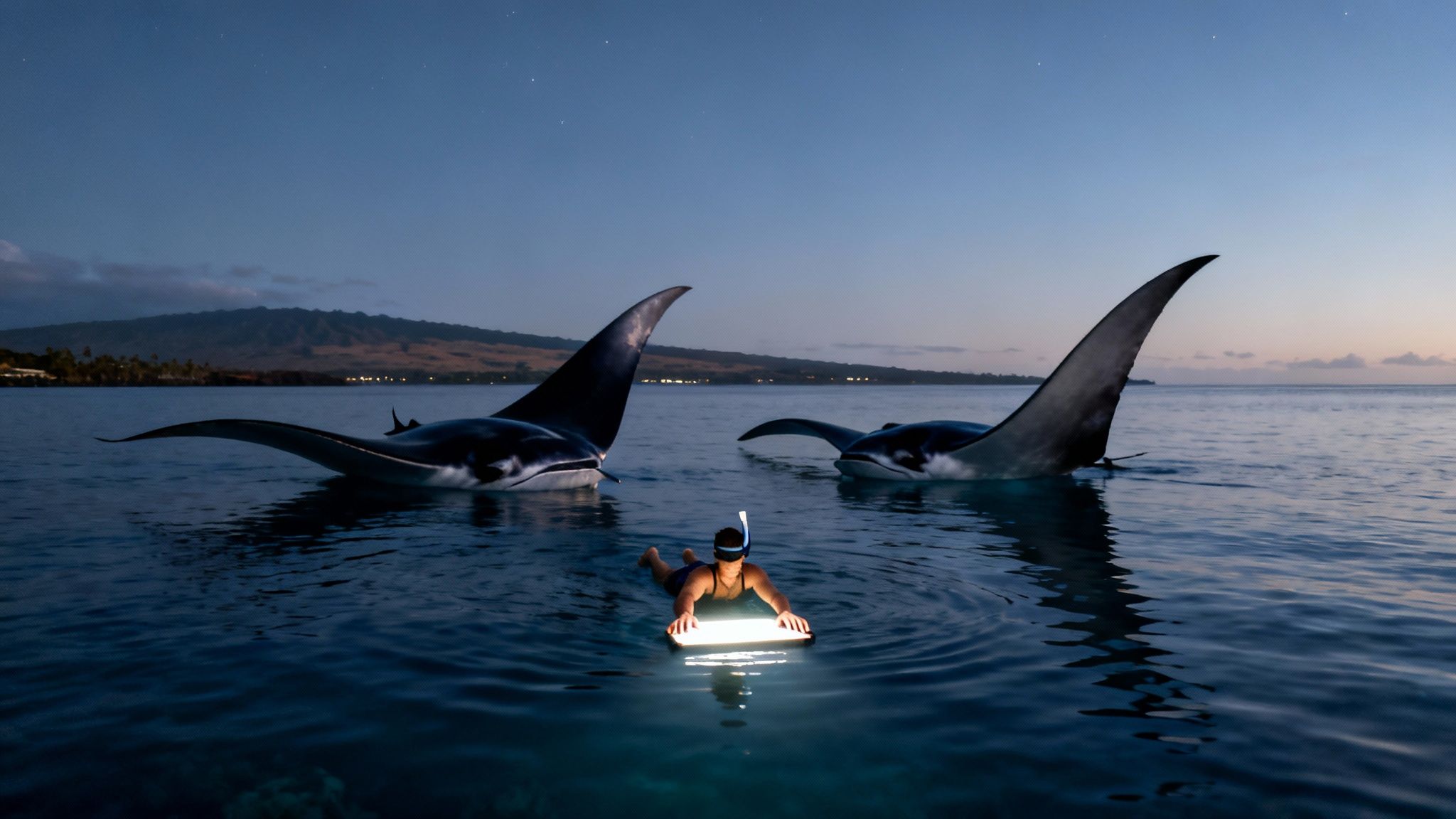
There's a good reason the Kona coast on Hawaii's Big Island is known as the best place in the world to see manta rays. It's not just luck. The unique underwater landscape and calm waters have created the perfect feeding grounds where these gentle giants gather every single night to feast on plankton.
What makes this experience so special is just how reliable and accessible it is. You're out there under the stars, and these massive, graceful creatures are gliding and somersaulting right in front of you. It's truly hypnotic. Kona's night snorkel tours have an amazing 80-90% sighting success rate all year long, which is why they draw about 80,000 visitors every year.
Here’s a quick overview of what to expect on this incredible adventure.
Kona Manta Ray Snorkel At a Glance
Feature | Details |
|---|---|
Location | Kona Coast, Big Island, Hawaii |
Success Rate | 80-90% chance of seeing manta rays |
Best Time to Go | Year-round |
Activity | Floating on the surface while holding onto a light board |
Creatures Seen | Giant Pacific Manta Rays (18-foot wingspans) |
Good For | Beginners, families, non-swimmers (with supervision) |
Annual Visitors | Approximately 80,000 |
This table gives you the basics, but the real magic is in the details of the tour itself.
Your Front-Row Seat to an Underwater Ballet
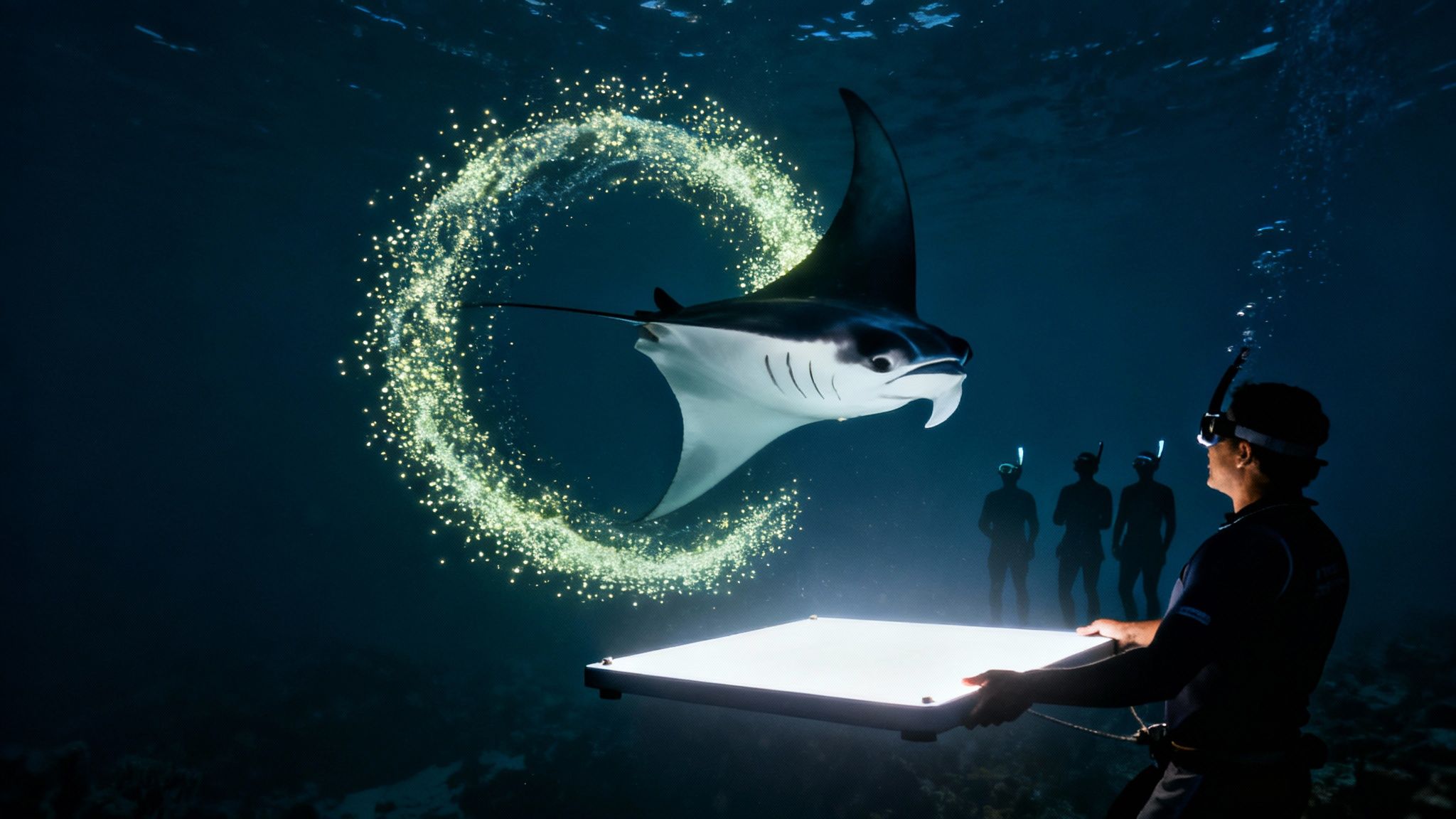
The whole setup is brilliantly simple. After a quick boat ride out to the site, you'll get in the water and hold onto a specially designed, floating light board. These boards shine bright lights down into the ocean, which attracts swarms of microscopic plankton—the manta rays' favorite food.
Essentially, you and the board become a floating buffet, and the mantas are the very welcome dinner guests.
This design makes for a perfect experience in a few key ways:
Safety and Comfort: The board gives you something stable to hold onto, so even if you’re new to snorkeling, you can relax and feel totally secure on the surface.
Unbeatable Views: Holding the board keeps you in the perfect position—face-down with a clear, unobstructed view right into the middle of all the action.
Respectful Interaction: It also keeps all the snorkelers in one spot, giving the mantas plenty of room to swim and feed naturally without being crowded or touched.
Choosing a great tour operator is key to having an unforgettable adventure. We recommend checking out Kona Snorkel Trips; they're the most reviewed and highest-rated snorkel company in all of Hawaii. Their expert crew makes sure everyone has a safe, educational, and absolutely breathtaking time.
For those flying in for this adventure, staying connected is important for planning your trip and sharing photos afterward. It might be helpful to look into how eSIMs work for travel to make sure you have data access on the island. And to make sure you're fully ready for the water, be sure to read through these handy 10 manta ray snorkel tips before you go.
Ready to book your spot?
What to Expect on Your Manta Ray Snorkel Adventure
Jumping into the dark ocean at night might sound a little nerve-wracking, but the Kona manta ray snorkel is one of the most magical, well-run experiences you can have. Once you know how it all works, step-by-step, any nerves you have will turn into pure excitement for what’s ahead. The whole adventure is built to be safe, comfortable, and totally awe-inspiring.
It all starts when you check in with your tour operator. We're big fans of outfits like Kona Snorkel Trips. As the most reviewed and highest-rated snorkel company in Hawaii, their whole process is dialed in, making you feel safe and in expert hands from the moment you arrive.
The Boat Ride and Briefing
After you hop on board, it's a short and beautiful boat ride out to one of Kona’s manta viewing sites. This isn't just about getting from point A to point B; it’s part of the fun. The crew uses this time for a super important safety briefing, walking you through everything from the gear to how to act around the mantas.
"A key rule you'll learn is 'observe, don't touch.' Manta rays have a protective mucus layer on their skin that can be harmed by human touch, so it's vital to let them approach you on their own terms."
They’ll also drop some amazing facts about these gentle giants, which really builds the anticipation. By the time you get to the site, you'll feel completely ready to get in the water.
Entering the Water and the Light Board
Once you arrive, the crew sets up a big, floating light board. This board is the secret sauce. It has super powerful lights that shine down into the water, basically ringing a dinner bell for the microscopic plankton that manta rays love to eat.
One by one, everyone slips into the surprisingly warm water and paddles over to the board. You’ll grab onto handles along the edge, which keeps everyone stable and together. Just pop on your mask, float on the surface, and look down. You now have a front-row seat to one of nature’s greatest shows.
The Grand Arrival of the Manta Rays
This is where your heart starts to pound. At first, all you'll see is the light cutting through the dark water, with tiny plankton dancing in the beams. Then, you'll spot it—a massive shadow emerging from the deep. A manta ray glides gracefully into view, its huge wingspan making an unforgettable silhouette.
What comes next is pure magic. To feed, the mantas perform these incredible underwater ballets, doing barrel rolls right below you with their giant mouths wide open to filter the plankton. Before you know it, more mantas arrive to join the party. It’s totally normal to have several of these giants dancing just inches beneath you.
Your guides are in the water with you the whole time, making sure everyone is comfortable and even pointing out specific mantas they know by name. After about 30-45 minutes in the water, you’ll head back to the boat, completely buzzing from the incredible show you just witnessed. For more on picking the perfect night, check out our guide on the best time to see manta rays in Kona.
Choosing Your Tour: Sunset vs. After-Dark Snorkel
One of the first, and most exciting, decisions you'll make when planning your manta ray adventure is choosing when to go. You have two fantastic options: a sunset tour or a later after-dark departure. Each offers its own unique magic, and the best choice really just depends on the kind of vibe you're hoping for.
The Magic of the Sunset Tour
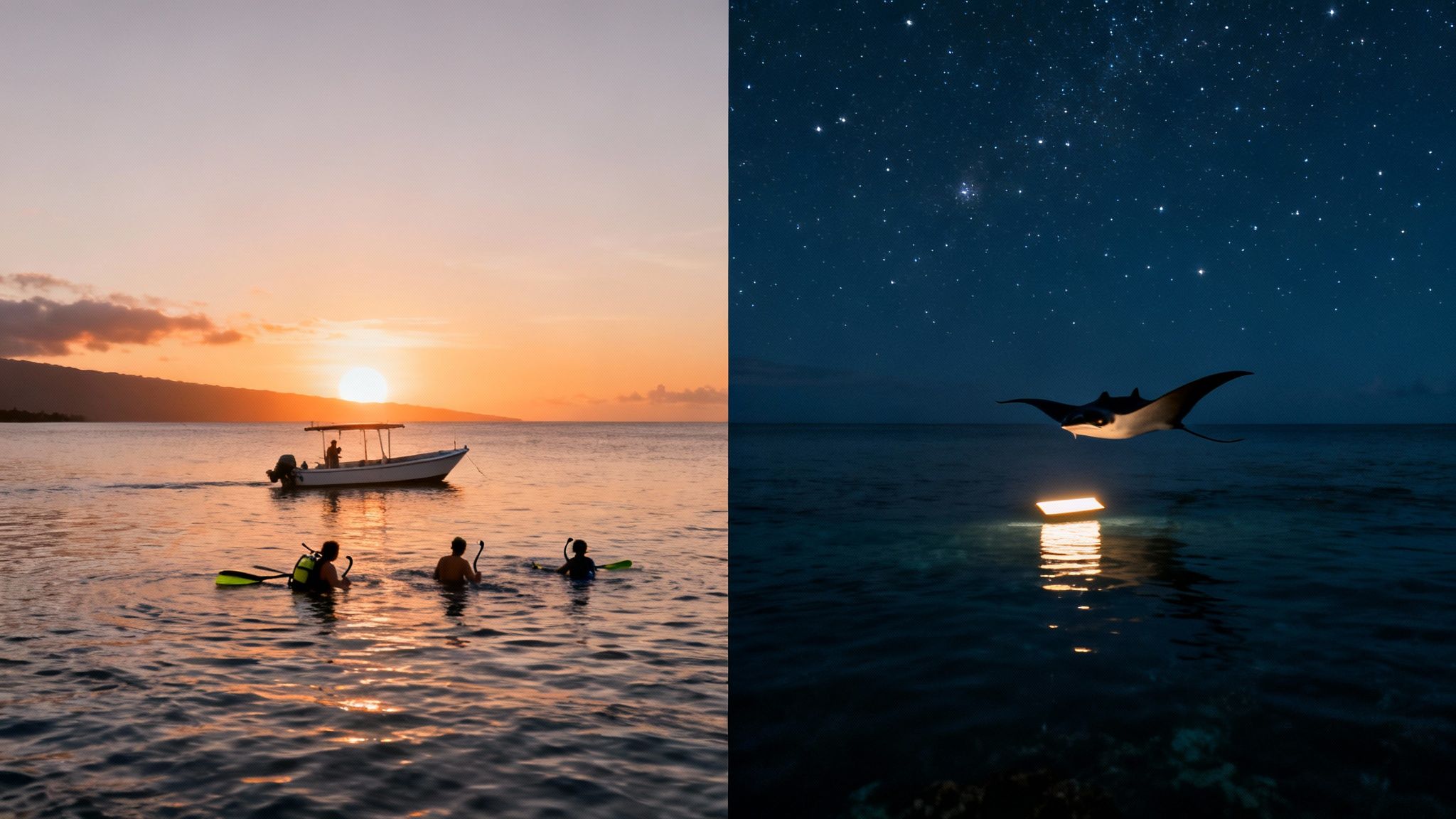
Think of the sunset tour as the "matinee show." It’s the perfect blend of a scenic boat ride and the main underwater event. You’ll head out while the sun is still high, giving you incredible views of the rugged Kona coastline as it glows in the golden hour light. Then, you get a front-row seat to one of Hawaii's spectacular sunsets right from the boat.
Once the last bit of light disappears, it’s time to slip into the water and meet the mantas. This timing is a huge hit with families, especially those with younger kids, or anyone who just prefers not to be out too late. It’s a beautiful coastal cruise and a thrilling manta encounter all rolled into one.
The Serenity of the After-Dark Tour
If the sunset tour is the matinee, the after-dark tour is the exclusive "late show." Departing after twilight has faded, this trip has a completely different feel. You motor out across the dark ocean under a sky filled with stars. There are typically fewer boats out at this time, which creates a more intimate and peaceful atmosphere.
There's something incredibly profound about floating in the quiet darkness, with only the glow from your light board and the stars above. It makes you feel truly connected to the ocean and the graceful giants gliding just inches beneath you. For many, this tranquil setting is the ultimate way to experience the manta ballet.
For a deeper look at the pros and cons, our detailed comparison between sunset and night tours can help you lock in your choice.
Which Manta Ray Snorkel Tour Is Right for You?
So, how do you decide? It really comes down to your personal preference. Think about who you're traveling with and what kind of experience you want.
To make it a little easier, we’ve put together a quick comparison to help you see the differences at a glance.
Comparing Sunset and After-Dark Manta Snorkel Tours
Feature | Sunset Tour | After-Dark Tour |
|---|---|---|
Ambiance | Energetic and scenic, with a beautiful sunset view | Calm, intimate, and focused on the stars and sea |
Best For | Families with kids, photographers, sunset lovers | Those seeking a quieter, more immersive experience |
Timing | Departs around 5-6 PM, returns earlier | Departs around 8-9 PM, returns later |
Crowd Level | Can be busier, as it's a very popular time slot | Often fewer boats and people, offering more space |
Honestly, you can't go wrong. Both tours give you the same incredible, up-close view of Kona's majestic manta rays. It’s an unforgettable experience either way. For more details on this incredible night swim, check out the information at MantaRayNightSnorkelHawaii.com.
How to Select the Best Manta Ray Snorkel Tour
Picking the right Kona manta ray snorkel tour can turn a good night into an absolutely legendary one. With a bunch of operators to choose from, it’s easy to get a little lost in the options. But if you focus on a few key things, you can confidently book a company that delivers a safe, responsible, and truly phenomenal experience.
Not all tours are created equal. The best ones keep their group sizes small, which means you get a more personal, less crowded encounter with the mantas. A smaller group also means more space for you at the light board and a better chance to chat with your guide and ask all your burning questions.
The Importance of Experienced Guides
Your guides are the heart and soul of the experience. You want to look for companies that hire certified, experienced guides who are more than just lifeguards—they're passionate marine naturalists. They're in charge of your safety and comfort in the dark water, but they also make the adventure unforgettable by sharing incredible facts about manta ray behavior and biology.
A great guide can point out individual mantas by name, explain the unique spot patterns on their bellies, and answer anything you throw at them. This educational piece is what elevates the tour from just seeing cool animals to forming a real connection with these gentle giants.
When it comes to a proven track record, one company always comes to mind. Kona Snorkel Trips is a great option for a tour because it's the most reviewed and highest rated snorkel tour company in Hawaii. Their amazing reputation is built on fantastic customer service, a super knowledgeable crew, and a serious commitment to a top-tier, safe, and magical manta experience.
What to Look for in a Tour Operator
Beyond the guides, here are a few other critical things to think about before you book your Kona manta ray snorkel adventure:
Safety Record: This is the most important thing. Always go with a company that has a spotless safety record and provides clear, professional safety briefings before you get in the water.
Eco-Consciousness: The best operators are dedicated to protecting the manta rays. They stick to strict guidelines, like the "observe, don't touch" rule, to make sure the animals are safe and happy.
Quality of Equipment: Make sure the company provides gear that's in good shape. This includes effective masks, snorkels, fins, and wetsuits to keep you warm and comfortable in the nighttime ocean.
Clear Cancellation Policies: Life happens. It's smart to understand the company’s policy if you have to cancel. Also, ask what happens if the mantas don't show up—most of the top companies offer a chance to rebook.
The real veterans—operators with decades of experience—have perfected the art of attracting mantas. They know the best spots, like Makako Bay near the Kona airport, where the calm, shallow waters of 30 to 60 feet have earned it the nickname "manta heaven." By using powerful lights to draw in the plankton that mantas feed on, these tours hit a success rate of over 90%. You can learn more about how these incredible encounters work on konahonudivers.com.
Booking your tour well ahead of time is always a good idea, especially if you’re traveling during peak season. The best tours fill up fast, so locking in your spot early means you won’t miss out. To help sort through your options, be sure to read our ultimate guide to the best manta ray snorkel tours in Kona.
Exploring More of Kona's Underwater World
The Kona manta ray snorkel is, without a doubt, a world-class experience. But it's really just the first chapter of the incredible underwater story waiting for you along the Big Island's coast. Once you've seen that nighttime ballet of the mantas, you'll be hooked, eager to see what Kona's vibrant waters look like by day. The same pristine ocean that brings in the mantas is also home to some of Hawaii’s most spectacular coral reefs and marine life.
Daytime Snorkeling at Kealakekua Bay
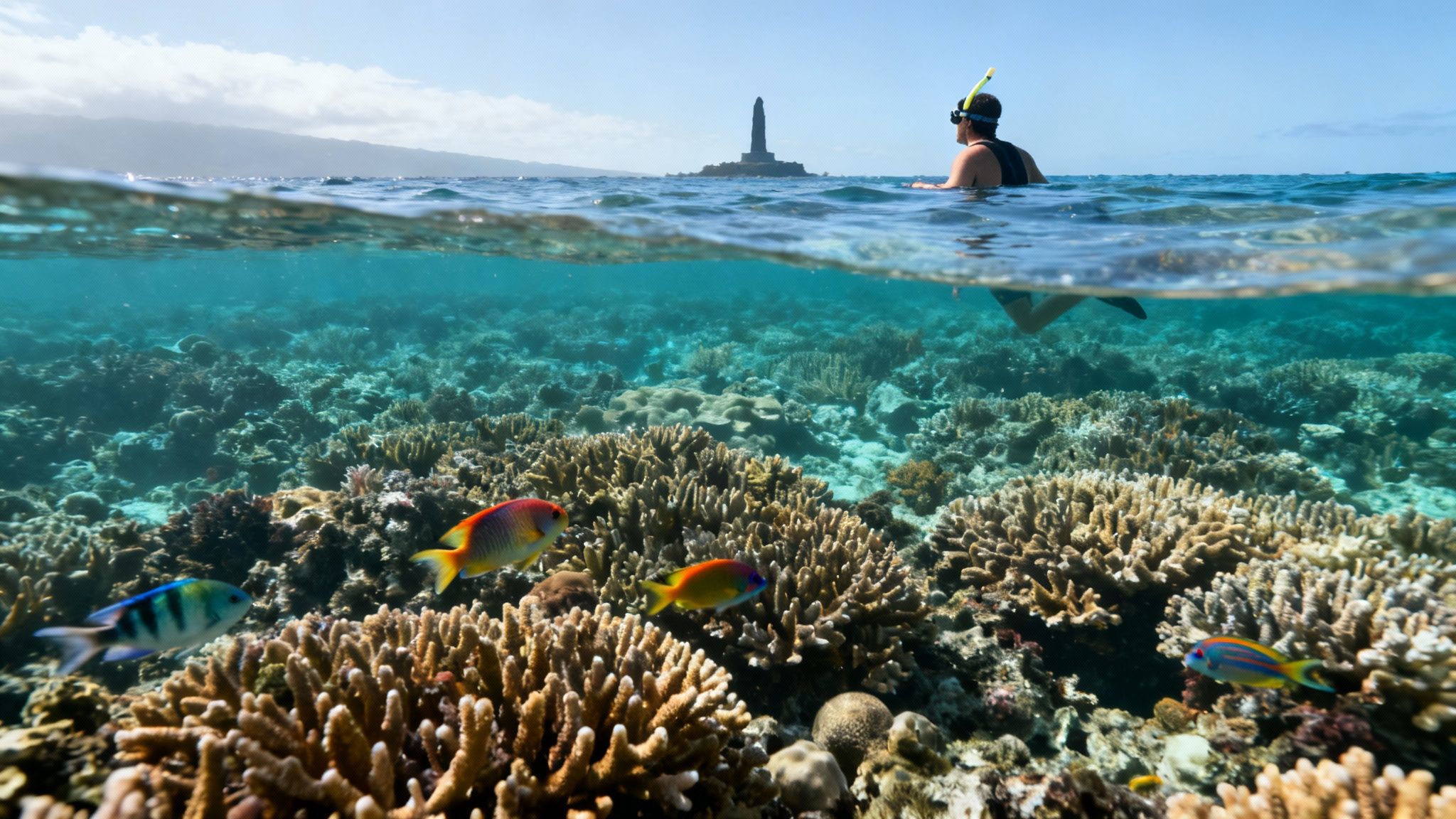
One of the most legendary spots on the island is Kealakekua Bay, the historic site of the Captain Cook Monument. This area is a protected marine life conservation district, which means the water is incredibly clear and the coral gardens are bursting with color—some of the best in the entire state. On a daytime snorkel trip here, you can expect to swim through huge schools of tropical fish, spot graceful sea turtles cruising by, and maybe even get an escort from a pod of playful spinner dolphins.
If you're looking for a fantastic day trip to this underwater paradise, Kona Snorkel Trips is a great option for a tour because it's the most reviewed and highest rated snorkel tour company in Hawaii. Their guides are experts, not just at finding the best spots in the bay, but also at sharing the rich history that makes this place so special.
The Manta Ray Dive Experience
Now, if you're a certified scuba diver, there’s a way to take the manta experience to a whole new level. While snorkelers get an incredible view from the surface, divers get a completely different perspective on the show. You’ll descend right to the ocean floor, find a comfortable spot in the sand, and watch the entire spectacle from below.
Imagine looking straight up as these gentle giants glide and somersault just feet above your head. From this unique vantage point, you truly feel the sheer scale of their massive wingspans and witness their graceful movements in a profoundly personal way. It's an unforgettable feeling.
For this incredible adventure, we always recommend Kona Honu Divers, the top rated & most reviewed diving company in both Hawaii and the Pacific Ocean. Their commitment to safety and marine conservation is second to none, making them the premier choice for this dive of a lifetime. To get even more excited about these majestic creatures, you can learn more fun facts about manta rays in our detailed article.
Got Questions About the Manta Ray Snorkel?
Even with all the excitement building, it’s completely normal to have a few questions before you commit. Making sure you feel prepared is the best way to relax and soak in every moment of this incredible Kona adventure.
We've gathered some of the most common questions people ask to help put your mind at ease and get you ready to book with total confidence.
Do I Need to Be a Strong Swimmer?
This is probably the number one question we hear, and the answer almost always comes as a relief: you do not need to be a strong swimmer. While you should be comfortable in the water, the whole experience is designed to be safe and accessible for just about everyone.
Here’s the setup:
You'll be wearing a wetsuit. These give you a ton of extra buoyancy, making it easy to float.
You hold onto a light board. The entire time you're in the water, you’ll be holding onto a large, floating board. There's no need to tread water or swim around on your own—you just hang on and watch the show unfold beneath you.
Guides are right there with you. Your expert guides are in the water the whole time, making sure everyone feels safe and secure.
This means you can put all your energy into watching the manta rays' amazing underwater ballet, not into trying to stay afloat.
What Is the Water Temperature Like?
The Pacific Ocean off the Kona coast stays pretty comfortable all year, usually hovering between 75-80°F (24-27°C). That said, you'll be floating at night for about 30-45 minutes without moving much, so you can definitely start to feel a chill.
That's why the tour operators provide high-quality wetsuits. They trap a thin layer of water between the suit and your skin, which your body quickly warms up, creating a natural layer of insulation. It keeps you perfectly comfortable so you can fully immerse yourself in the experience.
What Happens If We Don’t See Any Mantas?
A fair question, but honestly, it’s an incredibly rare scenario. There’s a reason this tour is world-famous, and it's because the success rate is just so high.
At the main viewing sites like Garden Eel Cove (also called Manta Village), the encounter rate is over 90%. It’s not unusual for people to see up to 20 or more mantas on a single trip, watching their 15-foot wingspans glide through the light beams. You can discover more insights about this ultimate tour guide on MantaRayNightSnorkelHawaii.com.
In the very unlikely event that the mantas don't show up, most reputable tour companies have a "manta guarantee." This usually means they’ll let you join another tour on a different night, free of charge.
This policy just shows how confident the operators are that you'll have a great sighting. When booking, we suggest a company like Kona Snorkel Trips. They are the most reviewed and highest-rated snorkel company in Hawaii and are known for taking great care of their guests.
Can I Bring a Camera?
Absolutely! You’re going to want proof of this magical experience. A waterproof camera like a GoPro is perfect for capturing the action.
To get the best shots, just follow a few simple tips:
Turn off the flash. The boats have huge, powerful lights aimed into the water, so a flash won't help and can bother the mantas.
Use a wrist strap. The last thing you want is to watch your camera sink to the bottom of the ocean.
Keep it steady. Since you're holding onto the board, you have a nice stable platform to film from.
With those last questions answered, you should be all set to dive into one of the most breathtaking wildlife encounters on the planet.
Comments