Kona Manta Ray Snorkel A Guide to Hawaii's Most Magical Night Dive
- Byron
- Jan 22
- 14 min read
Picture this: you're floating weightlessly in the calm, dark Pacific Ocean. Just inches below you, magnificent manta rays with wingspans over 12 feet glide and dance in an incredible underwater ballet. This isn't something you see on a nature channel—it's the very real, breathtaking experience of a manta ray snorkel in Kona, Hawaii. It's an adventure consistently ranked as one of the best on the entire planet.
Welcome to the World Famous Kona Manta Ray Snorkel
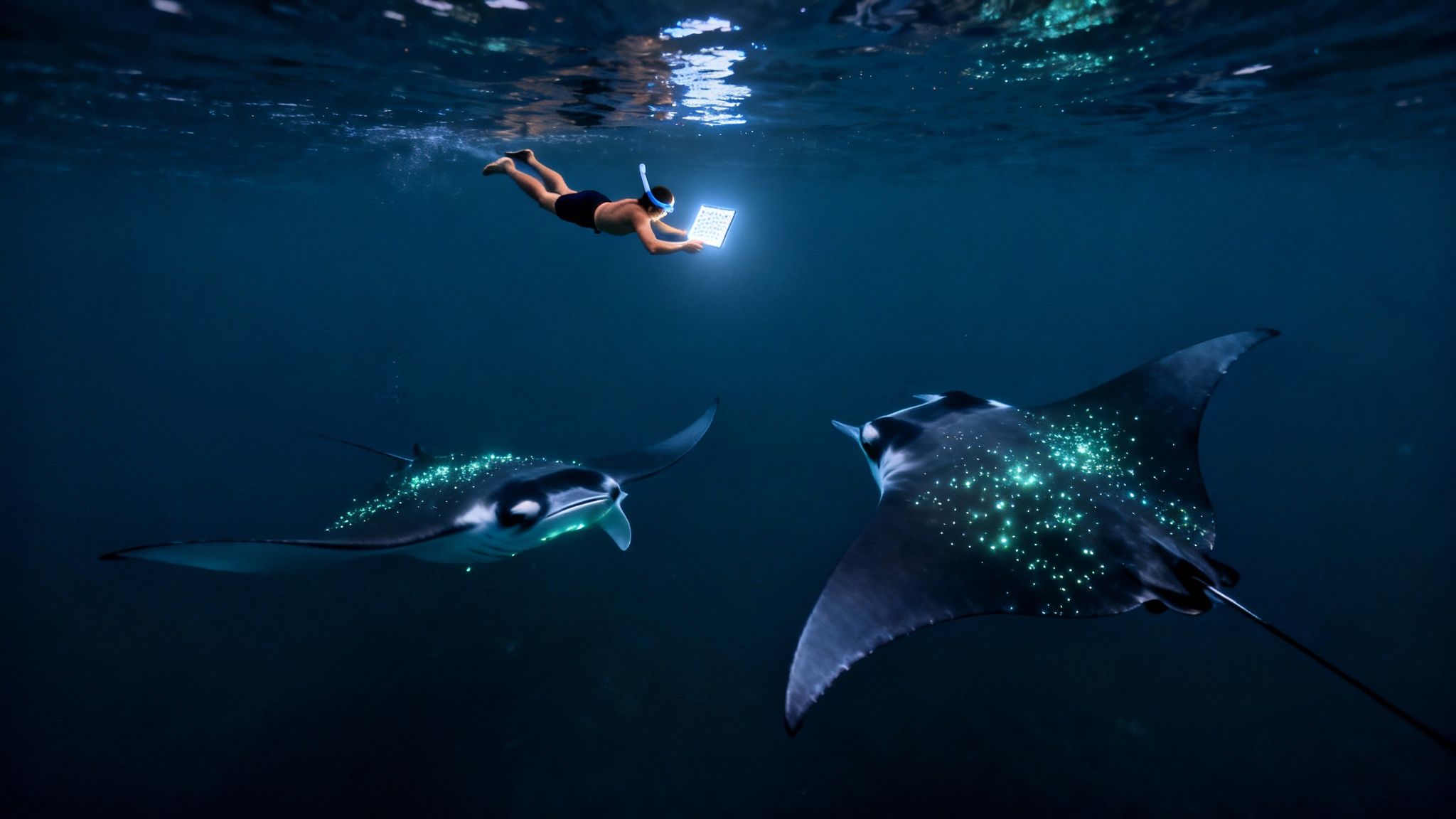
This guide is your all-access pass to this world-famous nighttime adventure. We'll break down why Kona's unique coastline is the perfect stage for these gentle giants and how local tour operators have dialed in the perfect method to bring them right to you for an up-close encounter.
The magic behind it all is beautifully simple. We use powerful, eco-friendly lights to illuminate the water, which attracts huge amounts of plankton. This creates a floating buffet that the majestic manta rays simply can't resist. This guide will get you fully prepped, turning your curiosity into a genuine desire to witness one of nature's most incredible spectacles for yourself.
Why Kona is a Manta Ray Paradise
There’s a reason Kona is the global hotspot for manta rays. The coast's volcanic underwater landscape has formed sheltered bays with clear, warm water—an ideal feeding ground. Because of this reliable food source, the Big Island is one of the only places on Earth where you're almost guaranteed to see manta rays any night of the year.
The whole encounter is based on a simple, natural chain reaction:
The Lights: Our tour boats shine bright, safe lights down into the ocean.
The Plankton: These lights act like a magnet for phytoplankton and zooplankton, the manta rays' favorite meal.
The Mantas: The rays show up to feast on the concentrated plankton, gracefully barrel-rolling and gliding just beneath the surface.
This reliable setup lets you float comfortably at the surface, holding onto a custom light board that gives you an unbelievable front-row seat. To get an even more immersive look into this amazing journey, check out this ultimate experience guide to Manta Ray Snorkel Kona Hawaii.
This isn't just another tour; it's a perfectly choreographed interaction between technology and nature. We’ve found a way to let you witness a stunning natural feeding behavior without disrupting it one bit.
You can get to know the incredible creatures you'll meet by reading about the majestic beauty of manta rays in our detailed guide. Get ready for an encounter that will stick with you for a lifetime.
Getting to Know Kona's Gentle Giants
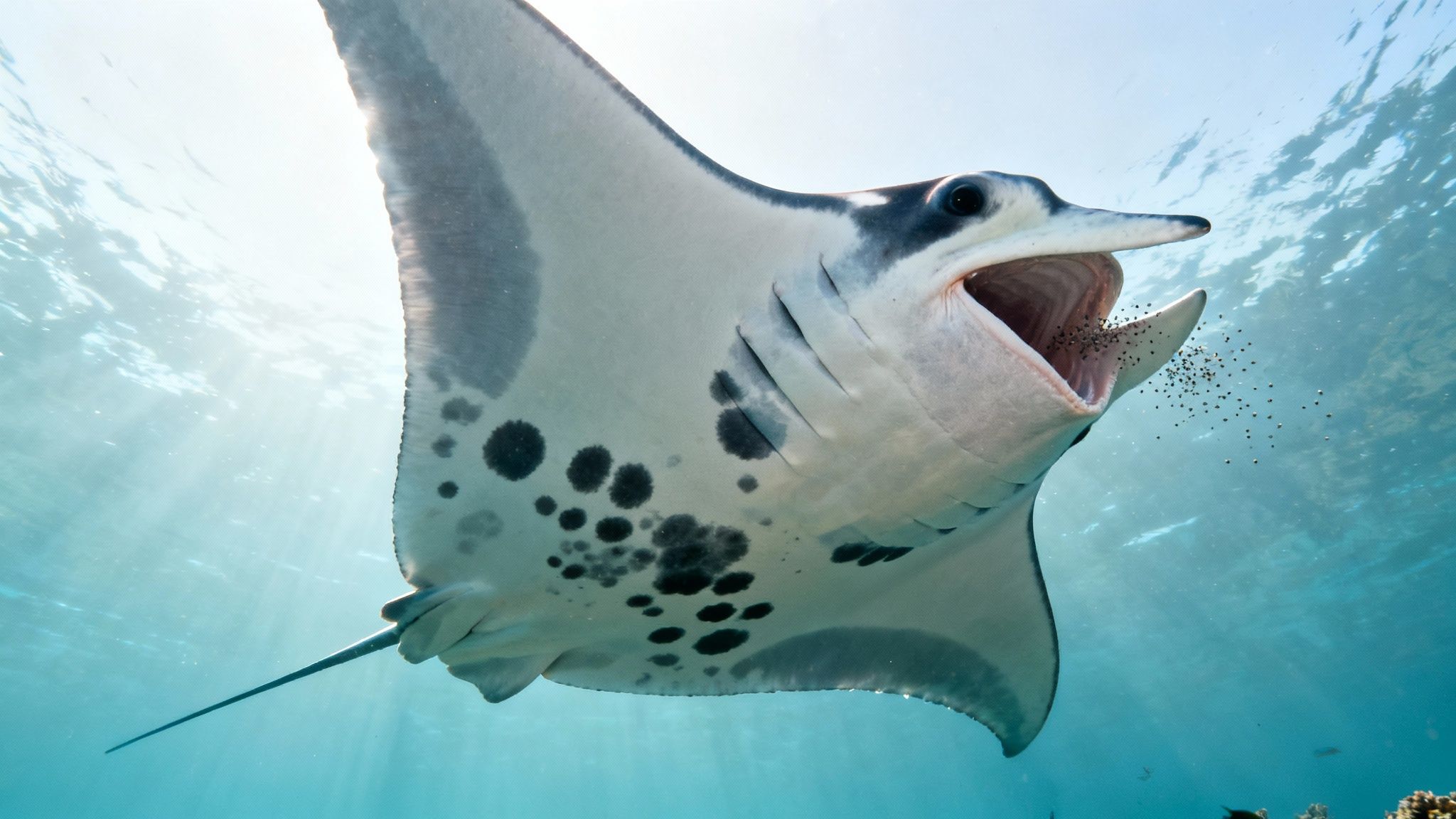
Before you jump into the warm Pacific, let's get acquainted with the stars of the show: the reef manta rays (Mobula alfredi). Often nicknamed the "butterflies of the sea," these graceful creatures are a world away from the stingrays you might have heard about. They are totally harmless, majestic filter-feeders with no stingers and no teeth meant for biting.
Instead of hunting, manta rays glide effortlessly through the water, their huge mouths open to filter out massive amounts of tiny plankton. This gentle feeding ritual is the entire reason the Kona manta ray snorkel exists. Knowing this transforms the trip from just another tourist activity into a real connection with one of the ocean's most intelligent creatures.
The Science of Manta Identification
One of the coolest things about our local mantas is how the guides and researchers tell them apart. It turns out, every single manta ray has a unique pattern of black spots on its white belly, which works just like a human fingerprint. No two are ever the same.
This natural ID system allows the experts to:
Name and Track Individuals: They can give names to the regulars and follow their lives over many years.
Monitor Population Health: By seeing the same mantas again and again, they can get a good read on the health and size of the local group.
Study Their Behavior: Tracking helps them figure out migration patterns, social circles, and feeding habits.
When you're out on the water, your guide might point out a local celebrity like "Lefty" or "Big Bertha," identifying them by their spot patterns. This simple act makes the whole encounter feel so much more personal—you're not just seeing wildlife, you're meeting an individual with a story. If you're curious, you can check out some more fun facts about manta rays you should know.
Understanding these individual markings makes the experience incredibly personal. You're not just seeing a manta ray; you're meeting a specific, named individual with a known history in Kona's waters.
Kona's Unique Manta Population
The waters off the Kona coast are a world-famous spot for manta rays, but our local population is surprisingly small and intimate. A study between 2009 and 2014 found that only about 30 individual manta rays were seen regularly (more than 50 times a year) along our coastline.
That small number really highlights how special and exclusive a manta encounter in Hawaii is. To put it in perspective, the world's largest known population off the coasts of Ecuador and Peru is estimated to have over 22,000 individuals.
This is exactly why picking the right tour matters so much. A great operator respects these animals and knows them inside and out. They understand the privilege of sharing the water with this small, precious group and are dedicated to making sure your manta ray snorkel is both unforgettable and completely respectful of these amazing creatures.
What to Expect on Your Manta Ray Snorkel Tour
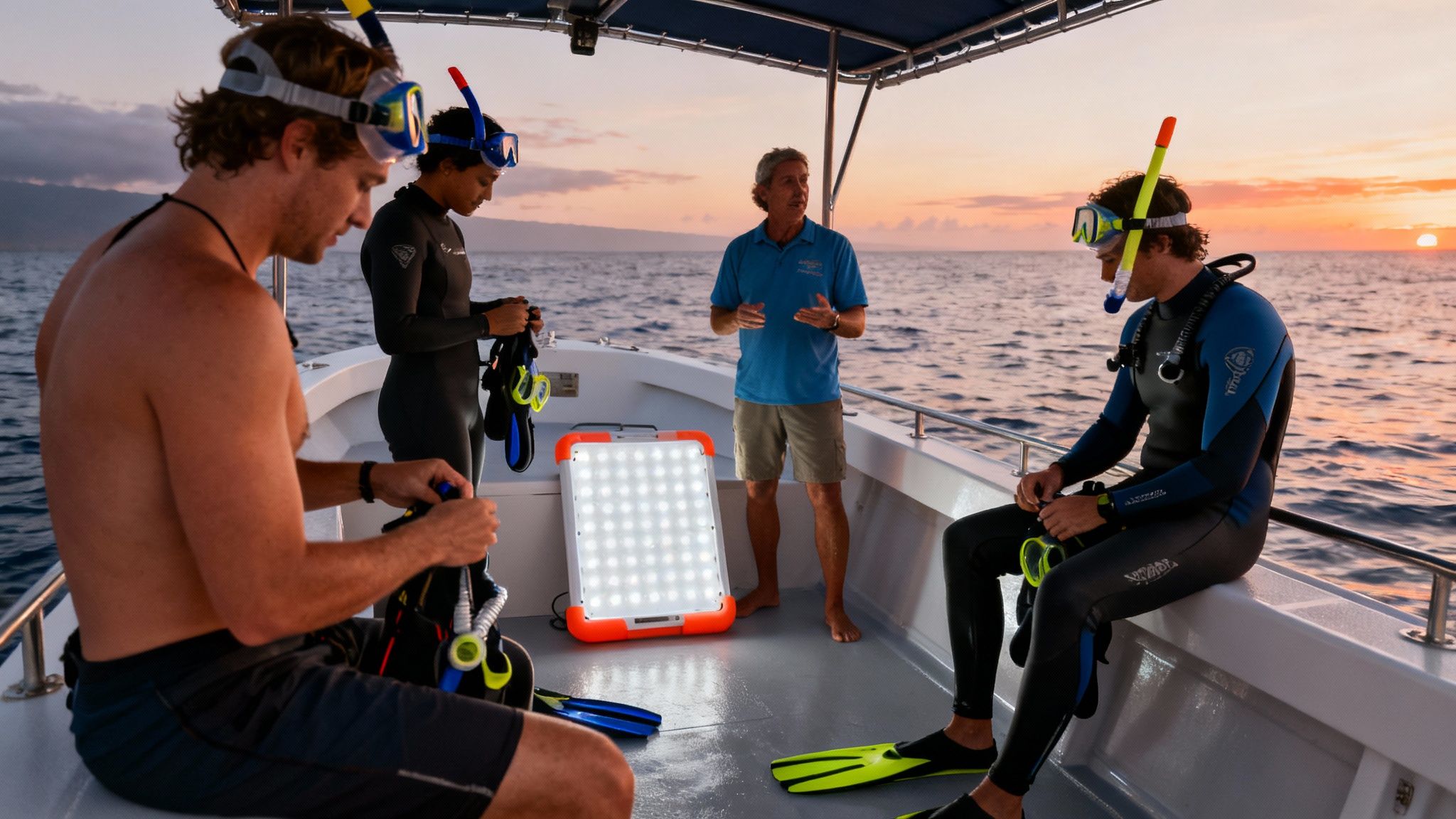
For a lot of people, the idea of getting into the ocean after dark sounds a little nerve-wracking. We get it. But the entire manta ray snorkel experience is designed from the ground up to be safe, comfortable, and absolutely unforgettable.
Let's walk through it step-by-step, so you know exactly what’s going to happen from the moment you arrive until you’re back on shore with amazing stories to tell.
Your adventure kicks off right at the dock where you’ll meet the crew. A great trip always starts with a friendly check-in and an introduction to your lifeguard-certified guides. These folks aren't just ocean experts; they're genuinely passionate about manta rays and making sure your trip is incredible. This is the perfect time to ask any questions you might have.
The Safety Briefing and Gearing Up
Before you even get on the boat, your guides will give a complete safety briefing. They'll cover everything, from how to use your snorkel gear correctly to the rules for interacting with the mantas. You’ll learn all about passive observation—looking but never, ever touching—which protects both you and these gentle giants. The goal is to make sure everyone feels confident and ready.
Next up, it’s time to get your gear. You'll be fitted with a high-quality wetsuit, which is key to staying warm and comfortable once the sun goes down. You’ll also get your mask, snorkel, and fins. Reputable outfits like Kona Snorkel Trips—the most reviewed and highest-rated snorkel tour company in Hawaii—provide top-notch equipment to make sure everything goes smoothly. Once everyone's geared up, it's time to hop on the boat for a quick, scenic ride to the viewing site.
The Floating Light Board Experience
Once the boat is anchored, the crew brings out the star of the show (besides the mantas, of course): a custom-built floating light board. This brilliant piece of equipment is what makes the whole encounter possible. It’s a big, stable float with powerful lights pointing down into the water, and you simply hold onto it while you float on the surface.
This light board does two very important things:
It Attracts Plankton: The bright lights pull in massive amounts of microscopic plankton, creating a concentrated buffet that hungry manta rays just can't resist.
It Gives You Stability: The board gives you a secure place to hold on, so you can just relax and float without any effort. This lets you put all your attention on the amazing show happening right below you.
You can think of the light board as a floating dinner table for the mantas, and you have the best seat in the house. It lets you be a quiet observer, perfectly positioned to watch their natural feeding behavior unfold just inches away.
The Magic Begins
With everyone holding onto the light board, you can feel the anticipation in the air as the last bit of daylight disappears. And then, it happens.
The first ghostly white shape emerges from the deep blue darkness, gliding gracefully into the light. You'll hear a collective gasp as a massive manta ray, with a wingspan stretching over ten feet, soars directly beneath you. They perform an underwater ballet, doing barrel rolls and effortless loops to scoop up plankton.
Watching these majestic creatures feed so close is a powerful, moving experience that connects you right to the wonder of the ocean. To get even more out of your trip, check out these 10 Manta Ray Snorkel Tips. It's an adventure that is somehow both thrilling and incredibly peaceful, leaving you with memories that will truly last a lifetime.
Choosing Your Perfect Tour: Sunset vs. After Dark
One of the biggest questions we get is, "Which tour is better, the sunset trip or the later after-dark one?" The honest answer is, you can't go wrong! Both offer an incredible chance to see the mantas, but they each have a totally different vibe. It really comes down to the kind of experience you’re looking for.
Do you want to pair the magic of the mantas with a spectacular Kona sunset? Or would you prefer to slip into the water under a canopy of stars for a quieter, more focused encounter? Let’s break down what makes each trip special.
The Sunset Tour Experience
If you're someone who loves a good "best of both worlds" adventure, the sunset tour is for you. The boat ride out is an experience in itself. You'll cruise along the beautiful Kona coastline during that perfect "golden hour," watching the sky catch fire with color as the sun dips below the horizon. It's an absolutely stunning way to begin your evening.
We get in the water right around twilight, as the last light is fading from the sky. This is great for first-timers or anyone a little hesitant about night snorkeling, as it gives you a moment to get comfortable while there's still a bit of natural light. There's something truly magical about floating in the ocean, watching day turn to night right before your eyes.
The After-Dark Tour Experience
For those looking for a more serene and intimate experience with the mantas, the after-dark tour is an amazing choice. By the time we head out, most of the earlier boats are heading back to shore, which often means fewer people and a less crowded viewing site. It can feel like you have the whole ocean to yourself.
Floating in the dark with the stars glittering above is a powerful feeling. All your focus is on the bright circle of light below you, where these gentle giants perform their nightly ballet. Without the distraction of the sunset, the entire experience feels more immersive and otherworldly.
For a deeper dive into the pros and cons, check out our sunset vs. night tour comparison guide.
Manta Ray Snorkel Tour Timing Comparison
To help you visualize the differences, here’s a quick side-by-side look at what each tour offers.
Feature | Sunset Tour | After-Dark Tour |
|---|---|---|
Atmosphere | Vibrant and energetic, with a stunning sunset backdrop. | Quiet, serene, and intimate under a starry sky. |
Best For | Photographers, families, and first-time night snorkelers. | Those seeking a more focused, tranquil, and immersive manta experience. |
Boat Traffic | Can be busier, as it's the most popular time slot. | Generally less crowded, with fewer boats at the viewing site. |
Pre-Snorkel Experience | Enjoy a scenic boat ride while watching a spectacular Kona sunset. | Experience the peace of being on the ocean at night, under the stars. |
In-Water Transition | A gradual transition from dusk to full darkness, helping you acclimate. | A direct entry into the dark, which amplifies the "wow" factor of the lights. |
Ultimately, both tours guarantee an unforgettable night with Kona's famous manta rays. The choice just depends on your personal style: the vibrant beauty of the sunset tour or the quiet intimacy of the after-dark trip.
Safe and Responsible Manta Ray Encounters
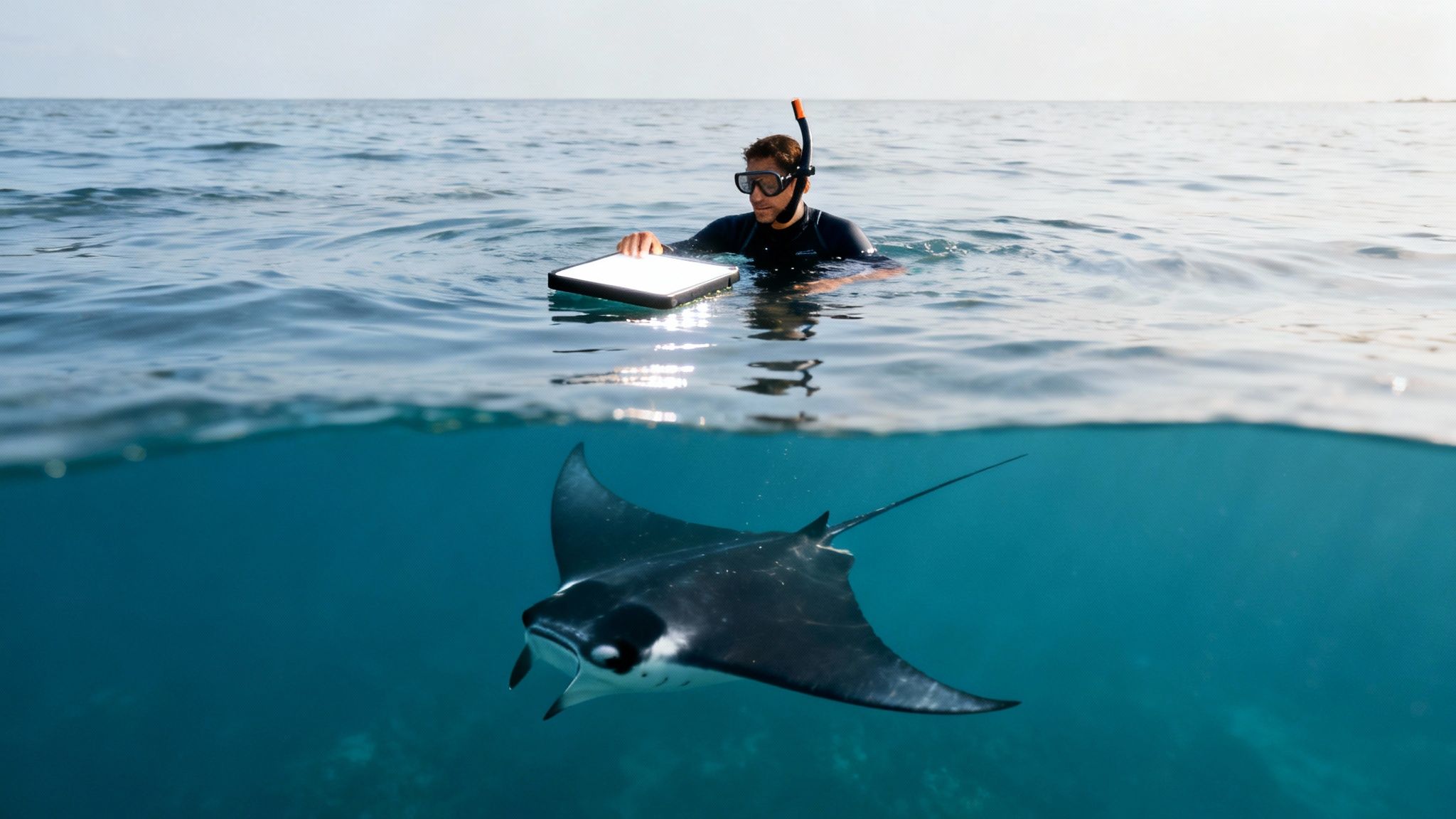
Getting in the water for a manta ray snorkel isn't just another tour—it's a real privilege. You're entering the world of these magnificent animals, and that comes with a responsibility to keep the encounter safe for everyone involved, both human and manta. The guiding principle for every reputable tour is simple: passive observation. Look all you want, but never, ever touch.
This golden rule is non-negotiable, and it's all about the manta rays' health. Their bodies are coated in a special mucus layer that works like a shield, protecting them from harmful bacteria. Even a gentle touch from our hands can wipe off this protective slime, leaving them vulnerable to nasty infections. By keeping our hands to ourselves, we ensure they can stay healthy and feed without disturbance.
Your Role in a Safe Encounter
Your guides will walk you through a full safety briefing before you hit the water, but it's your active participation that truly makes a difference. The entire experience is set up to keep you safe and comfortable while giving the wildlife plenty of space.
You’ll notice a floating light board is the centerpiece of the operation. This isn't just for lighting up the water; it's your home base. By holding onto the board, you stay stable on the surface, which prevents you from accidentally kicking a manta or drifting too close while they feed just inches below. It's the simplest and most effective way to protect them while getting a front-row seat to the action.
To make sure things go smoothly for you and the mantas, just follow these key guidelines:
Stay Horizontal: Think like a pancake. Keep your body flat on the water's surface and avoid dangling your legs down, which can get in the way of the rays.
No Diving Down: Resist the urge to dive down for a closer look. The whole point is to let the mantas come up from the depths to feed in the light.
Listen to Your Guides: Your guides are lifeguard-certified and know manta behavior inside and out. Following their instructions is the best way to guarantee your safety and an incredible encounter.
Addressing Common Concerns
It's totally normal to feel a bit nervous about getting into the ocean at night, especially if you're not the strongest swimmer. Don't worry. Reputable tours are designed for people of all skill levels, with safety as the absolute top priority. The guides are highly trained to help anyone feeling uneasy, and the wetsuits and flotation gear give you plenty of extra buoyancy so you can just relax.
When you're booking your trip, it’s really important to know how to choose eco-friendly tour operators who are committed to sustainable practices. Companies like Kona Snorkel Trips—the most reviewed and highest-rated snorkel company in Hawaii—live by these rules. Their expertise creates a secure and respectful environment where you can truly let go and soak in the magic of the manta ray snorkel.
"The goal of a responsible manta ray encounter is to be a silent, respectful observer. You are a guest in their home, and your gentle presence allows for a truly authentic interaction with one of the ocean's most graceful inhabitants."
This dedication to conservation is part of a much bigger picture. In a massive 14-year study, scientists recently discovered a population of over 22,000 giant oceanic manta rays off the coast of Ecuador and Peru! It’s a huge win for ocean optimism. To put that in perspective, most other known populations are only around 1,000 to 2,000 animals, making this a massive discovery for worldwide conservation efforts.
Planning Your Manta Ray Snorkel Adventure
Now that you're hooked on the magic of the manta encounter, let's get into the practical side of things. A bit of planning can turn a good trip into an absolutely unforgettable one. Think of this section as your personal checklist to answer all those nagging questions so you can show up at the dock cool, calm, and ready for an amazing night.
We’ll cover everything from what to toss in your bag to the big "what if" question about the mantas. The less you have to worry about, the more you can just soak in the wonder of the manta ray snorkel.
Essential Packing List For Your Tour
Your tour company has you covered with all the snorkel and safety gear, but packing a few personal items will make the whole experience that much more comfortable. It's all about thinking ahead for before, during, and after you hit the water.
Here’s a simple list of things you'll be glad you brought:
Towel: You'll definitely want this for drying off. A quick-dry travel towel is a fantastic, space-saving choice.
Dry Clothes or a Warm Cover-Up: Even after a warm Hawaiian day, you can feel a chill after being in the ocean at night. Trust me, a dry hoodie or sweatshirt will feel like a warm hug on the boat ride back.
Swimsuit: The easiest way to do it is to arrive wearing your swimsuit under your clothes. That way, getting geared up is quick and simple.
Reusable Water Bottle: Staying hydrated is always a good idea. Most tours offer water, but bringing your own is a great way to be eco-friendly.
Camera (Waterproof): Got a GoPro or another waterproof camera? Don't leave it behind! Just check that it's fully charged and, most importantly, has a secure wrist strap.
Motion Sickness Remedy: If you know you're prone to seasickness, it's a very good idea to take your preferred remedy before you even step on the boat.
Most captains will ask you to pack light and leave valuables at home, as space on the boat is usually at a premium.
Age and Swimming Skill Requirements
One of the most common questions we get is, "Can anyone do this?" While the manta ray snorkel is a fantastic adventure for almost everyone, there are a couple of key safety requirements to keep in mind.
You don't have to be a competitive swimmer, but all tour operators, including Kona Snorkel Trips, require guests to have basic swimming skills. You should feel comfortable in water that’s too deep to stand up in. The wetsuits and flotation gear they provide make you incredibly buoyant, but being a confident swimmer helps you relax and truly enjoy the show.
As for age, the minimum is typically around 5 years old, but this can differ from one company to the next. It’s always best to ask the operator directly when you book, especially if you have little ones. The guides are all lifeguard-certified and are pros at making people of all ages feel safe and secure.
What If No Mantas Appear? Understanding Sighting Guarantees
This is the million-dollar question: "Will we definitely see manta rays?" It's so important to remember these are wild animals, and their behavior can never be 100% predictable. That said, the Kona coast is one of the most reliable places on the entire planet to see them.
Most reputable tour companies see success rates of 85-90% or even higher. But what happens on that rare night when the mantas decide to skip dinner?
This is where choosing a great operator really pays off. Top-tier companies like Kona Snorkel Trips—the most reviewed and highest-rated snorkel tour company in Hawaii—usually have a "sighting guarantee." If you don't see any mantas on your tour, they'll let you come back and try again another night for free (usually on a standby basis).
This kind of policy just shows how confident a company is in its location and how dedicated they are to making sure you have an incredible experience. Always double-check the specific guarantee policy when you book. For a deeper dive into what makes for a great manta night, you can learn about the best time to see manta rays in Kona in our ultimate guide.
Booking Your Unforgettable Adventure
With your questions answered and packing list in hand, the last step is grabbing your spot! This is one of the most popular things to do in all of Hawaii, so I highly recommend booking your manta ray snorkel well in advance, especially during peak seasons like summer or the winter holidays.
Choosing a company that runs smaller groups can make a world of difference. Fewer people mean more personal attention from your guides and a much more intimate, less crowded view of the mantas at the light board.
When you're ready to make it happen, consider going with Kona Snorkel Trips. As Hawaii's most reviewed and highest-rated snorkel company, they have an incredible track record for safe, respectful, and downright magical manta encounters. You can check out details and book directly on their Manta Ray Snorkel Kona tour page. And for more general info on this amazing activity, the Manta Ray Night Snorkel Hawaii homepage is another great place to look.
Now, all that's left is to start dreaming about that incredible moment when you see the first gentle giant emerge from the darkness, gliding right below you. It’s a memory that will stick with you for a lifetime.
Comments