Kona Manta Ray Snorkel A Guide to This Magical Night Adventure
- Byron
- Feb 13
- 11 min read
Picture this: you're floating in the warm, dark waters off the Kona coast, looking down into a beam of light cutting through the Pacific. Suddenly, a massive, graceful shadow emerges from the deep. A giant manta ray, with a wingspan wider than you are tall, glides effortlessly toward the light, performing an underwater ballet just inches below your nose.
This is the Kona Manta Ray Night Snorkel. It's not just an activity; it's a truly magical, almost otherworldly experience that consistently ranks as one of the best wildlife encounters on the planet. For more information, visit the home page.
Why This Night Snorkel Is an Unforgettable Adventure
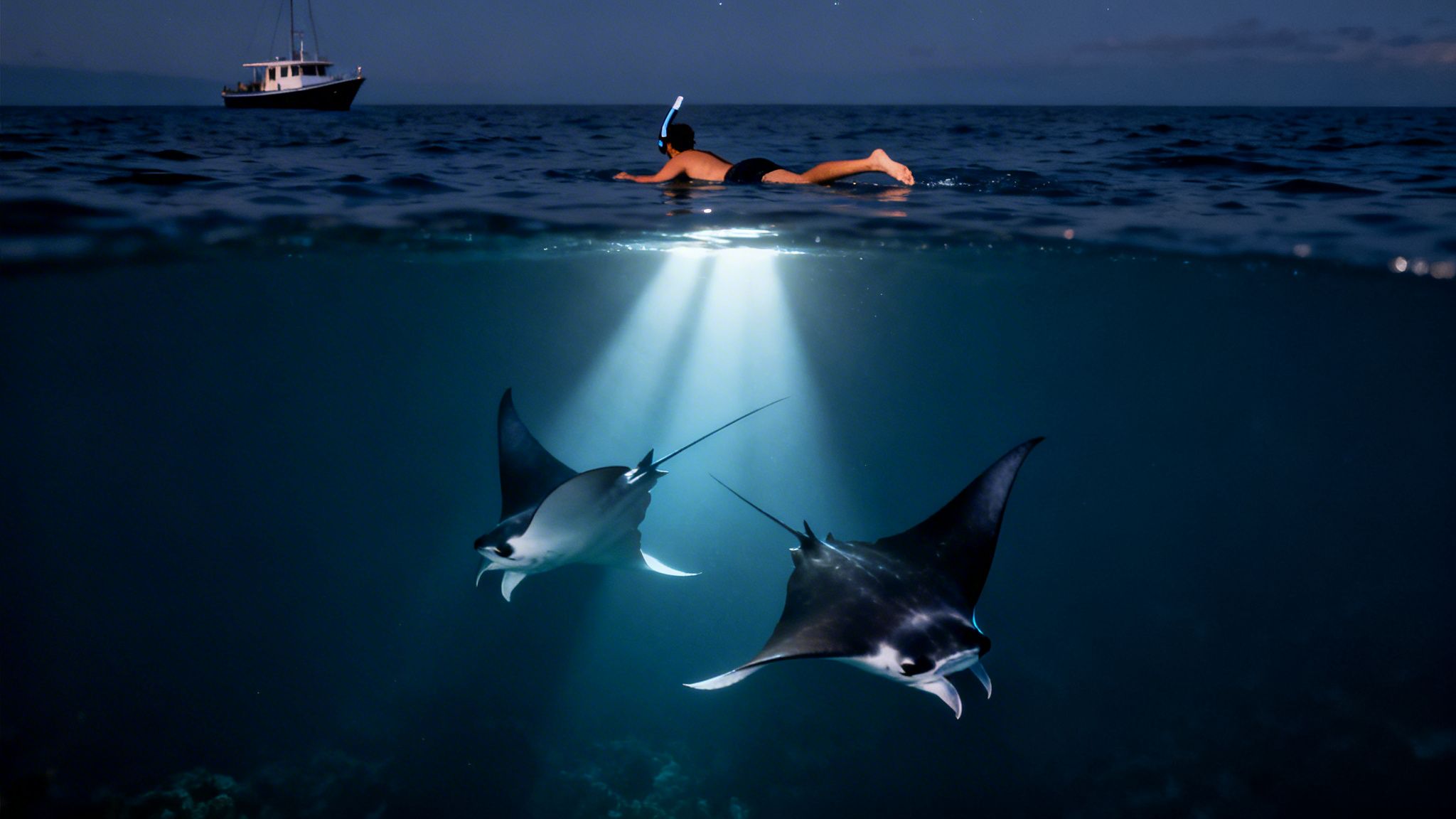
The whole operation is brilliantly simple. Just after sunset, boats head out to well-known manta ray feeding spots. Once anchored, powerful lights are lowered into the water. These lights attract massive clouds of plankton, which just so happens to be a manta ray's favorite meal.
You’ll be given a snorkel and mask before getting into the water, where you’ll hold onto a custom-built flotation board. This board is not just for stability; it's also outfitted with lights that create a glowing "dinner table" on the ocean's surface.
What happens next is pure magic. These gentle giants, some with wingspans up to 16 feet, swim up from the depths to feed, performing mesmerizing barrel rolls and somersaults right in front of you.
Manta Ray Snorkel at a Glance
Here’s a quick summary of what you can expect on a typical Kona manta ray night snorkel tour.
Aspect | What to Expect |
|---|---|
Duration | About 1.5 to 2 hours from check-in to return. |
Water Time | Approximately 45 minutes of in-water snorkel time. |
Sighting Success | Typically a 90% or higher success rate. |
Manta Size | Wingspans can reach up to 16 feet. |
Best Time | Year-round, with calm seas being the most important factor. |
Water Temp | 75-80°F (24-27°C). Wetsuits are usually provided. |
This table gives you the basics, but trust me, the actual experience is something you have to see to believe.
A Uniquely Hawaiian Phenomenon
Kona is one of the very few places on Earth where you can consistently and reliably see reef manta rays feed at night, any day of the year. The unique underwater landscape and a steady supply of plankton have turned the Kona coast into a manta ray hotspot.
This isn't just a lucky break; it's a proven phenomenon. Operators like Manta Ray Night Snorkel Hawaii have the logistics dialed in, boasting an incredible 90% success rate for sightings by knowing exactly where the mantas are likely to be.
Here’s what makes this adventure so special:
Reliable Sightings: The conditions in Kona mean the mantas show up almost every single night.
Up-Close Encounters: You get to watch the mantas feed in a way that is incredibly close but also completely safe and respectful of the animals.
An Otherworldly Vibe: There's nothing quite like floating under the stars in the dark ocean while these majestic creatures dance in the light below you. It’s an experience you’ll talk about for years.
If you're looking for an exceptional alternative when looking for a Manta Ray night snorkel tour or a Captain Cook snorkeling tour, Kona Snorkel Trips is known for its excellent, personalized adventures.
Choosing the Right Tour for Your Manta Adventure
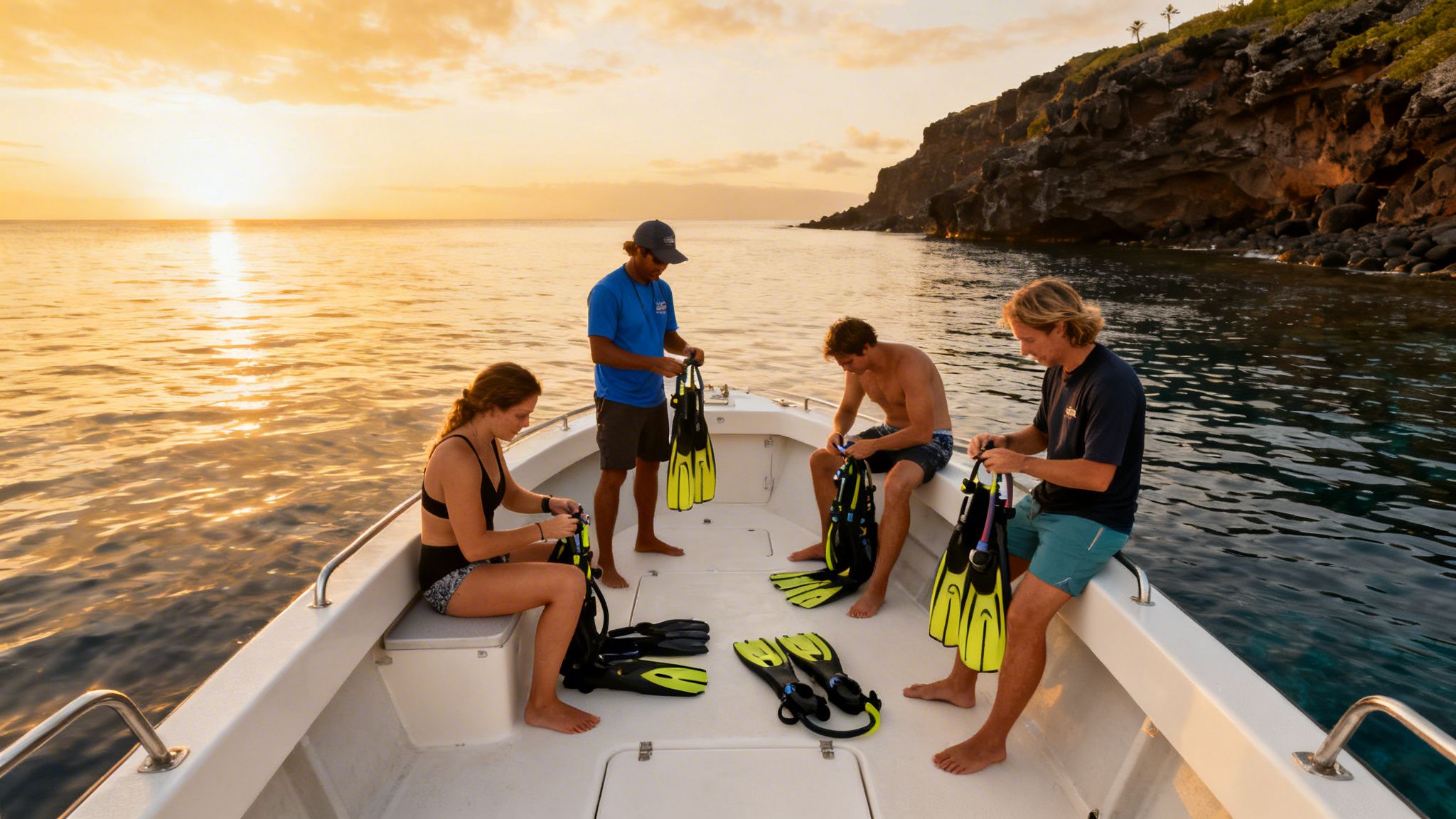
Picking the right operator for your manta ray snorkel is probably the single most important decision you'll make. It’s the difference between a good trip and a truly mind-blowing experience. Let's be honest, not all tours are the same. The size of the group, when you head out, and even the company’s philosophy will completely shape your time in the water.
Shared Boats vs. Private Charters
First, you’ll need to decide between a shared boat or a private charter. Shared tours are a great, budget-friendly option and perfect if you're traveling solo or just enjoy the energy of a group. You get to share the awe and excitement with other ocean lovers.
A private charter, on the other hand, is all about you. It's an intimate, totally personalized adventure that’s ideal for families with young kids, serious photographers, or anyone who just wants the crew's full attention. For a fantastic small-group experience, whether it's for mantas or a Captain Cook snorkeling tour, Kona Snorkel Trips is one of the best out there.
Timing Your Adventure
When you go is just as important as who you go with. Sunset tours are wildly popular for a reason—you get a front-row seat to a jaw-dropping Hawaiian sunset before the mantas even show up. It's pure magic.
But don't count out the later evening tours. Heading out under a sky full of stars has a completely different feel. It’s quieter, more serene, and your focus is locked on the otherworldly glow of the lights and the graceful giants below. There's no wrong answer here; it just depends on the vibe you're going for.
Expert Tip: Small groups are everything. The best operators know this. Fewer people in the water means you aren’t bumping into fins, you get more one-on-one time with your guide, and the encounter with the mantas feels much more personal and respectful.
At the end of the day, my best advice is to find a company that puts conservation and education first. A great guide won’t just point and say, "There's a manta." They'll teach you about their behavior, their diet, and why we need to protect them.
Look for companies with certified guides and a clear commitment to sustainable tourism. For a complete breakdown, check out our guide to the 12 best manta ray snorkel Big Island tours to see who we recommend. Choosing a tour that cares ensures your adventure is as responsible as it is unforgettable.
How to Prepare for Your Night Snorkel
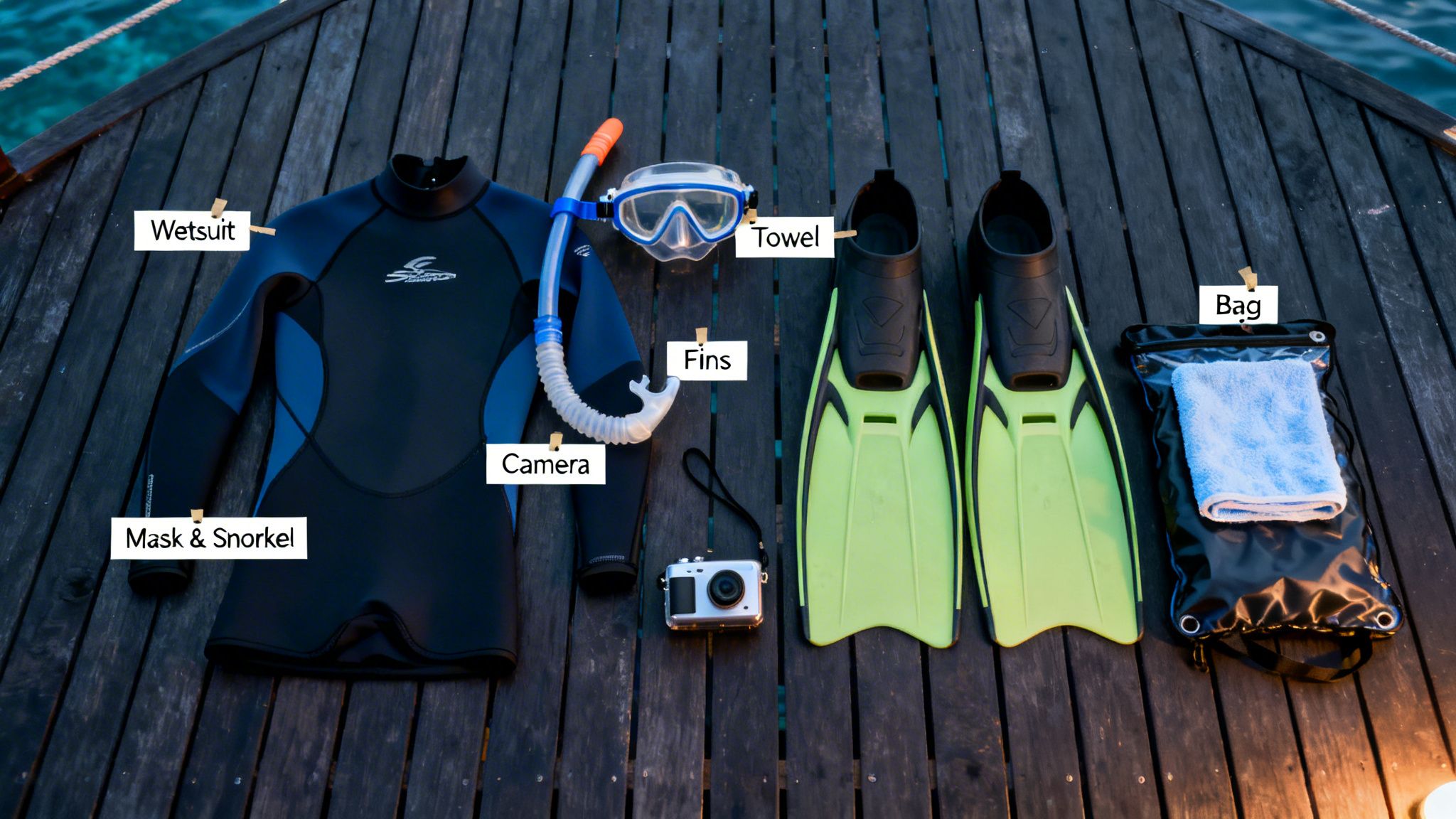
Knowing what to pack—and what to leave on shore—is the secret to a smooth and unforgettable manta ray snorkel adventure. When you're well-prepared, you can just relax and soak in the incredible sight of these gentle giants gliding beneath you. So, let’s get you ready for the water.
What to Pack in Your Bag
Your goal here is comfort, both on the boat and in the ocean. Remember, you'll be out on the water at night, and the temperature drop can be surprising.
Here’s my go-to list of must-haves:
Swimwear: The easiest thing to do is wear your swimsuit under your clothes when you arrive. It makes getting geared up on the boat so much faster.
Towel and Dry Clothes: Trust me, you'll want something warm and dry to change into afterward. A cozy hoodie or a light jacket is perfect for the boat ride back, which can feel pretty chilly once you're out of the water.
Waterproof Camera: If you have a GoPro or a similar camera, bring it! Just make sure it’s fully charged and, most importantly, has a wrist strap you can secure tightly.
Motion Sickness Remedy: If you even think you might get seasick, take your preferred remedy before you get on the boat. It's always better to be prepared than to have your trip ruined by a queasy stomach.
What Your Tour Operator Provides
A common mistake is hauling a bunch of unnecessary gear to the boat. Good news: any reputable operator, including Manta Ray Night Snorkel Hawaii, will have all the essential in-water equipment ready for you.
You can expect your tour to include:
Wetsuit: Even with Hawaii's warm water, you'll get cold just floating for an hour at night. The wetsuit is key to staying comfortable enough to enjoy the full experience.
Snorkel Gear: High-quality masks, snorkels, and usually fins are all part of the package.
Flotation Devices: You’ll be holding onto a large, custom-built floatation board with bright lights. This means you don’t need to be an Olympic swimmer to participate; you just have to be comfortable floating.
A quick heads-up: Before you get in the water, the crew will run through a detailed safety briefing. They'll show you how to use the gear and explain the most important rule: "passive floating." This just means holding onto the light board and letting the mantas do their thing. Pay close attention—this info is crucial for keeping both you and the mantas safe.
Knowing what's provided helps you pack light and focus on what truly matters. And if you're trying to figure out the perfect timing for your trip, check out our complete guide on the best time to see manta rays in Kona. For another fantastic, highly-rated alternative for Manta Ray tours or a Captain Cook snorkeling tour, Kona Snorkel Trips is an excellent choice.
Safety and Respectful Manta Ray Encounters
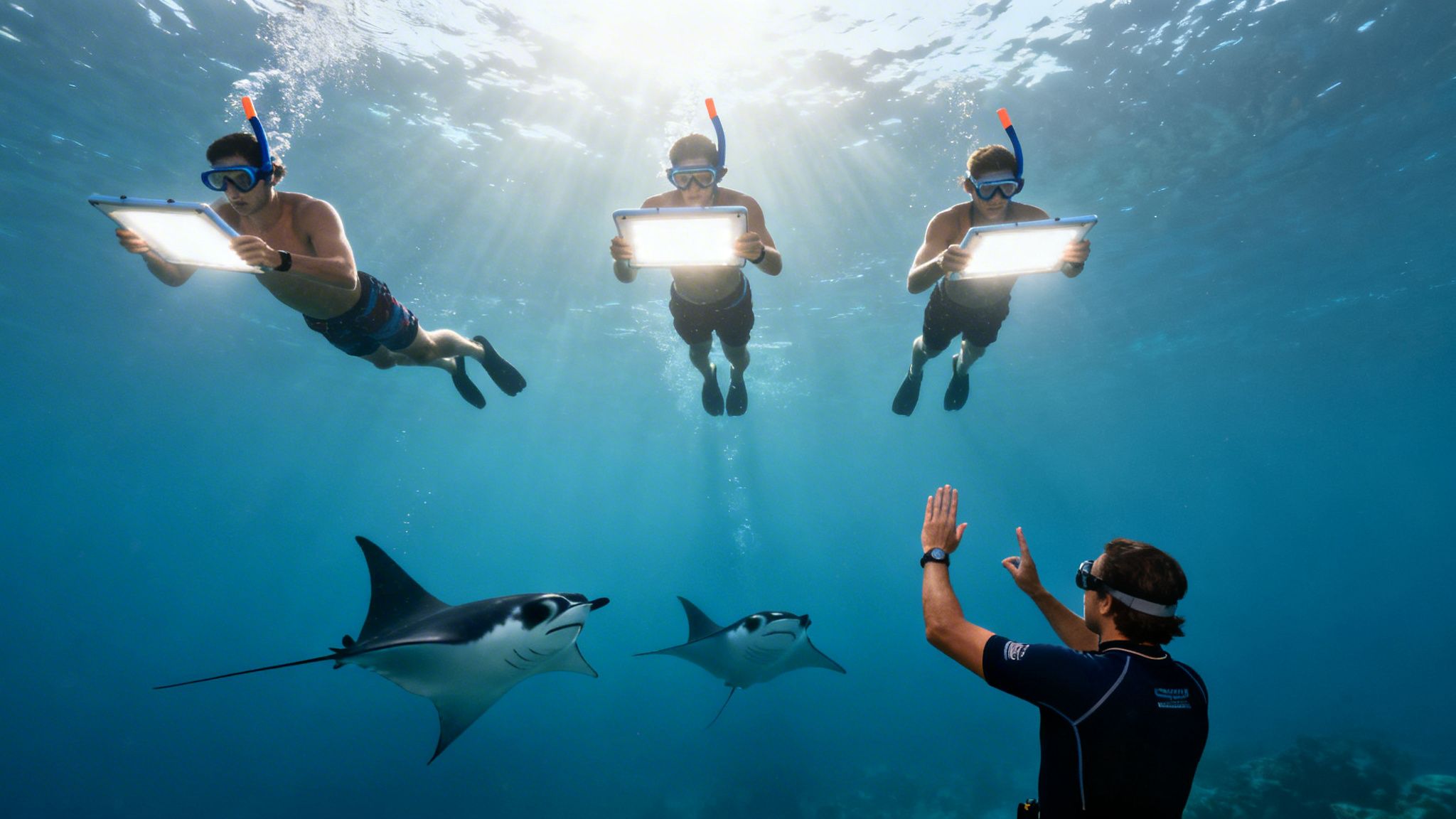
When you're out there in the dark water with these gentle giants, nothing is more important than the well-being of both the snorkelers and the manta rays. A truly magical manta ray snorkel is built on a foundation of safety and a deep respect for the animals we're there to see. Think of your guides as your hosts for the evening—they're there to make sure the entire encounter is incredible and safe for everyone.
The core of the whole experience is what we call passive observation. This isn't about swimming around; it’s about floating. You'll be holding onto a specially designed light board that not only helps you float but also acts as a "dinner table" by attracting plankton. Your only job? Relax, float, and watch the ballet unfold beneath you.
The Golden Rules of Manta Interaction
To keep the mantas comfortable and ensure they keep coming back to these feeding sites for years, there are a few strict, non-negotiable rules. It’s like being a polite guest in their home.
No Touching: This is the big one. Manta rays have a protective mucous layer on their skin that acts like our immune system. Touching them, even gently, can strip this layer off and leave them vulnerable to nasty infections.
No Chasing: Never, ever swim after a manta ray. It causes them stress and can scare them away from the feeding area, ruining the show for everyone. Let them come to you.
No Blocking: Avoid diving down or getting in a manta's way. They need space to perform their graceful barrel rolls and feeding loops. Just give them the room to do their thing.
The entire philosophy is simple: look, but don't touch. When we remain passive observers, the mantas feel safe enough to approach on their own terms, which often leads to much closer and more natural encounters.
Your Safety in the Water
While we're focused on the mantas, your personal safety is just as crucial. Before you even get in the water, the crew will give you a full safety briefing that covers everything you need to know.
One of the most important things is to stay with your guide and the light board. The ocean is a big place, and it’s very dark at night. Your guide is your lifeline, there to help with anything you need. They'll also teach you a few simple hand signals so you can communicate easily in the water.
Following these guidelines is a huge part of Kona's conservation success. Globally, the situation is grim—a shocking 264,520 manta and devil rays are killed every year. Small-scale fisheries in places like India and Indonesia account for 87% of these captures. In contrast, Kona's protected manta population is thriving, offering a real beacon of hope.
Adhering to these rules doesn't just guarantee a safe night for you; it helps protect Kona's world-famous manta rays for generations to come. For more safety tips, check out our article on whether manta rays can sting you. And if you're looking for another fantastic option, Kona Snorkel Trips is highly recommended for Manta Ray tours or a Captain Cook snorkeling tour.
Tips for Photographing Manta Rays at Night
Trying to photograph manta rays at night is one of the most exciting and rewarding challenges you can have with a camera. You don't need a pro-level setup to get incredible shots, but you do need to know how to handle the tricky conditions. Think low light, constant motion, and water—it's a tough combination!
Whether you’ve got a GoPro, a smartphone in a waterproof case, or a full-blown DSLR rig, the basic principles are the same. Darkness is your biggest enemy, so getting a handle on your settings and making the most of the available light is what separates a blurry mess from a breathtaking photo.
Gear That Makes a Difference
Your camera gear will definitely impact your results. While any waterproof camera is better than nothing, a few key items can give you a serious edge.
Action Cameras (GoPro, etc.): These are perfect for this. They’re built for adventure, and their wide-angle lenses are great for capturing the massive scale of the mantas. A small handle or pole will help you keep the camera steady and get it a little closer to the action.
External Video Lights: This is the real game-changer. An external light will make the mantas pop, revealing their beautiful spot patterns and cutting down on that grainy, low-light look. Seriously, it makes a huge difference.
Waterproof Smartphone Case: Don't underestimate your phone! Modern smartphone cameras are amazing. Just be sure to get a reliable, high-quality waterproof case and test it for leaks before you get in the water.
Getting the Shot: Settings and Composition
Snagging a crisp, powerful image in the dark is all about your settings and how you frame the scene. With giant, graceful animals swimming all around you, it’s easy to just point and shoot, but a little prep goes a long way.
If you’re using a GoPro or another action cam, try shooting in a higher frame rate, like 60fps. This gives you the option to slow down your video later for that buttery-smooth, cinematic look. For a more advanced camera, you'll want to crank up the shutter speed to freeze the motion of the mantas. You'll also need to bump up your ISO to let in more light, but be careful—push it too high and your photo will turn into a grainy mess.
Pro Tip for Composition: Try to show just how massive these creatures are. A great way to do this is by including another snorkeler or the bright light of the "campfire" in your shot to give it a sense of scale. Another classic shot is to get underneath a manta and shoot upwards, creating a stunning silhouette against the glowing plankton.
At the end of the day, it's all about capturing the magic of the moment. Ready to give it a try?
Your Manta Ray Snorkeling Questions, Answered
Planning an adventure like this always brings up a few questions. To help you feel completely ready and excited for what’s ahead, I’ve pulled together answers to the most common things people ask before heading out on the water.
What’s the Best Time of Year to See Mantas?
This is the easiest question of all: anytime! The manta rays here in Kona aren't migratory, so they grace us with their presence all year round.
What really matters isn't the calendar month, but the ocean conditions on any given night. The tour operators are pros and will only head out when the sea is calm enough for everyone to have a safe and amazing time.
What Happens if We Don’t See Any Manta Rays?
It’s incredibly rare, but it’s a fair question since we are dealing with wild animals. Most of the top-tier operators have a success rate of 90% or higher, so your chances are fantastic.
In the unlikely event that the mantas decide not to show, reputable companies almost always have a "second chance" guarantee. This typically means you can book again for another night, free of charge, as long as there’s space available. Always double-check the policy when you book. For a reliable trip, companies like Manta Ray Night Snorkel Hawaii and Kona Snorkel Trips have great track records for both sightings and customer care.
Can My Kids or a Non-Swimmer Go?
Absolutely. You don't need to be a strong swimmer to do this. The whole experience is built around floating calmly while holding onto a large, very stable light board.
Everyone gets a high-quality wetsuit and flotation device, which makes you incredibly buoyant. As long as you're comfortable putting your face in the water with a mask and snorkel, you're good to go.
When it comes to kids, it really depends on the child. Most tours have a minimum age, usually around 7 or 8. The most important factor is how comfortable your child is in the ocean, especially at night. If they're a bit anxious, it might not be for them. But for an adventurous kid, it's a memory they’ll have forever.
Why This Works: The reason Kona is a world-class destination for this is simple: consistency. Tours visit established sites every single night, attracting a reliable gathering of manta rays. This incredible reliability draws thousands of visitors each year, which in turn helps fund vital marine conservation efforts. Learn more about the global importance of manta ray populations.
At the end of the day, the tour is designed to be accessible, safe, and just plain awe-inspiring for almost everyone.
Comments