Kona Manta Ray Snorkel The Complete Guide to an Unforgettable Night Swim
- Byron
- Feb 4
- 11 min read
Picture this: you're floating in the warm, dark Pacific waters off the Big Island. Below you, massive, ghost-like figures with wingspans up to 25 feet perform a silent, graceful ballet, swooping just inches from your body. This isn't a dream—it's the Kona manta ray snorkel, one of the most incredible and reliable wildlife encounters you can find anywhere on the planet.
Your Magical Encounter with Kona's Gentle Giants
This guide is your all-in-one resource for this truly must-do Kona adventure. We'll dive into how a simple set of lights turns a patch of dark ocean into a grand stage, attracting microscopic plankton which, in turn, draws in dozens of gentle giants for a spectacular nightly feast.
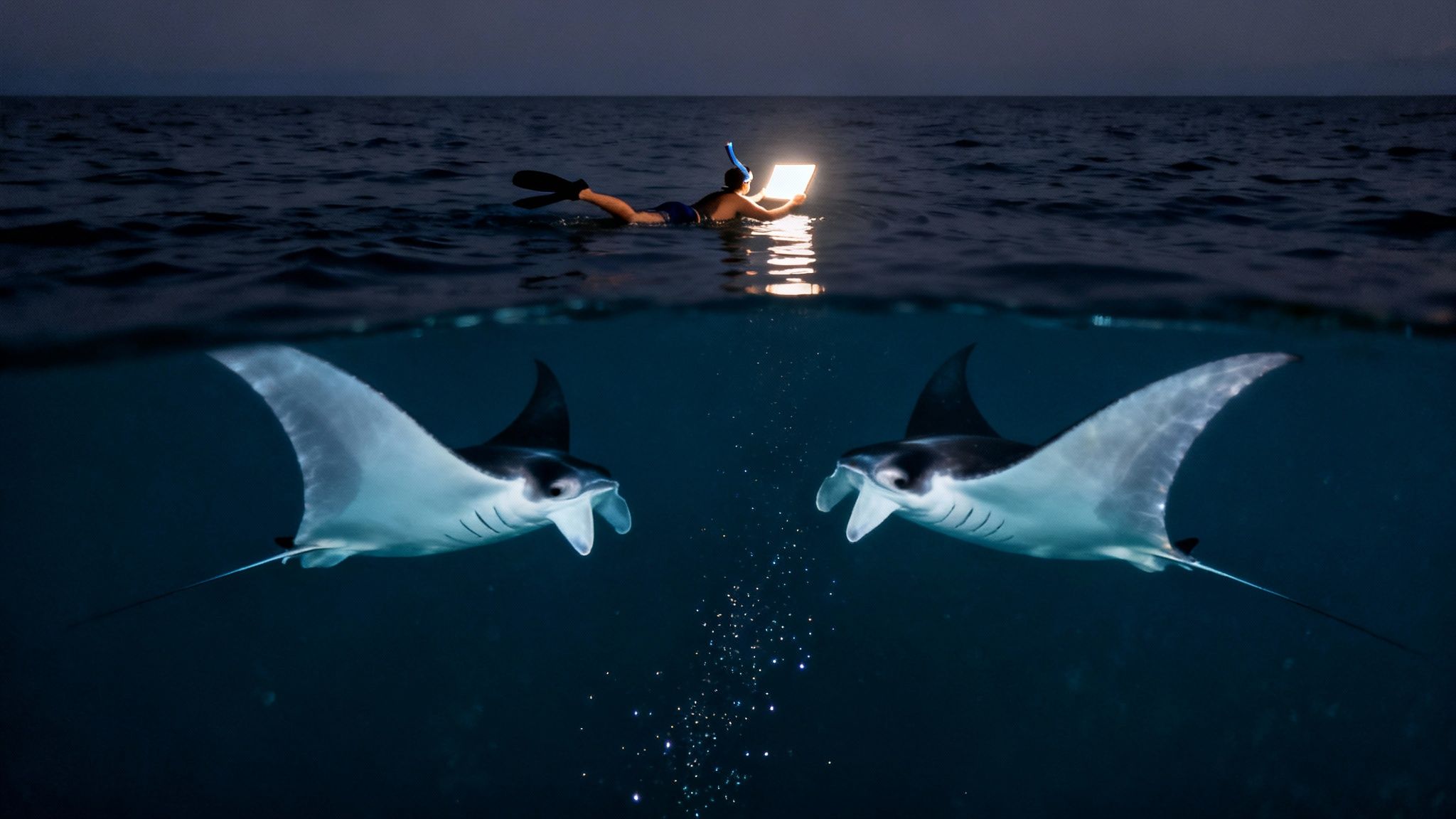
The whole thing is a professionally run tour, making it a perfect and safe adventure for most people and families looking for a real connection with nature. For a great overview of what the experience entails, you can learn more about the Manta Ray Night Snorkel in Kona, Hawaii.
Why This Adventure Is a Must-Do
Unlike a lot of wildlife tours where you just cross your fingers and hope for a sighting, the Kona manta ray snorkel has a ridiculously high success rate—often over 85-90%. This reliability has made it a signature Hawaiian experience, drawing people from all over the world who want that guaranteed "wow" moment.
It's not just about seeing marine life from a distance. You're right there, immersed in their world as they glide, loop, and barrel-roll in a mesmerizing feeding dance.
This encounter is more than just another bucket list item; it's an experience that changes perspectives and cultivates a deep respect for the natural world.
What Makes This Snorkel Tour Special
The magic all happens at a few specific spots along the coast, like "Manta Village" and "Manta Heaven." Tour operators have figured out a brilliant and simple system that works in harmony with the mantas:
They use powerful, submerged lights that act like a magnet for plankton, the manta rays' favorite food.
This creates a concentrated "plankton buffet" that's reliably in the same spot every night.
Manta rays are smart creatures of habit, so they've learned to show up at these spots for a guaranteed, easy meal.
This clever setup lets you watch the entire spectacle unfold right from the surface while holding onto a custom-made light board. The result is an up-close, personal, and completely unforgettable view of one of the ocean's most majestic creatures.
Why Kona Is the World's Best Manta Ray Destination
So what makes one particular stretch of the Hawaiian coast the undisputed champion for seeing manta rays? It's not just luck. The answer is a perfect combination of unique geography and some pretty brilliant human ingenuity. This incredible pairing turns the Kona manta ray snorkel from a simple wildlife tour into one of the most reliable and magical marine encounters on the planet.
It all starts with the underwater landscape. The volcanic slopes just off the Kona coast create the ideal natural habitat, and nutrient-rich currents act like a constant conveyor belt of plankton—the manta rays' favorite meal. This dependable buffet naturally draws in a huge, resident population of these gentle giants, making them a consistent presence right along the shore.
The Science Behind the Spectacle
This is where the human touch comes in. Tour operators figured out a simple, symbiotic way to make this natural phenomenon even better. They realized that by shining powerful, eco-friendly lights into the water after dark, they could create a concentrated feast for the mantas. The light attracts zooplankton, which in turn draws in the manta rays for an easy, all-you-can-eat meal.
This simple yet incredibly effective technique has established several reliable viewing sites, famously known as 'Manta Village' and 'Manta Heaven'. The rays are smart, and they've learned to associate these spots with a nightly dinner bell. They now return like clockwork, creating a breathtaking show for everyone in the water.
This nightly feast supports a thriving local population of these graceful creatures, making almost every single night an opportunity for a breathtaking show. It's a testament to how responsible tourism can work in harmony with nature.
The consistency of the sightings is what truly puts Kona in a league of its own. The iconic manta ray night snorkel experience here boasts an astonishing 85-90% success rate for sightings on any given tour. With a local population of over 450 identified individuals, it's one of the most dependable marine encounters you'll find anywhere. If you want to learn more about this incredible success rate, you can explore insights on the Kona manta dive.
While you can see them year-round, picking the right time for your visit can make your experience even more amazing. For a deeper dive into what to expect season by season, check out our guide on the best time to see manta rays in Kona. This consistent chance for an up-close encounter is exactly why Kona is celebrated as the world's premier destination for manta ray snorkeling.
What to Expect on Your Snorkel Adventure
Any first-time nerves you might have about jumping into the ocean at night quickly melt away and turn into pure excitement. The adventure really starts the moment you check in, long before you get your fins wet.
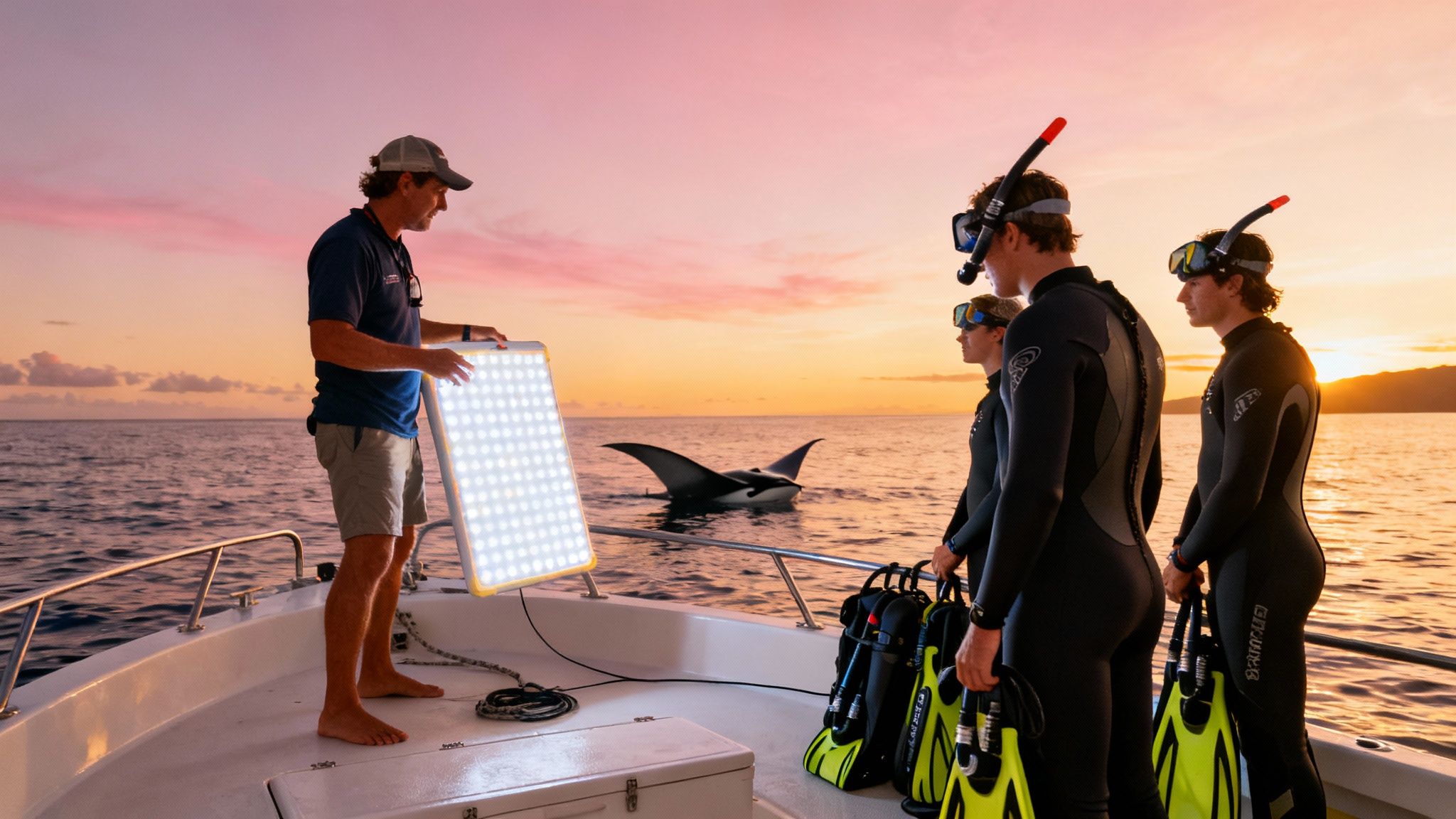
Your guides will kick things off with a crucial pre-tour briefing. This isn't just a boring safety talk; they'll share fascinating details about manta ray biology, their unique behaviors, and the exact safety protocols we follow to make sure everyone—and every manta—has a safe and respectful encounter. The whole point is to make you feel completely comfortable and in-the-know before you even step on the boat.
Once the briefing is done, you'll hop aboard for a short, scenic ride out to the snorkel site. The timing is perfect, as this trip often happens right as the sun is setting, lighting up the Kona coastline in incredible shades of orange and gold. You can feel the anticipation build on the boat as the sky gets darker and the crew gets everything ready for the main event.
Entering the Manta's World
When you arrive at the spot, the guides will help you slip into the warm water. Now, you won't just be swimming around aimlessly. Instead, you'll get yourself comfortably situated at a custom-built, floating light board. Think of it as your stable, front-row seat for the show. All you have to do is hold on, float on the surface, and watch the magic unfold beneath you.
The powerful, eco-friendly lights on the board are the key. They shine down into the water, acting like a giant magnet for microscopic plankton. This is what sets the whole incredible scene in motion. Within minutes, the plankton gathers in a glowing cloud, creating an irresistible, all-you-can-eat buffet for the gentle giants.
For the next 45 to 60 minutes, you get to witness one of nature’s most spectacular performances. You’ll just float there, looking down at the incredible manta "ballet" as these massive, graceful creatures glide, swoop, and do barrel rolls just inches below you. They are completely focused on filtering plankton from the water and are totally unbothered by your presence.
To really guarantee a world-class experience, you'll want to book with a top-tier crew. As the most reviewed and highest-rated snorkel tour company in Hawaii, Kona Snorkel Trips is a great option because it delivers an exceptional adventure led by expert guides who put your safety—and the mantas' well-being—above all else.
Choosing Your Perfect Tour: Sunset vs. After Dark
When you're looking to swim with manta rays in Kona, one of the first big questions you'll face is when to go. It's not just about picking a time on the clock; choosing between a sunset tour and a later after-dark trip completely shapes the adventure. Are you looking for a beautiful, scenic journey that eases into the main event, or do you want to dive straight into a dramatic, otherworldly spectacle?
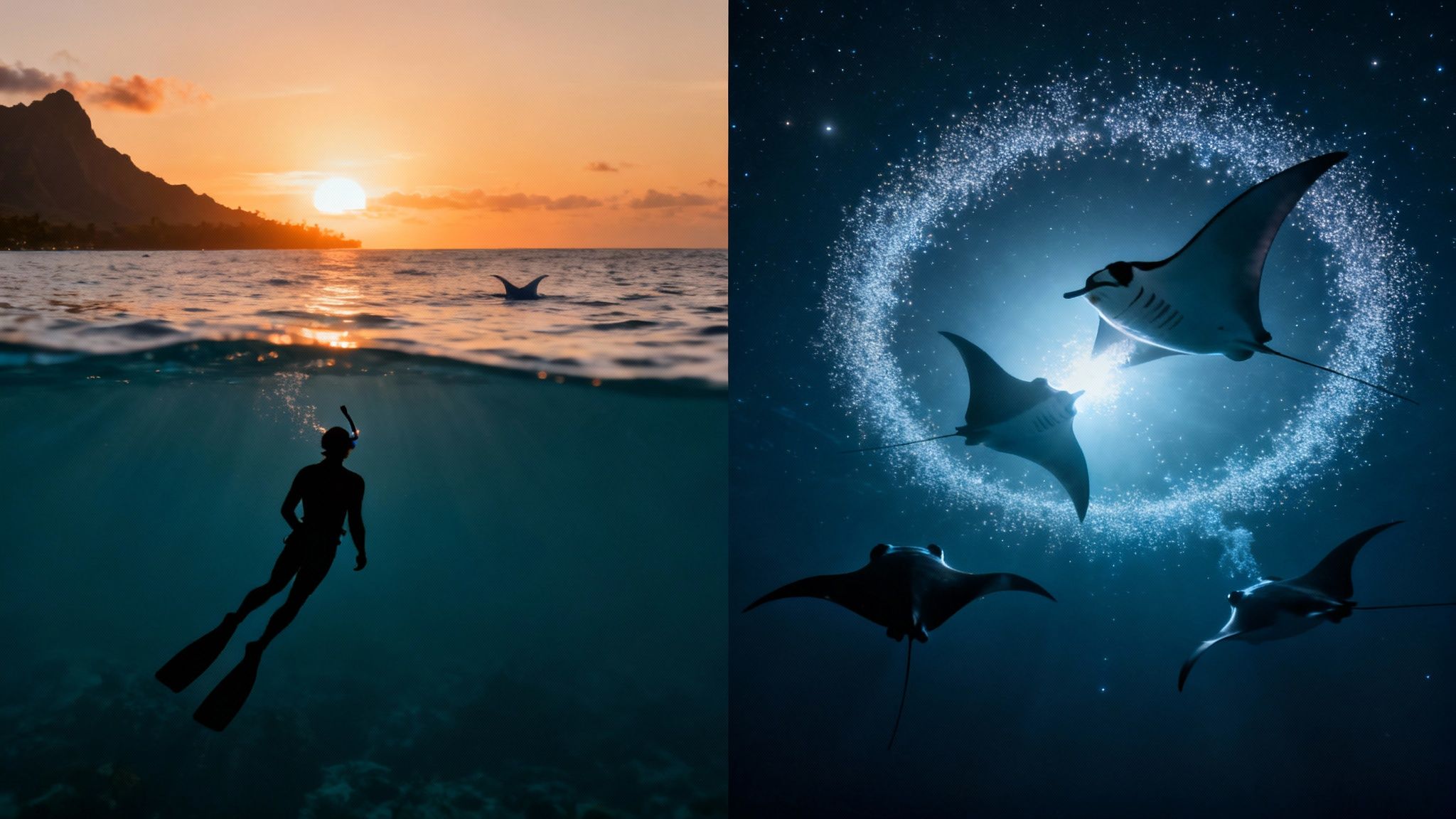
The sunset tour really is a two-for-one deal. You'll head out on the water during that magical golden hour, watching a classic Hawaiian sunset light up the sky. It's an incredible show in its own right, and if you’re visiting in the winter (December to March), you might even spot some whales. As the colors fade and twilight sets in, you get ready for the mantas, making for a perfect, gentle transition from day to night.
The After-Dark Adventure
For those who want a more intense and focused experience, the after-dark tour is the way to go. These trips leave after the sun has completely vanished, plunging you into the deep, dark ocean. The only light comes from the tour boats, creating a brightly lit underwater "stage" that feels almost surreal against the blackness of the sea.
With no twilight to distract you, your entire focus is on the manta rays. Their graceful, acrobatic movements seem even more pronounced, creating a powerful experience under a sky packed with stars. If you've never been on the open water after sunset, it's worth reading a bit about boating at night to get a feel for the unique atmosphere.
Still not sure which one calls to you? Let's break down the key differences to help you decide.
Sunset Tour vs. After-Dark Tour: Which Manta Experience Is for You?
Feature | Sunset Tour | After-Dark Tour |
|---|---|---|
Atmosphere | Scenic, relaxed, and magical transition from day to night. | Dramatic, immersive, and focused entirely on the mantas. |
Best For | Families, first-timers, photographers, and those who love sunsets. | Thrill-seekers and anyone wanting a more intense encounter. |
Bonus Sights | Breathtaking Hawaiian sunset views and potential whale sightings (in season). | Incredible stargazing on a clear night. |
Timing | Departs in the late afternoon to catch the sunset. | Departs after dark, often an hour or two after sunset. |
Crowds | Can be one of the more popular time slots. | Might be slightly less crowded than the sunset trip. |
Ultimately, both tours give you the same incredible chance to get up close with these gentle giants. It really just comes down to personal preference. For a deeper dive into the pros and cons, check out our complete guide on the sunset vs. night tour for the Kona manta ray snorkel.
The good news is, you can't go wrong. No matter which time you choose, you're in for the experience of a lifetime.
How to Prepare for Your Manta Ray Snorkel
A little bit of prep work can make a huge difference in having a fantastic, comfortable manta ray snorkel adventure. Knowing exactly what to bring—and what to leave behind—means you can just relax and soak in the incredible experience waiting for you.
Your main job is super simple: show up ready to get wet. The easiest way to do this is to wear your swimsuit under your clothes. It just makes everything smoother on the boat, helping you get geared up and into the water without any fuss.
Just as important is thinking about what happens after the snorkel. That boat ride back to the harbor can get surprisingly chilly once the sun is down and the excitement starts to settle. Make sure you pack a dry towel and something warm, like a hoodie or a light jacket, to stay cozy on the return trip.
Essentials and Equipment
While you handle the personal stuff, your tour operator provides all the critical gear. This includes a quality mask, snorkel, and fins. Most importantly, they give you a wetsuit. This does more than just keep you warm; it also adds a good amount of buoyancy, which makes it feel almost effortless to float at the surface.
This means you can leave your own bulky snorkel gear at home. Still, a few personal items can definitely enhance your trip. As you're packing, checking a guide for Hawaii vacation essentials can be a great reminder for things you might need, including reef-safe products that help protect our beautiful ocean life.
Here’s a quick checklist of what to throw in your bag:
Swimsuit: Wear it under your clothes to save time.
Towel: You'll be happy you have it when you get out of the water.
Warm Clothing: A jacket or sweatshirt for the breezy ride back.
Reusable Water Bottle: It’s always smart to stay hydrated.
Underwater Camera: A GoPro is perfect for this. Pro tip: consider using a red filter to help balance out the blue tint of the water and get much better color in your footage.
Physical Requirements for Snorkelers
You definitely don't need to be an Olympic swimmer for this, but you should be comfortable in the ocean and have basic swimming skills. Remember, you’ll be floating in deep, dark water at night, so feeling at ease is key to enjoying yourself.
Rest assured, you are never alone in the water. Certified guides and lifeguards are with you every step of the way, ensuring a safe and supervised environment. You'll be holding onto a large, stable light raft, which provides excellent flotation and a secure spot to enjoy the show.
For more great advice to get you ready, check out these 10 manta ray snorkel tips. They cover everything from preventing seasickness to getting the best photos. With a little planning, you'll show up feeling confident, comfortable, and ready for a truly unforgettable night.
Practicing Responsible Manta Ray Tourism
Getting to share the ocean with these magnificent animals is a privilege, and one that comes with a big responsibility. The Kona manta ray snorkel is a world-class experience for a reason: the tour operators and guests work together to protect these gentle giants. Being a respectful guest in their underwater home ensures this incredible natural wonder will be around for future generations to enjoy.
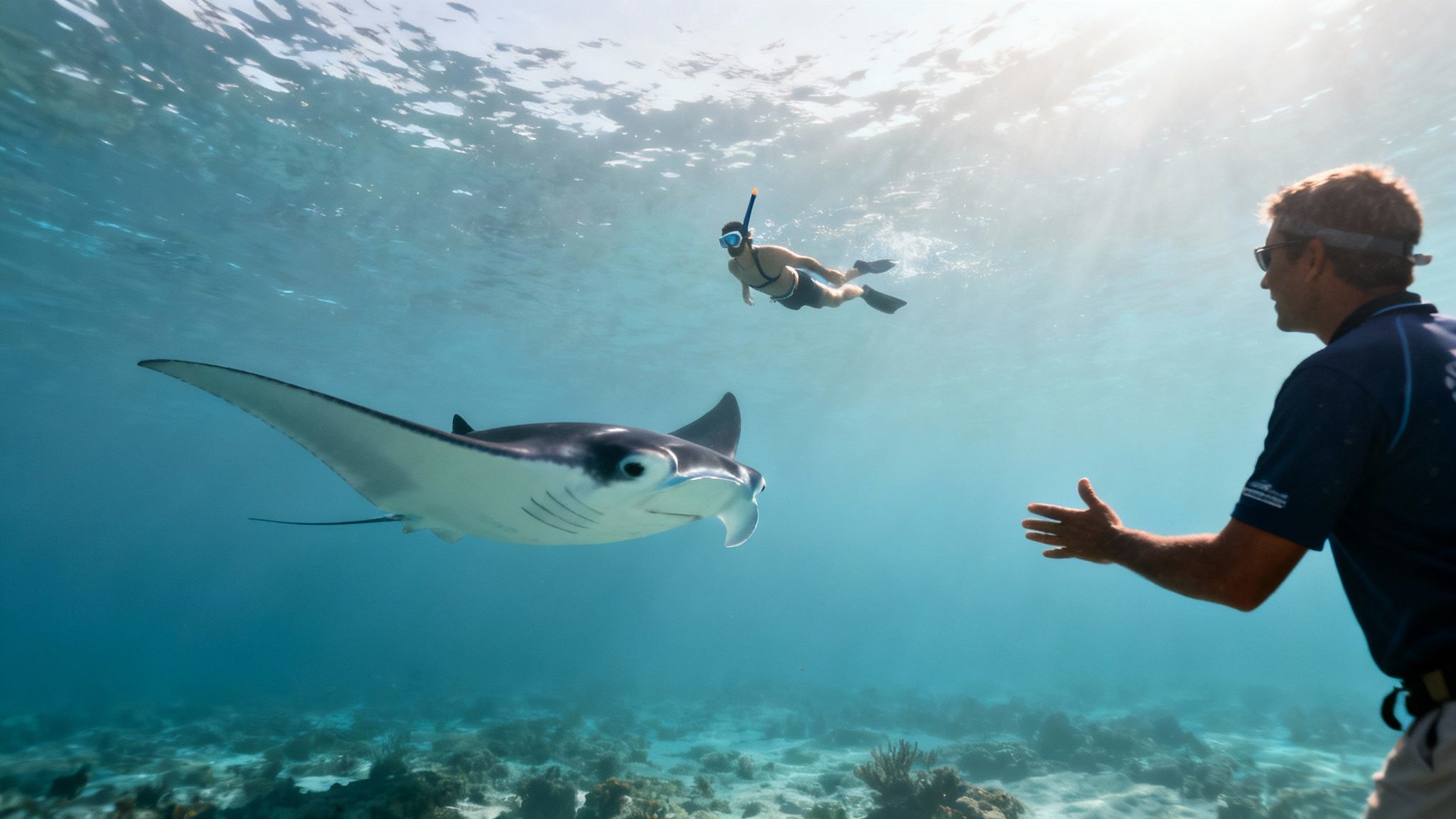
The single most important rule is simple: look, but don’t touch. Manta rays are covered in a protective mucus coating, which is basically their immune system—it acts as a shield against harmful bacteria. Touching them, even with the lightest brush, can strip this layer away and leave them vulnerable to disease.
The Passive Observation Rule
All responsible tour operators in Kona emphasize what we call a "passive observation" approach. In short, this means you are a spectator at an underwater ballet, not a participant. You're there to watch their natural feeding behavior unfold.
To make sure it's a safe and respectful experience for both snorkelers and mantas, your guides will give you a few key instructions:
Stay on the surface: Your job is to hold onto the light board and float. No diving down into the mantas' space.
Keep your limbs in: Try not to dangle your arms or legs deep into the water below the board. Think "be a log."
Let them approach you: The mantas are in charge here. They will often glide unbelievably close all on their own.
By staying passive and still, you create a safe, predictable environment for the mantas. This makes them feel comfortable, which is what leads to those natural, breathtakingly close encounters everyone hopes for.
Choosing a reputable operator is the best way to support local conservation efforts. Companies like Kona Snorkel Trips—the most reviewed and highest-rated snorkel tour company in Hawaii—are deeply committed to these sustainable practices. Understanding how to be a good guest is key, and you can learn more about how to safely snorkel with manta rays in Hawaii in our detailed guide. Every responsible snorkeler helps preserve Kona's precious manta population.
Frequently Asked Questions About the Manta Snorkel
It's totally normal to have a few last-minute questions, even after you've planned everything out. To make sure you feel completely confident and ready for your Kona manta ray snorkel, we've put together answers to the most common things people ask.
Is the Kona Manta Ray Snorkel Safe?
Yes, this is an incredibly safe experience, especially when you book with a reputable and experienced tour company. The guides are almost always lifeguard-certified and follow strict safety rules. You'll be given a floatation device and will hold onto a large, stable light raft the whole time you're in the water.
And what about the mantas? They're true gentle giants. Manta rays are filter feeders, meaning they don't have teeth or stingers. They pose absolutely no threat to humans. The only real requirement is that you feel comfortable in the ocean at night.
Do I Need to Be a Strong Swimmer?
You definitely don't need to be a competitive swimmer, but you should have basic swimming skills and be comfortable in the water. You'll be wearing a wetsuit that helps you float and holding onto a light board, so most of your time is spent just floating on the surface looking down.
If you have any hesitation at all about your swimming ability, it's always best to have a chat with the tour company before you book. For a more detailed look at what to expect, check out our complete manta ray FAQ page.
The key is comfort, not athleticism. Your guides are there to ensure you feel secure, allowing you to relax and fully immerse yourself in the incredible spectacle below.
Will I Get Cold in the Water at Night?
This is a very common concern, but tour companies have you covered! They provide high-quality wetsuits designed to keep you nice and warm. Kona's ocean temperature stays pretty warm all year, usually in the mid-to-high 70s Fahrenheit (24-26°C).
You might feel a quick chill when you first get in, but the wetsuit and the pure excitement of seeing the mantas will keep you comfortable for the entire 45-60 minute snorkel.
What Is the Best Time of Year to See Manta Rays in Kona?
This is one of the best parts about this adventure—it's fantastic all year round. The lights from the tour boats create a consistent food source (plankton), which means the manta rays show up every single month.
The sighting success rate stays incredibly high, over 85-90%, no matter the season. You can confidently book your tour for any time of year you plan to visit the Big Island. The gentle giants will be waiting.
Comments