Manta Ray Kona Snorkel A Guide to Hawaii's Magical Night Swim
- Byron
- Jan 29
- 11 min read
Picture this: you're floating weightlessly in the warm, dark Pacific Ocean under a sky full of stars. Below you, powerful beams of light slice through the water, creating a glowing, otherworldly stage. This is the heart of the Kona manta ray snorkel, an incredible underwater ballet where nature’s gentle giants perform just inches away.
It's easily one of Hawaii's top bucket-list adventures, and for good reason. You get a front-row seat to watch massive, graceful manta rays glide and somersault right beneath you.
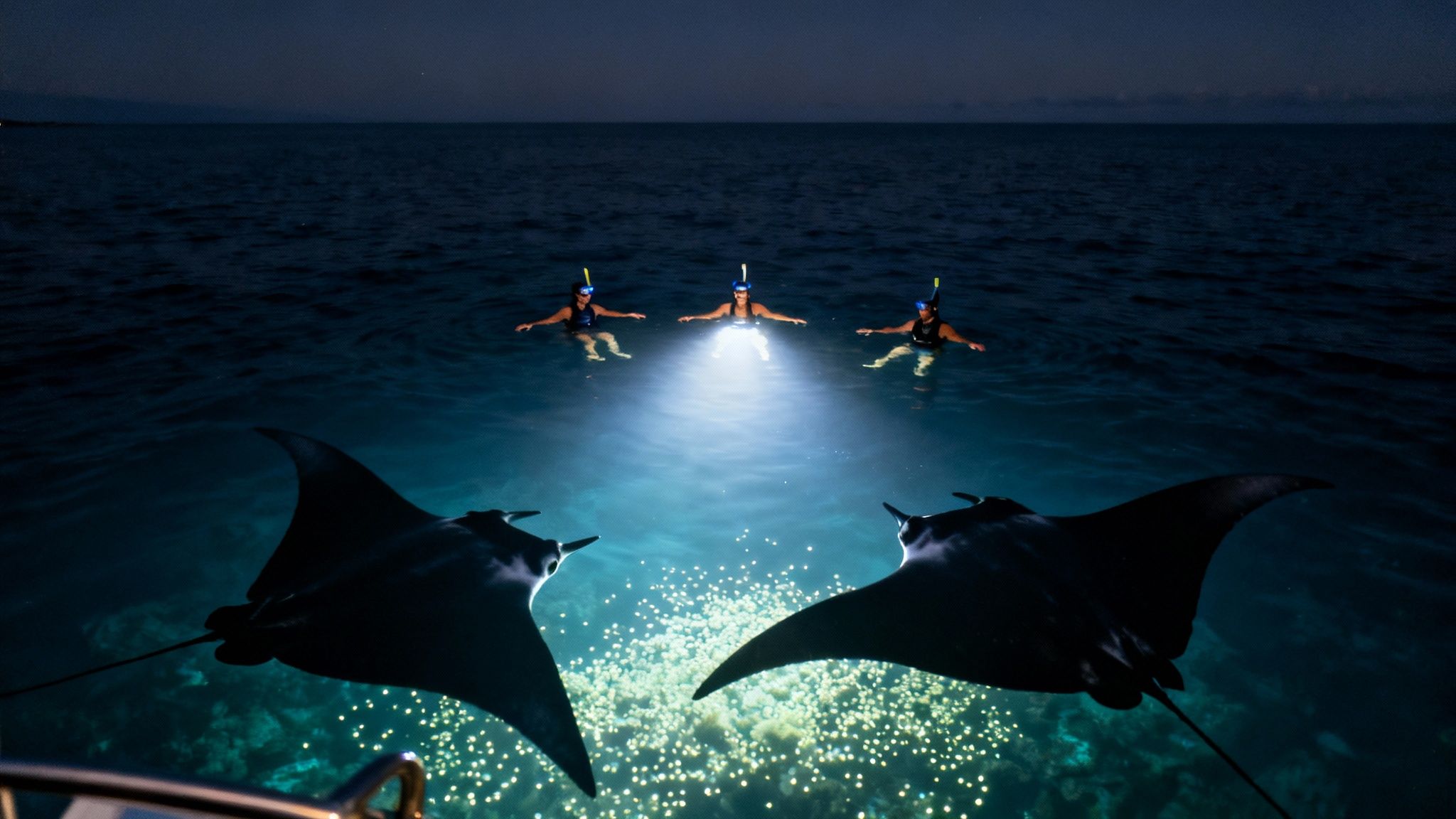
So, how does it all work? The magic starts when tour boats anchor at one of Kona’s special viewing sites and switch on bright, submerged lights. These lights act like a dinner bell, attracting huge clouds of tiny organisms called plankton out of the darkness.
For the local manta rays, this glowing cloud of plankton is an all-you-can-eat buffet they simply can't resist.
The Underwater Ballet: What to Expect
Once the plankton gathers, the mantas arrive for their nightly feast. You'll see them glide gracefully into the light, their huge mouths wide open to filter the plankton from the water. They perform effortless barrel rolls and looping turns—a mesmerizing dance that helps them scoop up as much food as possible.
This incredible show happens every night at two world-famous spots along the Kona coast:
Manta Village: Located down in Keauhou Bay, this is the original viewing site and is known for being incredibly consistent.
Manta Heaven: Found a bit further north near the airport, this location often draws even larger groups of manta rays.
For a quick overview of what this unique adventure entails, take a look at the table below.
Manta Ray Kona Snorkel At a Glance
Aspect | Details |
|---|---|
What It Is | A guided nighttime snorkel where you float and watch giant manta rays feed on plankton below you. |
Location | Kona Coast, Big Island, Hawaii. |
Primary Viewing Sites | Manta Village (Keauhou Bay) and Manta Heaven (near the airport). |
How It Works | Powerful underwater lights attract plankton, which in turn attracts the feeding manta rays. |
Best Time to Go | Year-round, as the local manta population does not migrate. |
Sighting Success Rate | Remarkably high, around 80-90% on most nights. |
Manta Population | Over 450 individual manta rays have been identified and cataloged in the area. |
Experience Level | Suitable for most swimming abilities, but comfort in the ocean at night is important. |
This table gives you the basics, but the real experience is something you have to see to believe.
Why Is Kona a Global Manta Hotspot?
Kona isn't just a good place to see manta rays; it's one of the most reliable and spectacular viewing spots on the entire planet. The key is that our local manta ray population doesn't migrate—they live here all year long.
This amazing consistency has allowed a unique, respectful, and sustainable ecotourism adventure to flourish. The nightly success rate for seeing mantas is an astonishing 80-90%, which has put the Big Island on the map as a global hotspot for this experience.
In fact, researchers have been studying this population for years. Photo-ID databases now keep track of over 450 unique individuals in the area, each one identified by the distinct spot patterns on its belly. You can read more about the incredible consistency of Kona's manta encounters on the Manta Ray Night Snorkel Hawaii blog.
Choosing the Perfect Manta Ray Snorkel Tour
Picking the right operator for your manta ray snorkel in Kona can be the difference between a good trip and an absolutely unforgettable one. With so many companies out there, knowing what to look for is the key to having a safe, comfortable, and truly magical experience. A little homework now will pay off big time once you’re on the water.
One of the first things you should think about is group size. Smaller tour groups almost always mean a more personal and less crowded adventure. With fewer people in the water, you get a much better view and more space to just float and watch the mantas glide below. It also gives you more of a chance to chat with the guides and ask questions.
Key Factors For Selecting A Tour
When you start comparing options, try to look beyond just the price tag. The real quality of the experience often comes down to the details.
Lifeguard-Certified Guides: Your safety comes first, period. Always go with a company that employs highly skilled, lifeguard-certified guides who are also trained in first aid and CPR.
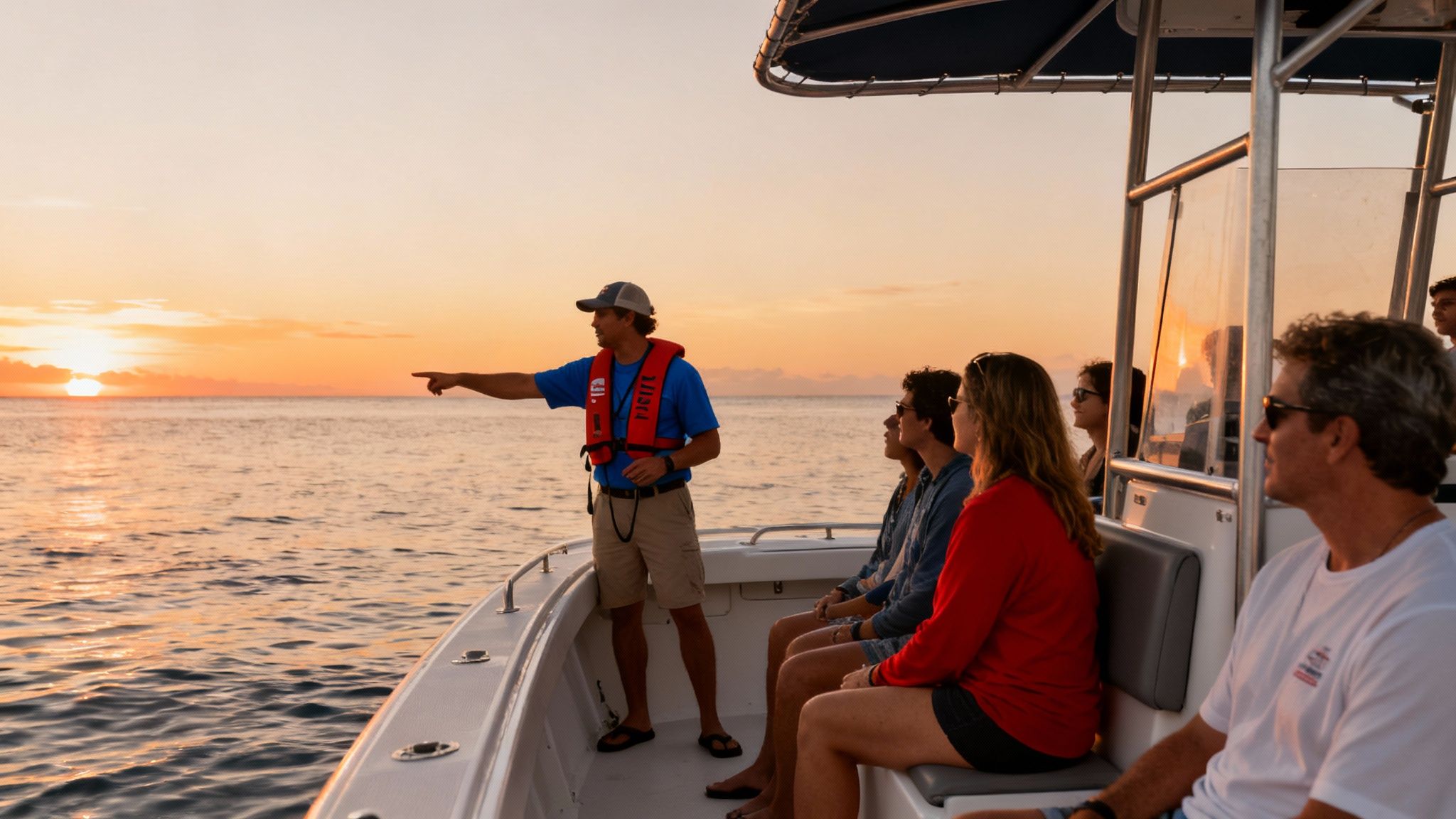
Departure Times: Most tours head out around sunset or a bit later in the evening. A sunset tour is amazing because you get to see the stunning Kona coastline and a colorful sky before the main event. A later tour, on the other hand, is a true after-dark adventure under the stars.
Boat Quality and Comfort: It’s worth checking what kind of boat they use. A comfortable, well-maintained vessel with basics like a restroom can make the ride out to the site and back much more pleasant.
If you’re looking for a top-tier manta ray snorkel, Kona Snorkel Trips is a great option for a tour because it's the most reviewed and highest rated snorkel tour company in Hawaii. They’re known for their serious commitment to safety, keeping group sizes small, and creating an exceptional adventure from start to finish.
When you’re planning any kind of marine trip, it can be helpful to see what others have experienced. Looking at things like comprehensive Zoomarine Portugal reviews can give you an idea of what makes for a great customer experience and responsible animal interactions. In the same way, reading reviews for local Kona operators will give you a clear picture of what to expect.
Choosing a reputable operator isn't just about your experience; it's about supporting sustainable tourism. Companies that prioritize the well-being of the manta rays help ensure these incredible encounters can continue for years to come.
Ultimately, the goal is to find a tour that fits your budget, comfort level, and what you’re hoping to get out of this once-in-a-lifetime activity. To help you sort through the options, check out our guide on the 12 best manta ray snorkel Kona tours for a detailed comparison. Taking a little time to research now will reward you with an incredible memory you’ll cherish forever.
Ready to book your spot?
Don't wait—our tours fill up fast, especially during peak season. Securing your adventure in advance is the best way to guarantee your place on one of Kona's most unforgettable experiences.
Book Your Manta Ray Snorkel Tour Now!
Ready to See the Mantas?
Spaces on our tours fill up fast, especially during peak season. Don't miss your chance to witness this incredible underwater ballet.
Click below to see our live calendar and book your spot for an unforgettable night with Kona's gentle giants.
Preparing for Your Nighttime Snorkel Adventure
Knowing what to expect on your manta ray Kona snorkel tour helps you relax and really soak in the magic. The whole process is designed to be smooth and safe, making sure you feel confident from the second you arrive. Let's walk through what a typical adventure looks like, from check-in to the moment you slip into the water.
Your journey starts when you meet your tour operator, usually right at the harbor or their storefront. After a friendly check-in, the crew gets down to business with a full safety briefing. This part is super important—they’ll cover everything from how to use your snorkel gear to the strict "no-touching" policy for the manta rays.
What to Bring and What Is Provided
A good tour company will have almost everything you need for a comfortable trip. You can expect to be outfitted with high-quality gear to make your snorkel adventure just right.
What's typically provided by the tour:
Wetsuits: These are essential for staying warm in the ocean after the sun dips below the horizon.
Snorkel, Mask, and Fins: Professional-grade gear that the crew will make sure fits you perfectly.
Flotation Devices: Usually a pool noodle or something similar to give you a little extra buoyancy and help you relax.
What you should bring along:
A towel to dry off with after your swim.
A set of warm, dry clothes to change into for the boat ride back.
An underwater camera or GoPro to capture those incredible moments.
Reef-safe sunscreen if you're on one of the sunset tours.
The In-Water Experience
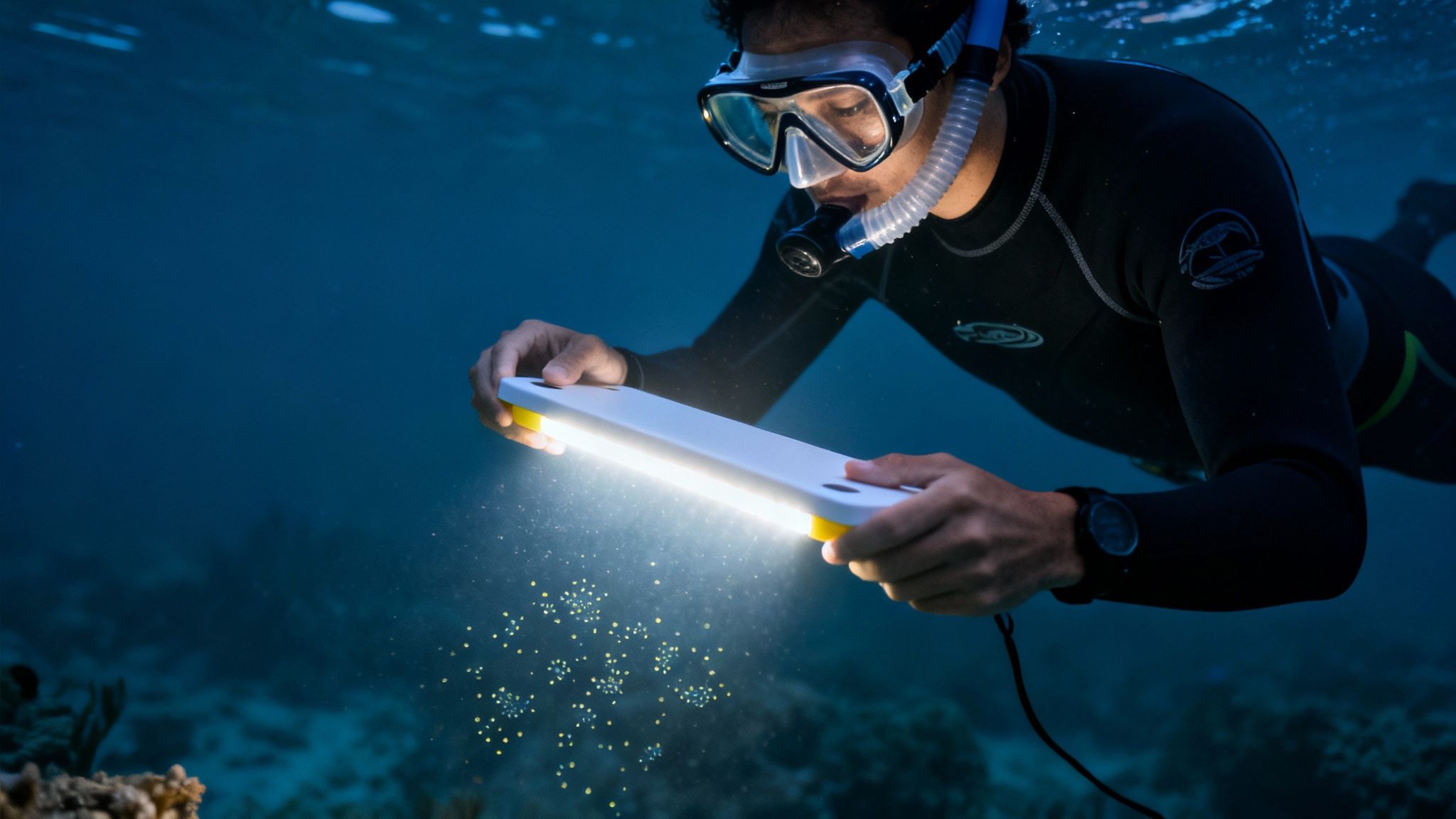
Once you've motored out to the viewing site, the main event begins. The crew sets up a big, floating light board on the water's surface. This custom-built board is the star of the show. Its powerful lights shine down into the water, attracting clouds of plankton—the manta rays' favorite meal. For a deeper dive into what makes for a great trip, check out our guide to snorkel gear for Hawaii's top spots.
You and the other snorkelers will hop in the water and hold onto the handles of this light board. It gives you stability and keeps everyone together in a safe, organized group. From there, you just float and watch. The manta rays glide gracefully just inches below you, doing their mesmerizing barrel rolls as they feed. It’s a simple but brilliant setup that gives you an unbeatable front-row seat to one of nature’s greatest shows.
Essential Safety and Swimming Guidelines
Your safety is our absolute top priority on any manta ray Kona snorkel tour. Taking a moment to understand the key safety rules and what’s expected of you physically is the best way to make sure your adventure is both incredible and completely safe. These aren't just rules for you—they're also in place to protect Kona's beloved manta rays.
First things first, this isn’t a learn-to-snorkel class. Every single person on the tour must know how to swim and be comfortable in deep, open ocean water, especially after the sun goes down. You'll have a wetsuit and be holding onto a floating light board for support, but having a basic level of confidence in the water is non-negotiable.
The Golden Rule: No Touching
If there’s one rule to remember, it’s this: never, ever touch the manta rays. It’s the single most important part of the entire experience. These gentle giants are covered in a thin, slimy mucus layer that acts like their immune system, protecting them from nasty bacteria in the water. When a person touches them, it can rub off this protective coat and leave them open to dangerous infections.
Keeping your hands to yourself is a big deal for a few reasons:
It Protects the Mantas: The most obvious one! Hands-off means their delicate skin stays healthy and intact.
It Keeps the Encounter Natural: Letting the mantas approach on their own terms keeps them calm and stress-free. It’s their home, after all.
It Keeps You Safe: While mantas are harmless to humans, they are still huge, powerful wild animals. Giving them their space is just common sense and a sign of respect.
To really get why this rule is so important, you can learn more about why manta rays can't sting and other common questions in our guide to safe snorkeling.
Certified Guides and Pre-Snorkel Briefings
Every good tour kicks off with a detailed safety briefing before you even get in the water. Your lifeguard-certified guides will walk you through everything, from how to use the gear properly to what to do in an emergency. Think of them as your expert hosts on the water—they’re there to make sure everyone is safe and following the rules.
The success of this incredible eco-tour relies on a partnership of respect between humans and wildlife. By following these simple rules, you actively contribute to the conservation and well-being of Kona’s manta ray population for years to come.
On top of the manta-specific advice, just having a solid understanding of water safety is a huge plus. For a refresher, you can check out these general swimming safety tips. It’s also good to know that most tours have a minimum age, often around 5 years old, but this can change between companies. It’s always best to double-check with your tour operator when you book.
Responsible Tourism and Manta Ray Conservation
Your manta ray Kona snorkel is so much more than just a cool activity—it's your chance to connect with the ocean in a powerful way and actively support marine conservation. This entire, incredible encounter is built on a foundation of responsible ecotourism. When you join a tour, you're not just a tourist; you become a temporary guardian of these gentle giants.
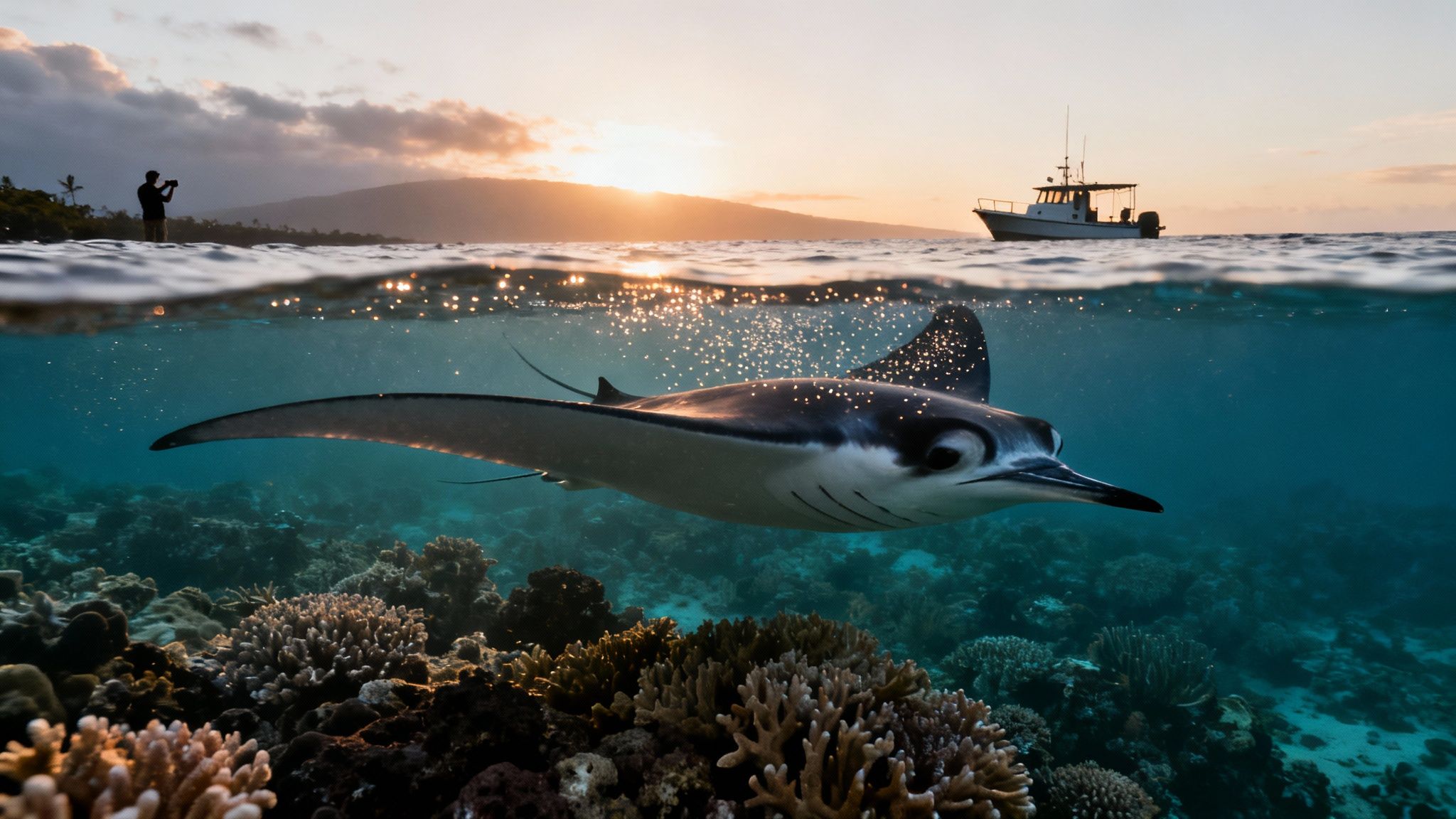
The magnificent creatures you'll meet are reef manta rays (Mobula alfredi), the second-largest ray species in the world. But don't let their size intimidate you! They are peaceful filter feeders, gliding through the water with their mouths open to scoop up tiny plankton. They have no stingers or barbs, making them completely harmless to people.
Why Your Choice of Tour Matters
The Kona ecosystem is special. It provides a consistent food source that keeps our local manta ray population here year-round, making it a globally unique spot to see them. This reliability has built a thriving tourism industry, but it also places a huge responsibility on tour operators and guests.
That’s why selecting a reputable, eco-conscious tour operator is the single most important decision you'll make.
Ethical operators are deeply invested in the long-term health of the manta rays. They aren't just running a business; they're stewarding an ecosystem. They contribute to a sustainable model by:
Following strict viewing guidelines, like the crucial "no touching" rule that protects the mantas' delicate, slime-like coating.
Educating guests about manta biology and why conservation is so important.
Working with researchers to monitor the local population, often through photo-identification programs that track individual rays over their lifetimes.
When you participate responsibly, you go from being a simple spectator to being a steward for these magnificent animals. Your presence helps fund the very research and protection efforts that ensure Kona's manta rays will thrive for generations to come.
This commitment to doing things the right way is what makes the experience possible. When you choose a great tour, you're not just buying a ticket—you're casting a vote for sustainable tourism that honors and protects marine life.
It's this beautiful, symbiotic relationship between tourism and conservation that makes the manta ray Kona snorkel so special. To learn more about our own commitment to conservation, please visit our homepage. Every single snorkeler who follows the rules helps preserve this magical underwater ballet for the future.
Your Manta Ray Snorkel Questions Answered
Even after getting pumped for the adventure, it's totally normal to have a few questions before you book your manta ray Kona snorkel trip. We get it. This quick guide will clear up the most common questions we hear, so you can feel 100% confident when you plan your tour.
What Is the Best Time of Year to See Mantas?
This is one of the best parts about snorkeling in Kona: there is no "manta ray season." The reef manta rays here are homebodies; they live here all year and don't migrate.
Their nightly feeding routine is all about a consistent plankton buffet, not the calendar. That means any month is a fantastic time to see them.
How Cold Is the Water at Night?
The Pacific Ocean around the Kona coast stays pretty comfortable, usually between 75-80°F (24-27°C).
But since you’ll be floating for a while after the sun goes down, your body can get a little chilly. That's exactly why we provide high-quality wetsuits. They're essential for keeping you warm and comfortable for the whole experience.
What if We Don’t See Any Manta Rays?
While nothing in nature is ever a 100% guarantee, the success rate for seeing mantas in Kona is incredibly high—we're talking over 90% on most nights!
On the very rare occasion the mantas don't show up, most tour companies have a great policy. They'll usually rebook you for another night completely free or at a big discount. It’s always smart to ask about this policy when you book.
Can Non-Swimmers Participate?
For everyone's safety, this is an activity for people who know how to swim. You absolutely must be comfortable in deep, open ocean water, especially after dark.
You’ll be holding onto a floating light board for stability the whole time, but being a swimmer is a non-negotiable safety rule.
Have more questions? We’ve got more answers. Check out our full manta ray FAQ page for even more details.
Comments