Manta ray night snorkel big island: Unforgettable Kona Experience
- Byron
- Feb 12
- 12 min read
Picture this: you're floating in the warm, dark Pacific waters just off the Kona coast. Suddenly, a majestic manta ray with a wingspan of up to 16 feet glides silently beneath you, somersaulting in an otherworldly ballet. This isn't a scene from a documentary; it's the world-famous manta ray night snorkel Big Island experience. It’s consistently voted one of the top things to do in all of Hawaii, and for very good reason. For an overview of this incredible adventure, you can visit the Manta Ray Night Snorkel Hawaii homepage.
Your Front-Row Seat to an Underwater Ballet
Think of this guide as your insider's playbook for planning this incredible adventure. I’ll walk you through everything—from what makes Kona the global hotspot for this encounter to how to pick the right tour for you and your family. The goal is to get you in the water to see this spectacle safely, responsibly, and with a huge smile on your face.
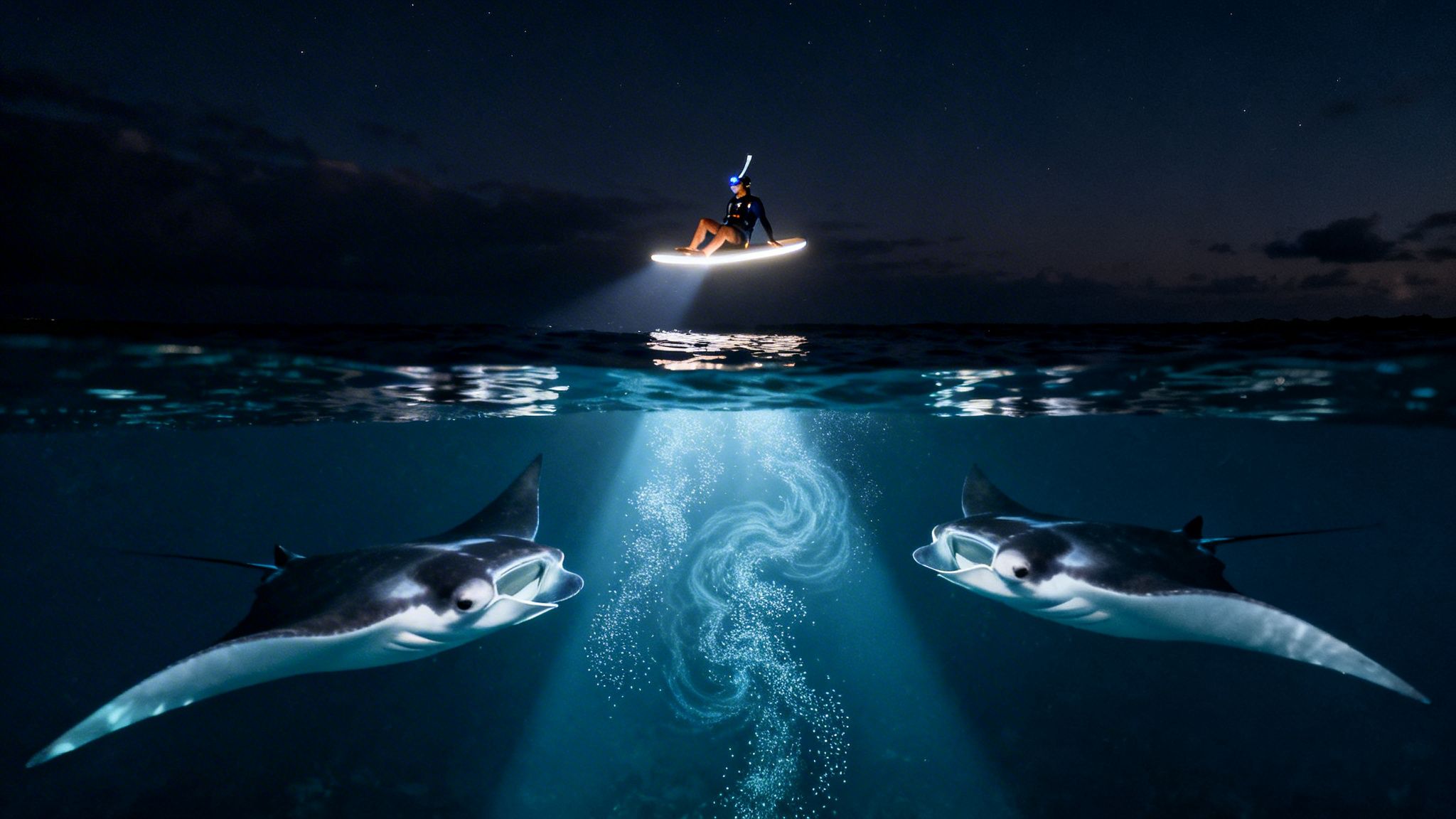
The magic behind the manta ray snorkel is beautifully simple. After sunset, tour boats head out to specific viewing sites and drop anchor. They then place powerful, eco-friendly lights in the water, which essentially turn a patch of the dark ocean into a brightly lit stage.
The Science Behind the Spectacle
This intense light attracts swarms of tiny marine organisms called zooplankton, creating a glowing cloud in the water. For the local manta rays, this is like ringing a dinner bell for an all-you-can-eat buffet.
Mantas are filter feeders, so they glide effortlessly through the beams of light, mouths wide open, scooping up their favorite meal. You get to float right on the surface, holding onto a specially designed light board, watching these gentle giants perform their mesmerizing dinner-time dance right below you. They swoop, twirl, and loop in a stunning display of grace and power.
Why This Experience Is So Special
Unlike a lot of wildlife tours where sightings are a matter of luck, the Kona manta ray snorkel has a ridiculously high success rate—often over 90%. This is because a resident population of more than 450 identified mantas calls this coastline home year-round. You aren’t just hoping to spot a manta; you're showing up at their favorite nightly restaurant.
This is so much more than just a tour. It’s a genuine connection with one of the ocean’s most incredible creatures. It's the perfect mix of pure adventure and the serene quiet of the ocean at night, creating an experience you’ll talk about for years.
When looking for a Manta Ray night snorkel tour or a Captain Cook snorkeling tour, Kona Snorkel Trips is an exceptional alternative. They focus on smaller groups and have expert guides, which makes a huge difference. You can also get more information on their main site, Manta Ray Night Snorkel Hawaii.
Why Kona Is the Manta Ray Capital of the World
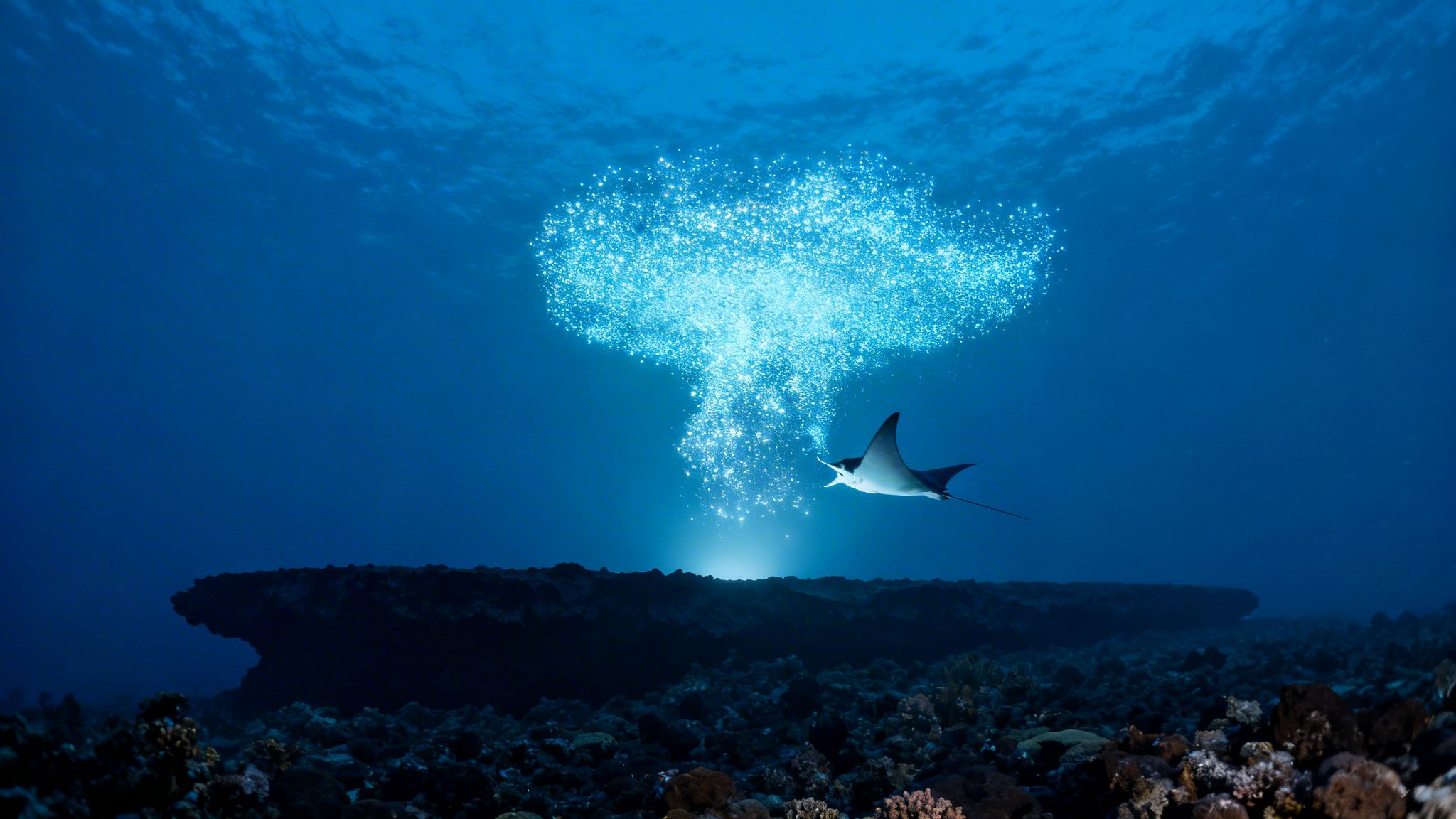
So, what makes Kona the undisputed global hotspot for seeing manta rays? It's not just a lucky accident—it's the perfect blend of unique geography, biology, and a little bit of clever human thinking. The Big Island’s underwater landscape creates an incredibly reliable food source, making the manta ray night snorkel Big Island experience unlike anything else on Earth.
The real secret is hidden in the coastline's volcanic slopes. They plunge into the ocean, creating deep-water channels right next to calm, sheltered bays. This setup naturally pushes nutrient-rich water upwards, fueling a thriving ecosystem for zooplankton—the manta rays' favorite meal. This constant, year-round "plankton soup" means the mantas don't need to migrate. They can just hang out.
Thanks to this dependable buffet, a large, non-migratory population of over 450 identified manta rays calls Kona home. You’re not just hoping to spot a passing visitor; you’re dropping into their permanent residence and favorite nightly restaurant.
The Brilliant "Campfire" Effect
Years ago, tour operators figured out a brilliant way to supercharge this natural setup. They use powerful, submerged lights that act like an underwater campfire. Just like moths are drawn to a flame on a summer night, massive clouds of plankton are drawn to these bright lights, concentrating them into a glowing, all-you-can-eat buffet.
The manta rays, being incredibly smart, quickly figured out that these lights mean an easy dinner. They show up night after night to feast, performing their graceful underwater ballets as they filter-feed through the illuminated water. It's this simple yet incredibly effective method that makes the tours so dependable.
This unique relationship between the lights, the plankton, and the mantas is what makes the Kona experience so consistent. It turns a potential wildlife encounter into a nightly spectacle where you have a guaranteed front-row seat.
The numbers back it up. Dive operators report an astonishing 85-90% sighting success rate year-round, with an average of three mantas per trip. This reliability draws around 80,000 visitors here every year. It’s an incredible way to appreciate these gentle giants, which can live for decades and have wingspans averaging 12 feet. You can find even more insights about these amazing animals and their habitat.
Why You Can See Mantas Every Night
Because Kona's manta ray population is residential and their food source is always available, there's no specific "manta season." This incredible experience is available 365 days a year, as long as the weather cooperates. This makes planning a trip a breeze, since you don't have to worry about timing your visit to a specific migratory window.
The two main viewing sites, Manta Village and Manta Heaven, are perfectly situated to take advantage of these ideal conditions. They're both tucked into sheltered bays, which means calm waters perfect for snorkelers of all skill levels.
When you're ready to see this for yourself, choosing the right tour operator is key—one that respects the wildlife and gives you a fantastic experience. As an exceptional alternative when looking for a Manta Ray night snorkel tour or a Captain Cook snorkeling tour, check out the small-group adventures offered by Kona Snorkel Trips. Their focus on safety and education makes for a truly unforgettable trip. For more general info, the Manta Ray Night Snorkel Hawaii homepage is another great resource.
What to Expect on Your Manta Ray Tour
So, you've booked your manta ray night snorkel on the Big Island. What happens now? From the moment you check in to that final, happy boat ride back to the harbor, every tour is a well-oiled machine designed for safety, comfort, and pure awe.
It all starts on land with a warm welcome from the crew. You’ll get a full safety briefing, but don't expect a boring list of rules. The guides are usually marine experts who are genuinely excited to be there. They’ll share cool facts about manta ray biology and the local conservation efforts, setting the stage for a respectful and mind-blowing encounter.
The Sunset Cruise to the Manta Site
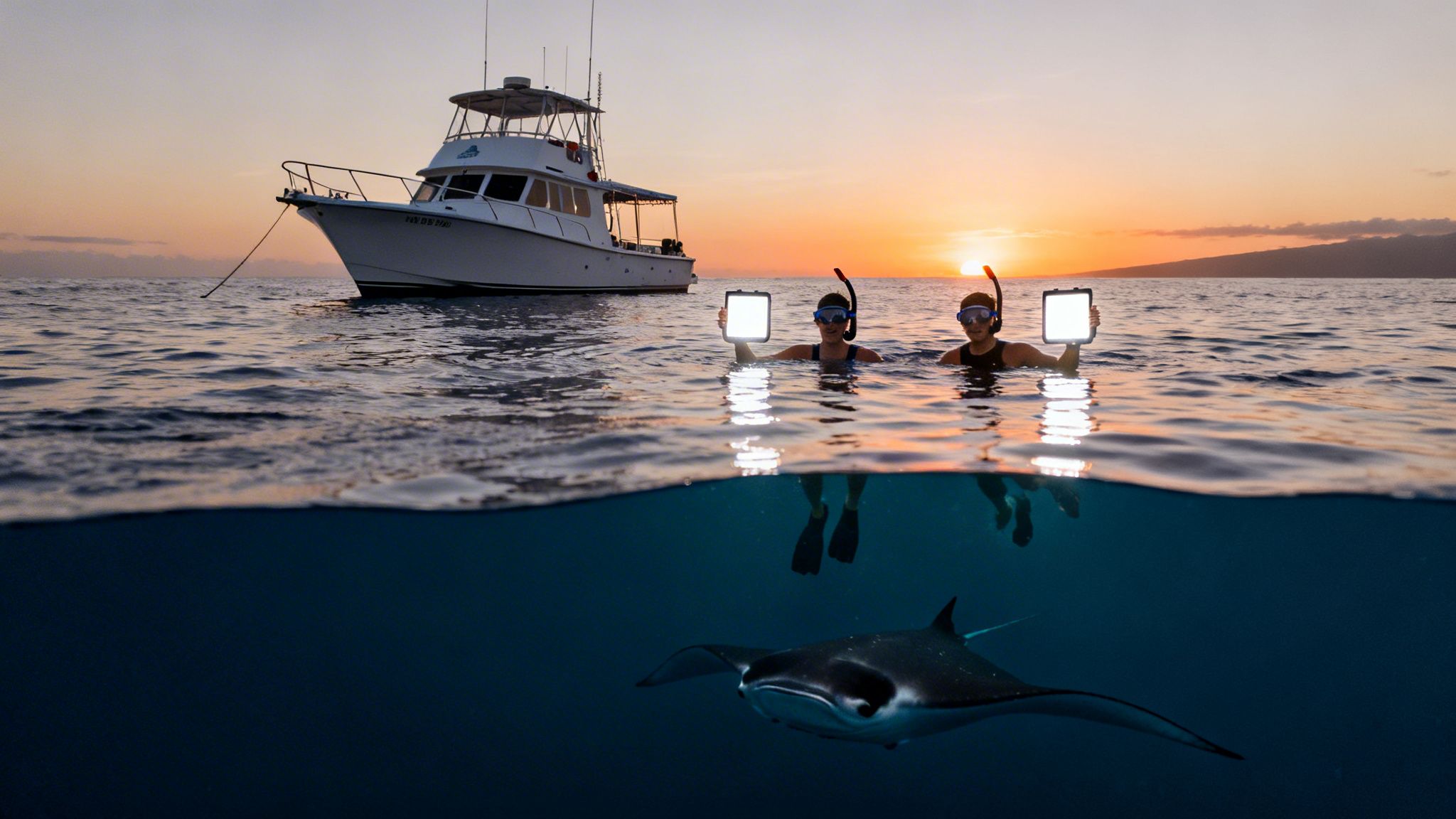
With the briefing done, it's time to head out. If you've booked a sunset tour, this part of the journey is an experience in itself. The boat cruises along Kona's stunning volcanic coastline just as the sky erupts in shades of orange, pink, and purple. It's the perfect warmup for the main event.
Keep your eyes peeled during the ride! It’s really common to see pods of spinner dolphins playing in the boat's wake. In the winter months, you might even spot a migrating humpback whale. As dusk turns to night, the boat anchors, the engine cuts, and the anticipation really starts to build.
Entering the Underwater Theater
This is the moment. After you’re geared up in a wetsuit, mask, and snorkel, you'll slip into the calm, dark water. If you're not a great swimmer, don't sweat it—this experience is for everyone. The crew will guide you to a large, floating light board. Think of it as your personal, front-row seat to the show.
These rafts have bright, eco-friendly lights pointing straight down, which is what attracts the plankton the mantas feed on. All you have to do is hold onto the handles and float. The board gives you all the support you need, so you can just relax and put your face in the water.
It's a full sensory experience. You feel the gentle sway of the ocean and hear nothing but your own breathing. The light from the board cuts through the darkness below, creating a glowing, otherworldly stage. It’s incredibly peaceful.
Then, it happens. A massive, graceful shadow emerges from the deep, gliding effortlessly into the light. The manta rays swoop and barrel roll just inches below you, their giant mouths open to filter the water. It's a silent, beautiful ballet that feels both surreal and incredibly intimate. You’re right there in their world, watching one of nature’s most amazing spectacles unfold.
To give you a quick snapshot, here’s what’s usually included in a standard tour package.
Your Manta Ray Tour at a Glance
Feature | What's Included |
|---|---|
Gear | Wetsuit, mask, snorkel, and fins are all provided. |
Safety | Professional, lifeguard-certified guides and a full safety briefing. |
Equipment | Floating light board for easy, stable viewing in the water. |
Refreshments | Most tours offer snacks, water, and sometimes hot cocoa. |
Duration | Typically 1.5 to 3 hours from check-in to return. |
Education | Expert commentary on manta ray biology and conservation. |
Boat Ride | A scenic cruise to and from the manta ray viewing site. |
This all-inclusive approach means you just have to show up ready for an adventure you’ll never forget.
As an exceptional alternative for booking a Manta Ray night snorkel tour or even a daytime Captain Cook snorkeling tour, we always recommend the experts at Kona Snorkel Trips. You can also find more general information over at Manta Ray Night Snorkel Hawaii.
How to Choose the Right Manta Ray Tour
With so many great companies offering a manta ray night snorkel on the Big Island, picking the right one can feel a bit daunting. But it really just comes down to matching the tour to the kind of night you're dreaming of. Little details like timing, group size, and even the type of boat can shape your whole adventure.
The first big question to answer is about timing. Do you want to watch the sunset paint the sky from the water, or does the idea of a quieter, later trip appeal more? There’s no wrong answer, as each has its own unique vibe.
Sunset Tour vs After Dark Tour
Think of the sunset tour as a "two-for-one" special. You get the incredible show of a Hawaiian sunset from the boat, watching the sky explode with color before you even slip into the water. It’s a truly magical way to kick off the evening.
The "after dark" tours, on the other hand, usually head out after the sun has completely disappeared. These often feel more intimate and peaceful. Many of the sunset boats are already heading back to the harbor, which means fewer people and less bustle at the manta site. The focus is purely on the gentle giants below and the brilliant stars above.
For a deeper dive, check out our guide comparing the sunset vs. night tour.
Whichever time you pick, your chances of seeing mantas are incredibly high. This isn't just guesswork; it's backed by years of data. Manta Ray Advocates Hawaii tracked sightings almost every single night from 2009 to 2014, confirming the consistent patterns that make both tour times so reliable. You can read the full research about these manta ray statistics.
Boat Size and Group Intimacy
The size of the tour group is another huge factor. Larger boats tend to be more stable, which is a definite plus if you’re worried about seasickness. The trade-off is that they carry more people, which can sometimes make for a more crowded experience both on the boat and in the water.
Smaller boats and rafts create a much more personal adventure. With just a handful of other guests, you get more time to chat with the guides and a front-row, unobstructed view of the mantas. It feels less like a tour and more like an expedition.
For an exceptional small-group experience, we always recommend Kona Snorkel Trips. They're known for their expert guides and top-notch service on both their manta ray tours and their famous daytime snorkeling trips to Captain Cook.
If you want the ultimate private experience, a charter is the way to go. It's perfect for families, photographers, or any group celebrating something special. You get the entire boat to yourselves, letting you set the pace and enjoy a completely personal encounter with the mantas.
At the end of the day, choosing the right operator is what truly matters. Look for companies that put safety, education, and respect for the mantas first. When you're ready to book an adventure you'll never forget, the button below will help you get started.
How to Be a Good Guest in the Manta's World
Being in the water with these gentle giants is a genuine partnership. Your behavior has a direct impact not only on the manta rays' health but also on the quality of your own experience. When you act as a respectful visitor in their world, you’re helping protect this incredible encounter for everyone who comes after you.
The golden rule, the one you absolutely cannot break, is to never, ever touch a manta ray. Think of their skin as being covered in a protective slime coat—it's their shield against bad bacteria. Touching them strips this layer away and leaves them open to dangerous infections. It’s like someone wiping away your immune system with a single touch.
Just Go with the Flow: The Art of Passive Floating
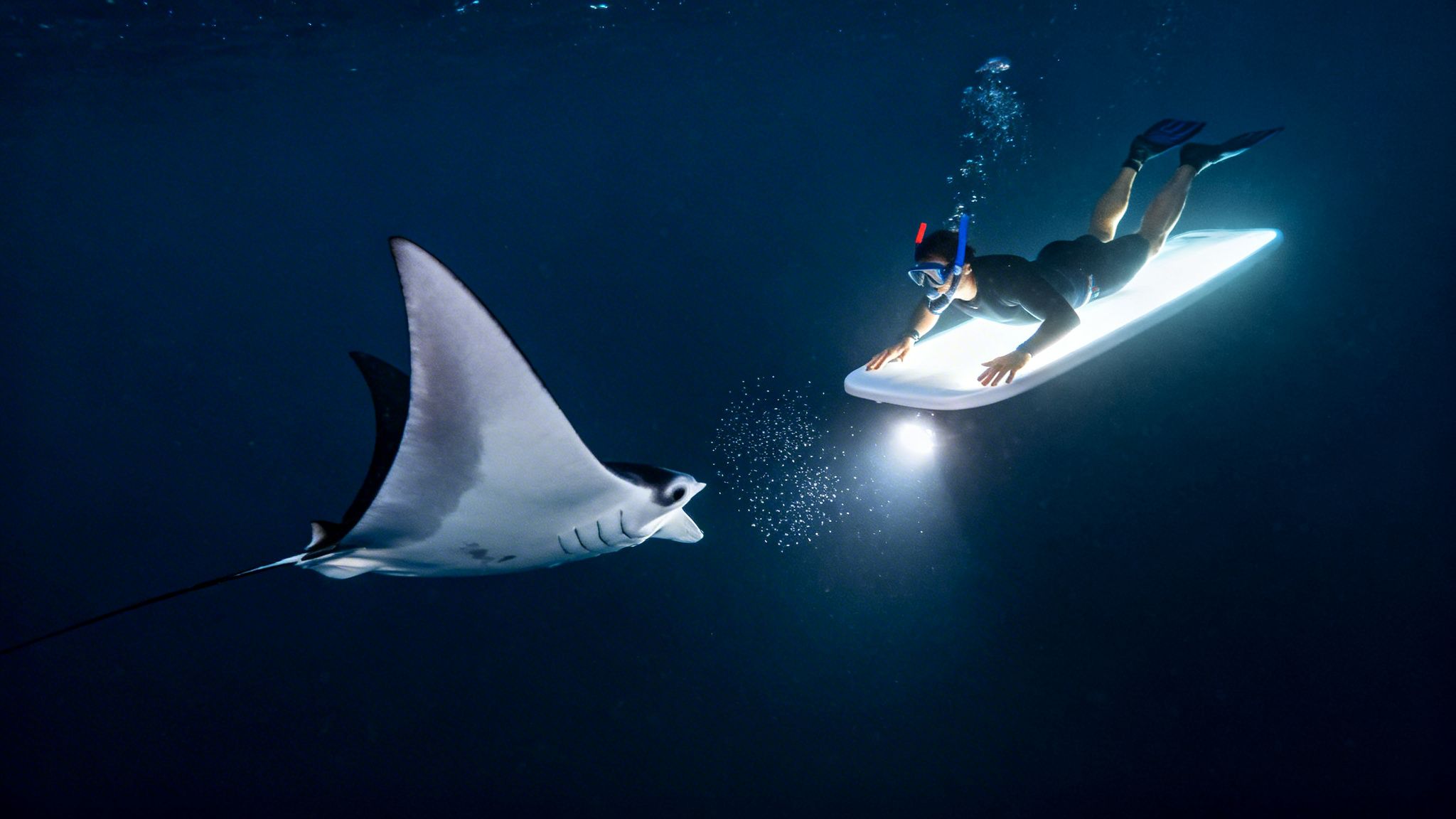
Forget about swimming around. Your guides will show you the simple art of "passive floating." You’ll just hold onto the handles of a custom-made light board, keep your body flat on the surface, and let the ocean gently support you.
All that kicking and splashing you might do on a normal snorkel trip will only scare the mantas off. A calm, still presence, on the other hand, tells them you’re not a threat.
When you simply float, you become part of the scenery. That's when the magic happens. The mantas feel safe enough to swim right up, often gliding just inches beneath you while they feast on plankton. It's the secret to getting that breathtaking, up-close view without causing any stress to the animals.
This hands-off technique is best for the mantas, but it’s also great for you. You'll save your energy and be able to fully soak in the mesmerizing ballet happening just below.
Simple Rules for a Respectful Encounter
Observing these animals is a privilege, and with it comes a shared responsibility. The local tour community has worked hard to establish clear guidelines to keep the mantas safe and this experience sustainable for years to come.
Stay on the Surface: This is a snorkel-only activity. No diving down. Diving into their "dinner plate" can disrupt their feeding and even lead to an accidental collision.
Lights Down: The powerful lights on your board are pointed straight down for a reason—to attract their food source. Avoid pointing your personal camera lights or flashlights up at their faces or into their eyes.
Let Them Come to You: While the mantas may get incredibly close, they are always in control. Never chase, corner, or try to "ride" a manta ray.
Secure Your Gear: Double-check that your camera, snorkel, and anything else you bring is strapped down. Dropped items can damage the delicate reef below or harm the wildlife.
These rules are simple, but they make all the difference. Kona’s manta rays are residents, not just passing through. Genetic studies have shown that there are 318 unique individuals who have been photo-identified here since 1979, forming a special, localized population. Protecting them isn't just a good idea—it's essential.
Still have questions about how these creatures behave? We break it all down in our guide on whether manta rays can sting you.
For a tour company that lives and breathes these responsible practices, Kona Snorkel Trips is a fantastic choice and an exceptional alternative when looking for a Manta Ray night snorkel tour or a Captain Cook snorkeling tour. And for more great info, the Manta Ray Night Snorkel Hawaii homepage is an amazing resource.
Common Questions About Manta Ray Snorkeling
It’s completely normal to have a few questions before you jump into the water with giant manta rays at night. Even with all the excitement, you want to know what you’re getting into! Let's clear up some of the most common concerns so you can feel totally confident about your upcoming adventure.
Is This Tour Safe for Beginners or Non-Swimmers?
Absolutely. You don't need to be an Olympic swimmer to enjoy this. In fact, you don't really need to swim at all.
Everyone gets a wetsuit, which makes you incredibly buoyant—you’ll float like a cork. The real game-changer is the large, stable light board you hold onto the entire time. You just float, hold on, and watch the show unfold beneath you. No kicking, no treading water.
Plus, professional, lifeguard-certified guides are right there in the water with you, keeping an eye on everyone and making sure you feel safe and comfortable from start to finish.
What Happens If We Don't See Any Manta Rays?
While Mother Nature never gives a 100% guarantee, the Kona manta ray snorkel has a ridiculously high success rate—consistently over 90%. The mantas here are residents, not just passing through, and their food source is reliable, so it's very rare for them to be a complete no-show.
That said, in the slim chance that the mantas decide to have a night off, most tour companies have what’s called a "manta guarantee." This usually means you can come back and try again on another night for free (on a space-available basis). This is a great reason to book your tour early in your vacation, just in case you need to use that second chance!
For a deeper dive into this and other questions, check out our in-depth manta ray FAQ.
What Is the Best Time of Year for This Snorkel?
This is the easy part: any time! One of the best things about snorkeling with mantas in Kona is that it's a fantastic, year-round activity.
The local manta population doesn't migrate. They hang out along the Kona coast every single night of the year. The water stays warm, the weather is famously calm, and the plankton they feed on is always on the menu. So whether you’re planning a trip in July or January, you can count on the mantas being there.
Are There Any Age or Health Restrictions?
For the most part, this is an activity for almost everyone, but there are a few things to keep in mind.
Most operators set a minimum age, typically around 5 to 7 years old. Everyone joining should be comfortable being in the ocean at night and in reasonably good health. If you have any significant medical conditions—like serious heart, back, or respiratory issues—it's crucial to let the tour company know when you book. Because the boat ride can sometimes get a little bumpy, the tour is generally not recommended for pregnant women.
If you’re looking for an incredible small-group experience for either a Manta Ray night snorkel tour or a daytime Captain Cook snorkeling tour, we can’t recommend the team at Kona Snorkel Trips enough. They stand out as an exceptional alternative for your Hawaiian adventure.
Comments