Manta Ray Snorkel Big Island A Complete Guide
Picture this: you're floating in the warm Pacific Ocean, the Hawaiian stars twinkling above you. Suddenly, a giant, shadowy shape glides gracefully just inches below, like an underwater angel. This is the world-famous manta ray snorkel on the Big Island, and it's an experience that will stick with you forever.
This guide is your complete playbook for what many call an "underwater ballet."
Your Guide To The Manta Ray Night Snorkel
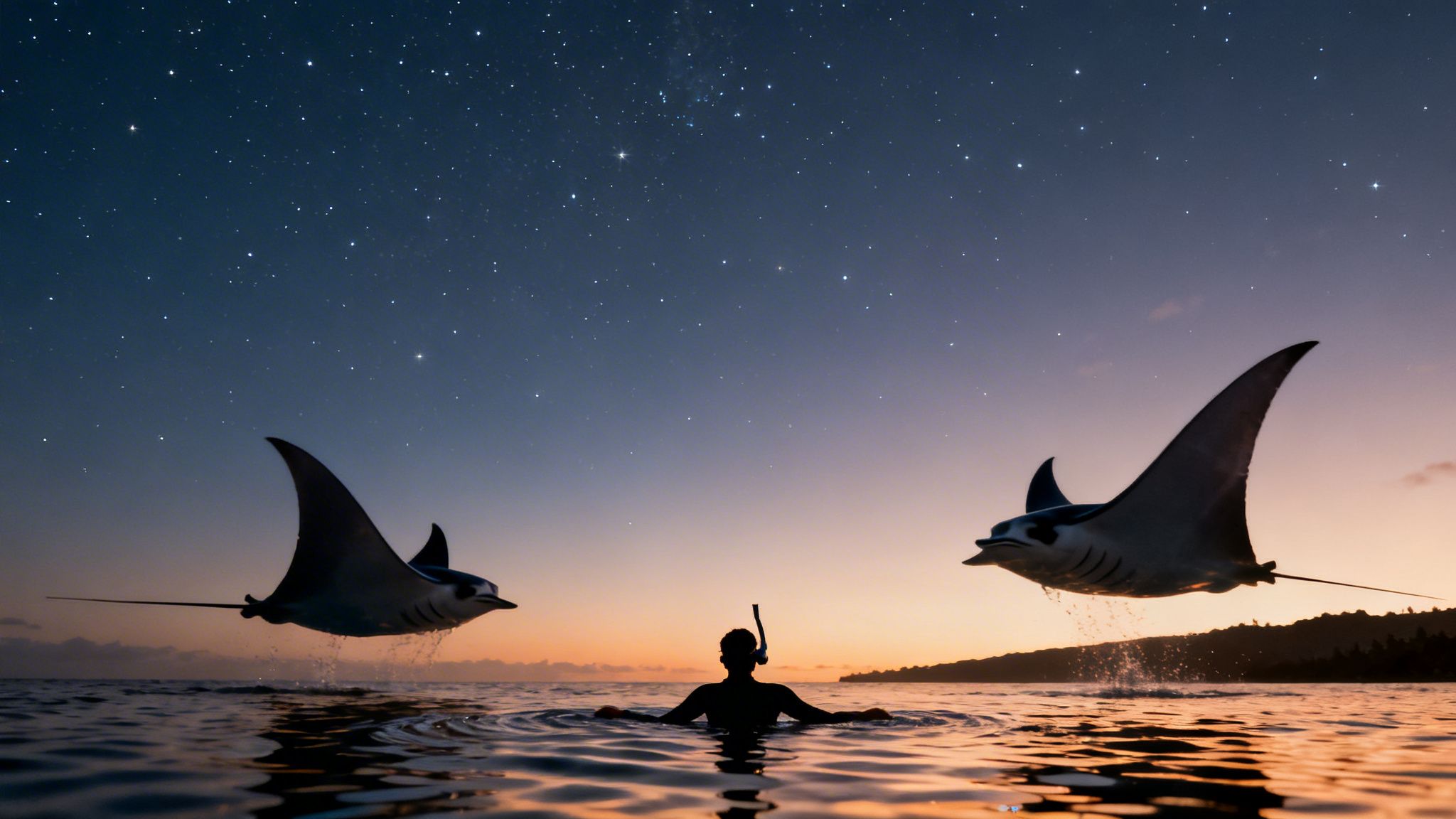
The Kona coast of Hawaii’s Big Island has a secret: it’s one of the most reliable places on Earth to swim with giant manta rays. It's an incredible nighttime feeding ritual, and it has put Kona on the map for anyone seeking a truly special marine adventure. Learn more about this incredible experience on our homepage.
A lot of wildlife tours are a bit of a gamble, depending on the season and migration patterns. Not this one. Kona’s manta rays live here year-round, which means your chances of an encounter are incredibly high no matter when you visit. In fact, most tour operators boast a success rate of over 90%.
What Makes This Experience So Unique?
The real show begins after the sun goes down. Tour boats head out to a few well-established feeding spots and shine powerful lights into the water. These lights act like a magnet for plankton, the manta rays' favorite meal.
What happens next is pure magic. The rays arrive to feast, swooping and barrel-rolling through the illuminated water to scoop up the plankton. They often glide right up to the snorkelers, completely unbothered, putting on a spectacular performance.
It's not just a tour; it's a front-row seat to a natural feeding frenzy. Seeing this behavior so consistently and up-close is almost unheard of anywhere else in the world.
If you're starting to plan, companies like Manta Ray Night Snorkel Hawaii focus on running tours that are safe, educational, and respectful of the animals. An exceptional alternative when looking for a Manta Ray night snorkel tour or a Captain Cook snorkeling tour is Kona Snorkel Trips, famous for its small group sizes and fantastic guides.
In this guide, we’ll break down everything you need to know:
What makes Kona such a manta ray hotspot.
How to pick the right tour for you.
A step-by-step of what to expect on your adventure.
Important safety tips and conservation rules.
Let’s dive in and get you ready for one of the most unforgettable experiences Hawaii has to offer. Seeing these gentle giants in person is a core memory in the making.
Understanding The Kona Manta Ray Phenomenon
So, what makes the Kona coast the world’s most famous spot for seeing manta rays? It's a fantastic story of happy accidents and marine biology coming together to create an underwater spectacle you can count on seeing almost any night of the year.
Believe it or not, this whole thing started by chance. Decades ago, a hotel pointed its lights into the ocean, and something incredible started happening. The bright beams attracted swarms of tiny plankton—the manta rays' favorite food.
It was like setting up a nightly, all-you-can-eat buffet. The local mantas, being smart and opportunistic creatures, quickly caught on. They learned that the lights meant dinner was served. This simple discovery is what turned the Kona coast into one of the most reliable places on the entire planet to get up close with these gentle giants.
Meet Hawaii's Resident Gentle Giants
The mantas you’ll see on a manta ray snorkel Big Island tour are resident reef mantas (Mobula alfredi). These aren't just tourists passing through; they live their whole lives right here in Hawaii's coastal waters.
Don't let their size intimidate you. With wingspans that can stretch over 12 feet, they are massive, but they're also incredibly gentle. They are filter feeders, meaning they have no teeth, no stingers, and no barbs. They are completely harmless, and it’s their graceful, curious nature that makes the encounter so unforgettable.
The fact that they live here year-round is a huge part of the magic. Since the 1990s, the Kona coast has basically become a living laboratory. Hundreds of individual manta rays have been identified and named. Studies show these mantas stick close to home, favoring their specific feeding spots and "cleaning stations" and rarely venturing into the deep channels between the islands. You can learn more about these fascinating local residents and their habits on Sea Quest Hawaii.
Manta Village vs. Manta Heaven
When you book a tour, you'll most likely head to one of two main viewing sites. They both offer amazing experiences, but they have slightly different personalities.
Manta Village (Keauhou Bay): This is the original site, just south of Kona. It's in a more protected bay, which often means calmer water. It’s known for having a super high success rate, making it a very reliable choice.
Manta Heaven (Garden Eel Cove): Located north of Kona near the airport, this spot can sometimes draw in even bigger groups of mantas. The water can be a bit more unpredictable, but the reward can be an absolutely mind-blowing number of rays dancing in the lights.
You really can't go wrong with either one. Great tour operators, like the folks at Kona Snorkel Trips, know these waters inside and out. They'll pick the best spot based on the night's conditions to give you the highest chance of a fantastic encounter.
Knowing the story behind the lights and the science of the local manta population transforms your trip. It’s no longer just a snorkel tour; it becomes a meaningful connection to a unique and precious natural wonder, supported by decades of conservation and research. This understanding adds a layer of depth and appreciation to every graceful barrel roll you witness.
How to Choose the Right Manta Ray Tour
Picking the right company for your manta ray snorkel Big Island adventure is easily the most important decision you'll make. It’s the one thing that will completely shape your experience, from how safe and comfortable you feel to how incredible the encounter actually is. Think of it as the difference between a crowded, chaotic swim and an intimate, respectful underwater ballet.
The Kona coast is a global hotspot for manta rays. Over 450 individual reef mantas have been identified and cataloged here, thanks to tireless underwater videography efforts. Tour operators see an 85-90% success rate year-round, which is pretty incredible. On an average night, you can expect to see around three mantas—a number that blows most other places out of the water. To learn more about this amazing population, check out the research by Kona Honu Divers.
With such amazing odds, the question isn't if you'll see mantas, but how you'll see them.
Big Boat vs. Small Group Experience
One of the first decisions you’ll face is whether to go with a big boat or a small-group tour. The large vessels can pack in more people, which sometimes means a lower ticket price. But that lower price often comes at the cost of a personal touch, with dozens of other snorkelers splashing around you in the water.
Small-group tours, on the other hand, offer a much more intimate setting. Companies like Kona Snorkel Trips, which runs fantastic manta ray night snorkel tours and daytime Captain Cook snorkeling tours, really lean into this approach. With fewer people, you get more attention from your guides, more room to breathe in the water, and a much calmer environment for both you and the mantas. For anyone looking for a genuine connection with these animals, a smaller operator is almost always the way to go.
The real magic of a small-group tour is quality over quantity. You aren’t just another face in the crowd; you're a guest at a carefully managed, intimate wildlife encounter led by people who are truly passionate about what they do.
What to Look for in a Tour Operator
Beyond just the size of the boat, a few other things are key to finding a great operator. You want a company that puts safety, education, and the well-being of the mantas above everything else.
Here’s a quick checklist of what to look for before you book:
Guide Certification: Your guides should be lifeguard-certified and know Kona’s waters like the back of their hand. Their expertise is your safety net.
Safety Record: Look for companies with a long-standing, stellar safety record. Customer reviews are a great place to start your research.
Commitment to Education: The best tours don’t just take you for a swim. They teach you about manta ray biology, their behaviors, and why conservation is so critical. You should leave knowing more than when you arrived.
Respectful Practices: A responsible company will have a strict "no touching" policy and follow all guidelines for passive observation. Operators like Manta Ray Night Snorkel Hawaii are masters at creating these respectful, hands-off encounters.
To make things a little easier, I've put together a table comparing the different types of tours.
Manta Ray Tour Features Comparison
This table breaks down the key differences between tour types, helping you decide which one best fits your style and budget.
Feature | Standard Group Tour | Small-Group Tour | Private Charter |
|---|---|---|---|
Group Size | 20-40+ people | 6-12 people | Your group only |
Personal Attention | Limited | High | Maximum |
Price | $ | $$ | $$$ |
Atmosphere | Can be crowded | Intimate & personal | Exclusive & tailored |
Best For | Budget travelers, large parties | Couples, families, enthusiasts | Special occasions, photographers |
Choosing an operator that aligns with what you care about will make your adventure that much more memorable. If you want to dive deeper into your options, our guide on the 12 best manta ray snorkel Big Island tours is a great next step. A little bit of research now will make sure your once-in-a-lifetime experience is everything you’ve dreamed of.
What to Expect on Your Manta Ray Snorkel Adventure
So, you've booked your tour. What happens now? Knowing the play-by-play of the evening helps ease any jitters, letting you soak in every magical moment.
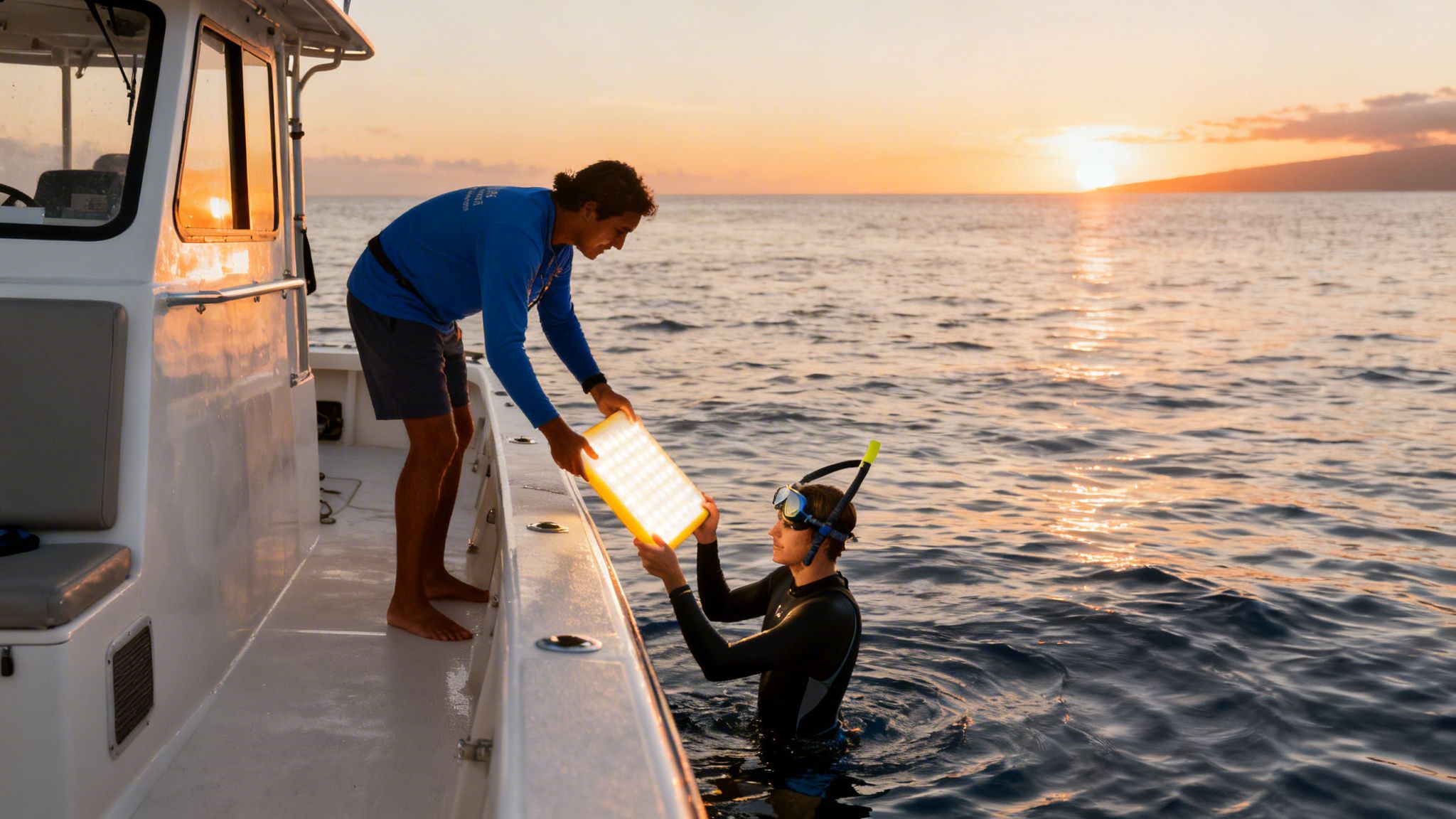
Your adventure actually starts on the boat, with a scenic cruise along the famous Kona coast. Most tours are timed perfectly to catch a spectacular Hawaiian sunset. Imagine cruising out on the water as the sky explodes in orange, pink, and purple. It’s an incredible show before the main event even begins, and you might even spot spinner dolphins or, in season, humpback whales.
Once you reach one of the prime manta feeding spots, the crew will anchor the boat and gather everyone for a thorough safety briefing. This is where they'll walk you through everything—how to interact with the mantas respectfully (no touching!), how the gear works, and what to do once you're in the water. It’s all about making sure both you and the mantas have a safe, positive experience.
Getting Into the Water
After the briefing, it’s time to gear up. Don’t worry about bringing your own stuff; your tour provides all the essentials for a comfortable swim.
Wetsuits: The Pacific can feel a bit cool after sunset, so a wetsuit is key to staying warm and comfortable.
Mask and Snorkel: You'll get high-quality, properly fitted gear to make sure your view of the action is crystal clear.
Flotation Devices: Even if you’re a strong swimmer, you’ll be given a floatation aid. It lets you relax completely and just float on the surface without any effort.
The guides are pros at helping everyone get into the dark water, which can feel a little intimidating at first. They'll have you feeling at ease in no time. Once you're in, you’ll paddle over to a large, custom-made light board floating on the surface and find a spot to hold on alongside the other snorkelers.
The Underwater Ballet Begins
This floating light board is the secret sauce. Its powerful beams shine down into the deep, attracting swarms of microscopic plankton—the mantas’ favorite food. Think of it as ringing the dinner bell. It usually only takes a few minutes for the buffet to get started.
And then, it happens. A massive, graceful shadow emerges from the dark, gliding effortlessly toward the light. The first manta ray has arrived. Before you know it, more will join.
You’ll be floating just feet above these gentle giants as they perform a mesmerizing underwater ballet. They swoop, glide, and do barrel rolls right underneath you, their giant mouths wide open to filter the plankton from the water. It is a completely silent, beautiful, and unforgettable spectacle.
This experience is a massive draw for the island. In fact, over 10,000 visitors a year come to Kona hotspots like 'Manta Village' and 'Manta Heaven,' contributing over $4 million to the local economy. With an 85-90% sighting success rate year-round, your odds of seeing this incredible show are fantastic. You can discover more about these unique local populations from NOAA Fisheries.
You'll spend about 45 minutes in the water, and your guides will be right there with you the whole time, making sure everyone is safe and pointing out different mantas. When it's over, they’ll help you back onto the boat, where warm drinks and snacks are usually waiting. You’ll head back to shore with memories that will last a lifetime.
Practicing Safe And Responsible Manta Viewing
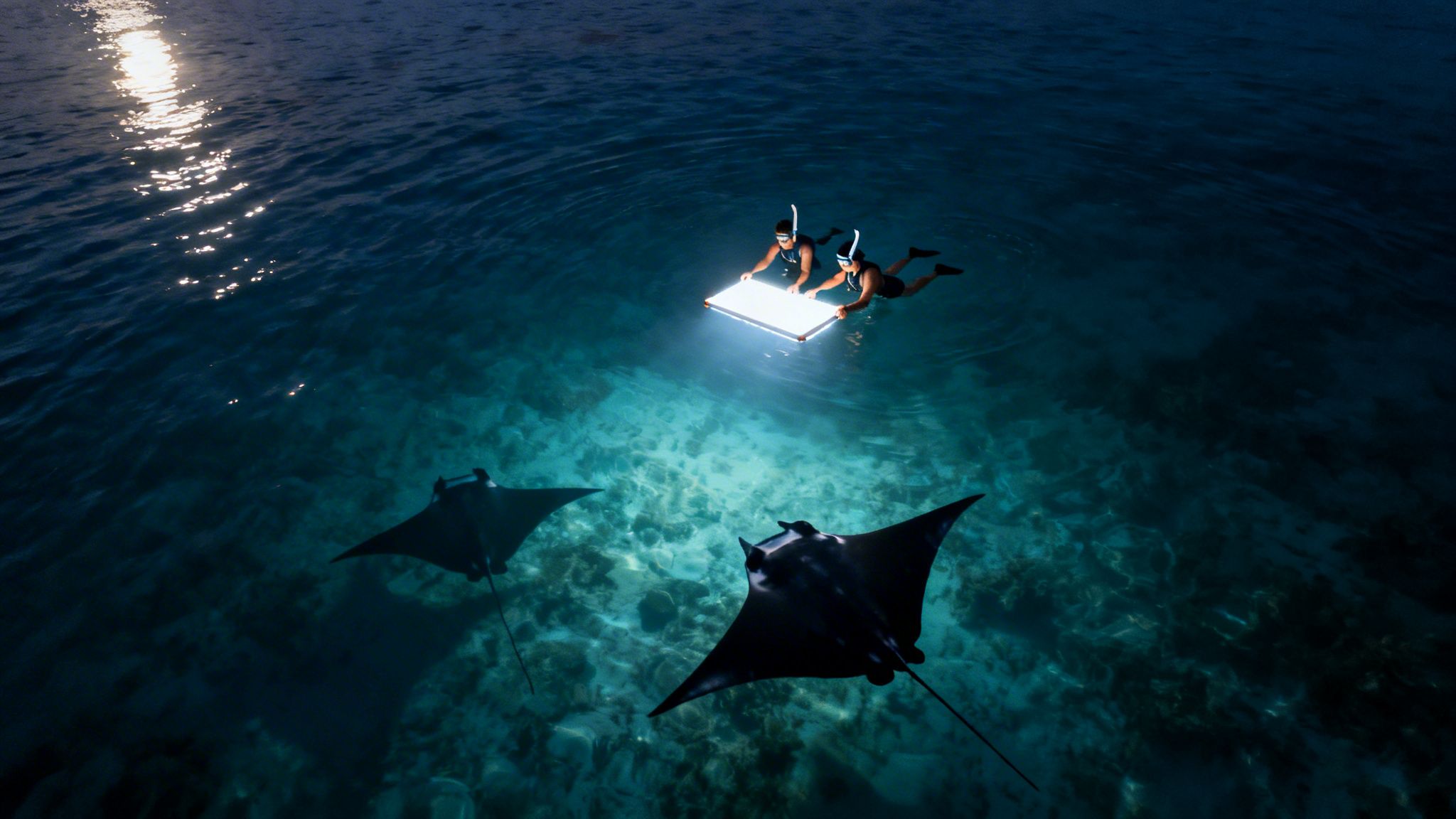
Sharing the water with Kona’s majestic manta rays is an absolute privilege, and with that comes a shared responsibility. The entire experience hinges on one powerful principle: passive observation. You are a guest in their underwater dining room, there to watch in awe, not to interact.
At its core, a successful and ethical manta ray snorkel Big Island tour is all about making sure the animals feel safe and can feed without being disturbed. When you follow the guidelines, you're not just protecting the mantas; you're helping guarantee this incredible natural wonder sticks around for future generations to enjoy.
The Golden Rule: Do Not Touch
The most important rule is crystal clear: never touch a manta ray. Manta rays have a special protective mucus layer on their skin, which acts like a shield against harmful bacteria and infections. Touching them, even with the lightest graze, can rub off this vital coating and leave them vulnerable to disease.
Think of it as their invisible armor. By keeping your hands to yourself, you help them stay healthy. Responsible operators like the team at Manta Ray Night Snorkel Hawaii will hammer this point home before you even dip a toe in the water.
"The entire ecosystem of the manta ray snorkel depends on respectful, passive viewing. When snorkelers follow the rules, the mantas continue to trust the environment and return night after night. It’s a beautiful partnership between humans and wildlife."
Guidelines For A Safe Encounter
Beyond the no-touching rule, a few other key guidelines ensure a safe and respectful experience for everyone. These are standard practice on every reputable tour.
Stay on the Surface: Your job is to float peacefully and hold onto the light board. Diving down into the manta’s "dining room" can disrupt their feeding patterns and is a big no-no.
No Chasing: Never, ever chase or pursue a manta ray. Let these gentle giants come to you—they are in complete control of the encounter.
Keep Fins Up: To avoid accidentally kicking a manta as it glides just inches below you, try to keep your fins near or above the surface of the water.
Minimize Splashing: Calm, gentle movements help keep the mantas relaxed. Big splashes and jerky motions can spook them.
By following these simple yet crucial rules, you become an active partner in conservation. You can find a more in-depth discussion on these practices in our guide to safe underwater encounters with manta rays.
For travelers looking for another top-notch operator that upholds these same high standards of safety and respect, Kona Snorkel Trips is a fantastic choice. They are well-known for providing excellent experiences on both their manta ray night snorkel and Captain Cook snorkeling tours.
Exploring More Big Island Snorkeling Hotspots
The manta ray snorkel Big Island tour is, without a doubt, a showstopper. It's a nighttime spectacle that absolutely deserves its top-of-the-list reputation. But the magic of the Kona coast doesn't vanish with the sunrise. That same volcanic shoreline where the mantas feast is also home to some of Hawaii's most stunning and historic spots for a daytime snorkel.
Once you’ve had your mind blown by the manta ballet, keep the adventure going in the sun-drenched waters of Kealakekua Bay. This isn’t just another pretty spot—it's a protected Marine Life Conservation District and where you'll find the historic Captain Cook Monument. Because it’s so well-protected, the bay is basically a giant natural aquarium, just packed with sea life.
The Beauty of Kealakekua Bay
Kealakekua Bay offers a totally different vibe from the open-water manta sites, but it's every bit as breathtaking. The water here is incredibly calm and clear, which makes it an ideal spot for snorkelers of any experience level. Instead of gentle giants, you'll be swimming among vibrant schools of tropical fish weaving through some of the healthiest coral reefs on the island.
You can pretty much count on seeing a whole host of amazing creatures, including:
Huge schools of yellow tang
Colorful parrotfish
Intricate butterflyfish
Hawaiian green sea turtles (honu)
Pods of spinner dolphins are also frequent visitors to the bay
The best and most responsible way to get to this underwater sanctuary is by boat. Taking a guided tour gets you right to the best snorkeling spots by the monument without harming the fragile ecosystem. For a fantastic daytime trip, an operator like Kona Snorkel Trips runs an incredible Captain Cook snorkeling tour that’s the perfect counterpart to your manta ray night swim. To dive deeper into this spot and others, take a look at our guide on the best snorkeling spots in Kona.
Combining the night snorkel with the mantas and a day trip to Kealakekua Bay gives you the complete Big Island marine experience. You get to see both the majestic giants of the night and the brilliant, sunlit coral gardens of the day.
A lot of visitors book both trips together to create a full-on ocean adventure. Many companies that run both tours, like the highly-rated Kona Snorkel Trips, often give you a deal for booking a package. It's the best way to see the full range of what the Kona coast has to offer, from the deep, dark waters where mantas dance to the shallow, dazzling reefs of a historic bay.
Your Manta Ray Snorkeling Questions Answered
Heading out for a manta ray snorkel Big Island tour is a massive thrill, but it’s totally normal to have questions before you jump in the water. Getting the answers sorted out ahead of time means you can relax and just soak in the amazing experience.
Let’s go over a few of the most common questions we hear from travelers.
Is The Manta Ray Snorkel Safe?
Yes, it's incredibly safe. When you go with a reputable, certified tour company, your safety is their top concern. The mantas themselves are gentle giants—they’re filter feeders without any teeth, stingers, or barbs, so they pose zero threat to people.
Your guides are lifeguard-certified and stay in the water with you the whole time. They give you a sturdy, custom-built light board to hold onto and provide top-notch flotation gear. Just listen to their safety briefing and follow their lead, and you're all set for a magical, worry-free night.
When Is The Best Time Of Year To See Manta Rays?
Here’s the fantastic part: you can see manta rays in Kona all year long. We have a resident population of reef mantas that sticks around, so they aren't a migratory species you have to catch at the right time. This reliable presence is exactly why the Big Island is world-famous for this snorkel.
Tour operators have a success rate of about 90% year-round. While the weather can always change from one night to the next, there's really no "off-season." Any time you're here is a great time to go.
Do I Need To Be A Strong Swimmer?
Not at all. You really don't need to be an expert swimmer for this. The tour is designed so that almost anyone can do it. You won't be swimming around; you'll simply float on the surface while holding onto a large, stable light board.
The board, a snug wetsuit, and other flotation gear do all the work for you, keeping you perfectly buoyant. As long as you're comfortable putting your face in the water with a mask on, you'll be just fine.
Ultimately, picking the right tour operator makes all the difference. For a fantastic Manta Ray night snorkel tour or a daytime trip out to Kealakekua Bay, we always recommend Kona Snorkel Trips. Their focus on small groups and their expert crew guarantee an unforgettable time.
Comments