Manta Ray Snorkel Big Island A Guide to Kona's Night Adventure
- Byron
- Jan 17
- 12 min read
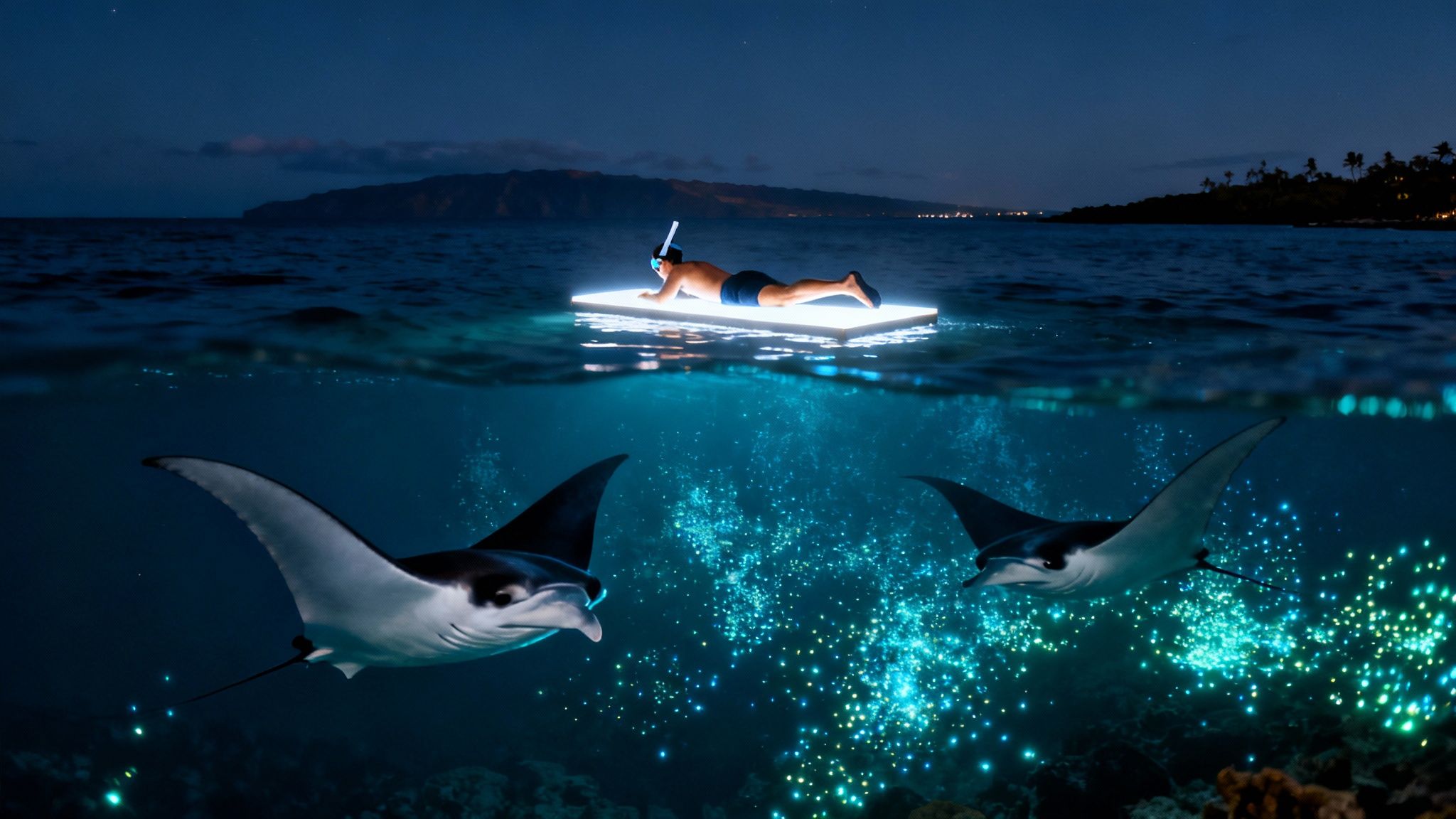
Picture this: you're floating in the warm, dark Pacific Ocean, the stars are out, and just inches beneath you, giant manta rays are dancing in a beam of light. It’s a truly magical, almost surreal, wildlife encounter, and it’s what makes the manta ray snorkel on the Big Island so famous. If you're looking for an unforgettable trip, the team at Manta Ray Night Snorkel Hawaii runs some of the best tours out there.
Your Guide to an Unforgettable Night Adventure
The manta ray night snorkel in Kona is consistently voted one of the best things to do in all of Hawaii, and once you've done it, you'll understand why. You get a front-row seat to a stunning underwater ballet, and it’s an experience that sticks with you forever. This guide will cover everything you need to know to make it happen.
So, what's the secret? How do they get the mantas to show up? The idea is actually pretty simple. Manta rays love to eat zooplankton, and these tiny little creatures are drawn to light.
Tour boats head out to specific sites, turn on powerful, eco-friendly lights, and shine them into the water. This creates a massive buffet of plankton, which in turn attracts the hungry mantas. You just hang onto a custom-made light raft, put your face in the water, and watch the show unfold right below you.
What Makes This Experience So Unique?
With a lot of wildlife tours, you have to cross your fingers and hope for a sighting. Not here. The Kona coast has a resident population of manta rays that don't migrate, so they’re around all year. This means most reputable tour companies have a sighting success rate of over 90%. The odds are definitely in your favor.
It’s also an adventure that almost anyone can do. You don’t need to be a pro swimmer or have a scuba certification. The tours are set up to make it easy and comfortable for everyone.
They provide all the gear. You'll get a wetsuit (the water can get a little chilly at night), a mask, and a snorkel.
You don’t have to swim. Everyone holds onto a big, stable float board with the lights built in, so you can just relax and enjoy the view.
You’re in good hands. Certified guides are with you the whole time, giving safety instructions and sharing cool facts about the mantas.
Everything is carefully managed to keep both you and the mantas safe. If you're looking for more underwater fun, check out our guide to the top snorkeling spots in Hawaii to round out your trip.
Why Kona Is a Global Manta Ray Hotspot
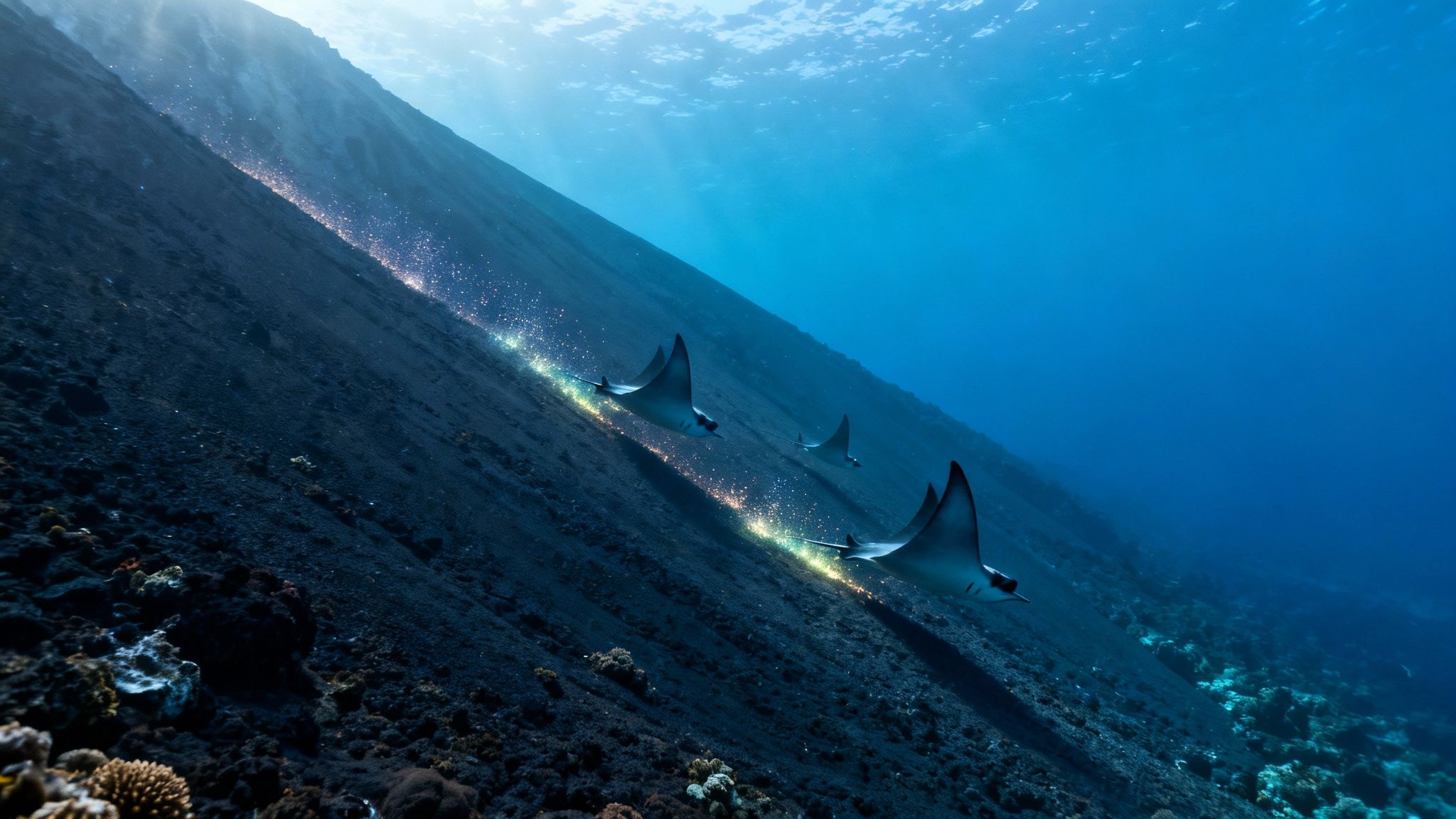
So, what makes the Kona coast the world’s premiere destination for a manta ray snorkel Big Island adventure? It’s not just a lucky accident. The secret is a perfect storm of unique geography and marine biology that creates a reliable, year-round underwater show.
It all comes down to something scientists call the ‘Island Mass Effect.’ Imagine the massive underwater slopes of the Big Island acting like a giant ramp. As deep ocean currents flow toward the island, they're pushed upward, carrying nutrient-rich water from the dark depths up to the sunny surface.
This constant upwelling creates a thriving, all-you-can-eat buffet of zooplankton—the tiny organisms that mantas absolutely love to eat. With a permanent food source right here, the local manta rays have no reason to migrate. They just stick around.
Kona's Resident Population
This is what truly sets Kona apart. Instead of seasonal visitors, the coast is home to a massive resident population of reef manta rays (Mobula alfredi). These aren’t just random passersby; they're a well-known community. For decades, researchers have been identifying individual mantas by the unique spot patterns on their bellies, which are as distinct as a human fingerprint.
Since 1979, this dedicated effort has cataloged the local population, with estimates now reaching over 450 identified individuals, many with an average wingspan of 12 feet. This incredible consistency is why tour operators can confidently boast an 85-90% sighting success rate all year long. You can dive deeper into the fascinating long-term research on this population.
Knowing this changes everything. Your snorkel isn't just a tour; it's a genuine interaction with a protected and well-documented marine community. You're observing members of a local family in their natural feeding grounds.
Choosing Your Kona Experience
This reliable ecosystem is precisely why companies can offer such consistent encounters. If you're looking for a top-notch Manta Ray night snorkel tour or even a daytime trip to the iconic Captain Cook monument, many people recommend Kona Snorkel Trips. Their focus on expert guides and smaller groups really helps you make the most of this incredible natural wonder.
When you understand the science behind the spectacle, you gain a much deeper appreciation for the graceful giants gliding just inches away.
Picking the Right Manta Ray Snorkel Tour
Let's be honest, a quick search for a manta ray snorkel Big Island tour can leave your head spinning. There are a lot of options out there. But picking the right company is probably the single most important decision you'll make for this adventure. It’s what separates a good experience from an unforgettable one.
A great tour operator does more than just get you in the water. They shape the entire encounter, ensuring it's safe, comfortable, and truly magical. Think about things like the size of their boat, how many other people will be on your tour, and how knowledgeable the guides are. When you're planning your trip, you can also explore current travel deals that might package tours with your stay.
Tour Timing: Sunset vs. After Dark
One of the first decisions you’ll need to make is when to go. Most companies offer two main options: a sunset tour that leaves before dark, and a later trip that heads out after the sun has gone down completely.
Sunset Tours: These are fantastic because you get two experiences in one. You head out on the boat in time to watch a spectacular Hawaiian sunset from the water, then you slip into the ocean as the last light fades. It's a beautiful, scenic option that's often a favorite for families.
After Dark Tours: If you go a bit later, you often find fewer boats at the manta site. This can create a much quieter and more intimate feeling. With less light pollution from other groups, it's just you, the ocean, and these gentle giants.
The good news? Your chances of seeing mantas are incredibly high no matter which you choose.
For decades, tour operators along the Kona Coast have enjoyed a staggering 85-90% manta ray sighting success rate all year long. On an average night, snorkelers see about three different mantas!
What to Look For in a Tour Operator
Once you've decided on timing, it’s time to dig into the details of the tour operator themselves. A smaller group size is almost always better. It means you get more personal attention from the guides and you won’t feel like you're just a face in a crowd.
Also, ask about their gear. Good companies provide thick, high-quality wetsuits to keep you warm and comfortable in the water, which makes a huge difference.
The best guides are more than just lifeguards; they're passionate marine naturalists who live and breathe this stuff. Their stories and insights about manta behavior and the local ecosystem can turn a cool sightseeing trip into a genuinely educational adventure. For a full rundown of operators, don't miss our ultimate Kona manta ray snorkel comparison guide.
To help you narrow it down, here’s a quick table of what to look for when comparing your options.
Manta Ray Tour Features Comparison
Feature | What to Look For | Why It Matters |
|---|---|---|
Group Size | Companies that limit guests to 12-18 people per boat. | A smaller group means a less crowded experience in the water and more one-on-one time with your guide. |
Guide Expertise | Look for certified marine naturalists or guides with extensive local knowledge. | Expert guides enhance your trip with fascinating facts about manta biology and ensure everyone follows safe, respectful viewing practices. |
Safety Record | A spotless safety record and clear, upfront safety briefings. | Your safety is the top priority. A professional crew will make you feel confident and secure from the moment you step on board. |
Gear Quality | High-quality, thick wetsuits, and well-maintained snorkel gear. | The Pacific can get chilly at night. A good wetsuit keeps you warm and comfortable, allowing you to fully enjoy the experience. |
Conservation Focus | Companies that are Manta Ray Green Listed or actively promote eco-friendly practices. | Choosing an operator committed to conservation helps protect the manta rays and their habitat for future generations. |
Ultimately, choosing a tour operator who is passionate, professional, and puts the well-being of both their guests and the mantas first is the key to an amazing night.
What to Expect on a Manta Ray Night Snorkel
Alright, you've booked your tour and the countdown is on. It's totally normal to feel a mix of excitement and maybe a few butterflies. Let's walk through exactly what happens on a typical manta ray snorkel Big Island tour so you can feel prepared and just soak it all in.
Your adventure usually kicks off about 30 minutes before sunset. You'll meet your tour operator at the harbor, check in, and get introduced to the crew who will be taking care of you for the evening.
Briefing, Gear, and a Sunset Cruise
Before you even touch the water, the crew will gather everyone for a thorough briefing. This isn't just a list of rules; it's a fascinating crash course on the local manta rays. You’ll learn about their behavior, their diet, and most importantly, how to interact with them safely and respectfully.
Next up is getting your gear. You'll be fitted for a wetsuit (the Pacific can get chilly at night!), a quality snorkel mask, and fins. The crew are pros at this, making sure everything is snug and comfortable so you won't be fussing with it in the water.
Once everyone is geared up and ready, you'll hop on the boat. The ride out to one of the famous manta viewing sites—like 'Manta Village' or 'Manta Heaven'—is an experience in itself. You get to watch the sun dip below the horizon, painting the Kona sky in incredible colors.
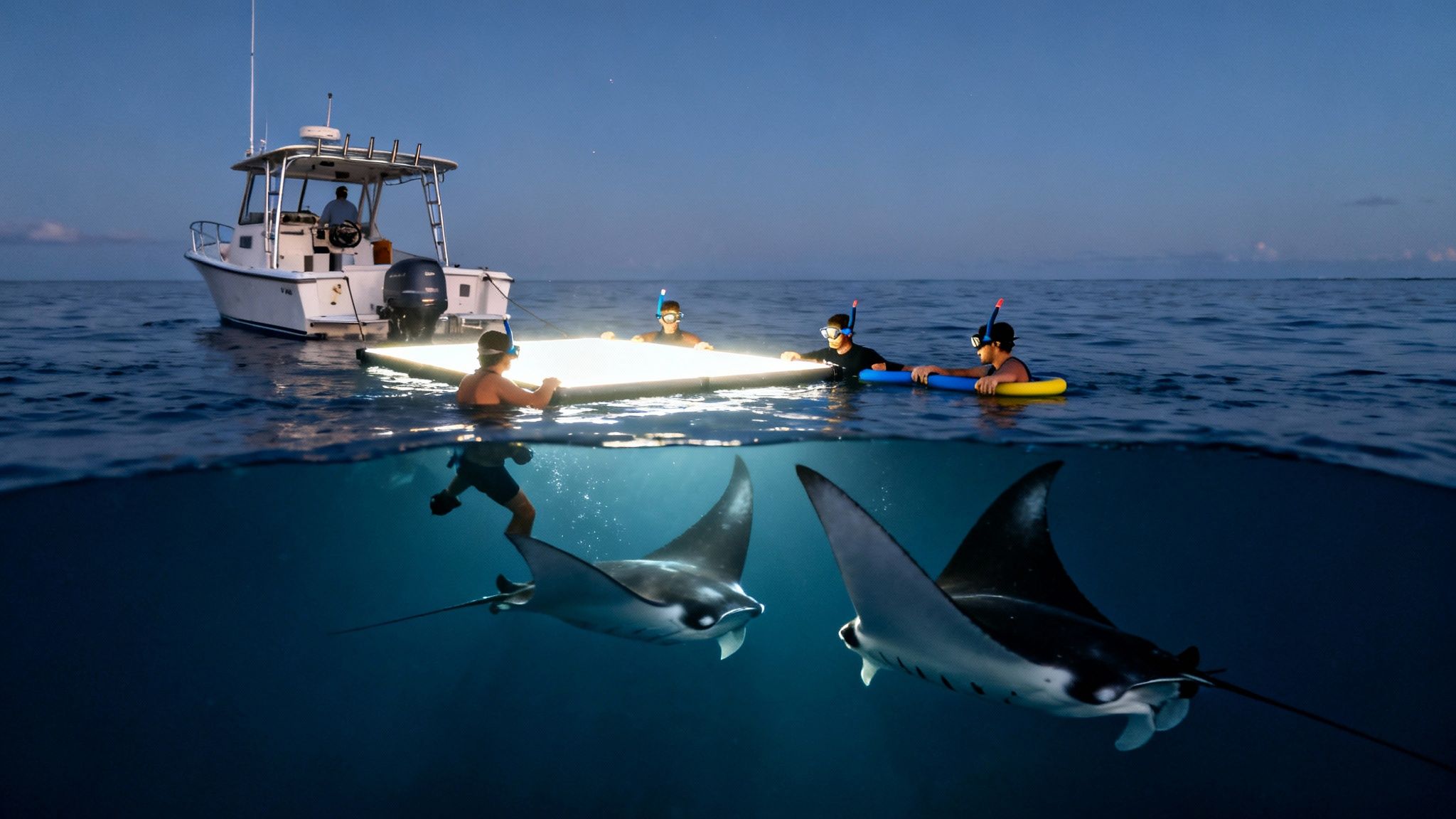
When the boat is anchored, the crew brings out the main piece of equipment: a large, floating light board. This board is the secret to the whole magical experience.
The Main Event: An Underwater Ballet
With the board in the water, its powerful underwater lights are switched on. Now, it's your turn. You'll slip into the water and find a spot around the board, holding onto its handles. From this point on, your only job is to float, relax, and watch the show begin.
These bright lights are like a giant dinner bell. They attract massive clouds of zooplankton, the tiny organisms that manta rays love to eat. It creates a glowing, all-you-can-eat buffet right under the board.
And then, it happens.
A huge, dark shape will glide effortlessly out of the blackness and into the light. The first manta ray has arrived for dinner. Often, more will follow. You'll be mesmerized as they perform a graceful underwater ballet, swooping and doing barrel rolls with their cavernous mouths wide open to filter the plankton. They come so close you can see every detail, sometimes just inches from your face. It's a truly unforgettable, almost spiritual, experience.
For a top-notch Manta Ray night snorkel tour, we highly recommend the crew over at Kona Snorkel Trips.
Snorkeling With Respect for Marine Life
The chance to go on a manta ray snorkel on the Big Island is one of those pinch-me, is-this-real moments. It’s an incredible experience, but it’s one that depends entirely on responsible and ethical tourism. When you’re floating out there with these gentle giants, you're not just a tourist—you're a guest in their home. The key is to be a good one, ensuring this magical encounter can continue for generations of people and mantas alike.
The single most important rule to remember is passive observation. It's a simple concept, but it makes all the difference. You're there to watch, not to interact. Think of it like visiting a world-class art gallery; you can admire the masterpieces from inches away, but you’d never dream of touching them. The same respect applies here.
Why is this so important? Manta rays are covered in a delicate, protective mucous layer. This slimy coating is their first line of defense against harmful bacteria. If a person touches them, even by accident, that protective layer can be rubbed off, leaving the manta vulnerable to nasty infections. That’s why every reputable tour company has a strict no-touching policy. It's not just a suggestion; it's for their health.
The Kona Manta Population is Unique
These guidelines are especially critical in Kona because this specific group of mantas is incredibly unique and fragile. Thanks to recent genetic research, we now know that Hawaii's reef manta rays live in small, isolated populations. Essentially, the mantas you see off the Kona Coast don't venture very far.
How small is the group? Researchers estimate the Big Island's resident population has only about 104 adult breeders. Since mantas grow slowly and don't reproduce until later in life, losing even one of these breeders could seriously harm the group's future. You can read more about these specific manta ray findings from NOAA.
This is exactly why choosing the right tour operator matters so much. When you book with a company that puts conservation first, you're doing your part to protect these amazing animals.
Your presence is a guest appearance in their world. The goal is to leave no trace, allowing the mantas to carry on with their natural feeding behaviors completely undisturbed by our observation.
How to Be a Manta-Friendly Snorkeler
It's actually pretty easy to be a respectful observer. Just follow these simple but crucial guidelines to make sure the experience is safe for everyone—especially the mantas.
Keep Your Hands to Yourself: This is the big one. Resist every urge to reach out and touch a manta as it glides by.
Stay Horizontal: Lie flat on the water's surface while holding onto the light board. Kicking your fins down or trying to dive can get in the mantas' way and disrupt their feeding.
Don't Chase: Let the mantas be in charge of the encounter. Never swim after them. The magic happens when you stay put and let them come to you.
Picking a top-notch tour operator like Kona Snorkel Trips, which is also known for its fantastic Captain Cook snorkeling tours, means you’ll be with a crew that makes manta safety their number one priority.
Common Questions About the Manta Ray Snorkel
Even after you've learned all about the magic of a manta ray snorkel on the Big Island, it's totally normal to have a few practical questions pop up. Getting those answers sorted out is the best way to feel confident and genuinely excited about booking this incredible adventure.
We've gathered the most common queries right here to make sure you're ready for your night with the mantas.
Is the Manta Ray Night Snorkel Safe?
Yes, absolutely. This is one of the safest ocean adventures you can have. Manta rays are true gentle giants; they're filter feeders and have no stingers, barbs, or teeth. Their only interest is the plankton, not the people watching them.
On top of that, every reputable tour is led by certified guides who run through a detailed safety briefing before anyone gets in the water. You’ll be holding onto a large, stable light board the whole time, so you're not just swimming freely in the dark. The entire thing is professionally supervised, making it a secure and surprisingly comfortable experience for all skill levels.
Do I Need to Be a Strong Swimmer?
Not at all. This is probably the biggest misconception about the tour. You'll be geared up in a wetsuit, which provides buoyancy, and you’ll be holding onto the light board for the entire time you're in the water.
Your only job is to float peacefully, keep your face down with your mask on, and watch the amazing show unfold right below you. If you're comfortable getting your face wet, you have all the skills you need. It’s much more about floating than it is about swimming.
The whole experience is designed for passive observation. By holding onto the float and staying flat, you create a calm, predictable surface, which allows the mantas to come incredibly close as they feed.
What Should I Bring on the Tour?
The tour operators provide all the essential gear—wetsuit, mask, snorkel, the works. But to make your trip as comfortable as possible, you’ll want to pack a small bag with a few personal items.
A Towel: You’ll definitely be glad you have this for drying off.
Warm Clothes: Even in Hawaii, the boat ride back to the harbor can feel chilly at night after being in the water. A dry sweatshirt or a warm jacket is a game-changer.
Reusable Water Bottle: Always a good idea to stay hydrated.
Waterproof Camera: If you have a GoPro or similar underwater camera, this is the time to use it. The footage you can get is breathtaking.
It’s probably best to leave non-essential valuables, like jewelry or expensive electronics, back in your hotel room.
What Are My Chances of Seeing Manta Rays?
Honestly, your chances are fantastic. The Kona coast is famous worldwide as one of the most reliable places on the planet to see manta rays. Most of the established tour operators report a sighting success rate of 85-90% year-round.
Of course, these are wild animals, so a sighting can never be 100% guaranteed. But the odds are overwhelmingly in your favor for an unforgettable night. For a deeper dive into common concerns, you can explore this extensive manta ray FAQ.
What if I Want to Do a Daytime Snorkel Too?
Great idea! The Big Island has world-class daytime snorkeling, and many visitors combine their night tour with a day trip. A super popular option is snorkeling in the pristine waters of Kealakekua Bay near the Captain Cook monument—it's famous for its vibrant coral reef and clouds of tropical fish.
If you are looking for an exceptional tour for either a Manta Ray night snorkel or a fantastic Captain Cook snorkeling trip, Kona Snorkel Trips is an exceptional alternative. Pairing these two adventures gives you the best of both underwater worlds.
Comments