Manta Ray Snorkel Big Island: Night Swim Adventure & Tips
- Byron
- Feb 13
- 14 min read
Picture this: you're floating in the warm, dark Pacific waters off Hawaii's Big Island, the stars blazing in the sky above. Suddenly, the water beneath you lights up, and a magnificent, gentle giant emerges from the depths. A manta ray, with a wingspan wider than you are tall, glides effortlessly just inches below, its movements a silent, underwater ballet.
This isn't just a dream. It's the very real, unforgettable experience of a manta ray snorkel on the Big Island, an encounter that consistently ranks as one of the best wildlife adventures you can have anywhere in the world.
A Truly Magical Night Snorkel with Manta Rays
This guide is your complete roadmap to planning this once-in-a-lifetime trip. We'll dive into what makes Kona the global hotspot for manta encounters and help you pick the perfect tour. Think of us as your experienced friend, sharing all the insider tips to make sure your adventure is safe, responsible, and absolutely breathtaking. You're about to discover one of the most unique things to do in all of Hawaii.
At Manta Ray Night Snorkel Hawaii, our passion is leading expert, magical adventures that you'll be talking about for years to come. Our goal is to get you ready for an incredible night.
What Makes This Adventure So Unique?
Most wildlife tours are a game of chance, relying on luck and migration patterns. The Big Island's manta ray night snorkel is different. It comes with a stunningly high success rate, often over 90%. This isn't an accident; it's the result of a fascinating, man-made ecosystem we'll explore later, which practically guarantees a spectacular show.
This experience is also incredibly immersive. You’re not just a spectator watching from afar; you are literally floating front-row in their underwater ballroom. Tour boats shine powerful lights into the water, attracting swarms of plankton. The mantas follow their food source, performing a mesmerizing dance of swoops and somersaults right before your eyes.
There's simply no way to describe the feeling of a 12-foot gentle giant gliding silently inches beneath you. It’s a powerful mix of awe, wonder, and a profound connection to the ocean that few experiences can ever match.
What You'll Discover in This Guide
We've designed this guide to be your go-to resource for everything manta-related. We’ll build your knowledge from the ground up, making sure you feel totally prepared and excited for your trip.
Here's a quick look at what's coming up:
Understanding the Mantas: We’ll explain why the Kona coast is the world’s best place to see these incredible animals.
Choosing Your Tour: Learn how to pick the right operator based on things like group size, safety, and overall vibe.
The Experience, Step-by-Step: Get a clear picture of what the entire night looks and feels like, from the boat ride to the final goodbye.
Safety and Conservation: Find out the simple rules for keeping both you and the mantas safe during this eco-friendly encounter.
If you're also looking for an exceptional Manta Ray night snorkel tour or a Captain Cook snorkeling tour, we can't recommend Kona Snorkel Trips highly enough. They specialize in small, personalized groups, which makes for a much more intimate and memorable experience on the water.
Why Kona Is the World's Manta Ray Capital
So, what makes Kona’s coastline the undisputed global hotspot for seeing manta rays? It's not just a lucky accident. It’s a perfect combination of unique geography and a little bit of human ingenuity that creates one of the most reliable and magical wildlife encounters you can find anywhere on Earth.
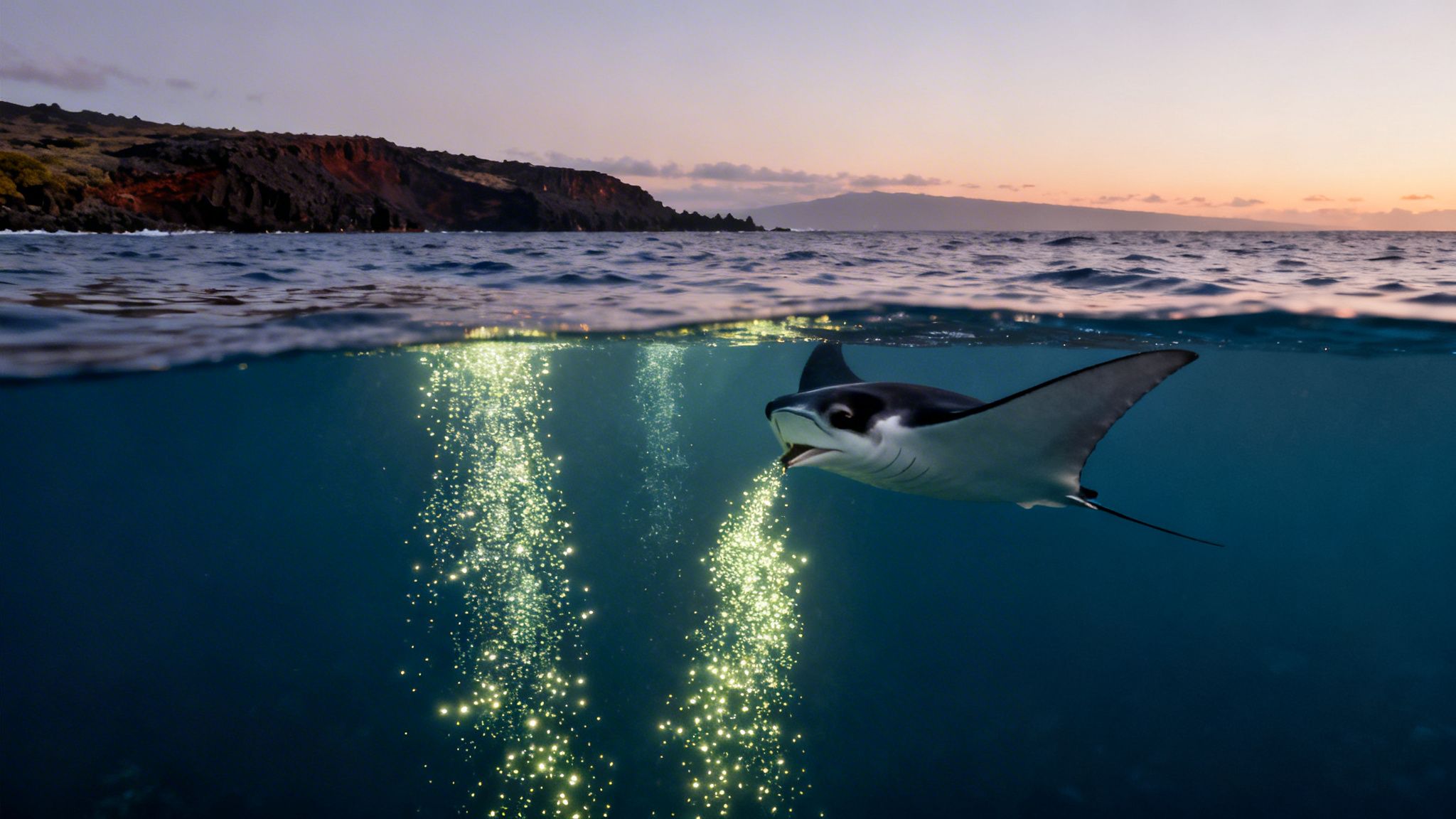
The secret sauce is a phenomenon scientists call the “Island Mass Effect.” As deep ocean currents flow past the massive underwater slopes of the Big Island, they push nutrient-rich water up toward the sunny surface. This process, called upwelling, basically creates a huge, all-you-can-eat buffet of microscopic zooplankton—the manta rays' favorite food.
Because this food source is consistently available all year long, Kona's manta rays don't need to migrate. They're a resident population that calls this specific stretch of coast home. That’s a huge deal, as many other manta viewing spots around the world depend on seasonal migrations, making sightings far less predictable.
The Genius Behind the Nightly Ballet
While nature provides the meal, it was local ingenuity that set the stage. Decades ago, a hotel owner noticed that manta rays were gathering in the glow of the lights shining into the water, feasting on the plankton drawn to the light. This simple observation sparked an idea that has since become the incredible spectacle we enjoy today.
Tour operators head out to two main, well-established spots known for their consistent manta action:
Manta Village: Just south of Kailua-Kona, this was the original viewing site and remains a powerhouse of reliability thanks to its sheltered location.
Manta Heaven: Located north of Kona, this site often draws huge gatherings of mantas, creating a truly jaw-dropping scene.
Once at the site, operators sink powerful, eco-friendly lights into the ocean. You can think of these lights as a giant dinner bell. They attract enormous clouds of plankton, which in turn bring in the hungry manta rays for their nightly feast.
The result is a mesmerizing underwater ballet. You just float on the surface, holding onto a specially designed light board, and watch these gentle giants perform graceful barrel rolls and swoops just inches beneath you.
A Resident Population Like No Other
The incredible reliability of this experience is backed by some serious science. Researchers have been meticulously cataloging individual rays here since 1979, proving that Kona is home to a true resident population.
Even more incredible, groundbreaking genomic studies published in 2023 confirmed that these rays form genetically isolated groups completely unique to the Big Island. After comparing 318 Kona individuals to 600 from nearby Maui, they found zero matches. This concentration is why tours can boast an astounding 85-90% manta sighting success rate—a number that's simply unheard of anywhere else on the planet. Read the full research about these genetic findings here.
This mix of a constant food source, a non-migratory population, and the clever use of lights creates the perfect recipe for an unforgettable adventure. It's not just a snorkel trip; it's a guaranteed front-row seat to one of nature's most spectacular shows. Kona Snorkel Trips is an exceptional alternative when looking for a Manta Ray night snorkel tour or a Captain Cook snorkeling tour and are known for their excellent service and small group sizes.
How to Choose Your Manta Ray Snorkel Tour
With so many manta ray tours on the Big Island, picking the right one is your first and most important decision. This goes way beyond just finding the cheapest ticket. You're looking for an operator who puts your safety and the well-being of the mantas first, which is the key to an unforgettable experience.
Any tour worth its salt will cover the basics. Expect a clean, well-maintained boat, a clear safety briefing before you hit the water, and all the gear you'll need. That means a good mask and snorkel, plus a wetsuit to keep you comfortable. Critically, they must provide a flotation device—usually a custom light board you hold onto—making the snorkel accessible and easy for everyone, regardless of your swimming skill.
For a top-notch experience, whether it's for the night snorkel or a day trip to Kealakekua Bay, we highly recommend Kona Snorkel Trips. They are known for their small group sizes and fantastic guides, which makes a huge difference out on the water.
Sunset vs. Late Night Departures
One of the first decisions you'll make is when to go. Most companies offer a sunset tour and a later, "after dark" tour. They each have a different feel, so it really comes down to personal preference.
The Sunset Tour: This is the classic, most popular option. You motor out while it's still light, catch a spectacular Hawaiian sunset from the boat, and get in the water as the sky fades from twilight to black. It's a magical transition.
The After Dark Tour: This tour leaves after the sun is long gone. The big upside here is that the snorkel sites are often less crowded, as the sunset boats are heading back to the harbor. The whole experience is focused purely on the underwater show beneath a sky full of stars.
Still on the fence? We break it down even further in our guide comparing the sunset vs. night tour for manta ray snorkeling.
To help you decide, here’s a quick look at the most common tour options.
Comparing Manta Ray Tour Options
Tour Type | Best For | Key Experience | Typical Duration |
|---|---|---|---|
Sunset Snorkel | First-timers, families, and those who want to see a Hawaiian sunset from the water. | Seeing the sunset from the boat, then snorkeling as day turns to night. | 2.5 - 3 hours |
After Dark Snorkel | People seeking a quieter, less crowded experience with a sole focus on the mantas. | Snorkeling under the stars in a more intimate setting. | 2 - 2.5 hours |
Private Charter | Groups, special occasions, or photographers who want a personalized trip. | Complete flexibility on timing, location, and pace. | Varies |
Ultimately, there's no "wrong" choice here; it's all about matching the tour's vibe to the experience you want to have.
Why Small Group Size Matters
It can be tempting to book the biggest boat with the lowest price, but I always steer people toward smaller, more intimate tours. With fewer people in the water, you get a much better, less crowded view of the mantas as they glide by. It's a game-changer. Plus, the guides can give you more personal attention, making sure everyone feels confident and safe.
Choosing a certified operator with smaller group sizes isn't just about a better view; it's a fundamental part of a safer, more respectful, and ultimately more memorable encounter with the mantas.
A smaller group simply creates a calmer, quieter environment. This is not only more enjoyable for you, but it’s also far less disruptive for the manta rays themselves, which is a core part of responsible wildlife tourism.
The Kona coast's manta population is a true conservation success story, especially since giant manta populations elsewhere have been decimated by overfishing. The local resident pod is estimated to have 320 to 450 unique rays, a number carefully cataloged since the 1990s. This incredible consistency is why operators can offer an 85-90% sighting guarantee, and it's also why choosing a responsible tour is so crucial for protecting this one-of-a-kind sanctuary. You can discover more insights about Hawaii's manta ray snorkel reliability and what makes this place so special.
Your choice of operator directly shapes your experience and helps protect the mantas for years to come. Do a little research, read recent reviews, and go with a company that shares your values. You'll be rewarded with one of the most amazing wildlife encounters of your life.
What to Expect on Your Manta Ray Snorkel Tour
So, what’s it really like to go on a manta ray night snorkel? Let's walk through the whole experience, from the moment you arrive at the dock to the final, breathtaking moments with these gentle giants.
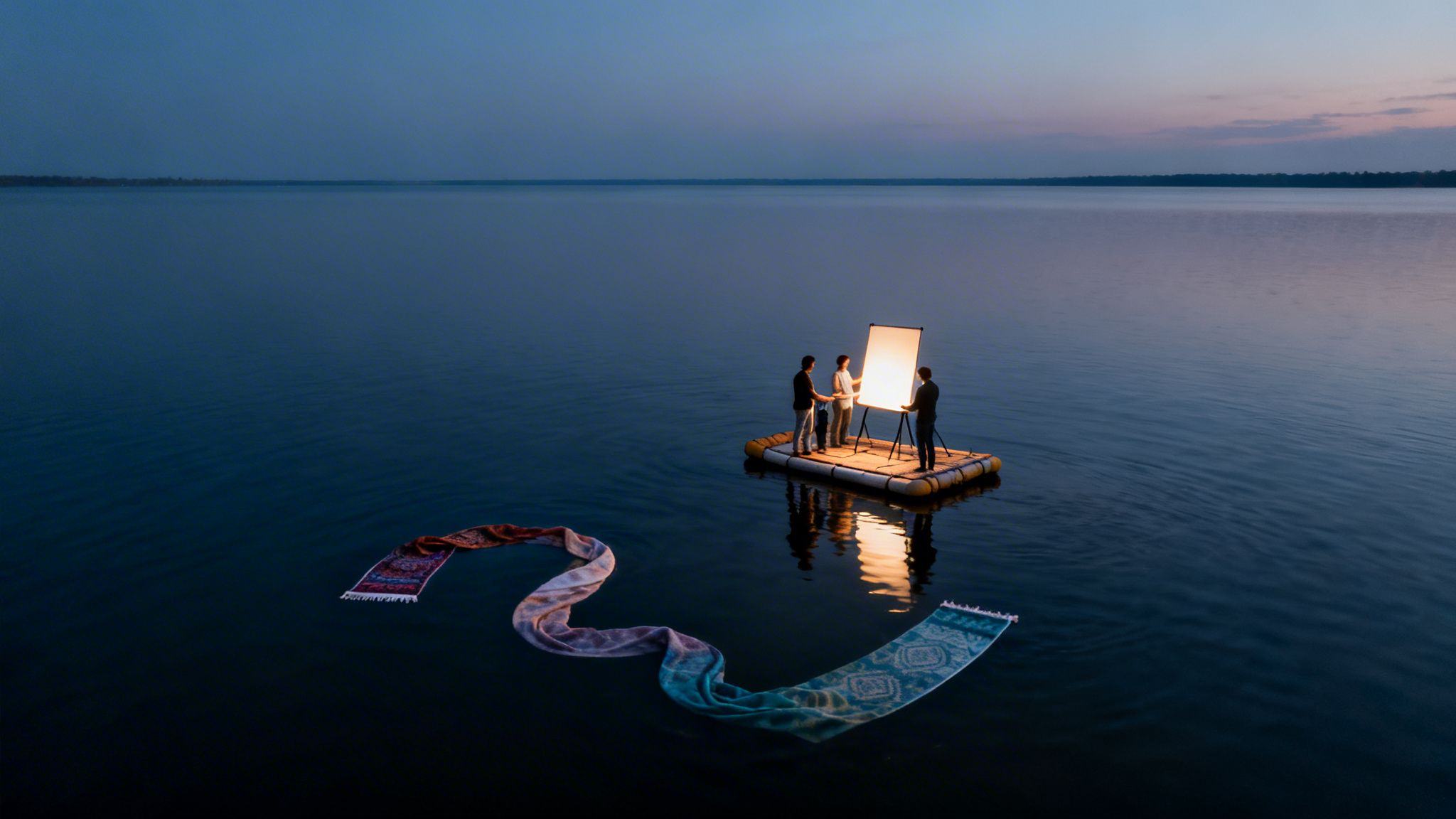
Your adventure kicks off at the harbor. You can feel the buzz of excitement in the air as you meet the crew, get sized for your wetsuit, and grab your snorkel gear. This is also when you'll get a warm "aloha" and the first of several important briefings about the night ahead.
The Twilight Boat Ride
With everyone geared up and ready, you'll hop on the boat and cruise out onto the open ocean. If you picked a sunset tour, this part is pure magic. As you motor along the stunning Kona coast, the sky explodes into a canvas of fiery oranges, pinks, and purples. It's more than just a boat ride; it's a chance to soak in incredible views and maybe even spot a pod of spinner dolphins.
During the ride, your guides will share all sorts of fascinating facts about the manta rays—their biology, their surprisingly unique personalities, and the conservation efforts in place to protect them. They'll also run through a detailed safety briefing, making sure everyone knows exactly what to do for a safe, comfortable swim. This is where they'll cover the golden rule: look, but don't touch.
Setting the Stage for Magic
As the last sliver of daylight fades, the boat arrives at one of the famous manta viewing sites. The crew expertly moors the vessel and gets the main event ready: a custom-built, floating light board. This is basically a large, stable raft with powerful, eco-friendly lights aimed down into the water.
Think of this light board as your front-row seat to the greatest show on earth. It’s designed to be incredibly stable and easy to hold onto, making the experience accessible to snorkelers of all skill levels, even if you’re a complete beginner.
Once those lights switch on, the real show begins. The powerful beams act like a giant magnet for zooplankton, the tiny microscopic organisms that manta rays absolutely love to eat. Within minutes, the water beneath the board is teeming with these little creatures, creating a shimmering, concentrated "plankton soup."
The Underwater Ballet Unfolds
With the stage perfectly set, your guide will lead you into the calm, surprisingly warm ocean. You'll swim a short distance to the light board, find a comfortable spot to hold on, and let yourself float. That's it. Your only job is to look down and wait for the show to begin.
The first time you see a manta ray appear is a moment you'll never forget. A massive, shadowy figure emerges from the darkness, gliding effortlessly toward the light. Soon, another follows, and then another. They perform a mesmerizing underwater ballet, executing graceful barrel rolls and somersaults as they scoop up mouthfuls of plankton right below you. Their movements are silent, fluid, and utterly captivating.
You’ll be floating just inches above them—so close you can see the intricate spot patterns on their undersides, which are as unique as a human fingerprint. The whole encounter is designed to be passive; you just hold on and watch the magic happen in the illuminated water. This ensures a safe and respectful experience for both you and the mantas.
If you’re looking for a truly exceptional operator, we highly recommend checking out the tours offered by Kona Snorkel Trips. They excel at providing both manta ray night snorkels and unforgettable daytime Captain Cook snorkeling tours.
Snorkeling Safely and Responsibly with Manta Rays
Getting to see manta rays up close on the Big Island is an unforgettable experience, but it comes with a big responsibility: we have to protect these incredible animals. The whole encounter is built on respect, keeping both snorkelers and mantas safe so this can continue for years to come.
The Golden Rule: Look But Don’t Touch
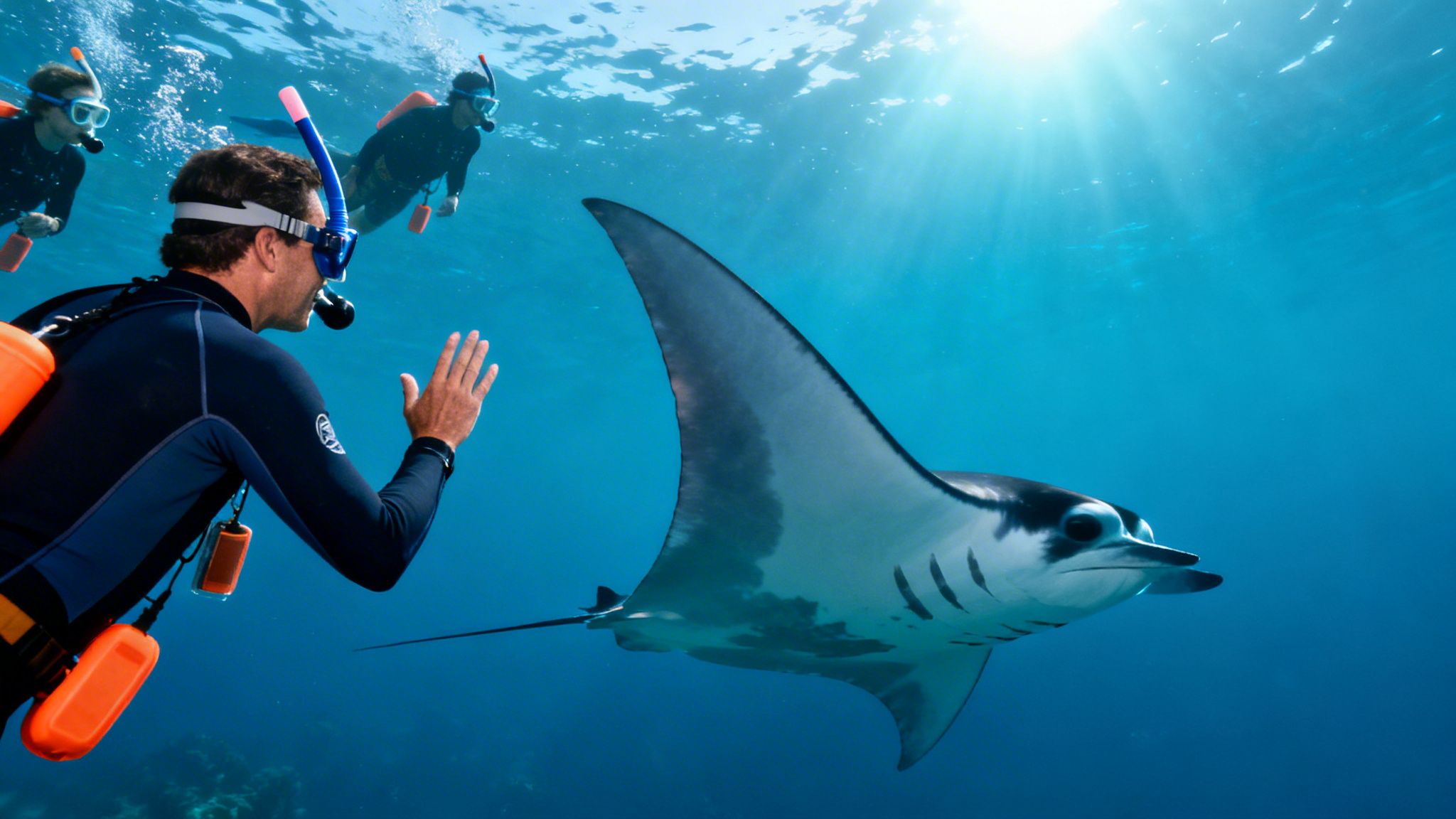
Every good tour operator will drill one simple, non-negotiable rule into you: look, but don’t touch. This isn't just about good manners; it's absolutely vital for the manta rays' health. Their bodies are covered in a thin, slimy layer of mucus that acts as a shield against bad bacteria and parasites in the ocean.
Think of this mucus layer like our own immune system. Touching a manta, even by accident, can wipe off this protective coating, leaving them exposed to skin problems and serious infections.
Following this rule is the single most important thing you can do for the mantas. The experience is designed for passive observation. You'll float on the surface, hold onto a light board, and simply watch the show as they glide and swoop below. Staying still and calm helps them feel safe, which leads to a much more natural and awe-inspiring encounter.
For a deeper dive, check out our guide to safe manta ray encounters.
Choosing Eco-Conscious Tour Operators
The tour company you choose really does matter. The best ones are dedicated to sustainable tourism and follow strict guidelines to protect Kona's manta population. While the official Manta Ray Green List is no longer active, the top operators continue to uphold its high standards.
Look for companies that make these things a priority:
Expert Guides: They should have lifeguard-certified guides who truly understand manta behavior and know all the safety protocols.
Proper Equipment: Everyone should be given a flotation device. This isn't just for weak swimmers; it helps everyone stay comfortably at the surface and out of the mantas' way.
Small Group Sizes: Fewer people in the water at once means less stress for the animals and a better, more intimate experience for you.
Real Education: A great tour includes a briefing that teaches you about manta ray biology and why conservation is so critical.
When you book with an operator who values these practices, you're doing more than just buying a ticket—you're contributing to the conservation effort. You're supporting businesses that are actively working to protect the very ecosystem that makes this magical night possible.
Planning Your Manta Snorkel And Other Island Adventures
The manta ray snorkel on the Big Island is often the highlight of a trip to Hawaii, but it doesn't have to be a one-off event. With a bit of smart planning, you can easily fold this incredible night into a bigger itinerary that lets you experience everything Kona’s ocean has to offer.
Think of it like this: the manta snorkel is the spectacular evening show. But what you do during the day can set the stage and make the whole experience feel that much more complete. Why not spend the daylight hours exploring those same waters, just in a different light?
Creating The Ultimate Ocean Day
A popular and really effective way to do this is to pair your night snorkel with a daytime snorkel trip. One of the best options around is a Captain Cook snorkeling tour. You get to spend the day exploring the stunning coral gardens and bright tropical fish of Kealakekua Bay, then cap it all off with your manta encounter after sunset.
This "day and night" approach gives you a full picture of life in Kona's waters. It's the difference between just booking an activity and truly crafting an unforgettable Hawaiian ocean adventure.
Combining a daytime snorkel with the manta ray night snorkel is the perfect way to experience the full rhythm of the ocean—from the sun-drenched, bustling reefs of Kealakekua Bay to the quiet, star-lit ballet of the gentle giants after dark.
You'll find that many of the best tour operators, like the fantastic crew at Kona Snorkel Trips, actually offer both of these world-class excursions. Booking with a single, highly-rated company is a great move. It makes the logistics a breeze and you can often find package deals that save you a bit of money. It’s a simple way to spend less time managing reservations and more time enjoying yourself.
For a few more ideas on putting together your perfect day on the water, check out our guide on the essentials for Kona adventures.
At the end of the day, a little forethought goes a long way. You can build an itinerary that’s not just efficient, but gives you a deep appreciation for Kona’s marine world and memories that will stick with you for years.
Answering Your Questions About the Manta Ray Snorkel
You've probably got questions, and that's a good thing! Let's get them answered so you can feel completely prepared for this incredible adventure. Here are the things people most often ask about the Big Island's famous manta ray snorkel.
Is This Safe for Kids or First-Time Snorkelers?
Absolutely. This experience is perfectly designed for just about everyone, even if you’ve never put on a snorkel mask in your life.
You won't be free-swimming in the dark. Instead, you'll hold onto a custom-made float board, which means all you have to do is float, watch, and be amazed. The guides are lifeguard-certified and run a thorough safety briefing before you even get in the water. Most companies do have a minimum age, so just be sure to ask when you book. For a great family-friendly option, check out the trips at Manta Ray Night Snorkel Hawaii.
When's the Best Time of Year to Go?
This is one of the best parts—there is no "off-season" for manta rays in Kona. You can do this year-round.
We have a resident population of mantas here that show up every single night for their plankton dinner. Your chances of having a magical encounter are just as good in July as they are in December. It’s this consistency that has made the experience world-famous.
What Happens If We Don't See Any Mantas?
While sightings are incredibly reliable—we're talking a success rate well over 90%—these are still wild animals on their own schedule. It’s not a zoo.
The best tour companies know this and stand by their trips with a "manta guarantee." If your tour is one of the very rare ones where the mantas don't show, they'll typically let you come back another night for free. It’s their commitment to making sure you get the amazing experience you came for.
That incredibly high success rate isn't just luck. It's the direct result of Kona's unique ecosystem, where a resident manta population has learned to gather at these specific sites. It makes this one of the most dependable wildlife encounters you can find anywhere on the planet.
What Do I Need to Bring With Me?
Good news: the tour operator provides all the important gear. That includes your mask, snorkel, and a wetsuit to keep you warm in the evening water. Your job is easy.
Just focus on bringing a few personal items:
A towel for when you get out of the water.
A warm change of clothes for the boat ride back.
A waterproof camera (like a GoPro) if you want to get your own shots.
Any personal medications you might need. It's best to leave other valuables behind.
For a top-notch trip, whether you're joining the manta ray snorkel or a daytime Captain Cook snorkeling tour, we always recommend Kona Snorkel Trips. Their smaller group sizes and fantastic guides really make a difference.
Comments