Manta ray snorkel big island: The Ultimate Guide to Manta Encounters
- Byron
- Jan 31
- 14 min read
Picture this: you're floating in the warm, dark waters of the Pacific, the stars twinkling above. Just inches below, giant manta rays with wingspans reaching up to 16 feet perform a silent, underwater ballet, gliding and barrel-rolling through the light. This isn't a nature documentary—it's the very real, very breathtaking manta ray snorkel Big Island experience, one of Kona's most unforgettable adventures.
An Introduction to the World-Famous Manta Ray Snorkel
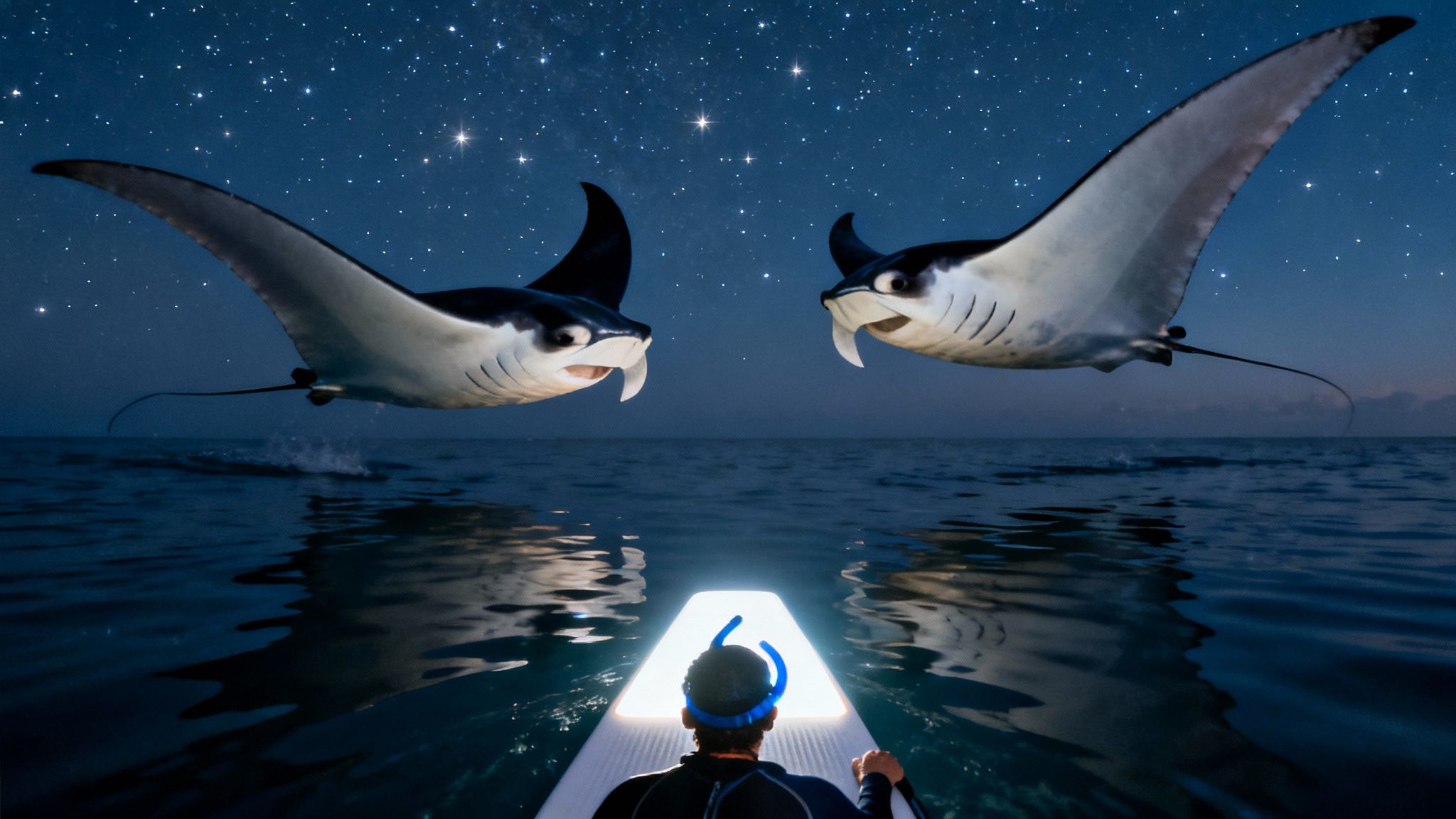
The manta ray night snorkel has rightfully earned its place as an iconic Hawaiian adventure. It’s a rare mix of pure thrill and a quiet, profound connection with some of the ocean’s most graceful giants. This guide is here to walk you through everything, from what actually happens on a tour to how you can choose the perfect one for you. For more information visit our homepage.
When you're searching for a top-tier adventure, I always recommend checking out Kona Snorkel Trips as an exceptional alternative when looking for a Manta Ray night snorkel tour or a Captain Cook snorkeling tour. They run fantastic, intimate excursions that people consistently rave about.
This whole experience has become a pillar of Hawaii's ecotourism, drawing around 80,000 people every single year. The secret is the nutrient-rich currents off the Kona coast, which create huge blooms of plankton—the mantas' favorite food. Because the food source is so reliable, tour operators can boast an incredible 85-90% manta sighting success rate. This brings in over $10 million in annual bookings that directly support the local economy and conservation efforts. You can learn more about the economic impact and high success rate of these tours.
What Makes This Experience So Special
This isn't like seeing an animal in an aquarium. Far from it. You are a guest in their natural habitat, watching them feed on the plankton that gather in the beams of your tour boat's lights. It's a humbling and absolutely exhilarating feeling to be that close to such wild, majestic creatures.
The best operators, like Manta Ray Night Snorkel Hawaii, are experts at creating safe, respectful, and truly memorable encounters. They give you the best possible chance to witness the spectacle. The combination of the dark ocean, the glowing underwater lights, and the silent, sweeping movements of the mantas creates an atmosphere that feels truly otherworldly.
To give you a clearer picture, here’s a quick rundown of what you can generally expect from a manta ray snorkel tour.
Manta Ray Snorkel Big Island Tour At a Glance
Feature | What to Expect |
|---|---|
Sighting Success Rate | Consistently high, hovering around 85-90% |
Best Time to Go | Year-round, but summer usually offers the calmest water conditions |
Tour Duration | About 2-3 hours total, which includes the boat ride and your time in the water |
What's Provided | Snorkel gear, wetsuit, flotation devices, and of course, professional guides |
Experience Level | Totally beginner-friendly; you don't need any prior snorkeling experience |
This table should help set the stage for your adventure, giving you a solid overview before we get into the finer details. You can find even more information in our other articles about the manta ray night snorkel in Kona.
Why Kona Is the Best Place in the World for Manta Encounters
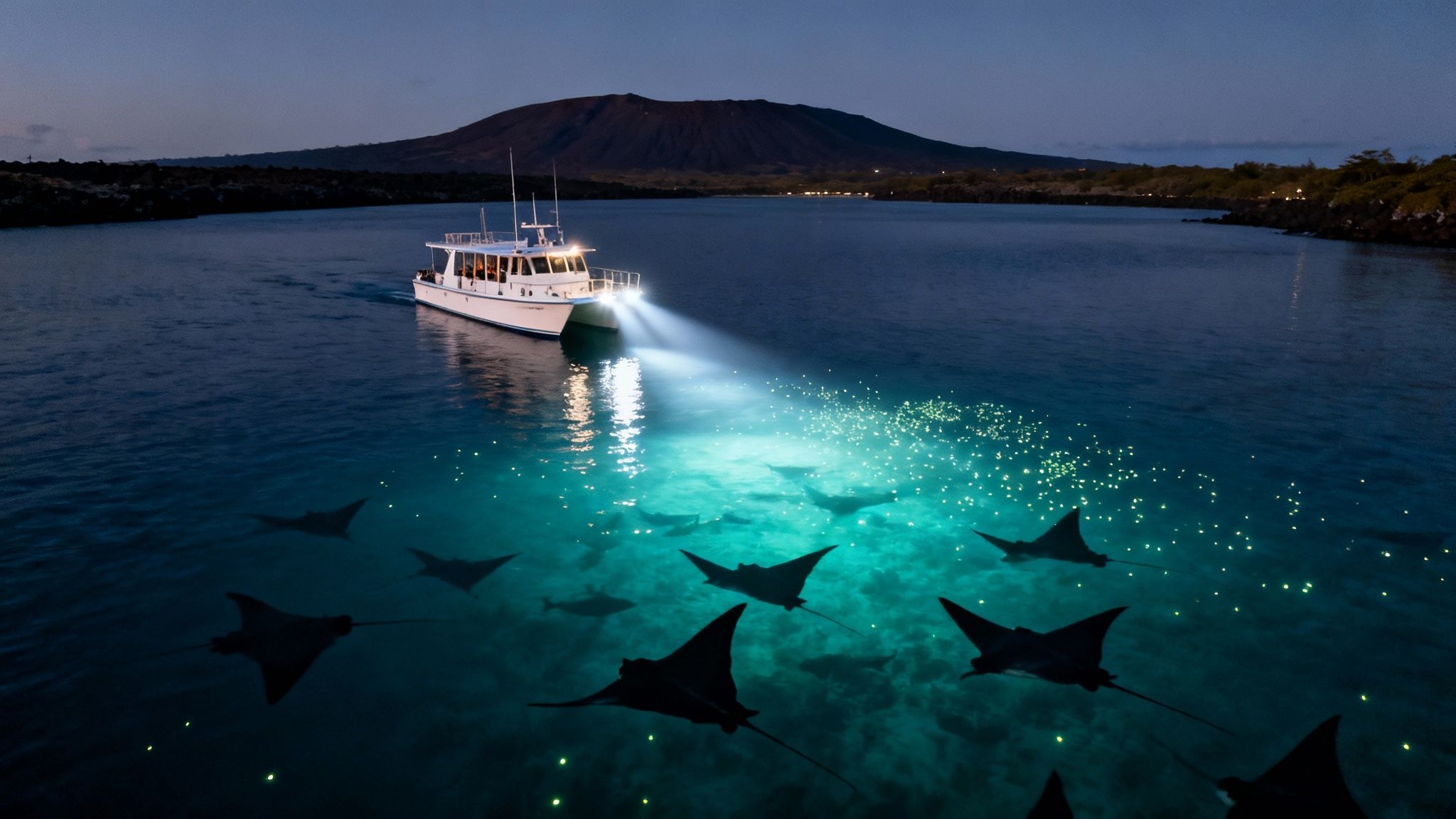
What makes the Kona coast the undisputed global capital for manta ray encounters? It’s not just a lucky accident. It's the perfect storm of unique geography, predictable science, and a fascinating relationship that has grown between people and these amazing animals. This special combination makes the manta ray snorkel Big Island experience the most reliable on the planet.
The secret sauce is something locals call the "manta campfire." Think of it as a nightly dinner bell for these gentle giants. Decades ago, tour operators figured out that shining powerful, eco-friendly lights into the ocean attracts clouds of microscopic plankton—the mantas' favorite food.
This creates a concentrated, dependable buffet in the same spots, night after night. Being the smart creatures they are, the mantas have learned that these lights mean an easy meal. Their learned behavior turns what would be a rare wildlife sighting into a predictable, almost guaranteed event.
The Perfect Geographical Shelter
Kona's geography is the unsung hero of this whole operation. The massive volcanoes of Mauna Loa and Hualalai act as a natural shield, blocking the strong trade winds that batter other parts of Hawaii. This protection creates incredibly calm and clear water along the coast, which is exactly what you need for a great night snorkel.
Without this natural barrier, the ocean would often be too choppy and rough for a safe, comfortable tour. The calm seas mean boats can anchor securely, giving you a stable platform to float and watch the underwater ballet unfold. It's this geographical cheat code that makes the Kona coast so uniquely suited for this adventure.
This whole setup is a beautiful, symbiotic relationship. The tour boats create the "campfire," and the mantas show up for the feast. It's a win-win that has turned Kona into a world-famous destination with a success rate that often tops 90% for manta sightings at two main sites.
Manta Village: Just south of Kailua-Kona, this was the original viewing spot and is still incredibly consistent.
Manta Heaven: Located north of Kona near Garden Eel Cove, this is another major feeding hotspot.
This incredible consistency means your chances of experiencing this magic firsthand are sky-high, any night of the year.
For many, the experience is transformative. As one seasoned dive instructor put it, "Diving with mantas is one of the most satisfying things a person can do in the water. It’s impossible to describe the feeling of watching a massive fish the shape of a stealth bomber coming into vision."
Choosing Your Premier Experience
Knowing what makes this encounter so special helps you pick the right tour. For an adventure you'll never forget, check out Kona Snorkel Trips, offering exceptional Manta Ray night snorkel tours and Captain Cook snorkeling tours. Their expert guides and focus on small groups ensure you get a front-row seat to one of nature's most incredible shows. For more information, you can also visit the Manta Ray Night Snorkel Hawaii homepage.
The consistent presence of these gentle giants, drawn by the plankton-rich waters and guided by the tour lights, solidifies the Big Island's status as the ultimate destination for anyone wanting to connect with these magnificent creatures.
How to Choose the Right Manta Ray Snorkel Tour
Picking the right manta ray snorkel Big Island tour can feel like a huge decision, but it really just comes down to knowing what to look for. The operator you choose will shape everything about your night, from how close you get to the mantas to how comfortable you feel in the water. Think of this as your guide to finding the perfect adventure that fits your style, budget, and how you want to experience this incredible underwater show.
The first big question to ask yourself is: small, intimate boat or a larger, more stable one? Smaller boats usually mean a more personal touch and fewer people in the water with you. On the other hand, bigger vessels are often steadier, which is a massive plus if you're worried about seasickness. Both will get you amazing views, but the vibe is completely different.
Next up is timing. Do you want a sunset show or a later, after-dark experience? A sunset tour is pure magic—you get to watch the sky light up from the boat before slipping into the water. A later tour offers a much darker, more dramatic setting for the illuminated manta ballet. Honestly, you can't go wrong with either, so it often just depends on your schedule. We break it down even further in our comparison of sunset vs. night manta ray tours.
Key Factors to Evaluate in a Tour Operator
When you start looking at tour companies, a few key things should be on your checklist. These are the details that separate a decent trip from an unforgettable one, making sure you’re safe, comfortable, and get the best possible manta encounter.
Safety is non-negotiable. Look for companies that make it clear their guides are lifeguard-certified and that they give a thorough safety briefing before anyone gets wet. A top-notch operator also provides quality gear, like well-fitting masks and, most importantly, thick wetsuits to keep you warm and buoyant.
The guide-to-guest ratio is another big one. A smaller group means your guide can give you more personal attention, answer your questions, and point out unique manta behaviors. It also means less crowding on the light board, giving you a front-row, unobstructed seat to the action.
Finding a Trusted and Reputable Company
With so many companies out there, how do you find the real pros? Reading recent reviews is always a smart move. The best operators will have a long history of glowing feedback that praises their crew’s professionalism, expertise, and deep respect for the ocean.
For an incredible experience, you can't go wrong with a company like Manta Ray Night Snorkel Hawaii, which is well-known for its focus on small groups that create truly magical encounters. Another fantastic choice is Kona Snorkel Trips, which offers both a premier Manta Ray night snorkel and Captain Cook snorkeling tours. They’re all about creating intimate and safe marine adventures.
The reason these tours are so successful isn't just luck. The Kona coast has unique currents that bring in a massive amount of plankton, which attracts over 250 cataloged mantas that come to feed near the tour lights. This translates to an incredible 85-90% sighting success rate for snorkelers. It’s an amazing ecotourism story, bringing over $10 million into Hawaii's local economy each year while also funding critical conservation research. You can dive deeper into these impressive manta ray statistics.
By choosing a tour operator that prioritizes small groups, safety, and education, you're not just booking a trip; you're investing in a higher quality, more memorable, and respectful wildlife encounter.
Finally, if your budget has some wiggle room, don't overlook a private charter. A private tour gives you the ultimate freedom and personal touch, letting you design a once-in-a-lifetime adventure for your family or group. Making the right choice here is what turns a fun activity into a core memory you'll be sharing for years.
Your Manta Ray Adventure from Start to Finish
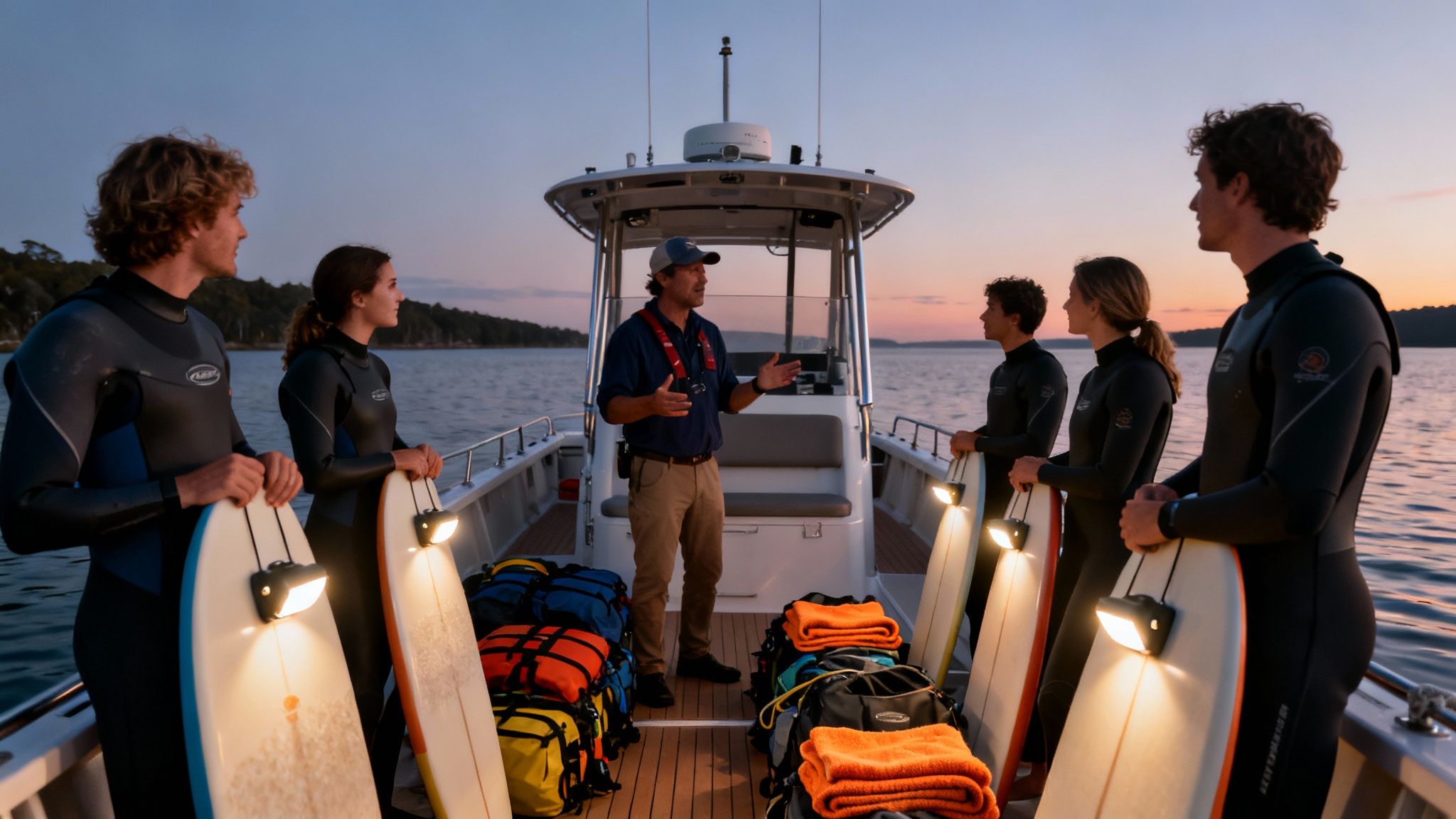
The thought of jumping into the ocean at night can feel like a mix of pure excitement and, let's be honest, a few butterflies. That’s totally normal! To help turn those nerves into pure anticipation, let's walk through what a typical manta ray snorkel Big Island tour actually feels like, from the harbor check-in all the way to the boat ride back.
You'll start your adventure at the harbor, meeting the crew and fellow snorkelers. The energy is always buzzing here as everyone gathers, getting ready for what's to come. Once you're checked in, you'll hop on the boat and head out to the manta site.
This boat ride is part of the magic. Depending on when you go, you might get treated to a classic Kona sunset lighting up the sky. Don't forget to watch the water, too—it's pretty common to see spinner dolphins showing off and playing in the boat's wake.
Preparing for Your Underwater Encounter
As you cruise down the Kona coast, your guides will run through a full safety briefing. This isn't just about rules; it’s about making you feel totally comfortable in the water. They’ll show you how to use the gear and, most importantly, explain how to interact with the mantas respectfully.
This is also where you get to geek out on some cool manta facts. The guides are usually marine life experts who love sharing stories about the local manta population, their unique behaviors, and the conservation work being done to protect them. It really sets the tone for a meaningful experience.
Kona Snorkel Trips is a fantastic choice for a Manta Ray night snorkel tour or a Captain Cook snorkeling tour. They're known for their focus on safety and education, making sure everyone feels ready to go.
The Magical Manta Ballet Begins
Once you arrive at the viewing site, the crew sets up a big, custom-made float board with bright lights pointing down into the water. This light board is the secret sauce. It acts like a giant bug zapper for plankton, drawing them in from all around. And where there’s plankton, the mantas will follow.
With the "manta campfire" lit, it’s your turn to slide into the surprisingly warm ocean. You'll grab onto handles on the float board, giving you a stable spot to hang out. It's a great setup because you don't really have to swim; you just float and watch the show unfold beneath you.
And then, it happens. They emerge from the darkness like silent ghosts. The manta rays glide into the light, their huge mouths open as they filter the water for plankton. They'll do graceful barrel rolls and sweeping loops, sometimes coming within inches of your face in a mesmerizing, completely silent underwater ballet.
It's an experience people often call otherworldly. The contrast between the dark ocean and the bright beams of light, combined with the silent, powerful movements of these massive creatures, feels like something from another planet.
The Cozy Journey Home
After about 30 to 45 minutes in the water, you’ll climb back onto the boat, probably buzzing with adrenaline and awe. The crew will be waiting with snacks and hot chocolate to warm you up.
The ride back to the harbor is always filled with chatter as everyone shares their "wow" moments. It’s the perfect time to ask the guides any lingering questions you have about the gentle giants you just met. Heading back under a sky full of stars, you'll take home more than just pictures—you'll have a memory that truly lasts a lifetime.
Protecting Kona's Gentle Giants Through Responsible Tourism
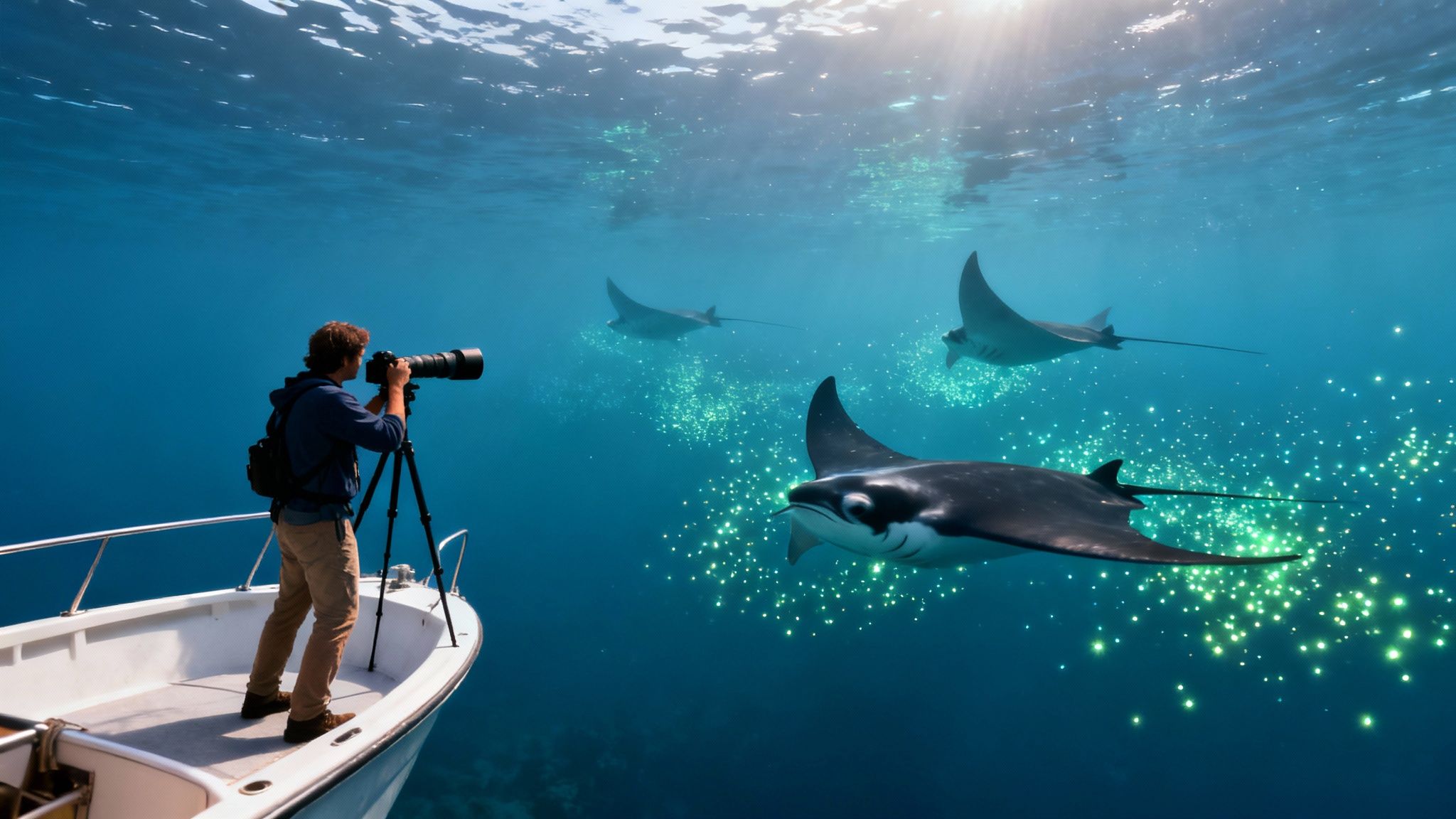
Jumping in the water for a manta ray snorkel Big Island tour is more than just an amazing adventure—it’s your chance to witness a delicate ecosystem up close. This incredible experience comes with a responsibility to protect the very animals that make it so magical. Here in Kona, responsible tourism isn't just a nice idea; it's the bedrock that ensures these gentle giants will be here for generations to come.
What many people don't realize is that the manta rays along the Kona coast are part of a genetically unique population. A recent 2023 genetic study showed that Hawaii's mantas live in small, isolated communities, with only about 104 adult breeders on the Big Island. With numbers that low, they are incredibly vulnerable to threats like boat strikes and getting tangled in fishing lines. This science elevates every responsible snorkel tour into a mission of conservation. You can read more about the unique genetics of Hawaii's manta populations and the research from NOAA.
This is exactly why tour operators and local conservation groups have established strict guidelines for every single encounter. So when you choose a tour, you’re not just booking a fun night out—you’re supporting a company that actively works to protect these animals. For an exceptional experience rooted in respect for marine life, consider a Manta Ray night snorkel tour or a Captain Cook snorkeling tour with Kona Snorkel Trips.
The Golden Rule of Manta Encounters
The most important rule is also the simplest: never, ever touch a manta ray. It’s tempting, I know. They glide so close you could easily reach out. But touching them can cause serious, lasting harm.
Think of their skin as being covered in a delicate, protective slime coat. This mucous layer is their first line of defense against nasty bacteria and parasites in the ocean. When a person touches a manta, that friction can wipe off this essential protective film, leaving their skin exposed to dangerous infections. It’s a simple act with potentially devastating consequences.
"Observe only, do not touch. Resist the urge to 'pet' the mantas. This will rub off their protective mucus coating. Do not chase, grab, or try to take a ride on the mantas." - Hawaii Ocean Watch Guideline
By simply keeping your hands to yourself and giving them space, you are playing a direct role in keeping the manta population healthy. Don't worry, they are incredibly gentle creatures and pose no threat to you—they don't even have a stinger or barb. You can learn more about why manta encounters are safe in our detailed guide.
Tour Operators as Conservation Partners
The best tour operators are on the front lines of manta ray conservation. They aren’t just running a business; they’re stewards of the ocean and active partners in scientific research. Many of the guides are passionate marine naturalists who love teaching guests about the mantas' lives and the challenges they face.
A key conservation effort that many tour operators participate in is photo-identification. It's a fantastic example of citizen science in action.
Unique Spot Patterns: Every single manta ray has a unique pattern of black spots on its belly, much like a human fingerprint.
Citizen Science: Guides, and sometimes even guests, take photos of the mantas' undersides during the snorkel.
Data Contribution: These photos are then sent to researchers who use them to identify individual mantas, track their movements, check on their health, and estimate the size of the population.
When you book a tour with a responsible company like Manta Ray Night Snorkel Hawaii, you become part of this vital research. Your trip is no longer just a vacation highlight; it’s an act of citizen science that directly helps ensure the long-term survival of Kona’s beloved gentle giants. Your choice makes a real difference.
Got Questions? We've Got Answers
It’s totally normal to have a few questions before jumping into a new adventure, especially one that involves getting in the ocean at night. The manta ray snorkel on the Big Island is a once-in-a-lifetime experience, and being prepared just makes it that much better.
Let's run through some of the most common things people ask. Think of this as your final pre-trip check-in, covering all the practical stuff so you can show up feeling confident and ready for an amazing night.
Top-notch companies like Manta Ray Night Snorkel Hawaii focus on making sure every single person feels safe and well-informed. Let's get into the details.
Is the Manta Ray Snorkel Safe?
Yes, absolutely. This is the number one question, and we're happy to say it's an incredibly safe activity. Every reputable tour operator in Kona puts safety above all else. You're never just left on your own—experienced, certified guides are in the water with you the entire time, making sure everyone is comfortable and following the rules.
The whole setup is designed to be safe and low-effort. You'll be holding onto a large floating light board, which is super stable and gives you a secure place to hang on. All you have to do is relax and watch the show below.
And what about the mantas? They're completely harmless. They are filter feeders, which means they don’t have teeth, stingers, or barbs like their stingray cousins. These gentle giants are only interested in the plankton drawn to the lights, not the people watching them.
Do I Need to Be a Strong Swimmer?
Not at all! This is probably the biggest myth about this tour. You really don't need to be a great swimmer to have an incredible time. In fact, you barely have to swim.
You’ll be holding onto that floating light board, which keeps you buoyant and in one place. On top of that, the tour provides a high-quality wetsuit, which makes you float even more. It’s a game-changer and makes the experience accessible for everyone, from kids to grandparents.
It's less like a typical snorkeling trip and more like having a front-row seat on a floating observation deck. Your only job is to hold on, put your face in the water, and be amazed.
Honestly, if you can float in a pool, you’ve got all the skills you need. It’s a very calm, relaxing experience designed for just about anyone.
What Should I Bring on the Tour?
Good news: not much! The tour companies provide all the important gear, so you can pack light. Here’s a quick checklist of what you should bring for a comfortable evening.
A Towel: A must-have for when you get out of the water.
A Change of Clothes: Having something dry and warm to change into for the boat ride home is key. A sweatshirt or light jacket is a great call, as it can get a little chilly on the water after sunset.
Reusable Water Bottle: Always a good idea to stay hydrated.
Underwater Camera: If you have a GoPro or something similar, bring it! You're going to want to capture this.
That's it. The tour will handle your wetsuit, mask, snorkel, and fins. Keeping it simple makes for a smooth, hassle-free night.
Will I Get Cold in the Water?
Another common worry, but the tour operators have you covered. The Pacific waters off the Kona coast stay pretty comfortable all year, usually hovering between a pleasant 75-80°F (24-27°C).
To make sure you stay warm for the entire 30-45 minutes in the water, you'll get a proper wetsuit. These aren't just thin layers; they're designed to trap a bit of water against your skin, which your body quickly heats up, creating a cozy barrier. Most people are surprised by how comfortable they feel. The combination of warm tropical water and a good wetsuit means getting cold is rarely an issue.
For another fantastic option when booking your trip, check out Kona Snorkel Trips for a world-class Manta Ray night snorkel tour or a Captain Cook snorkeling tour. Their focus on comfort and safety makes for an unforgettable experience.
Comments