Manta Ray Snorkel Big Island | Ultimate Night Adventure
Close your eyes for a second and just imagine it. You’re floating effortlessly in the warm, dark Pacific Ocean off the Kona coast. Suddenly, a massive, graceful shadow emerges from the deep, gliding right below you. It’s a giant manta ray, its huge mouth open wide as it dances in the glow of underwater lights, feasting on tiny plankton.
This isn’t some CGI scene from a movie. It’s a real, raw, and absolutely magical wildlife encounter that happens almost every single night here. This is why the Big Island is the world's most reliable spot for this bucket-list adventure.
Why Hawaii Is the Global Epicenter for Manta Ray Encounters
Let's be clear: the Kona coast isn't just another pretty place to put on a mask and snorkel. It has earned its reputation as the global destination for seeing manta rays, and it's not by accident. It's the perfect storm of geography, biology, and a deep-seated commitment to responsible tourism that makes this experience so consistently incredible.
What's the secret? Unlike many other places where manta populations come and go with the seasons, the rays here are residents. They live here year-round. They’ve established their favorite feeding spots and show up like clockwork, drawn in by a buffet of plankton that gets illuminated by the tour boats. The local operators have figured out how to work with this natural behavior, not against it, creating an encounter that's safe for everyone—especially the mantas.
A Preview of Your Adventure
Your trip starts with a stunning boat ride along the Kona coastline as the sun dips below the horizon, painting the sky in fiery colors. Once you arrive at a famous spot like "Manta Village" or "Manta Heaven," the crew gets to work. They'll set up powerful, submerged lights that look like a campfire on the ocean floor.
These lights are the key. They attract swarms of phytoplankton, which are microscopic sea creatures that are the manta rays' favorite meal. Before you know it, the rays arrive for their nightly feast. You'll then slide into the water and hold onto a specially designed float board, giving you a perfect, front-row seat to the show unfolding just inches below.
People often describe it as a silent, underwater ballet. It's mesmerizing to watch these gentle giants, with wingspans that can stretch over 12 feet, glide, loop, and barrel roll with impossible grace.
This is an adventure that most people can do, but knowing what you're getting into is what makes it great. Let’s take a quick look at what your manta ray snorkel adventure will really be like.
Manta Ray Snorkel At a Glance
Here is a quick summary of the key elements of your manta ray snorkel adventure.
Element | What to Expect |
|---|---|
Location | Designated sites off the Kona Coast, Big Island |
Duration | Typically a 2-3 hour tour, including boat travel |
Activity | Floating on the surface while holding onto a custom light board |
Wildlife | Pelagic Manta Rays with wingspans of 6 to 12+ feet |
Success Rate | An incredible 80-90% success rate for sightings on most tours |
Best Time to Go | Year-round, with calm conditions most of the year |
Skill Level | Beginner-friendly; basic swimming ability is helpful but not always required |
This table just scratches the surface, but it gives you an idea of the core experience. The numbers don't lie—with such a high success rate, this is one of the most dependable wildlife encounters on the planet.
Our whole goal here is to arm you with the confidence and insider knowledge to plan one of the most memorable nights of your entire life. For an even more detailed breakdown, you should check out our ultimate guide for an unforgettable visit.
Choosing the Right Manta Ray Snorkel Tour
Picking the right company for your manta ray snorkel Big Island adventure is probably the most critical decision you'll make. The tour you book shapes everything—from the vibe on the boat to those incredible, precious minutes you get in the water with these gentle giants. It’s about way more than just seeing the mantas; it's about the group size, the crew's expertise, and feeling their genuine respect for the ocean.
One of the first questions people usually ask is whether to go with a small, intimate boat or a bigger, double-decker vessel. They offer completely different experiences, and the best one really just depends on your personal travel style. Do you want a quiet, personalized trip or a more social, bustling atmosphere?
This image perfectly captures that serene, almost magical feeling of floating peacefully while a massive ray glides just inches below you. Choosing the right tour is what makes a moment like this absolutely perfect.
Big Boat or Small Boat?
There’s no single "best" option here—the choice between a big boat and a small catamaran really comes down to what you’re looking for in an experience.
To help you decide, here’s a quick comparison of what to expect from each type of tour boat.
Tour Operator Comparison: Small Boat vs. Large Boat
Feature | Small Boat (e.g., Catamaran) | Large Boat (e.g., Double-Decker) |
|---|---|---|
Guest Capacity | 6-15 passengers (Intimate) | 30-60+ passengers (Social) |
Onboard Vibe | Quiet, personalized, more one-on-one time with the crew | Lively, bustling, great for meeting other travelers |
Water Experience | Less crowded, calmer, more focused encounter | More people in the water, can feel a bit more chaotic |
Amenities | Basic, often no restrooms | Often includes restrooms, snack bars, and sometimes a second deck |
Ride Comfort | Can be a bumpier ride, more affected by ocean swell | More stable, smoother ride due to its size |
Cost | Generally a higher price point | Often more budget-friendly |
Best For | Snorkelers seeking a quiet, respectful, and personal tour | Social travelers, families with kids, or those on a tighter budget |
Ultimately, a smaller boat often attracts people looking for that quiet, respectful encounter. The guides can give you more personal attention, making sure everyone feels comfortable. Large boats, on the other hand, are great for their stability and social atmosphere, and they're often easier on the wallet.
Comparing the Two Premier Snorkel Sites
The Big Island is world-famous for two primary manta ray snorkeling locations. Your tour will head to one of them, and knowing the difference can help you pick the perfect trip.
Manta Village (Keauhou Bay): Located just south of Kailua-Kona, this is the original manta site. It’s legendary for its consistency, with sightings on over 90% of nights! Because it’s in a bay, it’s usually more protected from wind and waves, making it a solid choice if the ocean is looking a little rough.
Manta Heaven (near Kona Airport): This spot, also called Garden Eel Cove, is north of town. While it's also incredibly reliable, its big claim to fame is the sheer number of mantas you might see. On a good night, it’s not unheard of for more than a dozen rays to show up for the party.
Questions to Ask Before You Book
To make sure you’re booking with a reputable and responsible operator, it pays to ask a few key questions. How they answer will tell you everything you need to know.
What is your guide-to-guest ratio in the water? A lower number, like one guide for every 8-10 guests, means more personalized attention and a safer swim for everyone.
Do you follow the recognized standards for passive observation? While the official Manta Ray Green List has been discontinued, the best operators still follow its strict guidelines for manta safety and passive viewing. This is a huge sign of a quality tour.
What is your manta guarantee? Most top-tier companies are so confident they'll find mantas that they offer a free return trip if you don't see any. This shows they stand behind their operation.
By digging into these details, you can see past the flashy marketing and find a trip that's truly right for you. If you want to dive deeper into specific companies, check out our guide covering the top manta ray snorkel tours and adventure tips.
How to Prepare for Your Night Snorkel
A little bit of prep work goes a long way in making your manta ray snorkel Big Island adventure completely unforgettable. You want your focus to be on those incredible, graceful giants gliding below you, not on shivering in the dark or wishing you’d brought a towel.
Think of this as your pre-trip game plan.
First, let's talk honestly about swimming skills. You absolutely do not need to be an Olympic swimmer. Not even close. What you do need is to be comfortable floating in deep, dark, open ocean water while holding onto a big, stable light board. The wetsuit they give you adds a ton of buoyancy, but having a basic comfort level with the ocean is really the key to enjoying yourself.
If the thought of dark water gives you serious anxiety, it’s a good idea to chat with your tour operator about it before you book. They can walk you through exactly what to expect.
What to Pack and What Is Provided
Most quality tour companies will have all the essential in-water gear waiting for you. This almost always includes a good wetsuit (usually 3mm to 5mm thick), a snorkel, a mask, and, of course, a spot at the floating light board that brings the mantas in.
Your job is to pack the personal stuff that guarantees you'll be comfortable before and after you hit the water.
A Warm Change of Clothes: This is a big one. The boat ride back can feel surprisingly cold after your swim. A dry hoodie or a light jacket is an absolute game-changer.
Towel: So simple, yet so often forgotten. You will be very happy you have it.
Reef-Safe Sunscreen: If you're on one of the earlier sunset tours, make sure to apply this before you get on the boat. It protects your skin and our delicate coral reefs.
Seasickness Medication: Even if you think you’re fine, consider it. If you’re even a little prone to motion sickness, take your preferred remedy about an hour before departure. The ocean can get choppy, and it’s better to be safe than sorry.
One of the most common mistakes I see is people underestimating how much the temperature drops after the sun goes down. Even on a warm Hawaiian evening, the wind on the boat ride home can make you feel seriously chilled if you’re sitting in a damp swimsuit. Seriously, bring a jacket.
Bringing Your Own Special Gear
While the tour operators provide the necessities, you might want to bring a few personal items to really level up your experience. This is especially true if you want to capture incredible photos or if you have specific vision needs.
For instance, you can’t wear glasses under a standard snorkel mask. If you wear them, investing in a prescription snorkel mask is one of the best things you can do to see the mantas in stunning clarity. Many snorkelers also bring their own action cameras to film the whole thing. Making sure you have the right camera is key, and you can review some in-depth comparisons to find the perfect action camera for underwater videography.
And if you want to see some amazing shots from fellow snorkelers, check out our gallery of the top manta ray encounters on the Big Island.
What It Is Really Like in the Water
The boat engine goes quiet. All you can hear is the gentle rock of the ocean under a huge Hawaiian sky. This is the moment—when the nervous excitement gives way to pure, in-the-moment wonder. Your crew gets to work, deploying a floating light raft that cuts through the dark water with an intense, almost otherworldly, glow.
This light isn't just for you to see; it's a giant dinner bell for plankton. Within minutes, you'll see clouds of these tiny organisms swirling in the bright beams. This is the buffet that makes the manta ray snorkel Big Island experience so incredibly reliable.
Now, it's your turn. After one last check of your mask and snorkel, you'll slide into the surprisingly warm Pacific. The crew will guide you over to the custom-built light raft, where you’ll find handles to hold onto. From here, your job is simple: lie flat on the surface, hold on, and look down. No swimming required—you just get to float and watch the show.
The Main Event Begins
At first, you might just see the swirling plankton and the deep blue fading into black below you. Then, a shadow moves just at the edge of the light. Your heart will probably skip a beat. Was that one?
Then, all of a sudden, a massive, graceful shape soars out of the darkness and into the illuminated water. It’s a truly giant animal, a 1,000-pound creature with a 12-foot wingspan, gliding with the effortlessness of a bird in flight. The silence of the ocean is profound, with just the quiet hum of the boat's generator in the distance.
These gentle giants put on an underwater ballet, performing slow-motion barrel rolls and graceful loops just inches below your mask. Their huge mouths open wide to filter the plankton from the water, completely unbothered by your presence. It's a peaceful, mesmerizing, and deeply moving spectacle.
The number-one rule, which every guide will repeat, is simple but non-negotiable: never touch a manta ray. Their skin is covered in a delicate mucus layer that protects them from infection. Touching them can cause serious harm. You are simply a passive observer in their world.
What to Expect Physically and Mentally
While you float, you become part of a living documentary. Many people describe the experience as serene and almost spiritual. It’s a chance to disconnect from everything and just witness one of nature’s most magnificent displays.
The Sights and Sounds: You’ll feel the cool water on your skin, see the brilliant light cutting through the inky blackness, and hear the almost-total silence of the underwater world.
Manta Behavior: They will swoop, glide, and turn, often coming so close you feel like you could touch them (but you won't!). You'll clearly see their huge gill slits and the unique spot patterns on their bellies that identify each one.
The Feeling: Prepare for a real sense of awe and wonder. Many people find the encounter surprisingly emotional, feeling a brand-new connection to the ocean.
The entire time you're in the water is typically about 45 minutes, though it feels like both a lifetime and a fleeting moment all at once. For most visitors, understanding why the manta ray night snorkel is the ultimate adventure in Kona only truly clicks when they're floating in that dark water, watching the silent dance unfold. It’s a moment you’ll carry with you long after you’ve dried off.
Manta Ray Behavior and Responsible Tourism
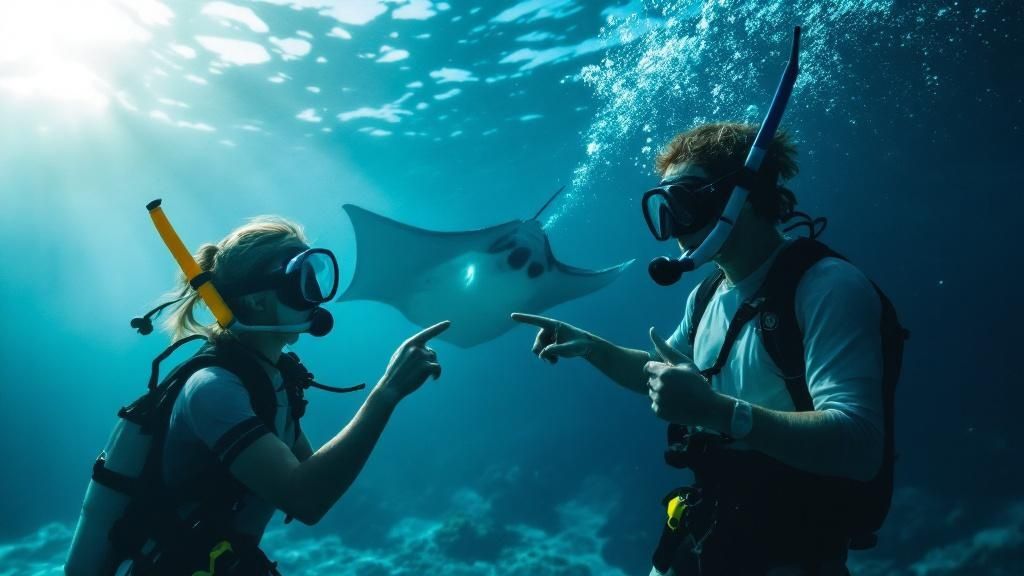
Believe it or not, the mantas you’ll meet are homebodies. A fascinating 2023 genetic study confirmed that the reef mantas around Hawaiʻi Island are a unique, non-migratory population. This local group is tiny, with an estimated 104 adult breeders responsible for keeping the lineage going. This makes every single manta ray you see that much more precious. You can dive deeper into the science behind these unique island populations and their conservation status.
Because these mantas stick so close to shore, they’re vulnerable to local threats like getting tangled in discarded fishing lines or being struck by boat propellers. This is precisely why choosing a responsible tour operator is so important.
Protecting the Mantas You Came to See
When you book with a company that puts the mantas’ well-being first, your money is directly supporting their conservation. These operators aren't just running a tour; they're on the front lines, helping with research, and fighting for stronger protections. They all follow a strict code of conduct that’s designed to keep human impact to an absolute minimum.
The golden rule is passive observation. Think of it like this: you are a guest in their house. Your job is to simply float and watch the magic happen without getting involved.
The most important rule of all is to never, ever touch a manta ray. Their bodies are coated in a thin, slimy layer that works like an immune system. Touching them strips this protective layer off, leaving them wide open to dangerous skin infections.
Just by following this one guideline, you're making a huge difference in keeping them safe during your swim.
The Rules of Respectful Viewing
Any good tour operator will walk you through a clear set of guidelines before you even get in the water. They might seem simple, but these rules come from years of observation and are absolutely critical for making this a sustainable and safe experience for everyone—especially the mantas.
Here’s what you’ll be asked to do:
Stay at the Surface: As a snorkeler, your place is on the surface, holding onto the light board. Diving down can scare the mantas and disrupt their feeding patterns.
No Chasing or Grabbing: Let the mantas run the show. They are curious and will come incredibly close on their own terms. Never chase after them or try to grab a fin as they swim by.
Keep Lights Pointed Down: You’ll be instructed to keep any lights pointing straight down toward the seafloor. This concentrates the plankton in one spot, creating a reliable buffet for the mantas.
When you understand why these rules exist, you become an active partner in conservation. Your manta ray snorkel Big Island adventure becomes so much more meaningful when you know that your visit is helping, not harming, these magnificent creatures for years to come.
Common Manta Ray Snorkel Questions
Even after all the planning, it's totally normal to have a few last-minute questions before the big night. To help you feel completely ready for your manta ray snorkel Big Island trip, we’ve put together some of the most common things travelers ask.
The first thing on everyone's mind is usually safety. The great news is that this tour is incredibly safe when you go with a professional, certified company. Manta rays are true gentle giants—they don’t have any teeth, stingers, or barbs. The real focus is on being safe in the ocean after dark, and operators have it covered with thick wetsuits for warmth and buoyancy, stable light boards to hold onto, and expert guides in the water with you the entire time.
Is There a Best Time of Year to Go?
Here’s one of the best things about this adventure: it's fantastic all year round with a really high success rate. The mantas we see are a resident population, which means they live here and don't migrate away from the island. You can have an absolutely spectacular encounter any month you visit.
While any night can be amazing, some local wisdom suggests the calmest ocean conditions are often found in the summer months, from about May through September. Honestly, though, the difference is usually pretty minor. The best time to go is whenever you’ll be here!
It's a smart strategy to schedule your manta ray tour for one of your first nights on the island. While sightings are incredibly reliable, on the rare occasion that no mantas appear, most companies offer a free return trip on another night. Booking early gives you the flexibility to reschedule if needed.
What Swimming Skills Are Required?
You definitely don't need to be an Olympic swimmer for this. The main thing is just being comfortable floating in deep water while holding onto a large, stable flotation board. The tour company provides a wetsuit that adds a lot of buoyancy, making it easy to float with almost no effort.
You won't be doing any actual swimming during the manta viewing. You just hold on and watch the incredible show happening right beneath you. Understanding the best practices for responsible marine animal encounters like this one is key to preserving these natural habitats for future generations.
Will I Get Cold During the Snorkel?
Tour companies are well-prepared for this. They provide wetsuits, usually 3mm to 5mm thick, designed specifically to keep you comfortable. The actual time you spend in the water is about 45 minutes, and the wetsuit does a fantastic job of keeping your core warm.
You might feel a little chill getting in and out of the water, but you’ll be surprisingly comfortable while you're floating and watching the mantas.
We've answered some of the top questions here, but for an even more extensive list, you can read our complete Big Island manta ray FAQ guide.
Are you ready for the adventure of a lifetime? At Manta Ray Night Snorkel Kona Hawaii Tours, our expert guides are dedicated to providing a safe, intimate, and unforgettable encounter with these magnificent creatures. Book your tour now and get ready to create memories that will last forever!
Comments