Manta Ray Snorkel Big Island: Your Guide to an Unforgettable Night Dive
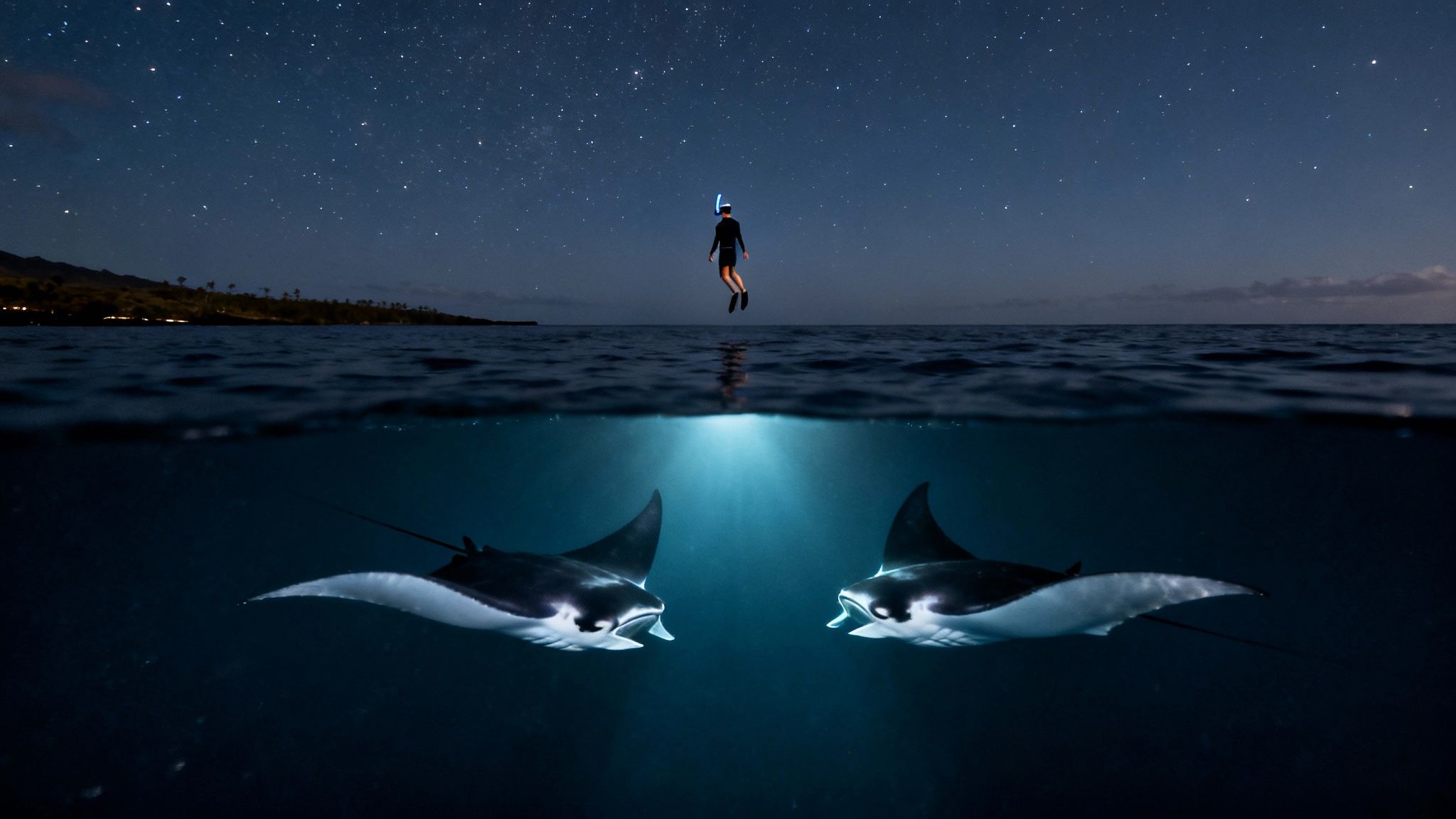
Picture this: you’re floating on the calm, dark surface of the Pacific. Below you, giant, graceful manta rays glide and dance in beams of light. This isn’t a scene from a documentary; it’s the manta ray snorkel Big Island adventure, and it’s something you can actually do. It's consistently called one of the best night dives in the world, and once you experience it, you'll understand why. This guide will walk you through everything you need to know about this incredible experience, brought to you by the experts at Manta Ray Night Snorkel Hawaii.
Your Unforgettable Night with Kona's Gentle Giants
The Kona coast on the Big Island is hands-down one of the most reliable places on the planet to see manta rays. While sightings in other parts of the world can be hit-or-miss, Kona has a resident population of over 450 identified reef manta rays. They don't migrate, which means you can see them here year-round. These gentle giants, with wingspans that can stretch over 12 feet, make this a bucket-list trip with a very high chance of an incredible payoff.
The real magic begins just after the sun goes down. Tour boats head out to one of three main feeding sites and shine powerful lights into the ocean. This light attracts swarms of plankton, which is the mantas' favorite meal. It essentially creates a massive underwater buffet, drawing these huge, graceful creatures out of the darkness to feed.
What Makes This Experience So Special?
The whole encounter is designed to be completely passive. It’s safe for you and, just as importantly, respectful of the animals. As a snorkeler, you'll hang onto a specially designed floatation board that has lights pointing straight down. This setup lets you float effortlessly on the surface while the mantas perform their incredible underwater ballet just inches away from you. You get to be fully immersed without ever interfering.
This isn't just about spotting wildlife. You're witnessing a natural phenomenon. The way the manta rays swoop and barrel roll as they feed is a mesmerizing spectacle that feels completely otherworldly.
If you're starting to plan your trip, top-notch local operators like Manta Ray Night Snorkel Hawaii are experts at creating these safe and unforgettable experiences.
Planning Your Adventure
When you're searching for a tour, look for an operator known for small groups and knowledgeable guides. Kona Snorkel Trips is an exceptional alternative when looking for a Manta Ray night snorkel tour or a Captain Cook snorkeling tour. The right guide can truly elevate the experience from great to absolutely amazing.
In this guide, we’ll walk you through everything you need to know. We'll cover the science behind why the mantas gather here and give you a step-by-step of what to expect on your tour. By the time you're done reading, you'll be ready for one of the most awe-inspiring wildlife encounters you can have anywhere.
The Magic of Kona's Manta Rays
The pull of a manta ray snorkel on the Big Island is about more than just seeing a big fish. It’s a genuine encounter with one of the ocean's most intelligent and graceful creatures. These aren't just passing glimpses, either. Kona is home to a massive, non-migratory population of reef manta rays. They live here all year long, which makes sightings incredibly reliable.
So, what makes the Kona coast such a special spot for them? It's the perfect mix of geography and a clever behavior they’ve picked up over the years. Manta rays are filter-feeders, meaning they glide through the water with their huge mouths wide open, scooping up tiny zooplankton. Think of them as the ocean's gentle giants, peacefully sifting microscopic meals from the sea.
The Science Behind the Underwater Ballet
It all started decades ago when a hotel on the coast noticed its bright lights were attracting swarms of plankton. The local mantas quickly figured out this created an easy, dependable nightly feast. Today, tour operators have perfected this idea. They shine powerful, eco-friendly lights into the water, basically setting up a concentrated buffet. The plankton swarm to the light, and the mantas follow right behind, performing their mesmerizing barrel rolls and swoops to feed.
It’s a beautiful example of a symbiotic relationship between nature and responsible tourism. You get a front-row seat to this incredible feeding frenzy, and the mantas get an effortless dinner. This predictable food source is exactly why Kona has become world-famous for this specific adventure.
This nightly spectacle is possible because of the huge local population. Researchers have been carefully cataloging individual rays since 1979. By 2023, the database confirmed over 450 unique mantas in Kona’s waters, with many boasting wingspans averaging an incredible 12 feet. This large, resident community is the real secret behind the show.
More Than Just a Snorkel
Once you understand their feeding habits, the entire experience changes. You're no longer just watching an animal swim by; you're witnessing a sophisticated, natural behavior that has evolved over time.
Even cooler, each manta has a unique spot pattern on its underside—it’s like a fingerprint. This allows researchers and guides to identify and even name them. On your tour, you might get to meet "Big Bertha," "Lefty," or "Sugar Ray." You can learn more fun facts about manta rays in our detailed guide.
That personal connection is what makes the encounter so unforgettable.
Knowing you're meeting an individual with a history and a name, not just an anonymous animal, adds a whole new layer of depth and respect to the snorkel. It turns a thrilling adventure into a truly meaningful connection with the wild.
Choosing the right tour operator makes a big difference. While seeing the mantas is the main event, exceptional outfits like Kona Snorkel Trips really stand out. They not only run a fantastic manta ray night snorkel but also offer amazing daytime adventures, like their famous Captain Cook snorkeling tour, giving you a full spectrum of underwater exploration. Their focus on small groups and expert guides ensures your adventure is as educational as it is spectacular.
What to Expect on Your Manta Ray Snorkel Adventure
So, you're ready for your big manta ray snorkel adventure? It's an incredible experience, and knowing what's coming will help you relax and soak it all in. Think of it less like a rigid tour and more like a carefully guided rendezvous with some of the ocean's most majestic creatures.
The whole thing kicks off with a casual check-in at the harbor. This is where you'll meet your guides—who are all lifeguard-certified—and get kitted out with all the necessary gear. They'll fit you with a good quality mask and snorkel and, most importantly, a wetsuit to keep you warm and comfortable once the sun goes down.
Setting Sail at Sunset
With everyone geared up, you'll hop on the boat and head out to one of Kona's prime manta feeding spots. If you've booked a sunset tour, the boat ride itself is part of the magic. There’s nothing quite like watching a Hawaiian sunset paint the sky from the open water.
On the way out, the guides will run through a full safety briefing. They’ll cover the basics of using your snorkel gear and go over the ground rules for interacting with the mantas. The number one rule? Passive observation. You'll learn exactly why you should never, ever touch them—it's all about protecting their delicate skin.
This is also your chance to learn a little. The guides are a wealth of knowledge and are genuinely passionate about these animals. They'll tell you all about the local manta population and even show you how to identify individual rays by their unique spot patterns.
The Main Event: The Underwater Light Show
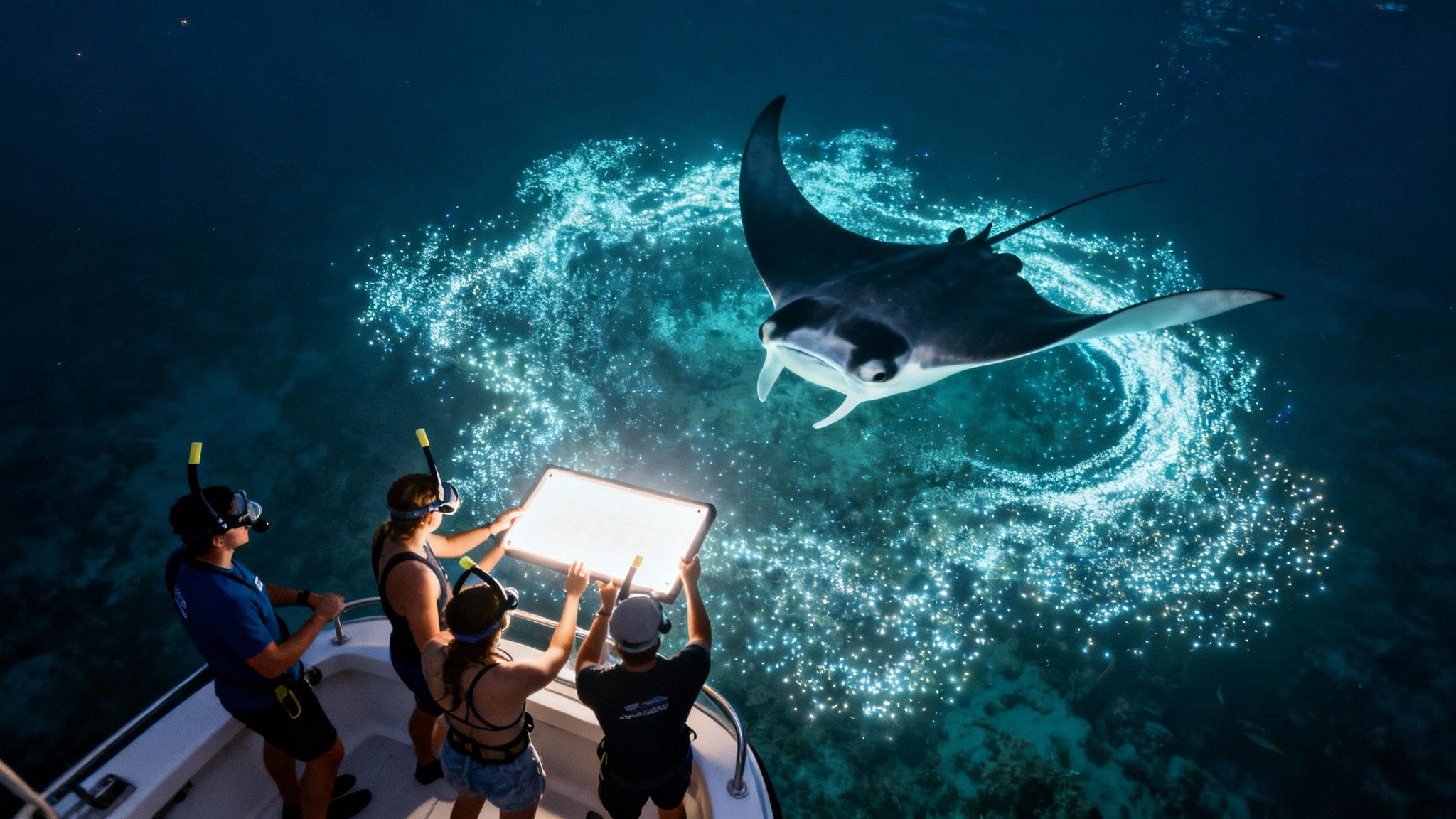
Once you arrive at the snorkel site, the crew gets to work setting up the main attraction: a big, custom-designed light board. This isn't just any old light; it’s a powerful, floating raft with eco-friendly lights that shine deep into the water, attracting plankton—the manta rays' favorite meal.
Think of it as ringing a dinner bell for the mantas. The light board creates a concentrated column of their favorite food, drawing them in from the darkness for their nightly feast. It’s a brilliant and effective way to ensure incredible, up-close encounters.
You and your small group will slip into the water and hold onto the handles of this light board. The design is genius because you don't need to be a super-strong swimmer. You just float on the surface, holding on, and look down into the illuminated show below.
The anticipation builds as you float there in the dark, quiet ocean. And then it happens. A huge, shadowy figure glides up from the deep, swooping gracefully into the light. Soon, another follows, and then another. Watching them perform their beautiful, acrobatic barrel rolls just inches beneath you is a sight that will be etched in your memory forever. You’ll spend about 30 to 45 minutes in the water, completely captivated by this underwater ballet.
Your Manta Ray Snorkel Tour At A Glance
To give you a clearer picture, here’s a simple breakdown of how the evening typically unfolds.
Tour Stage | What Happens | Key Highlight |
|---|---|---|
Check-In & Gear Up | Meet the crew at the harbor and get fitted for a wetsuit, mask, and snorkel. | Getting comfortable and meeting your expert guides for the night. |
Sunset Boat Ride | Cruise out to the manta viewing site while the sun sets over the Pacific. | Witnessing a spectacular Hawaiian sunset from the water. |
Briefing & Education | Guides cover safety procedures and share fascinating facts about manta rays. | Learning how to respectfully observe the mantas and identify them. |
In-Water Experience | Hold onto a floating light board and watch the mantas feed right below you. | The breathtaking sight of giant mantas barrel-rolling inches away. |
Post-Snorkel & Return | Climb back on board for hot drinks and snacks while heading back to the harbor. | Sharing stories under the stars after an unforgettable encounter. |
It's a smooth, well-organized flow from start to finish, designed to make your experience as magical as possible.
Finding the Best Tour
The quality of your tour really boils down to the operator. While there are many companies to choose from, one that stands out is Kona Snorkel Trips. They are known for their fantastic manta ray night snorkel and also run some of the best daytime adventures, like their famous Captain Cook snorkeling tour. Their focus on small groups and expert-led trips makes for a much more personal and memorable experience.
After your time in the water, you'll climb back onto the boat where the crew is waiting with snacks and hot drinks to warm you up. The ride back to the harbor under a sky full of stars is the perfect, peaceful cap on an exhilarating night. The whole trip is a seamless mix of natural wonder and professional care, making it an amazing adventure for just about everyone.
Picking the Right Big Island Manta Ray Tour
With so many companies offering a manta ray snorkel on the Big Island, how do you choose the right one? It can feel a little overwhelming, but the great news is you have options. Knowing what to look for will help you book an adventure that’s a perfect fit for you and your group.
From the time you head out to the philosophy of the crew, a few key things will shape your experience. Making a smart choice is about ensuring your night with these gentle giants is not just amazing, but also safe, comfortable, and respectful of the animals.
Tour Timing: Sunset vs. After-Dark
One of the first things you'll decide is whether to go at sunset or later in the evening. Both trips offer the exact same incredible chance to see the mantas, but the vibe is a little different.
Sunset Tours: These are almost always the most popular, and for good reason—especially for families. You get a boat ride out to the site that comes with a free, spectacular Hawaiian sunset. There's a real sense of anticipation as the sky darkens and the water comes alive.
After-Dark Tours: If you're looking for something a bit quieter and more intimate, a later tour might be your speed. There are often fewer boats at the viewing sites, which makes for a more peaceful experience under the stars.
Honestly, you can't go wrong. The manta rays are out and feeding all evening, so it really just comes down to your schedule and what kind of atmosphere you're after.
Why Your Guides and the Tour's Success Rate Matter
This is a big one: not all tours are created equal. The quality of your guides can truly make or break your night. Look for companies that hire lifeguard-certified guides who are genuinely passionate about marine biology. They do more than just keep you safe—they share fascinating facts about the mantas, turning a cool swim into a really meaningful encounter.
Success rate is another key thing to check. While seeing wildlife is never a 100% guarantee, the resident manta population in Kona makes sightings incredibly consistent. Top-tier operators, like the team at Manta Ray Night Snorkel Hawaii, regularly report success rates over 90%. They know the best spots and understand the mantas' patterns, which is why they have such a high hit rate.
This isn't just luck; it's backed by science. Operators consistently see success rates between 85-90% because Kona is home to a massive resident population of over 450 identified mantas. What’s fascinating is that recent research shows this group is genetically isolated. This is partly due to "female philopatry," a behavior where mothers return to their own birth sites to have their young. You can read more about the unique Kona manta ray population and its behaviors.
A Standout Choice for Your Big Island Adventure
If you're looking for an operator that checks all the boxes—small groups, knowledgeable guides, and a serious commitment to safety—one company comes up again and again. Kona Snorkel Trips is a fantastic choice for anyone wanting a top-quality manta ray night snorkel or even a daytime Captain Cook snorkeling tour. They’ve built their reputation on creating personal, educational, and truly memorable experiences on the water.
When you go with a trusted local operator like them, you know you’re supporting a business that cares just as much about the well-being of the manta rays as they do about their guests. Whether you're flying solo, with a partner, or bringing the whole family, picking a tour that aligns with these values will make your time on the Big Island unforgettable.
How to Snorkel Safely and Respectfully with Manta Rays
A truly amazing wildlife encounter is one that’s safe for both you and the animals. When you go on a manta ray snorkel on the Big Island, you’re more than just a spectator—you’re a guest in their underwater home. The best tour operators put the well-being of these incredible creatures first, making sure every interaction is a good one that helps protect them for years to come.
This whole process starts the second you check in for your tour. You’ll get professional-grade gear that’s picked out for your comfort and the mantas' safety. This usually means a high-quality mask and snorkel for a great view and, importantly, a wetsuit to keep you warm out on the ocean at night. You'll also be given a flotation device, which lets you float easily on the surface without having to kick or swim around. This is a huge part of the experience.
The Golden Rule of Manta Encounters
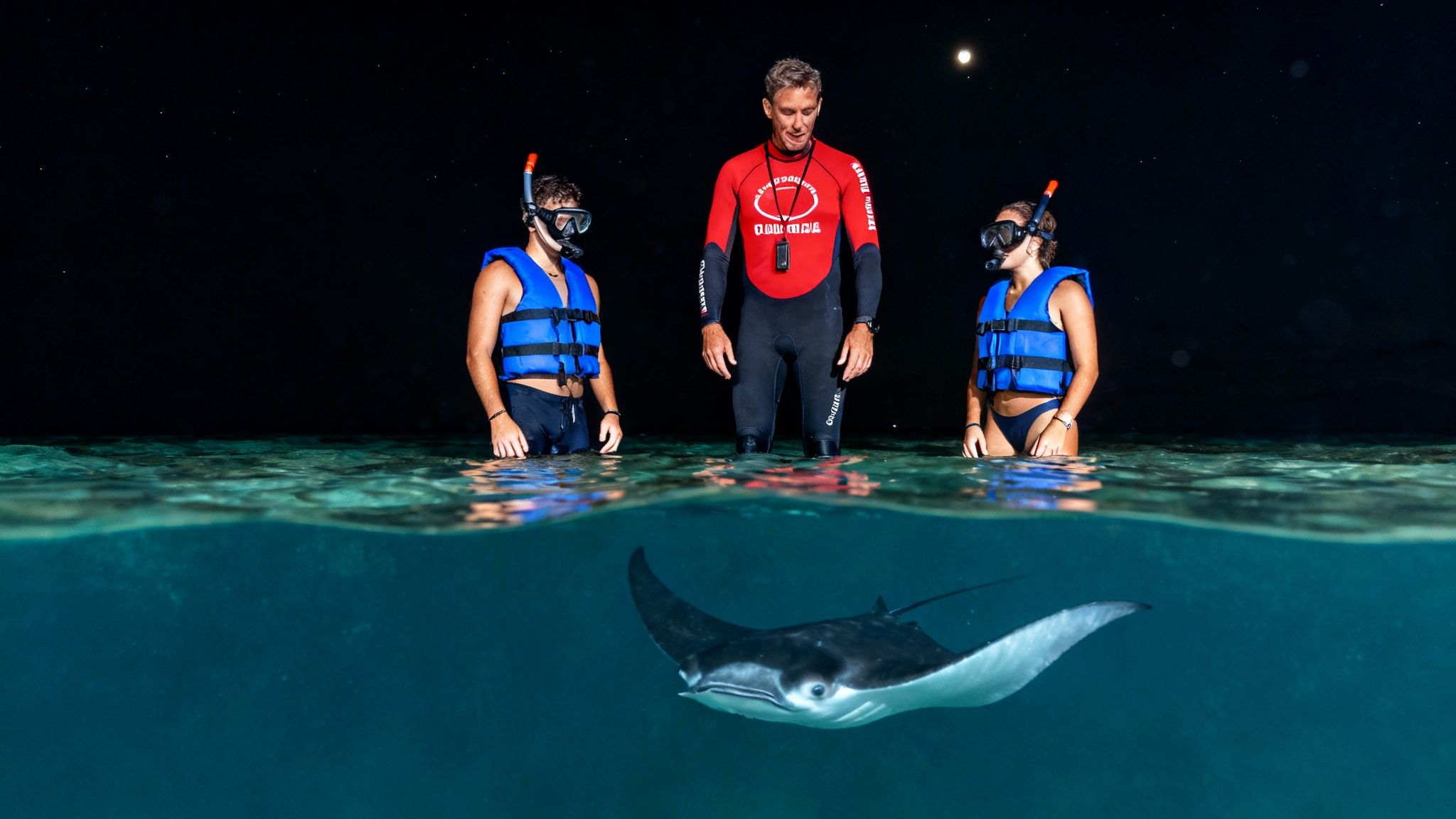
The single most important thing you’ll learn is the rule of passive observation. This is the absolute foundation of responsible manta ray tourism. It’s a simple idea with a massive impact: you are there to watch, not to interact.
The cardinal rule is to never, ever touch a manta ray. These gentle giants are covered in a delicate mucus coating that works like a shield, protecting them from bad bacteria and infections. Touching them can strip this protective layer off, leaving them vulnerable to disease.
Your guides will be right there in the water with you, not just to keep you safe but also to make sure everyone is following the rules. They’ll remind you to stay on the surface, hold onto the light board, and let the mantas be in charge of the encounter. Just follow their lead, and you’ll be doing your part to protect these amazing animals.
Essential Guidelines for a Respectful Snorkel
To keep the experience safe and sustainable for everyone—and every manta—tour operators follow a strict set of guidelines. These rules are all about protecting the fragile marine ecosystem and the local manta ray population.
No Touching: As we've said, this is the most critical rule. No matter how close they get, you have to resist the urge to reach out and pet them.
Stay on the Surface: Snorkelers hang onto a floating light board and stay flat on the surface. Diving down can scare the mantas and interrupt their feeding.
Don't Chase or Block: Never chase, grab, or try to ride a manta ray. Just give them space to move freely and gracefully.
Lights Point Down: All lights on the snorkel board are pointed down toward the seafloor. This attracts the plankton and creates the "dinner buffet" that brings the mantas to you.
Minimize Splashing: Try to avoid kicking and making big splashes. Calm, quiet movements help keep the mantas relaxed and comfortable.
Even though manta rays are incredibly gentle, it’s completely natural to have questions about safety. If you want to learn more about their behavior and why they aren't a threat to people, you might want to check out our guide that answers the question, can manta rays sting you.
By picking a tour operator that takes these rules seriously, you become a partner in conservation. Your unforgettable adventure helps protect Kona's gentle giants, ensuring they'll be here to mesmerize visitors for generations to come.
Exploring More of the Big Island's Underwater World
Don't think the magic ends when the sun comes up after your manta ray snorkel Big Island tour. While the nighttime dance of the mantas is unforgettable, the Big Island’s sunlit waters offer a totally different—but equally spectacular—underwater world. Your aquatic adventure is just getting started.
The Kona coast is a snorkeler's dream, dotted with countless coves and bays bursting with life. Swapping the deep, dark ocean of the manta encounter for the bright, crystal-clear shallows of a daytime reef gives you the full picture of what makes this island so special.
Discover the World-Famous Captain Cook Snorkeling Tour
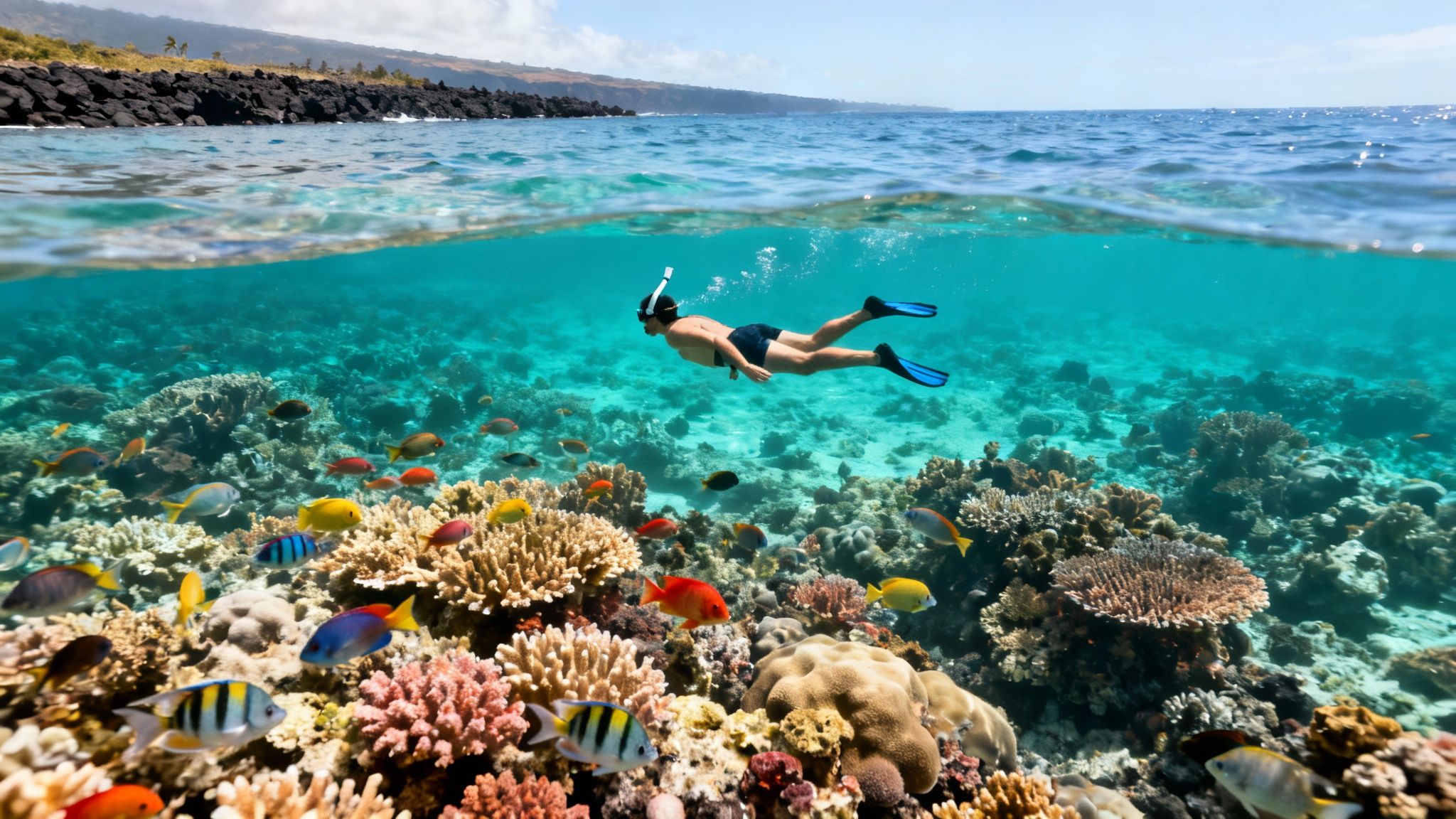
One of the absolute must-do daytime trips is the Captain Cook snorkeling tour in Kealakekua Bay. This place is special. As a protected marine life conservation district, its waters are incredibly clear and just teeming with fish. The bay is naturally sheltered from wind and waves, creating a calm, aquarium-like setting that's perfect for everyone, from first-timers to seasoned snorkelers.
While the manta sites are all about the plankton that draws in the giants, Kealakekua Bay is home to vast, vibrant coral gardens. You'll find yourself swimming through shimmering schools of tropical fish, spotting green sea turtles gliding by, and maybe even catching a glimpse of spinner dolphins leaping in the distance. It’s a brilliant, colorful contrast to the majestic, deep-blue world of the night snorkel. You can dive deeper with our guide to Captain Cook snorkeling.
Kealakekua Bay is a journey back in time. It's the very spot where Captain James Cook first landed, marked by a striking white monument on the shore. Snorkeling here feels like swimming through a living museum, where Hawaiian history and incredible natural beauty come together.
Your Gateway to Kona's Best Water Adventures
For the ultimate Big Island experience, why not do both? Pairing a nighttime manta ray snorkel with a day trip to Kealakekua Bay gives you the best of both worlds. You'll witness the awe-inspiring giants after dark and then explore the dazzling biodiversity of the reefs by day. It’s a combination that truly captures the soul of Kona's underwater kingdom.
If you're looking to book both adventures, Kona Snorkel Trips is an excellent choice. They are known for their fantastic manta ray night snorkel and also run top-rated Captain Cook snorkeling tours. Going with a trusted local operator ensures both of your excursions will be safe, respectful to the marine life, and completely unforgettable.
Your Manta Ray Snorkeling Questions, Answered
Even after getting pumped up for the adventure, it's totally normal to have a few practical questions pop into your head. Let's tackle some of the most common ones we hear so you can book your manta ray snorkel Big Island trip feeling completely confident and ready.
Think of this as the final check-in before the big event. We'll clear up any last-minute worries about safety, timing, and what to pack so you can just focus on the magic of it all.
Is This Manta Ray Snorkel Safe If I'm a Beginner?
Absolutely! This experience is built from the ground up to be safe and fun for everyone, even if you’ve never put on a snorkel mask in your life. The guides are lifeguard-certified, and they'll walk you through a full safety briefing before you even touch the water.
Once it's time to get in, you won't be left to fend for yourself. You'll hang onto a large, custom-made light board that floats on the surface. It's super stable, so there’s no real swimming involved—you just float and watch. Plus, the pros are in the water with you the whole time, keeping an eye on everything and making sure you’re having the time of your life.
When Is the Best Time of Year to See Manta Rays in Kona?
Here’s one of the best parts about this whole experience: there is no "best" time of year! The manta rays off the Kona coast are residents, not tourists. They live here year-round, so your chances of seeing them are fantastic whether you visit in the dead of winter or the peak of summer.
Tour operators like Kona Snorkel Trips consistently report a success rate of over 90% all year long. The only thing that might cancel a trip is bad weather or rough seas, as your safety always comes first.
This incredible reliability is why the manta ray snorkel Big Island tour is such a solid bucket-list adventure. You can plan your vacation for whenever works for you and still have an excellent shot at an unforgettable night.
What Should I Bring on the Tour?
Good news—the tour company provides all the main gear. But bringing a few personal items will make the experience that much more comfortable.
Here’s a quick checklist of what to pack:
A Towel: You'll be very happy to have this waiting for you when you climb back on board.
A Change of Clothes: Swapping your wet swimsuit for dry clothes makes the ride back to the harbor much cozier.
A Light Jacket or Sweatshirt: It can get a little chilly on the boat after dark, especially with the ocean breeze.
Underwater Camera: Definitely bring it if you have one! Just be mindful of the "no-touching" rule while you're getting those epic shots.
Top-notch tours, like those run by Manta Ray Night Snorkel Hawaii, will have quality masks, snorkels, fins, and wetsuits ready for you. It's probably best to leave your valuables back at the hotel.
Will I Get Cold Snorkeling at Night?
That’s a fair question, but don’t worry, you’re not just jumping into the chilly ocean unprepared. The tour operators provide you with a properly fitted wetsuit, which is a game-changer for staying warm. It works by trapping a thin layer of water against your skin, which your body quickly heats up, creating a nice, toasty layer of insulation.
Plus, the water in Kona stays pretty warm year-round, usually hovering between the mid-70s and low 80s Fahrenheit (around 24-27°C). Between the wetsuit and the sheer adrenaline of watching giant manta rays dance just inches below you, most people forget all about the temperature.
Comments