Manta Ray Snorkel Kona The Ultimate Guide to an Unforgettable Swim
- Byron
- Jan 26
- 14 min read
Imagine yourself floating on the calm surface of the Pacific. Just inches below, gentle giants with wingspans stretching over 12 feet glide and barrel roll through the water. This isn't a scene from a nature documentary—it's the world-famous manta ray night snorkel in Kona, the single most reliable place on the planet for this magical encounter.
Your Guide to Kona's World-Famous Manta Ray Snorkel
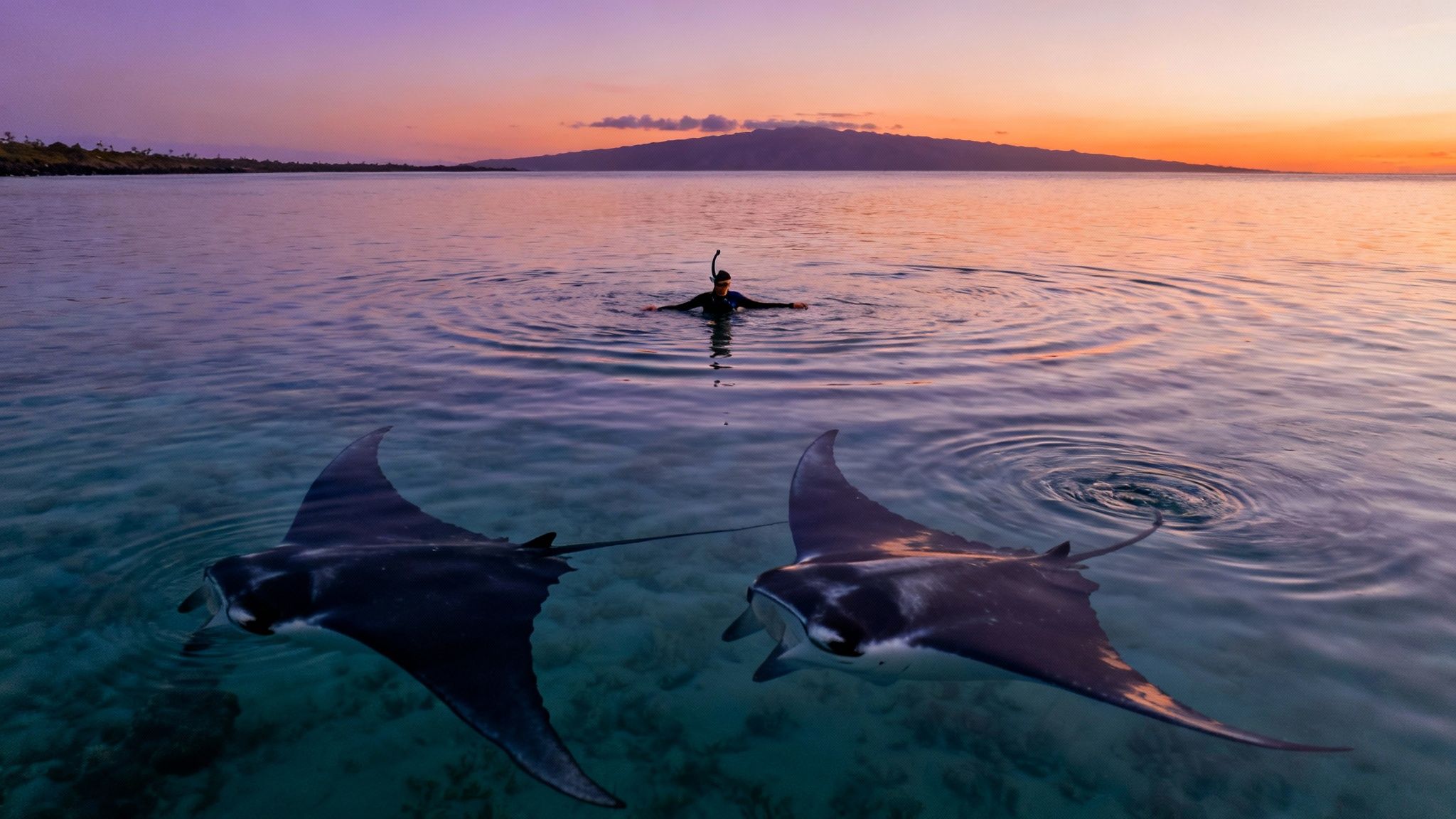
Think of this guide as your complete roadmap to one of the most breathtaking wildlife experiences you can have. We’ll walk you through everything, from what actually happens on the boat to picking the perfect tour time and understanding the incredible ecosystem that makes it all possible.
The Kona Coast isn't just another pretty spot on the Big Island; it’s a global hotspot for manta rays. Researchers have identified a resident population of over 450 unique mantas here, each one recognized by the distinct spots on its belly, which are like fingerprints. It's this huge, year-round population that draws ocean lovers from all corners of the globe.
Choosing the Right Tour Operator
To have a truly incredible and safe experience, going with a top-rated operator is non-negotiable. Your choice of tour company really shapes the entire adventure, affecting everything from your comfort and safety to how much you learn. A great operator does more than just drive a boat; they provide expert guidance and show deep respect for the ocean and its inhabitants.
For a truly memorable manta ray snorkel, Kona Snorkel Trips is a fantastic choice. They are the most-reviewed and highest-rated snorkel tour company in all of Hawaii, known for their expert guides, commitment to safety, and creating a fun, welcoming atmosphere for everyone on board.
When you go with a seasoned crew, you know you're in good hands. It allows you to completely relax and soak in the magic of the moment, trusting the professionals to handle all the details while you focus on the graceful ballet unfolding right below you.
What Makes This Experience So Unique
Unlike so many wildlife tours that rely on seasonal migrations, the manta rays in Kona are residents. They live here year-round, which makes sightings incredibly consistent. This reliability is a huge reason why the manta ray snorkel kona experience has landed on countless bucket lists.
The whole encounter is built around a fascinating, almost symbiotic relationship between the tour boats and the mantas:
Bright Lights: First, operators shine powerful, eco-friendly lights into the dark water.
Plankton Magnet: These bright lights attract massive clouds of microscopic plankton, which happens to be the manta rays' favorite food.
The Main Event: Drawn by the all-you-can-eat plankton buffet, the manta rays arrive to feast, performing mesmerizing acrobatics as they filter-feed right in front of you.
This brilliant, sustainable interaction allows for unparalleled, up-close views without ever disturbing the animals' natural feeding behaviors. You can find more details in our comprehensive articles about the manta ray night snorkel in Kona.
What to Expect on Your Manta Ray Snorkel Adventure
It’s one thing to be excited about snorkeling with manta rays, but it’s another to know exactly what the adventure holds. Knowing the flow of the tour helps turn that buzz of anticipation into a clear picture of the incredible night you’re about to have.
Your journey kicks off at the harbor, where the boat crew will greet you with a warm aloha. This is where the energy starts to build! After a quick check-in, you’ll get settled on the boat. As you pull away from the dock, the Kona coastline makes for a stunning farewell view.
The Journey to Manta Village
The boat ride out to the site is more than just a commute—it’s part of the experience. As you cruise towards one of Kona's famous manta viewing spots, your guides will walk you through a thorough safety briefing. They'll cover everything from using your snorkel gear to the golden rule of manta etiquette: never touch them. This is crucial for protecting the delicate, mucus-like coating on their skin that keeps them healthy.
If you’re on a sunset trip, get your camera ready. The sky often puts on a spectacular show, lighting up with brilliant shades of orange, pink, and purple as the sun dips below the horizon. It’s the perfect, peaceful start to an unforgettable night.
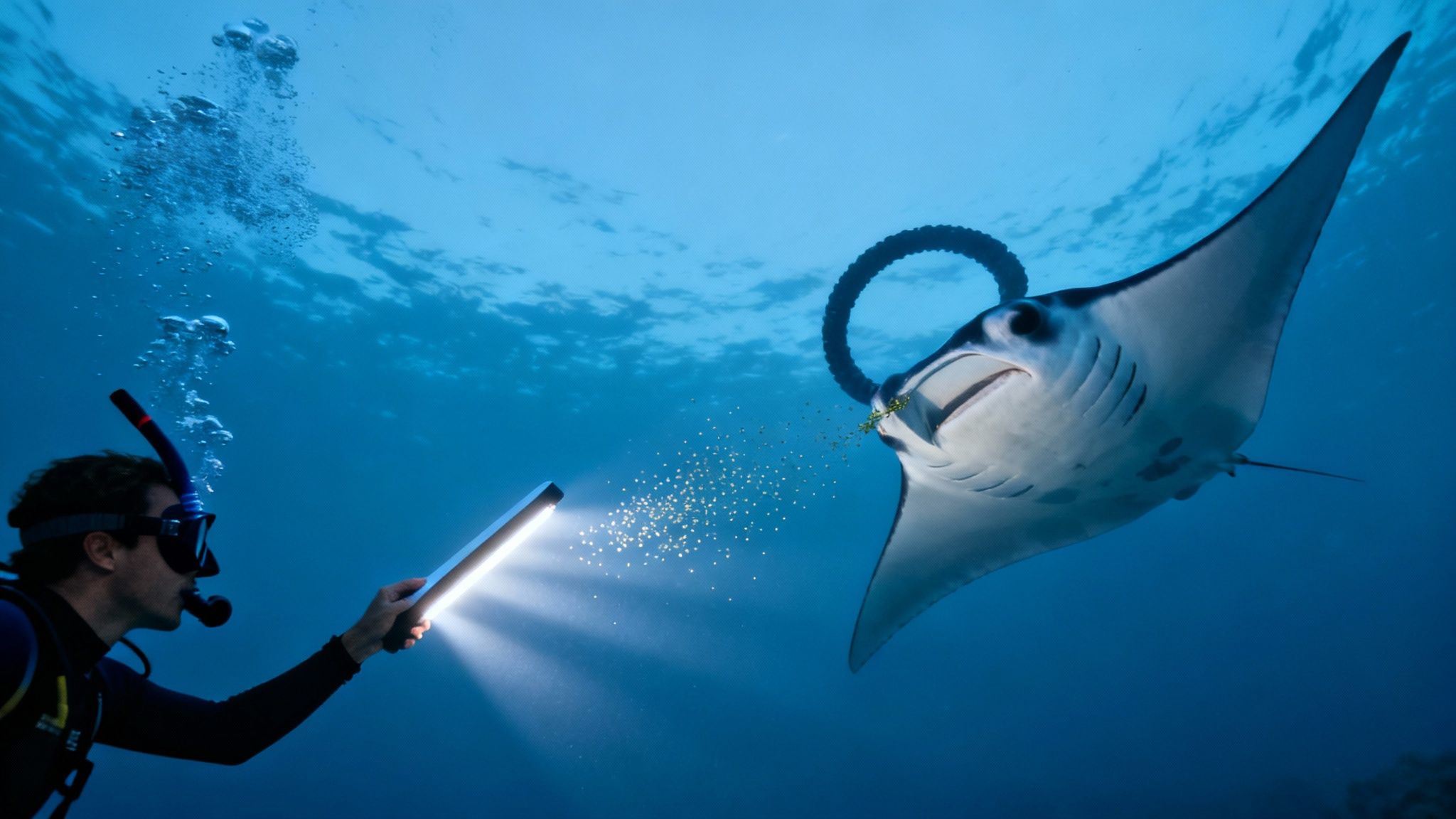
Once the boat is anchored, the crew gets to work. They’ll set up a custom-designed light board that floats on the surface. This isn’t just something for you to hold onto; its powerful lights are the key to the entire encounter.
The lights act like a dinner bell for marine life. They attract huge clouds of microscopic plankton—the manta rays' favorite food—creating a glowing, all-you-can-eat buffet right where you’ll be snorkeling.
Next, you'll slip into the water, nice and warm in your wetsuit. You’ll swim a short distance to the light board and find a comfortable spot to hold on. Floating on the surface, looking down into the illuminated water, you’ll feel the anticipation peak. The show is about to begin.
An Underwater Ballet
The first time you see a manta ray appear is a moment that will be seared into your memory forever. A dark shape emerges from the deep, growing larger and more defined until it glides effortlessly into the light. Its massive mouth is wide open, filtering the plankton from the water. It’s only then that you can truly appreciate their incredible size and elegance.
What follows is an amazing underwater ballet. The mantas loop, soar, and barrel-roll just inches below you, sometimes several at once, weaving around each other in a mesmerizing dance. The only sounds you’ll hear are the gentle lapping of the water and the amazed gasps from your fellow snorkelers.
Throughout the 45-minute in-water experience, your guides are right there with you, making sure everyone is safe and comfortable. They’ll also share fascinating facts, often pointing out specific mantas by name and telling you about their unique personalities. For more ways to prepare, check out our guide on 10 essential manta ray snorkel tips.
When it’s time to climb back on the boat, you'll be buzzing with excitement. Most tours provide hot drinks and snacks to warm you up while you share stories under the stars on the peaceful ride back to the harbor. It’s the perfect ending to a truly magical adventure.
Choosing Your Tour: Sunset vs. After-Dark
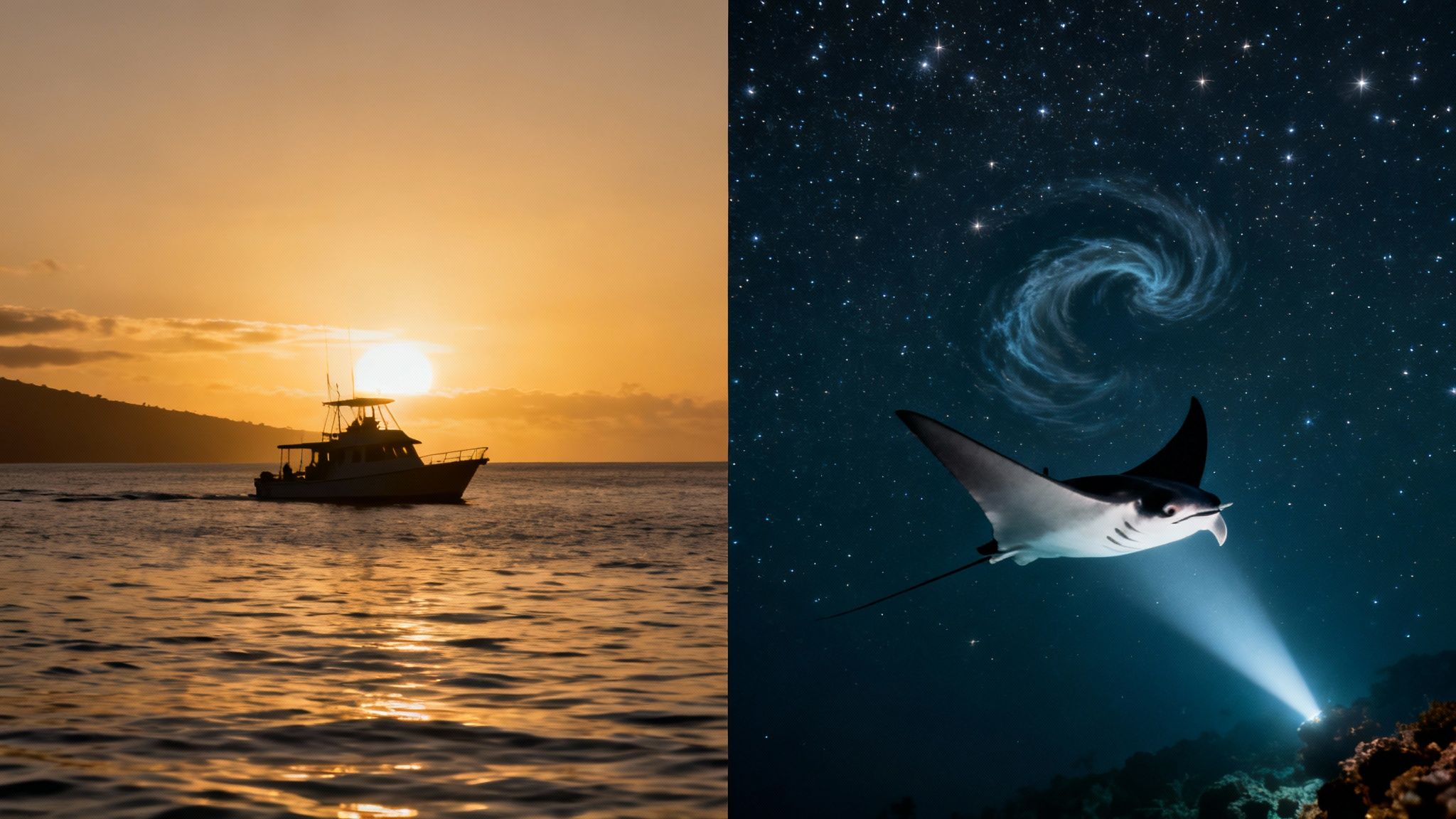
One of the biggest questions people have when planning their manta ray snorkel in Kona is whether to go at sunset or later, after dark. Honestly, both are incredible, but they offer completely different vibes. Your choice really comes down to the kind of memory you want to create.
The sunset tour is more than just a snorkel; it's a whole evening experience. You'll start with a scenic boat ride along the stunning Kona coast while the sun is still high, giving you a chance to really soak in the island's beauty from the water. As the sun begins to set, the sky often explodes with fiery colors—it’s a picture-perfect start to an amazing night.
Plus, heading out earlier means you're more likely to spot other marine life. It’s pretty common to see pods of spinner dolphins playing in the boat's wake. And if you’re here during whale season (December through March), you might even get the unforgettable bonus of seeing a humpback whale breach. For a deeper dive, check out our full article comparing the Kona sunset vs. night tour.
The Magic of an After-Dark Snorkel
On the other hand, the after-dark tour has a magic all its own. This trip is a more focused, intense encounter with the manta rays. You motor out under a breathtaking canopy of stars, far from the shore lights, which is an awe-inspiring experience by itself.
This later trip often feels more intimate and serene. With fewer boats typically out on the water, the atmosphere is quieter, allowing you to completely lose yourself in the moment with the graceful giants swooping below. It’s a pure, concentrated dose of manta magic, perfect for anyone seeking a powerful connection with nature. For many, floating in the dark ocean with these huge, gentle creatures is the absolute highlight of their trip.
To help you figure out what’s best for you, let’s break down the key differences.
Sunset Tour vs. After-Dark Tour Comparison
Here is a direct comparison to help you choose the best manta ray snorkel tour time for your trip.
Feature | Sunset Tour | After-Dark Tour |
|---|---|---|
Primary Ambiance | Scenic, multi-experience, vibrant | Focused, immersive, serene |
Best For | Families, photographers, first-timers | Adventurous spirits, repeat visitors |
Crowd Levels | Can be busier, more boats on the water | Often quieter with fewer boats |
Other Wildlife | Higher chance of seeing dolphins/whales | Focused entirely on manta rays |
Experience | Enjoy a spectacular sunset from the boat | Snorkel under a stunning, starry sky |
Which Manta Ray Snorkel Tour Is Right for You?
So, which one should you pick? Ultimately, the best tour is the one that aligns with what you’re hoping to get out of the experience.
If you're traveling with your family, love photography, or want to combine the manta snorkel with a beautiful sunset cruise and the chance to see other animals, the sunset tour is an amazing choice. It’s an all-in-one Hawaiian ocean adventure.
But if your main goal is a deep, focused encounter with the manta rays in a quieter, more intense setting, the after-dark tour delivers an experience that's hard to beat. The stark contrast between the dark water and the brightly lit "stage" below creates a dramatic and profound memory you won't soon forget.
No matter which one you choose, you're in for an incredible night.
What You Need to Know About Safety and Gear
The idea of slipping into the ocean after dark to meet manta rays is a huge thrill, but being prepared is what lets you really relax and soak it all in. Let’s walk through the safety measures and gear that make this incredible adventure not just possible, but comfortable and worry-free.
One of the first questions people ask is about swimming. You don't need to be a competitive swimmer, but you do need to be comfortable floating in deep water. You'll be holding onto a light board the whole time—not swimming around—so the main thing is feeling at ease in the open ocean, buoyed by a wetsuit and other flotation gear.
Safety First, Always
Every reputable tour operator puts your safety above absolutely everything else. This isn't just a friendly suggestion; it's the foundation of their entire operation. Your adventure will kick off with a mandatory, in-depth safety briefing before you even dip a toe in the water.
The crew will cover everything from using your snorkel gear properly to the golden rules of interacting with the mantas. They’ll show you how to get in and out of the boat safely and explain the simple signals for getting help if you need it.
You are never out there alone. All top-tier tours have lifeguard-certified guides in the water with you the entire time, keeping a close watch on the group and making sure everyone is doing okay. Their presence lets you just relax and get lost in the amazing show happening below.
Picking a tour company with an ironclad safety record is non-negotiable for a great manta ray snorkel kona trip. If you're looking for an operator that truly excels here, Kona Snorkel Trips is a phenomenal choice. As the most-reviewed and highest-rated snorkel company in Hawaii, their commitment to guest safety and creating a positive experience is unmatched.
What Gear Is Provided?
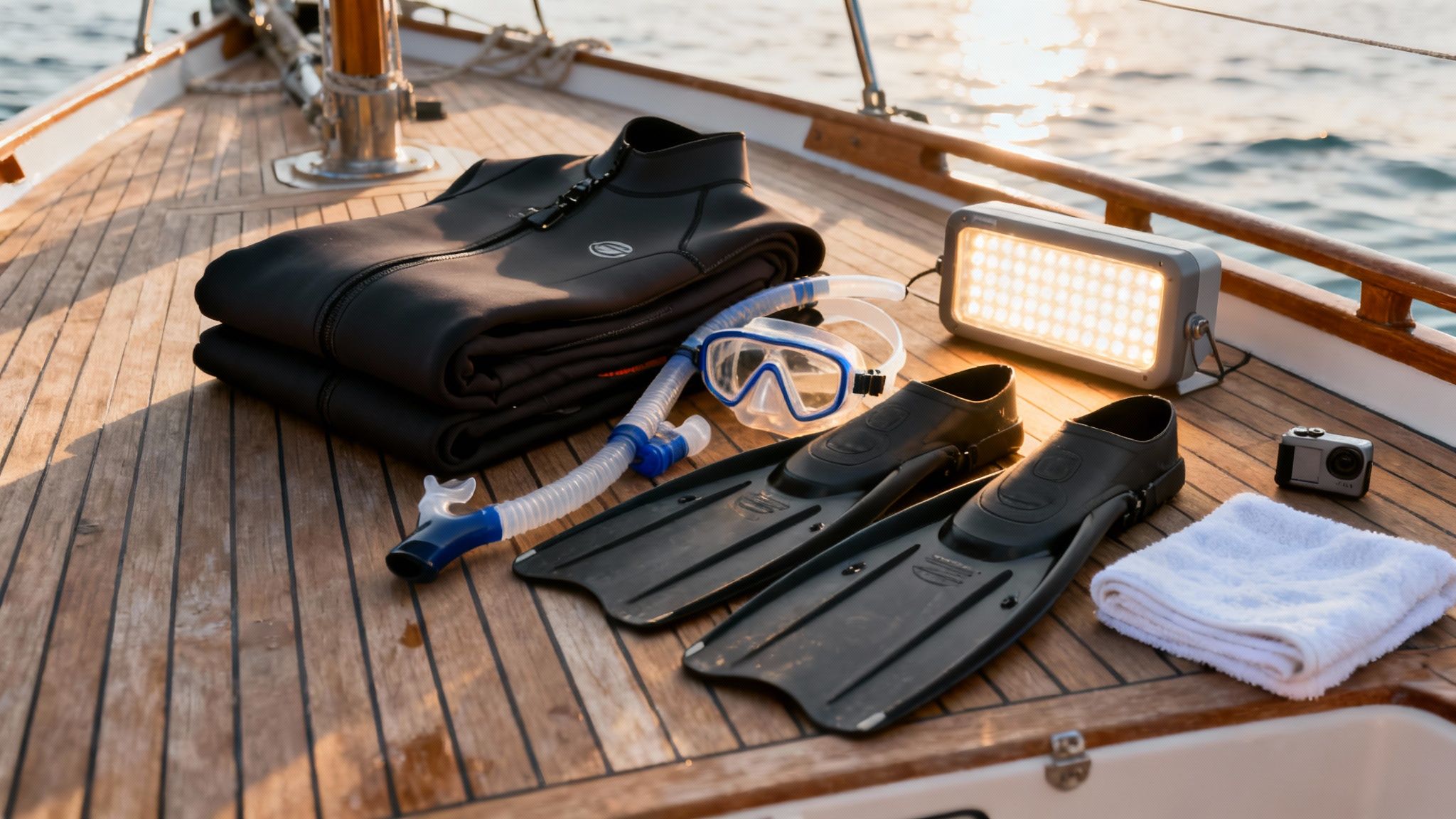
No need to pack your own flippers. Professional tours provide everything you need, and all of it is sanitized and well-maintained for your safety and comfort.
Here’s what you can expect them to hand you:
High-Quality Wetsuits: The Pacific water off Kona stays around a pleasant 76°F (24°C) all year. But floating in place for 45 minutes can make you feel chilly pretty fast. A snug wetsuit keeps you warm so you can enjoy the entire show.
Snorkel Mask and Snorkel: You’ll get a professional-grade mask for a crystal-clear view and a snorkel that lets you breathe easily while looking down at the action.
The Light Board: This is the real star of the show (besides the mantas!). It’s a big, floating board with powerful lights pointing straight down. You simply hold onto its handles for stability while the light attracts the plankton—the mantas’ favorite meal—right to you.
Knowing the gear helps you feel way more confident. And if you have more safety questions, we put together a guide that answers the big one: "Can Manta Rays Sting You?".
Your Simple Packing Checklist
While the boat has all the main equipment covered, bringing a few personal items will make your trip that much better. Show up prepared, and you can focus completely on the adventure.
What to Bring With You:
A towel for drying off afterward.
Dry clothes to change into for the comfortable ride back to shore.
A light jacket or hoodie—it can get cool on the boat at night.
A reusable water bottle to stay hydrated.
Your GoPro or underwater camera if you want to capture the magic (just be mindful not to get in the animals' way).
Any personal medication you might need, especially if you're prone to seasickness.
With these simple preparations, you're all set to enjoy one of the most unforgettable wildlife encounters you'll ever have.
Planning and Booking Your Kona Manta Trip
A little bit of planning is what separates a good manta ray snorkel trip from a truly unforgettable one. Nailing down the right tour at the right time is the secret sauce to making the whole experience seamless and spectacular. The great news? Kona has a massive resident manta population, so you’re pretty much guaranteed an amazing encounter any night of the year—a rare treat in the world of wildlife adventures!
While every night is a great night to see mantas, there are a few subtle differences throughout the year. The summer months offer up warmer water, which is always a nice bonus. But if you visit during the winter, from December through March, you get the incredible add-on of humpback whale season. It’s not uncommon to see these giants breaching on the boat ride out, adding a whole other layer of magic to the evening.
Booking in Advance Is Essential
If I can give you one single piece of advice, it's this: book your tour way in advance. Seriously. The Kona manta ray snorkel is one of the most popular things to do in all of Hawaii. The best tours, the ones with the top-notch crews and boats, fill up fast, especially during holidays, spring break, and the summer rush.
Waiting until the last minute is a recipe for disappointment. You’ll either find everything is sold out or you’ll have to settle for a less-than-stellar company. To make sure that doesn't happen, try to book your spot at least a few weeks before your trip. For major holidays, I’d even say a month or two ahead is the smart play.
How to Choose a Top-Tier Operator
The tour company you choose can absolutely make or break your night. A great operator is all about safety, respect for the animals, and has knowledgeable guides who can actually teach you something cool about these incredible creatures.
Here’s a quick checklist for picking a winner:
Check Recent Reviews: Hop on Google and TripAdvisor and see what people are saying. Look for consistent, positive feedback about the crew, their safety talks, and the overall vibe of the trip.
Verify Safety Records: A company that takes safety seriously will be proud of it. Look for mentions of lifeguard-certified guides and detailed safety briefings before you get in the water.
Review Cancellation Policies: Life happens, plans change. Always give the cancellation policy a quick read before you book. Good companies usually offer a full refund or a chance to rebook if you cancel with enough notice (typically 24-48 hours).
When it comes to the manta ray snorkel, going with a proven outfitter like Kona Snorkel Trips is a no-brainer. They are the most reviewed and highest-rated snorkel tour company in Hawaii, with a long history of running safe, fun, and memorable trips. If you want to compare a few more options, this guide to the top manta ray snorkel tours in Kona is a great resource.
Considering a Private Charter
Have a bigger family, a group of friends, or just want a more exclusive adventure? A private charter is an amazing option. When you book a private boat, the entire vessel and crew are all yours for the night.
A private charter gives you a totally flexible timeline and a customized experience. You get to share this incredible moment with just your favorite people, which is perfect for celebrating a birthday, an anniversary, or just making a special memory.
It’s the best way to get unparalleled personal attention from the guides and enjoy an intimate, unforgettable night out on the water.
Why Kona Is the Manta Ray Capital of the World
When people talk about snorkeling with manta rays, Kona, Hawaii isn't just on the list—it is the list. This small stretch of coastline has rightfully earned its title as the "Manta Ray Capital of the World," and it's all thanks to a perfect storm of factors that create the most reliable and magical manta encounters on Earth.
The whole thing started by accident, decades before any formal tours existed. The historic Kona Inn decided to shine bright lights into the water off its property. These lights drew in massive clouds of plankton, which just so happens to be a manta ray’s favorite meal. It didn’t take long for the local mantas to figure out that this nightly glow meant an all-you-can-eat buffet. They started showing up every single night, and an incredible natural phenomenon was born.
This happy accident is the very foundation of the modern manta ray snorkel in Kona. Tour operators today simply recreate this effect, using powerful underwater lights to draw in the plankton, which in turn brings the gentle giants right to them.
The Famous Manta Ray Snorkel Sites
This unique relationship between light, plankton, and mantas has led to a few specific, world-renowned viewing sites. Think of them less as random spots in the ocean and more as established "restaurants" for the rays, each with its own vibe.
Manta Village: Located just offshore from the Sheraton Kona Resort at Keauhou Bay, this is the original site where it all began. It has an incredible success rate, with mantas spotted on well over 90% of nights. Being so close to shore makes it super accessible.
Manta Heaven: You'll find this spot, also known as Garden Eel Cove, north of Kailua-Kona near the airport. The success rate here is also fantastic, but Manta Heaven is often known for drawing even larger groups of mantas at once. It’s a truly breathtaking underwater ballet.
Of course, having a great guide is what turns a good trip into an unforgettable one. For your manta ray snorkel Kona adventure, Kona Snorkel Trips is a fantastic choice. As the most reviewed and highest-rated snorkel tour company in Hawaii, their expert crew will make sure you have a safe, fun, and eye-opening experience at these legendary sites.
Keeping the Magic Alive with Responsible Tourism
The consistency of Kona’s manta ray encounters is a treasure, and protecting it is a responsibility everyone shares. The local community and tour operators have worked hand-in-hand to establish strict guidelines to keep these interactions safe for the rays.
The golden rule is simple: passive observation. You’re there to float and watch the show. Guests are always instructed to never touch, chase, or get in the way of the mantas. Touching them can rub off the protective mucus coating on their skin, which leaves them vulnerable to infections.
By simply floating peacefully and observing, we allow the mantas to do their thing naturally and comfortably. These responsible practices are what will ensure the Kona manta ray snorkel can be enjoyed for generations to come, turning it from a simple tourist activity into a meaningful encounter with one of the ocean's most majestic creatures.
Your Manta Ray Snorkel Questions, Answered
Got a few last-minute questions before you book? I get it. Here are some quick, straightforward answers to the things most people ask before they jump in the water with us for this incredible manta ray snorkel kona adventure.
How Good of a Swimmer Do I Need to Be?
You definitely don't need to be an Olympic swimmer. The most important thing is simply being comfortable floating in water that's over your head.
You'll be wearing a buoyant wetsuit and holding onto a big, custom-made light board the whole time, so very little actual swimming is involved. It’s more about being at ease in the open ocean so you can relax and focus on the incredible ballet happening right below you.
Will I Get Cold on a Night Snorkel?
Even in paradise, the water can feel a bit cool after a while. Kona's water temperature stays a lovely 74-78°F pretty much all year. But when you’re floating still for about 45 minutes, you can start to feel a chill.
That’s why any good tour company provides quality, thick wetsuits. They do an amazing job of trapping your body heat and keeping you toasty and comfortable for the entire time you're in the water.
What Are the Chances of Actually Seeing Manta Rays?
The odds are overwhelmingly in your favor! The success rate for seeing mantas in Kona is sky-high, often said to be over 90% year-round. This isn't just luck; Kona is home to a big population of reef manta rays that don't migrate.
The tour lights attract their favorite food (plankton), creating a reliable nightly buffet. Because of this, the mantas show up almost every single night. Of course, they're wild animals, so a sighting can never be 100% guaranteed.
Do the Tour Lights Hurt the Manta Rays?
Not at all. The lights are completely harmless and serve a very simple purpose: they attract the zooplankton that the manta rays eat.
Think of it as turning on a porch light that attracts moths. The lights create a concentrated food source, essentially a "dinner bell," encouraging the mantas to come and feed. All reputable operators follow strict, sustainable guidelines to make sure the encounter is safe for the animals. That's why choosing a top-rated company like Kona Snorkel Trips—the most reviewed and highest-rated snorkel tour company in Hawaii—is so important for supporting responsible tourism.
Comments