Manta Ray Snorkel Kona Your Guide to a Magical Night Swim
- Byron
- Jan 27
- 15 min read
Picture this: you're floating weightlessly on the calm, dark surface of the Pacific, a breathtaking canopy of stars overhead. Then, out of the deep blue, they appear. Giant, graceful creatures with wingspans wider than you are tall, gliding and barrel-rolling in beams of light, sometimes just inches away. This isn't a dream—it's the magic of the manta ray snorkel in Kona, an adventure that has rightfully earned its spot on bucket lists around the globe.
An Introduction to Kona's Manta Ray Night Snorkel
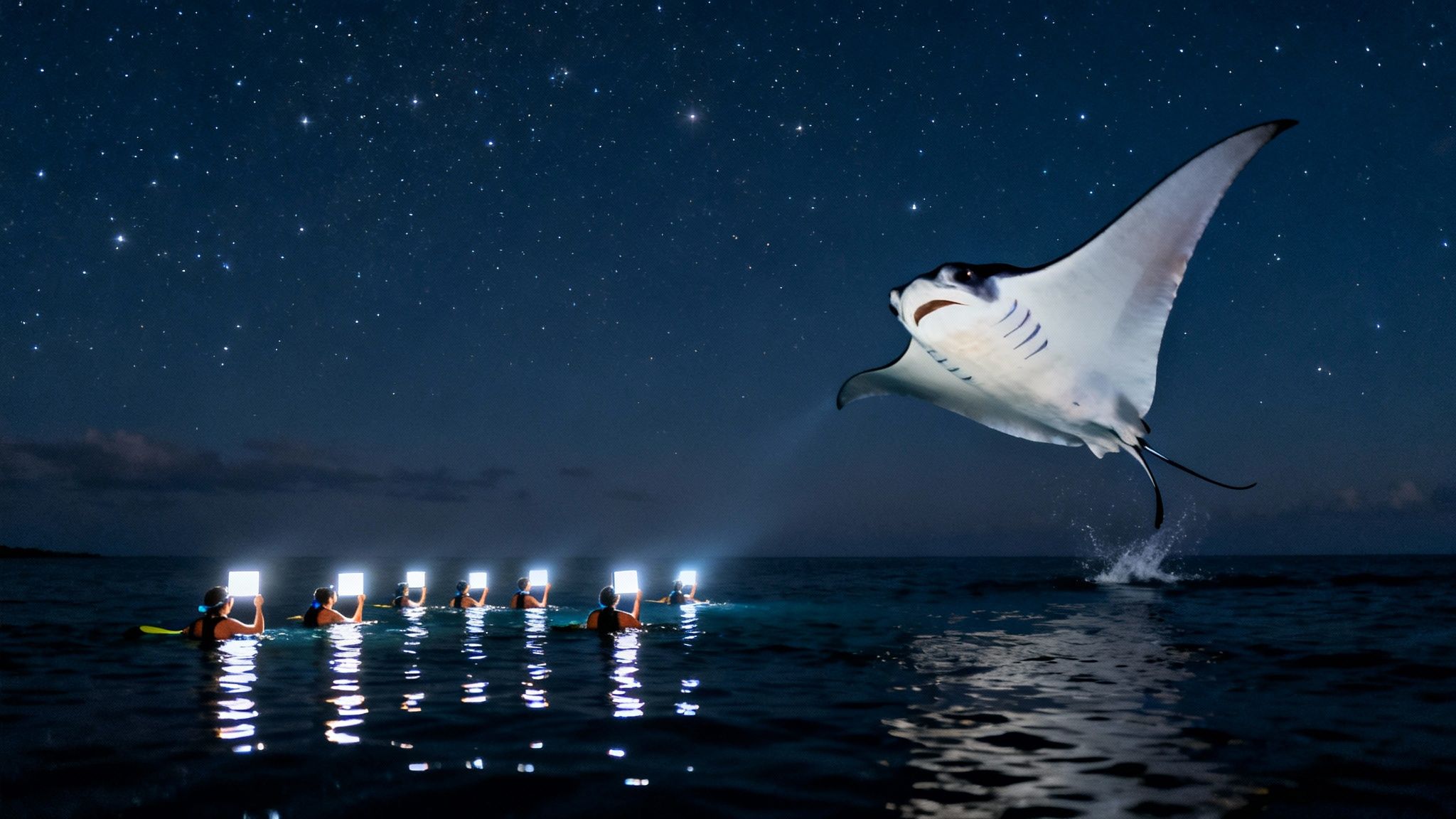
Kona isn't just another beautiful spot on the Big Island; it's the undisputed world capital for reliably swimming with manta rays. While other destinations might offer a slim chance of a sighting, Kona’s unique underwater landscape and a healthy, resident manta population make this an almost nightly spectacle. This guide is your all-access pass to planning this incredible experience, covering everything you need to know from what it’s like to how to book the perfect tour. For a deep dive into this one-of-a-kind adventure, check out Manta Ray Night Snorkel Kona Hawaii Tours.
The success rate for these tours is simply staggering. Between 2009 and 2014, careful tracking showed an 80-90% success rate for seeing mantas on these nightly trips. It gets even better: in 2013, the main snorkel site, known as Manta Village, had a 96% success rate, with an average of four mantas spotted every single night. You can dig into these incredible manta ray statistics to see just how dependable this wildlife encounter is.
Sunset vs. After Dark Tours
One of the first choices you’ll make is whether to go out at sunset or on a later, after-dark trip. Both options deliver the main event—swimming with mantas—but each has its own distinct vibe. The sunset tour gives you a front-row seat to a spectacular Hawaiian sunset from the boat, a truly magical way to start your evening.
On the other hand, the after-dark tour happens under a blanket of stars, offering a more mysterious and intense focus on the ocean's nightlife. The stark contrast between the inky black sky and the brightly lit water below creates a scene that feels otherworldly.
It really boils down to what you're looking for. Do you want the vibrant colors of a sunset send-off, or the profound stillness of a swim beneath the stars?
To help you decide which adventure is right for you, here’s a quick comparison of the two main tour times.
Choosing Your Adventure: Sunset vs. After Dark Tours
This table breaks down the key differences to help you pick the best time for your manta ray snorkel adventure.
Feature | Sunset Tour (First Trip) | After Dark Tour (Second Trip) |
|---|---|---|
Atmosphere | Kicks off with a scenic boat ride during a beautiful Hawaiian sunset. It's a great time for photos before you even hit the water. | Takes place in total darkness under the stars, creating a more dramatic and immersive underwater light show. |
Crowds | This is a very popular time slot, especially for families and those who prefer an earlier night, so it can sometimes be a bit busier. | Often slightly less crowded. This trip appeals to night owls and those looking for a quieter, more intimate experience with the mantas. |
Marine Life | Manta sightings are fantastic. You might also spot dolphins or, in season, even whales during the boat ride out. | The focus is squarely on the mantas. The darkness heightens your senses, making the encounter feel even more intense and personal. |
Best For | Families, photographers hoping for golden hour shots, and anyone who wants to be back on shore earlier in the evening. | Adventurous spirits, night owls, and snorkelers who want the most focused and dramatic manta viewing experience possible. |
Ultimately, there’s no wrong choice here. Whether you’re bathed in the warm glow of the setting sun or floating under a sky full of stars, you're in for an unforgettable night with Kona's gentle giants.
Why Kona is the Manta Ray Capital of the World
Ever wonder what makes a small stretch of the Big Island's coast the absolute best place on Earth for a manta ray snorkel kona adventure? It’s not just a lucky accident. It’s the perfect mix of geography, biology, and a little bit of human cleverness. This unique recipe creates an almost guaranteed wildlife encounter that you just won’t find anywhere else.
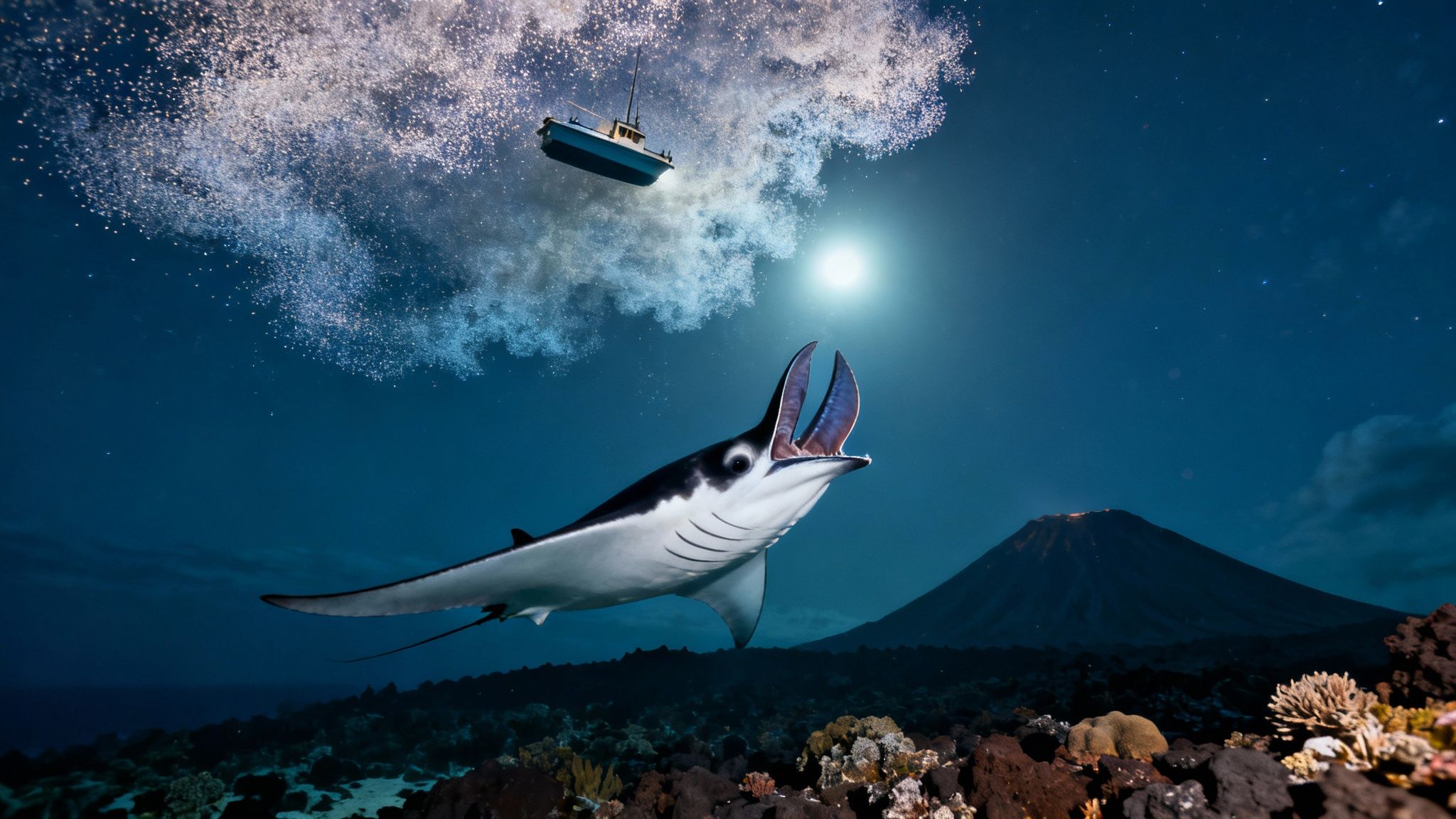
It all starts with Kona’s unique underwater landscape. The coastline, shaped by ancient volcanic eruptions, is full of submerged lava rock formations, gentle slopes, and deep canyons. This rugged topography creates the perfect home for plankton—the microscopic critters that happen to be a manta ray’s favorite meal.
Because of this constant food supply, Kona is home to a large, non-migratory population of reef manta rays (Mobula alfredi). This is what really sets Kona apart. While you might spot mantas seasonally in other parts of the world, our mantas are permanent residents. This means incredible sightings are a year-round event. If you want to dive deeper into the best times to go, check out our guide on the best time to see manta rays in Kona.
The "Dinner Bell" Effect
So, how do we turn a potential sighting into a nightly spectacle you can count on? Simple: every night, we ring a giant dinner bell. Tour boats are equipped with powerful, submerged blue or white lights that shine down into the dark water. These lights attract massive clouds of plankton.
Think of it like a porch light on a warm summer evening attracting moths—it’s the same idea. The plankton swarm to the light, creating a concentrated, all-you-can-eat buffet. Over the decades, the local manta rays have learned that these lights mean an easy dinner is served, and they show up every night to feast. All you have to do is float on the surface and watch the show unfold just inches below.
This nightly event is less about finding the mantas and more about ringing the dinner bell and letting them come to you. It's a masterful, symbiotic relationship that creates an unparalleled viewing experience.
This nightly feeding has become so reliable that Kona's coast is now a thriving hub for these gentle giants. The reef manta rays here are the second-largest species, with impressive wingspans averaging 12 feet. Researchers have actually identified over 450 unique individuals in our local population! A core group of these resident mantas are seen most often, confirming they stick around all year. The tour lights simply amplify their natural feeding behavior, drawing in an average of 4 to 11 rays every single night.
Meeting the Local Celebrities
The experience goes way beyond just seeing manta rays; it's more like meeting local celebrities. Each manta ray has a unique pattern of black spots on its belly, kind of like a human fingerprint. Marine biologists and experienced guides have identified and named many of the regulars, so you might get to meet "Big Bertha," "Lefty," or "Amanda Ray."
This personal touch completely transforms the encounter. Your guides can often point out specific individuals and share stories about their histories and personalities. You're not just observing some random animal; you're being introduced to a member of a well-known underwater community. It makes every manta ray snorkel kona tour a truly unique and personal introduction to these magnificent creatures.
What to Expect on Your Manta Ray Snorkel Tour
Knowing how your adventure will unfold from start to finish really helps set the stage for an unforgettable night. The whole process is designed to be smooth, safe, and absolutely awe-inspiring. So, let’s walk through what your manta ray snorkel kona experience will actually be like.
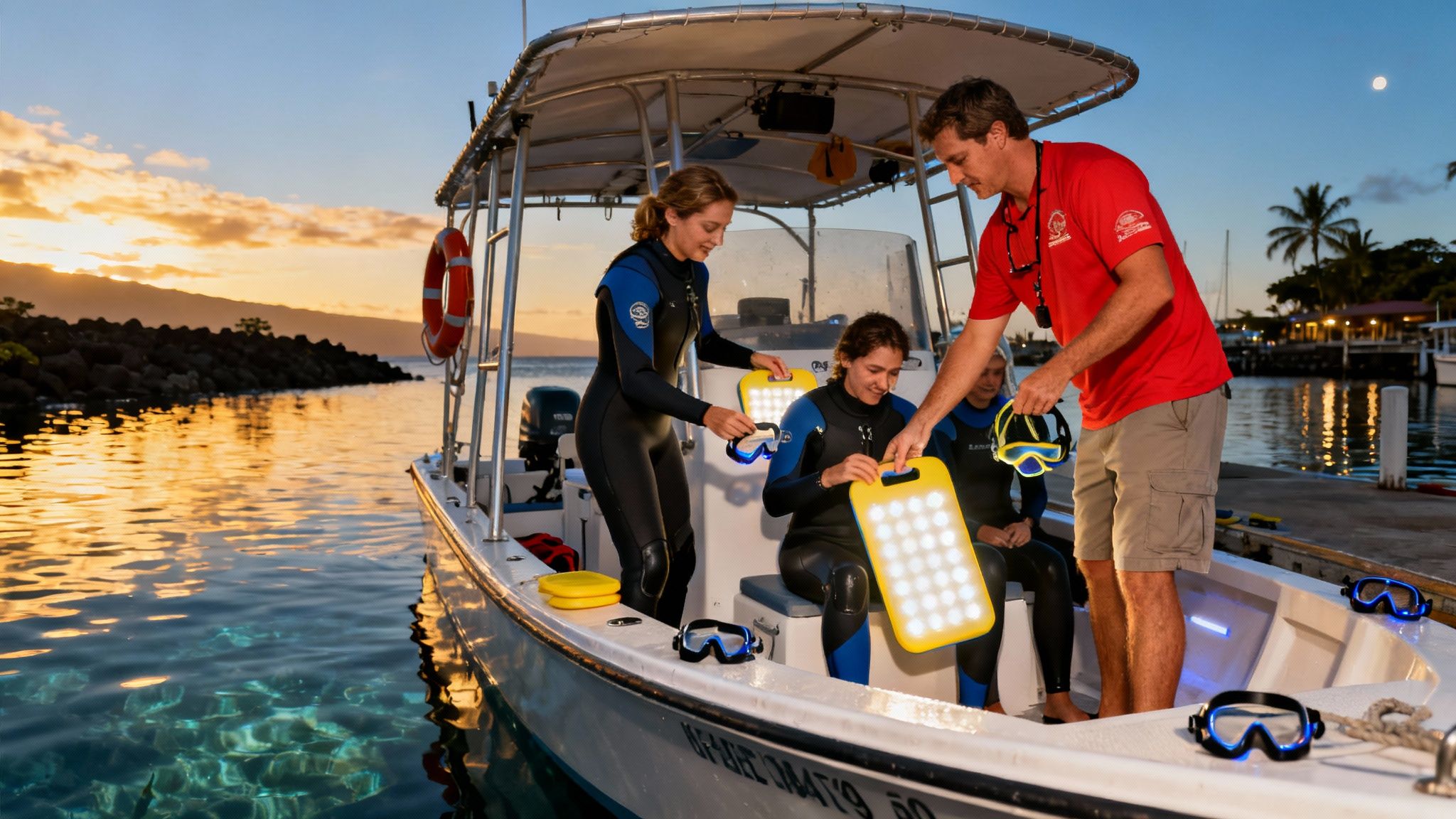
Your journey kicks off at the harbor, where you'll meet the friendly crew and check in. This is the perfect time to ask any last-minute questions and get to know the guides who will be leading your trip into the Pacific. Once everyone’s aboard, it's a short, scenic boat ride to one of Kona's special manta viewing sites.
The Pre-Snorkel Briefing
Safety and education are the cornerstones of a fantastic tour. Before you even get your toes wet, your lifeguard-certified guides will give you a thorough briefing. They’ll cover everything from manta ray biology and behavior to the simple rules of the encounter—especially the golden rule of "passive observation," which means no touching these gentle giants.
This briefing makes sure you feel confident and ready for what’s ahead. You'll learn exactly how the evening will play out, how to use your gear, and what to do once you're in the water. It’s what turns a simple snorkel trip into a much deeper, more meaningful connection with wildlife.
Entering the Water and the Light Board
With the briefing done, it’s time for the main event! You'll be given all the gear you need, including a high-quality wetsuit, mask, and snorkel. The wetsuit does more than just keep you warm; it adds natural buoyancy, making it super easy to float.
Once you slip into the calm, dark ocean, the crew will guide you to a custom-built floating light board. This clever invention serves two critical roles:
A stable handhold: You simply hold onto the board, which gives you a secure place to rest on the surface. No active swimming is needed—you just float and enjoy the show.
The "dinner bell": Powerful lights attached to the board shine down into the depths. This light attracts swarms of plankton, the manta rays' favorite meal, creating a concentrated buffet that draws the mantas right to you.
This setup is what makes the Kona experience so dependable and perfect for snorkelers of all skill levels. You just hold on and let the magic happen inches away. For an operator that has perfected this experience, Kona Snorkel Trips is a phenomenal choice; they are the most reviewed and highest-rated snorkel company in Hawaii.
The Main Event: An Underwater Ballet
As you float, the real show begins. The gentle lapping of the water against the board and the quiet sounds of the night create a truly multisensory experience. Before you know it, the first giant shadow emerges from the darkness, gliding gracefully into the light.
It's a moment that will take your breath away. The sight of a 12-foot manta ray performing an elegant 'barrel roll' just inches beneath you is something photos and videos can never truly capture. They are completely silent, moving with an effortless grace that is both powerful and peaceful.
This activity has become one of Hawaii's top marine attractions, now bringing in 80,000 annual visitors statewide. Its incredible reliability is backed by years of data. Logs from 2009-2014 show Manta Village had a 96% success rate with an average of four rays per night, while Manta Heaven had a 90% success rate with an average of eleven! You can explore the full statistics of manta ray sightings to see why this is a world-class adventure.
If you're trying to decide between heading out at dusk or later in the evening, check out our comparison of sunset vs. night manta ray tours.
Key Safety Guidelines for Your Adventure
Let's be honest, the thought of floating in the ocean after dark can feel a little unnerving, especially if it's your first time. We get it. But you can rest easy knowing the manta ray snorkel kona experience is designed with your safety as the absolute top priority. These tours have been refined over decades to create a secure, comfortable environment where you can relax and just focus on the incredible show.
Once you understand the safety measures in place, any butterflies you have will be replaced by pure excitement.
Swimming Ability and Physical Requirements
This is probably the number one question we hear: "How well do I need to swim?" You definitely don't need to be a competitive swimmer, but you should be comfortable in water where your feet can't touch the bottom. The most critical skill is simply being able to stay calm and listen to your guide's instructions.
Keep in mind, you won't actually be swimming much at all. This is a passive experience. You'll just be floating on the surface while holding onto a big, sturdy light board. Your wetsuit also provides a ton of buoyancy, basically doing all the floating for you, which makes this adventure accessible to a huge range of people.
Built-In Safety Protocols
Every single part of the tour is built around your well-being. The boats are operated by experienced captains, and your in-water guide is lifeguard-certified. These pros aren't just there to point out mantas; they are constantly watching the group to make sure everyone is safe, comfortable, and having a great time.
Several key safety features work together to make this possible:
High-Quality Wetsuits: They keep you warm in the cooler night water and provide excellent buoyancy, so floating is effortless.
Floating Light Boards: Everyone holds onto a large, custom-designed float. This gives you stability and a secure handhold, so there's no need to tread water.
Constant Supervision: Guides are right there in the water with you the whole time, ready to offer assistance and keep the group together.
The Most Important Rule: Do Not Touch the Mantas
The single most important rule of the night is for the manta rays themselves: you must never touch them. While these gentle giants pose no threat to people, our touch can seriously harm them. To learn more about their peaceful nature, you can read our guide on whether manta rays can sting.
Manta rays have a delicate, protective mucus coating on their skin. This layer is their immune system, shielding them from bad bacteria and parasites. Touching them, even lightly, can rub off this vital coating and leave them vulnerable to dangerous infections and disease.
By keeping a respectful distance and just observing, you're not only keeping yourself safe but also acting as a guardian for this incredible marine life. This simple act of respect ensures the magical Kona manta ray encounters can continue for generations. Your guides will go over this and other important rules in detail during the pre-snorkel briefing, making sure everyone knows how to be a great guest in the mantas' home.
Choosing and Booking the Best Manta Ray Tour
With several amazing companies offering a manta ray snorkel kona adventure, picking the right one can feel like a big decision. How do you make sure you're booking a top-notch experience that's safe, unforgettable, and respectful to the wildlife?
The first choice you'll likely face is whether to join a small group tour or book a private charter. Each has its own vibe and benefits, and the best one for you really boils down to your group size, budget, and what you’re hoping to get out of the night.
Small Group Tours vs Private Charters
Small group tours are the most popular way to see the mantas, and for good reason. They hit that sweet spot between being affordable and offering a really high-quality night on the water. A private charter, on the other hand, is all about ultimate flexibility and creating an exclusive adventure just for your crew.
Think of it like choosing between a popular, highly-rated restaurant and hiring a private chef. The restaurant has a proven menu and a great social atmosphere. The private chef creates a meal just for you. Both are fantastic, but they serve different occasions.
To help you decide what fits your trip, let's break down what makes each option unique.
Tour Option Comparison Small Group vs Private Charter
Deciding between a standard group tour and a private charter for your manta ray snorkel can shape your whole experience. This table lays out the key differences to help you see which option is the right fit for your adventure.
Feature | Small Group Tour | Private Charter |
|---|---|---|
Experience | You'll share the boat and the experience with other travelers. It's a fun, social atmosphere where you can meet people from all over. | The entire boat and crew are yours for the night. This means maximum privacy and a trip that's completely personalized for your group. |
Flexibility | Tours run on a set schedule with fixed departure times. The itinerary is already planned out to get you the best possible manta viewing. | You're in complete control. You can often customize when you leave, how long you stay in the water, and other details of the trip. |
Cost | This is the more budget-friendly route. You pay a set price per person, which makes it perfect for solo travelers, couples, and small families. | The cost is much higher because you're booking the entire vessel and crew. It’s priced for the whole boat, not per person. |
Best For | The vast majority of travelers! This includes solo adventurers, couples, and families looking for a world-class experience without the premium price tag. | Big families, special celebrations like anniversaries or proposals, or any group that just wants the ultimate private ocean adventure. |
Whether you go for a group tour or a private trip, the company you choose will make all the difference.
What to Look for in a Tour Operator
The quality of your tour operator is what turns a good night into a truly unforgettable one. A great company is the secret ingredient.
Here are the non-negotiables to look for:
An Impeccable Safety Record: Safety has to be the #1 priority. Look for companies that are proud of their safety protocols and make sure their guides are lifeguard-certified.
Experienced and Knowledgeable Crew: The best guides aren't just boat captains; they are passionate marine experts who can teach you about manta ray behavior and Kona's amazing ecosystem.
Stellar Reviews: A long history of five-star reviews is the best sign that a company consistently delivers an amazing experience. This is exactly why Kona Snorkel Trips is such a fantastic choice—they are the most reviewed and highest-rated snorkel company in Hawaii. You can check out their top-rated manta ray snorkel in Kona.
Commitment to Sustainability: Go with operators who strictly follow the guidelines for passive observation. This protects the mantas and ensures they stay healthy and happy in their natural home.
Booking your tour is one of the most exciting parts of planning your trip! If you're looking to make your travel budget stretch a bit further, exploring smart booking strategies can help you find great value. You can also dive deeper with our complete guide to the best manta ray snorkel tours in Kona for more head-to-head comparisons.
How to Prepare for Your Manta Ray Snorkel Night
You’ve booked your tour, the excitement is building—now what? A little bit of prep work can make a huge difference in having an incredible manta ray snorkel Kona experience. Following a simple checklist ensures you show up ready for an unforgettable night.
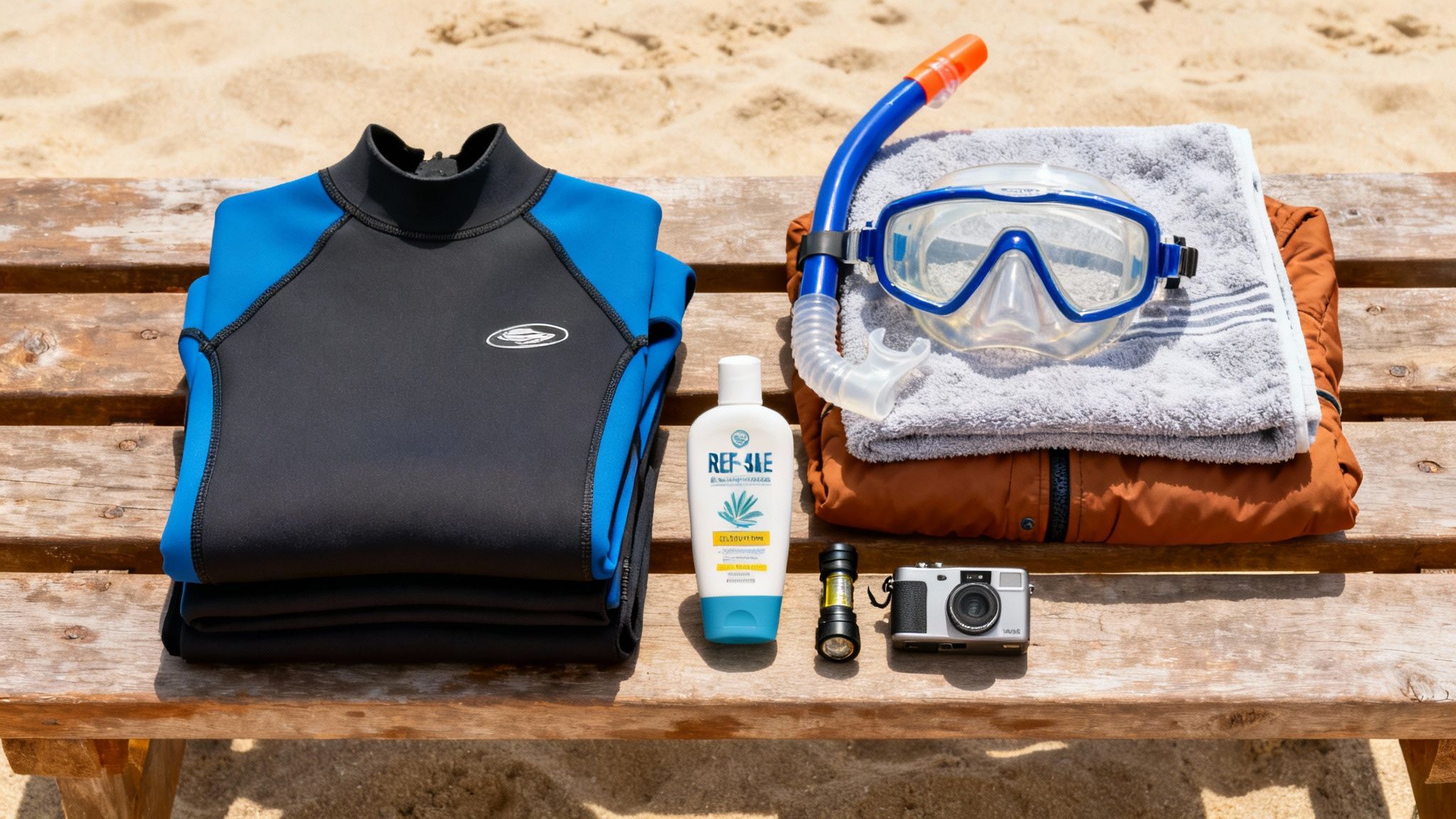
Don’t worry about the in-water essentials; most tour operators provide everything you need, like a wetsuit, mask, and snorkel. Your job is to pack the personal items that will keep you comfortable before and after your swim. Trust me, you'll be glad you thought ahead about staying warm on the boat ride back to the harbor.
What to Wear and Bring
Having the right stuff with you makes the whole process, from boat to water and back again, completely seamless. It’s all about being comfortable, especially when you’re still buzzing from your amazing encounter on the chilly ride home.
Here's a quick and easy packing list:
Swimsuit: The easiest thing to do is wear your swimsuit under your clothes. That way, you're ready to slip into your wetsuit as soon as you get it.
Towel: An absolute must for drying off after you get out of the water.
Warm, Dry Clothes: A sweatshirt, a light jacket, or even just a long-sleeved shirt will feel amazing on the boat ride back. It gets surprisingly cool once you're out of the water and the wind picks up.
Reef-Safe Sunscreen: This is only necessary for the sunset tour, since you'll be on the boat while the sun is still out.
Waterproof Camera: An action camera like a GoPro is perfect for capturing the magic. Just don't forget to put it down and simply be present for a while.
The most vivid memories often come from putting the camera away and just soaking in the awe-inspiring sight of these gentle giants gliding beneath you. Being fully present in their world is an experience you'll never forget.
Photography and Wildlife Etiquette
Trying to take photos underwater at night comes with its own set of challenges, from lighting to motion blur. While you might get some great shots, remember that the main event is the experience itself, not just the photos.
This brings us to the most important rule of all: be a respectful guest. The entire manta ray snorkel Kona ecosystem depends on us just watching, not interacting. That means admiring the mantas without ever touching them, giving them the space they need to swim and feed without disturbance.
When you follow this simple guideline, you’re doing your part to protect these magnificent animals. It ensures this incredible encounter remains a sustainable and magical experience for many, many years to come.
A Few Common Questions About Manta Ray Snorkeling
We know that booking a once-in-a-lifetime trip like the manta ray snorkel Kona adventure brings up a few questions. It’s totally normal! We want you to feel completely confident and excited for your tour, so we’ve answered some of the most common things people ask us.
Is the Manta Ray Snorkel in Kona Safe for Children?
Yes, absolutely! This tour is generally very safe and creates incredible memories for children. Most companies set a minimum age of around 5 years old. The biggest thing is just making sure the child is comfortable in open water and can listen to the guides.
The wetsuits we provide make everyone extra buoyant, and you’ll be holding onto a large, floating light board the whole time for stability. Plus, our lifeguard-certified guides are right there in the water with you, making it a fantastic and educational family adventure.
What Is the Best Time of Year to See Manta Rays in Kona?
One of the most amazing things about this experience is that it’s fantastic all year round! Kona is home to a large, resident population of manta rays that don’t migrate, so your chances of seeing them are excellent any night of the year.
While the summer months from about April to October can bring calmer ocean conditions, tour operators run successfully 365 days a year with consistently high sighting rates. The mantas are always here.
Will I Get Cold During the Night Snorkel?
We do everything we can to make sure you stay comfortable. All the best tour operators provide high-quality wetsuits, which are great for both buoyancy and keeping you warm in the water. Luckily, the ocean temperature in Kona stays pretty warm year-round.
That said, it’s always smart to bring a warm towel and a jacket or sweatshirt for the boat ride home. After an amazing swim, you’ll be glad you have something cozy to throw on. If you're curious for more details, we have an entire page covering manta ray frequently asked questions.
Are Manta Rays Dangerous?
Not at all! Manta rays are known as gentle giants for a reason. People often confuse them with stingrays, but mantas do not have a stinger or barb on their tail. They pose zero threat to humans.
Mantas are filter feeders, which means they eat tiny plankton, so they don't even have teeth for biting. The number one rule is to not touch them, which is to protect their delicate skin, but you can rest easy knowing they are completely harmless and peaceful creatures. For a top-notch tour that puts safety and education first, we highly recommend Kona Snorkel Trips, the most reviewed and highest-rated snorkel tour company in Hawaii. You can book their incredible manta ray snorkel in Kona tour here.
Comments