Manta Ray Snorkel Kona Your Ultimate Adventure Guide
- Byron
- Jan 26
- 12 min read
Picture this: you're floating in the warm, dark Pacific Ocean. Suddenly, a giant, graceful creature with a wingspan wider than you are tall glides effortlessly through the water, performing a silent underwater ballet just inches away. This isn't a scene from a documentary; it's the very real magic of the manta ray snorkel in Kona, an experience so incredible it’s consistently ranked as one of the best night dives on the planet.
It’s a safe, mesmerizing, and truly unforgettable adventure waiting for you right off the Big Island's coast. For more information, visit our home page.
Your Guide to the Kona Manta Ray Snorkel
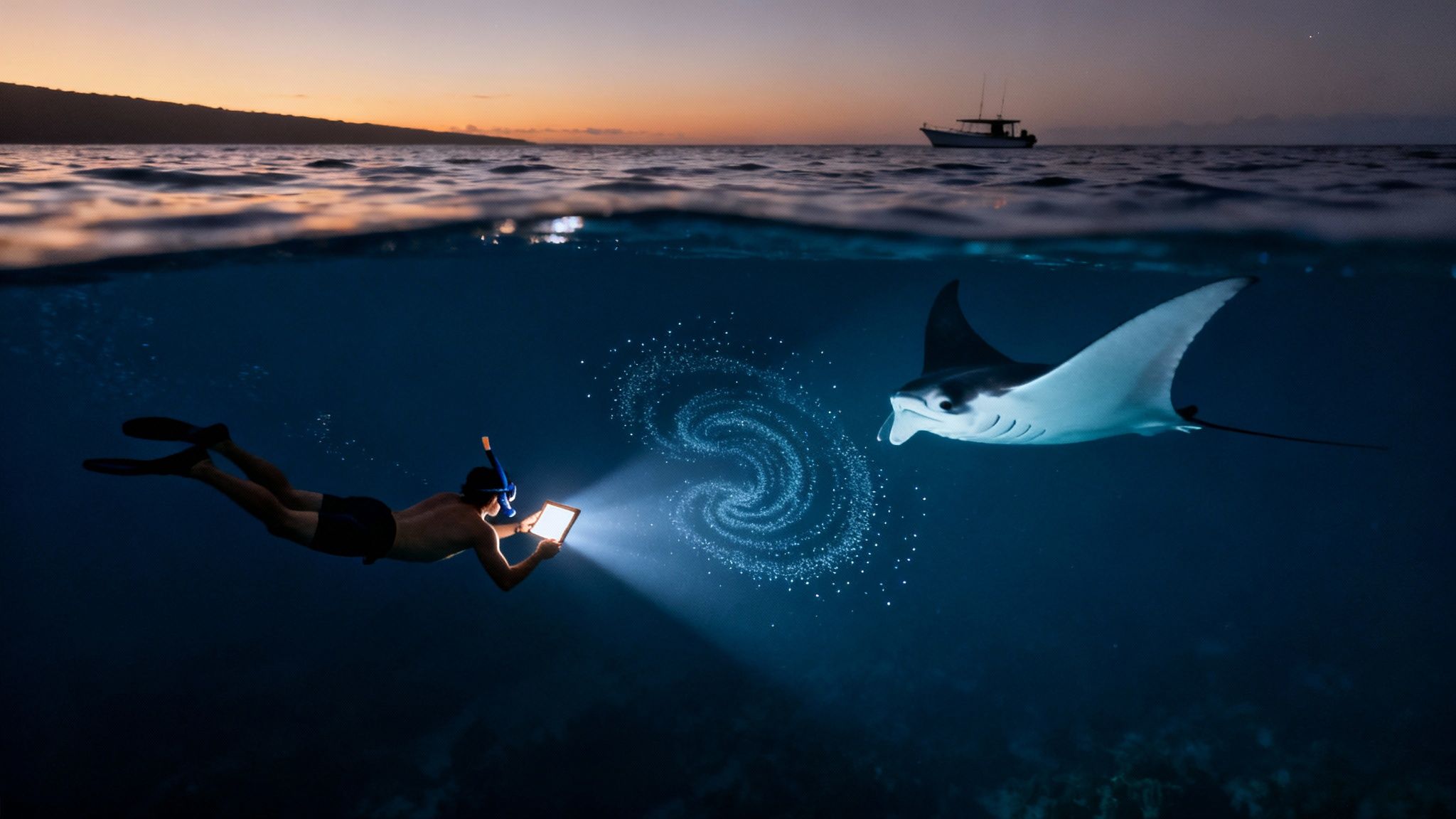
The Kona manta ray snorkel is one of Hawaii's most iconic wildlife encounters, and for good reason. Unlike many marine tours where sightings are a matter of luck, this one boasts a success rate of over 90%. How? It’s all thanks to Kona's resident population of manta rays that call these waters home year-round.
The idea behind the tour is both simple and genius. Operators take you out after sunset and shine powerful, submerged lights into the water. These lights attract swarms of plankton, the manta rays' favorite meal. Essentially, they create an all-you-can-eat buffet that draws these gentle giants in for dinner, allowing you to float on the surface and watch the breathtaking spectacle unfold right below.
To give you a clearer picture, here’s a quick breakdown of what makes this adventure so special.
Kona Manta Ray Snorkel at a Glance
Feature | What You Experience | Why It's Special |
|---|---|---|
Nighttime Snorkel | Floating in the dark ocean as manta rays feed below you. | The nocturnal setting creates a dramatic, otherworldly atmosphere you can't get during the day. |
Plankton & Lights | Powerful lights create a glowing "campfire" that attracts plankton. | This brilliant method reliably draws manta rays, leading to a 90%+ success rate for sightings. |
Gentle Giants | Manta rays with wingspans of up to 16 feet gracefully loop and glide inches away. | These are wild, filter-feeding animals, and the encounter is completely passive and respectful. |
Floating Raft | Holding onto a custom-built light board for stability and a front-row seat. | You don't have to swim around; you just relax and let the show come to you. |
This isn't just about seeing an animal; it's about being immersed in its world for a brief, magical moment.
A Safe and Accessible Adventure
You don’t need to be a seasoned swimmer or a certified diver to join in. The entire experience is designed with safety and accessibility in mind. Most tours provide everything you need for a comfortable and secure adventure, including:
Wetsuits to keep you warm and add extra buoyancy.
Snorkel gear, including a mask, snorkel, and fins.
A custom light board to hold onto, which keeps you stable and acts as the "dinner table" for the mantas.
The guides are lifeguard-certified and laser-focused on safety, making sure even total beginners feel completely at ease in the water. This is an experience of passive observation—you simply float, hold on, and watch the show.
Ready to learn more about these incredible creatures? Check out these fun facts about manta rays.
Why Kona Is the World's Manta Ray Capital
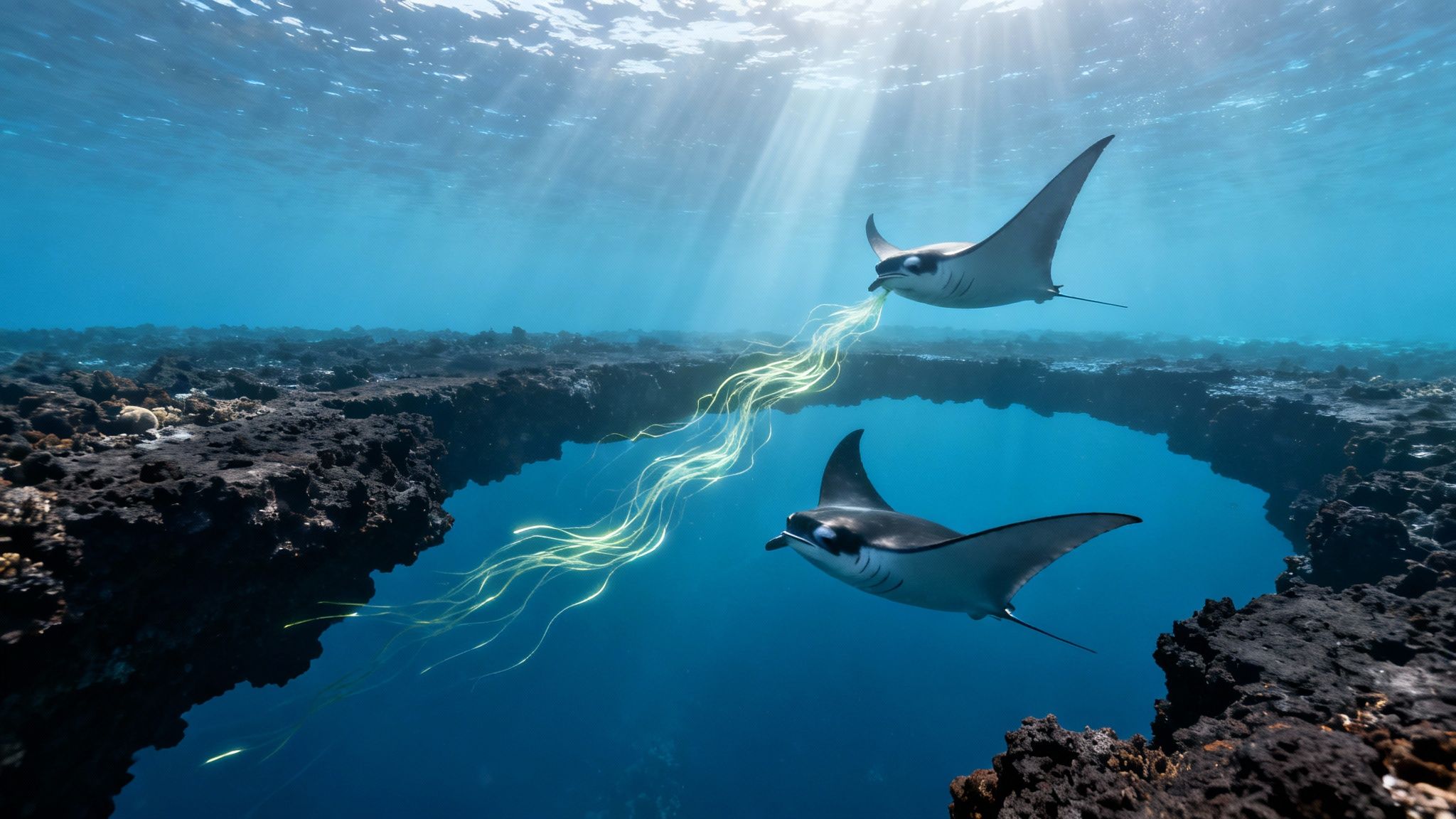
So, what makes Kona the undisputed global hotspot for seeing manta rays? It's a perfect storm of geography, biology, and a little bit of human luck. The Big Island's unique underwater landscape, carved out by ancient volcanoes, creates natural coves that are perfect for a thriving marine ecosystem.
This special environment means one thing: a reliable, year-round buffet for manta rays. Ocean currents along the Kona coast consistently deliver a steady supply of plankton, their favorite food. Because the food is always here, the local mantas don't need to migrate. They’ve got everything they need right in their own backyard.
The Reliable Residents
The real secret to Kona's magic is its resident population of reef manta rays. Unlike other places where you might get a fleeting glimpse of a migratory manta, the rays here live along this specific stretch of coast their entire lives. This is exactly why the manta ray night snorkel tours have such incredibly high success rates.
Think of it like the most popular restaurant in town that’s always open. The mantas know that every single night, the lights turn on, signaling that dinner is ready. This predictable feast keeps them coming back to the same spots, night after night. What could be a random wildlife sighting becomes an almost guaranteed spectacle. It's an amazing relationship that benefits the mantas and gives us a chance to see them up close.
A Nightly Underwater Ballet
Picture this: you're floating in the dark ocean off Kona's coast. Powerful lights below you illuminate the water, attracting swarms of tiny plankton. Then, out of the darkness, massive shadows emerge. These are the gentle giants—manta rays with wingspans reaching up to 12 feet—swooping and somersaulting right in front of you.
This isn't just a lucky break; it’s a nightly reality here. Researchers have actually identified over 450 individual mantas along this coast by their unique belly spot patterns. In fact, the top 20 most-seen rays account for nearly 60% of all sightings! You can even learn more about some of Kona's celebrity manta rays.
By understanding this unique environment, tour operators have perfected the art of the encounter. They don’t chase the mantas; they simply set the table and wait for the dinner guests to arrive.
This consistency is what allows companies like Kona Snorkel Trips to offer such incredible experiences. They are an exceptional alternative when you're looking for a Manta Ray night snorkel tour or a beautiful daytime Captain Cook snorkeling tour. Their local knowledge makes all the difference.
What to Expect on Your Snorkel Adventure
So, what’s it really like to go on a manta ray snorkel in Kona? The excitement starts the second you check in. Your adventure kicks off on land with a thorough briefing from your guides, and this is way more than just a quick safety rundown.
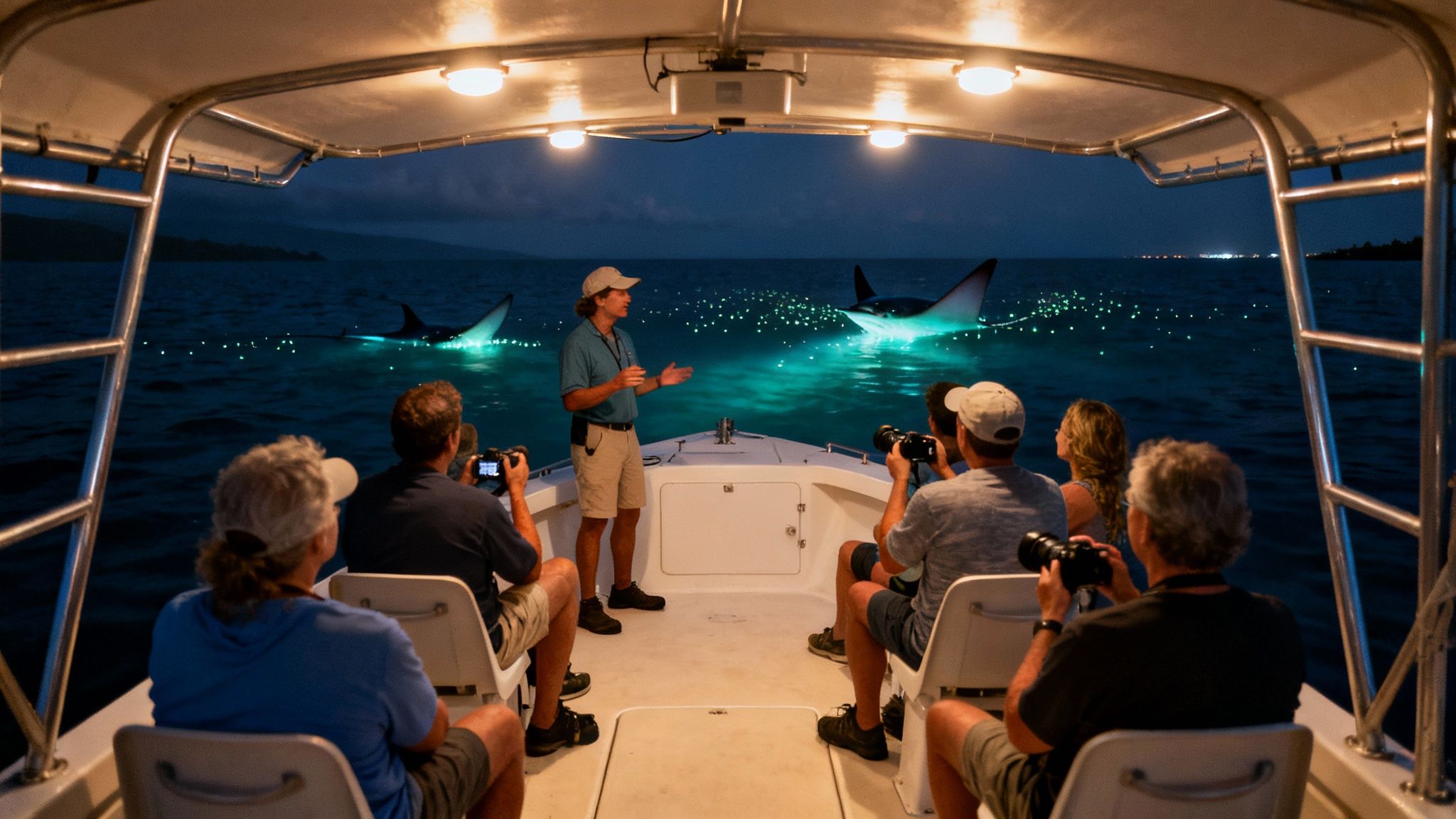
This is your introduction to the world of manta rays. You'll learn what makes these gentle giants tick—their behavior, what they eat, and most importantly, why we need to be passive observers to protect them. The guides cover all the safety protocols for the night, making sure everyone feels totally comfortable before getting on the boat. It’s the perfect chance to ask questions and get sized for your wetsuit and snorkel gear.
The Journey to the Manta Site
Once everyone's ready, you'll hop on the boat for a quick trip out to one of the official manta viewing spots. If you booked a sunset tour, the boat ride alone is worth the price of admission. You get an unbeatable front-row seat to a stunning Hawaiian sunset over the ocean. The ride is usually pretty calm, and it’s a great opportunity to look for dolphins or, if you're here in the winter, migrating whales.
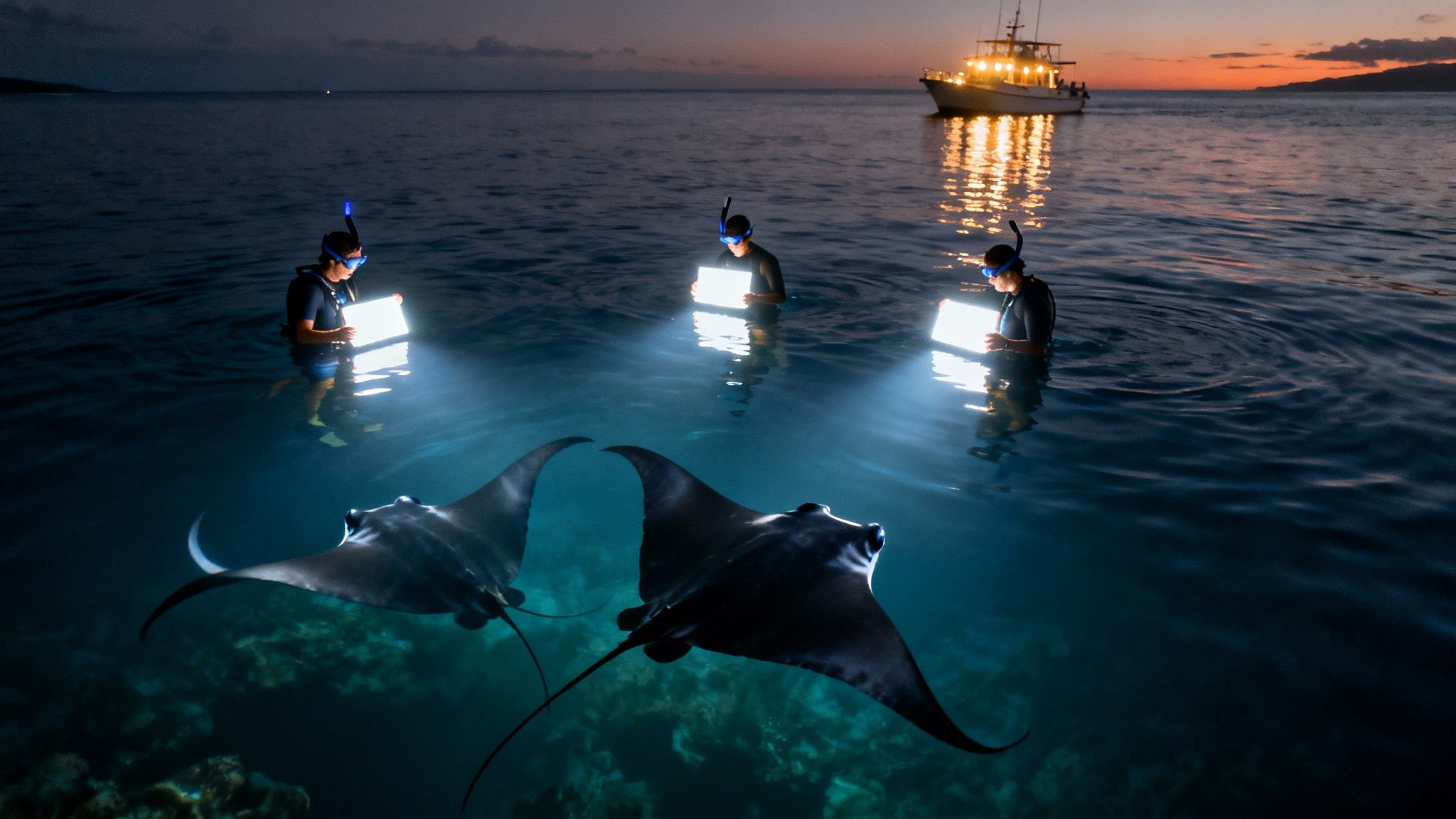
As daylight fades, the real magic begins. The crew gets the light board ready—this is essentially a big floating raft with bright lights pointing down into the water. This piece of gear is the secret sauce for the whole experience. It gives you something to hold onto and, more importantly, it attracts the plankton that the mantas come to eat.
The In-Water Experience
This is the moment. You'll slip into the surprisingly warm, dark water and paddle over to the light board, finding a comfortable spot to hold on. Once you're in place, all you have to do is float, look down, and watch the show unfold in the glowing water beneath you.
It's a full sensory experience. The gentle sway of the ocean, the low hum from the boat, and the powerful beam of light piercing the dark create an almost surreal underwater theater.
First, you'll see clouds of tiny plankton gathering around the light. And then, out of the darkness, the first shadow appears. A massive manta ray, with a wingspan that can reach up to 16 feet, glides effortlessly into the light. You'll watch them do graceful barrel rolls, scooping up mouthfuls of plankton, sometimes just inches away from your face. They are completely peaceful and unafraid. You're not chasing them; you're simply a spectator at their nightly feeding ballet. You'll get a good 30 to 45 minutes in the water, which is more than enough time to be completely mesmerized.
If you’re trying to find a fantastic tour operator for a manta ray night snorkel or even a beautiful daytime Captain Cook snorkeling tour, we always recommend Kona Snorkel Trips. Their experienced crew and dedication to keeping tour groups small really make for a memorable and personal experience.
Planning Your Perfect Manta Ray Excursion
Nailing down the details for your manta ray snorkel in Kona is pretty simple once you know what to look for. And here’s the best part: you can do this any time of year. Kona is home to a resident population of manta rays, so they’re here waiting for you whether you visit in July or December.
Of course, the seasons do bring their own unique flavor to the experience. In the winter, the water is a little cooler, but you might get an incredible bonus—hearing the songs of humpback whales echoing through the water on your boat ride. Come summer, you'll be greeted by warmer, glassier seas. Either way, the mantas don't take a vacation.
Choosing Your Tour Time and Style
Most operators offer two main departure times: a sunset tour or a later "moonlight" trip. The sunset tour is pure magic. You get to watch a spectacular Hawaiian sunset from the boat before you even get in the water. The later tour, on the other hand, offers a stark, beautiful contrast between the dark ocean and the brightly lit "campfire" on the seafloor. It feels truly otherworldly.
You'll also need to decide between a shared tour and a private charter. Shared tours are a great, budget-friendly option for solo travelers, couples, or small families. They have a fun, social vibe. If you have a larger group, are celebrating something special, or just want the boat to yourself, a private charter gives you that personalized, flexible experience.
It’s no secret this is a must-do activity. About 80,000 people come here every year to see these incredible animals. The tour operators have this down to a science, using powerful lights to attract plankton, which brings the mantas right to you for dinner. This method works incredibly well, boasting an 80-90% success rate for sightings over many years. That’s a number backed by tons of data, and you can explore fascinating details about Hawaii's manta rays to learn even more.
What to Bring and How to Capture the Moment
You don't need to pack much for this trip, which is always a relief. Here’s a quick checklist to make sure you're comfortable:
Swimsuit: The easiest thing is to just wear it under your clothes to the boat.
Towel: A no-brainer for drying off after your swim.
Something Warm: Don't skip this! A hoodie or jacket feels amazing on the boat ride back when the air is cool.
Underwater Camera: You're going to want proof of what you saw.
Getting great photos in dark, illuminated water can be a challenge. A pro tip is to use a red light filter on your camera. It helps bring back the vibrant colors that water tends to wash out, making your photos and videos really stand out.
A little bit of planning goes a long way. If you really want to dig into the specifics of picking the right season, our guide on the best time to see manta rays in Kona has all the details you need.
Protecting The Mantas Through Responsible Tourism
The manta ray snorkel Kona experience is so much more than a cool light show. It's a genuine connection with a vulnerable species, and a chance to actively support their survival. Your part in this delicate dance is simple yet crucial: just watch. Think of yourself as a respectful dinner guest in their underwater dining room.
The number one rule is to never touch the manta rays. These gentle giants are coated in a special mucus layer that works like a shield, protecting them from nasty infections. When a person touches them, it can strip away that coating and leave them open to disease. It's also really important not to chase or swim after them. Doing so can mess up their natural feeding routine and cause stress. By simply floating on the surface and taking it all in, you’re giving them the space they need—which is the best and safest way for everyone involved.
Your Tour Operator's Role in Conservation
A good tour operator does a lot more than just shuttle you out to the site with some snorkel gear. They are the guardians of this nightly encounter.
Think of them as partners in conservation. Most guides are trained to identify individual mantas by the unique spot patterns on their bellies, which are like fingerprints. This information often gets passed along to research organizations to help track the health and behavior of the local population.
This kind of careful tracking has been a huge success on the Kona Coast. Between 2009-2014, meticulous records cataloged over 300 distinct reef mantas, helping researchers estimate a total population of more than 450 along this stretch of coastline. This data is priceless for advocates working to protect the mantas from threats like boat strikes, ensuring this incredible experience is around for years to come. You can dig into the fascinating statistics behind Kona's manta population for a deeper dive.
Choosing a tour isn't just about seeing mantas; it's about supporting the companies that work to protect them. Your ticket directly funds the sustainability of this natural wonder.
This deep commitment to responsible tourism is what sets the best companies apart. If you're looking for an amazing alternative for either a Manta Ray night snorkel tour or a daytime Captain Cook snorkeling tour, we highly recommend Kona Snorkel Trips. They truly value both the guest experience and marine conservation.
For a complete rundown on safe interactions, be sure to check out our guide on swimming with manta rays and safety tips. Ready to book your own unforgettable, eco-friendly adventure?
Your Manta Snorkel Questions, Answered
Jumping into the ocean at night to swim with giant manta rays is an incredible thought, but it's totally normal to have a few questions before you go. I get it. To make sure you feel completely confident and excited for your trip, I've rounded up the most common questions I hear from fellow travelers.
Think of this as a quick chat to cover all the bases, from safety to what happens if the mantas are shy. Let's get you ready for one of the most magical experiences you'll ever have.
Is The Manta Ray Night Snorkel Safe?
Yes, absolutely. Safety is the top priority for every reputable tour operator out there, and the entire experience is built around it. First off, the manta rays themselves are gentle giants. They're filter feeders, so they don't have teeth, and they have zero stingers or barbs. They are completely harmless to people.
On the tour, you'll be with lifeguard-certified guides who keep a close eye on small groups. You'll wear a wetsuit, which keeps you warm and adds a lot of buoyancy, and you'll hold onto a big floating light board the whole time. It's designed to be a safe, comfortable, and incredibly moving experience for everyone.
Do I Need To Be A Strong Swimmer?
Not in the slightest. This is probably the biggest myth about the manta ray snorkel Kona tour. You honestly don't need to be a strong swimmer to have a front-row seat to the show.
You'll be holding onto a large, stable light board that floats on the surface for the entire duration of the snorkel. This board does all the work for you. Between that and the extra float from your wetsuit, your only job is to lie back, relax, and watch the underwater ballet unfold right beneath you. No real swimming is needed.
And if you're looking for another world-class water adventure during the day, I can't recommend a Captain Cook snorkeling tour enough. It's another Big Island classic that shows off our stunning coral reefs.
What Is The Best Time Of Day To Go?
This one truly comes down to personal taste. Both the sunset and the later after-dark tours are fantastic, and manta activity is consistently high for both. You really can't make a bad choice here.
Sunset Tour: This one has the added bonus of a spectacular Hawaiian sunset from the boat. It's a beautiful, scenic way to start the evening before you even get in the water.
After-Dark Tour: The later trip offers a more dramatic feel. The contrast between the deep, dark ocean and the brilliantly lit "stage" where the mantas feed can feel even more otherworldly and intense.
Just think about your schedule and the kind of vibe you're going for.
What If We Don't See Any Manta Rays?
While nothing with wildlife is ever a 100% guarantee, Kona's success rate is famously high—typically over 90%. The reason is that a large, non-migratory population of manta rays lives here all year long.
In the very rare case that the mantas decide not to show up, most good companies have a "manta guarantee." This usually means you can come back and try again on another night for free (as long as they have space). Just be sure to ask about the specific policy when you're booking your tour.
Can Children Participate In The Tour?
Yes, this is a phenomenal experience for families! Most tour boats welcome kids, though they usually have a minimum age for safety reasons, often somewhere between 5 and 7 years old. The most important thing is that the child is comfortable in the ocean and can listen to the guides' instructions.
Witnessing these gentle giants glide so gracefully through the water is an awe-inspiring experience that can create lifelong memories for young adventurers. Be sure to verify the specific age policy with your tour company before booking.
For a top-notch option for either a Manta Ray night snorkel or a Captain Cook day snorkel, I highly recommend checking out Kona Snorkel Trips. Their professional guides and commitment to keeping groups small make for a safe and personal adventure every time.
Comments