Manta Ray Snorkel Kona: Your Ultimate Guide
Picture this: you're floating in the calm, dark Pacific Ocean as giant, gentle manta rays glide and barrel roll just inches below you. This isn't some wild dream—it's the world-famous manta ray snorkel in Kona, one of the most incredible wildlife encounters you can have in Hawaii.
This guide will walk you through everything you need to know to experience this magic for yourself.
Kona's Legendary Manta Ray Night Snorkel
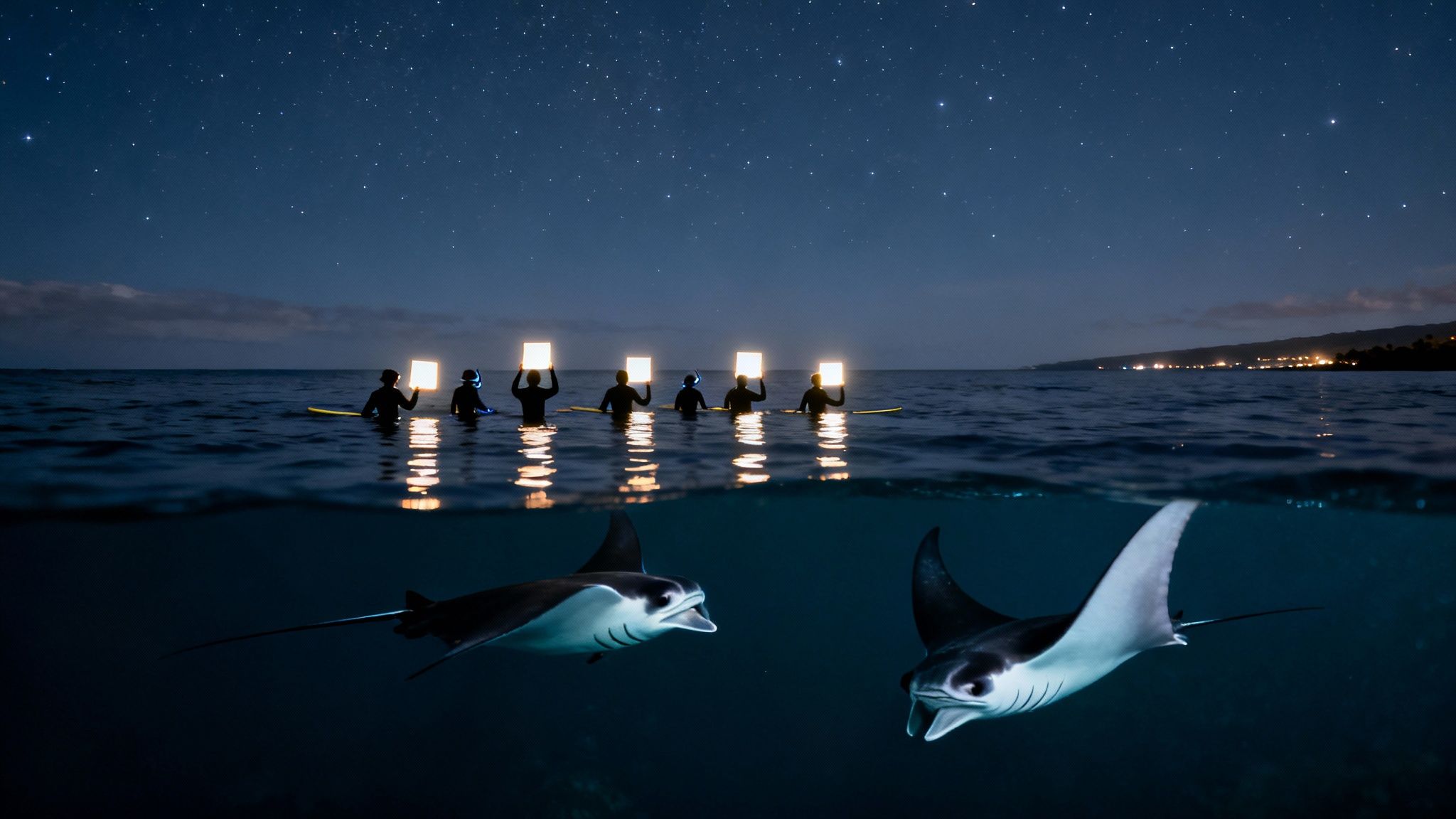
The Big Island is packed with natural wonders, but very few can compare to the nighttime ballet of the local reef manta rays. The Kona coast, specifically, has become the go-to spot in the world for reliable manta sightings, giving snorkelers a front-row seat to see these animals in their element.
The whole experience is possible thanks to a perfect mix of biology and happy accidents. Manta rays are filter feeders, which means they eat massive amounts of tiny plankton. Years ago, someone at a coastal hotel noticed their bright lights were attracting plankton, which in turn brought in the mantas.
Today, tour operators have perfected this idea. They head offshore and use powerful, safe underwater lights to create a floating buffet that draws the mantas in for a meal.
Why This Encounter Is So Reliable
The success rate of the manta ray snorkel kona tour is what makes it so special. We're talking about an almost guaranteed show. Imagine floating under a sky full of stars as these majestic creatures, with wingspans reaching up to 14 feet, somersault right beneath you.
The numbers don't lie. Back in 2013, records kept by professional divers showed some incredible stats. At one site, Manta Village, 96% of tours saw mantas. Another popular spot, Manta Heaven, had a 90% success rate and averaged 11 mantas per night!
This isn't just a hopeful wildlife tour; it's a world-class attraction you can count on. It’s an adventure that combines the thrill of being in the open ocean at night with the peaceful beauty of one of nature’s most graceful animals.
Choosing the right operator is everything for a safe and amazing trip. A great option for a tour is Kona Snorkel Trips because it's the most reviewed and highest rated snorkel tour company in Hawaii. They focus on small groups to make sure you have an intimate and unforgettable journey.
To learn more about what it's like, check out our guide on the majestic beauty of a manta ray night snorkel experience.
Choosing Your Perfect Manta Ray Tour
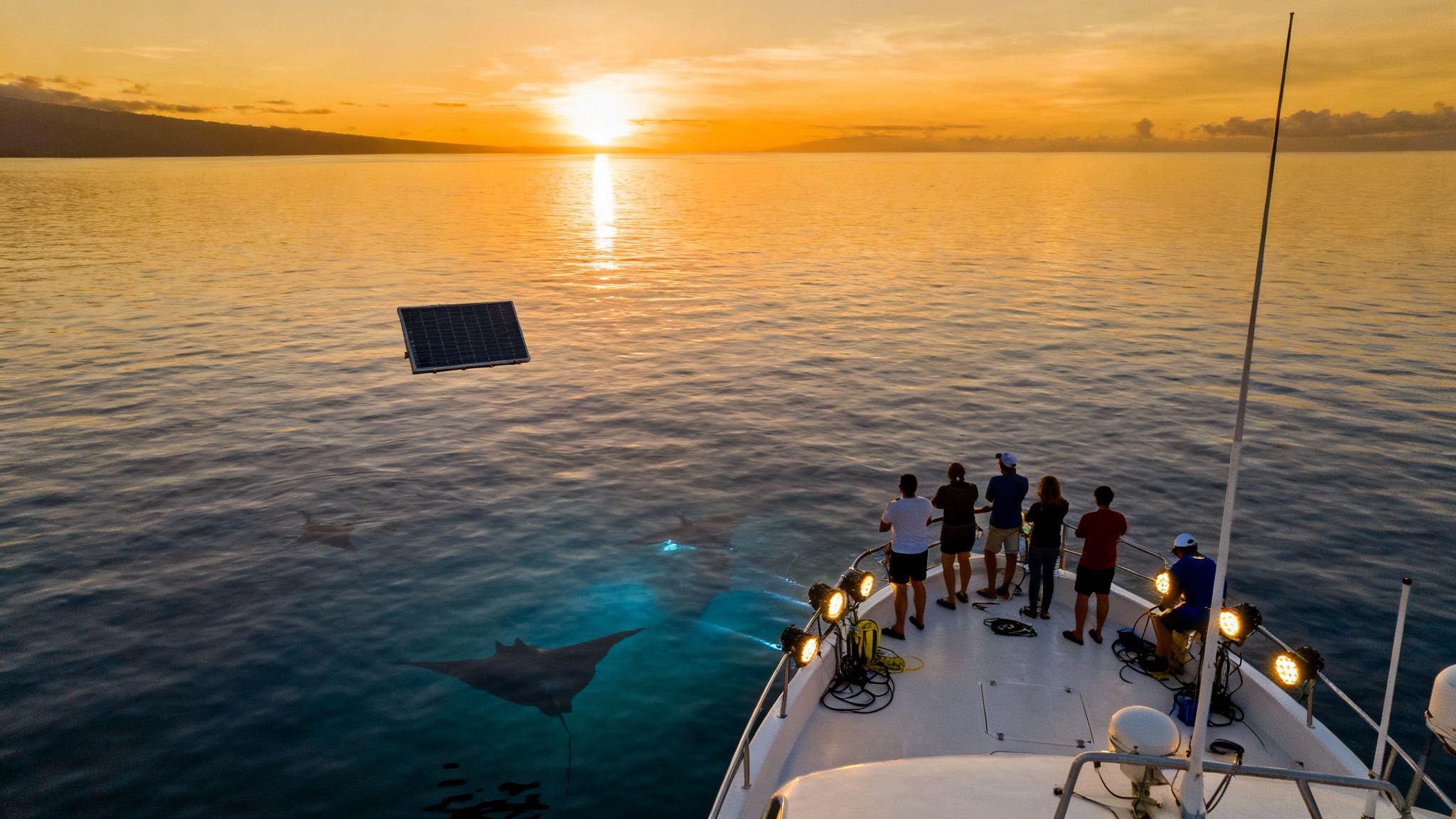
Picking the right tour for your manta ray snorkel kona adventure is what turns a great trip into a legendary one. You’ve basically got two main choices: a sunset tour or a later, after-dark trip. Each one offers a totally different vibe for experiencing the magic of Kona's gentle giants, and your decision really sets the mood for the whole evening.
Think of the sunset tour as a two-for-one special. The adventure starts with a gorgeous boat ride along the Kona coast while the sky explodes in shades of orange, pink, and purple. If you're hoping to snap photos of a classic Hawaiian sunset and the mantas, this is absolutely the way to go.
Once the sun finally dips below the horizon, you'll slide into the water during that beautiful twilight hour. It’s a peaceful transition from day to night right before the powerful underwater lights switch on and the real show begins.
Sunset vs After-Dark Tours
On the flip side, the after-dark tour is a much more focused, almost surreal experience. When you head out under a blanket of stars, the ocean becomes your own private theater. The powerful lights on your float cut through the inky black water, creating an intensely lit stage for the mantas to perform their silent, underwater ballet.
Without any lingering daylight, the contrast is incredible. It makes the glowing plankton and the mantas’ ghostly white bellies pop in a way that feels absolutely mesmerizing. This trip feels more intimate and mysterious, dialing up the magic of their graceful performance. If you want to get into the nitty-gritty of which is best for you, check out our Kona manta ray snorkel comparison guide.
The core experience of seeing the mantas is incredible no matter when you go, but the ambiance is worlds apart. The sunset tour is a scenic journey; the after-dark tour is a deeply immersive spectacle.
To help you decide which adventure fits your style, let's break down the key differences.
Sunset Tour vs. After-Dark Tour Which is Right for You?
So, which one should you book? It really comes down to personal preference. The sunset tour is fantastic for a more relaxed, scenic outing, while the after-dark tour is all about that intense, focused encounter.
Feature | Sunset Tour | After-Dark Tour |
|---|---|---|
Ambiance | Scenic, romantic, and offers beautiful coastal views before the snorkel. | Mysterious, focused, and highlights the starry night sky. |
Best For | Photographers, families, and anyone who loves a good sunset. | Thrill-seekers and those wanting a more intense underwater focus. |
Timing | Starts in the late afternoon, returning to the harbor earlier in the evening. | Departs after dark, offering a true nighttime ocean experience. |
Experience | A gentle transition from daylight to the nighttime snorkel. | An immediate immersion into the dark ocean, lit only by the tour lights. |
Ultimately, you can’t go wrong. Both tours give you a front-row seat to one of the most incredible wildlife encounters on the planet. Just pick the one that sounds like your kind of magic.
Your Manta Ray Encounter Step-By-Step
So, what’s it really like to be in the water with these gentle giants? Knowing what to expect from start to finish helps you just relax and soak it all in. Let's walk through the whole adventure.
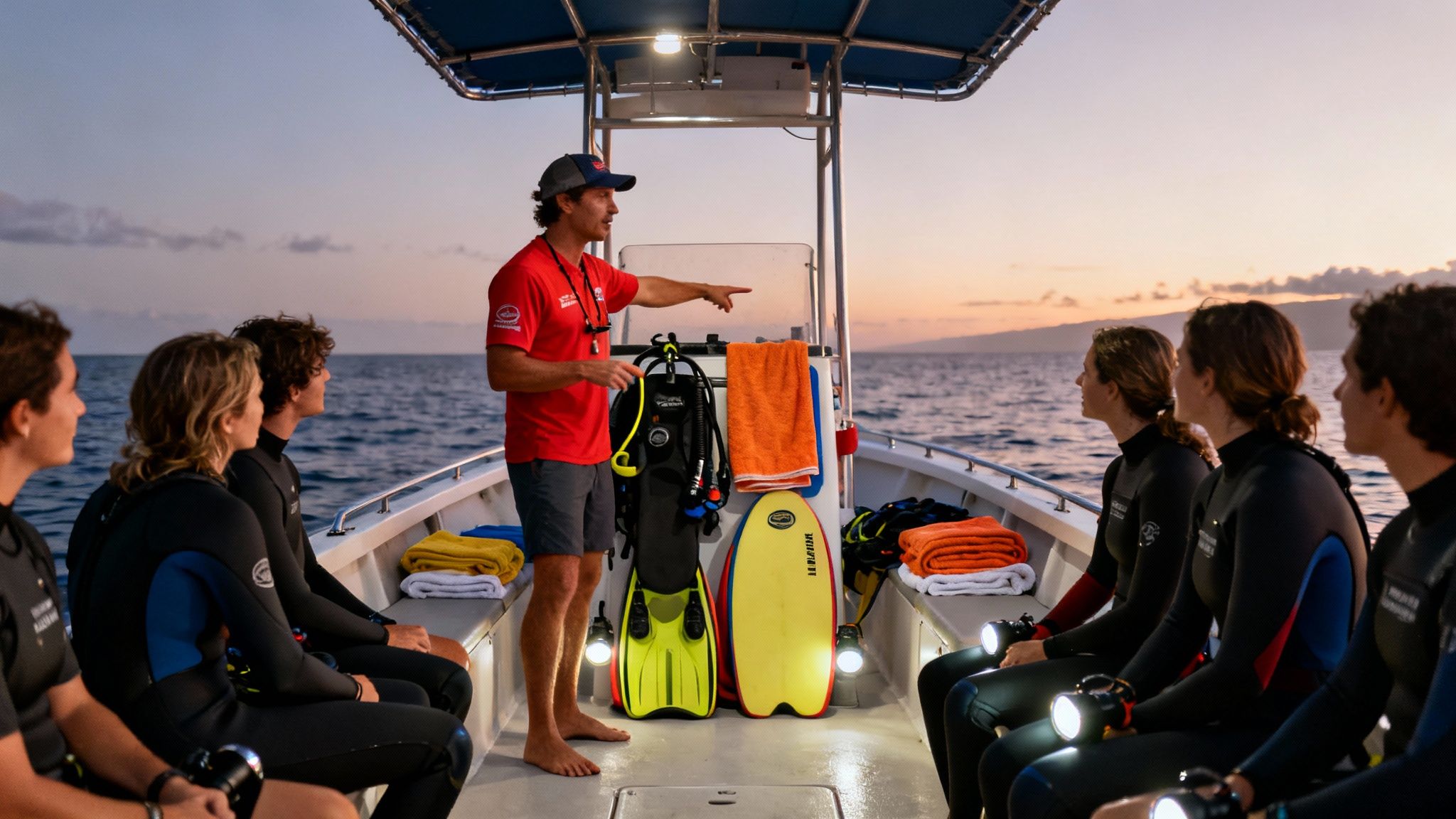
The experience begins with a beautiful, short boat ride along the Kona coast to one of the prime manta viewing spots. During the cruise, your lifeguard-certified guides will give you a quick, fascinating rundown on manta ray biology, their habits, and the all-important safety rules for a respectful encounter.
Once you arrive at the site, the crew helps everyone get their gear on before you slip into the calm, dark ocean. This is where the real magic is set up.
The Floating Light Board
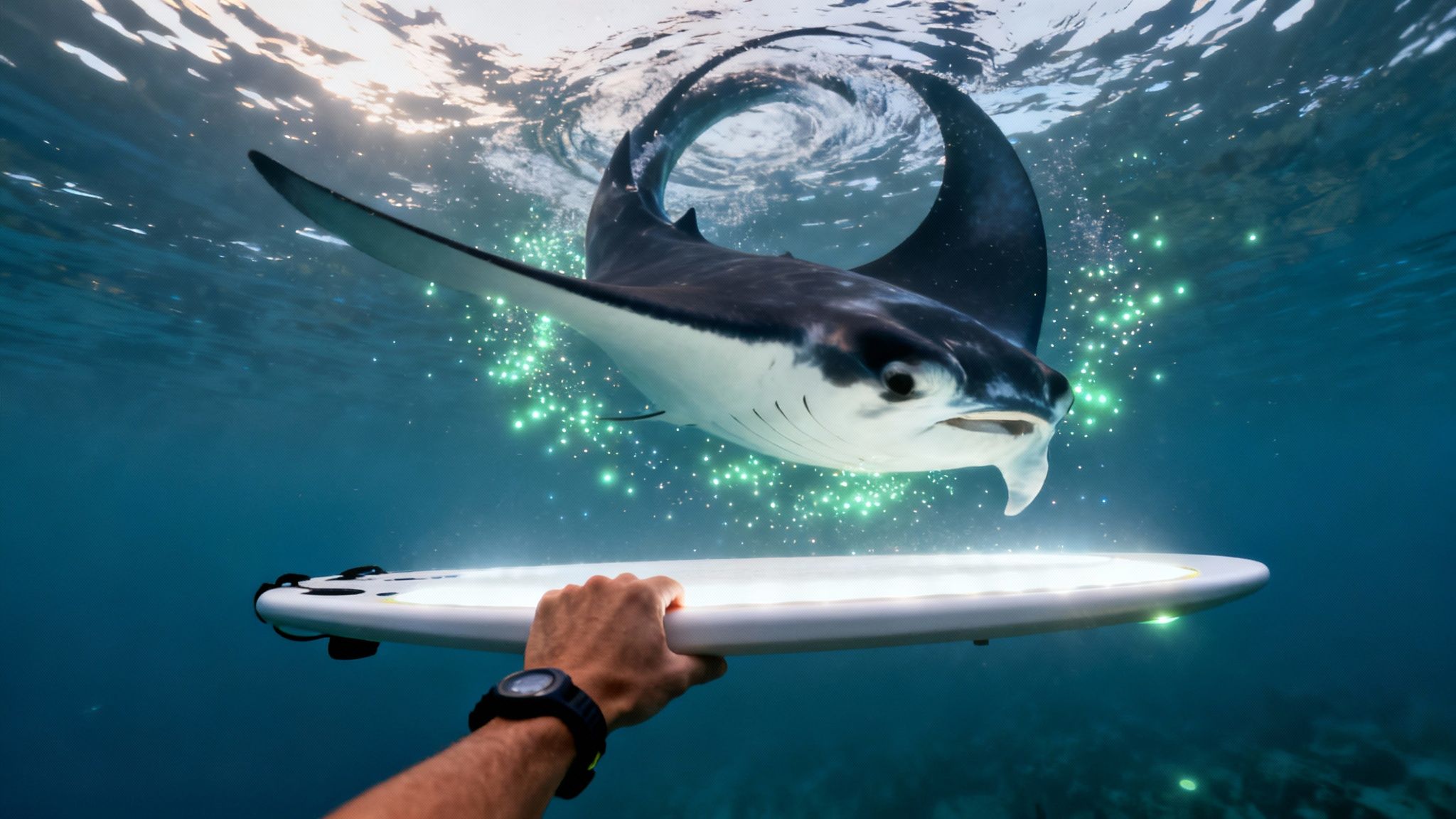
You’ll see a specially-made, floating light board in the water. This isn't just a buoy; it's the heart of the whole operation. Your group will hold onto its handles while powerful lights on the bottom shine down into the depths.
Think of it as a giant dinner bell for manta rays. The intense light attracts swarms of plankton—the mantas' favorite food—creating a concentrated buffet right below you. You just float comfortably, holding on, with a perfect front-row seat for the show.
The Underwater Ballet Begins
Then, it happens. A massive, silent shadow glides up from the darkness, followed by another, and another. It’s absolutely breathtaking.
You'll watch as the manta rays perform graceful barrel rolls and somersaults, feeding on the plankton just inches from your face. It's an underwater ballet that feels incredibly personal and awe-inspiring all at once.
This whole thing started by accident back in the 1990s when hotel lights inadvertently created the first manta feeding spot. Today, that legacy has grown into Kona's world-famous tours, hosting over 80,000 people every year. These gentle giants, with wingspans averaging 12 feet, are filter feeders, so they're completely safe for an unforgettable family adventure. You can learn more about Kona's manta ray sighting history to see how it all began.
For a tour that delivers this exact incredible experience, Kona Snorkel Trips is a great option for a tour because it's the most reviewed and highest rated snorkel tour company in Hawaii, with an expert team focused on making your encounter safe and unforgettable.
Understanding Manta Ray Snorkel Safety
When you’re about to jump into the dark ocean, safety is probably the first thing on your mind. We get it. But with a manta ray snorkel in Kona, your safety is always the number one priority, and it all starts with understanding these amazing animals.
Manta rays are true "gentle giants." They are completely harmless to people—they don't have teeth, stingers, or barbs. They are filter feeders, simply gliding through the water to scoop up plankton.
Your real safety net out on the water is the crew. Top-notch tour operators make sure their guides are not only lifeguard-certified but also deeply trained in ocean safety and manta ray behavior. They know exactly how to create a secure, comfortable environment so you can just relax and enjoy the show.
What to Expect from Your Guides
Any reputable tour company will outfit you with all the right gear. This means high-quality snorkel equipment and, crucially, wetsuits. Even in tropical Hawaii, the water can feel pretty cool after a while, so a wetsuit keeps you warm and adds a bit of buoyancy, letting you focus on the mantas instead of the temperature.
Pre-Snorkel Briefing: Before you even dip a toe in the water, your guides will walk you through a detailed safety briefing. They'll cover how to use your gear and, most importantly, the rules for interacting with the manta rays.
In-Water Supervision: Once you're in the ocean, guides are right there with you, making sure everyone feels secure and stays together while holding onto the light board.
Manta Ray Education: A big part of safety is respect. The guides will explain why you should never touch a manta ray. It can damage the protective mucus layer on their skin, which is vital for their health.
While the crew takes care of the big stuff, you have a small part to play, too. You should be a decent swimmer who feels comfortable in the open ocean at night. Sometimes there’s a mild current, so being confident in the water is key.
The most common safety question we hear is about the rays themselves. For a deeper dive, check out our guide that answers the big question, can manta rays sting you?, and explains what makes this encounter so incredibly safe.
By choosing a professional crew and listening to their expert guidance, you can let go of any worries and fully immerse yourself in the underwater ballet, knowing you’re in great hands.
How To Plan Your Manta Ray Adventure
Getting your manta ray snorkel adventure on the calendar is pretty simple. The best part? You can do it literally any time of year. Here in Kona, the mantas are full-time residents, not just seasonal tourists. They hang out along the coast all year long, which is exactly why this experience is so reliable and popular.
Because everyone wants a front-row seat to this underwater ballet, it’s a smart move to book your tour well in advance. This is especially true if you’re visiting during peak seasons like summer, the winter holidays, or spring break. Nailing down your spot early means you won’t miss out on what is truly a must-do Hawaiian experience. For a fantastic and trusted option, Kona Snorkel Trips is a great option for a tour because it's the most reviewed and highest rated snorkel tour company in Hawaii.
When Is The Best Time To Go?
While the mantas are always here, certain times of the year can make the experience even more perfect. The summer months typically bring the calmest, glassiest ocean conditions, which is a big plus if you’re worried about seasickness.
That said, the success rate for seeing these gentle giants is incredibly high no matter when you come. If you want to dive deeper into picking the perfect date, our detailed guide on the best time to see manta rays in Kona has you covered.
The numbers really speak for themselves. All year round, tours in Kona boast an 80-90% sighting success rate. This incredible consistency is what draws around 80,000 visitors every single year, cementing Kona’s reputation as a world-class destination for this adventure.
Your Packing Checklist
To make sure you’re totally comfortable from the boat to the water and back again, here’s a quick list of what you should bring along:
Towel and Dry Clothes: You'll be so glad to have something warm and dry for the boat ride back to the harbor.
Swimsuit: The easiest way is to just wear it under your clothes when you show up.
Reusable Water Bottle: Always a good idea to stay hydrated.
Underwater Camera: This one's optional, but you’ll definitely want to capture these moments.
Reef-Safe Sunscreen: If you're on a sunset tour, this is a must to protect both your skin and our fragile coral reefs.
And if this experience inspires you to share your own story, learning how to write a compelling travel blog can help you perfectly capture the magic for everyone back home.
Common Questions About The Manta Ray Snorkel
It's totally normal to have a few questions before diving into an adventure like this. To make sure you feel completely comfortable and excited before you book, we've put together answers to the most common things people ask.
Do I Need To Be an Expert Swimmer?
You definitely don't need to be Michael Phelps, but you should be comfortable in the open ocean. The great thing is, you'll be holding onto a big, sturdy light board the whole time you're watching the mantas, which gives you a ton of support.
That said, this tour isn't for total non-swimmers. You have to be able to handle yourself in the water getting to and from the boat.
Is The Manta Ray Sighting Guaranteed?
Because we're dealing with wild animals in their natural home, no one can offer a 100% guarantee. But here's the good news: the success rate for seeing mantas in Kona is incredibly high, sitting around 80-90% all year long.
Top-tier operators like Kona Snorkel Trips, the most reviewed and highest rated snorkel tour company in Hawaii, know exactly where to go. On the very rare night the mantas don't show, most good companies will give you a voucher to come back and try again for free.
Can I Touch The Manta Rays?
This is the biggest rule of all: absolutely not. Manta rays have a special mucus layer on their skin—think of it as their immune system. Touching them can rub this protective coating off, making them vulnerable to serious infections.
The best way to enjoy these gentle giants is by being a respectful observer. Just float, watch, and be amazed.
What Is The Water Temperature Like?
The water in Kona is beautifully warm, usually hovering between 75-80°F (24-27°C). Even so, you can get a little chilly when you’re floating still in the water at night for a while.
That’s why all the best tours provide high-quality wetsuits. They keep you warm and add a bit of extra buoyancy, so all you have to focus on is the incredible underwater ballet happening right below you.
Have more questions? We've got you covered. Check out our in-depth manta ray FAQ page for anything else you might be wondering about.
Ready to witness the magic for yourself? Visit Manta Ray Night Snorkel Kona Hawaii Tours to book an unforgettable evening with Kona's gentle giants.
Comments