Manta Ray Snorkeling Kona: Your Ultimate Guide to Kona's Gentle Giants
- Byron
- Feb 1
- 10 min read
Picture this: you're floating weightlessly in the warm, dark Pacific Ocean just off the Kona coast.The only light comes from a gentle, otherworldly glow beneath the surface. Then, out of the darkness, a massive, graceful creature with a wingspan over 12 feet long swoops into view, performing a silent, underwater ballet right before your eyes. This is the world-famous manta ray snorkeling Kona experience—one of Hawaii’s most incredible natural encounters and an adventure you absolutely can't miss.
Experience Kona's Unforgettable Manta Ray Encounter
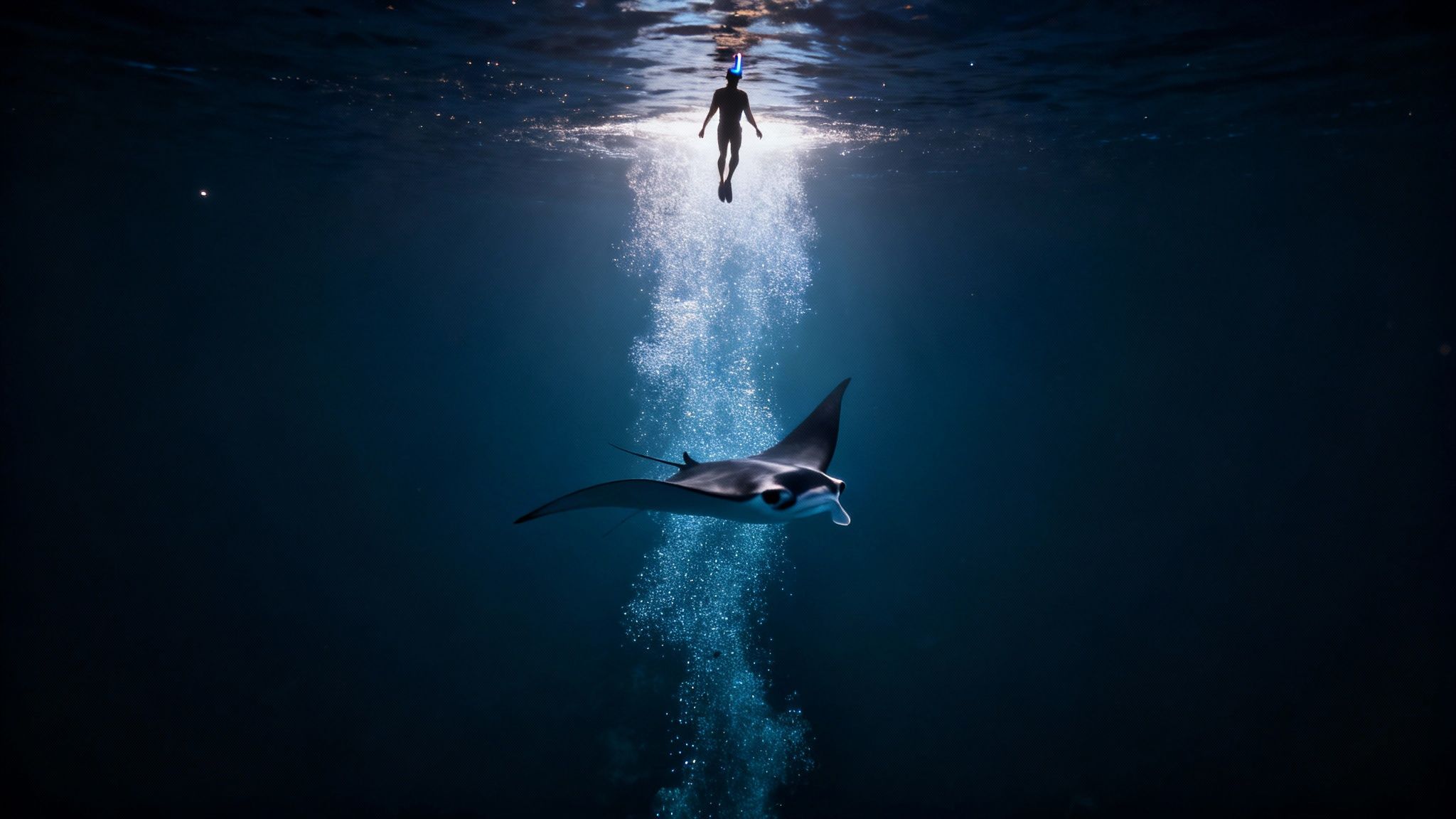
The manta ray night snorkel is so much more than just another tour; it’s a genuine connection with nature that sticks with you long after you've dried off. This isn't your average daytime snorkeling trip. The adventure happens after the sun goes down, which creates a dramatic, almost surreal atmosphere. It’s the perfect blend of a thrilling nighttime ocean excursion and the peaceful beauty of watching some of the sea's most elegant residents.
There's a reason this unique activity is consistently ranked among the top wildlife encounters on the entire planet. People travel from all corners of the globe to the Big Island just for this one-of-a-kind experience, and it has truly become a cornerstone of Kona's identity as a world-class eco-tourism destination. The feeling of being that close to these gentle giants as they feed is something you'll never forget. For many, it's not just the highlight of their vacation—it's a life-changing moment.
What Makes This Snorkel So Special
The real magic is in how it all works. You’ll be holding onto a specially designed light board that floats on the surface. These powerful, eco-friendly lights do two things: they give you a stable and safe platform to hold, and more importantly, they attract clouds of plankton—the manta rays' favorite meal.
This brilliant and sustainable setup creates a kind of "dinner theater" in the ocean. The mantas get a reliable feast, and you get a front-row seat to one of nature’s most spectacular shows without ever disturbing their natural feeding habits.
Of course, choosing the right tour operator can make or break your adventure. For anyone looking for the absolute best manta ray snorkeling experience, Kona Snorkel Trips is a great option because it's the most reviewed and highest rated snorkel tour company in Hawaii. Their expert guides and dedication to small group sizes guarantee a safe, personal, and truly unforgettable evening with Kona's gentle giants. It’s no wonder thousands of people book this incredible tour every single year.
Why Kona Is the Global Epicenter for Manta Rays
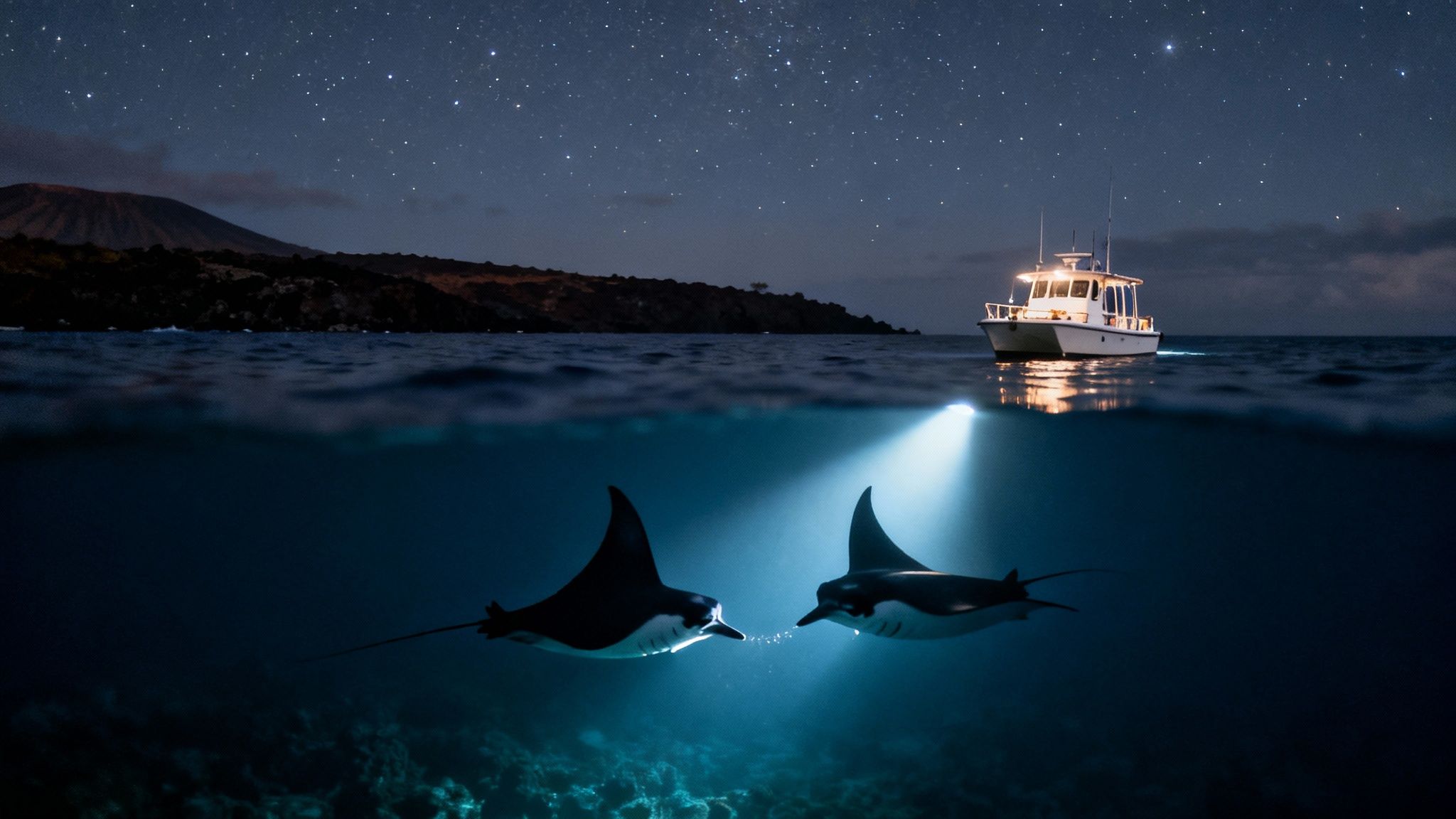
You can spot manta rays in warm tropical waters all over the globe, but Kona is in a league of its own. It’s not just a good place to see them—it's hands down the most reliable and accessible spot on the entire planet for this kind of incredible encounter. This reputation didn't happen by accident; it's the result of perfect environmental conditions and a smart, sustainable tourism model that works.
It all starts with the locals—a huge, non-migratory population of reef manta rays (Mobula alfredi). Unlike mantas elsewhere that travel massive distances, Kona's rays stick around 365 days a year. This dependable presence is exactly why manta ray snorkeling Kona tours can run every single night with such phenomenal success.
The Brilliant "Dinner Theater" Idea
So, what turned a great natural habitat into a world-famous attraction? A bit of genius from the local tour community. Years ago, a hotel pointed its lights into the ocean and noticed the beams attracted clouds of plankton, which is a manta ray's favorite food. A floating buffet was born.
Tour operators took this idea and ran with it, creating custom light boards for snorkelers to hold onto and setting up powerful underwater lights for divers. This concentrates the plankton into a thick "soup," drawing the mantas in for an easy meal. The result is a completely natural underwater dinner show where we get front-row seats without ever bothering the animals.
This relationship between tourism and nature has become a cornerstone of Kona's identity and economy. The industry now hosts around 80,000 people every year, generating over $10 million in gross bookings. The reliability is just staggering, with tours reporting an 80-90% success rate for seeing mantas. At one of the original sites, Manta Village, operators even hit a 96% success rate for an entire year!
Year-Round Reliability
When you combine a resident manta population with this super-effective light system, you get an experience with no "off-season." As long as the weather is good, the show goes on every single night.
This year-round consistency is what truly sets Kona apart. While other destinations may offer seasonal sightings, Kona provides a dependable, world-class wildlife encounter any night you choose to go, solidifying its status as a global model for sustainable marine tourism.
This amazing reliability means your chances of having a jaw-dropping encounter are incredibly high, no matter when you decide to visit. For a closer look at the best times to plan your trip, check out our guide on the best time to see manta rays in Kona.
How to Choose the Best Manta Ray Snorkel Tour
Picking the right tour operator for your manta ray snorkeling Kona adventure can be the difference between a good trip and an absolutely phenomenal one. With a handful of companies to choose from, knowing what to look for is the key to having a safe, comfortable, and truly awe-inspiring experience. The best tours don't just focus on your enjoyment—they also put the well-being of the mantas first.
One of the first things you'll need to decide is what time you want to go. Most companies offer two main trips: a sunset tour and a later "after dark" tour. The sunset trip is incredibly popular because you get to watch a beautiful Hawaiian sunset from the boat right before you hop in the water. On the flip side, the later tour is often less crowded, which can mean a quieter, more intimate encounter with the mantas under a sky full of stars. For a more detailed look, you can learn more about the differences between sunset and night tours.
Why Group Size Matters
This might be the single most important thing to consider: the size of the tour group. While the bigger boats might seem impressive, it's the operators who focus on smaller groups that consistently deliver a better experience. It’s simple, really. With fewer people in the water, you get more space, a clearer view, and way less chance of getting accidentally kicked by a fin.
A smaller group setting allows for more personal interaction with both the guides and the manta rays. You get more time to ask questions, receive individual attention, and enjoy an unobstructed view of the underwater ballet.
This is exactly why we recommend choosing a reputable company known for its commitment to small-group tours. A fantastic option is Kona Snorkel Trips, which is a great option because it's the most reviewed and highest rated snorkel tour company in Hawaii. Their whole approach is built around smaller, more intimate trips designed to maximize your viewing time and comfort, making sure you have the best possible encounter with these majestic creatures. When you book with a top-rated operator, you're not just buying a ticket—you're ensuring your evening is well-organized, safe, and completely unforgettable.
What to Expect on Your Night Snorkel Adventure
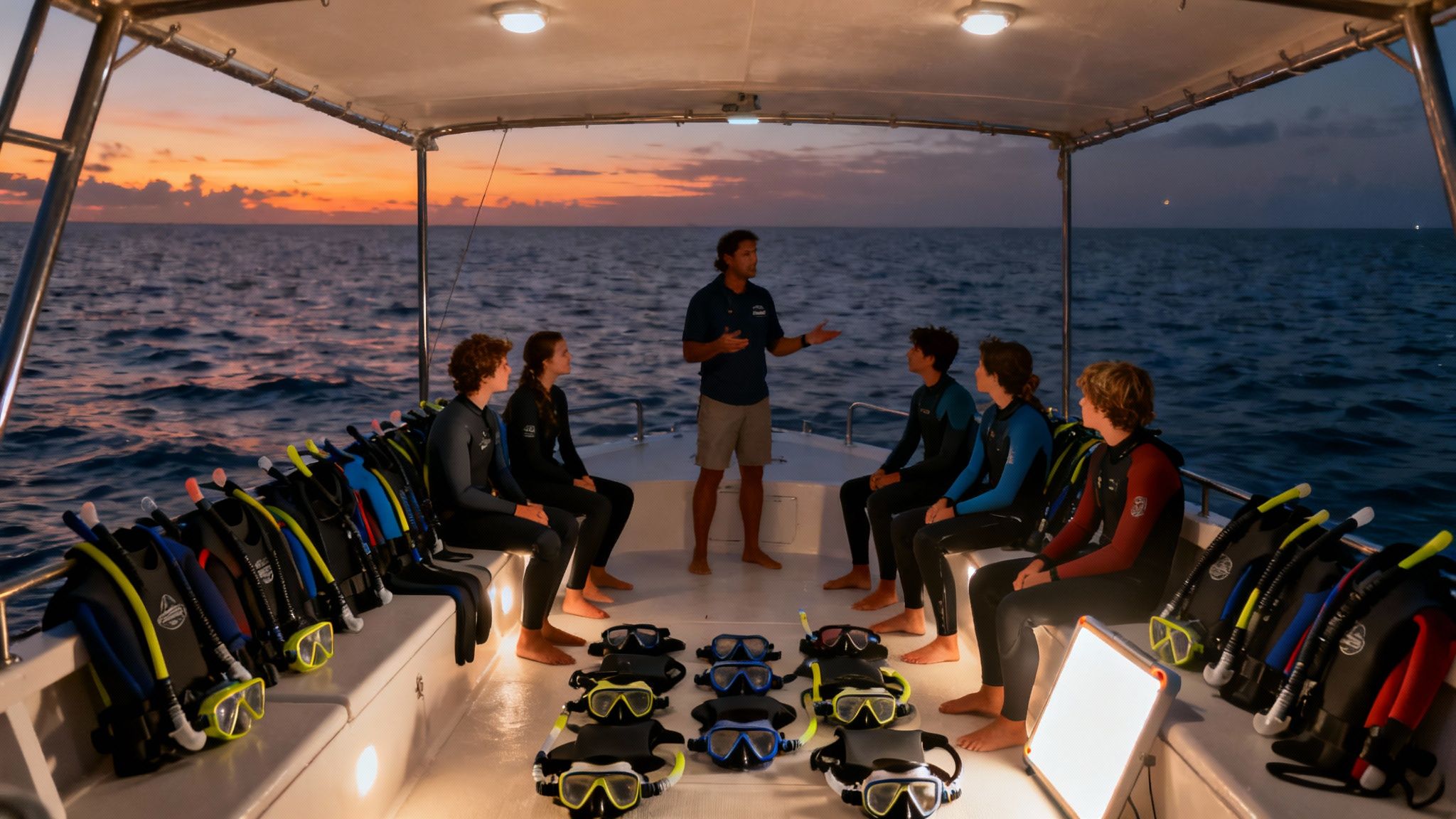
Knowing how the evening will unfold can help turn any pre-trip jitters into pure excitement. Your manta ray snorkeling Kona adventure is a well-oiled machine, fine-tuned for safety, comfort, and delivering a truly incredible show. It all kicks off right at the harbor when you check in with your tour crew.
First things first, every tour starts with a crucial pre-trip safety briefing. This is where your lifeguard-certified guides walk you through everything you need to know for a smooth and safe trip. They’ll cover safety rules, show you how to use the gear, and share some amazing facts about manta ray biology. You'll learn the single most important rule of the night: passive observation. That means no touching, no chasing, and no diving down after the mantas—a simple rule that keeps both you and these magnificent animals safe.
The Journey to the Manta Site
Once the briefing's done, you'll hop on the boat for a short, scenic ride out to one of Kona's famous manta spots, like "Manta Village" or "Manta Heaven." As you cruise along the coast, the crew will get you kitted out. A good tour provides all the essentials:
Wetsuits: These are key for staying warm and buoyant in the ocean after sunset.
Masks and Snorkels: Quality gear makes all the difference for a clear, comfortable view.
Fins: You won't be doing much swimming, but fins help you make small adjustments in the water.
When you arrive, the crew sets up a big, custom-built light board. Think of it as your floating viewing platform for the evening. It has powerful lights pointing straight down into the water, which attracts the plankton that manta rays love to eat. Your job is simple: hold onto the board, float on the surface, and get ready for the main event.
The Main Event: An Unforgettable Encounter
This is the moment you've been waiting for. As the plankton cloud gathers under the lights, the manta rays start to show up. One by one, they glide out of the darkness and into the illuminated "dining room" below you. You'll get a front-row seat to their famous barrel rolls and swooping dives as they feed, sometimes coming within inches of you.
It's a surreal and humbling experience. These gentle giants, with wingspans often exceeding 12 feet, move with an elegance that seems impossible for their size. Floating there, with only the quiet sounds of the ocean as they perform their underwater ballet, is something you'll never forget.
After about 30-45 minutes in the water, you’ll climb back on the boat buzzing with what you just saw. For a deeper dive into the whole process, check out our complete guide to night snorkeling with manta rays here. The entire trip is designed to be as seamless as it is magical.
Your Guide to Safe and Sustainable Manta Viewing
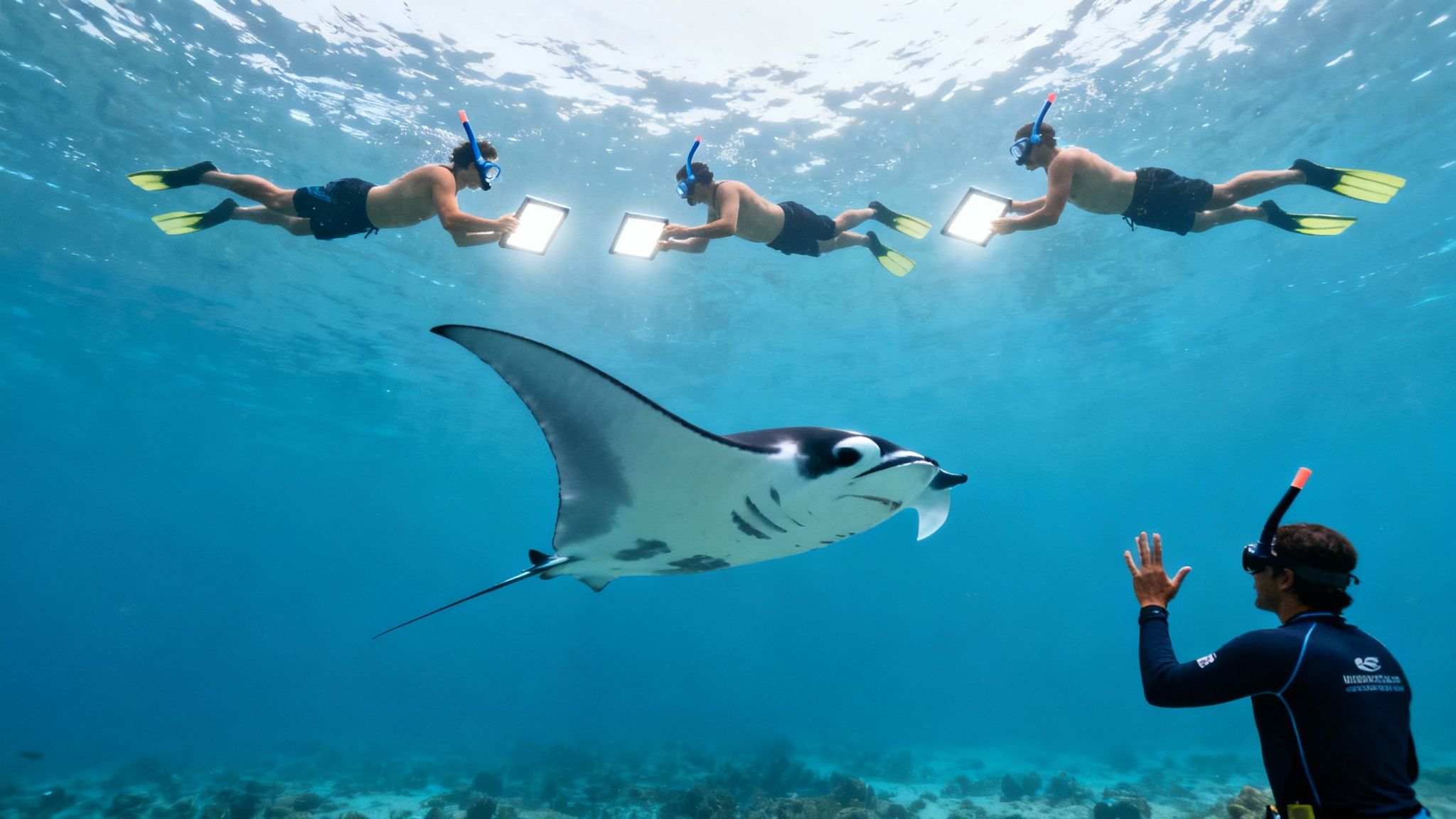
When we step into the ocean, we're entering the home of incredible wildlife, and with that comes a big responsibility to protect it. The amazing manta ray snorkeling Kona experience is built entirely on a foundation of respect for these animals and their habitat. Any great tour operator is deeply committed to keeping both you and the mantas safe, ensuring this magical encounter can continue for years to come.
The whole philosophy boils down to something called passive observation. It's the golden rule, and it’s all about creating a safe, predictable environment where the mantas feel comfortable coming right up to us. Your guides will walk you through everything before you even get in the water, so everyone is on the same page.
The Rules of Engagement
Following a few simple, common-sense rules is key. These guidelines aren't just for fun; they ensure the mantas stay calm and continue to return to their favorite feeding spots night after night.
Never Touch the Mantas: This is the big one. Manta rays have a special mucus coating on their skin that acts like an immune system, protecting them from bad bacteria. Touching them, even accidentally, can rub this layer off and leave them vulnerable to infections.
Stay Horizontal: Once you’re in the water, you’ll be holding onto a light board and floating flat on the surface. This creates a kind of "ceiling" for the mantas, so they know exactly where you are and can swoop and glide freely below you without getting kicked by a stray fin.
Don't Chase or Pursue: Let the mantas be the ones to control the encounter. Chasing after them only causes stress and can easily scare them away, ruining the show for everyone. Just relax and let them come to you—they will!
By choosing a tour that takes these standards seriously, you're doing more than just having an adventure; you're actively helping with conservation. Your choice supports the long-term health of Kona’s beloved manta ray population.
Our passion for the mantas is part of a bigger commitment to marine environmental protection and preserving our oceans. Of course, human safety is just as important, and if you have any concerns, you might want to read our guide on whether manta rays can sting you. By listening to your crew and respecting the wildlife, you help make sure this incredible experience is around for future generations to enjoy.
Common Questions About Manta Ray Snorkeling
Thinking about a manta ray snorkeling Kona trip is exciting, but it's totally normal to have a few questions before jumping in. We get it. To help you feel confident and ready for this incredible experience, we’ve put together answers to the questions we hear the most.
Knowing what's ahead lets you relax and just soak in the magic of the moment.
Do I Need to Be a Strong Swimmer for This Tour?
This is probably the number one question we get, and it’s a good one. You don't need to be a competitive swimmer, but you absolutely must be able to swim and feel comfortable in the open ocean at night. This is a non-negotiable safety rule for everyone on board.
Once you’re in the water, you'll be holding onto a big, custom-made light board that floats on the surface. It’s very stable, so you're mostly just floating, not actively swimming all over the place. The wetsuits we provide are also super buoyant, which helps you float effortlessly.
Still, if you have any doubts about your swimming skills, it's really important to chat with the tour company before you book.
Are Manta Rays Dangerous to Humans?
Not at all! Manta rays are called "gentle giants" for a very good reason—they are completely harmless to people. They are filter feeders, which means their diet consists of tiny plankton. They don't have teeth, stingers, or barbs like their stingray cousins.
If a manta feels threatened, its only defense is to gracefully swim away. Our professional, lifeguard-certified guides run a full safety briefing before you get in the water and stay with you the whole time, making sure it’s a safe space for both you and the mantas.
The main safety focus on these tours isn't the animals; it's about being in the ocean at night. The mantas are peaceful and curious, just showing up for the plankton buffet your light board creates.
What Is the Best Time of Year to Snorkel with Mantas in Kona?
Here’s one of the best parts about manta ray snorkeling Kona: it's fantastic all year round. The manta rays here are a resident population, meaning they live along the Kona coast 365 days a year. They don't migrate away.
This amazing consistency means we can run tours every single night with a super high success rate, typically between 80-90%. While a rare trip might get cancelled for rough weather, your chances of seeing mantas are excellent no matter what month you visit.
Can Children Participate in the Manta Ray Snorkel?
Yes, most tours are very family-friendly! We love seeing kids experience this. The typical minimum age is around 5 years old, but the real requirements are that the child is a confident swimmer and is comfortable in the ocean after dark.
For most kids, it's the adventure of a lifetime that they'll be talking about for years. For some, the dark water can be a little intimidating. We always suggest checking the specific age and skill policies with your tour company to make sure it’s the right fit for your little ones.
If you're visiting from abroad, it helps to prepare for international travel to make sure your trip goes smoothly. Getting the logistics sorted out beforehand means you can fully enjoy amazing experiences like this one. For even more answers, check out our detailed manta ray FAQ page.
Comments