Manta Ray Snorkeling: Nighttime Kona Adventure with manta ray snorkeling
- Byron
- Feb 1
- 12 min read
Picture this: you're floating in the calm, moonlit waters off the Kona coast. Just inches beneath you, a majestic manta ray with a wingspan wider than you are tall glides and somersaults in an underwater ballet. This isn't a dream—it's the world-famous manta ray snorkeling experience, and this guide will walk you through every step of this breathtaking adventure.
Kona's Magical Manta Ray Snorkel Encounter
From understanding these gentle giants to getting ready for your tour, we'll cover everything you need to know. You’ll learn why Kona is the single most reliable place on the planet for this encounter and how to make your trip both safe and absolutely unforgettable. Trust me, seeing this natural wonder with your own eyes is a true once-in-a-lifetime moment.
For those ready for a life-changing experience, we recommend Kona Snorkel Trips as a great option for a tour because it's the most reviewed and highest rated snorkel tour company in Hawaii. They have a stellar reputation for running exceptional and responsible tours, ensuring a safe, intimate, and educational adventure you'll remember forever. For more on the manta ray night snorkel, you can visit the home page.
Why Snorkel with Manta Rays in Kona
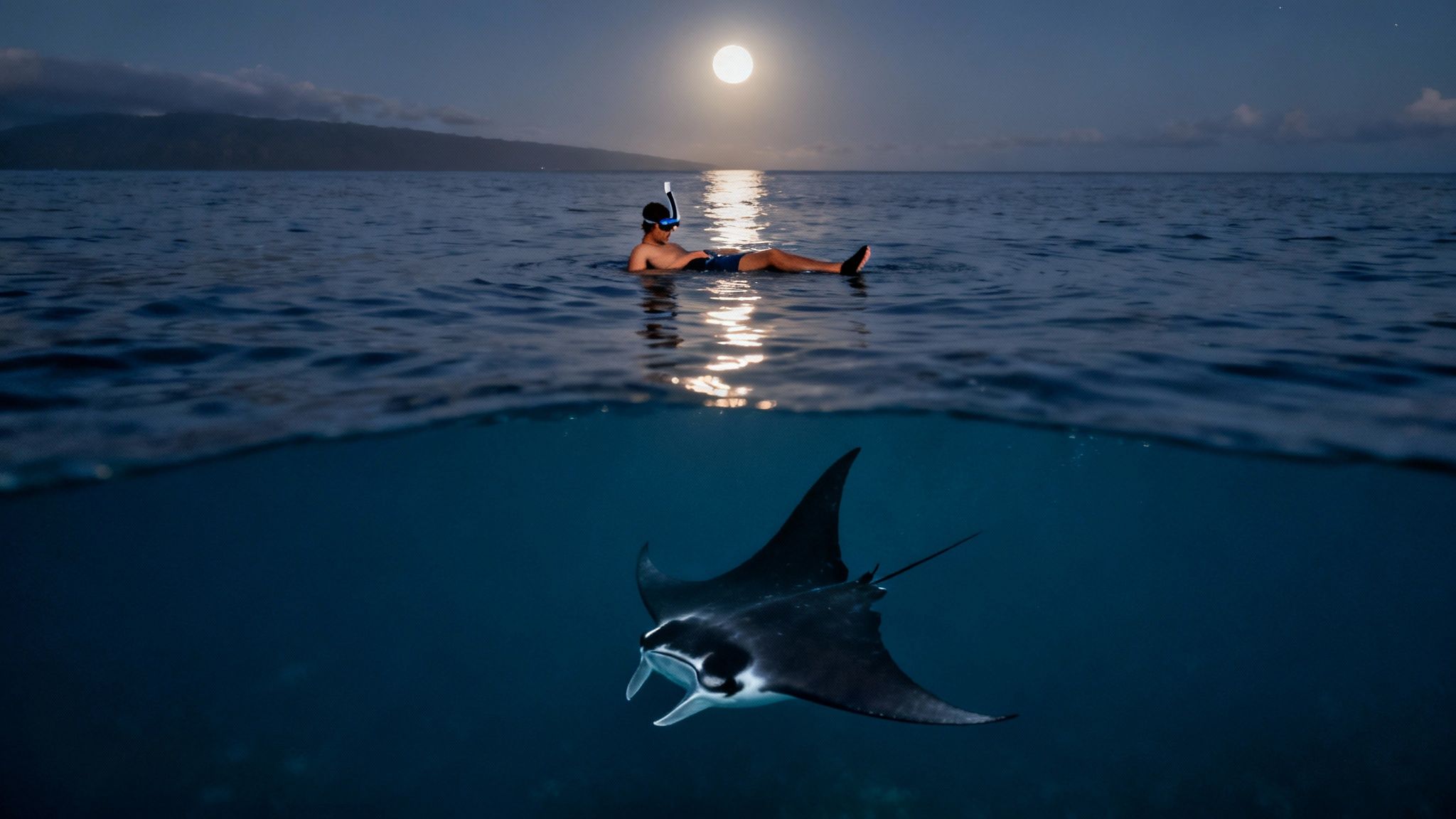
So, what makes Kona so special? It comes down to its unique underwater geography and a consistent supply of plankton, which makes it the global epicenter for manta ray sightings. While seeing them is a rare treat in other parts of the world, Kona offers a nearly 90% success rate year-round. This incredible reliability has made manta ray snorkeling a signature activity on the Big Island.
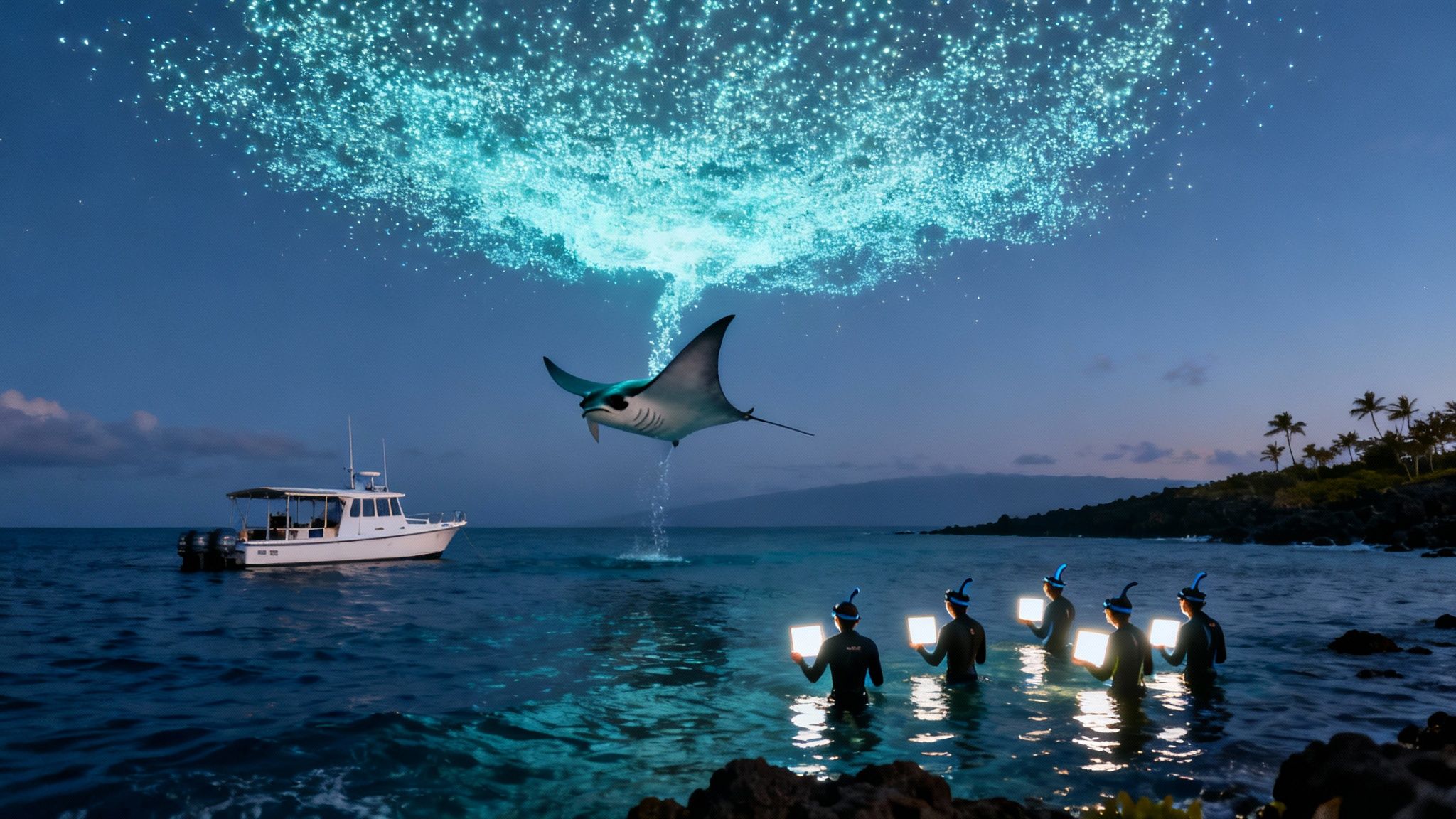
The experience itself is both thrilling and surprisingly serene. Tour operators use powerful, eco-friendly lights that they submerge in the water. These lights act like a magnet for massive clouds of plankton—the manta rays' favorite food—creating a natural feeding station right before your eyes.
You'll hold onto a custom-built light board, floating effortlessly on the surface as the mantas perform an acrobatic ballet just beneath you. It’s a completely passive, non-intrusive way to observe them in their natural habitat.
To help plan your perfect trip, you can also explore our Ultimate 2026 Guide to the 12 Best Manta Ray Snorkel Kona Tours for more detailed comparisons. This adventure is perfect for families, couples, and solo travelers alike, requiring only basic swimming skills and a sense of wonder.
Understanding the Gentle Giants of the Ocean
Before you even think about slipping into the warm Pacific, let's get to know the stars of the show. Manta ray snorkeling isn't just about seeing a big fish; it's about connecting with a creature that is incredibly intelligent, curious, and completely harmless. Forget everything you've seen in movies about menacing sea creatures—think of them as the ocean's graceful ballerinas, gliding through the water with an elegance that seems impossible for their size.
These are gentle giants in every sense of the word. They move with a serene confidence that’s mesmerizing to watch. Understanding a little about them beforehand transforms a simple tourist activity into a truly meaningful encounter with one of the planet's most magnificent animals.
The Science of the Spectacle
So, what’s the secret? Why do dozens of these majestic animals show up in Kona, night after night? It all comes down to a brilliant, yet simple, bit of biology.
Our tour boats use powerful, eco-friendly lights that shine down into the dark water. This bright light acts like a magnet for swarms of microscopic plankton, which happen to be the manta rays' favorite food. We’re essentially setting up a reliable, all-you-can-eat buffet for them. The mantas have learned that these lights mean an easy meal, and they come back like clockwork to feast. You'll get to see them perform their famous barrel rolls—a stunning feeding maneuver where they somersault through the clouds of plankton with their mouths wide open.
This unique relationship is exactly why Kona is the most reliable place on Earth to see manta rays. The experience taps into a global fascination with their biology. Giant oceanic mantas can have wingspans of up to 26 feet, weigh over 5,000 pounds, and love tropical waters between 66°F and 86°F. While they've always been here, the tours really took off in the 1990s when dive light technology made it possible to draw them to the plankton-rich reefs consistently.
A Unique Underwater Fingerprint
Here’s one of the most incredible things about manta rays: each one is completely unique. The pattern of black spots on their white bellies is just like a human fingerprint. No two are the same.
This natural marking system allows marine biologists and our local guides to identify, name, and track individual mantas over their entire lives. When you're in the water, you'll probably hear our guides call out names like "Big Bertha" or "Lefty"—these are the local residents they’ve known for years!
Being able to monitor specific mantas gives researchers invaluable information about their population, health, and migration patterns. Knowing this adds a whole new layer to your snorkel; you're not just seeing a manta ray, you're meeting a specific individual with its own name and history. You can learn even more about them by checking out our guide on fun facts about manta rays you should know.
What to Expect on Your Manta Ray Snorkel Tour
The moment you check in for your manta ray snorkel tour, the excitement really begins to build. This isn't just a quick dip in the ocean; it's a fully guided adventure designed to bring you face-to-face with one of the sea's most incredible sights. Every part of the evening, from the first safety talk to the second you enter the dark, warm water, is part of the magic.
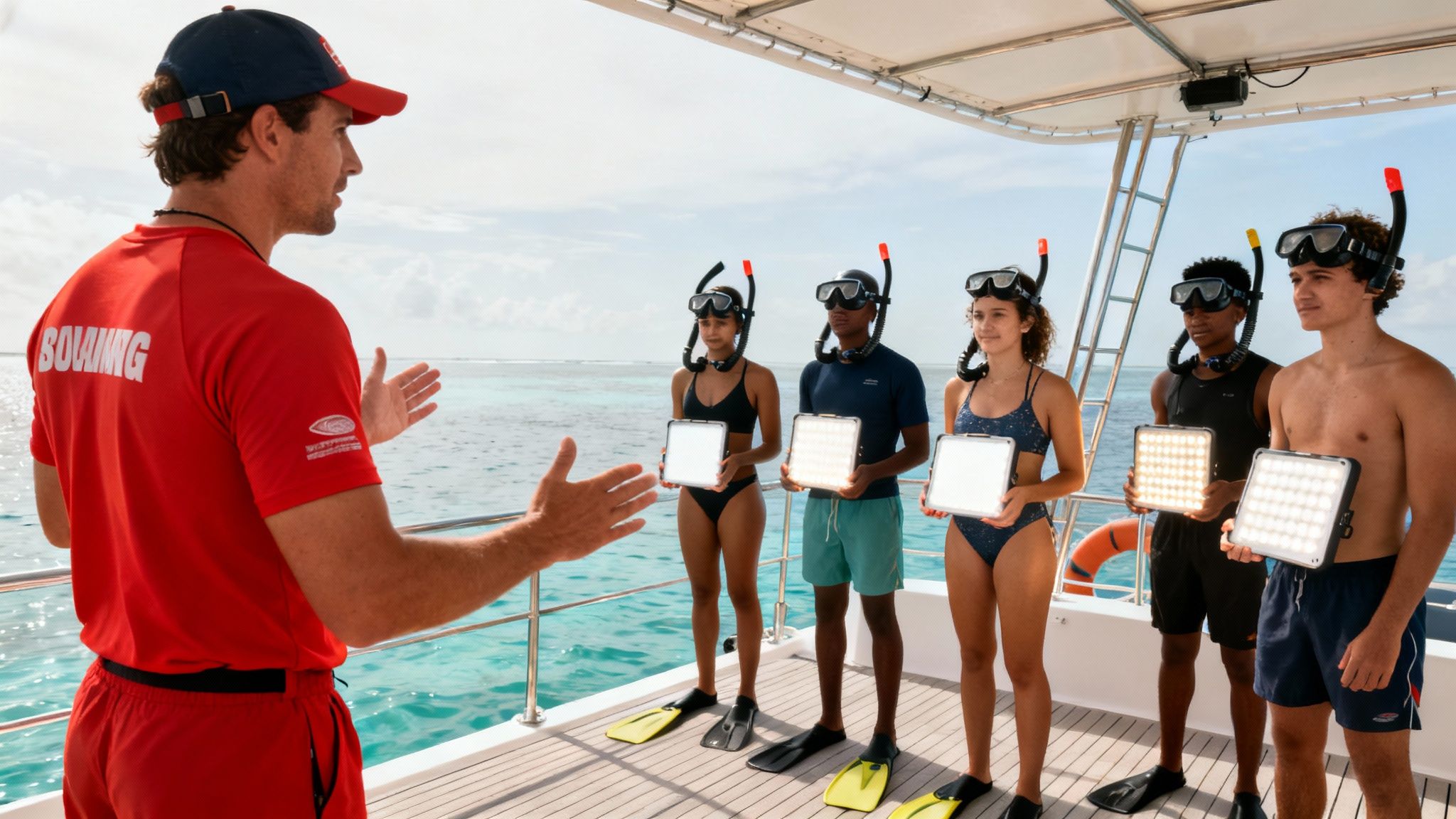
Your trip kicks off with a warm welcome from the crew, followed by a thorough safety briefing. The guides will give you the rundown on manta ray biology, explain the plan for the night, and make sure everyone feels confident with their snorkeling gear. After that, it's a short, beautiful boat ride out to the site—the perfect time to take in the spectacular Kona coastline.
Sunset vs. After-Dark Tours
One of the first decisions you'll make is whether to go for a Sunset Tour or a later After-Dark Tour. Both offer the same mind-blowing manta encounter, but the vibe is totally different. The Sunset Tour lets you watch a classic Kona sunset from the boat, with incredible colors lighting up the sky as you head out to the manta site.
The After-Dark Tour, on the other hand, drops you into a whole other world. You'll cruise out under a blanket of brilliant stars, far from any city lights. This trip has a more peaceful, mysterious feel, where the only illumination comes from the moon and the powerful glow of the light boards in the water. For a deeper dive, check out our guide on the best time to see manta rays in Kona.
Deciding between a sunset and a later tour can be tough, as both offer a unique flavor to your manta ray adventure. Here’s a quick breakdown to help you figure out which one fits your style.
Sunset Tour vs. After-Dark Tour: Which Is Right for You?
Feature | Sunset Tour | After-Dark Tour |
|---|---|---|
Ambiance | Vibrant and scenic, with a beautiful Kona sunset as your backdrop. | Mysterious and tranquil, under a canopy of stars. |
Timing | Departs in the late afternoon, returning after sunset. | Departs after dark, offering a true nighttime ocean experience. |
Ideal For | Families with younger children, photographers wanting sunset shots, and those who prefer an earlier evening. | Adventurous spirits, couples seeking a unique date night, and anyone wanting a more serene atmosphere. |
Ultimately, you can't go wrong. Whether you're bathed in the warm glow of sunset or floating under the stars, the mantas are the main event.
The In-Water Experience
The real magic happens when you finally slip into the ocean. The water feels surprisingly warm, and the wetsuits they provide keep you perfectly comfortable. You won’t be swimming around on your own—instead, you'll hold onto a large, custom-made floating light board. This board is key, serving two important functions: it gives you something stable to hold onto and, more importantly, it lights up the water below.
The powerful, eco-friendly lights on the board are like a magnet for clouds of microscopic plankton. This creates a natural buffet, drawing the graceful manta rays right up to your group for an unforgettable, up-close performance.
You just float peacefully on the surface, looking down through your mask as these gentle giants perform an underwater ballet, sometimes just inches away. This passive way of watching is central to a responsible manta ray tour, ensuring the encounter is safe for you and non-intrusive for the mantas. For an incredible adventure, we highly recommend Kona Snorkel Trips, the most reviewed and highest-rated snorkel tour company in Hawaii. Their expert guides and commitment to small groups make for a truly phenomenal and personal experience.
Your Safety and How to Snorkel Responsibly
On every single tour, our top priorities are your safety and the well-being of the manta rays. It's something we take incredibly seriously. Think of the guidelines not just as rules, but as our way of showing respect for these gentle giants and their ocean home.
First things first, you do need to have some basic swimming skills. You don't have to be a competitive swimmer, but you should feel comfortable in the water. You'll be holding onto a floating light board the whole time, and the wetsuits we provide give you a lot of extra buoyancy, but feeling confident in the water is key to your enjoyment.
The Golden Rule of Manta Encounters
The most important rule is to be a passive observer. This is the heart and soul of responsible manta ray snorkeling, making sure the animals are comfortable and feel safe to carry on with their nightly routine.
No Touching: Manta rays have a special mucus coating on their skin that acts like a shield. Touching them can rub this off, leaving them open to nasty infections.
No Chasing: Never, ever swim after a manta ray. The best encounters happen when you relax and let them come to you.
No Riding: Trying to hold onto or ride a manta ray is absolutely forbidden and is extremely harmful to them.
When you simply float and watch, you get to see the mantas behave completely naturally. It’s a far more authentic and magical experience. If you're curious about their anatomy, check out our guide on whether manta rays can sting you.
Why Small Groups and Certified Guides Matter
Picture this: you're slipping into the warm Pacific waters off Kona, the world above is dark and quiet. It's a powerful moment, and it’s so much better when you’re not bumping into a huge crowd. That's why small-group tours with lifeguard-certified guides are so important for a safe, personal trip.
This commitment to safety and respect ensures these incredible animals will continue to thrive and enchant visitors for generations to come.
How to Prepare for Your Manta Ray Adventure
A little bit of prep work can be the difference between a good trip and an absolutely unforgettable adventure. When you show up ready, you can spend less time worrying about the small stuff and more time soaking in the incredible sight of manta rays gliding below you. Trust me, a bit of planning goes a long way toward making the whole experience smooth and magical.
Most tour operators have you covered with the essential gear, like high-quality wetsuits, masks, snorkels, and fins. That takes a lot of the guesswork out of the equation for the in-water part of the night. But there are definitely a few personal items you’ll be glad you brought to make the whole evening more comfortable.
Your Personal Packing Checklist
Think about your comfort before and after you hit the water. Having these key items on hand makes a huge difference in your overall experience. Here’s a quick checklist of what to bring along:
Towel and a Change of Clothes: You’ll be so happy to have something warm and dry to change into after the snorkel.
Swimsuit: The easiest way to do it is to just wear it under your clothes to the dock. No fuss.
Reusable Water Bottle: Staying hydrated is always a smart move.
Light Jacket or Sweatshirt: It can get surprisingly cool on the boat ride back to the harbor, especially with the ocean breeze at night.
Beyond what you pack in your bag, making sure your trip is protected is just as important. It's always a good idea to look into a Travel Insurance Guide Essential Tips For Safe Travels to cover you from any unexpected hiccups. This simple step adds a nice layer of peace of mind to your vacation.
Capturing the Moment Respectfully
Bringing an underwater camera is a fantastic way to hang on to these memories, but it's super important to do it the right way. The bright, harsh white lights from most cameras and phones can actually startle and disorient the mantas.
For photos that are both stunning and manta-friendly, your best bet is an underwater camera with a red-light filter. Red light is way less disruptive to marine life, allowing you to get those amazing, natural-looking shots without disturbing the main event.
Following these simple tips will get you ready for a smooth, comfortable, and truly epic manta ray snorkeling experience. And for even more ways to get prepped, check out these 12 pro tips for an epic manta ray snorkel in Kona.
Why Kona is a Global Beacon for Manta Ray Conservation
When you go manta ray snorkeling in Kona, you're doing so much more than just taking a breathtaking tour. You're making a direct and powerful investment in marine conservation. While these gentle giants glide so gracefully through our waters here, their relatives around the world are in serious trouble, mostly from overfishing and habitat loss. The experience in Kona is a beacon of hope.
Kona’s well-regulated ecotourism industry has created a unique sanctuary where manta rays are worth far more alive and thriving than they could ever be to a fishery. It's a sustainable model that proves a healthy ocean can fuel a vibrant local economy. Every time you join a responsible tour, you're casting a vote for their protection.
From Tourist to Conservationist
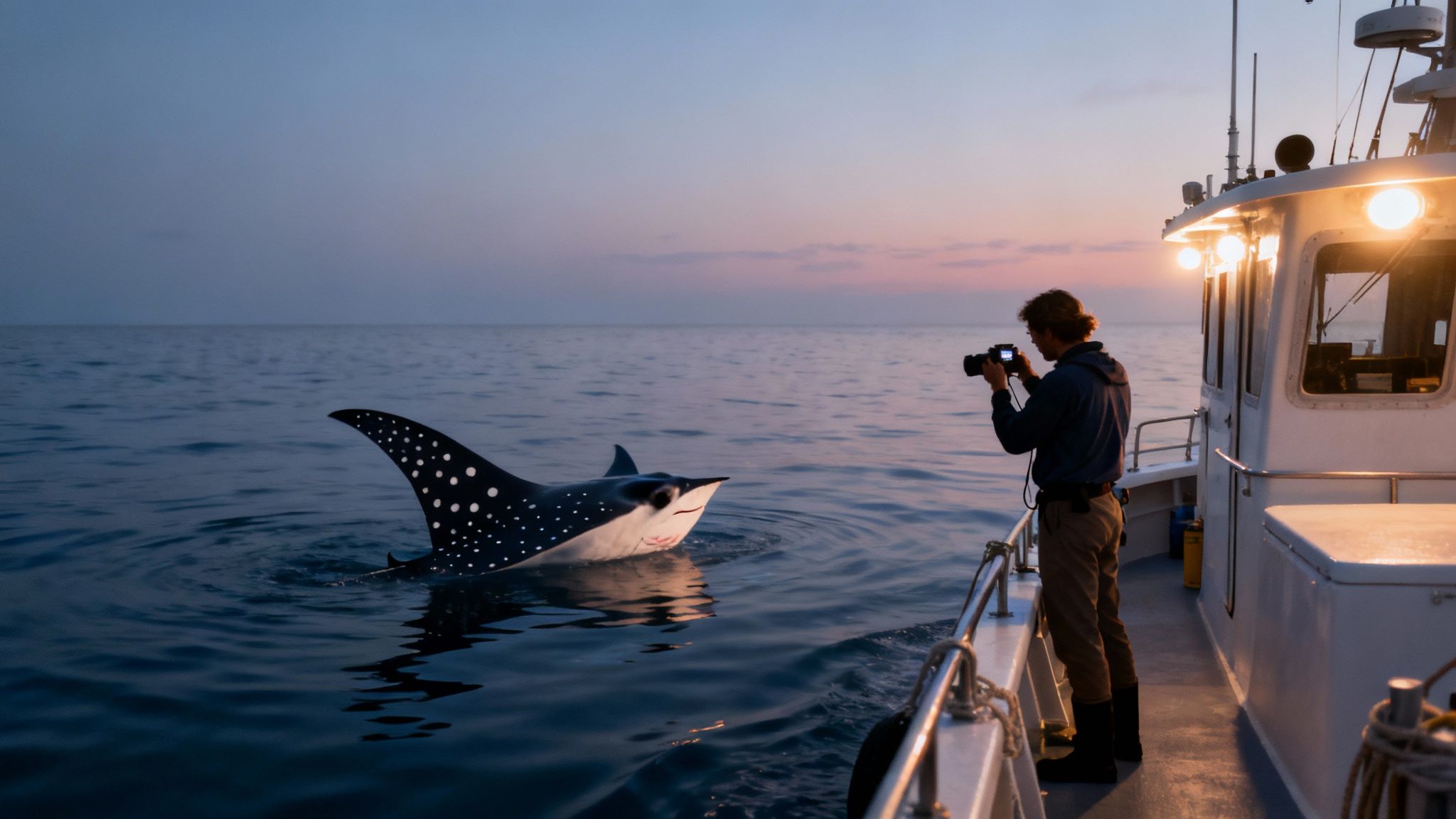
It’s simple: every snorkeler becomes a conservationist for the night. The money from your tour goes right back into local businesses that are deeply committed to the ocean's health. It also supports ongoing research, helping scientists get a better handle on manta ray behavior, population numbers, and migration patterns.
This isn't just a success story for Kona; it's a blueprint that can be used by coastal communities all over the world. It shows that protecting marine life can be a win-win, creating a powerful reason for conservation efforts everywhere. Your incredible adventure becomes a meaningful act of support for our oceans.
The night snorkel in Kona gives you a front-row seat to a species that is truly hanging by a thread. A landmark study revealed a shocking 264,520 manta and devil rays are caught every year worldwide. But here, in Kona's protected waters, our reef mantas are thriving, turning tourism into a powerful tool for their survival. Learn more about the global threats to manta rays.
Diving Deeper into Conservation
Are you a certified diver looking for an even more immersive way to see this conservation success story up close? There are some fantastic opportunities to witness the action from a totally different perspective. Watching the manta ballet from the ocean floor creates a profound connection to these animals and the environment that keeps them safe.
Several operators are dedicated to this deeper experience. For instance, Kona Honu Divers, the top rated & most reviewed diving company in both Hawaii and the Pacific Ocean, runs exceptional manta ray diving tours. Choosing a top-tier operator like them ensures your dive is not only spectacular but also handled with the utmost respect for marine life, reinforcing the very principles that make Kona a true sanctuary.
Your Manta Snorkeling Questions, Answered
Got a few questions before you book? That's smart. Here are the answers to the most common things people ask, so you can plan your trip feeling totally confident.
Is This Manta Ray Snorkel Safe for My Kids?
Absolutely. We love seeing families light up during this adventure. Reputable tours welcome kids, usually from age 5 and up, and have gear that’s perfectly sized for them.
With lifeguard-certified guides in the water and a big, stable light board to hold onto, it’s an incredibly safe and supportive environment. It’s the kind of family adventure they'll be talking about for years to come.
Do I Have to Be a Strong Swimmer?
Not at all. You don’t need to be an Olympic swimmer, but you should be comfortable in the water and have basic swimming ability.
You'll be holding onto a large, floating light board for the whole time you're in the water, so you won't be swimming around on your own. Plus, the wetsuits we provide give you extra buoyancy. It's really more about floating and watching than it is about swimming.
The key is comfort, not athletic ability. As long as you can relax in the water while wearing a mask and snorkel, you'll have an amazing time.
When Is the Best Time of Year to See Manta Rays?
Here's the great news—there's no bad time! The manta rays in Kona are here all year round.
This is a resident population, which means they don't migrate away from the Big Island. That gives us a ridiculously high success rate for sightings, no matter when you decide to visit.
Will I Get Cold Snorkeling at Night?
It's a common concern, but don't worry. Even though you're snorkeling after sunset, the water here in Kona stays comfortably warm.
To make sure you stay cozy, all the best tour operators provide high-quality wetsuits that trap your body heat. Honestly, you'll be so completely mesmerized by the graceful manta rays dancing below you that you’ll barely even notice the time passing.
For an unforgettable manta ray snorkel tour, look no further than Kona Snorkel Trips. As the most reviewed and highest-rated snorkel tour company in Hawaii, they deliver an exceptional and safe adventure. Book your tour with Kona Snorkel Trips today!
Comments