Manta Ray Swimming Underwater A Guide to Kona's Night Ballet
- Byron
- Feb 14
- 12 min read
Picture this: you're floating in the warm, dark waters of the Pacific, the Hawaiian sunset just a memory on the horizon. Then, out of the deep, giant, ghost-like figures emerge, performing a silent ballet right beneath you. This isn't a dream; it's the mesmerizing reality of a manta ray swimming underwater—a spectacle that truly defines Kona's nightlife. Visit our home page to learn more.
Witnessing the Unforgettable Underwater Ballet
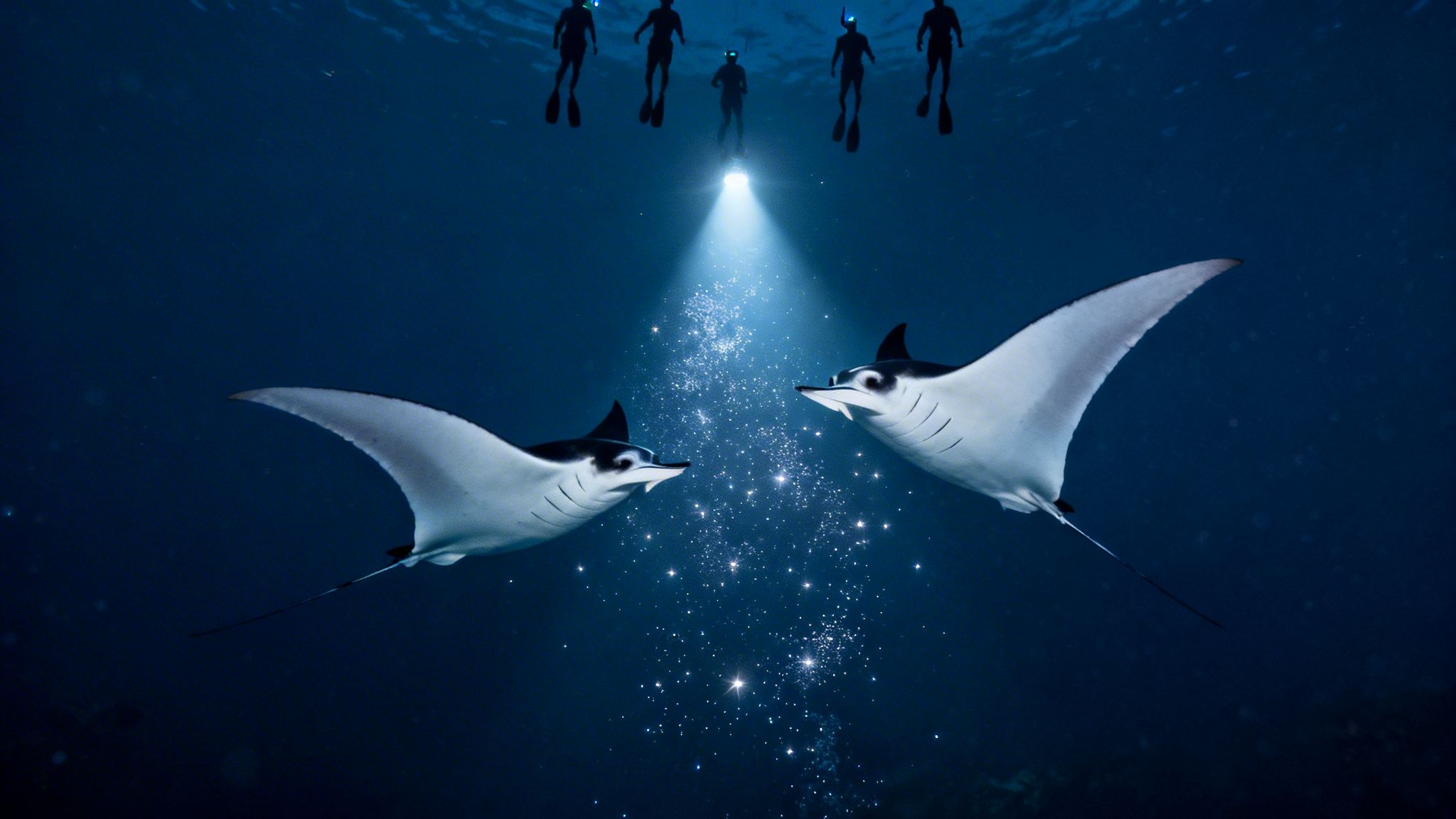
Your adventure starts as the sun dips below the waves, painting the Kona coast in brilliant colors. After a short boat ride, you'll arrive at a very special spot, a known gathering place for the ocean's most graceful giants. You slip into the calm, dark water and hold onto a custom-built light board.
These powerful underwater lights are the secret sauce. They create a "campfire effect," attracting swarms of microscopic plankton. This glowing buffet, in turn, is an irresistible dinner bell for the manta rays.
The Graceful Performance Begins
As you float peacefully on the surface, you’ll see the first shadows taking shape below. These are the majestic manta rays, some with wingspans stretching over 15 feet, gliding effortlessly through the illuminated water.
They perform incredible barrel rolls and graceful loops, sometimes coming within inches of you. You'll see their huge, cavernous mouths wide open as they filter the plankton-rich water. It's a silent, fluid dance that's less of a thrill ride and more of a profound connection with the natural world. You're a guest in their dining room, witnessing a nightly ritual few people ever get to see. The feeling is both serene and absolutely exhilarating.
The entire encounter is built on trust. When we show the manta rays respect by giving them space, they reward us with incredibly close and breathtaking encounters. It's a beautiful, silent agreement between human and animal.
These nightly gatherings are a truly remarkable natural phenomenon. Oceanic manta rays form some of the largest known groups for feeding and socializing. In fact, a groundbreaking 14-year study off Ecuador's coast identified over 2,800 individuals, leading to an estimated regional population of a staggering 22,000+ rays—the largest in the world. You can read more about these incredible population findings.
While Kona Snorkel Trips offers an exceptional alternative for a Manta Ray night snorkel tour or a Captain Cook snorkeling tour, your journey into this magical world starts with this very experience. The sight of a manta ray swimming just beneath you is something that will stay with you forever.
The Science of Underwater Flight
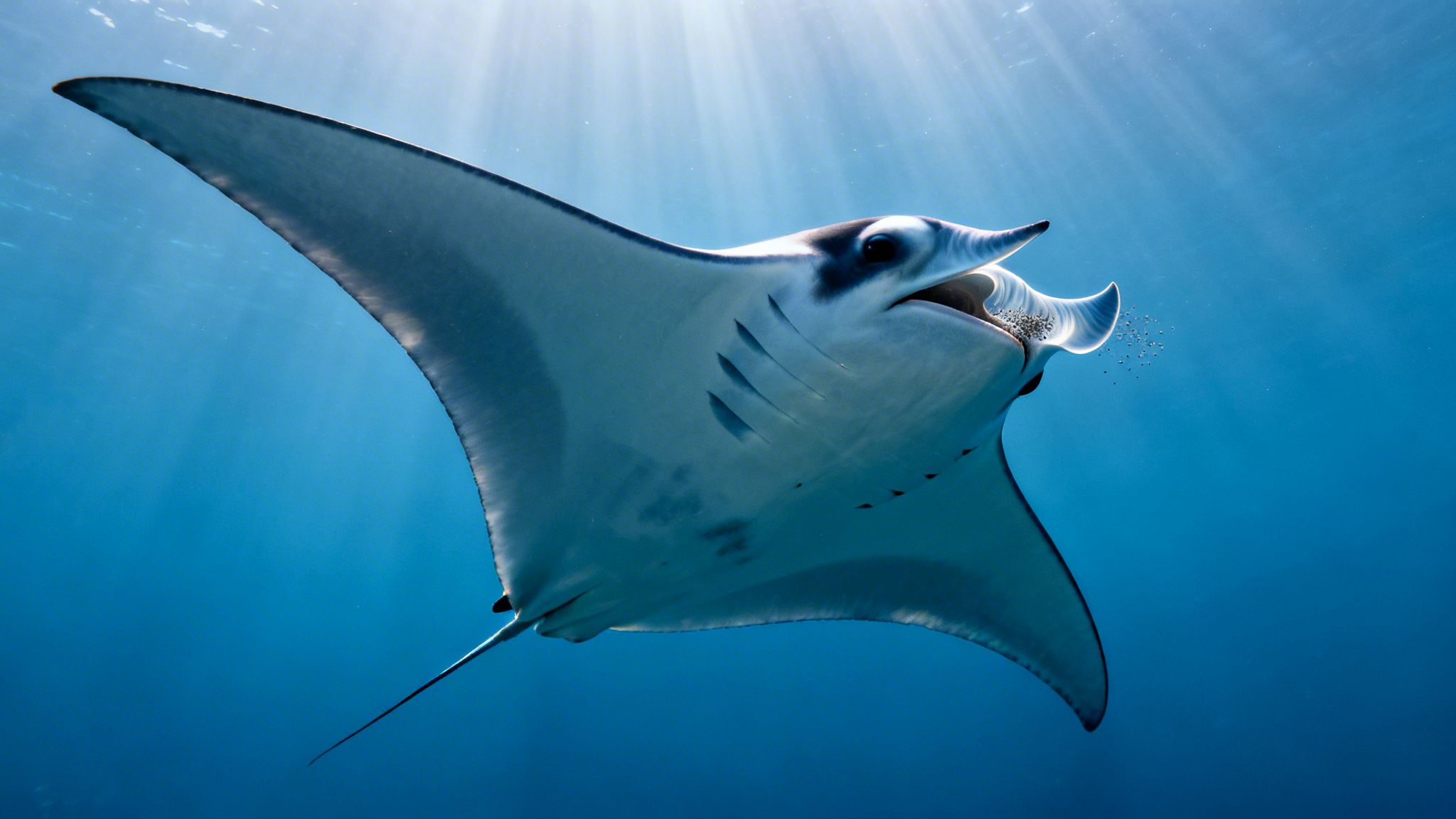
Watching a manta ray move through the water is less like watching a fish swim and more like witnessing an eagle soar. They don’t wriggle their bodies side-to-side like other fish. Instead, these gentle giants use their enormous pectoral fins to achieve a kind of elegant, underwater flight.
With powerful, rhythmic beats, these "wings" generate both lift and thrust, allowing mantas to glide silently and efficiently. This unique movement is what gives them that signature ballet-like quality. It’s an incredibly effective way to travel, letting them cover vast distances across the open ocean with surprisingly little effort.
Their entire body is built for this. The flat, diamond-shaped design is perfectly streamlined to cut through the water, minimizing drag. This allows for long, effortless glides between flaps, conserving precious energy as they search for food.
To really appreciate how they move, it helps to break down the mechanics. It’s a beautiful example of nature’s engineering.
How Manta Rays Fly Underwater
Characteristic | Description | Purpose |
|---|---|---|
Pectoral Fins | Large, wing-like fins that span the width of their body. | Flapped up and down to create both lift and forward propulsion. |
Streamlined Body | Flat, diamond-shaped, and smooth. | Reduces drag, allowing for long, energy-saving glides. |
Cephalic Lobes | Two fleshy fins that unfurl from their head during feeding. | Channel plankton-rich water directly into their mouths. |
Flexible Skeleton | Made of cartilage, not bone. | Provides the flexibility needed for graceful, fluid movements. |
This combination of features turns a simple swim into an extraordinary display of natural wonder.
A Design for Feeding in Flight
Manta rays have a fascinating way of combining eating with their graceful movement. While their size might look intimidating, they are completely harmless filter feeders. Their diet is made up almost entirely of tiny zooplankton—microscopic creatures like krill and fish larvae that drift in the water.
To eat, they swim with their enormous mouths wide open, using special plates in their gills to strain huge volumes of water. But the real genius is in their cephalic lobes. These are two unique, fleshy fins on either side of their heads. When it’s feeding time, these lobes unfurl and act like funnels, expertly guiding plankton-rich water right into their mouths as they swim.
This seamless combination of movement and feeding is a masterclass in biological efficiency. The same motion that propels them forward also delivers their dinner, making every glide and loop a purposeful act.
This is exactly the behavior you’ll see on a Kona night snorkel. The rays perform mesmerizing barrel rolls and loops through clouds of plankton, using their cephalic lobes to scoop up as much as possible. It's a beautiful, living demonstration of how perfectly they are adapted to their marine home. To dive deeper, you can explore some more manta ray fun facts in our detailed guide.
So, What’s the Kona Manta Ray Night Snorkel Really Like?
You might be wondering why Kona, of all places, became the world’s most famous spot for seeing manta rays up close. It wasn't just a lucky break—it was a smart and happy accident that created one of the most reliable wildlife encounters on the planet.
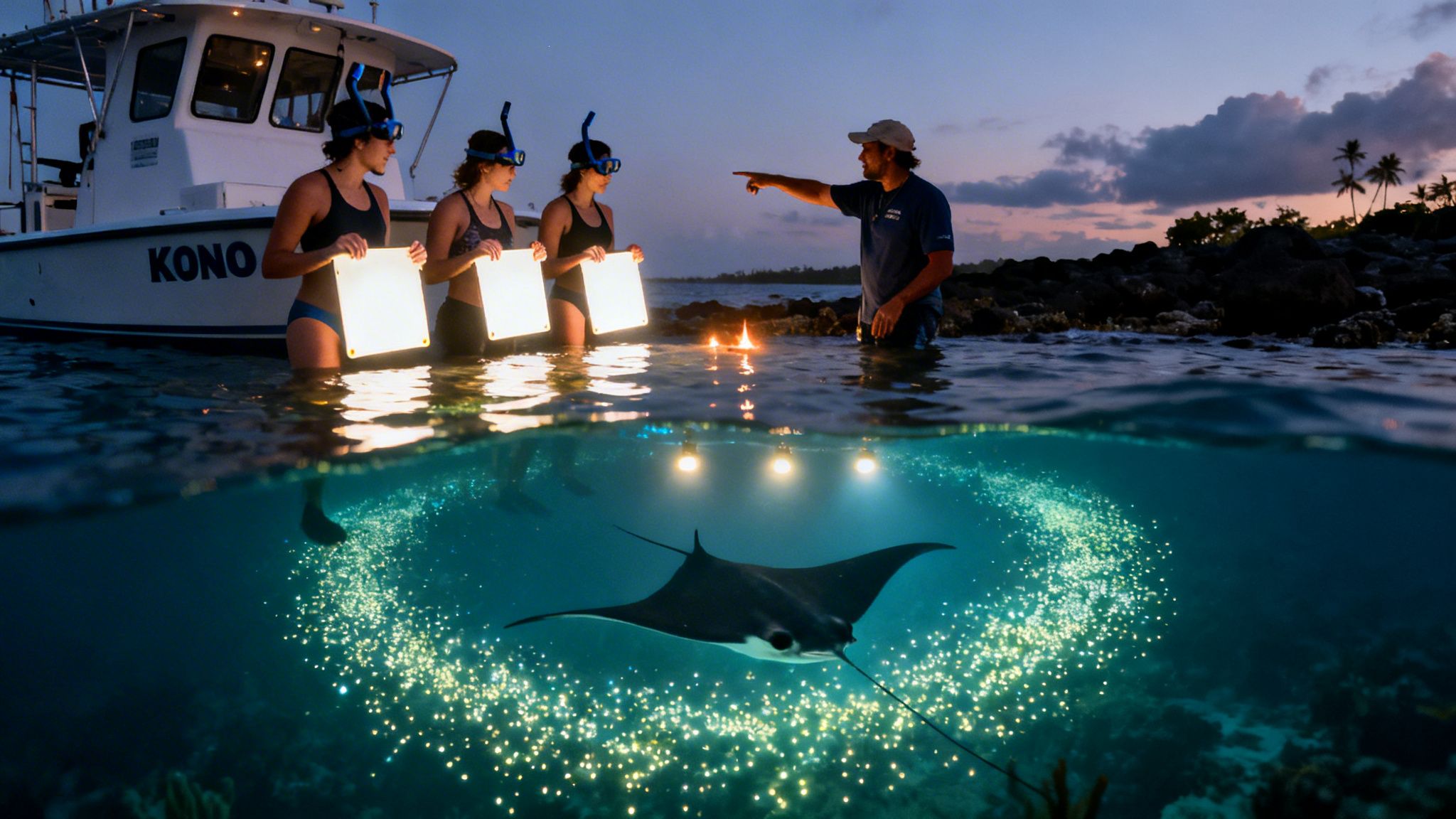
It all kicked off years ago when a hotel pointed its lights into the ocean. Those lights attracted swarms of plankton, which just so happens to be a manta ray’s favorite meal. Before long, the mantas started showing up every night for an easy feast. This simple discovery created what we now call the "campfire effect."
These days, tour operators like Manta Ray Night Snorkel Hawaii have perfected the technique. They use powerful, submerged lights to create a glowing underwater buffet that consistently draws in Kona's resident manta population. It's like ringing a dinner bell, turning a random chance encounter into a spectacular nightly show.
What to Expect on Your Tour
Your trip starts with a beautiful boat ride along the Kona coast as the sun sets, painting the sky in fiery colors. While you cruise, your lifeguard-certified guides will give you the inside scoop on the amazing marine life you’re about to meet.
When you arrive at the viewing spot, you'll get a full safety briefing. The whole setup is designed to be super simple, even if you’ve never snorkeled before. You'll hop into the warm water and hold onto a custom-made light board, which keeps you stable and gives you a front-row seat to the action. It's all about calm, respectful, passive observation.
We don't chase the mantas. We simply create an irresistible food source that invites them into our space. This allows for a truly authentic connection, all on their terms.
This incredible reliability is what sets Kona apart. Sure, there are other manta hotspots around the world, but sightings often depend on migrations or the right ocean conditions. For example, Ecuador sees massive seasonal gatherings, with researchers identifying over 2,800 unique mantas at just one site between 2005-2018. But Kona’s population sticks around all year, giving tours a success rate that’s often higher than 90%. You can discover more about global manta ray populations to see just how special this place is.
If you’re ready for this mind-blowing adventure, Manta Ray Night Snorkel Hawaii offers an amazing, intimate trip into their world. For another fantastic choice for either a Manta Ray night snorkel tour or a Captain Cook snorkeling tour, check out Kona Snorkel Trips. Their focus on small groups and ethical practices guarantees a personal and truly magical experience.
Safe and Respectful Manta Ray Encounters
Sharing the ocean with these gentle giants is a genuine privilege, and with that comes the responsibility to keep them safe. The whole experience is designed around passive observation, making sure it’s a positive encounter for both you and the incredible rays. By following a few simple guidelines, you're not just a tourist—you become a guardian of this natural wonder for years to come.
The absolute number one rule is to never touch, chase, or block a manta ray's path. It's more than just being polite. Their skin has a delicate mucus coating that works like an external immune system, shielding them from nasty bacteria. When you touch them, you can strip away that protective layer, leaving them wide open to infection. Being a good guest in their home means letting them lead the dance.
The Golden Rules of Manta Etiquette
Your guides will give you a full safety briefing, but the main ideas are straightforward. Your job is to be a calm, quiet observer. The less you move, the more comfortable the mantas will feel around you, which is the key to seeing a truly magical display of manta ray swimming underwater.
Stay on the Surface: Just float and hold onto the light board. This isn't the time for freediving, so resist the urge to dive down toward them.
Keep Movements Slow: Think smooth and gentle. Avoid any sudden splashing or kicking that could startle these graceful animals.
Let Them Come to You: Never swim after a manta ray. The most breathtaking moments happen when they feel safe enough to come check you out on their own terms.
The entire experience is built on trust. When we show the manta rays respect by giving them space, they reward us with incredibly close and breathtaking encounters. It's a beautiful, silent agreement between human and animal.
These rules aren't just for a good show; they're critical for conservation. Oceanic mantas take a long time to mature, reaching adulthood at around 8-10 years. They only give birth to a single pup every few years after a 12-month pregnancy. This incredibly slow reproduction rate makes their population extremely fragile. You can discover more insights about their life cycle and conservation status.
By following these simple guidelines, you’re playing a direct role in protecting Kona's resident manta ray family. For a deeper dive into safety and what to expect on tour, check out our complete guide on snorkeling with manta rays in Kona.
Tips for Photographing Manta Rays at Night
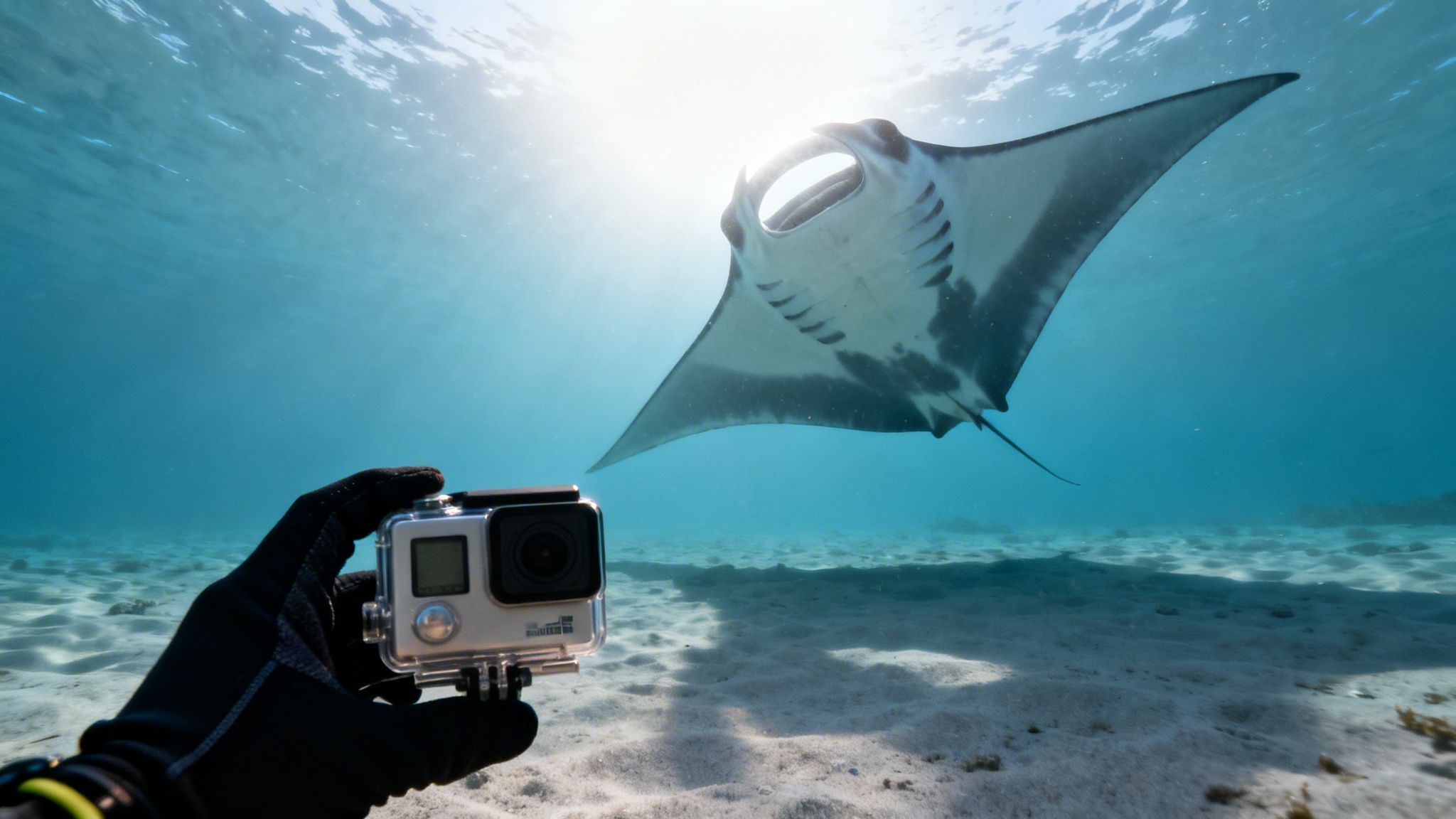
Trying to capture the ethereal beauty of a manta ray swimming underwater after dark is a special kind of challenge, but the results can be absolutely mind-blowing. It doesn't matter if you're using a simple GoPro or a professional rig; the secret to a great shot lies in understanding the unique lighting and constant motion of this incredible underwater ballet.
First thing’s first: you already have all the light you need. The tour boat’s powerful underwater lights are designed to illuminate the plankton and, in turn, the mantas. Because of this, you should never use your camera’s flash.
A flash will just light up all the tiny particles floating right in front of your lens, creating a nasty effect called backscatter. Your photos will look like you’re in the middle of a snowstorm. Let the big lights do their job.
Composing Your Perfect Shot
When you're trying to capture the sheer size and grace of a manta ray, think wide. A wide-angle lens is your best friend out here, letting you fit their entire wingspan into the frame as they glide inches away from you.
Here are a few more pointers to help you nail the shot:
Shoot in Burst Mode: Manta rays never stop moving. Using your camera's burst mode takes a quick series of photos, which seriously ups your chances of getting that perfectly crisp image of a barrel roll or an open-mouthed feeding pass.
Focus on the Eyes: Try to frame your shots to include their eyes. It makes for a much more personal and engaging photo that really connects with the viewer and captures the animal’s gentle spirit.
Use the Light Creatively: Think of the main light board as your stage lighting. Position yourself to capture the rays as they are lit from below—it creates dramatic, awe-inspiring images you'll cherish forever.
Don't forget to put the camera down for a bit. No photo or video can ever truly capture the feeling of being in the water with these gentle giants. Be present, and just soak in the silent, surreal magic of the moment.
Once you have a collection of amazing stills, you might want to turn a sequence of images into a compelling video to tell the full story of your incredible night.
And for more great advice, be sure to check out our guide on the 10 essential manta ray snorkel tips, which has some extra pointers for photographers.
Don't Stop Exploring: Kona's Underwater World by Day
The magic of watching a manta ray swimming underwater doesn't have to end when the sun comes up. While the night snorkel is an iconic Kona experience, the Big Island’s aquatic world is just as breathtaking in the bright light of day. If you're looking to see a completely different side of this vibrant marine ecosystem, the world-renowned Captain Cook snorkeling tour offers an equally stunning daytime journey.
This trip takes you to the historic Kealakekua Bay, a protected marine life conservation district. The bay’s crystal-clear waters and thriving coral reefs are a snorkeler's paradise, teeming with colorful tropical fish, playful spinner dolphins, and graceful sea turtles. It’s the perfect, sun-drenched counterpoint to the ethereal, plankton-fueled ballet you witness at night.
Finding Your Perfect Kona Adventure
Whether you're drawn to the ghostly giants of the night or the sunlit coral gardens of the day, picking the right tour operator makes all the difference. For travelers looking for exceptional and highly-rated experiences, Kona Snorkel Trips is a fantastic choice. They offer incredible options for both the unforgettable Manta Ray night snorkel tour and the classic Captain Cook snorkeling tour.
What sets them apart is their commitment to small group sizes and expert guidance. This ensures every adventure feels personal, safe, and deeply respectful of the marine life you've come all this way to see.
While Kona provides a safe haven for its resident manta rays, their cousins in the open ocean face significant threats. Your participation in ethical ecotourism directly supports the idea that these animals are worth more alive than not.
Sadly, the wider story for these creatures is often a perilous one. Satellite tagging has revealed that oceanic mantas routinely travel over 1,000 km, a journey that often takes them from protected areas into danger zones. In places like Sri Lanka, fisheries harvest nearly 1,000 rays annually. Sobering global data reveals that 87% of the 264,520 mobulid rays killed each year are caught by small-scale fisheries, with drift gillnets being the primary culprit. You can learn more about these critical conservation challenges.
Booking a responsible tour is a powerful way to vote for conservation with your wallet, helping ensure these magnificent creatures continue to grace our oceans for generations to come.
Your Manta Ray Snorkel Questions Answered
Heading out on the water after dark can feel a little mysterious, especially for the first time. It's totally normal to have questions! Getting the practical stuff sorted out beforehand means you can relax and just soak in every magical moment of your manta ray swimming underwater adventure.
We've gathered the most common questions our guests ask to help you feel completely ready for this incredible night.
Is It Safe to Swim with Manta Rays at Night?
Absolutely. Manta rays are true gentle giants, and they pose no threat to people. A lot of people get them mixed up with stingrays, but mantas are a world apart—they have no barbs, no stingers, and no teeth to worry about. They're just focused on scooping up mouthfuls of microscopic plankton, not the swimmers floating above them.
On top of that, every tour is led by lifeguard-certified guides who give a thorough safety briefing before you even touch the water. You’ll hold onto a custom-built light board and wear flotation gear, keeping you safe and comfortable at the surface while the crew keeps a close watch on everything.
What If I Am Not a Strong Swimmer?
No problem at all. You don't need to be an athlete to do this. In fact, you don't need any snorkeling experience whatsoever. This whole experience is designed to be accessible to everyone.
The light board you hold onto provides all the stability you need. It basically does the work for you! You can just relax, float effortlessly, and enjoy the incredible show happening right below. It’s perfect for first-timers and families.
When Is the Best Time to See Manta Rays in Kona?
This is one of the best parts—you can do this tour any time of year! The manta rays here in Kona are residents; they don't migrate. This consistency allows us to have an incredible 90% sighting success rate, no matter the season.
While a trip might occasionally get canceled for safety if the weather acts up, the mantas are always here. That means any night is a great night to plan your adventure.
This year-round reliability is what makes Kona one of the best places on Earth for this specific wildlife encounter. You are witnessing a consistent, natural feeding behavior that happens almost every single night.
What Should I Bring on the Tour?
We’ve got you covered with all the essential snorkel gear, including wetsuits to keep you comfortable in the cooler night water. To make your trip even better, we suggest you pack a small bag with these items:
A Towel: To dry off after your swim.
Warm Clothes: A dry sweatshirt or jacket for the boat ride back feels amazing.
An Underwater Camera: If you have one, this is the time to use it! Just be sure to turn off the flash.
Your Sense of Wonder: Honestly, the most important thing is to come ready for a night you’ll never forget.
If you are looking for an exceptional alternative when booking a Manta Ray night snorkel tour or a daytime Captain Cook snorkeling tour, we highly recommend checking out Kona Snorkel Trips. Their commitment to small groups ensures a memorable and personal experience.
Ready for the adventure of a lifetime? Book your tour directly with Manta Ray Night Snorkel Hawaii and prepare to witness the unforgettable underwater ballet of Kona's gentle giants. Visit our home page to learn more and reserve your spot.
Comments