Manta Ray Swimming Underwater: Kona Night Snorkel Adventure
There's nothing quite like watching a manta ray swimming underwater. It’s less like watching an animal and more like witnessing a silent, weightless dance. Here in Kona, Hawaii, that experience transforms into a world-famous nighttime spectacle, drawing people from all corners of the globe to see their incredible feeding rituals firsthand.
Your First Look at Kona's Underwater Ballet
Picture this: you're floating on the surface of the warm, dark Pacific, with a sky full of stars above you. Below, powerful lights from your tour boat cut through the darkness, illuminating a thick, shimmering cloud of tiny plankton. Then, out of the deep blue, a massive shadow glides into the light. That's your first, heart-stopping encounter with a Kona manta ray.
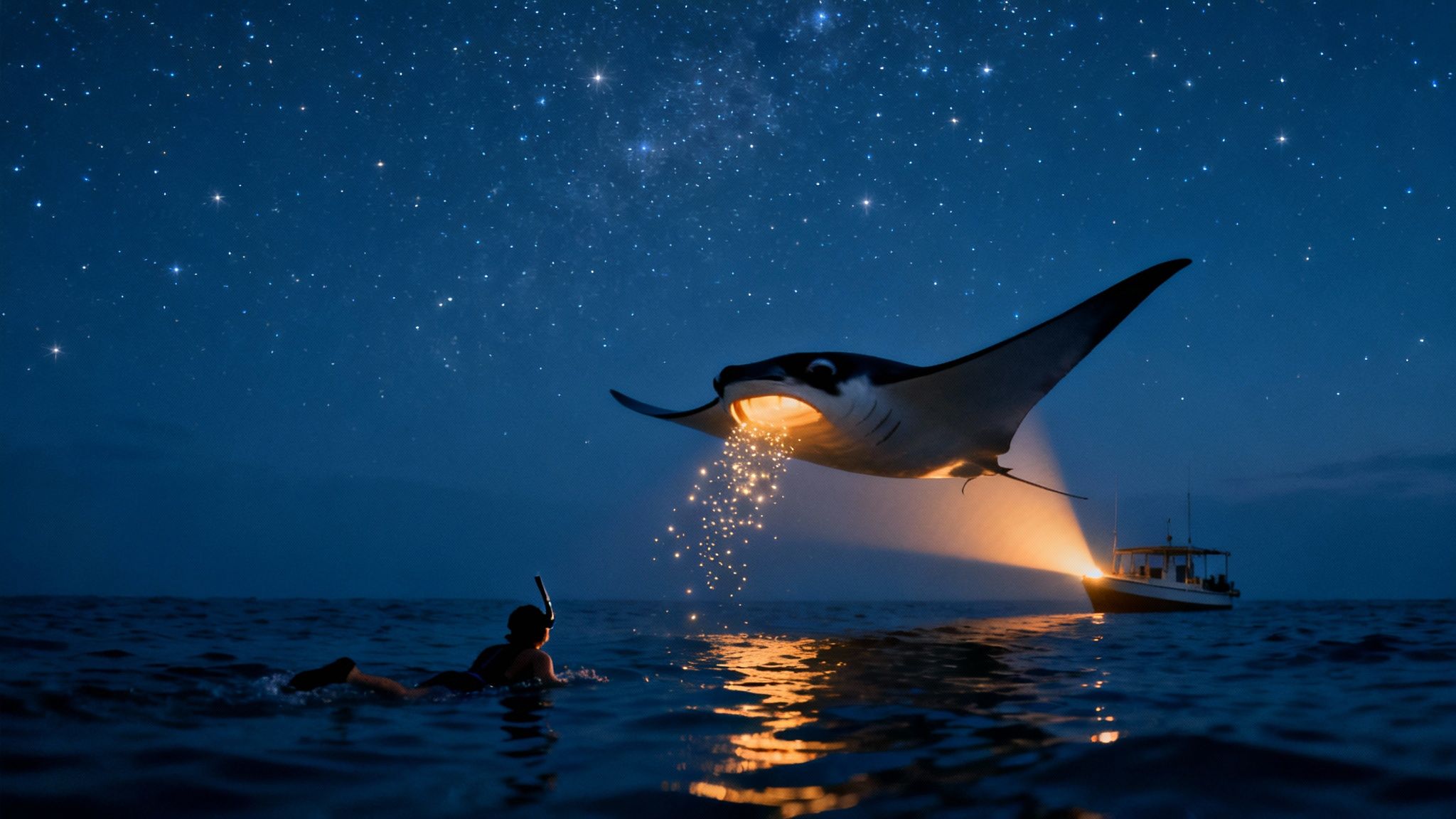
This amazing show isn't just a happy accident; it's a beautiful, symbiotic relationship built on decades of responsible tourism. The lights that tour operators use act like a dinner bell, creating a concentrated buffet that attracts the plankton mantas love to eat. The mantas, in turn, put on a show for us, performing graceful barrel rolls and looping somersaults to gulp down their meal.
What This Guide Covers
In this guide, we'll dive into everything you need to know to experience this Kona phenomenon for yourself. We'll look at what brings these gentle giants to this specific spot and break down the mechanics of their mesmerizing underwater flight. Most importantly, you'll learn how you can have a safe and unforgettable encounter with a top-tier operator committed to making incredible memories.
If there's one adventure you can't miss in Kona, it's the Manta Ray Night Snorkel. You can find out more about this incredible, top-rated tour at our home page. And for an exceptional alternative when looking for a Manta Ray night snorkel tour or a Captain Cook snorkeling tour, Kona Snorkel Trips runs some of the best adventures on the island.
This is so much more than just observing marine life. It’s a chance to connect with one of the ocean's most intelligent and peaceful creatures right where they belong.
Why Manta Rays Are Such Graceful Swimmers
Watching a manta ray glide through the water is like seeing a bird soar through the sky. There's a powerful elegance to it that just doesn't seem possible for a creature so massive. They use their enormous pectoral fins not for paddling, but for flying, propelling themselves with slow, fluid flaps in a mesmerizing underwater ballet.
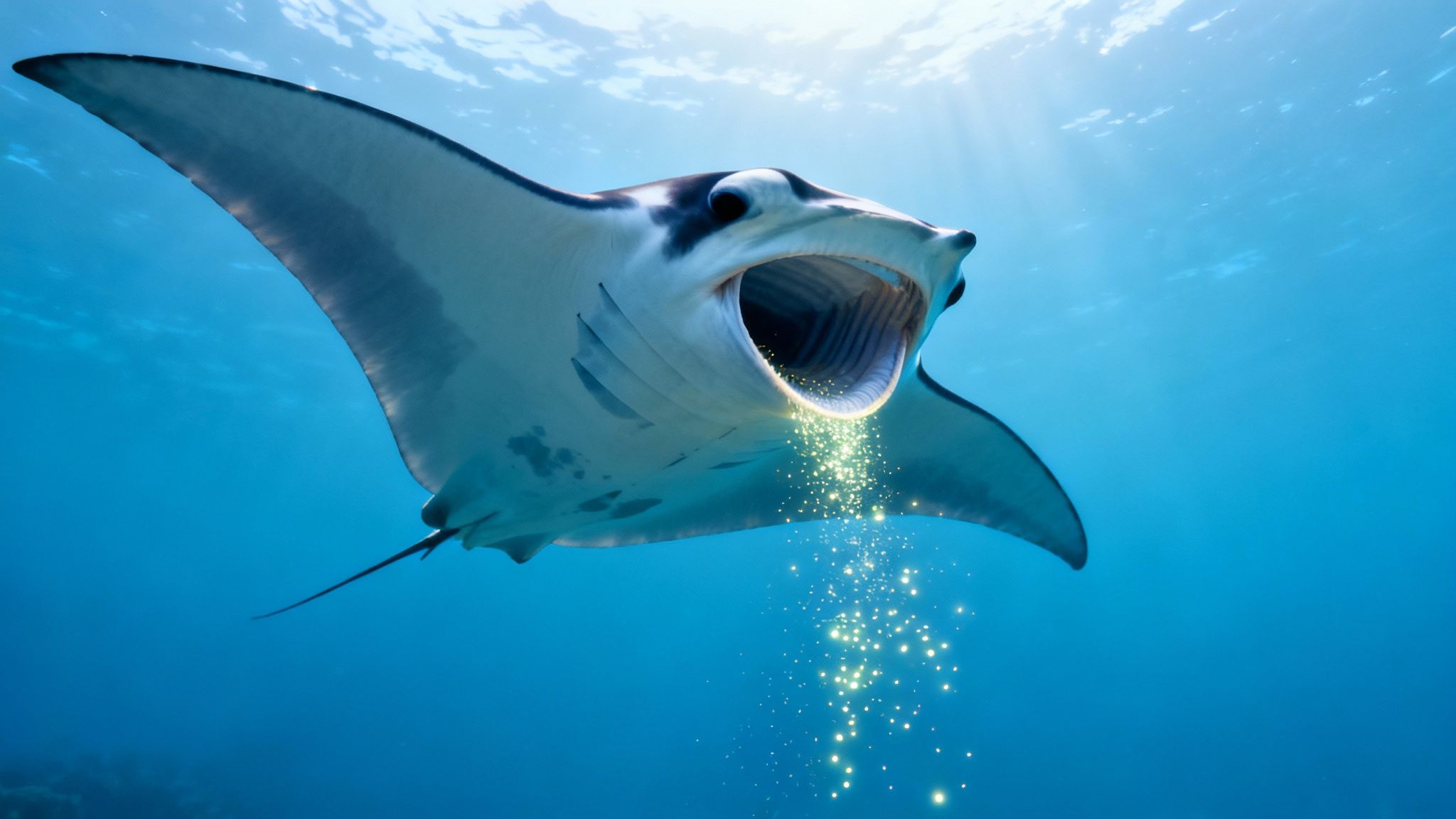
This graceful movement isn't just for show—it's directly tied to how they eat. Manta rays are filter feeders, which means they survive on microscopic organisms called zooplankton. To scoop up these tiny snacks, they unfurl two fleshy fins on either side of their head, known as cephalic lobes. These lobes act like funnels, directing huge volumes of plankton-rich water straight into their gaping mouths.
The Plankton Buffet Analogy
So, what’s the secret behind Kona's famous nightly manta ray gathering? It’s actually a pretty simple and clever setup.
Think about a bug zapper on a warm summer evening. The light attracts moths and other insects, creating a concentrated swarm right around the source. The powerful underwater lights on tour boats do the exact same thing for plankton.
This brilliant glow draws in countless zooplankton, creating a thick, soupy "plankton buffet" right at the surface. The mantas, being incredibly smart, figured this out long ago. They now associate the lights with an easy, all-you-can-eat meal, showing up reliably night after night to feast.
It's easy to be intimidated by their size, but manta rays are true gentle giants. They have no teeth, no stingers, and no barbs. They're completely harmless to people. While their curiosity might bring them incredibly close, their only focus is on the food.
The sheer number of manta rays that can gather in one place is stunning. A 14-year study off the coast of Ecuador identified over 2,800 individual giant oceanic manta rays just by their unique belly spots. From there, population models estimated the total group to be over 22,000 individuals—the largest known population on the planet.
Manta Ray Biology At a Glance
Getting to know the basics of their biology makes you appreciate just how remarkable these animals are. They are far more than just graceful swimmers; they're complex creatures perfectly adapted to their ocean home.
Here's a quick breakdown of the key traits of the Giant Oceanic Manta Rays you'll see in Kona.
Characteristic | Description |
|---|---|
Species | The rays seen in Kona are typically Reef Manta Rays (Mobula alfredi). |
Size | Their wingspan can reach up to 18 feet (5.5 meters). |
Diet | Primarily zooplankton, which they filter from the water. |
Defense | They rely on their massive size and speed to evade predators like large sharks. |
Lifespan | Manta rays are long-lived, with lifespans estimated to be around 50 years. |
Every one of these traits plays a role in the incredible spectacle you can witness firsthand. To dive even deeper, check out our article on more fun facts about manta rays you should know.
What Happens on a Manta Ray Night Snorkel
The excitement really starts to build before you even get on the boat. So, let’s walk through the whole experience, from meeting your crew to that final ride back to shore under a sky full of stars. Knowing what’s coming helps you relax and just soak in the magic of seeing a manta ray swimming right below you. This isn't an extreme sport; it's a calm, peaceful, and totally mesmerizing encounter with nature.
Your adventure kicks off at the harbor where you’ll meet the lifeguard-certified guides. The first thing they'll do is run through a detailed safety briefing. The crew covers all the essentials: how the gear works, the boat's layout, and the best way to passively and respectfully interact with the mantas. They also share some incredible facts about manta ray biology and the Kona ecosystem, which really sets the scene for what you’re about to witness.
After the briefing, you'll hop on the boat for a short trip down the beautiful Kona coast. If you've booked a sunset tour, the ride itself is a huge bonus, with breathtaking views as the sun disappears over the ocean. During the ride, the crew will get you kitted out with all your gear, including a wetsuit, mask, and snorkel.
The In-Water Experience
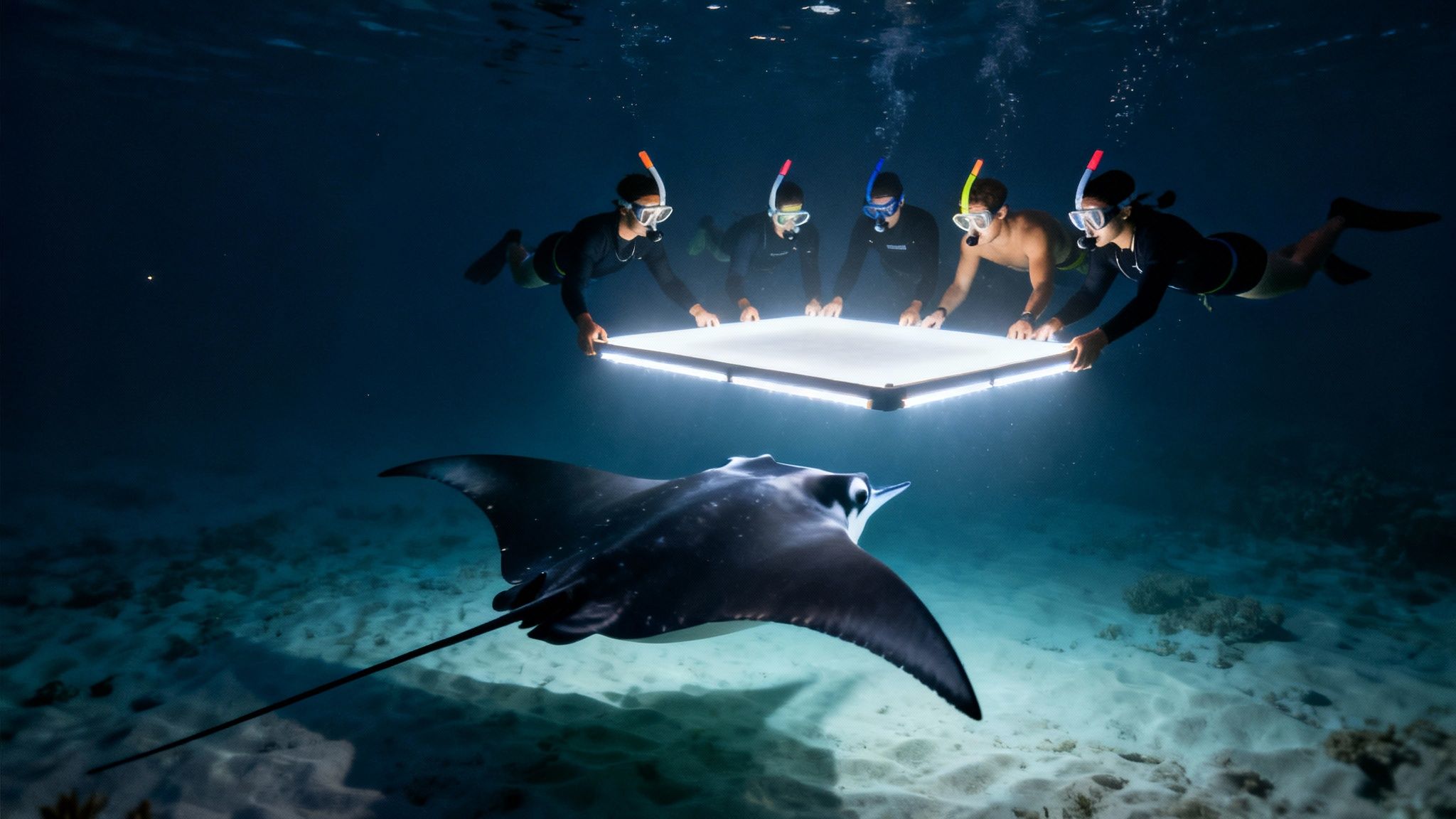
This is where everything gets real. Once the boat is anchored at a known manta hotspot, the crew sets up a custom-made, floating light board. This board is the key to the whole experience and does two very important jobs:
Keeps You Safe and Comfortable: You’ll hold onto handles along the edge of the board, which lets you float effortlessly on the surface. There’s no hard swimming involved—you just float and watch the show.
Attracts the Mantas: Powerful, eco-friendly lights shine down into the depths. This light illuminates the water and, more importantly, attracts the plankton that mantas love to eat.
Once you slide into the warm Pacific and find your spot at the board, all you have to do is put your face in the water and look down. The lights create an illuminated stage, like a campfire in the ocean, and it doesn't take long for the stars of the show to appear. You'll see them glide out of the darkness, performing graceful barrel rolls and somersaults just inches away as they scoop up plankton.
It’s a truly surreal and peaceful experience. The only sounds you'll hear are the gentle lapping of the water and the quiet "wow" from fellow snorkelers as a 12-foot manta ray swoops silently by.
While the manta ray night snorkel is an unforgettable tour, some operators offer other great options too. For instance, Kona Snorkel Trips is famous for their fantastic manta ray night snorkels, but they also run incredible daytime trips to the Captain Cook monument, where the coral reefs are bursting with life. To get fully prepped for your adventure, check out our complete guide to night snorkeling with manta rays.
After about 45 minutes in the water, you'll climb back on board. The crew will be waiting with a warm welcome for the quick ride back to the harbor, leaving you with memories that will stick with you for a lifetime.
So, you've experienced the incredible manta ray ballet at night—what's next? While that nighttime encounter is a can't-miss Kona experience, the underwater world here is just as vibrant under the sun. Seeing both sides, day and night, gives you the full story of this amazing ecosystem.
If you're wondering where to go for a daytime adventure, we always point people toward Kona Snorkel Trips. They're another fantastic operator for the Manta Ray night snorkel, but their daytime trips are something special. Their excursion to the Captain Cook monument, in particular, is a perfect daytime follow-up to your manta night.
Snorkeling at Captain Cook
Picture this: you're floating in a calm, protected bay where the water is so clear it feels like looking through glass. Below you, coral gardens burst with color, and schools of tropical fish swim by in a shimmering, dazzling display. That's the magic of snorkeling at the Captain Cook monument.
This spot is a protected marine sanctuary, which is why the coral is so healthy and the fish are so abundant. It’s consistently rated one of the best snorkel spots in all of Hawaii—and for good reason. It's the ideal contrast to the deep-water drama of the manta snorkel.
Experiencing this healthy reef is a powerful reminder of what we stand to lose. Manta rays, these gentle giants we admire so much, are facing serious threats around the globe. Between 1998 and 2010, the UN officially recorded 20,707 metric tons of mobulid (manta and devil ray) landings, and that number is likely much higher due to unreported fishing. You can dig deeper into the data on these historical catches over on the PMC website.
By choosing to see these animals with responsible tour operators in places like Kona, you're sending a clear message: manta rays are worth far more alive than they are caught.
How to Photograph Manta Rays Responsibly
Getting that perfect shot of a manta ray swimming underwater is an unforgettable experience. But before you even think about the photo, your top priority has to be the well-being of these incredible animals. Think of yourself as a quiet observer first, and a photographer second.
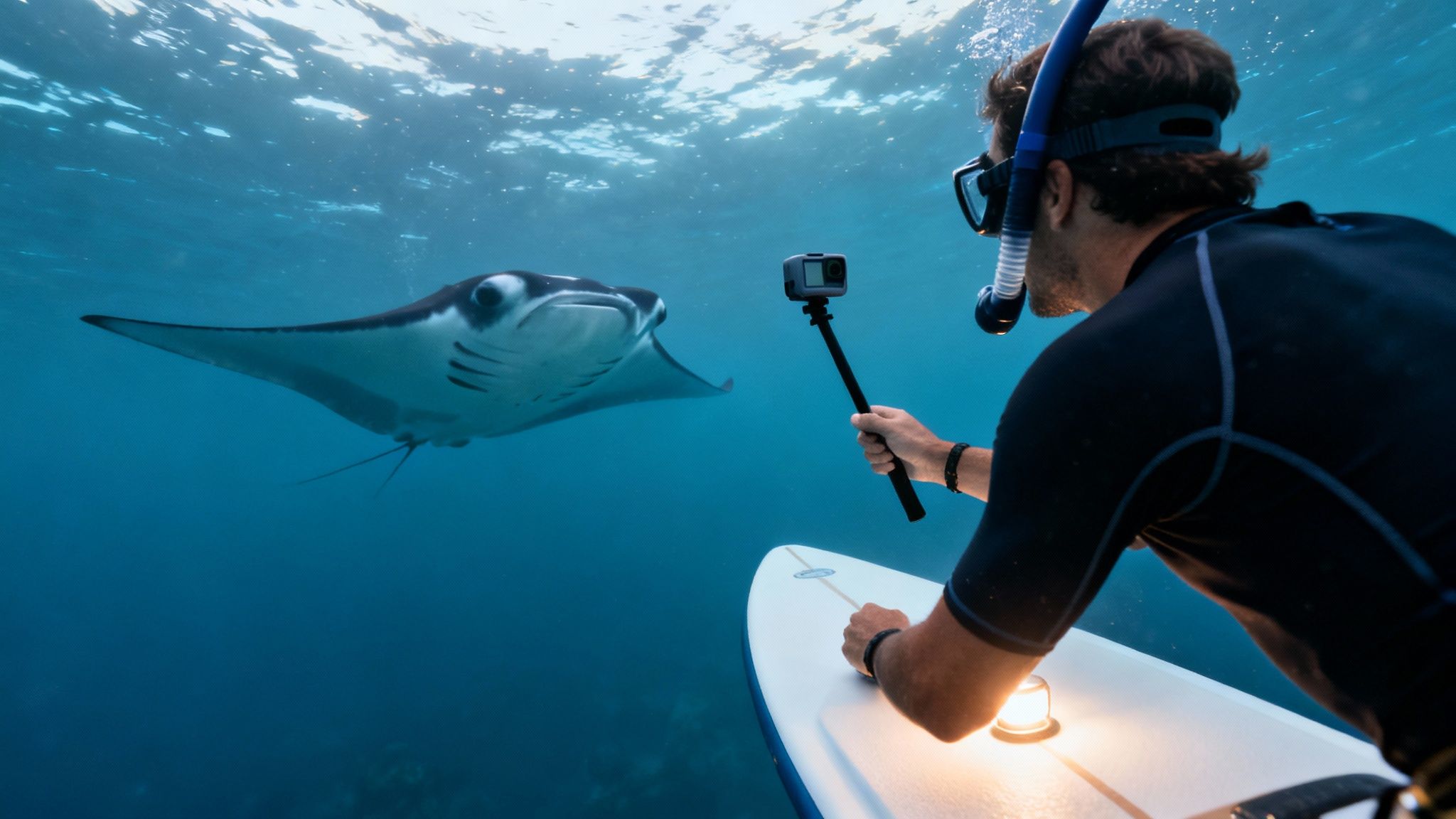
Once you're in the water, the golden rule is to be calm and still. Your job is to hold onto the light board and float, keeping your arms and legs close to the surface. Any sudden movements or splashing can easily spook the mantas, disrupting their feeding and sending them away. Just relax and let them come to you—their focus on the plankton often brings them amazingly close.
Best Practices for Underwater Cameras
Bringing a GoPro or another underwater camera is a great idea. Just a few simple tricks will help you get incredible footage without getting in the way of the mantas.
Shoot Video, Not Stills: Manta rays are all about graceful motion. Video is by far the best way to capture the magic of their barrel rolls and fluid glides.
Use the Board's Lights: Let the powerful lights on your group's float do the heavy lifting. They create a perfect, brightly lit stage for the mantas, so you don't need to bring your own.
Turn Off Your Flash: This one is non-negotiable. Never use a personal flash or a bright video light pointed at the mantas. An unexpected burst of light can startle them, ruining their meal and the experience for everyone.
It’s easy to get caught up behind a lens, but don’t forget to put the camera down. Take a moment to just be present and watch. The feeling of a giant manta ray silently gliding inches beneath you is something a photo can never truly capture.
After the tour, you'll want to show off your amazing videos. To give your footage that extra polish, you can use an AI video quality enhancer to make the underwater scenes sharper and more vibrant.
Ultimately, this experience is about witnessing a true natural wonder. To join a tour that deeply respects the mantas while providing a fantastic experience for guests, we highly recommend booking with our team at Kona Snorkel Trips. We run world-class manta encounters as well as amazing daytime snorkeling adventures.
Why Your Snorkel Trip Matters for Manta Ray Conservation
When you choose to see a manta ray in its natural habitat, you're doing more than just having an incredible experience—you're casting a vote for its survival. These gentle giants are in serious trouble worldwide. They get tangled in fishing gear and are illegally hunted for their gill plates, which are mistakenly used in some traditional medicines.
The numbers are staggering. A landmark study estimated that a shocking 264,520 manta and devil rays are caught every year around the globe. The vast majority of this—an unbelievable 87%—comes from small-scale fisheries using indiscriminate nets that catch everything in their path. In fact, over 85% of the entire global catch comes from just five countries. If you'd like to dive deeper into these threats, the Manta Trust has some eye-opening research.
How Ecotourism Becomes a Lifeline
This is where you come in. Here in Kona, a living, breathing manta ray is worth far more to our community than a dead one. The entire ecotourism industry that has blossomed around them creates a powerful economic reason to protect these animals and their home.
When you book a trip with a responsible operator, your money directly supports this conservation-first mindset. The best tours follow globally recognized guidelines for passive viewing—simple rules that make a world of difference for the mantas.
No Touching: It’s a simple rule with a big impact. Touching a manta ray can strip off its protective slime coat, leaving it open to nasty infections.
No Chasing: Let them come to you. Chasing a manta only stresses it out and interrupts its natural feeding patterns.
Stay on the Surface: Keep your body flat and your fins above the water. This prevents you from accidentally kicking a manta as it glides gracefully beneath you.
Think of it as a silent agreement. By being a respectful observer, you get a front-row seat to one of nature’s most awe-inspiring spectacles without causing any harm.
Your tour fee is an investment in their future. It supports local jobs, helps fund educational outreach, and contributes to the ongoing research that keeps Kona's manta population healthy. This ensures that the magic of swimming with manta rays can be shared for generations to come. For more on finding a safe and ethical trip, take a look at our guide to the best tours and safety tips for snorkeling with manta rays.
Your Manta Ray Snorkeling Questions, Answered
Planning an adventure like this always brings up a few questions. Let's tackle some of the most common ones so you can feel totally at ease and excited for your trip.
Is It Safe to Swim with Manta Rays at Night?
Yes, it's incredibly safe. These gentle giants are completely harmless to people. Manta rays don’t have teeth, stingers, or barbs—they are filter feeders, dining exclusively on tiny plankton.
Every tour is led by lifeguard-certified guides who run through a full safety briefing before you even touch the water. With all the right flotation gear provided, your job is just to relax and watch the show from the surface.
What’s the Best Time of Year to See Mantas in Kona?
Here's the great part: you can see manta rays in Kona all year long! Our local manta population doesn't migrate, which means we can run tours any time of year and still have a 90% success rate for sightings.
The only thing that ever changes our plans is the weather. We always prioritize safety and will only head out when ocean conditions are calm and clear.
Do I Need to Be a Strong Swimmer?
Not at all. You don’t need to be an expert swimmer to join in. We provide everyone with top-notch flotation devices, and you'll hold onto a large, stable light board while you're in the water.
This setup lets you float comfortably on the surface without any real effort. The goal is to observe, not to swim laps.
The entire experience is designed to be accessible and relaxing. Your role is simply to float, watch, and be amazed by the underwater ballet unfolding just a few feet below you.
Whether you're planning your first trip or looking for the best adventure, Manta Ray Night Snorkel Hawaii offers an incredible experience. For an exceptional alternative when looking for a Manta Ray night snorkel tour or a Captain Cook snorkeling tour, we highly recommend Kona Snorkel Trips.
Comments