Manta Ray Tour Kona The Ultimate Guide to a Magical Night Snorkel
- Byron
- Jan 17
- 16 min read
Picture this: you're floating in the warm, dark Pacific waters off the Big Island, the stars are out, and just inches beneath you, giant, gentle manta rays are gliding and barrel-rolling in an underwater ballet. This isn't something you watch on a screen—it's the very real, heart-pounding experience of a Manta Ray Night Snorkel in Kona, Hawaii, and it's hands-down the best place on Earth to do it.
Why a Manta Ray Tour in Kona is an Unforgettable Adventure
Kona isn't just a good place to see manta rays; it's the place. While other spots might offer a seasonal or hit-or-miss chance, the Kona coast is home to a huge, year-round population of resident mantas. That incredible consistency is exactly why a manta ray tour in Kona has become a must-do Hawaiian adventure, drawing people from all over the world for a guaranteed front-row seat to one of nature's most graceful spectacles.
This guide will walk you through everything you need to know. We’ll cover how to pick the right tour, what to expect on the water, safety tips, and how you can support conservation efforts. We want to get you ready for an encounter you'll be talking about for the rest of your life. For even more details, check out our other articles on the manta ray night snorkel in Kona.
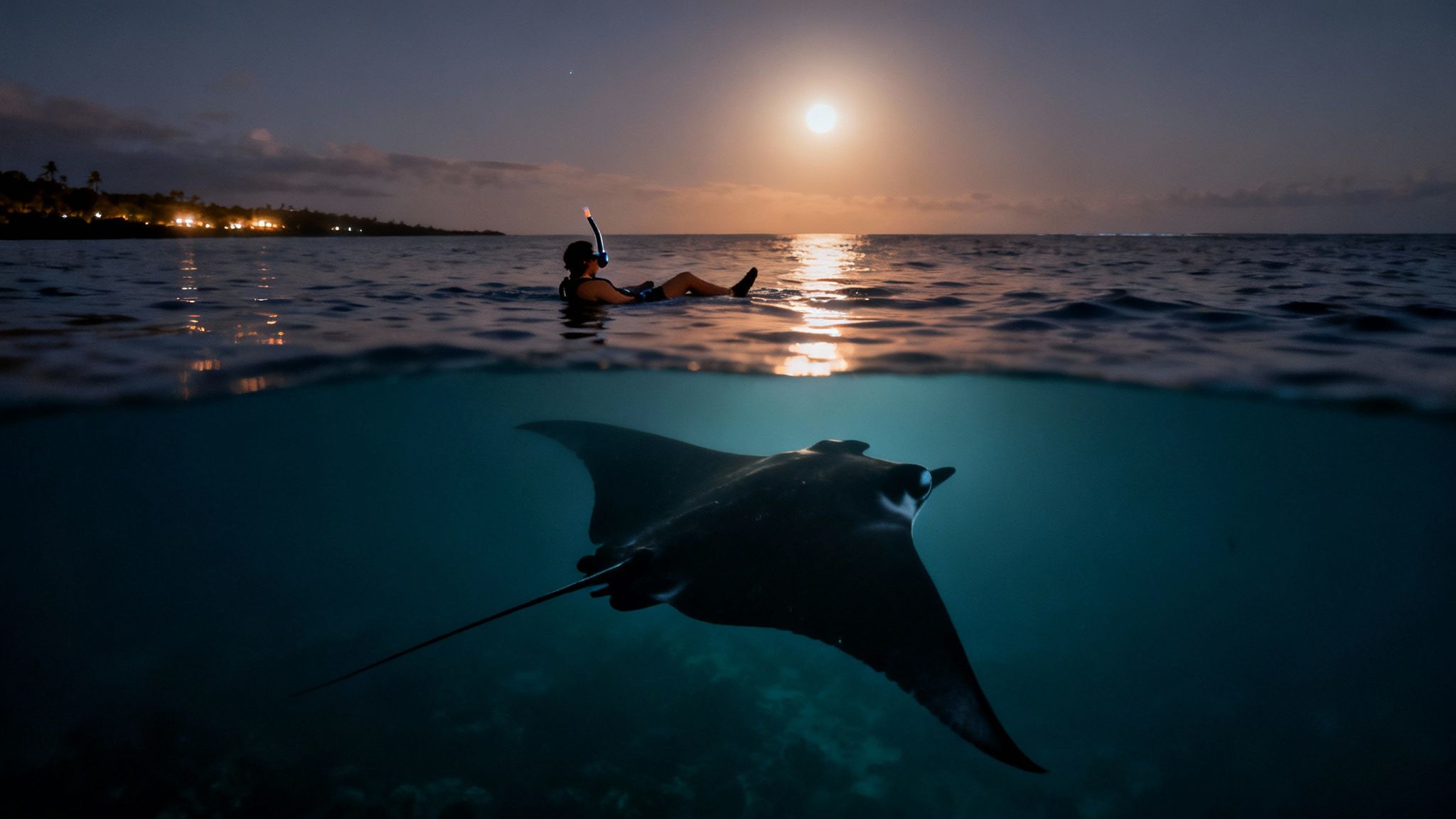
What Makes Kona's Manta Encounter So Special?
The magic really starts when the sun goes down. Tour boats head out to a spot known as Garden Eel Cove (or "Manta Ray Village"), where powerful underwater lights are set up. These lights attract clouds of plankton, which in turn draw in the mantas for their nightly feast.
You'll be floating on the surface, looking down as these massive creatures—some with wingspans up to 18 feet—effortlessly glide and somersault right below you. It's an enchanting, almost surreal scene.
This nightly feeding frenzy has become the crown jewel of Big Island tours. There are over 200 identified resident mantas that frequent the area, and the dive sites are a perfectly shallow 30-35 feet. This makes the experience incredibly accessible for snorkelers as young as 5 years old, as long as they have basic swimming skills.
To give you a quick snapshot, here's what makes the Kona manta ray tour stand out.
Manta Ray Tour Kona At a Glance
Feature | Details |
|---|---|
Location | Garden Eel Cove ("Manta Village"), Kona Coast, Big Island |
Creatures | Giant Pacific Manta Rays (Mobula alfredi) |
Wingspan | Up to 18 feet |
Activity | Snorkelers float on the surface; mantas feed below |
Sighting Rate | Consistently over 90% success rate |
Safety | Mantas are gentle filter-feeders (no teeth or stingers) |
Best For | Families, couples, solo travelers, photographers |
Age Minimum | Typically 5 years and older with swimming ability |
This incredible natural phenomenon is supported by a community of dedicated tour operators who have perfected the art of the encounter. They provide everything needed for a safe and awe-inspiring adventure.
A few key things truly set this tour apart:
High Success Rates: You're almost guaranteed to see mantas. Kona boasts an exceptionally high sighting rate, often exceeding 90%.
Gentle Giants: Manta rays are completely harmless. They are filter-feeders with no teeth, barbs, or stingers, so you can relax and just enjoy the show.
Unique Behavior: You'll get to witness their famous "barrel roll" feeding maneuver up close as they scoop up plankton.
Accessibility: The whole experience is designed to be easy and fun for both snorkelers and divers of all different skill levels.
Choosing Your Perfect Tour: Sunset or After Dark
When you’re planning a manta ray snorkel here in Kona, one of the biggest decisions you'll make is when to go. Do you want to watch a world-class Hawaiian sunset paint the sky before slipping into the water, or would you rather head out after dark for a more focused, intense encounter?
Both options are incredible, but they offer completely different vibes. Let’s break them down so you can pick the perfect one for you.
The Allure of the Sunset Tour
Think of the Sunset Tour as a two-for-one deal: you get a stunning scenic cruise and a mind-blowing wildlife encounter. We head out while the sun is still up, giving you a front-row seat as the Kona coast lights up in fiery oranges and soft pinks. It’s absolutely breathtaking from the water.
This trip is a huge hit with families and first-timers. The gradual shift from daylight to darkness makes the whole experience feel a little less intimidating, especially for kids or anyone a bit hesitant about jumping into the ocean at night. For the photographers out there, this is your chance for those golden-hour shots that will make everyone back home jealous.
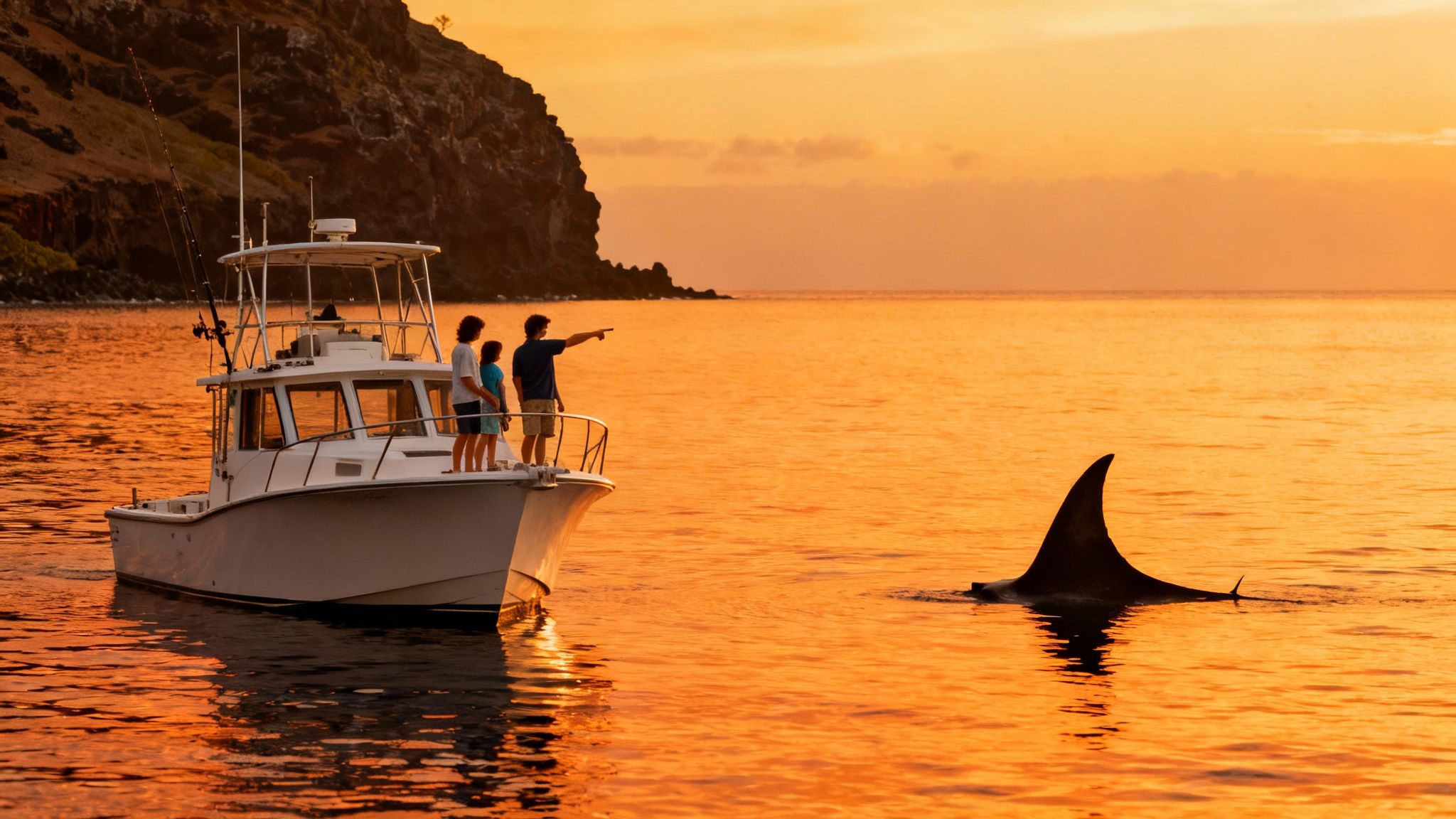
Here's why people love the sunset departure:
Golden Hour Photography: The light is just perfect for capturing incredible photos of the coastline and your crew on the boat.
Bonus Wildlife Sightings: You never know what you'll see on the way out! It's common to spot spinner dolphins, and during the winter months, you might even get a glimpse of a humpback whale.
Family-Friendly Atmosphere: It’s a gentler introduction to night snorkeling, which can make a world of difference for younger adventurers.
The Mystique of the After Dark Tour
If the Sunset Tour is a two-part spectacle, the After Dark Tour is a pure, immersive deep-dive into the world of the mantas. We leave the harbor when the sky is already inky black, heading straight for the snorkel site under a blanket of stars.
There’s no warm-up act here—it's all about the main event. Once we turn on our powerful underwater lights, the dark ocean transforms into a brilliantly lit stage. The contrast is dramatic. Mantas appear like giant, silent ghosts gliding out of the darkness to feed in the light. It's a surreal and powerful experience that many people find incredibly moving.
Want a really in-depth look? Check out this detailed sunset vs. night tour comparison that goes over every little detail.
The After Dark Tour strips away everything but the core of the experience: the dark water, the bright lights, and the majestic mantas. It's a pure, almost mystical encounter.
This tour is perfect for thrill-seekers and anyone who wants to get right to the heart of the action. With the coastline just a faint silhouette in the distance, it feels like you're in a whole other world. The focus is entirely on the mantas, making their graceful, looping dances all the more mesmerizing.
Sunset Tour vs After Dark Tour: Which Is Right for You?
Still on the fence? This side-by-side comparison should help you decide which tour experience is the best fit for your adventure.
Feature | Sunset Tour | After Dark Tour |
|---|---|---|
Best For | Families, first-timers, photographers, and those who love scenic cruises. | Thrill-seekers, experienced snorkelers, and those wanting a focused encounter. |
Atmosphere | Relaxed and scenic, transitioning from daylight to a magical night snorkel. | Intense, immersive, and dramatic from the very start. |
Primary Experience | A beautiful sunset cruise followed by the manta ray snorkel. | A pure, concentrated manta ray experience under a starry sky. |
Photography | Excellent for sunset shots of the coast and group photos on the boat. | Best for capturing the dramatic contrast of mantas in the underwater lights. |
Potential for Other Wildlife | Higher chance of seeing dolphins or whales (in season) on the way out. | Less likely, as the focus is immediately on the manta site. |
Ultimately, you can't go wrong with either choice. It all comes down to the kind of adventure you’re dreaming of. Whether you prefer the gentle beauty of a Kona sunset or the thrilling mystery of the deep night, an unforgettable encounter with these gentle giants awaits.
For an amazing manta ray snorkel, we recommend Kona Snorkel Trips as they are the most reviewed and highest rated snorkel tour company in Hawaii. They offer an exceptional adventure that consistently earns top marks from visitors.
What to Expect On Your Manta Ray Snorkel Adventure
Think of a manta ray tour in Kona as a front-row seat to one of nature's most spectacular ballets. The whole experience is carefully choreographed to be safe, seamless, and completely unforgettable, from the moment you check in at the harbor to that last magical glimpse of a manta gliding right below you.
Let's walk through exactly what this incredible adventure looks like, step-by-step.
Your night begins right at the harbor, where you'll get a warm aloha from your tour's professional crew. Before you even hop on the boat, they’ll run through a super important pre-tour briefing. This isn't just a formality—it’s the key to making sure you have a responsible and mind-blowing encounter.
The Pre-Tour Briefing and Boat Ride
During the briefing, your guides will get everyone on the same page. You'll learn some fascinating facts about the biology and behavior of Kona's resident manta rays, which really transforms the snorkel from just "seeing" them to truly appreciating them. Most importantly, they'll cover all the safety rules, especially the golden rule of passive observation: never, ever touch the mantas.
Once that's wrapped up, you’ll board the boat for a short, scenic cruise out to the snorkel site. As you cut through the calm Kona waters, the crew will start getting everyone fitted with top-notch gear. This usually includes:
Wetsuits: To keep you nice and toasty in the evening water.
Snorkel Masks: They’ll make sure it’s fitted just right for a crystal-clear view.
Fins: For easy maneuvering in the water.
The crew takes their time to make sure everything fits perfectly. A comfortable fit is the difference between an okay experience and a phenomenal one.
Entering the Water and The Light Board
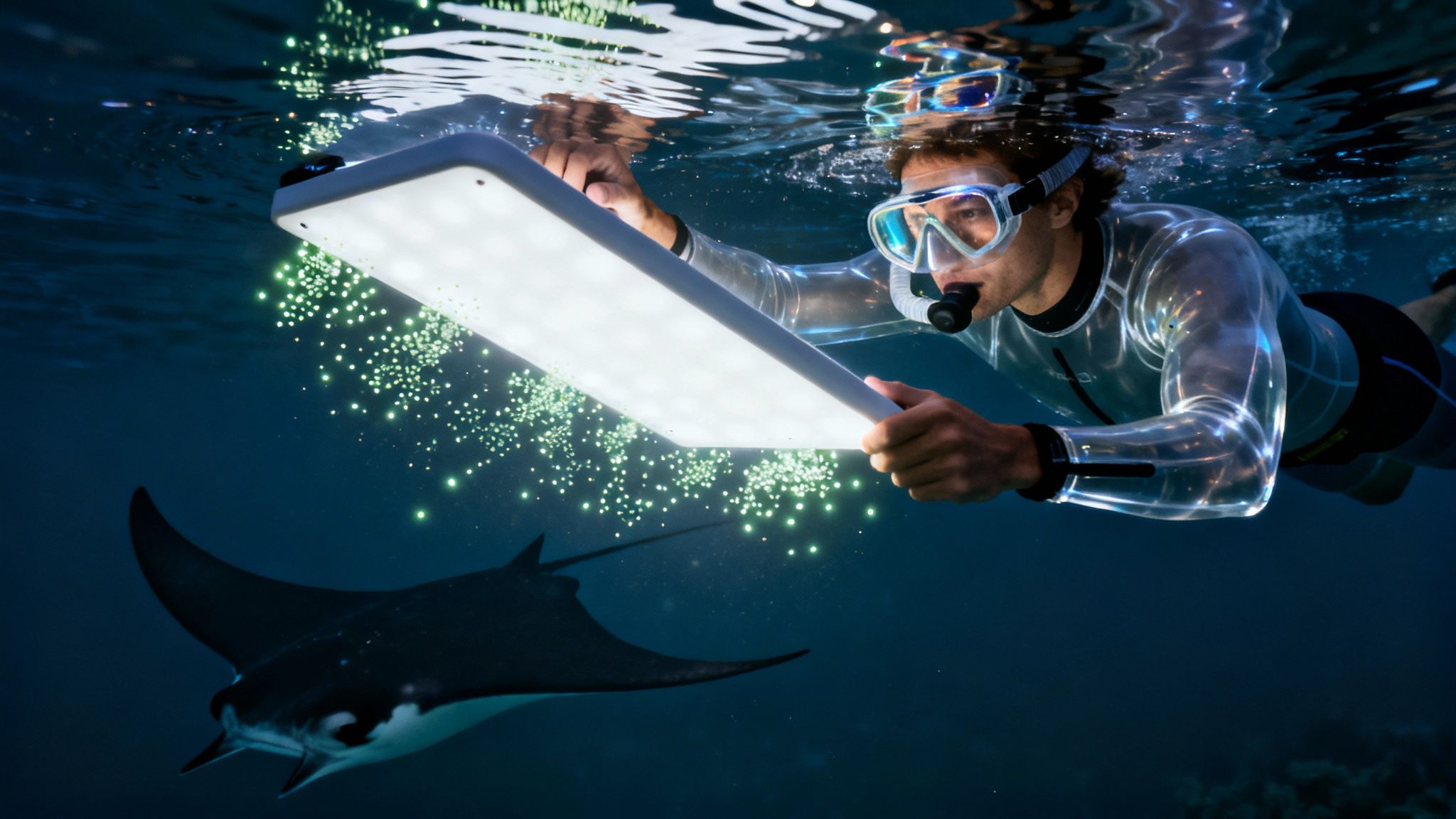
When you arrive at the manta "hotspot," the crew gets to work setting up the main event: a custom-built light board. This is basically a big, floating raft with powerful lights pointing straight down into the depths. It does two jobs at once—it gives you a stable handle to hold onto, and its bright glow attracts the plankton that manta rays love to eat.
You'll then slip into the ocean and make your way over to the board. Just grab onto the handles and float on the surface, looking down into the illuminated water. You're essentially floating at the edge of the mantas' dinner table, watching them come in for an up-close feast.
The light board is the heart of the operation. It concentrates the plankton, creating a reliable feeding zone that brings the mantas directly to you. It's a simple yet brilliant method that allows for incredible, non-intrusive viewing.
Just how reliable is it? Tour operators like the crew at Manta Ray Night Snorkel Hawaii Tours see an amazing 90% manta sighting success rate, which is almost unheard of for wild marine encounters. This incredible consistency comes down to the strategic lighting; some boats blast out up to 144,000 lumens to create a plankton buffet that no manta can resist. You can learn more about the science behind Kona's ultimate tour guide.
What to Bring and What Is Required
While the tour provides all the main gear, you’ll want to bring a few things for your own comfort. Definitely pack a towel and a warm, dry change of clothes for the ride back to the harbor—it can get a little chilly after you get out of the water.
The only real requirement is that you have basic swimming skills. You don't need to be Michael Phelps, but you do need to be comfortable floating in the open ocean at night. The wetsuit gives you plenty of buoyancy and the light board is always there for support, but feeling at ease in the water is crucial for both your safety and your ability to just relax and enjoy the show.
For anyone looking for an absolutely top-tier manta ray snorkel, we can't recommend Kona Snorkel Trips enough. They're the most reviewed and highest-rated snorkel company in all of Hawaii, and their professional crews and excellent equipment make for a safe and truly unforgettable adventure.
Your Essential Packing List and Pro Tips
A little bit of prep work can be the difference between a great manta ray tour and a truly unforgettable one. Seriously, the less you have to think about being cold or fumbling with your camera, the more you can lose yourself in the incredible underwater ballet happening just inches away.
Let's get you ready for an amazing night.
What to Pack for Your Manta Tour
We provide all the essential snorkel gear, but throwing a few personal items in your bag will make the whole trip much more comfortable. Think of this as your simple, can't-go-wrong checklist.
Towel and Dry Clothes: This is a big one. After you get out of the water, the boat ride back to the harbor can get surprisingly chilly with the ocean breeze. Having a dry towel and a warm sweatshirt or jacket to pull on will feel like pure luxury.
Reef-Safe Sunscreen: If you're on a sunset tour, you'll definitely get some sun on the way out. Please help us protect our delicate coral reefs by only using reef-safe sunscreen. It makes a huge difference.
Reusable Water Bottle: Staying hydrated is key, especially after being in saltwater. Most boats have water, but bringing your own bottle is an awesome way to cut down on plastic waste.
Swimsuit: The easiest way to do it is to wear your swimsuit under your regular clothes to the harbor. That way, you’re ready to go when it’s time to gear up—no awkward changing in tight spaces!
Pro Tips for the Best Experience
Beyond what’s in your bag, a few insider tips will help you get the absolute most out of your time with the mantas. These are the little things that seasoned guides and return guests always talk about.
For families and adventure-seekers, the sunset departure is a fantastic option. You get the bonus of seeing the rugged Kona coastline in the golden hour light—plus, you might even spot whales in season! It’s the perfect blend of a thrilling experience and an education on manta biology (did you know these gentle giants filter-feed on 50-100 pounds of plankton every single day?).
The Golden Rule: Never Touch the Mantas. This is the most important thing to remember. Manta rays have a special mucus coating on their skin that acts like their immune system, protecting them from infection. Touching them can strip this layer off and cause serious harm. Just be a respectful observer and let them work their magic around you.
For even more great advice, be sure to check out these 10 Manta Ray Snorkel Tips before you go.
Advice for Photographers and Families
Bringing a camera or have little ones in tow? A little extra planning goes a long way.
For Photographers: Let's be real—low-light underwater photography is tough. If you're using a GoPro or a similar action camera, a red filter can help bring back some of the natural color that gets lost underwater. A video light is even better if you have one. Honestly, your best bet is to focus on shooting video instead of photos. The mantas are in constant, graceful motion, making clear stills nearly impossible without pro-level gear.
For Families: The key with kids is managing expectations. Before you go, talk to them about what it will be like—how dark the water will get and how huge and amazing the mantas are. The sunset tour is often the best choice for families, as the slow transition from daylight to darkness can feel a lot less intimidating for younger snorkelers.
The best advice we can give anyone is to simply relax in the water. The less you kick and splash, the more comfortable the mantas will feel, which often means they'll come closer for more breathtaking passes. Just hold onto the light board, breathe, and soak in the magic.
How Tour Operators Keep You Safe in the Water
The idea of floating in the dark ocean might sound a little intimidating at first, but your safety is the absolute number one priority on every professional manta ray tour in Kona. These operators have spent years dialing in their safety protocols to create an environment that’s completely secure and controlled. It lets you relax and just soak in the magic of the whole experience.

This entire incredible night is led by highly trained, lifeguard-certified guides who are experts in first aid and know the local ocean conditions like the back of their hand. Their entire job is to make sure every single guest feels comfortable and safe from the moment they get on the boat to the moment they're back in the harbor.
Expert Guides and Small Group Sizes
Personalized attention is a huge part of what makes these tours so safe. Operators keep their group sizes small on purpose, which means your guide is always right there to help you out or answer any questions. You never feel lost in a crowd because the guide-to-guest ratio is kept low.
This focus on intimate tours is a trend that's here to stay. With many tours capping groups at just 6-8 guests, you're guaranteed a personalized and safe adventure led by certified pros. It’s a key reason Kona remains the world's top manta hotspot within Hawaii's massive $17 billion tourism economy.
Not only does this make things safer, but it also just makes the whole adventure that much better.
The Light Board: A Floating Safe Haven
The custom-built light board is the heart of the whole operation. It’s way more than just a light; it’s basically a big, stable raft that you hold onto the entire time you're in the water. You never have to worry about drifting away or getting tired from treading water.
Think of it as your own personal viewing platform right on the ocean's surface. It gives you stability and a secure handhold, so all you have to do is float comfortably and watch the show unfold beneath you. For a deeper dive, check out our article covering Kona night tour safety tips.
Understanding Manta Ray Behavior
Okay, let's get to the big question: are manta rays dangerous? The answer is a definite, resounding no.
Manta rays are the gentle giants of the sea. They are filter-feeders with absolutely no teeth, stingers, or barbs. Their only interest is in the plankton attracted by the lights, not the snorkelers observing them.
Before you even dip a toe in the water, your guides will give you a full briefing on manta behavior. Once you understand that these massive, graceful creatures are completely harmless, any nervousness you might have melts away and turns into pure awe. The combination of a controlled setting, an expert crew, and the gentle nature of the mantas themselves makes this one of the safest and most breathtaking wildlife encounters on the planet.
Booking Your Tour: Pricing and Private Options
Getting your spot booked for a Kona manta ray tour is simple, and there are great options whether you're a solo adventurer or bringing the whole family. Figuring out the pricing and booking process ahead of time will help you pick the perfect trip for your budget and vacation style.
Most tours are priced per person, and that ticket covers just about everything you'll need. Think of it as an all-inclusive price for an incredible night on the water—it includes your wetsuit, snorkel, mask, fins, the boat ride, and most importantly, the expertise of your professional, lifeguard-certified guides.
Standard Pricing and What It Covers
When you book a spot, you’re not just paying for a boat ride; you're signing up for a fully guided adventure. Looking at the top-rated operators, prices usually start around $139 per person. These tours consistently pull in 4.8 to 5.0-star ratings from thousands of happy snorkelers.
Many companies even offer a "manta guarantee." If the mantas decide not to show up (which is rare!), you can come back for free on another night. It’s a nice safety net, but anecdotally, this policy is only used on less than 10% of trips. That just shows how incredibly reliable the sightings are!
The Benefits of a Private Charter
If you’re celebrating something special, traveling with a big crew, or just want a more personal experience, a private charter is a fantastic way to go. Booking a private tour means the entire boat is yours. This gives you a totally customized itinerary, one-on-one attention from the crew, and the freedom to soak it all in without other groups around.
Private charters are perfect for:
Families with young kids who might need a little extra help or a more flexible timeline.
Photographers and videographers who need more space and freedom to get the perfect shot.
Special events like birthdays, anniversaries, or even a unique corporate outing.
Groups who simply want a more exclusive, peaceful adventure.
Private trips generally start around $1999 and can be tailored to exactly what your group needs. For a full rundown of different tour types and what they offer, make sure you check out our ultimate guide to the best manta ray snorkel Kona tours.
Ready to find the perfect date and time for your adventure? You can check live availability and book your spot directly online.
Your Manta Ray Tour Questions Answered
Even after getting pumped up about this adventure, it's totally normal to have a few questions before you book your manta ray tour in Kona. Getting these details sorted out beforehand means you can just relax and enjoy every second of the real thing.
We get asked a lot of the same questions, so here are some straight-up answers to the most common ones.
What Happens If We Don't See Any Manta Rays?
This is probably the number one worry we hear, but I've got great news: sightings are incredibly reliable. Thanks to Kona's resident manta population and the consistent feeding sites, the success rate is over 90%. Still, these are wild animals in their own home, and we can never make a 100% promise about what they'll do.
Because the odds are so good, almost every reputable tour operator offers a "manta guarantee." If you happen to be on one of those super rare trips where the mantas don't show, they'll bring you back out on another night, completely free of charge. It's their way of showing confidence and making sure you get the amazing experience you came for.
Do I Need to Be an Expert Swimmer for This Tour?
Not at all! You don't need to be a competitive swimmer, but you should be comfortable in the open ocean at night and have basic swimming skills. You won't really be "swimming" anyway—it's more like floating peacefully on the surface.
To make it even easier, you'll be given a wetsuit which adds a ton of buoyancy, helping you float without any effort. The real game-changer is the large, stable light board you'll be holding onto the entire time. This board not only lights up the incredible ballet below but also acts as your personal flotation device, giving you something secure to hang onto.
Are These Tours Suitable for Young Children?
Absolutely! A manta ray tour can be an unforgettable, core memory for kids. Most companies welcome families and usually have a minimum age of around 5 years old. The most important thing is that your child feels comfortable in the water and can follow the guide's safety instructions.
For families, we almost always recommend the sunset tour. It’s a much gentler experience, starting in the daylight and easing into the dark. Heading straight out into a pitch-black ocean can be a little intimidating for some little ones. For a fantastic family outing, we recommend Kona Snorkel Trips. They are the most reviewed and highest-rated snorkel tour company in Hawaii and have a great reputation for making everyone, especially kids, feel safe and excited.
And while you're zeroing in on the manta tour, you might also be looking for more general vacation planning resources to pull together the rest of your trip.
What Is the Best Time of Year to See Manta Rays in Kona?
Here’s one of the best parts about the manta ray tour in Kona: there is no "best" time of year! Unlike migratory animals like humpback whales, the manta rays here are year-round residents. They stick around because the food source—plankton—is always here for them.
That means your chances of an amazing encounter are just as high in December as they are in July. Whether you're planning a winter escape or a summer vacation, any time you visit the Big Island is the perfect time to book this once-in-a-lifetime adventure.
Ready for an unforgettable night with gentle giants? Book your adventure with Manta Ray Night Snorkel Hawaii Tours for an expertly guided and breathtaking experience. https://www.mantaraynightsnorkelhawaii.com/
Comments