Manta ray tour kona: Your Essential Guide to Kona's Manta Experience
- Byron
- Feb 7
- 10 min read
A manta ray tour in Kona is one of the most famous wildlife encounters on the planet. Picture yourself floating in the dark ocean at night, watching majestic manta rays gracefully feed on plankton just inches below you.
Tour operators use powerful lights to attract the mantas' food source, creating an unbelievably close and personal encounter with these gentle giants—some with wingspans wider than a car! It's easily one of Hawaii's most iconic and reliable adventures.
What Is a Manta Ray Tour Kona Experience?
Imagine this: you're floating in the calm, dark Pacific as enormous, gentle creatures glide effortlessly beneath you in a stunning underwater ballet. That's the heart of the Kona manta ray tour. It's not just another boat trip; it’s an otherworldly, immersive experience with one of the ocean's most incredible animals.
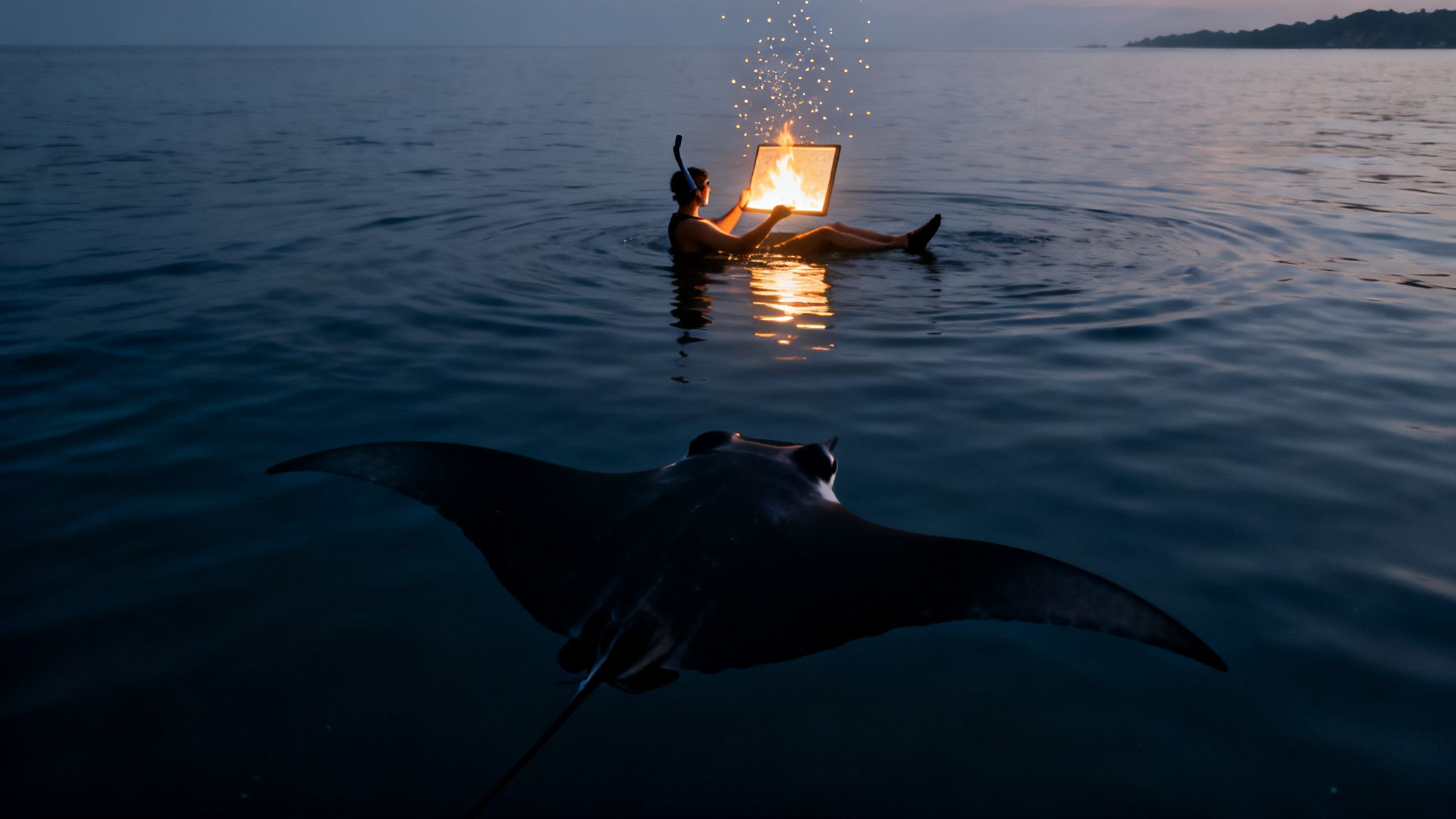
The magic behind it is actually pretty simple. Tour boats shine powerful, submerged lights into the water, which acts like a glowing magnet for microscopic plankton—the favorite food of manta rays.
The mantas, smart as they are, are drawn to this easy, concentrated buffet. They swoop in, performing graceful barrel rolls to filter the plankton-rich water, often coming within inches of the people watching from above.
Snorkeling and Diving Options
You have two main ways to see this incredible show, depending on your comfort level and certifications.
Night Snorkeling: This is by far the most popular and accessible choice. You’ll hold onto a custom-built floatation board that has bright lights shining down. You just float on the surface and watch the mantas feed right below you. Simple as that.
SCUBA Diving: If you're a certified diver, this gives you a totally different, bottom-up view. Divers get settled on the sandy ocean floor and look up as the massive rays soar and somersault above them, silhouetted against the glowing lights.
Kona's unique coastline creates the perfect sheltered conditions for this to happen, which is why manta ray sightings are so incredibly consistent here. For anyone ready to have this unforgettable adventure, choosing a top-rated operator is everything. Kona Snorkel Trips is a great option for a tour because it's the most reviewed and highest rated snorkel tour company in Hawaii, offering an exceptional manta ray snorkel tour in Kona.
You can learn more about this incredible tour on the main Manta Ray Night Snorkel Hawaii website. And while the manta tour is a showstopper, the world is full of other unique marine experiences like Jellyfish Lake that draw adventurous travelers. If you want to dive deeper, you can also check out our guide to discover more fascinating facts about manta rays.
Choosing Your Adventure: Sunset vs After-Dark Tours
Deciding between a sunset or an after-dark manta ray tour in Kona is one of the biggest choices you'll make for this adventure. Each one offers a completely different vibe, so the "right" one really comes down to the kind of experience you're hoping for.
Let's break down what makes each trip so unique.
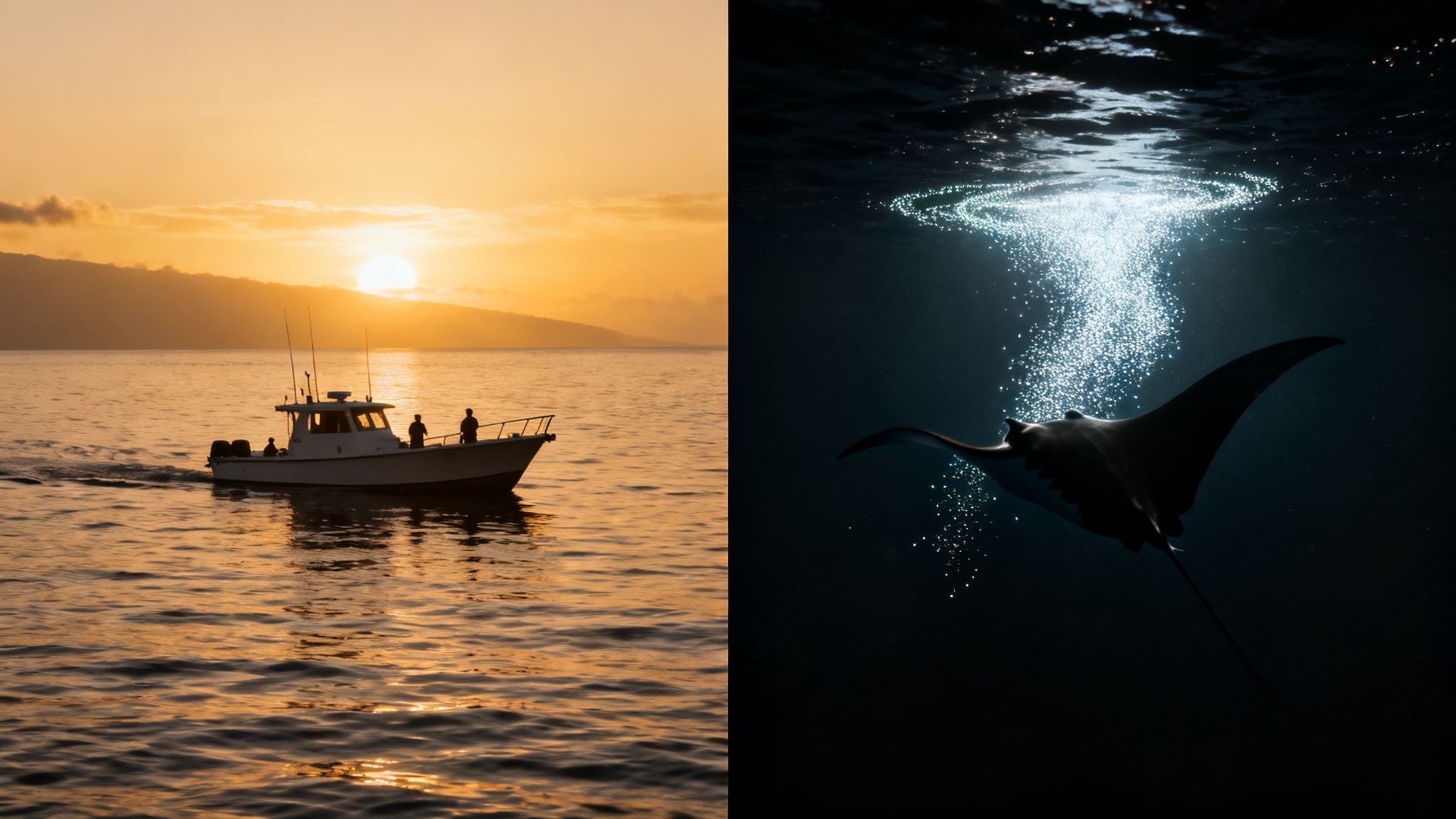
The Scenic Sunset Tour
Think of the sunset tour as the full coastal evening package. You'll head out on the boat while the sun is still high in the sky, giving you a front-row seat to the stunning Kona coastline bathed in that perfect golden-hour light.
This timing also happens to be prime time for other wildlife. It’s not uncommon to see playful spinner dolphins showing off in the boat's wake.
Of course, the main event before the main event is watching a world-famous Kona sunset from the water—an unforgettable moment all on its own. After the sun finally dips below the horizon, you'll slip into the water as twilight sets in, starting your manta encounter during that magical transition from day to night.
The Dramatic After-Dark Experience
The after-dark tour, on the other hand, is a more focused and intensely dramatic encounter. You'll depart after the sun has completely set, immersing you straight into the deep darkness of the open ocean. The whole experience feels amplified by the sharp contrast between the pitch-black sea and the powerful, glowing lights from the snorkel float.
This creates an almost theatrical atmosphere where the manta rays are the undeniable stars of the show. With no leftover sunlight, your entire focus is pulled to the underwater ballet happening just inches below you.
A fantastic bonus of being out later is the incredible stargazing. On a clear night, the Hawaiian sky puts on its own show, offering a breathtaking canopy of stars. It's the perfect ending to an otherworldly adventure.
To help you decide, here’s a quick side-by-side comparison of the two experiences.
Sunset Tour vs After-Dark Tour Comparison
Feature | Sunset Tour | After-Dark Tour |
|---|---|---|
Atmosphere | Scenic, relaxed, and picturesque | Dramatic, immersive, and focused |
Best For | Photographers, families, and those wanting a full evening experience | Thrill-seekers and anyone wanting the most intense manta encounter |
Lighting | Natural golden hour light transitioning to twilight | Complete darkness contrasted with powerful underwater lights |
Bonus Sights | Kona coastline views and a spectacular sunset over the ocean | Breathtaking stargazing in the clear night sky |
Wildlife | Higher chance of seeing dolphins and other marine life during the boat ride | All focus is on the manta rays attracted to the light |
Timing | Departs in the late afternoon, returns after dusk | Departs after sunset, returns later in the evening |
Ultimately, there’s no wrong choice—both tours are incredible. The sunset trip is a beautiful journey with a spectacular manta finale, while the after-dark tour is a deeply immersive, manta-centric experience under the stars.
For an even deeper dive into the pros and cons, check out our full guide on the sunset vs. night tour for your manta ray snorkel. Whichever you choose, you're in for the experience of a lifetime.
What to Expect on Your Manta Ray Snorkel Tour
So, you're ready for your manta ray tour in Kona? Let’s walk through the adventure from start to finish. Knowing how the evening unfolds will help you relax and just soak in this absolutely incredible experience.
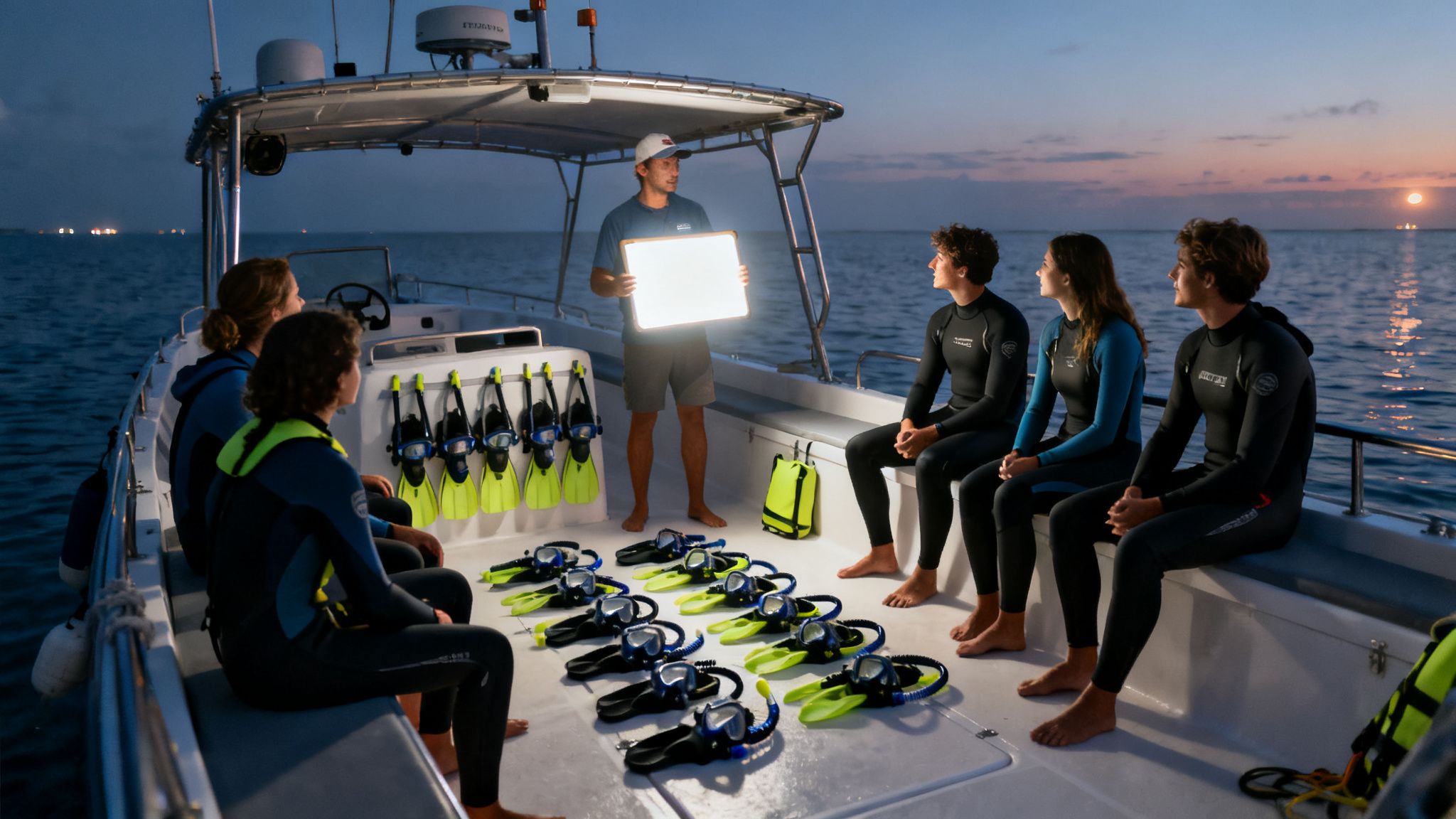
Your journey kicks off at the harbor, where you'll check in with our friendly, professional crew. This is the perfect time to get any last-minute questions answered and meet the guides who will be with you all evening.
Once everyone’s on board, the captain runs through a comprehensive safety briefing. Pay close attention here—it’s crucial. We’ll cover everything from using the gear correctly to the rules for interacting respectfully with the mantas. After that, the guides will get you fitted with your equipment, including a wetsuit to keep you warm and a high-quality mask and snorkel.
The Journey to the Manta Site
With everyone geared up, we'll head out to one of Kona’s world-famous manta ray viewing sites. The boat ride itself is part of the fun, giving you gorgeous views of the coastline. Depending on which tour you book, you might catch a breathtaking sunset or cruise under a sky blanketed with stars.
As we get close to the site, your guides will share some fascinating facts about manta ray biology, their behavior, and why conservation is so important. You’ll learn how these gentle giants have become a cornerstone of Kona’s marine ecosystem, adding a much richer layer of appreciation to the whole experience.
The core of the in-water experience is passive observation. You are there to witness a natural phenomenon without interfering. This respectful approach ensures the manta rays remain comfortable and continue returning to these sites for generations to come.
Once the boat is anchored, the crew sets up a custom-made light board. Think of it as your floating campfire for the evening. You and the other guests will hold onto this board as it shines powerful, eco-friendly lights down into the water.
Your In-Water Encounter
Those bright lights attract swarms of microscopic plankton, creating a glowing cloud in the dark ocean. For the manta rays, this is the dinner bell. You’ll float comfortably on the surface, looking down as these majestic creatures arrive to feast on the plankton buffet.
This is a passive viewing experience. The golden rule is simple: do not touch the manta rays. Their skin is covered in a protective mucous layer that our touch can harm. Your only job is to float, watch, and be amazed as they perform their graceful barrel rolls, often coming within inches of you.
Throughout your time in the water, lifeguard-certified guides are right there with you, making sure everyone feels safe and comfortable. They are your underwater guardians, making the trip not just thrilling but incredibly secure. For more great advice, check out our guide on 10 essential manta ray snorkel tips to make your adventure perfect.
Snorkeling vs Scuba Diving With Manta Rays
So, how do you want to see the incredible manta ray ballet—from above, or from below? A manta ray tour in Kona offers two completely different perspectives, and picking the right one is key to having the perfect night. Each option gives you a totally unique view of this amazing natural spectacle.
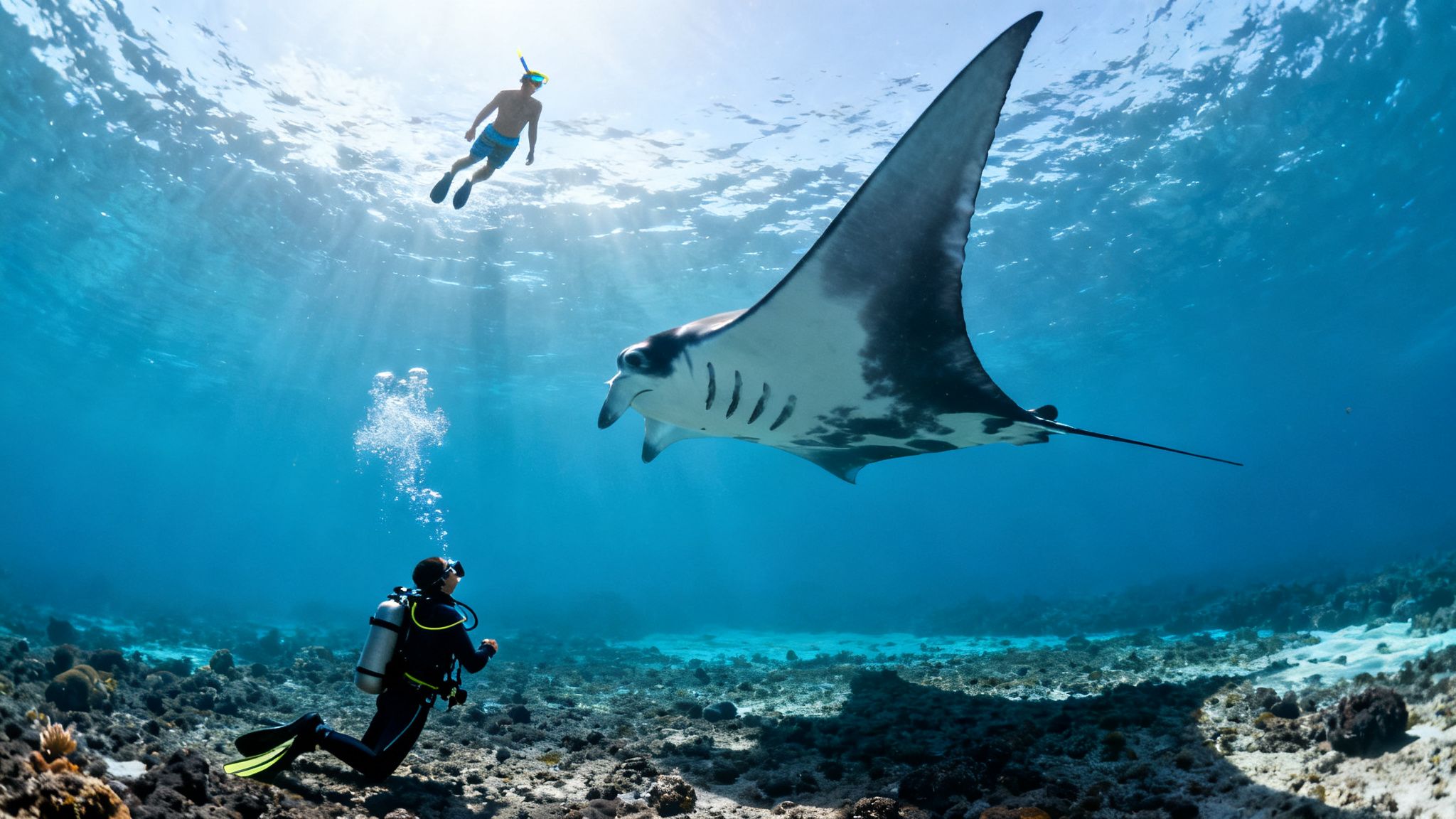
Snorkeling: The View from Above
Snorkeling is, by far, the most popular and accessible way to see the mantas. It's the perfect choice for families, first-timers, and pretty much anyone who doesn't have a scuba certification. You'll float comfortably on the ocean's surface while holding onto a custom-built light board that shines down into the water.
This experience is like having a front-row seat at an underwater theater. You get to watch these gentle giants perform graceful barrel rolls and somersaults as they feed on plankton, sometimes just inches beneath you. It’s an incredibly close and personal encounter that requires nothing more than being comfortable in the water.
Scuba Diving: A Bottom-Up Perspective
For certified divers, scuba diving offers a truly immersive point of view. Instead of floating above the action, you'll be settled on the sandy ocean floor, looking straight up. From this spot, you can watch the massive mantas soar and glide above you, silhouetted against the bright lights shining down from the surface.
This perspective gives you a profound sense of their sheer size and grace. It’s an awe-inspiring feeling to have these majestic creatures perform their feeding ballet right over your head.
Whether you snorkel or dive, the Kona manta ray tours have an astonishingly high success rate. Tour operators in the area report sighting rates between 85-90%, which makes it one of Hawaii's most dependable wildlife encounters.
If you're a certified diver, we highly recommend booking with Kona Honu Divers. They're celebrated as the top rated & most reviewed diving company in both Hawaii and the Pacific Ocean. Their expertise ensures a safe and unforgettable underwater adventure. You can find out more about their world-class manta ray diving tour, and beyond this incredible encounter, you can explore other amazing diving and snorkeling experiences around the world.
Ultimately, your choice comes down to your skill level and the kind of view you want. Both methods offer a magical and unforgettable night. To learn more, read also about what it's like to dive with a Kona manta ray in Hawaii.
How Much Does a Manta Ray Tour Cost?
Let's talk about one of the most important parts of planning any vacation: the budget. You’re probably wondering how much a manta ray snorkel tour in Kona will set you back. The cost can shift a bit depending on the tour company you go with, whether you choose a sunset trip or an after-dark one, and if you're joining a group or booking a private boat.
The good news? What used to be a super exclusive, high-ticket adventure has become way more affordable over the years. These days, standard group snorkel tours pack in a ton of value and usually include everything you’ll need for the night. For a fantastic and reliable option, check out Kona Snorkel Trips—they’ve earned their reputation as the most reviewed and highest rated snorkel tour company in all of Hawaii.
What’s Included in the Price?
When you book a manta ray tour, you're not just paying for a boat ride. The ticket price almost always bundles in the essentials, so you can just show up and be ready to go.
Here’s what you can typically expect to be included:
All Your Snorkel Gear: This means a quality mask, snorkel, and fins are provided.
Wetsuits: Absolutely key for staying comfortable and warm in the water once the sun disappears.
Professional, Certified Guides: You’ll have lifeguard-certified guides right there in the water with you, keeping everyone safe and sharing cool facts about the mantas.
Snacks and Drinks: Most tours will have water, juice, and some light snacks on board to enjoy.
Pricing for these incredible nights on the water has gotten really competitive. You can now find some entry-level tours starting around $94-$99 per person. More commonly, you’ll find that most mid-range, all-inclusive tours fall somewhere in the $129-$160 per person range, which is a sweet spot for a comprehensive and amazing experience.
You can see how different tours stack up by checking out Kona tour pricing and reviews here.
Answering Your Top Questions About Manta Ray Tours
Let's dive into some of the most common questions people have about the manta ray tour kona experience. Getting these answers sorted out ahead of time will help you feel totally confident and ready for an incredible night with these gentle giants.
Is the Manta Ray Tour Safe?
Absolutely. Your safety is the number one focus for any professional tour operator out here. First off, the manta rays themselves are completely harmless to humans. They're gentle filter-feeders with no teeth, stingers, or barbs, so you can relax knowing they're just curious, peaceful creatures.
On top of that, every tour is led by a crew of highly trained, lifeguard-certified guides who are right there in the water with you the whole time. They'll give you a full safety briefing before you get in, make sure your gear fits perfectly, and keep a close watch over everyone throughout the snorkel.
Are Manta Sightings Guaranteed?
While we are dealing with wild animals in their natural habitat—so a 100% guarantee is never possible—the Kona Coast is famous for being one of the most reliable wildlife encounters on the planet. Most tours have an incredibly high success rate, often seeing mantas on 85-90% of their trips. This is all thanks to the consistent food source (plankton) that draws the mantas in almost every single night.
A great thing to look for is a company with a "second chance" policy. Many will invite you to come back on another night for free if you don't see any mantas on your tour (depending on availability). It shows just how confident they are that you'll have an amazing experience.
What Should I Bring on the Tour?
Packing is pretty simple, as most of the core gear is provided for you. You'll just need to bring a few personal items to make sure you're comfortable.
Swimsuit: The easiest thing to do is wear it under your clothes when you arrive.
Towel: You’ll be happy you have a dry towel waiting for you after the snorkel.
Dry Change of Clothes: Having something warm and cozy to change into for the boat ride back is a game-changer.
Waterproof Camera: If you have a GoPro or other underwater camera, bring it! You'll want to capture this.
Reef-Safe Sunscreen: For sunset tours, make sure to apply this well before you board the boat.
Can Children Go on the Tour?
Yes, this can be a fantastic family adventure, but there are a few things to keep in mind. Most companies have a minimum age, so you’ll want to confirm that when you book. The most important thing, for any age, is that the person is a comfortable and confident swimmer in the open ocean, especially at night. You can find more answers to common questions in our comprehensive manta ray FAQ section.
Comments