Manta Rays at Night Big Island: Swim Guide - manta rays at night big island
Imagine floating in the warm, dark Pacific while giant, shadowy figures perform an underwater ballet just inches beneath you. This is the mesmerizing reality of snorkeling with manta rays at night on the Big Island. The Kona coast isn't just a good spot for this; it's world-renowned as one of the best places on Earth for this encounter, making it a must-do Hawaiian adventure.
Your Guide to an Unforgettable Night with Gentle Giants
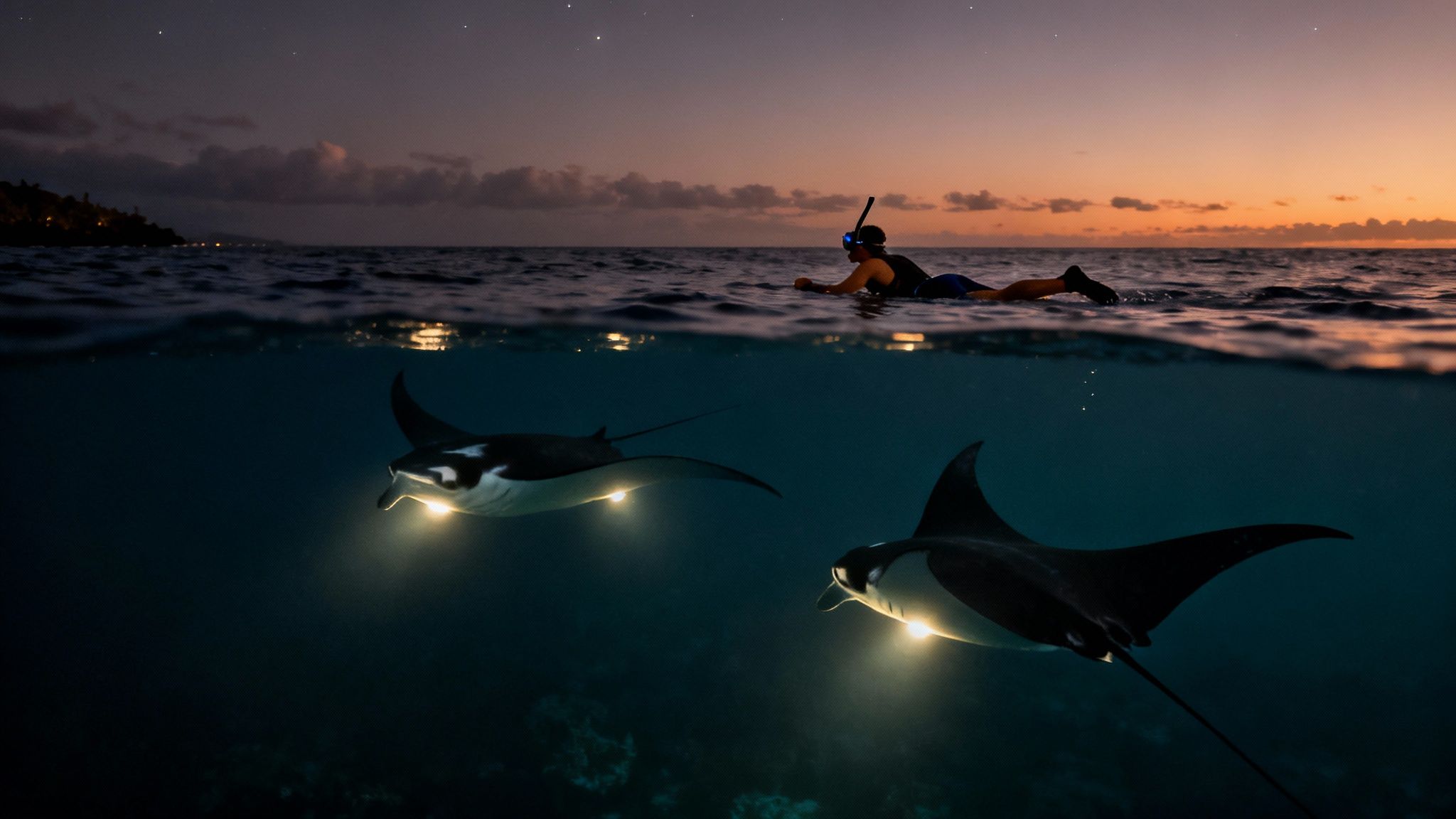
The manta ray night snorkel is consistently ranked among the most memorable activities in Hawai‘i, and for good reason. It’s an otherworldly experience that puts you right in the middle of one of the ocean's most majestic and gentle creatures in their natural feeding environment.
This guide is here to walk you through every aspect of this incredible journey. We'll break down everything you need to know—from what the tour actually feels like to how to choose the right one for your adventure. The goal is to turn any questions you have into pure confidence, ensuring you feel fully prepared to witness this natural wonder.
Why Is Kona the Perfect Place for Manta Rays?
The Kona coast of the Big Island has a unique combination of features that create a perfect sanctuary for reef manta rays (Mobula alfredi). This nightly spectacle isn't just a random occurrence; it's a specific ecological phenomenon that happens like clockwork.
Calm, Sheltered Bays: Locations like Manta Village and Manta Heaven are protected from the strong open-ocean currents. This creates calm conditions that are ideal for both snorkelers and the mantas themselves.
Abundant Plankton: These calm waters are rich in plankton, the microscopic organisms that manta rays love to eat. This reliable food source keeps the local manta population coming back night after night.
A Learned Behavior: It all started decades ago when a hotel first shined bright lights into the water, which attracted plankton. The local manta rays learned to associate the light with an easy meal—a behavior that tour operators now replicate responsibly.
This unique setup has fostered a thriving, resident population of over 450 identified manta rays, each with unique belly markings that act like a fingerprint. You can find more fascinating details in our full collection of articles about the Kona manta ray night snorkel.
What Makes This Experience So Special?
Swimming with manta rays at night is more than just another activity; it’s a profound connection with nature. Unlike many wildlife encounters, this one happens completely on the animals' terms. You simply float and watch as they gracefully glide, swoop, and perform barrel rolls to filter plankton from the water, often coming within inches of you.
This encounter is a powerful reminder of the ocean's magic. The silence, the darkness, and the gentle movements of these enormous creatures create a feeling of awe that stays with you long after you've returned to shore.
For those ready to dive deeper into this incredible experience, premier local operators like Manta Ray Night Snorkel Hawaii offer expertly guided tours that prioritize both your safety and the well-being of the mantas.
What to Expect on Your Manta Ray Night Snorkel Adventure
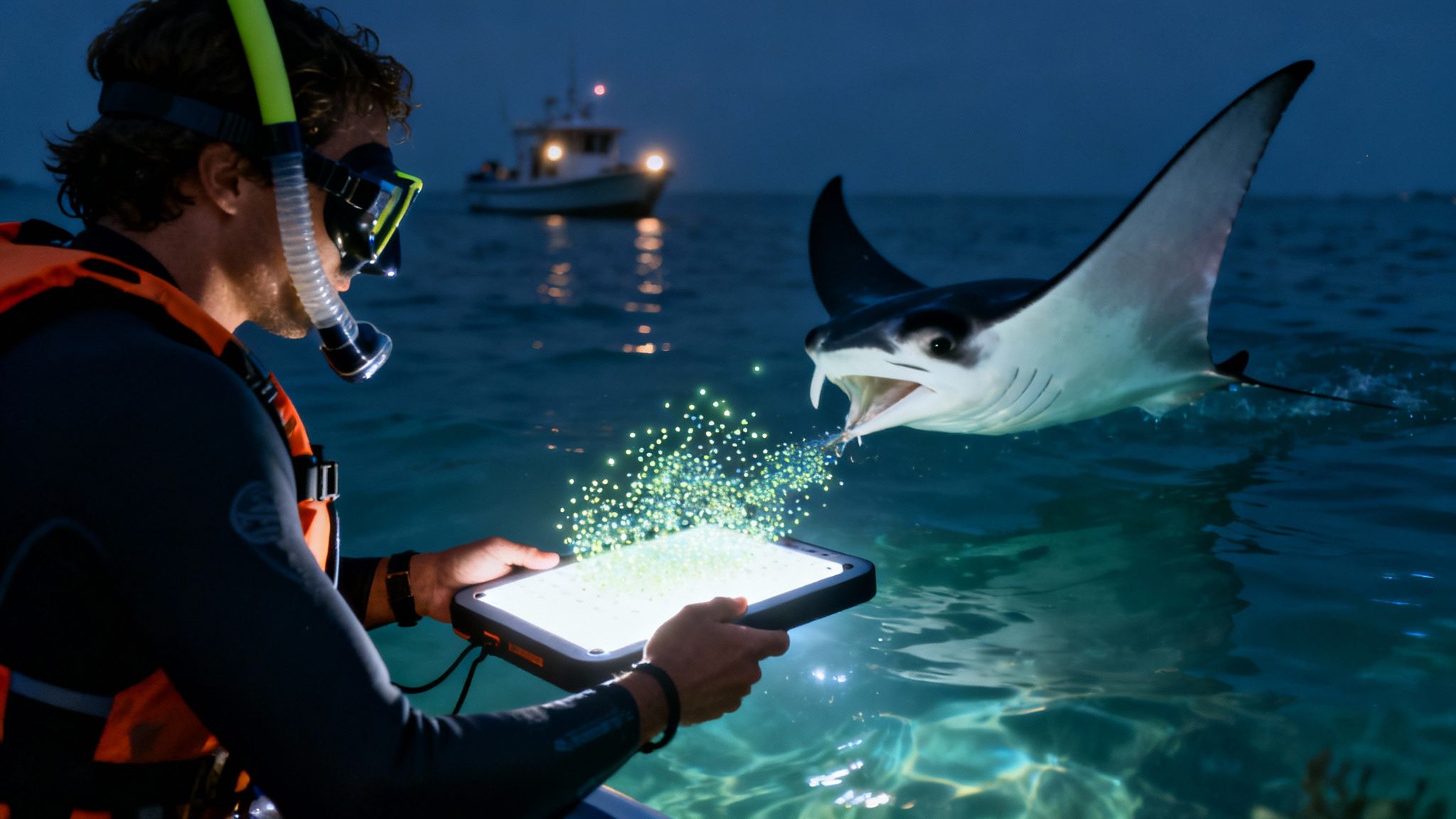
Your journey into the world of manta rays at night on the Big Island doesn't start in the ocean, but at a local harbor. This is where the magic begins. You'll get a warm welcome and meet the lifeguard-certified guides who are genuinely excited to share this incredible experience with you.
Before you even see the boat, you'll get a full rundown of the evening. The guides will walk you through the plan, show you how to use the snorkel gear, and share some fascinating facts about the gentle giants you’re about to meet. It’s the perfect time to ask any questions and shake off any nerves.
The Boat Ride and Setting the Stage
Once you're briefed and ready, it's time to board the boat for a short cruise along the stunning Kona coast. If you're on a sunset trip, this is a show in itself. Watching the sun dip below the horizon, lighting up the sky in brilliant colors from the water, is an unforgettable part of the adventure.
When you arrive at one of the famous manta spots, the crew gets to work setting up the main event. They’ll place a custom-designed light board or a set of powerful underwater lights into the water. This is the secret ingredient. The brilliant light acts like a magnet, attracting huge clouds of microscopic phytoplankton—the manta rays’ favorite meal.
Essentially, the crew is setting a glowing dinner table for the mantas. This beacon in the dark ocean signals to the local manta population that their nightly buffet is open for business. It’s a beautifully simple and effective way to bring the mantas right to you for a natural feeding display, without ever disturbing them.
Your Front-Row Seat to an Underwater Ballet
Now for the moment you’ve been waiting for. You’ll gently slide into the warm Pacific, wearing a wetsuit that helps with both warmth and buoyancy. From there, you'll hold onto the floating light board, which gives you a stable spot to float and a perfect, front-row seat.
As you float on the surface and gaze down into the illuminated circle below, the first dark shapes will emerge from the deep. These are the majestic manta rays, some with wingspans reaching up to 12 feet, gliding effortlessly into the light. They perform an incredible underwater ballet, swooping and barrel-rolling with their huge mouths wide open to filter the plankton from the water.
The feeling is truly surreal. One minute, you're floating in the quiet darkness of the ocean, and the next, a creature the size of a small car is gracefully soaring just inches beneath you. You just hold on and watch the breathtaking show unfold.
This entire encounter is designed to be completely safe for both you and the mantas. The "look, don't touch" rule is strictly followed to protect the rays' delicate skin. For a world-class experience, consider an operator like Kona Snorkel Trips. They are the most-reviewed and highest-rated snorkel company in Hawaii for a reason, excelling at safe, educational, and truly unforgettable tours.
Along the Kona Coast, at famous spots like 'Manta Village' and 'Manta Heaven,' these night snorkel tours have an incredible 85-90% success rate for manta ray sightings all year round. This makes the Big Island one of the most reliable places on the entire planet for this kind of encounter. It's common for snorkelers to see an average of three mantas on a tour, mesmerized as they loop just inches away.
To get the absolute most out of your trip, check out our guide on 7 essential tips for your Kona manta ray snorkel.
Getting to Know Kona's Resident Manta Rays
When you slip into the warm, dark waters for a manta ray night snorkel on the Big Island, you’re not just seeing wildlife passing through. You’re actually meeting the locals. The Kona coast is home to a special, non-migratory community of reef manta rays, and many of them have been swimming here for decades.
This isn’t just another snorkeling trip; it’s an introduction to a fascinating underwater society. The experience becomes so much richer when you realize the manta gliding beneath you might be "Lefty," "Big Bertha," or another well-known resident that local guides have known for years.
The Manta Ray Fingerprint
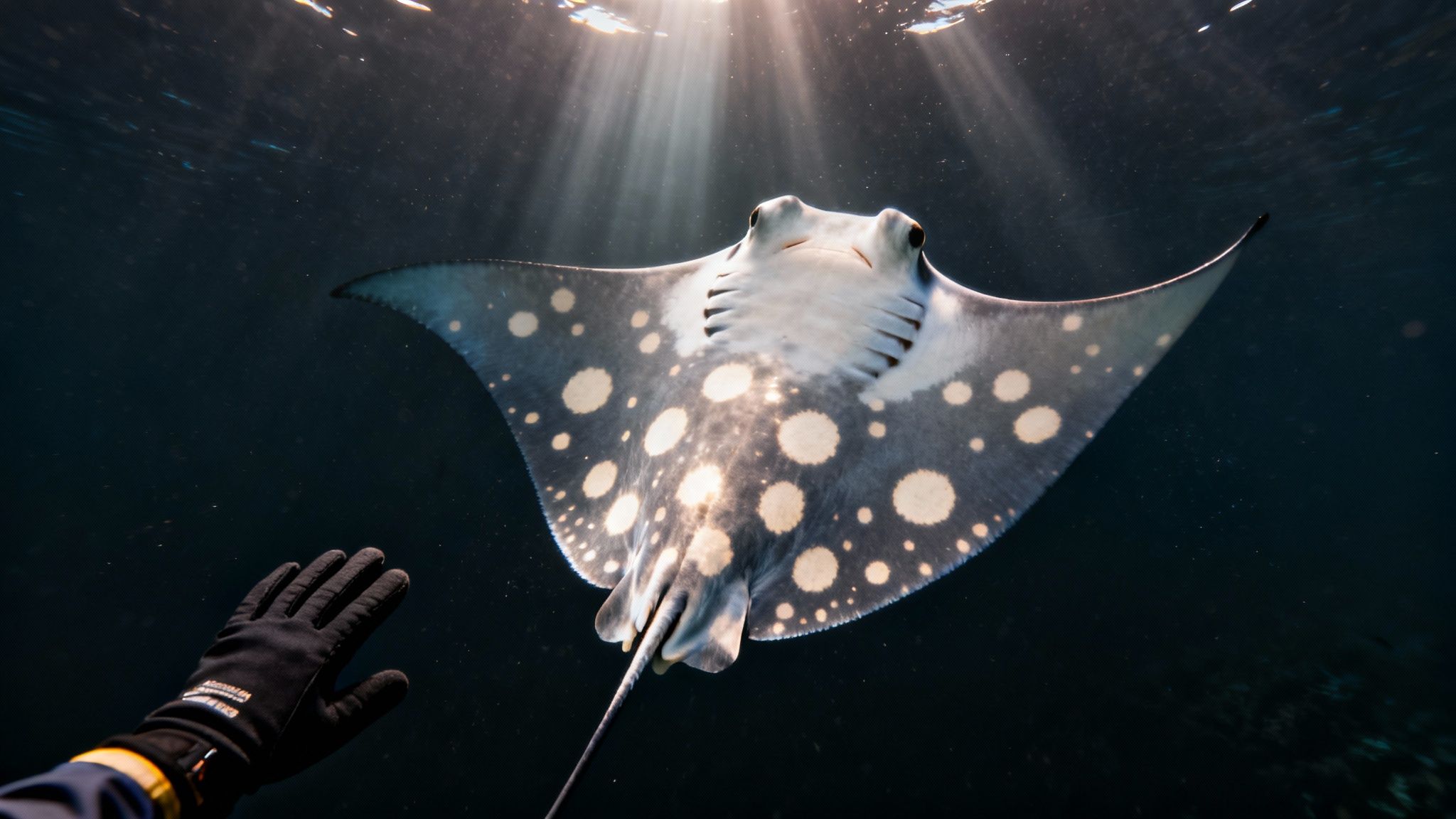
So, how can anyone possibly tell these graceful creatures apart? It’s all in the belly spots.
Each manta ray has a completely unique pattern of black spots on its white underside, just like a human fingerprint. No two are ever the same.
This is how researchers and local conservation groups track individuals. Using a technique called photo-identification, they snap pictures of the mantas' ventral sides (their bellies) to build a database of every known ray in the area. It’s an incredible tool that helps them monitor the population's health, movements, and lifespans.
This cataloging transforms your snorkel from a simple wildlife viewing into a chance to meet a known individual. You might be watching a manta ray that was first identified decades ago, turning a fleeting moment into a connection with a long-term resident of these waters.
To give you a better idea of who you'll be meeting, here's a quick look at Kona's resident reef manta rays.
Kona's Reef Manta Rays at a Glance
Characteristic | Details |
|---|---|
Scientific Name | Mobula alfredi |
Population Size | A community of over 450 cataloged individuals. |
Wingspan | Up to 12 feet (about 3.6 meters). |
Lifespan | Can live up to 50 years or more. |
Diet | Filter feeders that consume tiny zooplankton. |
Key Feature | Unique black spot patterns on their white bellies. |
Conservation Status | Listed as Vulnerable by the IUCN. |
Seeing these details, you start to understand that you're not just swimming with fish; you're encountering a specific, well-studied, and protected community of magnificent animals.
Gentle Giants of the Sea
Despite their impressive size, Kona’s manta rays are completely harmless. It’s a common mistake to confuse them with their distant cousins, the stingrays, but they couldn't be more different in temperament.
Here’s why they pose absolutely no threat to snorkelers:
No Stingers: Manta rays do not have the sharp, venomous barb on their tail that stingrays have. Their tails are smooth and harmless.
No Teeth: They are filter feeders, which means they don’t have teeth for biting or chewing. Their enormous mouths are designed to gulp huge volumes of water and filter out microscopic plankton.
Gentle Demeanor: Their behavior around humans comes from curiosity and a focus on feeding, not aggression. They are intelligent and inquisitive, but their interest is in the plankton attracted by the lights, not the people watching them.
This gentle nature is what allows for the incredible, up-close encounters that make the Kona manta ray snorkel so famous. They are completely focused on the "plankton buffet," often swooping and gliding within inches of you without any ill intent. For a deeper look into their world, check out these fun facts about manta rays you should know.
By understanding who these animals are, the snorkel becomes a much more profound and meaningful connection with one of the ocean’s most incredible inhabitants.
Why This Is the Must-Do Adventure on the Big Island
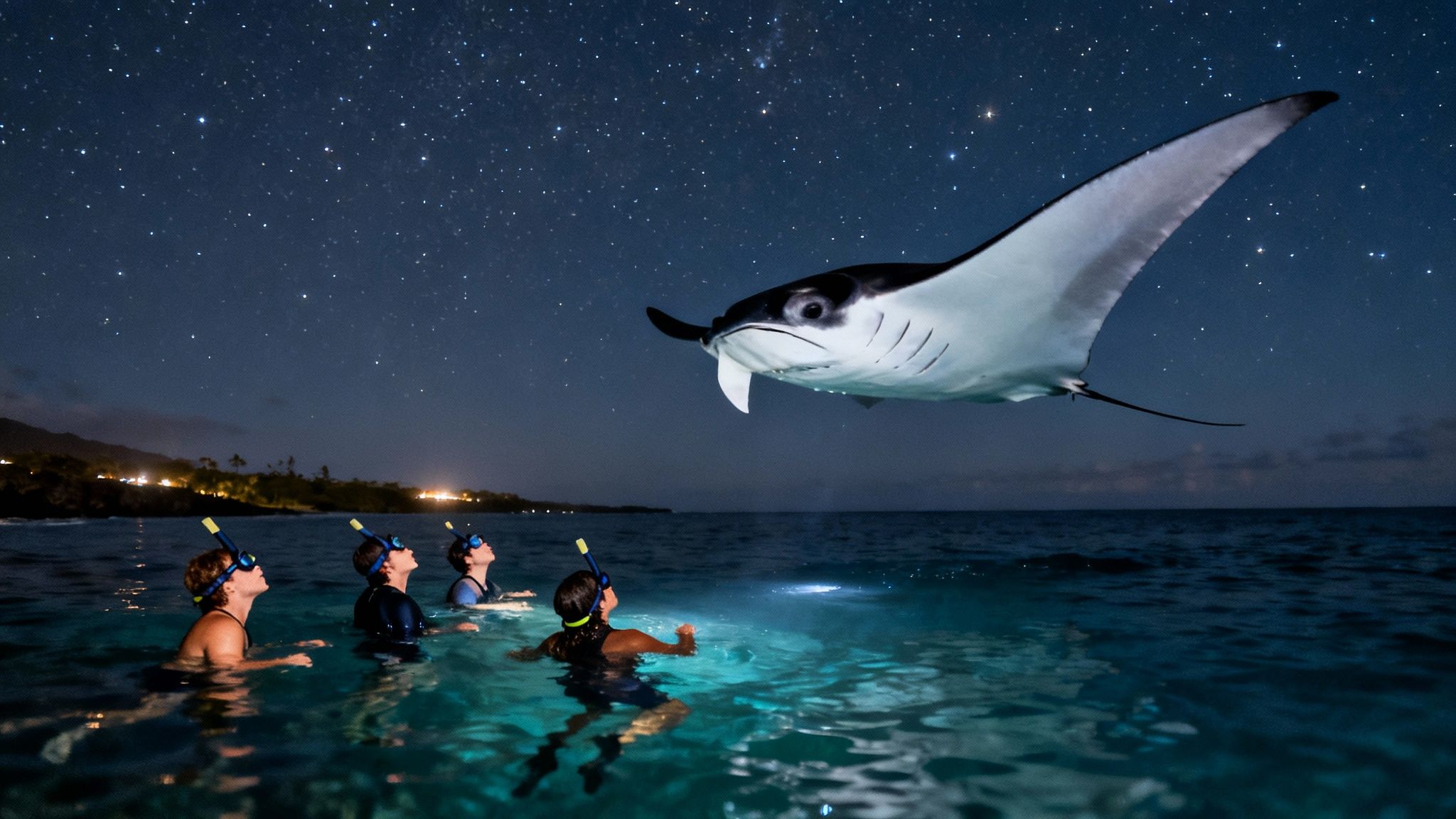
Out of all the incredible things you can do in Hawai‘i, snorkeling with manta rays at night on the Big Island is in a league of its own. It's so much more than just another tour—it’s where thrill, beauty, and a sense of purpose all collide, rightfully earning its spot as one of the most iconic experiences in the Pacific.
So what's the big deal? What makes this one encounter so special? It’s the raw, unfiltered magic of nature combined with a surprisingly deep emotional connection. It's honestly hard to find the right words to describe the feeling of a massive, gentle creature gliding silently just inches below you, performing a graceful underwater ballet.
It's a moment of pure, humbling awe. You aren't just watching from the sidelines; you're right there, a quiet observer floating on the surface of their world, completely immersed in their nightly feeding ritual.
A Unique Thrill for Everyone
One of the coolest things about the manta ray night snorkel is how it hits home for just about everyone. It dishes out a genuine sense of adventure that makes it the perfect centerpiece for any Big Island trip, no matter who you’re traveling with.
For Families: This is a memory-maker, plain and simple. Kids and teens get a real-life lesson in marine biology and conservation that no classroom or documentary can ever match.
For Couples: Looking for a date night with a serious wow factor? Sharing the quiet wonder of this underwater spectacle under the stars is about as unique and romantic as it gets.
For Solo Adventurers: It’s a chance to connect with nature on a profound level and share a singular experience with a small group of fellow explorers. Floating in the dark ocean watching these giants is both meditative and wildly exhilarating.
No matter your reason for being there, the encounter leaves a mark. It’s that rare activity that manages to be both heart-pounding and incredibly peaceful all at once.
More Than a Tour—It's an Act of Conservation
Here’s the best part: when you choose to snorkel with manta rays in Kona, you’re doing more than just having an amazing time. You’re directly helping to protect them. This whole experience is a powerful example of how responsible tourism can fund critical conservation work.
Reef mantas have been listed as Vulnerable by the IUCN since 2013, threatened by fishing and the loss of their habitats. The nightly tours here on the Big Island create a unique opportunity for researchers to keep an eye on them. Guides and videographers collect data that helps track the health and movements of Kona’s local manta population, which is crucial for protecting them.
Your ticket helps fuel this entire positive cycle. It shows that a living manta ray is far more valuable than a dead one, encouraging sustainable practices over destructive ones. You can learn more about the research your visit supports from the Manta Trust's ongoing studies.
By simply showing up and following the "no-touch" rule, you are actively supporting the resilience of this incredible species. It transforms your vacation into a meaningful act of marine stewardship.
This perfect blend of adventure, wonder, and purpose is what makes swimming with manta rays at night on the Big Island an absolute must-do. It’s your chance to witness something truly extraordinary and leave the ocean a little better than you found it.
How to Choose Your Perfect Manta Ray Tour
Deciding to go snorkeling with manta rays at night on the Big Island is the easy part. The real fun begins when you choose the perfect tour for you. With a few fantastic options on the table, knowing the key differences will take your experience from just "good" to absolutely unforgettable.
Not all manta ray tours are the same. The main choices you'll make boil down to timing—do you want a sunset cruise or a true after-dark adventure?—and the size of the tour boat. Each option has its own unique vibe, and the right one really just depends on your personal style and what you're hoping to get out of this incredible night.
Sunset Tour vs After-Dark Tour
The biggest decision you'll face is whether to catch the first trip of the evening, which includes the sunset, or a later tour that happens in total darkness. Both tours offer amazing opportunities to see the mantas, but the overall feel is completely different.
A sunset tour is like getting a two-for-one special on Hawaiian magic. You’ll cruise out along the stunning Kona coastline while the sun puts on a show, painting the sky with brilliant colors. It adds a beautiful, relaxing boat trip to the adventure before you even slip into the water. Once dusk settles in, the lights come on, and the manta ballet begins. This is a fantastic choice for families or anyone who wants to soak in a classic Hawaiian sunset from the best seat in the house: the ocean.
On the other hand, an after-dark tour is for those who want a pure, immersive ocean experience under the stars. You’ll head out when the world is quiet and dark, with the focus aimed squarely on the underwater world below. The darkness makes everything feel more mysterious and really amplifies the magic of the glowing light board as the graceful mantas emerge from the deep. Sometimes, the later trips benefit from more plankton gathering, which can lead to even more active feeding shows.
Comparing Your Tour Timing Options
To help you figure out what's best for you, let's break down the key features of each tour. Think about what you value most: the scenic views, the overall atmosphere, or just maximizing your time watching the mantas.
If you want to dive deeper, we have a complete comparison of sunset vs night manta ray tours that breaks it all down.
Sunset Tour vs After-Dark Tour: Which Is Right for You?
A comparison to help you choose the best time for your Big Island manta ray snorkel adventure.
Feature | Sunset Tour | After-Dark Tour |
|---|---|---|
Departure Time | Late afternoon, just before the sun sets. | After dark, often the second trip of the night. |
Primary Ambiance | A scenic and often breathtaking sunset cruise. | A true nocturnal adventure under a canopy of stars. |
Bonus Sightings | You get beautiful views of the Kona coastline in daylight. | The focus is entirely on the underwater light show. |
Best For | Travelers who want to combine a beautiful cruise with the manta encounter. | Night owls and those seeking a more focused, immersive experience. |
After weighing the pros and cons, the choice really comes down to personal preference. Both timings offer a front-row seat to one of nature's most incredible spectacles.
Small Group vs Large Boat: The Intimacy Factor
Another key thing to think about is the size of your tour group. While bigger boats can be quite stable and offer more amenities, there's a huge advantage to choosing an operator that keeps things small and personal.
A smaller tour provides a more intimate and personal encounter. With fewer people in the water, you get more space to float comfortably and an unobstructed view of the manta rays. Guides can offer more one-on-one attention, answer your questions, and ensure everyone feels safe and confident.
Choosing a company that prioritizes small groups, like Kona Snorkel Trips, can make a world of difference. As the most reviewed and highest-rated snorkel tour company in Hawaii, they have perfected the art of creating a safe, educational, and genuinely personal connection with the mantas. You can check out their highly-regarded manta ray snorkel tour in Kona to see for yourself what makes a small-group experience so special.
Ultimately, the perfect tour is the one that fits your vision for this bucket-list adventure. Whether you opt for a stunning sunset cruise or a mysterious journey after dark, you're in for an experience you'll never forget.
Common Questions About Night Snorkeling with Manta Rays
Getting ready for a manta ray night snorkel on the Big Island is thrilling, but it's totally normal to have a few questions before you jump in. Feeling prepared is the best way to relax and really soak in this once-in-a-lifetime experience. We've put together answers to the most common questions we hear, so you can feel confident and know exactly what to expect.
We'll cover everything from swimming skills and safety to what you should pack and what happens on the rare night the mantas are a no-show.
Do I Need to Be an Expert Swimmer to Do This?
This is easily the question we get asked the most. The good news is, you definitely don't need to be an Olympic swimmer! You do, however, need to have basic swimming skills and be comfortable in the open ocean. Keep in mind, this tour happens after dark in the Pacific, which can feel a little intimidating if you're not used to it.
Your safety is the top priority for any reputable tour operator, and they provide gear to help you feel secure. You’ll be given a wetsuit, which makes you incredibly buoyant and helps you float effortlessly. Plus, you’ll be holding onto a large, custom-made light board for the whole snorkel. This means you won't be treading water at all—just floating peacefully on the surface.
That said, you must be able to swim from the boat to the light board and back again without assistance, and most importantly, you need to be able to stay calm in the water. Lifeguard-certified guides are always watching over you, but your personal comfort in the ocean is key to a great time.
Is the Manta Ray Night Snorkel Safe?
Yes, absolutely. When you go with a professional, well-established company, the manta ray night snorkel is a very safe activity. For every legitimate operator in Kona, safety is priority number one, and you're in the hands of trained professionals from start to finish.
Here’s how they keep you safe:
Certified Guides: Every trip is led by guides who are lifeguard certified and trained in first aid, CPR, and ocean rescue. They are constantly scanning the group and watching the ocean conditions.
Thorough Briefings: Before anyone gets in the water, you'll get a detailed safety briefing. They’ll cover how to use your gear, how to float at the light board, and the rules for interacting respectfully with the mantas.
High-Quality Gear: You'll be outfitted with top-notch equipment. This includes warm, buoyant wetsuits, sanitized masks and snorkels, and stable light boards that are easy to hold.
Gentle Giants: And what about the mantas? They are completely harmless. Manta rays are filter feeders, meaning they don't have teeth, stingers, or barbs. They are only interested in the plankton attracted to the lights and are famous for being gentle and graceful around people.
The single most important safety rule is to listen to your guides and follow their instructions. They’re the experts out there, looking out for both you and the mantas.
What Should I Bring on the Tour?
The great thing is, your tour operator provides all the essential gear you need to get in the water—the wetsuit, mask, snorkel, and fins are all included. But you’ll want to bring a few personal items to make your trip more comfortable.
Here’s a quick packing list:
A Towel: A must-have for drying off after your swim.
Warm, Dry Clothes: Even in Hawai‘i, the boat ride back can feel brisk after you’ve been in the water. A sweatshirt or light jacket will feel like a warm hug.
Motion Sickness Remedy: If you’re prone to seasickness, it's a smart move to take something before the tour starts (always follow your doctor's advice). It's better to be safe than sorry!
Reusable Water Bottle: Always a good idea to stay hydrated.
Underwater Camera: Got a GoPro? Bring it! You'll want to relive this. Just make sure it has a wrist strap so it doesn't end up on the ocean floor.
It's best to leave valuables like jewelry or anything that isn't waterproof locked up safely on shore.
What Happens if We Do Not See Any Manta Rays?
Manta rays are wild animals, and like any wildlife experience, sightings can never be 100% guaranteed. The good news is that the Kona coast is one of the most reliable places on the planet to see them. Top tour operators have an incredible success rate, often between 85% and 90% all year long.
On the unlucky chance that the mantas decide to skip dinner during your tour, most reputable companies offer a "Manta Guarantee." This fantastic policy means you can come back and try again on another night for free, based on availability. It's a testament to their confidence and their commitment to making sure you have an amazing experience.
Always double-check the specific "Manta Guarantee" policy with your tour operator when you book. A pro tip is to schedule your manta snorkel early in your trip, giving you plenty of time to reschedule if needed.
For even more detailed information, we've compiled a comprehensive list that addresses many other specific concerns. You can explore our full Manta Ray FAQ to get answers to all your questions.
Ready for an adventure you'll never forget? Kona Snorkel Trips is the most reviewed and highest rated snorkel tour company in Hawaii, offering an unparalleled manta ray night snorkel. Their expert guides and small group sizes ensure a safe, personal, and magical experience. Book your tour today and prepare to be amazed.
Comments