Manta Rays Big Island: Manta Ray Kona Night Snorkel Guide
Imagine this: you're floating in the warm, dark Pacific waters off the Kona coast. Below you, giant, graceful shadows glide through the water like underwater birds. This isn't a nature documentary—it's the world-famous Big Island manta ray night snorkel, and this guide is your ticket to making it happen.
Your Ultimate Guide to the Big Island Manta Ray Experience
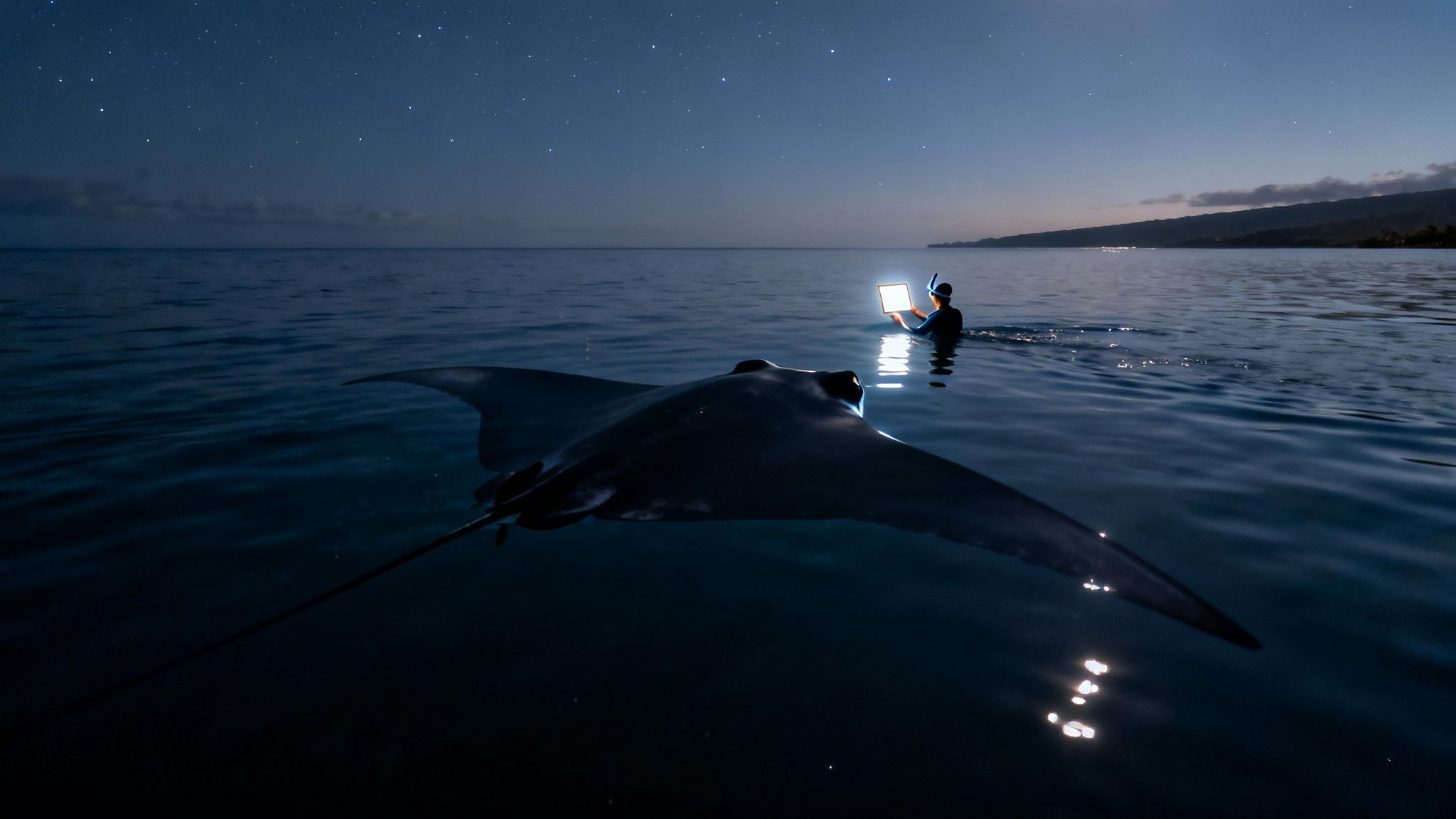
The Kona coast isn't just another pretty spot in Hawaii. It is, without a doubt, the single best place on the entire planet to have a close encounter with manta rays. While other destinations might offer a slim chance of a sighting, Kona delivers a spectacular show almost every single night.
So what's the secret? It’s a perfect storm of geography and behavior. The island's coastline creates calm, sheltered bays, and over decades, a resident population of reef manta rays has figured something out: light means food. This incredible learned behavior results in a nightly "manta ballet," a mesmerizing feeding frenzy that has become one of Hawaii's most iconic adventures. Learn more at Manta Ray Night Snorkel Hawaii.
Why Kona Is the Premier Manta Ray Destination
The consistency of sightings here is just off the charts. On any given night, snorkelers have an 85-90% chance of seeing these gentle giants, a statistic that firmly cements Kona's reputation as the world's top manta ray hotspot.
This isn't just marketing hype; it's backed by years of real-world data from the dive sites where mantas gather nightly, drawn to the tour boats' lights that attract their favorite food—plankton.
To put it simply, several key ingredients come together to make Kona the undisputed champion for manta encounters.
Why Kona is the World's Best Manta Ray Destination
Factor | Significance |
|---|---|
Resident Manta Population | A community of over 240 identified mantas lives here year-round, not just passing through. |
Calm, Sheltered Bays | The Kona coast is protected from major ocean swells, creating ideal and safe conditions for snorkeling. |
Learned Feeding Behavior | The mantas have been conditioned to associate light with a concentrated plankton buffet. |
High Sighting Reliability | The 85-90% success rate is unmatched anywhere else in the world. |
Established Eco-Tourism | A well-regulated and knowledgeable tour industry ensures safe and respectful encounters. |
This unique combination of natural and behavioral factors means you’re not just hoping to see a manta ray; you’re practically guaranteed an unforgettable experience.
In this guide, we'll walk you through everything you need to know to get in the water with these amazing animals. We'll cover:
How to pick the perfect manta ray tour for your style and budget.
What really happens from the moment you step on the boat.
How your visit actually helps protect these gentle giants for the future.
Experiencing the manta rays of the Big Island is so much more than a tour. It’s a genuine connection with one of the ocean's most magnificent creatures. Get ready for a night you'll never forget.
Meet Kona's Famous Resident Manta Rays
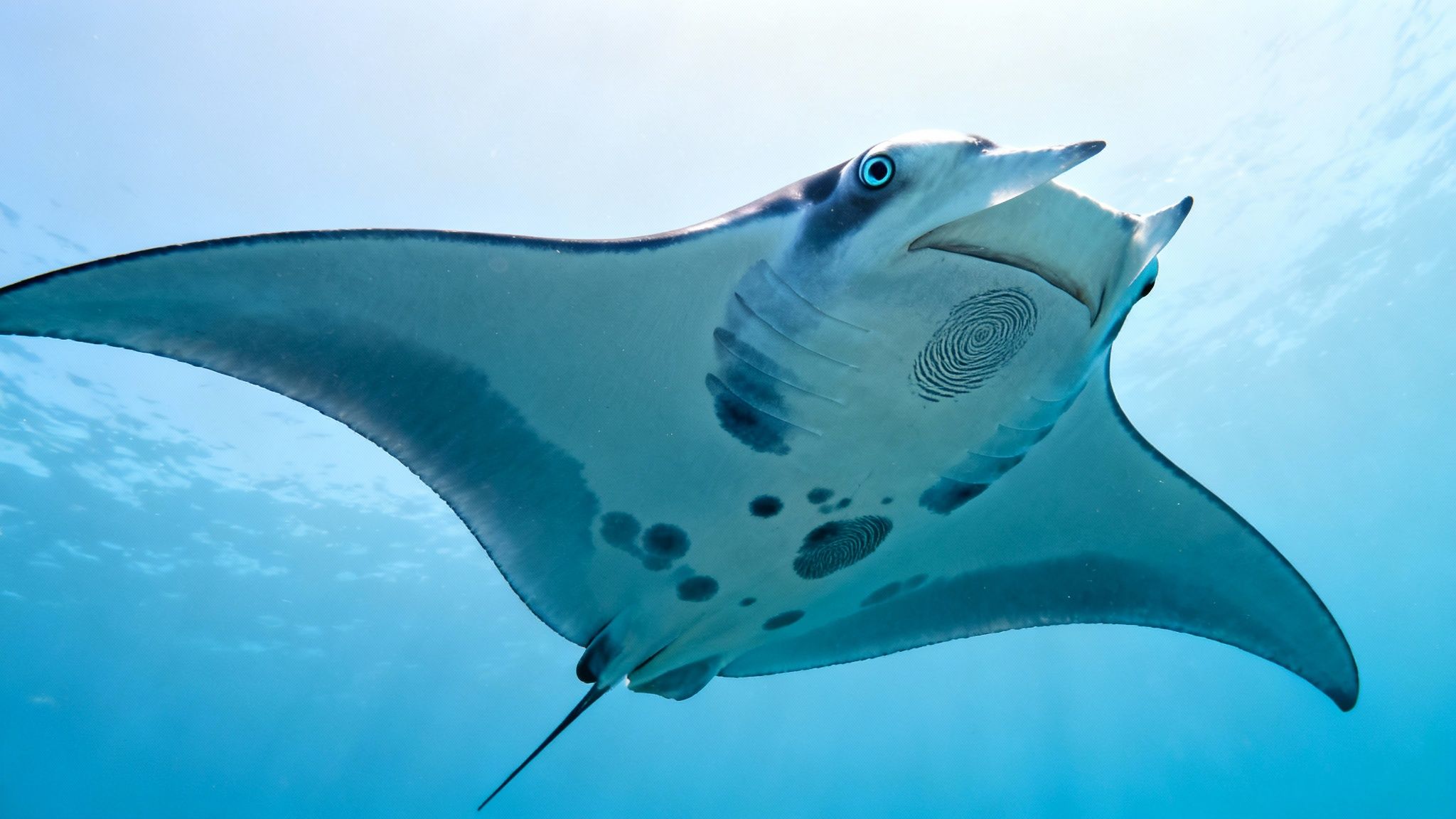
When you slip into the water for a manta ray night snorkel, you’re not just seeing some random fish passing through. You are actually meeting the locals—a well-known, resident population of reef manta rays (Mobula alfredi), many of whom have been swimming these waters for decades.
This isn’t just an animal sighting; it’s more like a personal introduction.
These gentle giants are part of an intimate community living right here along the Kona coast. Each one has a completely unique pattern of black spots on its belly, which works just like a human fingerprint. This allows scientists and guides to identify, name, and track individual mantas over their lifetimes.
A Community You Can Recognize
Knowing that you can identify individual manta rays on the Big Island completely changes the experience. Instead of just seeing a manta ray, you might be meeting Lefty, a famous local known for his damaged cephalic fin, or even Big Bertha, one of the largest and most recognized females in the area.
This personal connection turns a beautiful spectacle into a meaningful interaction with a cherished local celebrity. You're getting a front-row seat to the nightly lives of creatures with distinct personalities and histories. For a deeper dive, check out some more fun facts about manta rays you should know.
This consistent, year-round presence is what makes Kona so special. The mantas aren't just migrating through; they live and feed right here. Every night is a potential reunion.
The Science of the Manta Ballet
The mesmerizing "manta ballet" you'll witness is a beautiful example of learned behavior. Over the years, the mantas have figured out that the bright lights from our tour boats attract a concentrated buffet of their favorite food: plankton.
This creates a reliable and absolutely spectacular feeding frenzy every single night.
This isn't a chance encounter; it's a predictable, nightly gathering rooted in a unique ecological relationship. The mantas gracefully perform barrel rolls to scoop up as much plankton-rich water as possible, putting on an unforgettable show for snorkelers floating just above.
And how big is this local population? It's surprisingly intimate. Since 1979, researchers have meticulously identified exactly 318 unique individuals along the Kona coast through photo-identification. It's a tight-knit community, making their protection all the more critical.
How To Choose Your Perfect Manta Ray Tour
Picking the right tour is probably the biggest decision you'll make for your manta ray adventure. It really sets the stage for the whole experience. When you boil it down, the main choice comes down to one simple question: do you want to snorkel on the surface, or are you a certified scuba diver who wants to see them from below?
Both options are incredible, but they offer totally different ways to see the nightly manta ballet.
Snorkeling is, by far, the most popular and accessible way to see the mantas. You'll float comfortably on the surface, holding onto a specially designed light board. This board is like a giant dinner bell for the mantas—it attracts plankton, their favorite food. As the mantas swim up from the dark water to feed, you get a perfect bird's-eye view, watching them swoop, glide, and do barrel rolls just inches below you. It's a surreal, up-close experience that just about anyone can do.
Finding the Best Manta Snorkel Tour
If you decide snorkeling is for you, the tour operator you choose can make or break the night. You really want to go with a company that has a stellar reputation for safety, has expert guides who love what they do, and genuinely respects the ocean and these animals.
When it comes to seeing the manta rays on the Big Island, one company truly sets the bar.
We always recommend Kona Snorkel Trips. Why? Because they are the most reviewed and highest-rated snorkel tour company in all of Hawaii. Their reputation speaks for itself. They consistently deliver amazing, safe, and educational trips that leave you with a real connection to these gentle giants. Booking with a top-notch operator like them ensures your night is unforgettable and supports the local companies doing things the right way.
The Scuba Diving Perspective
Now, if you’re a certified scuba diver, a whole other world opens up. Instead of floating on the surface looking down, you'll be settled on the sandy ocean floor, looking up.
Imagine watching these massive, graceful creatures soaring just above your head like silent stealth bombers against the glow of the lights. It's an absolutely awe-inspiring viewpoint that makes you feel like you're truly a guest in their underwater world.
For this kind of unique adventure, you absolutely need a dive operator with a flawless safety record and who knows these dive sites like the back of their hand. For an unforgettable dive with the manta rays of the Big Island, we recommend Kona Honu Divers. They are celebrated as the top-rated and most-reviewed diving company not just in Hawaii, but in the entire Pacific Ocean. Their expertise guarantees a safe and spectacular underwater show. To learn more, check out our guide to the 12 best manta ray snorkel tours in Kona.
No matter which you choose, the best tours share common traits: small group sizes for a more personal experience, knowledgeable guides who are passionate about conservation, and a steadfast commitment to Manta-SMART guidelines to protect the animals. Your investment goes beyond a simple boat trip; it becomes a direct contribution to preserving this incredible natural wonder.
What To Expect On Your Manta Ray Night Snorkel
Knowing exactly how a manta ray night snorkel works can turn any pre-trip jitters into pure excitement. The entire adventure is designed to be safe, comfortable, and totally mesmerizing. It’s a well-oiled machine from start to finish, so let’s walk through what your evening will look like.
Most tours kick off about an hour before sunset at one of the Kona-area harbors. You’ll check in, hop aboard the boat, and get treated to a spectacular coastal cruise as the sun dips below the horizon. During the ride, the crew will give you a full safety briefing. They cover everything—how to use the gear, the do's and don'ts of manta etiquette (rule #1: no touching!), and what to expect once you’re in the ocean.
Entering the Water and the Light Board
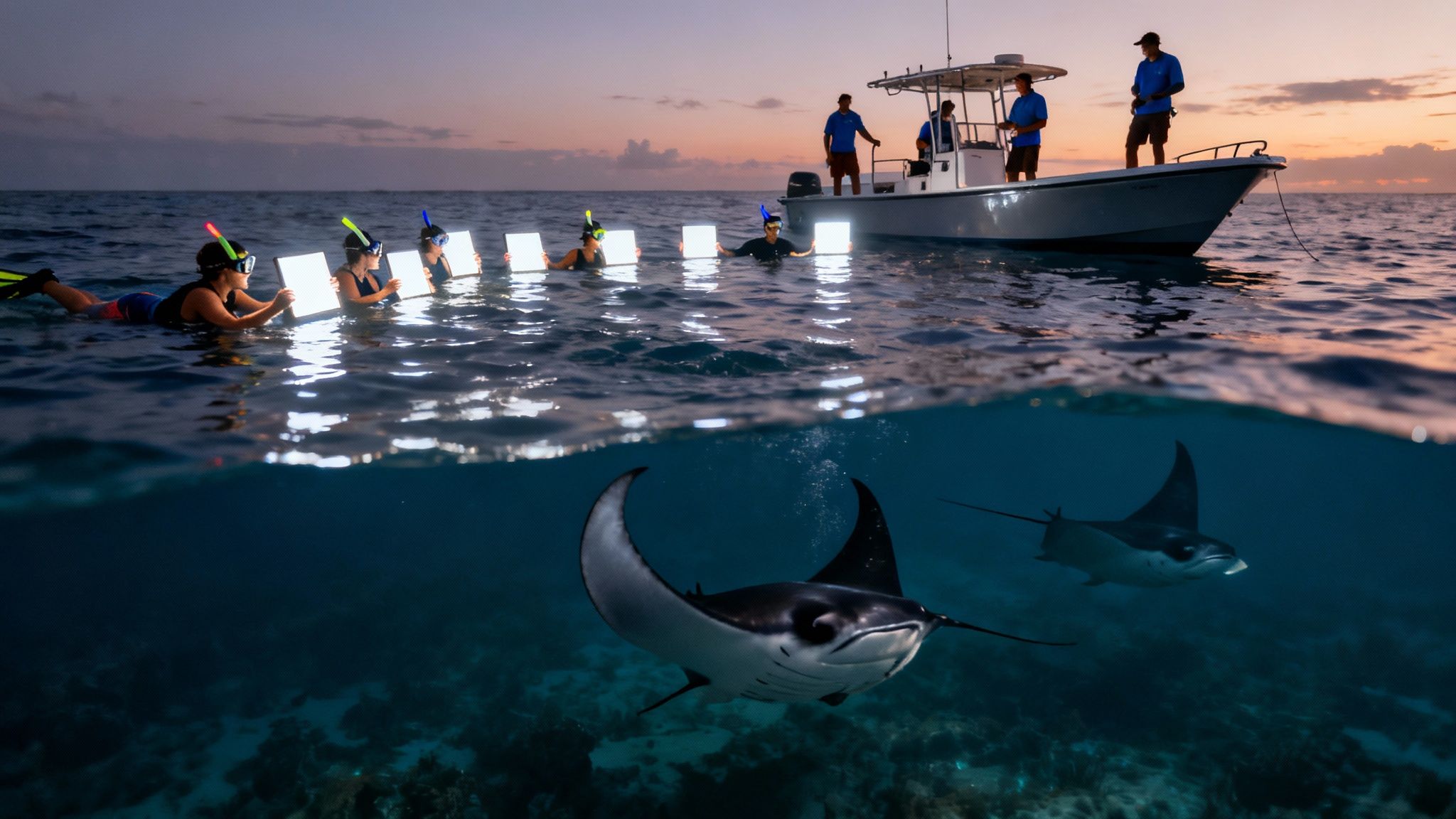
Once the boat anchors at the manta viewing site, it's go-time. You'll slip into the dark, surprisingly warm Pacific waters, but you won't be swimming off on your own. Instead, you'll paddle over to a large, custom-built floating light board, which is the key to the whole experience.
You simply grab onto handles along the edge and float on the surface, no major swimming required. Powerful lights underneath the board shine down into the deep, acting like a massive dinner bell for tiny plankton. And it's this glowing plankton buffet that attracts the manta rays on the Big Island. This whole setup creates the perfect, stable viewing platform for the incredible show about to unfold.
The Main Event: The Manta Ballet
As you float and look down through your mask, the magic begins. One by one, these gentle giants appear from the darkness below, drawn in by the feast of plankton. They glide effortlessly, performing incredible, weightless barrel rolls just inches from your face.
The experience is surreal. The only sound you’ll hear is the gentle lapping of water against the board as these massive creatures, some with wingspans over 12 feet, soar through the beams of light with their giant mouths open. It’s an incredibly intimate and moving spectacle that feels like a silent, underwater ballet.
You'll spend about 30-45 minutes in the water with the mantas before your guides help you back onto the boat. Most tours provide warm drinks and snacks for the cozy ride back to the harbor under a sky full of stars. Understanding the best time to see manta rays in Kona can help you plan this unforgettable night. The whole process is carefully planned for maximum wonder and safety, ensuring you're ready for the experience of a lifetime.
How To Safely And Responsibly Interact With Manta Rays
When you’re in the water with these gentle giants, their well-being is everyone’s number one priority. Every reputable tour operator on the Big Island is committed to making sure these incredible encounters can happen for years to come. That’s why we all follow a strict code of conduct often called ‘Manta Etiquette.’
These aren’t just suggestions; they’re rules that protect the animals and, honestly, create a much better and more natural experience for everyone in the water.
The most important rule is simple, but absolutely critical: look, but don't touch. It can be incredibly tempting when a massive manta ray glides just inches from your face, but touching them can cause real harm. Manta rays have a protective mucous layer covering their skin, which is their primary defense against harmful bacteria. Touching them, even with the lightest finger, can rub off this coating and leave them vulnerable to nasty infections.
Following Manta Etiquette
The whole name of the game is passive observation. Your job is to simply be a quiet, respectful witness to their amazing feeding behavior. For snorkelers, this means staying flat on the surface, holding onto the light board, and letting the mantas be the ones to approach you.
Here are a few of the most important guidelines you’ll need to follow:
No Diving Down: As a snorkeler, you need to stay on the surface at all times. Diving down into the water column can easily disrupt the mantas' feeding patterns or block their path to the plankton.
Avoid Bright Flashes: You can definitely take photos, but please don't use a bright, external camera flash. The sudden bursts of light can startle and disorient the mantas.
Give Them Space: This should go without saying, but never chase, grab, or try to ride a manta ray. Let them be in complete control of the interaction and just enjoy the incredible show they put on.
By simply floating and observing, you become part of the underwater scenery rather than an intrusion. This calm approach helps the manta rays on the Big Island feel safe, which almost always results in them making closer and more spectacular passes.
How Reputable Tours Ensure Safety
Choosing a professional, experienced tour operator is the single best way to ensure both your safety and the well-being of the mantas. For reputable companies, safety is the top priority from the moment you step onto the boat. You can get a deeper understanding by reviewing these safety tips for swimming with manta rays in Kona.
Every trip should kick off with a detailed pre-snorkel briefing where the guides clearly explain the rules of engagement. Once in the water, these guides are lifeguard-certified professionals who are constantly keeping an eye on both the snorkelers and the animals, making sure everyone sticks to the guidelines. This professional oversight is what makes the whole experience not just magical, but incredibly safe for people and marine life alike.
Why Manta Ray Conservation In Hawaii Matters
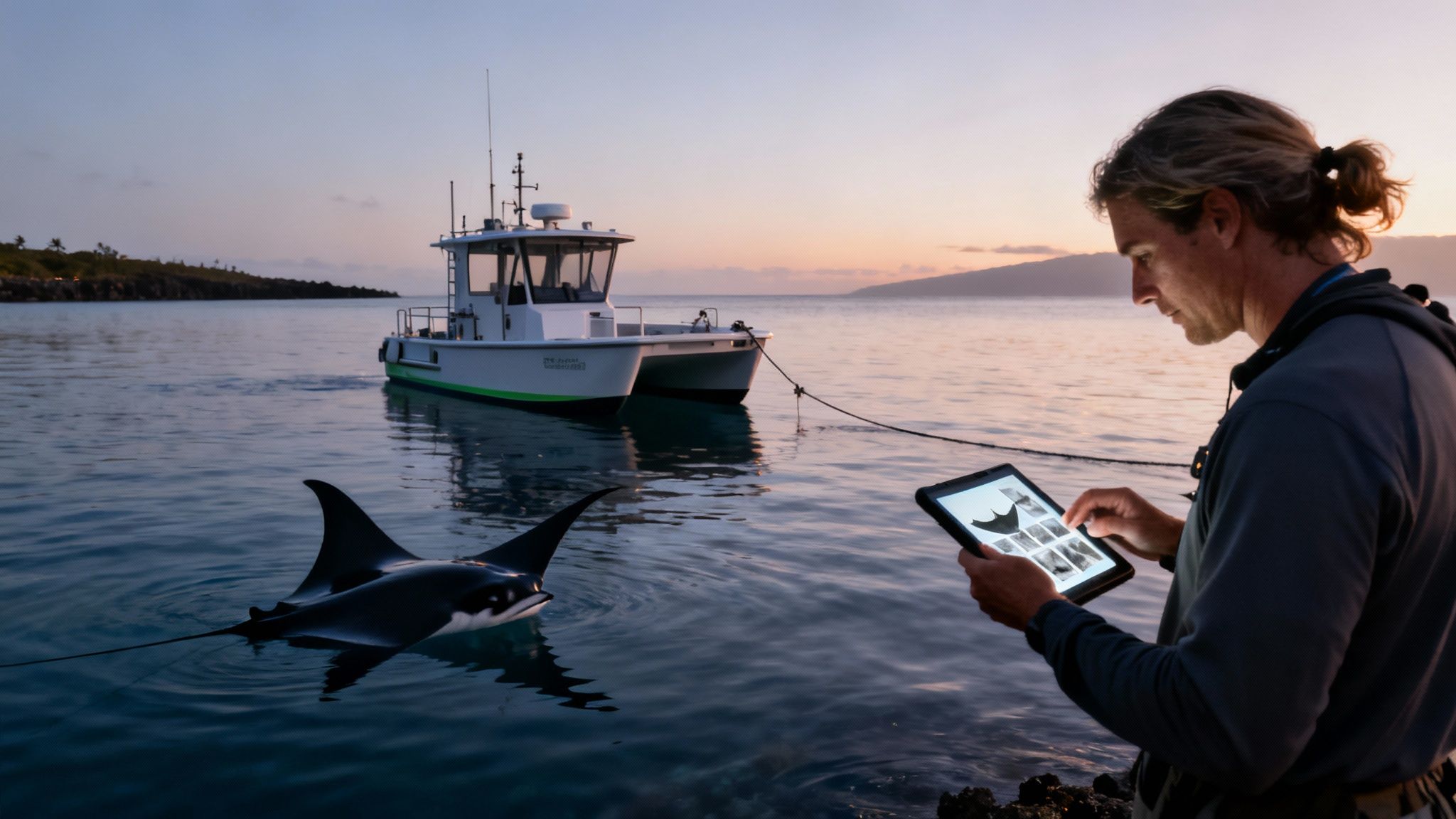
That incredible night snorkel you're planning with the manta rays on the Big Island is more than just a vacation highlight—it’s directly tied to the survival of this amazing local population. These encounters aren't just for show; they're a vital part of a fragile ecosystem that needs our respect and protection.
Sadly, the resident manta population faces some serious threats out there. Things like accidental boat strikes and getting tangled up in discarded fishing lines are a constant risk for these gentle creatures. Every single manta is precious, which makes protecting them a true community effort.
A Fragile Population
You really get a sense of urgency when you look at the numbers. A recent 2023 genomic study showed just how fragile this community is. Scientists estimate the Big Island's entire reef manta population has only about 104 adult breeders out of roughly 318 identified individuals.
That small number means they have very low genetic diversity, making them extremely vulnerable to any threats. If you want to dive deeper, you can discover more about these critical findings from the Manta Trust.
Your Role in Sustainable Tourism
This is where you, as a visitor, can make a huge difference. When you choose a Manta-SMART certified operator for your tour, you're doing so much more than just booking a fun trip. You're casting a vote for the long-term health of these animals.
Your ticket becomes an investment in conservation. It helps fund critical research, supports operators committed to eco-friendly practices, and promotes awareness about the importance of protecting Kona's gentle giants.
This one simple choice turns your adventure into a meaningful act of marine stewardship. You become part of the solution, helping ensure the mesmerizing manta ballet continues for generations of visitors to come.
While these giants are unique, you can learn more about their relatives in our guide to stingrays and other rays in Hawaii.
Answering Your Manta Ray Tour Questions
You've got questions, and we've got answers. Here’s a rundown of the most common things people ask before they book their adventure with Manta Ray Night Snorkel Kona Hawaii Tours. We want you to feel completely ready for this incredible experience.
Do I Need To Be A Strong Swimmer To Snorkel With Manta Rays?
Not at all. You don’t need to be an Olympic swimmer, but you should be comfortable in the water. We’ll get you geared up in a wetsuit and other floatation devices to make sure you're buoyant and relaxed.
The whole time you're in the water, you'll be holding onto a big, sturdy light board. So, you're really just floating and watching the show below—no serious swimming is required. Plus, our guides are right there in the water with you to make sure everyone is safe and having a great time.
Is It Safe To Be In The Ocean At Night With Manta Rays?
Yes, it’s incredibly safe. Manta rays are true gentle giants. They are filter feeders, which means they don't have any teeth, stingers, or barbs. They are only interested in the clouds of plankton that are drawn to the lights from our boards.
Every reputable tour has a stellar safety record. We operate with certified guides and use powerful underwater lights that create a well-lit, controlled environment for your adventure with the manta rays on the Big Island.
What Is The Best Time Of Year To See Manta Rays?
Here's one of the best parts about Kona: you can see manta rays all year round! The local manta population sticks around, so they don't migrate. This gives us a consistently high sighting success rate of 85-90% no matter which month you visit.
Honestly, the best time to book your tour depends more on your travel plans and the weather than on any specific "manta season."
What Should I Bring On A Manta Ray Night Snorkel Tour?
We've got you covered with all the main gear—snorkel, mask, fins, and a wetsuit. All you really need to bring is a towel and a change of dry clothes for after you get out of the water.
A light jacket or hoodie is also a great idea for the boat ride home, as the ocean breeze can feel a bit chilly. Most importantly, just bring your sense of wonder. You're in for an amazing night.
Comments