Swim with Manta Rays Big Island a Complete Guide
- Byron
- Feb 1
- 11 min read
Picture this: you're floating in the warm Pacific Ocean after sunset, and just inches below, giant, graceful manta rays are gliding and somersaulting through the water. This is the incredible, real-life magic you get when you swim with manta rays on the Big Island. It's consistently called one of the most unforgettable wildlife adventures on the planet, and for good reason. For more information about this incredible tour, check out the manta ray night snorkel.
Your Guide to an Unforgettable Manta Ray Swim
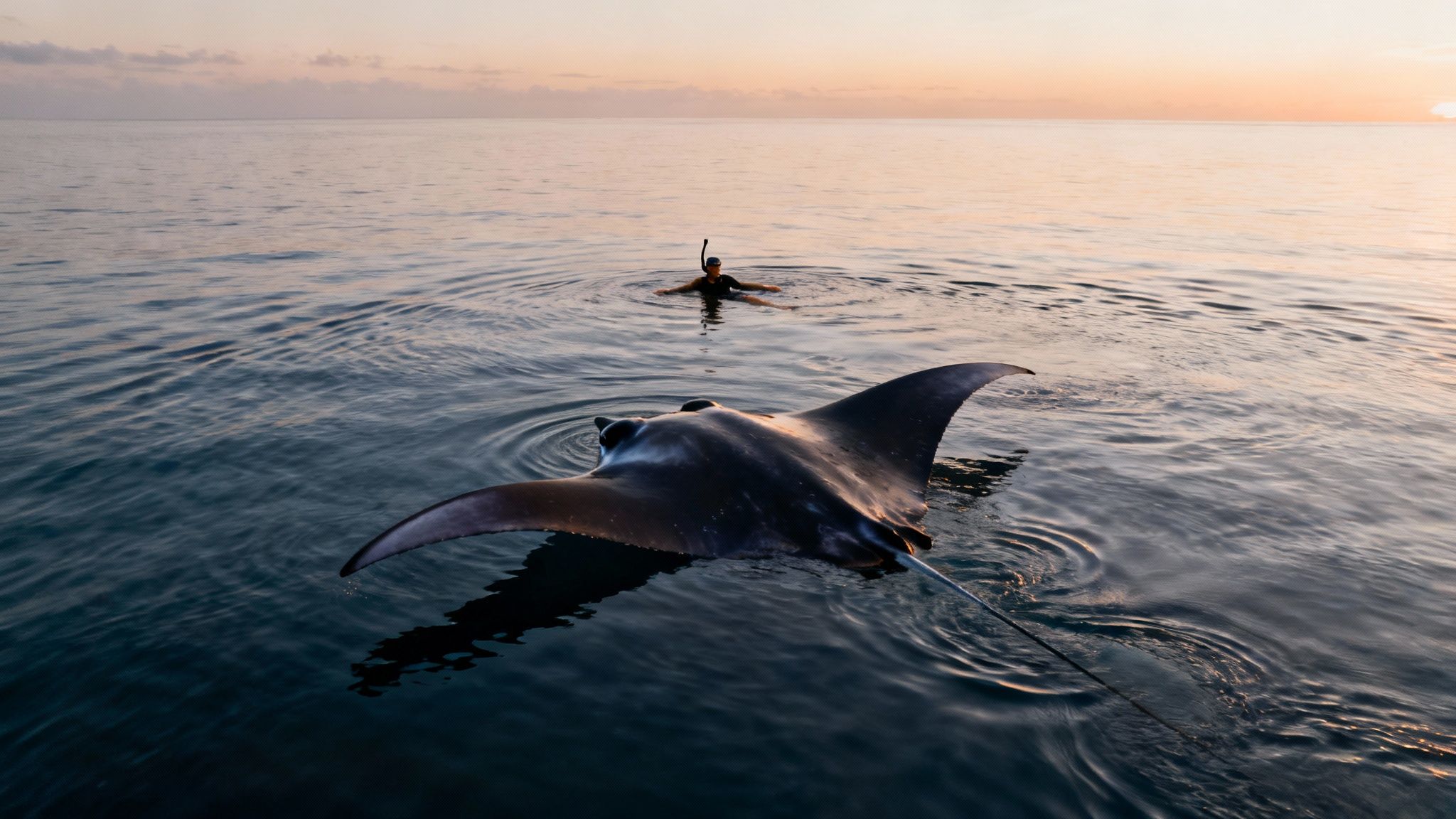
The Kona coast of Hawaii’s Big Island isn't just a good spot to see these creatures; it's the world's absolute best destination for getting up close. This guide is here to walk you through everything you need to know about this world-famous night snorkel. We'll explain exactly why this specific location puts on such a reliable and breathtaking show night after night.
We’ll cover what a typical tour feels like and how to prepare, making sure you feel totally confident and ready for this bucket-list adventure. Knowing the flow of the tour and a bit about the mantas themselves is the secret to a comfortable and truly memorable swim.
To give you a quick snapshot, here's what the experience generally looks like.
Manta Ray Night Snorkel At a Glance
Aspect | Details |
|---|---|
Location | Kona Coast, Big Island, Hawaii |
Activity | Night snorkeling (or diving) |
Main Attraction | Giant Pacific Manta Rays feeding on plankton |
Your Role | Floating on the surface, holding onto a light board |
How It Works | Lights attract plankton, which brings the mantas to you |
Best Time | Year-round, after sunset |
Swim Skills | Basic swimming ability; you'll have flotation support |
This table just scratches the surface of what makes this adventure so special. Let's dive a little deeper.
Why Is This a Can't-Miss Experience?
This is so much more than a typical snorkeling trip. Think of it as an immersive, underwater ballet starring some of the ocean's most gentle giants. The experience is so popular it draws around 80,000 participants annually, turning the dark ocean into a brightly lit stage.
This activity doesn't just create lifelong memories; it also generates over $10 million in gross bookings that directly support local ecotourism and conservation efforts. It's an amazing way to have fun while contributing to the protection of these beautiful animals.
Of course, to have the best time, choosing a top-rated operator is key. We at Manta Ray Night Snorkel Kona Hawaii Tours focus on providing exceptional experiences with a strong emphasis on safety and small group sizes for a more personal adventure.
This encounter is a perfect blend of thrill and tranquility. You are a passive observer, floating at the surface while holding onto a custom light board. The board's lights attract plankton, which in turn draws in the manta rays for their nightly feeding ritual right below you.
From understanding the unique biology that makes Kona a manta hotspot to selecting the perfect operator, this guide will get you ready for a truly special night. You can also check out our list of the best manta ray snorkel tours on the Big Island to see how different tours compare.
Get ready for an adventure you’ll be talking about for years to come.
Why Kona Is the Manta Ray Capital of the World
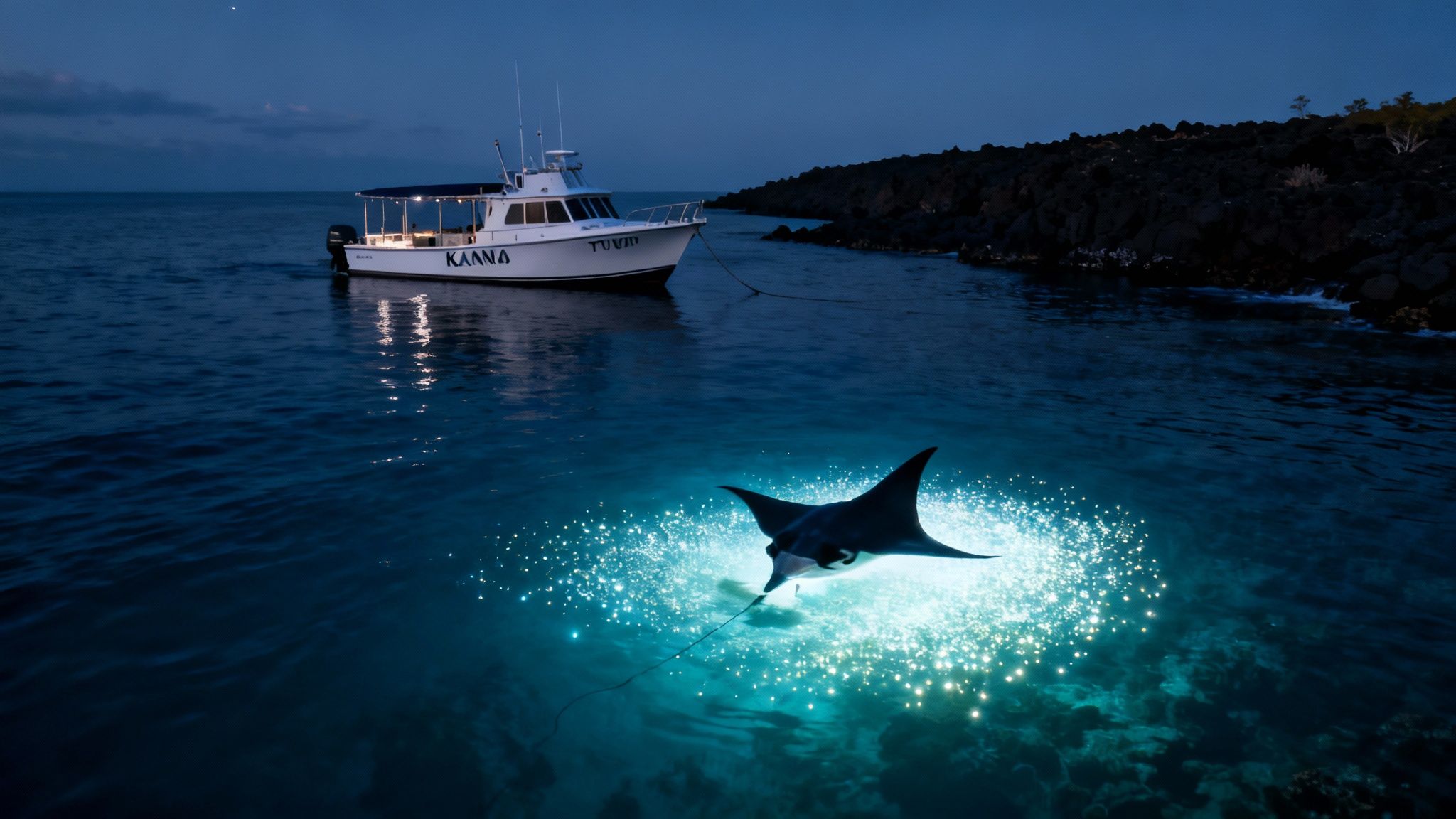
So, what makes the Kona coast the absolute best place on the entire planet to swim with manta rays? It's a fascinating story that's part biology, part geography, and part happy accident. For decades, these gentle giants have been gathering right here, making Kona the world's hotspot for this incredible encounter.
It all started years ago when a hotel on the coast decided to point bright lights into the ocean. They probably just wanted to light up the shoreline, but they accidentally did something amazing. The lights drew in massive clouds of plankton, which happens to be a manta ray’s favorite meal.
The local mantas caught on fast, realizing these lights were a nightly dinner bell. Just like that, a predictable and reliable feeding spot was born, laying the groundwork for one of the world's greatest eco-adventures.
From Hotel Lights to an Underwater Stage
Today, modern tour operators like us at Manta Ray Night Snorkel Kona Hawaii Tours have perfected this idea. Instead of relying on lights from shore, we bring our own custom-built, floating light boards and place them right in the water.
These boards act like giant plankton magnets, creating a glowing, concentrated buffet right at the surface. This brilliant setup brings the feeding mantas directly to our snorkelers, giving you an up-close, front-row seat to their amazing underwater ballet. It’s an immersive show, and you’ve got the best seat in the house.
The reliability here is just astounding. The Kona coast has a year-round sighting success rate of over 85%. This isn't just luck; it's a beautifully established natural pattern, making it one of the most consistent wildlife encounters you can find anywhere.
Knowing the Locals by Name
The mantas you'll meet in Kona aren't just passing through; they're residents. Thanks to years of dedicated photo-identification work, local researchers and our guides can recognize individual mantas by the unique spot patterns on their bellies—they’re just like human fingerprints.
This incredible effort has identified and named over 250 individual mantas in the area. Some of the regulars, like the famous "Lefty," have been showing up to these same feeding spots for decades.
This high degree of site fidelity is the real secret to Kona's success. The mantas know exactly where to go for dinner every night, and they just keep coming back. It means that when you go out to swim with manta rays on the Big Island, you're not just seeing wildlife—you're visiting a community of incredible animals in their natural dining room.
If you're hooked and want to learn even more about these amazing animals, check out some more fun facts about manta rays in our detailed guide.
Choosing Your Adventure: Snorkel or Scuba Dive
So you’ve decided to swim with manta rays on the Big Island—fantastic choice! The first big decision you’ll face is how you want to see them. Will you be on the surface looking down, or on the seafloor looking up?
Both snorkeling and scuba diving offer absolutely incredible, yet totally different, views of this nightly spectacle. Your decision really comes down to your comfort level in the water, whether you have a dive certification, and the kind of experience you're dreaming of.
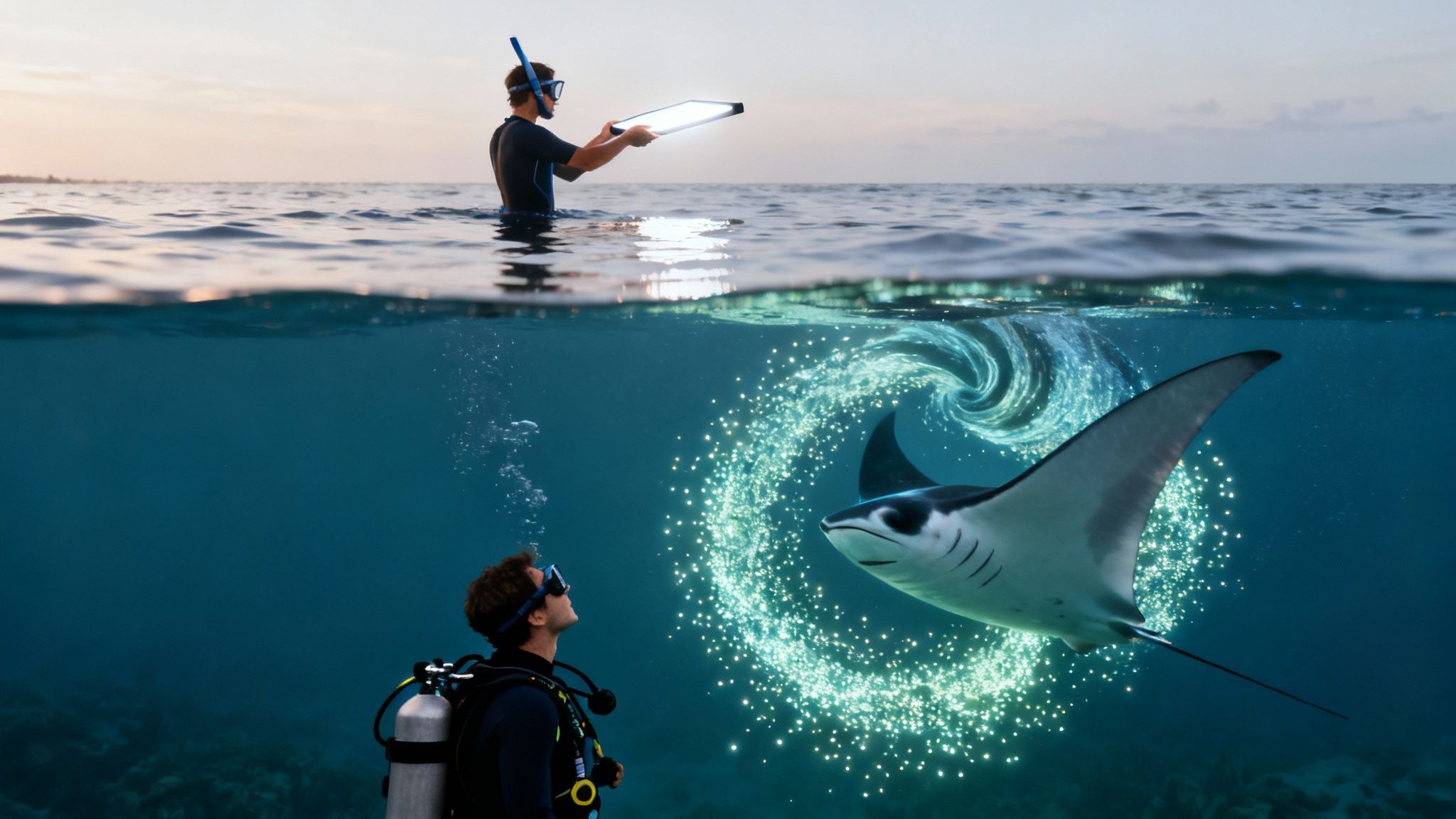
Snorkeling is, by far, the most popular and accessible way to go. It gives you a breathtaking, top-down view of all the action. You'll float on the surface, holding onto a specially designed light board that shines down into the water. This light is like a dinner bell, attracting plankton and drawing the mantas right up to you for their amazing underwater ballet.
This option is perfect for almost everyone, from families to first-timers. All you need are basic swimming skills and to be comfortable floating in the ocean at night. For an unforgettable snorkel tour, Kona Snorkel Trips is an incredible choice. As Hawaii's most reviewed and highest-rated snorkel tour company, they really know how to deliver a safe and magical adventure.
The Snorkeler's View: A Surface-Level Spectacle
As a snorkeler, your view is wide and panoramic. You get to see the whole scene unfold below you—multiple mantas gliding, barrel-rolling, and interacting in the beams of light. It's like having the best seat in the house for a beautifully choreographed dance.
The experience is remarkably calm and stable. You aren't actively swimming around; you're a floating observer. This passive approach allows the mantas to get incredibly close, often coming within inches as they feed on the plankton just below the surface.
Sighting consistency has gotten so much better over the years. Around 2012, the introduction of modern light arrays boosted the plankton density by a massive 300-500%! This skyrocketed the sighting success rate to an amazing 85-90% all year long.
The Diver's Perspective: An Immersive Experience
For certified scuba divers, the adventure is completely different. Instead of floating above, you'll be settled on the ocean floor, looking up at the show. From this vantage point, you see the massive silhouettes of the mantas as they glide overhead, framed by the glowing lights from the surface.
This perspective is truly immersive and makes you feel like you're a part of their world. It does require a scuba certification and a bit more planning, but the payoff is a jaw-dropping view that very few people ever get to see. For a world-class dive, Kona Honu Divers is the go-to. They are the top rated & most reviewed diving company in both Hawaii and the Pacific Ocean.
Ultimately, whether you choose to snorkel or dive, you're in for an encounter that will stick with you for a lifetime. You can also explore more about the thrilling experience of a manta ray dive in Kona to help make your decision.
What to Expect on Your Manta Ray Night Snorkel
The thought of slipping into the dark ocean at night to swim with manta rays on the Big Island is a mix of pure excitement and maybe a few butterflies. If you’ve never done it before, it’s natural to wonder how it all works. Knowing the flow of the tour can turn those nerves into pure anticipation for what is truly a safe, comfortable, and absolutely unforgettable adventure.
Your evening kicks off the moment you arrive for check-in. You’ll be welcomed by the friendly and highly skilled guides from a top-tier crew like ours at Manta Ray Night Snorkel Kona Hawaii Tours. These aren't just boat captains; they are lifeguard-certified professionals who are passionate about making your experience incredible from start to finish.
With everyone checked in, you’ll hop aboard for a beautiful ride along the Kona coast as the sun begins to set. This quick trip out to the site is the perfect chance to soak in the views and get hyped for the main event.
The Briefing and Getting into the Water
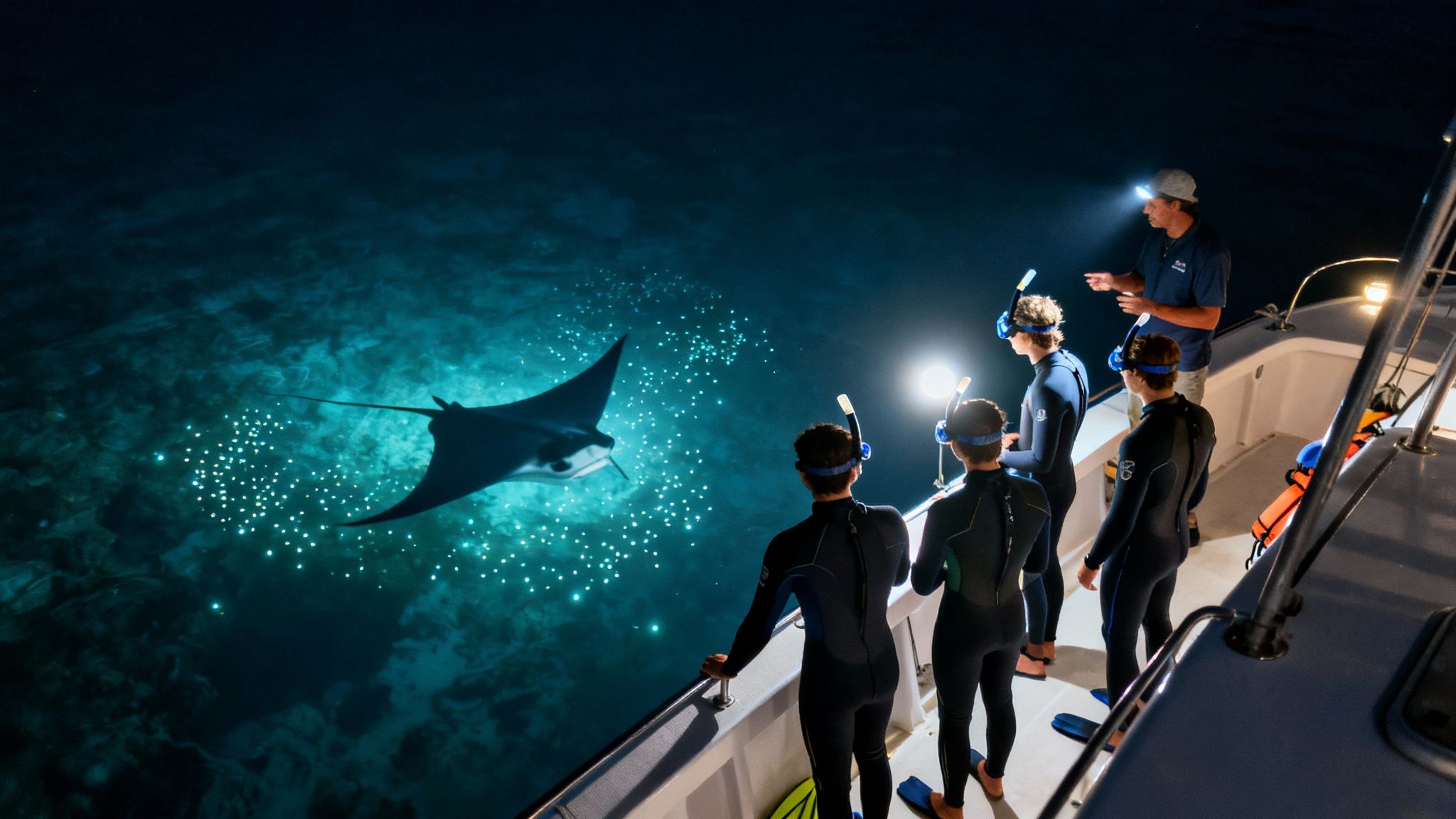
As we anchor at the viewing site, your guides will run through a full safety briefing. This is a super important part of the tour. They'll share fascinating facts about manta ray biology and behavior, and most importantly, cover the rules for a safe and respectful swim.
The number one rule is simple but essential: Do not touch the manta rays. These gentle giants are covered in a protective mucus layer, and touching them can harm their delicate skin. We're here to be passive observers, letting them perform their nightly ballet without any interference from us.
Once the briefing is done, it's go time! The crew helps everyone slide into the warm Pacific water and get comfortable at our large, custom-made light board. This floating raft has powerful lights that shine down into the water, acting like a giant dinner bell for plankton. All you have to do is hold on, float, and wait for the show to begin.
The Main Event: An Underwater Ballet
It won't take long before the first massive shadow emerges from the deep. As the plankton swarms in the light beams, the manta rays glide in for their nightly feast. It’s a breathtaking moment to see these huge creatures—some with wingspans averaging 12 feet—move so effortlessly through the water.
They perform graceful barrel rolls and somersaults, swooping up to scoop mouthfuls of plankton just inches beneath you. The experience is incredibly peaceful. The only sounds are the gentle lapping of the ocean and your own quiet breathing as this underwater spectacle unfolds right before your eyes. You can learn more about picking the best time to see manta rays in Kona in our detailed guide.
How to Prepare for Your Big Island Manta Swim
Getting ready for your manta ray swim is a breeze, but a little bit of planning can make a world of difference. When you know what to expect and what to pack, you can focus on the pure magic of the moment. Think of this as your simple guide to making an incredible adventure even more comfortable.
The great news is you don’t need to pack much. Your tour operator handles all the in-water gear, so you just need to think about what you'll need before and after the snorkel.
What to Bring and What to Leave Behind
The number one thing to do is wear your swimsuit under your clothes when you show up. This saves so much time and hassle, letting you get ready on the boat in a snap. You’ll also want a towel and something warm and dry to put on for the ride back—a sweatshirt or a light jacket is perfect. It can get surprisingly chilly on the boat after an evening swim.
As for what to leave at your hotel? Pretty much everything else. A quality operator like Manta Ray Night Snorkel Kona Hawaii Tours provides all the gear you’ll need for a great time in the water, including:
High-quality wetsuits that keep you warm and help you float.
A snorkel set (mask and snorkel) that’s properly fitted for you.
All the necessary safety equipment.
It's best to leave valuables like fancy jewelry, lots of cash, or electronics you don't need back in your room. The boat is secure, of course, but the less you have to worry about, the more you can relax and enjoy the experience.
Physical Requirements and Expectations
You don't need to be an olympic swimmer, but you do need to have basic swimming skills. You’ll spend most of your time holding onto a floating light board, not swimming laps, but being comfortable in open ocean water after dark is a must. The most important thing is being able to stay calm and handle yourself in the water.
It's also key to remember this is a true wildlife encounter. Every single night is different. While the Kona coast has one of the most reliable manta ray populations in the world, these are wild animals on their own schedule. Show up with a sense of wonder and adventure, and you’re sure to have an amazing time.
The best part? This adventure is fantastic any time of year. Kona’s resident mantas are here year-round, so you can plan your trip for any season.
Your Manta Ray Questions Answered
Even with all the excitement bubbling up, it's totally normal to have a few questions before you commit to a night out in the ocean. Getting clear answers helps you feel confident and ready to soak in every moment of your swim with manta rays on the Big Island.
Here are a few of the most common questions we hear from fellow adventurers just like you.
Is It Safe to Swim with Manta Rays at Night?
Absolutely. There's a reason everyone calls them "gentle giants"—they are completely harmless to us. Manta rays don’t have teeth, stingers, or barbs. The real focus for any tour is making sure you feel safe and secure in the ocean after the sun goes down.
That's why any tour worth its salt uses highly skilled, lifeguard-certified guides. They'll give you a thorough safety briefing before you even dip a toe in the water. With top-notch gear and their eyes on you the whole time, you can just relax and enjoy the show.
What If I Am Not a Strong Swimmer?
You definitely don't need to be an Olympic swimmer for this! But you do need to have basic swimming skills and feel comfortable being in the open ocean.
During the snorkel, you’ll be holding onto a big, custom-made light board that floats really well. You won't be actively swimming around; you're mostly just floating and watching the magic happen below you.
If you have any doubts at all about your swimming ability, the best thing to do is chat directly with your tour operator before you book. They’ll help you figure out if this is the right adventure for you.
Will We Definitely See Manta Rays?
Because we're dealing with wild animals in their natural home, no one can ever make a 100% guarantee. That said, the Kona coast has one of the most reliable manta ray populations on the planet, with sighting rates that are consistently above 90% all year.
The feeding sites we visit are well-established, creating a powerful and predictable draw for the mantas. On the super rare night they decide to be shy, most companies have a great policy where you can come back again for free on a standby basis.
Can I Touch the Manta Rays?
No, and this is a big one. Touching the manta rays is strictly forbidden on all eco-tours. Manta rays are covered in a protective mucus layer, which is like their immune system, shielding them from nasty bacteria. Touching them can strip this coating off, leaving them vulnerable to infections.
The whole point of this amazing encounter is passive interaction. Your job is simply to float, watch, and be amazed by these incredible creatures without interfering. It’s a simple rule that helps keep Kona’s beloved manta ray population healthy for years to come.
For even more answers to your questions, feel free to check out our comprehensive manta ray FAQ page.
Comments