Swim With Manta Rays Big Island A Guide to Kona's Night Snorkel
- Byron
- Jan 6
- 11 min read
Picture this: you're floating in the warm, dark Pacific waters off the Kona coast. Just inches below, giant, gentle manta rays swoop and barrel roll in a silent, underwater ballet. This isn't a dream—it's the magic of the Big Island's world-famous manta ray night snorkel, an experience that consistently ranks as one of the top wildlife encounters on the planet.
Your Guide to Kona's Manta Ray Night Snorkel
This guide is your all-access pass to making this incredible adventure happen. We'll dive into why Kona is the place for this activity, what you can expect when you're out on the water, and how to pick the perfect tour for your trip. We want you to feel totally prepared and ridiculously excited for a night you’ll never forget.
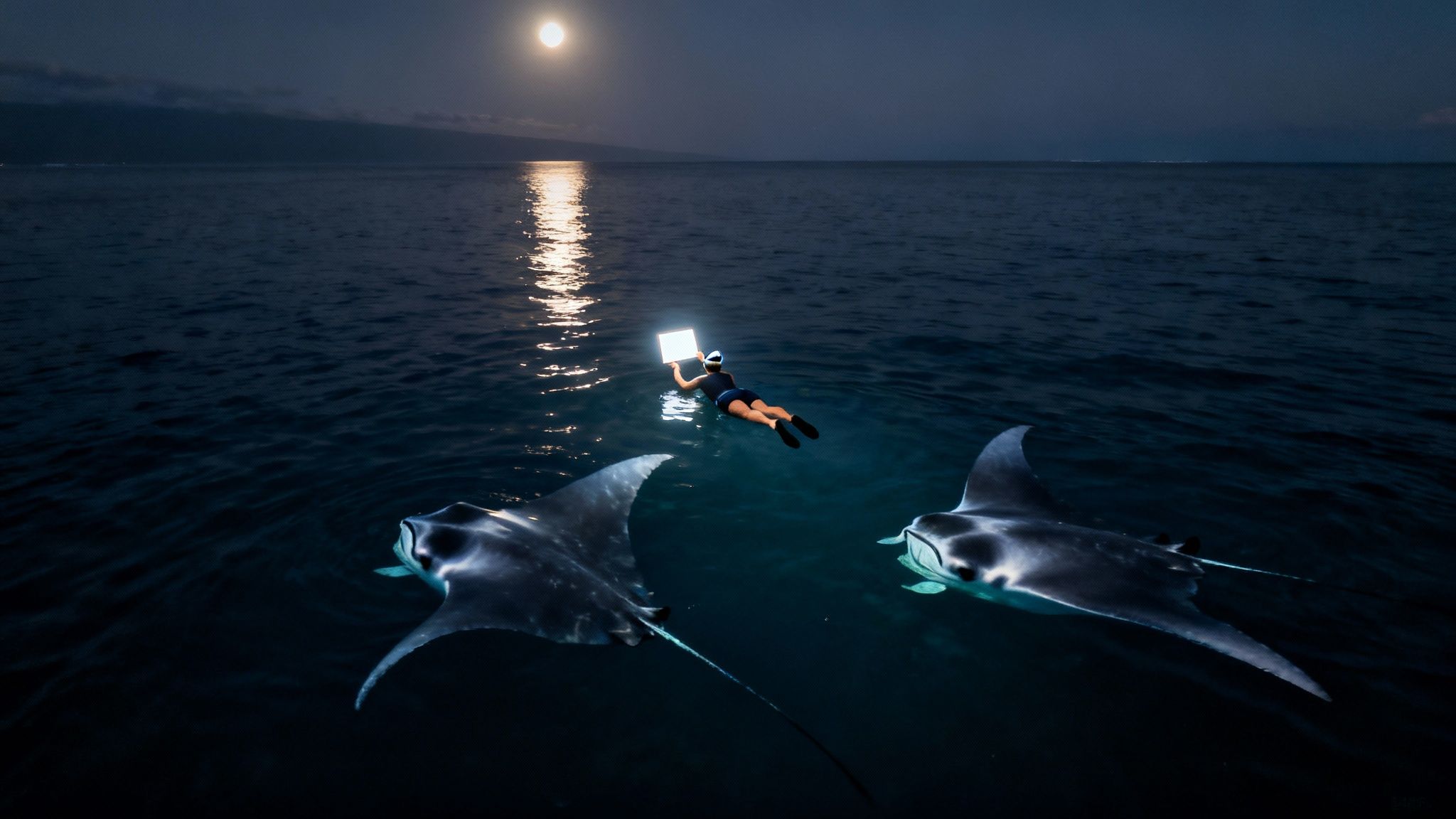
So, how does it all work? The whole experience hinges on a simple, fascinating natural phenomenon. Manta rays are filter feeders, which means they eat tiny, microscopic organisms called plankton. Tour operators figured out that if they shine powerful lights into the water after sunset, they can attract massive clouds of this plankton. It’s like setting up a brightly lit, all-you-can-eat buffet in the middle of the ocean.
What Makes This Experience So Unique
This plankton buffet, of course, brings in the majestic manta rays for an easy meal. As a snorkeler, your job is simple: float on the surface, hold onto a specially designed light board, and watch the breathtaking show from the best seat in the house. It's a completely passive, respectful, and totally mesmerizing way to see these gentle giants do their thing without disturbing them.
The setup is brilliant in its simplicity, creating a reliable and safe encounter night after night. That predictability is what makes swimming with manta rays on the Big Island so special. Here’s a little taste of what the adventure involves:
A Sunset Boat Ride: Most tours kick off with a beautiful boat trip along the Kona coastline just as the sun is dipping below the horizon.
Expert Guidance: You’ll get a full safety briefing and hear some amazing facts about manta ray biology from your lifeguard-certified guides.
An Underwater Ballet: The main event! You'll witness manta rays perform graceful somersaults and loops as they feast on the plankton swirling in the beams of your light board.
This perfect blend of natural beauty, clever science, and respectful wildlife interaction is what defines the Kona manta ray night snorkel. To learn even more, you can check out our other articles about the manta ray night snorkel in Kona.
Why Kona Is The World's Best Place to See Manta Rays
The Kona coast of Hawaii's Big Island isn't just another pretty spot; it’s the undisputed global capital for meeting manta rays. What makes it so special is a perfect storm of geography and a brilliantly simple discovery that creates a reliable, breathtaking wildlife encounter you just can't find anywhere else.
Kona's calm, sheltered bays and unique volcanic slopes under the water have created the perfect home for these gentle giants. The conditions here support nutrient-rich waters, which means one thing: a constant, thriving population of plankton, the mantas' favorite food. It's like an all-you-can-eat buffet that never closes.
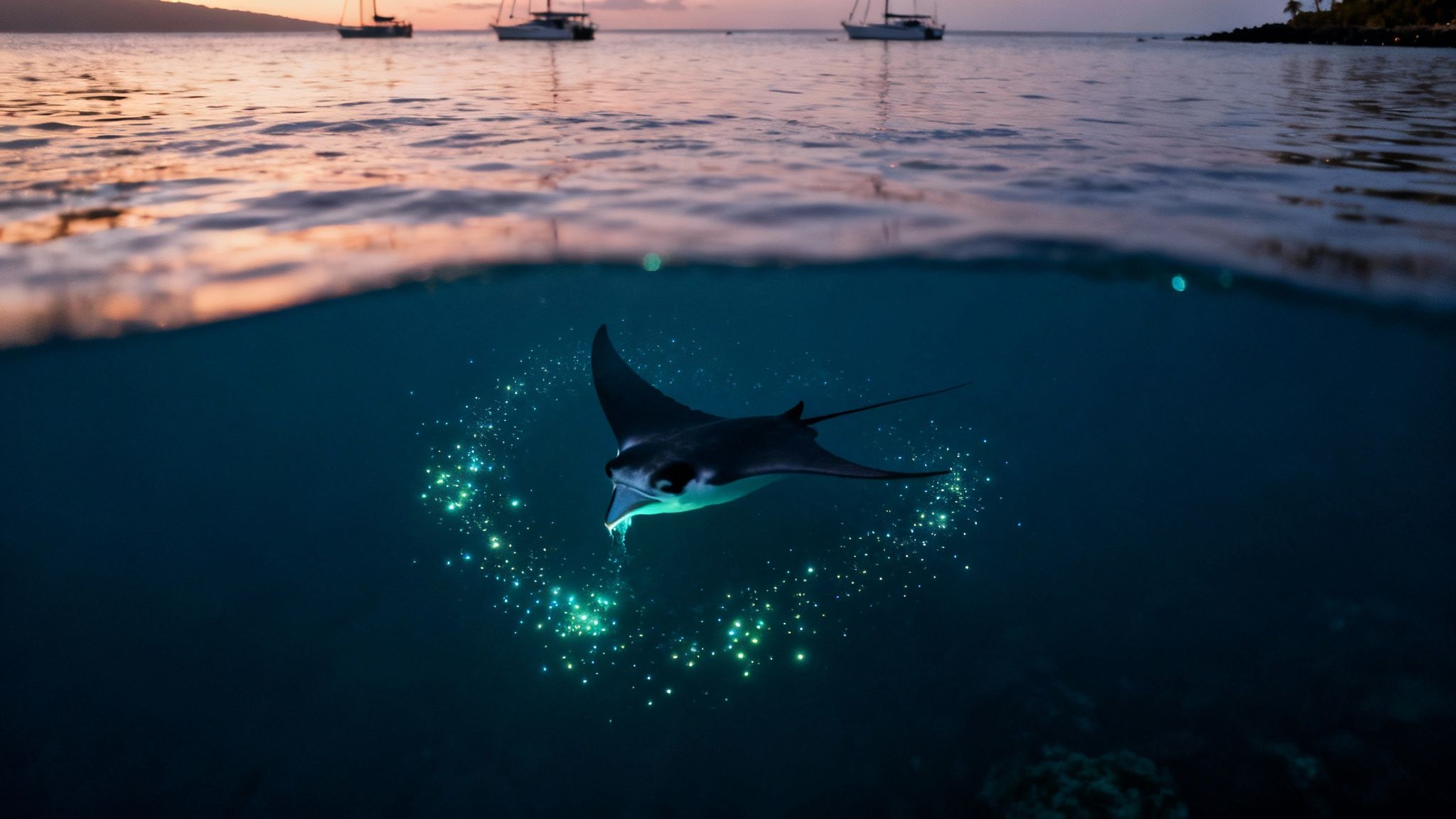
This endless food supply has made the Kona coast a true hotspot. It’s home to over 300 individually identified reef mantas (Mobula alfredi), a huge resident population that makes night tours so successful. Researchers have been tracking these local celebrities since the 1990s, using the one-of-a-kind spot patterns on their bellies like fingerprints to tell them apart. You can learn more about these fascinating manta ray facts before your Kona adventure.
The Plankton Campfire Effect
The real magic behind this nightly spectacle was actually a happy accident. Years ago, tour operators figured out that shining powerful underwater lights into the dark water acts like a magnet for plankton. These tiny organisms are naturally drawn to the light, creating a dense, swirling cloud of food right where we want it.
This thick soup of plankton is completely irresistible to the mantas. The lights basically create a "plankton campfire," calling the rays in from all around for an easy, guaranteed meal. It’s this clever trick that turns a random chance encounter into a predictable, almost guaranteed nightly show.
Two legendary sites have become the main stages for this incredible performance:
Manta Village: Famous for its calm, protected waters, making it an incredibly reliable spot for sightings.
Manta Heaven: A slightly more exposed bay that also regularly attracts huge numbers of feeding mantas.
This simple but incredibly effective technique is the secret sauce behind Kona's fame. It transforms the vast, dark ocean into an intimate dining theater where you get a front-row seat to one of nature's most graceful ballets.
Because of these unique conditions, you can enjoy this experience all year long. While sightings are consistently amazing, you can check out our guide on the best time to see manta rays in Kona to help fine-tune your travel plans. It’s this combination—a resident manta population, a non-stop food source, and the innovative use of lights—that truly makes Kona the best place in the world for this adventure.
What to Expect During Your Manta Ray Adventure
So, what’s this whole night snorkel really like? Let's walk through it, from the moment you step on the boat to the second you see your first manta ray. That way, you’ll know exactly what’s in store when you swim with manta rays on the Big Island. This isn't just a tour; it's a carefully guided encounter designed to be as safe as it is breathtaking.
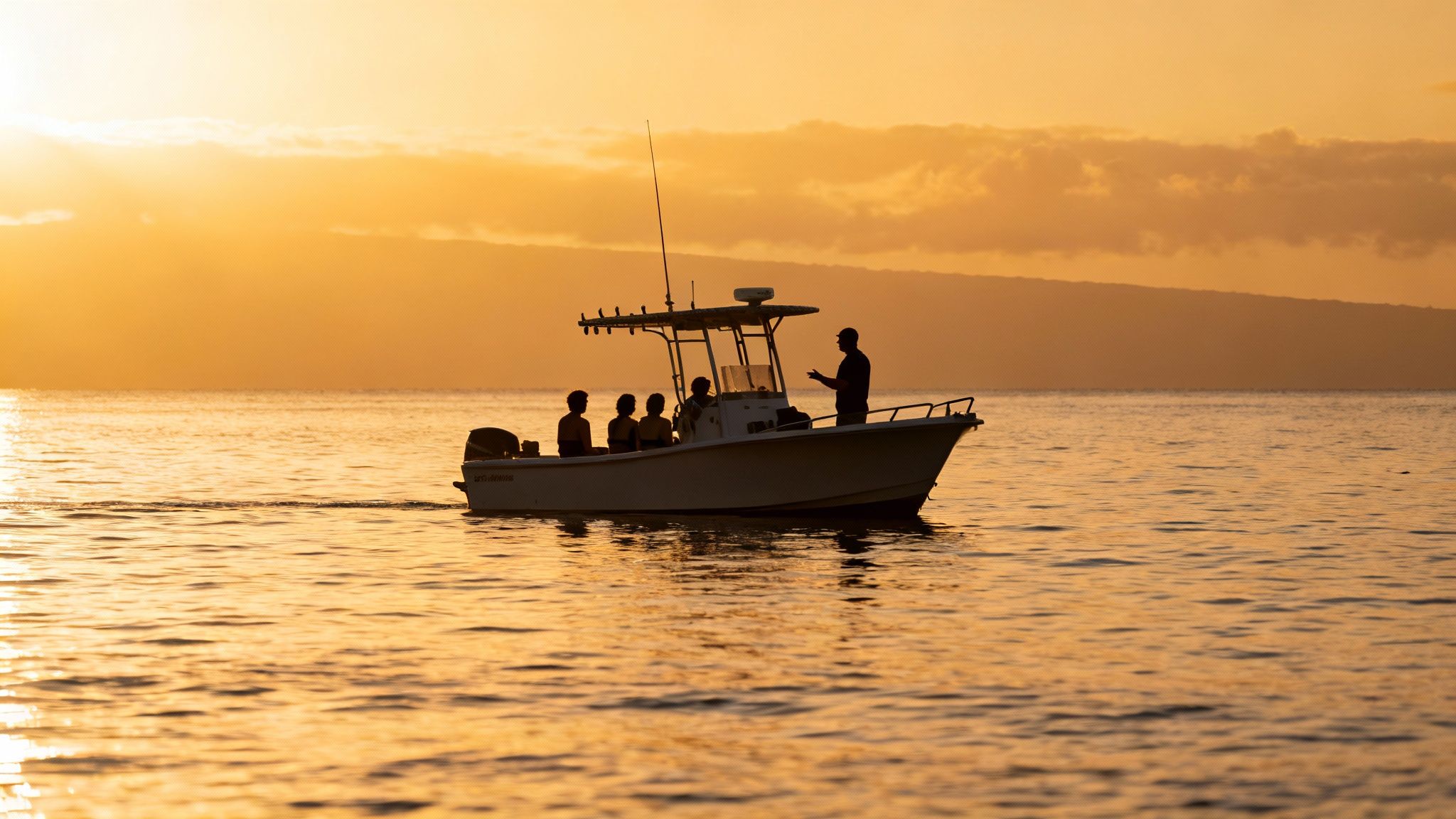
Your adventure kicks off with one of the best parts—a stunning boat ride along the Kona coast while the sun puts on a spectacular show. This "golden hour" trip gives you amazing views of the volcanic shoreline and the endless Pacific, setting the perfect mood for the main event. It’s a great time to just kick back, snap some photos, and let the excitement build.
From Briefing to Ballet
Once you're on board, your lifeguard-certified guides aren't just there for safety; they're your ocean experts for the evening. They'll share cool facts about the mantas, explaining the whole "plankton campfire" effect that makes this incredible meeting possible.
Most importantly, they’ll run through a detailed safety briefing to make sure everyone feels completely comfortable before getting in the water. They cover all the essentials:
How to use your snorkel gear correctly.
The proper way to hold onto the light board.
The number one rule of manta etiquette: look, but don't touch.
When the boat arrives at a famous manta spot like Manta Village or Manta Heaven, it's go-time. You'll slide into the warm, dark ocean and swim over to a specially made light board. These boards float on the surface, shining powerful lights down into the water below.
Your only job is to float, hold onto the handles, and keep your body flat like a pancake. It’s a totally passive and respectful way to watch these incredible animals without disturbing them.
The Main Event: An Underwater Spectacle
Those powerful lights act like a magnet for plankton, the manta rays' favorite meal. It doesn’t take long for the stars of the show to make their grand entrance. You’ll be mesmerized as these gentle giants, some with wingspans over 14 feet, emerge from the dark.
They perform an underwater ballet right below you, doing graceful somersaults and barrel rolls to scoop up plankton. It’s an incredible sight, happening just inches away. The only sounds are the soft lap of the water and your own breathing as you witness one of nature's most beautiful rituals. It's a peaceful, humbling, and completely magical experience.
This whole adventure is one of the most unique things you can do in Hawaii. Learn more about the manta ray night snorkel and see why it’s an absolute must-do.
How to Choose the Right Manta Ray Tour
With so many companies offering manta ray tours on the Big Island, picking the perfect one can feel a little overwhelming at first. But don't worry, it's actually pretty simple. The best tour for you really just boils down to your personal style—what kind of vibe are you looking for?
The first big decision you'll make is whether you want a Sunset Tour or an After Dark Tour. Each one is incredible, but they offer two completely different atmospheres.
Sunset vs After Dark Tours
A Sunset Tour is the perfect choice if you want to mix your manta ray adventure with a classic golden hour boat ride. You'll head out on the water just as the sun begins to set, giving you a front-row seat to a spectacular Kona sunset before you even dip a toe in the water. It’s a super popular option with a fun, energetic vibe.
On the flip side, an After Dark Tour has a magic all its own. Heading out later often means fewer boats are at the manta site, which creates a much quieter and more intimate experience. There’s something truly peaceful about floating under a sky full of stars while these gentle giants glide silently beneath you.
To really dig into the details of each tour type, take a look at our Kona manta ray snorkel comparison guide.
Comparing Big Island Manta Ray Tours
To help you visualize the differences and decide what fits your dream adventure, here’s a quick comparison of the most common tour options available in Kona.
Tour Feature | Sunset Tour | After Dark Tour | Private Charter |
|---|---|---|---|
Best For | Seeing a Kona sunset and enjoying a lively atmosphere. | A quieter, more intimate experience with fewer crowds. | Ultimate flexibility, privacy, and a customized trip. |
Timing | Departs before sunset, in the water as darkness falls. | Departs after dark, straight to the snorkel site. | Completely flexible schedule based on your preference. |
Atmosphere | Energetic, social, and exciting. | Calm, serene, and almost surreal. | Exclusive and personalized to your group's desires. |
Crowd Level | Can be busier as it's the most popular time slot. | Often less crowded with fewer boats at the site. | Just you and your group—no one else. |
No matter which you choose, you're in for an unforgettable night. The "right" choice is simply the one that sounds most like your kind of adventure.
Finding the Best Tour Operator
Once you know when you want to go, it’s time to pick a great company. You'll want to look for operators that keep their groups small and really put safety and respect for the mantas first. A smaller tour almost always means a better, less crowded time in the water.
If you’re looking for a consistently amazing experience, Kona Snorkel Trips is a fantastic choice. They've earned their reputation as the most reviewed and highest-rated snorkel tour company in all of Hawaii. Their guides are experts (and lifeguard-certified), and their focus on safety means you can just relax and enjoy the show.
You can check out their specific manta ray snorkel tour in Kona to see why so many people trust them with this once-in-a-lifetime trip.
Whether you're drawn to the vibrant energy of a sunset trip or the quiet magic of a late-night snorkel, going with a top-rated crew ensures your focus stays right where it should be: on the incredible underwater ballet happening right in front of you.
Snorkeling Safely and Respectfully with Manta Rays
When you swim with manta rays on the Big Island, you’re not just going for a dip—you're a guest in their home. The top priority for any reputable tour company is ensuring your safety and the well-being of these gentle giants. That’s why we follow strict guidelines, often called 'Manta Ray Green' standards, to make sure the encounter is magical for you and completely harmless for the mantas.
The number one rule is the simplest and most important: look, but don't touch. It might be tempting, but manta rays are covered in a delicate, protective mucus layer that’s basically their immune system. Touching them can rub it off, leaving them wide open to infections. This means no chasing, no diving down toward them, and definitely no trying to hitch a ride.
Busting Common Manta Ray Myths
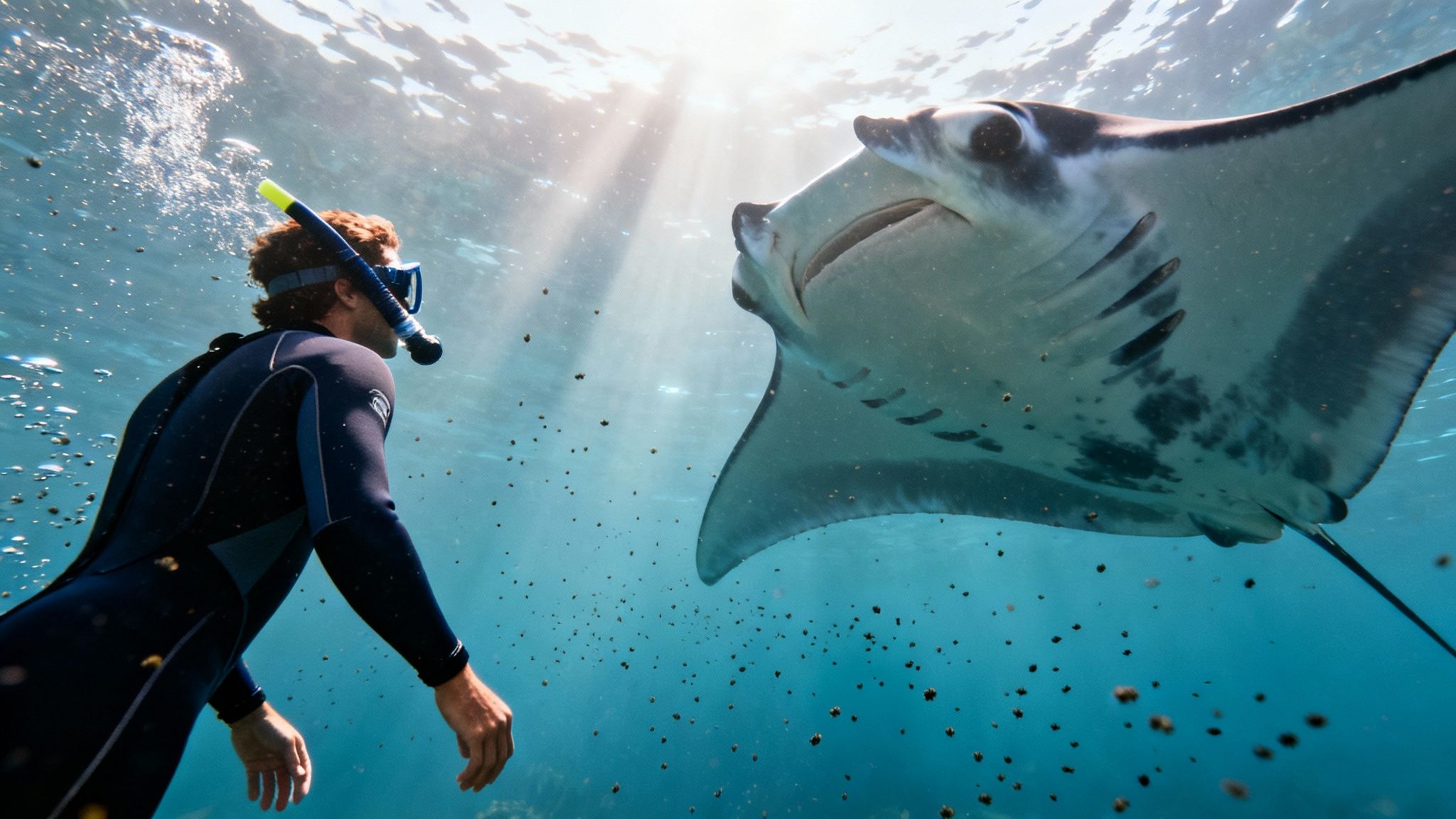
A lot of people hear "ray" and immediately think of stingrays. It's a common mix-up, but the truth is, manta rays are incredibly gentle and totally harmless to people. Once you understand a little about them, any fear quickly turns into fascination.
No Stingers: Unlike their cousins, the stingrays, manta rays do not have a stinger or barb on their tail. At all.
No Teeth: They're filter feeders, which means their mouths are designed for gulping down plankton, not for biting.
Gentle Nature: Mantas are known for being curious and graceful. They aren't aggressive creatures in the slightest.
These gentle giants pose zero threat, making this experience completely safe as long as you follow your guide's instructions. If you're curious to learn more, you can read our guide that answers the question, "can manta rays sting you?".
The Importance of Conservation
Following these simple, respectful rules does more than just keep everyone safe—it helps protect this incredible marine ecosystem for the long haul. The resident manta population here in Kona is a global treasure. For perspective, while Ecuador has a massive population of over 22,000 giant mantas, the Kona Coast is home to a much smaller, cherished colony of about 130-320 cataloged individuals.
This local population, which has been monitored since the 1990s, supports a huge part of our local economy. It draws around 80,000 snorkelers and divers every year, contributing millions to Hawaii's tourism.
By choosing a responsible tour and simply being a passive observer, you become a partner in conservation. You're helping protect this amazing natural wonder so that people can continue to have this experience for generations to come.
Common Questions About the Manta Ray Snorkel
Even after getting excited about this incredible adventure, it's natural to have a few questions pop into your head. Don't worry, that's completely normal! We want you to feel totally prepared to swim with manta rays on the Big Island, so we’ve put together answers to the questions we hear most often.
Think of this as your final check-in before diving in. We’ll cover everything from swimming skills and age limits to what you should toss in your bag for the boat ride.
Do I Need to Be an Expert Swimmer?
This is probably the number one question we get, and the short answer is no, you definitely don't need to be an Olympic-level swimmer. You do, however, need to be comfortable in the water.
The whole experience is designed to be pretty passive. You'll be holding onto a specially designed light board that floats on the surface, which means you won't actually be doing much swimming at all. Most tours provide wetsuits (which help you float) and other flotation aids. The main thing is that you can remain calm and handle yourself in the open ocean without panicking.
Is This Experience Safe for Kids?
Absolutely! The manta ray night snorkel is an unforgettable adventure for the whole family. Most tour companies have a minimum age, which usually hovers around 5 years old, but it's always a good idea to double-check with your specific operator when you book.
The biggest factor for kids is how comfortable they are in the open ocean after dark. If your child is a confident swimmer and isn't easily spooked by the dark, they're going to have the time of their life. The guides are pros at making everyone, especially the younger snorkelers, feel completely safe and secure.
What Is the Best Time of Year to Go?
Here’s one of the best parts about snorkeling with mantas in Kona: you can see them all year round! Unlike migratory animals like humpback whales, the manta rays here are a resident population. They stick around 365 days a year, thanks to the consistent food supply of plankton.
That means there really is no "bad" time to book your tour. Whether you’re visiting in the heat of summer or during the winter months, your chances of a magical encounter are fantastic. Reputable tours have an incredibly high success rate, often over 90%.
What Should I Bring on the Boat?
The tour operators will have all the essential gear waiting for you—snorkel, mask, fins, and a wetsuit. That said, there are a few personal items you'll want to bring along to make your trip more comfortable:
A Towel: A no-brainer for drying off after your snorkel.
Dry Clothes: Something warm and comfy to change into for the boat ride back to shore is a game-changer.
Reef-Safe Sunscreen: If you're on a sunset tour, be sure to apply it well before you get on the boat.
Seasickness Medication: Prone to motion sickness? It's wise to take something beforehand. The ride is typically smooth, but it's always better to be prepared.
A Waterproof Camera: An action camera like a GoPro is perfect for capturing the magic without having to worry about water damage.
For an even more detailed list of questions and answers, feel free to check out our complete manta ray FAQ page.
Expert Tip: Try to have a light meal before your tour. Snorkeling on a full stomach can be a little uncomfortable, but you don't want to be running on empty either. A small snack about an hour before you head out is usually just right.
Hopefully, by answering these common questions, you feel confident and even more excited to book your trip. This is truly a once-in-a-lifetime chance to connect with one of the ocean's most majestic creatures in a way that is safe, respectful, and absolutely breathtaking.
Comments