Swim With Manta Rays Hawaii Your Ultimate Guide
Picture this: you're floating in the warm, dark Pacific Ocean as gentle giants glide gracefully just beneath you. Some have wingspans wider than a car. This isn't a dream—it's the world-class manta ray night snorkel in Kona, Hawaii, on the Big Island.
It’s an absolutely unforgettable experience where you get to watch these majestic creatures feed on plankton, sometimes just inches away.
Your Essential Guide to Manta Ray Encounters in Hawaii
This guide is here to walk you through exactly what makes Kona the undisputed global hotspot for this bucket-list adventure. If you're looking for a truly breathtaking wildlife encounter, swimming with manta rays is hands-down one of the top things to do on the Big Island. People often call it an underwater ballet, and honestly, that’s the perfect way to describe it.
What makes Kona so special is the consistency. In many parts of the world, seeing a manta ray is a lucky break. Here, it’s practically a sure thing. The success rate for spotting them on a night snorkel tour is consistently over 90%, making it one of the most reliable wildlife experiences you can find anywhere.
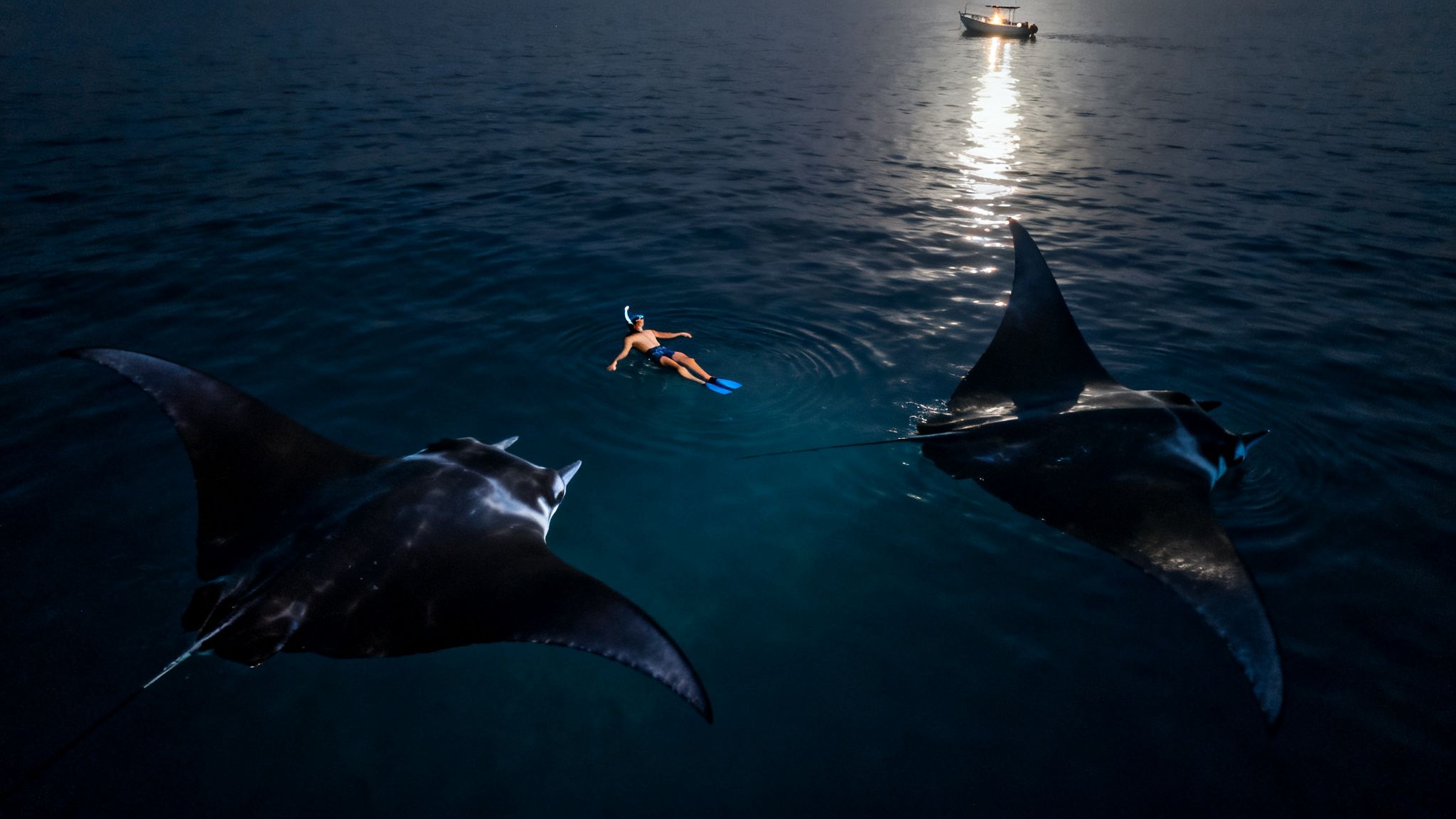
Why Snorkeling Is the Best Way to See Mantas
While certified divers can certainly go for a dive, snorkeling is easily the most popular and accessible way for almost everyone to see the manta ray show. The best part? No special certification is needed, which makes it a perfect activity for families and adventurers of all ages.
On a typical tour, you'll hold onto a specially designed light board that floats on the surface. These powerful lights act like a magnet for plankton, the mantas' favorite food. This brings the rays right up to the surface, giving you a safe, comfortable, and absolutely breathtaking front-row seat as they swoop and barrel-roll right below you. For a great option, consider Kona Snorkel Trips, which is the most reviewed and highest rated snorkel tour company in Hawaii. You can learn more about their manta ray snorkel tour.
Here's a quick summary of what makes the Kona manta ray experience unforgettable.
Kona Manta Ray Night Snorkel at a Glance
Aspect | Details |
|---|---|
Location | Kona Coast, Big Island, Hawaii |
Experience | Night snorkeling while holding onto a floating light board that attracts plankton and manta rays. |
Sighting Rate | Over 90% success rate, making it one of the world's most reliable wildlife encounters. |
Best For | Families, couples, solo travelers, and adventurers of all ages. No certification is required for snorkeling. |
Manta Behavior | Graceful feeding, "barrel rolls," and gliding just inches from snorkelers. |
This combination of accessibility and reliability is why thousands of people come to Kona every year for this specific adventure.
If you're already thinking about planning your trip, Manta Ray Night Snorkel Hawaii is a fantastic resource for everything you need to know. And if you want to brush up on your knowledge beforehand, check out these fun facts about manta rays you should know.
Why Kona Is the Global Capital for Manta Ray Encounters
You might catch a glimpse of a manta ray in other parts of the world, sure. But what Hawaii—and specifically the Kona Coast of the Big Island—offers is something else entirely. It's an encounter so reliable and breathtaking that it has rightfully earned this spot the title of the global capital for swimming with manta rays.
This isn't just a lucky coincidence. It's the result of a perfect storm of geography, biology, and a bit of human ingenuity that created an unparalleled underwater spectacle.
It all starts with the Kona coast's unique underwater landscape. The seafloor here drops off sharply, creating ideal conditions for a thriving marine ecosystem. This environment is rich with plankton, the tiny organisms that manta rays absolutely love to eat.
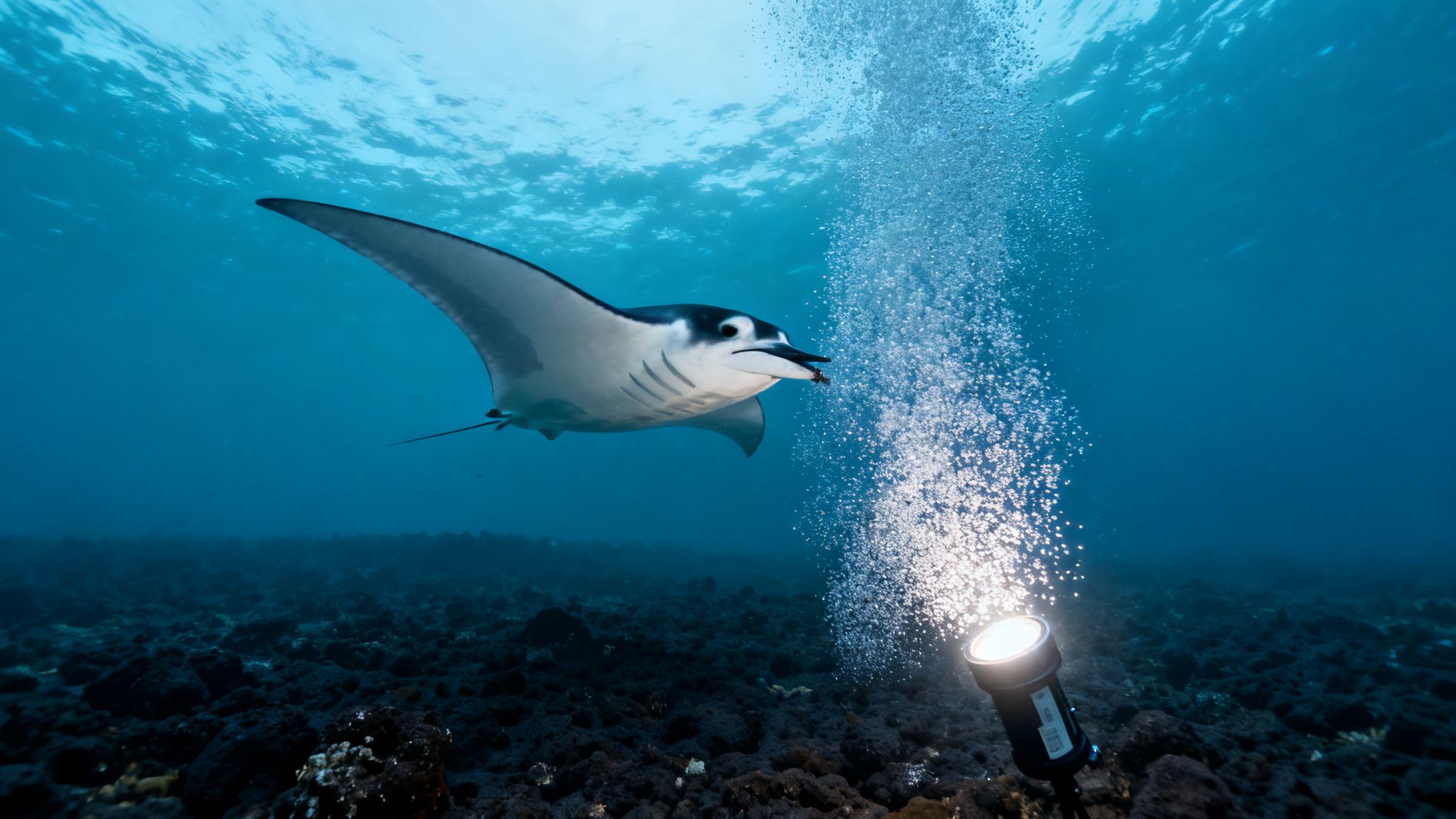
The Birth of the Manta Ray Night Snorkel
Decades ago, some forward-thinking hotel owners and tour operators noticed something incredible. The bright lights from the shoreline hotels were attracting massive swarms of plankton after dark. And right behind the plankton came the local manta rays, showing up for a nightly feast.
This sparked a brilliant idea: what if this "manta buffet" could be recreated on purpose in safe, accessible spots?
Tour companies started using powerful, eco-friendly underwater lights to draw in the plankton. This created a consistent food source that the mantas could rely on, night after night. Just like that, the world-famous manta ray night snorkel was born.
These aren't just random snorkeling spots; they're established feeding grounds affectionately known as 'Manta Village' and 'Manta Heaven.' The mantas have literally learned to associate the lights with an easy meal, which is what makes these encounters so predictable.
Kona vs Other Hawaiian Islands
You might get lucky and see a manta ray while snorkeling off Maui or Oahu, but it’s a completely different game. Those sightings are rare, fleeting, and based purely on chance.
Kona offers something you can actually plan your trip around:
Consistent Sightings: Thanks to the established feeding sites, you have a greater than 90% chance of seeing mantas on any given tour. That’s an incredible number.
Purposeful Behavior: You’re not just watching a manta swim by. You’re witnessing their feeding ballet—graceful swoops, glides, and barrel rolls right below you. It's absolutely mesmerizing.
Accessibility: The tours here are designed from the ground up for this experience, providing everything you need to see the show safely and comfortably.
In fact, research from 2009-2014 showed that tours at 'Manta Village' and 'Manta Heaven' reported manta sightings six to seven nights a week. It's this incredible reliability that puts Kona in a league of its own. You can read more about what makes Hawaii's mantas special on Beat of Hawaii.
This unmatched consistency is why, for anyone wanting to swim with manta rays in Hawaii, all roads lead to the Big Island. To get your timing just right, check out our guide on the best time to see manta rays in Kona.
What to Expect on Your Manta Ray Night Snorkel Tour
So, you’re wondering what it’s really like to swim with manta rays in Hawaii. Pictures and videos are one thing, but the actual experience is a kind of magic that’s hard to put into words. Knowing what happens step-by-step helps you shake off any nerves and just soak it all in. From the moment you arrive, everything is set up for a safe, comfortable, and totally unforgettable night.
Your adventure will likely kick off in the late afternoon at a Kona harbor. After you meet the crew and get checked in, you’ll hop on the boat for a beautiful, quick ride out to one of the prime manta spots. Most tours are timed to catch the sunset, giving you a front-row seat to the sky exploding in color over the Kona coast. It’s the perfect calm before the excitement begins.
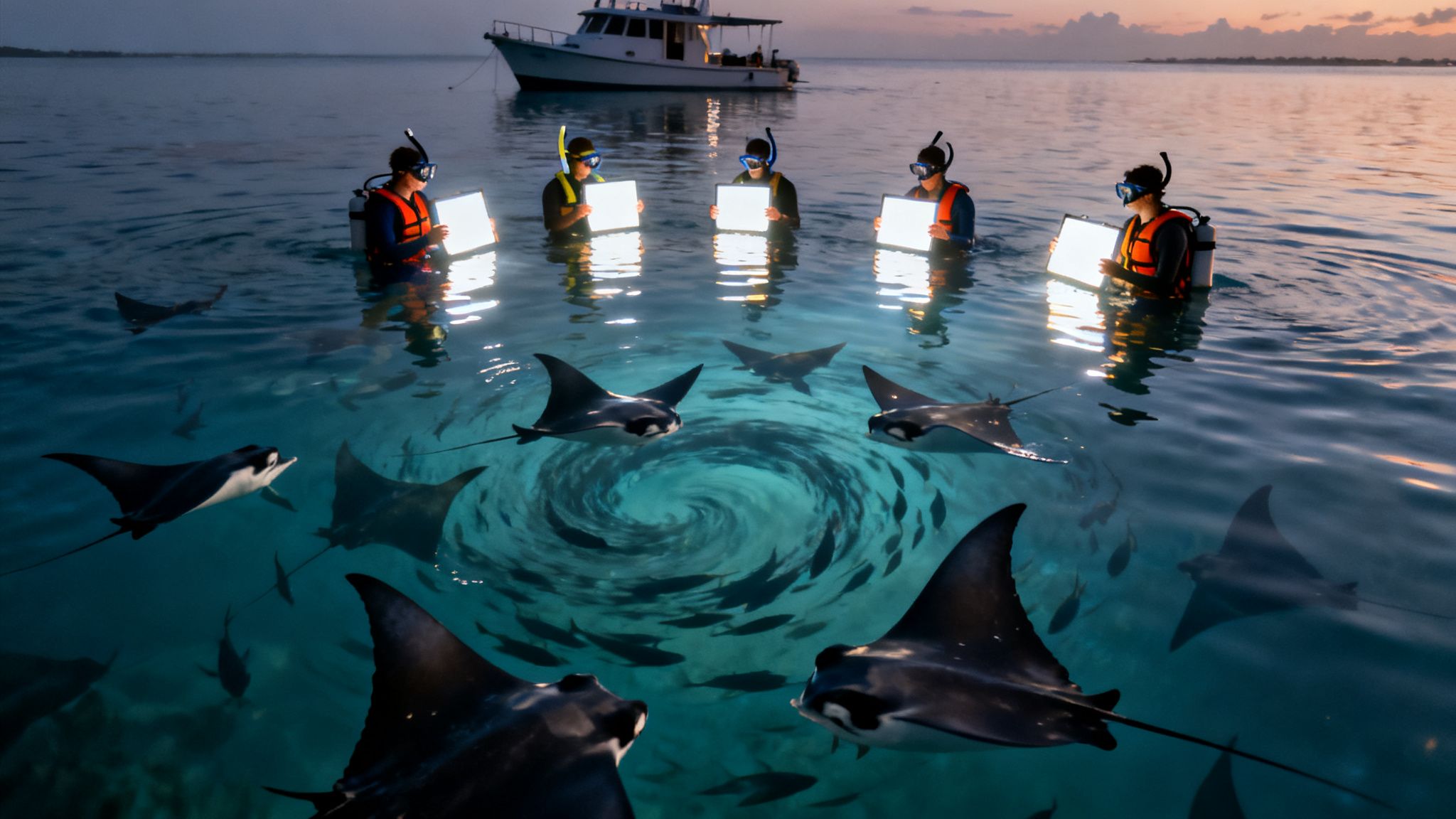
The Pre-Snorkel Briefing
Before anyone gets a toe wet, your guides will walk you through a detailed safety briefing. This part is super important. The crew will go over everything you need to know.
Getting your gear right: They’ll help you get a snug fit for your mask, snorkel, and wetsuit.
Manta ray etiquette: You’ll learn the number one rule—look, but don’t touch. They'll explain why this is so critical for protecting the mantas' sensitive skin.
What to do in the water: They’ll show you exactly how to hold onto the light board and what to do when the mantas show up.
This briefing makes sure everyone feels ready and understands how to interact with these amazing animals respectfully.
Entering the Water for the Main Event
Once you’re at the site, the real show starts. You’ll slide into the dark, surprisingly warm ocean and paddle over to a big, floating light board. This board is the secret sauce; its powerful blue lights shine down into the water, attracting swarms of plankton—the mantas’ favorite food.
At this point, it’s less about “swimming” and more about just floating. You’ll grab onto handles on the board, let your feet float up behind you, and just drift on the surface. It takes almost zero effort, which lets you become a spectator for the incredible performance about to begin.
The light board is basically a dinner bell for manta rays. Once enough plankton gathers in the light, the mantas rise up from the depths to feed, performing their famous underwater ballet just inches beneath you.
The feeling of a 12-foot manta ray gliding silently under you, its giant mouth wide open, is absolutely breathtaking. They do graceful flips and barrel rolls, completely unfazed by your presence. It’s an experience you’ll never forget.
Of course, a great tour comes down to the operator. For an experience that is truly top-notch, we recommend you learn more about the complete night snorkeling with manta rays experience.
Choosing Your Adventure: Snorkeling vs. Diving
So you've decided you want to swim with manta rays in Hawaii—awesome choice! Now you have two fantastic ways to do it, and each one gives you a totally different, equally magical perspective. The big question is: snorkeling or scuba diving? It really just boils down to your comfort in the water, whether you're a certified diver, and the kind of view you're hoping for.
For most people visiting Kona, snorkeling is the way to go. It’s super accessible because you don't need any special certifications. That makes it perfect for families, couples, or anyone just looking for an incredible night out on the water.
Here’s how it works: you’ll float on the surface, holding onto a specially designed light board. These boards shine bright lights down into the water, which does two things. First, it attracts a massive cloud of plankton (manta ray dinner!), and second, it brings the mantas right up to the surface to eat. You get this amazing top-down view, watching them glide, swoop, and do barrel rolls just inches below you. It's like having the best seat in the house for an underwater ballet.
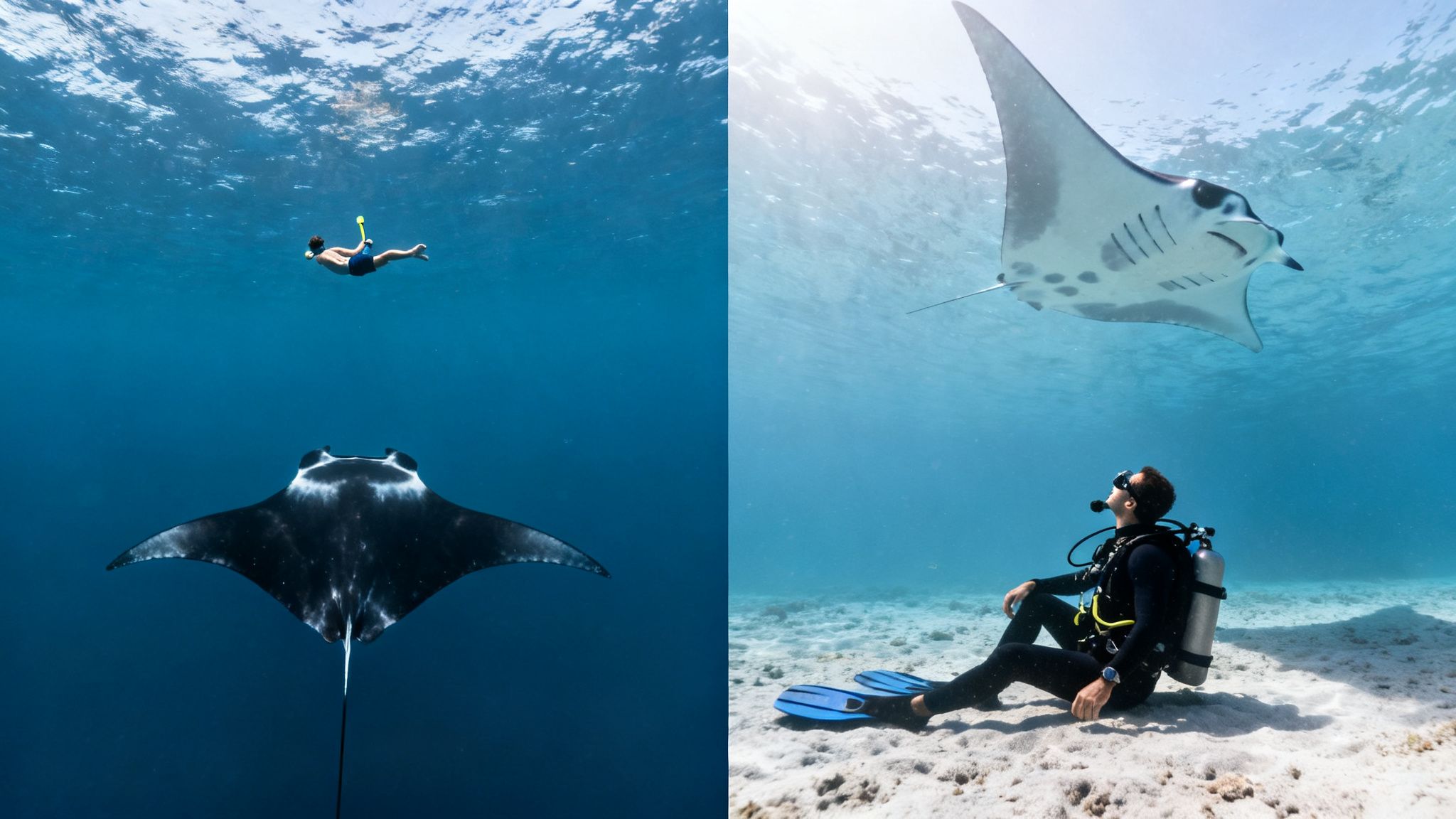
A Scuba Diver’s Perspective
Now, if you happen to be a certified scuba diver, you’re in for a completely different kind of treat. Instead of watching the show from above, you'll get to be part of the audience on the ocean floor, typically around 30-40 feet deep.
From down there, you get to look up as these gentle giants soar right over your head. Their huge, dark silhouettes are perfectly framed by the glow of the snorkelers' lights on the surface. It's dramatic, it's awe-inspiring, and it’s a perspective that truly makes you feel small in the best way possible as they perform their graceful feeding acrobatics.
For this unforgettable adventure, we highly recommend Kona Honu Divers. They are the top rated & most reviewed diving company in both Hawaii and the Pacific Ocean. You can check out their famous manta ray diving tour to see what this incredible bottom-up view is all about.
Manta Ray Snorkel vs Dive Comparison
To help you figure out which adventure is right for you, here’s a simple side-by-side look at the two experiences. You can also get more details by reading our guide on how to dive with a Kona manta ray in Hawaii.
Feature | Snorkeling | Scuba Diving |
|---|---|---|
Certification | None required | Open Water certification needed |
Viewpoint | Top-down, looking from the surface | Bottom-up, from the ocean floor |
Experience | Floating comfortably on the surface | Kneeling or sitting on the sand |
Best For | Families, non-divers, and adventurers of all ages | Certified divers seeking total immersion |
Ultimately, you can't go wrong. Both options offer a front-row seat to one of nature's most spectacular shows. It just depends on whether you want to watch from the balcony or the orchestra pit
Getting All Your Ducks in a Row for the Big Night
Turning that dream of swimming with manta rays into reality is pretty straightforward once you know the basics. Let's walk through everything you need to plan the perfect trip, from the best time to visit to why booking ahead is a must.
People always ask, "When's the best time to go?" The honest answer? Any time. The local manta rays are here year-round, showing up for their plankton dinner party every single night. That said, the summer months usually bring calmer seas, which can make for a more comfortable boat ride.
What to Bring (and What to Leave Behind)
Packing for this adventure is refreshingly simple. The tour company handles almost all the in-water gear, so you just need to think about your own comfort before and after the swim.
Provided by the Tour: Your operator will have you covered with good-quality snorkel gear (mask, snorkel, fins) and a wetsuit top to keep the chill off. Most importantly, they bring the custom light board that attracts the mantas.
What You Should Pack: Just the basics! A towel for drying off, a change of clothes if you want, and definitely a warm jacket or sweatshirt. That boat ride back to the harbor can feel pretty brisk after you’ve been in the water.
Why You Absolutely Must Book in Advance
If you take away one piece of advice, let it be this: book your tour before you even get on the plane to Hawaii. These tours are one of the most popular activities on the Big Island, and the best operators sell out fast—sometimes weeks ahead, especially during holidays or summer break.
As you're planning this unforgettable highlight, it's also a great time to see how you can find incredible beach vacation deals to make the whole Hawaiian adventure a bit easier on the wallet.
Booking with an established, reputable company is more critical now than ever. In 2024, Hawaii's Department of Land and Natural Resources started rolling out new rules to protect the manta ray habitat from getting overcrowded. The plan is to slash the number of permitted tour boats from around 70 down to just 24. This is a huge step for sustainable tourism, but it also means fewer spots are available. You can read more about these new regulations and their impact on KonaSnorkelTrips.com.
Choosing a company with a long history and solid reputation isn’t just about getting a better, safer tour. It's about supporting the operators who are truly committed to protecting the manta rays for years to come.
Finally, let's talk cost. You can expect a standard group snorkel tour to run anywhere from $100 to $175 per person. The price usually depends on the size of the boat, the number of guests, and what's included, so it's always smart to compare a couple of options to find the perfect fit for your trip.
Safe and Responsible Manta Ray Interaction
The incredible chance to swim with manta rays here in Hawaii is a privilege, one that's built entirely on mutual respect. To make sure these encounters can continue safely for years to come, every single person in the water needs to follow one golden rule: passive interaction. Think of yourself as a guest in their house—you're there to observe, not to interfere.
The most important guideline, without a doubt, is to never touch, chase, or try to ride a manta ray. These gentle giants have a delicate mucus layer covering their skin, which is basically their immune system. It’s a shield against bad bacteria. When a person touches them, it can strip off that protective coating and leave them open to nasty infections. By sticking to a strict "look, don't touch" policy, you're personally helping keep Kona's resident manta population healthy.
Gentle Giants of the Sea
If you've never done this before, you might be wondering if it's dangerous. The answer is a huge, resounding "no." Manta rays are famously gentle animals and are absolutely no threat to people.
No Stingers: They aren't stingrays. Unlike their distant cousins, mantas have no stinger or barb on their tail.
No Teeth: They're filter feeders, so their mouths are designed for gulping down microscopic plankton, not for biting. They have tiny, non-functional teeth you’d never even notice.
Peaceful Nature: They are curious and completely focused on finding their next meal, not on being aggressive.
This completely peaceful temperament is what makes the whole encounter feel so serene and magical. You can get a deeper dive into why they're so safe by reading our ultimate guide to safe manta ray snorkeling.
Your safety is also the number one priority for the crew. Our professional guides aren't just experts on manta behavior; they are also lifeguard-certified and trained for open water conditions. They create a secure, controlled environment, handling everything from your gear to your position on the water.
All this is done so you can simply relax, float, and get lost in the incredible underwater ballet happening just inches below you. Just listen to their instructions, and you're set for a magical and totally risk-free adventure.
Frequently Asked Questions About Manta Ray Snorkeling
Let's tackle some of the most common questions we get. Think of this as the final check-in before your big adventure, making sure you feel completely ready to go.
Do I Need to Be a Strong Swimmer?
This one comes up a lot. You definitely don't need to be an Olympic-level swimmer, but you must be comfortable in the water. The whole experience is more about floating than swimming, since you'll be holding onto a specially designed light board. The key is just being at ease in the open ocean at night.
Great operators like Kona Snorkel Trips—the most reviewed and highest-rated snorkel tour company in Hawaii—put safety first. Their expert guides are right there to make sure you feel totally secure, so all you have to do is enjoy the incredible show below. If you're looking to book with a top-notch crew, you can check out their Kona manta ray snorkel tour.
Is It Scary to Snorkel in the Dark?
It's completely natural to feel a little hesitant about being in the ocean after dark. But honestly, the whole setup is designed to feel serene, not spooky. The powerful lights on your board illuminate the water all around you, creating a glowing, otherworldly stage just for the mantas.
The moment you see that first gentle giant glide into the light, any nerves you had tend to just melt away into pure awe. The guides are with you the entire time, keeping the environment safe, controlled, and totally magical.
Are Manta Sightings Actually Guaranteed?
While you can never 100% guarantee a wildlife encounter, the Kona manta ray snorkel gets as close as you can get. The success rate for seeing mantas here is consistently above 90% all year long.
Why? Because these are resident mantas who have figured out that the lights mean a reliable buffet of plankton. On the very rare chance you're in that unlucky few and don't see any, most good companies will let you come back on another night for free.
Comments