Swim with manta rays kona: Kona Night Snorkel Guide & Tours
- Kona Snorkel Trips
- Feb 8
- 12 min read

Picture this: you're floating in the warm, dark Pacific waters off the coast of Hawaii. Suddenly, a giant, graceful shadow emerges from the depths, gliding and somersaulting just inches below you. This isn't a dream—it's the world-famous experience you get when you swim with manta rays in Kona, one of the Big Island’s most unforgettable adventures.
If you're ready for a truly magical night, this guide will walk you through everything you need to know about the manta ray night snorkel.
Your Guide to Kona's Manta Ray Night Snorkel
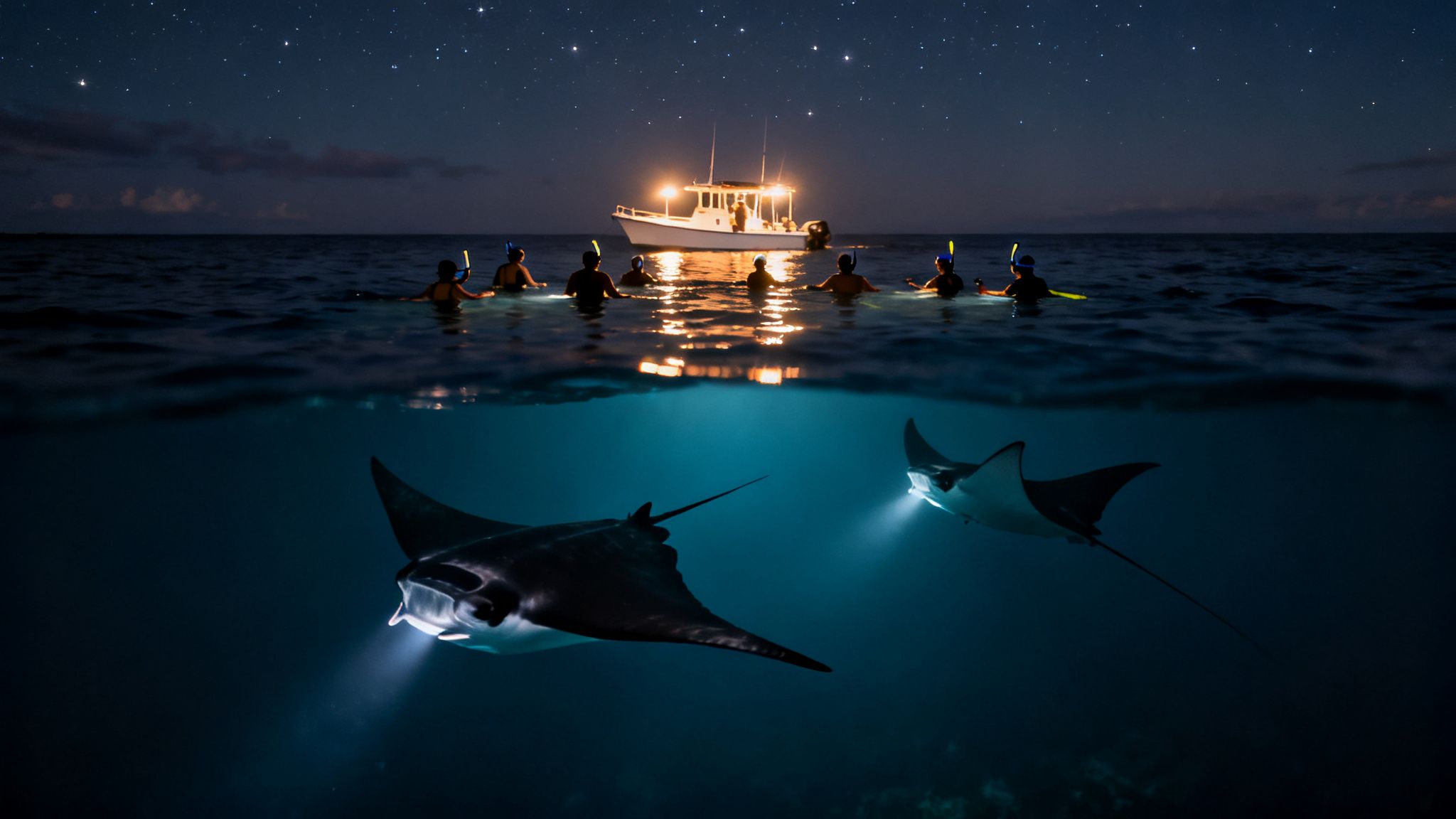
The Kona coast isn't just a good spot for seeing manta rays; it's globally recognized as the premier destination for reliable, almost nightly encounters. While other places might offer seasonal or sporadic sightings, Kona’s unique underwater landscape has created the perfect natural theater for these gentle giants.
For so many visitors, this is a true bucket-list moment, and a little planning goes a long way. If you need some help organizing an adventure this big, you can find some great advice for taking your bucket list trip and making it seamless.
So, how does this nightly spectacle happen? It’s all thanks to a simple combination of light and food. Here’s the magic formula:
A Plankton Hotspot: The volcanic slopes of the Big Island create nutrient-rich currents, which fuel massive blooms of plankton—the manta rays' favorite food.
The Dinner Bell: Decades ago, coastal hotels started shining lights into the water, and tour operators have since perfected the technique. These powerful lights attract huge clouds of plankton.
A Reliable Buffet: Manta rays are incredibly intelligent. They quickly learned that these lights mean an easy, all-you-can-eat meal, so they return to the same spots almost every single night to feed.
Why This Adventure is a Must-Do
The consistency here is just astounding. Each year, around 80,000 people from all over the world come to join these night snorkel tours, making it one of the island's top ecotourism draws.
That popularity is built on an incredible track record. Tour operators report an 85-90% encounter rate year-round! That near-guarantee is thanks to modern light arrays that can boost the plankton density in the water by 300-500%, making it an irresistible invitation for the mantas.
We'll walk you through every step of this experience, from what to expect on the boat to the breathtaking moment these majestic creatures appear in the illuminated water below you. Our goal is to make sure you feel completely prepared for a safe, respectful, and absolutely awe-inspiring encounter.
You can also read our other articles about the manta ray night snorkel in Kona for more stories and pro tips
What to Expect on Your Manta Ray Adventure
The excitement you feel when you book your Kona manta ray swim is just the start. The actual adventure is a beautifully coordinated experience, designed from start to finish for maximum wonder and safety, turning that feeling of anticipation into a memory you’ll hold onto for life.
Your journey kicks off the moment you check in. A friendly, professional crew will greet you, and you’ll immediately feel the buzz from your fellow snorkelers. This isn't just about getting on a boat; it's your orientation into the world of these gentle giants. The crew’s first job is to make sure you feel comfortable, informed, and totally ready for the incredible encounter ahead.
The Sunset Voyage and Safety Briefing
Once you’re aboard, the next phase of your adventure begins against one of the best backdrops in the world. Most tours are perfectly timed to catch the famous Kona sunset. As you cruise out to the manta viewing site, you'll see the sky explode into a canvas of orange, pink, and purple, all reflecting on the calm Pacific.
During this scenic ride, your guides will run through a crucial safety briefing. This isn’t just a list of rules; it’s an engaging introduction to the stars of the show. You'll learn fascinating details about manta ray biology, how they feed, and why respectful interaction is so important. If you want to dive deeper, you can read up on some interesting facts about manta rays to really appreciate what you’re about to see.
The most important rule is simple but profound: observe, don't touch. You’ll learn that touching a manta ray can damage the protective mucus coating on its skin. It's a hands-off experience that always puts their well-being first.
Entering the Underwater Theater
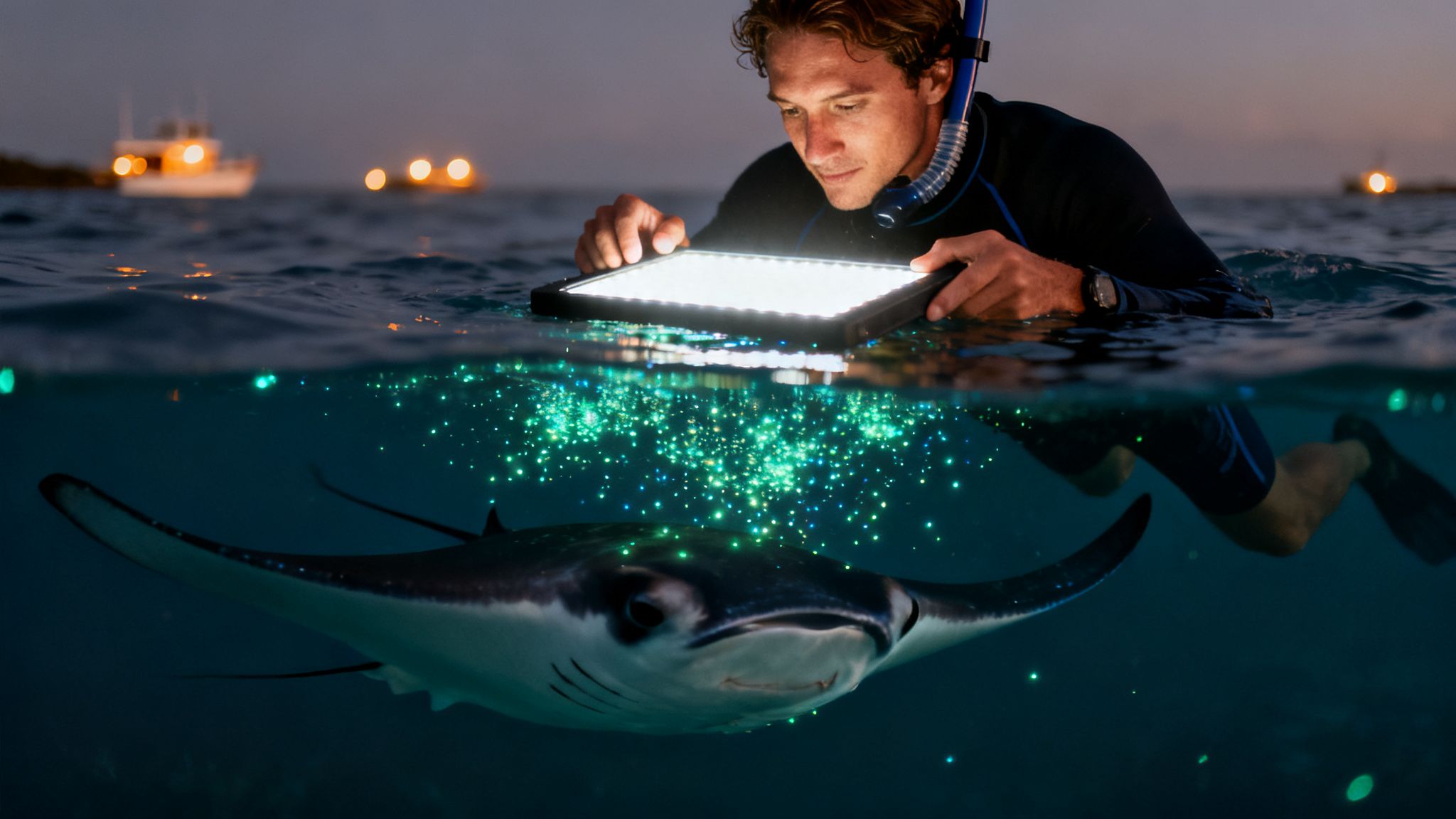
When you arrive at the manta site, the sun has just dipped below the horizon, and the crew gets to work. They’ll set up a custom-made light board—a large, floating raft with powerful lights that shine straight down into the dark water. This board does two things: it gives you a stable handhold in the water, and it acts as a giant dinner bell for the mantas.
Those bright lights attract clouds of microscopic plankton, which is the manta rays’ favorite food. As you slip into the warm water and grab onto the board, you’ll get a front-row seat as this "plankton soup" gathers in the beams of light. The anticipation in these moments is electric. You’re just floating comfortably on the surface, staring down into the illuminated circle below, waiting for the first sign of movement.
The Grand Arrival
And then, it happens.
A huge, dark shape glides effortlessly out of the blackness and into the light. The first manta arrives. There are no words to describe the feeling of seeing a creature with a wingspan of up to 16 feet appear just inches below you. There’s no cage, no glass—just you and these incredible animals in their natural home.
They perform a silent, graceful ballet, swooping and barrel-rolling through the water to gulp down the plankton. Their movements are so fluid and mesmerizing as they soar through the light, their huge white bellies glowing. It’s an unbelievably peaceful and humbling experience that connects you to the magic of the ocean in a way that few things can.
How to Choose the Best Manta Ray Tour
Picking the right tour is your first big step to an incredible night when you swim with manta rays in Kona. With so many operators and tour times out there, a little homework goes a long way in making sure your adventure is everything you dreamed it would be. It's about looking past the price tag and really thinking about the kind of experience you want.
Most manta ray snorkel tours boil down to two main options: the sunset tour and the after-dark tour. Each one has its own vibe and unique perks, so the choice really comes down to the atmosphere you're looking for.
Sunset Tours vs After Dark Tours
The Sunset Tour is a classic for a reason. It’s like getting a two-for-one deal on the Big Island’s best experiences. You’ll cruise out on the boat in the late afternoon, catching those jaw-dropping views of the Kona coastline as the sun sinks into the ocean, splashing the sky with fiery oranges and pinks. It's a fantastic option if you love photography or just want that scenic boat ride. Then, once the sun disappears, you slip into the water for the main event.
On the other hand, the After Dark Tour has a completely different kind of magic. Leaving the shore after night has fully fallen, this tour plunges you right into the quiet darkness of the ocean. It's just you, the stars above, and the glowing light board below. There’s a peaceful, almost mystical feeling to being in the water under a starry sky, which a lot of people feel makes the manta encounter even more wondrous.
Key Takeaway: If you’re hoping for a picturesque journey that combines a beautiful sunset with the manta encounter, the Sunset Tour is your best bet. If you'd rather have a more focused, tranquil, and immersive underwater experience under the stars, go for the After Dark Tour.
For a deeper dive, you can explore a detailed comparison in our guide to the top manta ray snorkel Kona tours to see exactly which one fits your trip.
Finding the Right Operator for Your Adventure
The company you go with makes a huge difference in how your night unfolds. For snorkelers, Kona Snorkel Trips is a great option for a tour because it's the most reviewed and highest rated snorkel tour company in Hawaii. Their expert guides and dedication to small groups make for a personal and safe adventure. You can learn more about their specific manta ray snorkel tour in Kona.
If you're a certified scuba diver wanting a view from below, the choice is just as clear. Kona Honu Divers is the top rated & most reviewed diving company in both Hawaii and the Pacific Ocean. Their manta ray diving tour lets you watch the whole spectacle from the ocean floor, looking up as these gentle giants glide right over you.
For anyone looking for a truly special outing with family or friends, a Private Charter is the ultimate way to go. You get to customize the trip, have the boat all to yourselves, and enjoy the crew's full attention.
Kona Manta Ray Tour Comparison
To make the decision a little easier, we've put together this quick comparison table. It's designed to help you see the options side-by-side and find the perfect fit for your manta ray adventure.
Tour Type | Best For | Key Feature | Recommended Operator |
|---|---|---|---|
Sunset Snorkel Tour | Photographers & Scenery Lovers | Combines a beautiful sunset cruise with the manta ray snorkel. | Kona Snorkel Trips |
After Dark Snorkel Tour | Purists & Stargazers | A magical, focused experience under a canopy of stars. | Kona Snorkel Trips |
Manta Ray Scuba Dive | Certified Divers | Viewing the mantas from the unique perspective of the ocean floor. | Kona Honu Divers |
Private Charter | Families & Special Occasions | An exclusive and personalized adventure tailored to your group. | Varies |
No matter which path you choose, you're in for a night you'll never forget. The best tour is simply the one that matches your comfort level and what you want to get out of the experience. Whether you're snorkeling at sunset or diving into the dark, an amazing encounter awaits.
What to Pack and What Gear Is Provided
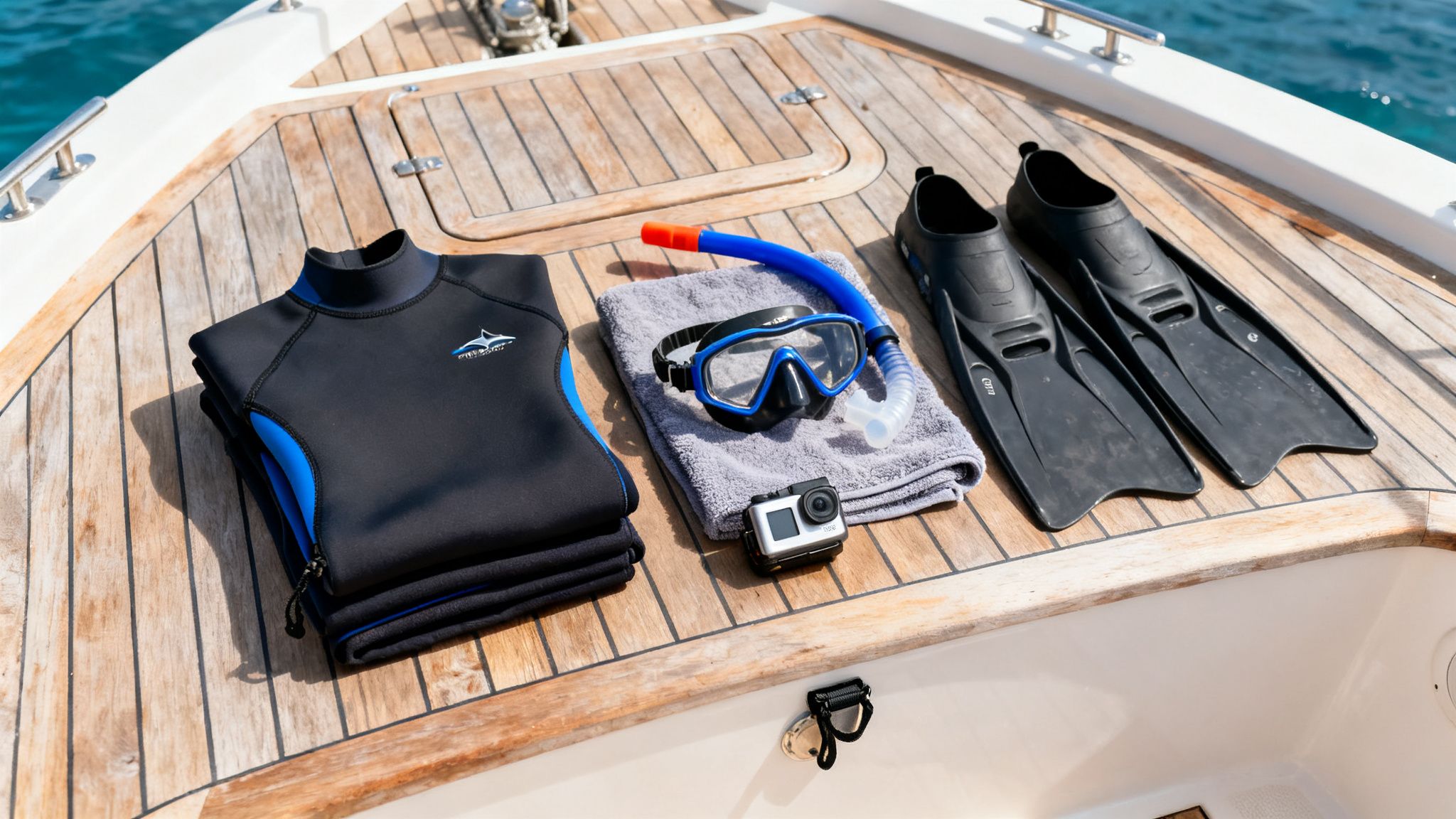
Knowing exactly what to bring—and what to leave behind—is the secret to a perfect, stress-free night when you swim with manta rays in Kona. When you’re properly prepared, you can focus 100% on the incredible show happening right in front of you, not on wishing you’d packed a warmer jacket.
The great news is that any top-tier tour operator will provide all the essential gear you need in the water. That means you don’t have to stress about lugging bulky equipment all the way to Hawaii.
Gear Provided by Your Tour Operator
Reputable companies don’t mess around when it comes to safety and comfort. They provide professional-grade equipment for every guest, which not only lightens your packing load but also ensures everything is well-maintained and perfect for the specific conditions of a night snorkel.
You can pretty much always count on them having:
Wetsuits: Even in Hawaii, the ocean can feel surprisingly cool at night, especially after you've been floating for a while. A wetsuit is key to staying comfortable so you can enjoy every single minute with the mantas. For some extra prep, you can learn about different kinds of cold water wetsuits to know what to expect.
Mask, Snorkel, and Fins: High-quality, properly sanitized gear will be waiting for you. The crew is fantastic about making sure your mask has a good seal to prevent annoying leaks, giving you a crystal-clear view of the action.
Flotation Devices: You’ll be holding onto a large, stable light board the entire time. This makes the experience incredibly relaxing and easy, even if you’ve never snorkeled before.
Your Personal Packing Checklist
While all the main gear is covered, there are a few personal items you’ll be glad you brought along to make your trip absolutely perfect. Think of this as your personal comfort kit for before and after you hit the water.
Pro Tip: Show up to the boat already wearing your swimsuit under your clothes. It’s a simple move that saves a ton of time and hassle, letting you get ready on board in a flash.
Here’s a quick checklist of what you should toss in your bag:
Swimsuit: The most important item! Wear it right to the marina.
Towel: An absolute must-have for drying off after your snorkel.
Warm Layer: Trust us on this one. Bring a hoodie or a jacket. The boat ride back can get chilly with the ocean breeze, and you’ll be so happy you have it.
Reusable Water Bottle: Staying hydrated is always a smart move.
Underwater Camera: You do not want to miss the chance to capture this magic. A GoPro or a similar waterproof camera is perfect for the job.
Gratuity for the Crew: If you had an amazing time, it’s customary to tip the hard-working guides and boat captain for their efforts.
Packing just these few essentials will set you up for an incredible, comfortable, and unforgettable adventure. And if you’re looking for more great advice for your ocean excursions, check out our guide to the top spots and gear for snorkeling in Hawaii.
Understanding Manta Ray Conservation and Responsible Tourism
When you swim with manta rays in Kona, you’re doing more than just checking off a bucket-list item. You're stepping into a delicate marine ecosystem, becoming part of a unique partnership between adventure and conservation. How you participate plays a real role in protecting these incredible animals for years to come.
Choosing a responsible tour operator is the key to making sure your adventure has a positive impact. The whole experience is built on respect, education, and active participation in the efforts to study and preserve Kona’s manta ray population. By making an informed choice, you’re directly supporting an industry that puts the health and safety of these gentle giants first.
The Golden Rule: No Touching Allowed
The single most important rule for any manta ray encounter is simple but absolutely non-negotiable: look, but don't touch. This isn't just about being polite; it’s a critical measure to protect the mantas' health.
Manta rays have a delicate, slimy mucus layer covering their bodies. Think of it as their skin's first line of defense against harmful bacteria and parasites in the ocean. When a person touches a manta, their hand wipes away a patch of this crucial protective film, leaving the animal vulnerable to potentially deadly infections.
This protective coating is essential for their immune system. A single touch can compromise their health, which is why reputable guides will brief you thoroughly on maintaining a safe and respectful distance.
Your guides will instruct you to be passive in the water, just floating and letting the mantas control the entire encounter. By simply observing, you keep them safe while still getting a breathtakingly close view as they glide and barrel-roll right below you.
How Your Tour Supports Manta Ray Research
Believe it or not, your adventure does more than just create amazing memories—it actively helps with scientific research. Many of Kona's best tour operators are key partners in conservation, using every trip as a chance to gather important data on the local manta ray population.
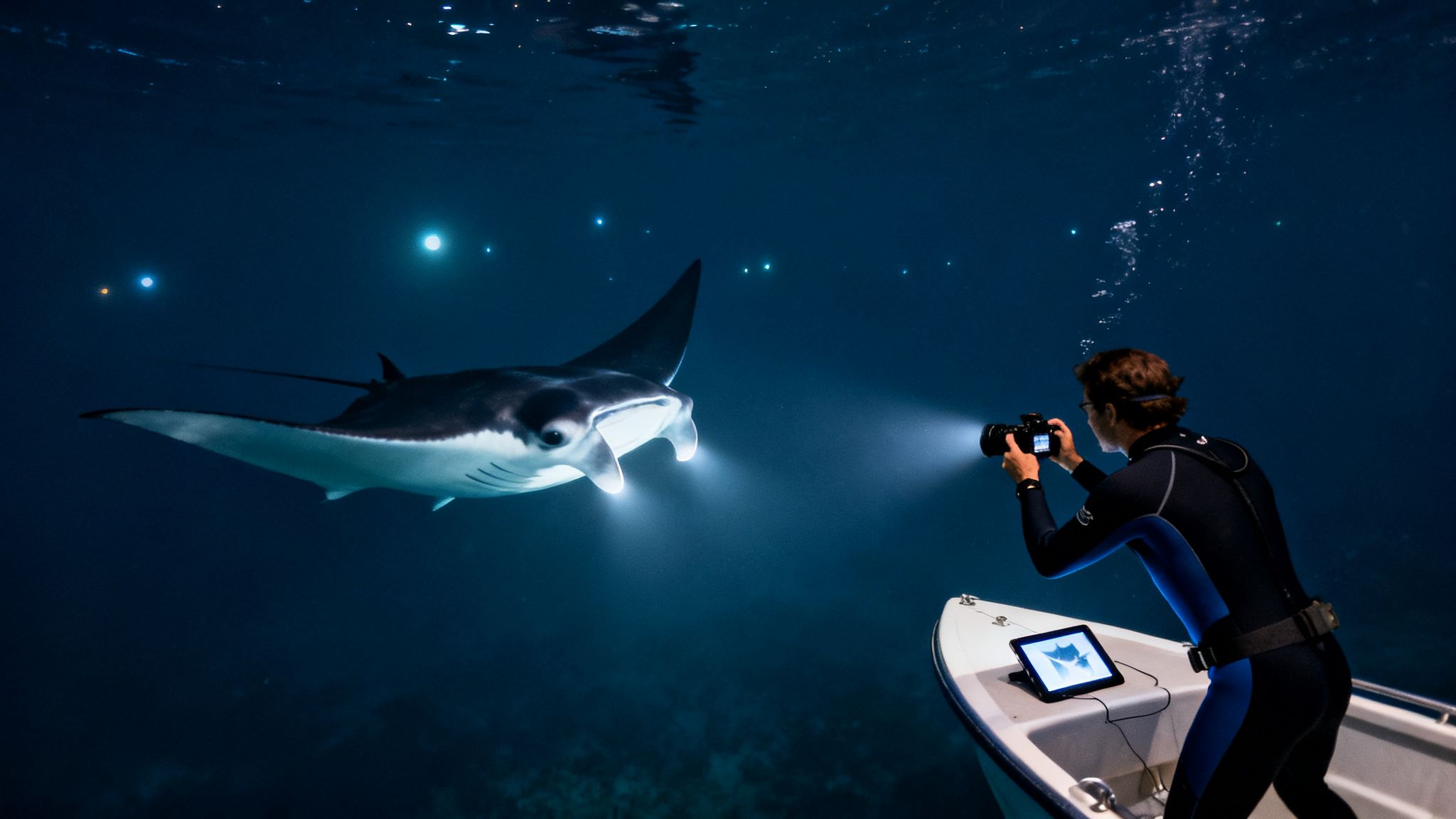
One of the biggest contributions comes from photo-identification. Just like a human fingerprint, the spot pattern on each manta ray's underside is completely unique. Guides and researchers use underwater photos to document these patterns, which allows them to identify and track individual animals over their lifetimes.
This ongoing "manta census" helps scientists:
Monitor Population Health: By keeping tabs on individuals, researchers can get a clear picture of the overall health and size of the manta population.
Study Behavior and Migration: Photo-ID helps uncover their movement patterns, social circles, and feeding habits.
Protect Their Habitat: Understanding where mantas feed and gather is vital for protecting the ocean habitats they depend on.
This amazing collaborative effort has identified a thriving local community. Kona is home to over 450 individual mantas, cementing its status as a world-class aggregation site where both reef (Mobula alfredi) and giant (Mobula birostris) manta rays hang out year-round. Globally, Kona's model shows how tourism can actually help safeguard mantas, which are listed as vulnerable worldwide. You can learn more about how Kona became a premier global destination for manta encounters.
By choosing a responsible company like Kona Snorkel Trips—known as the most-reviewed and highest-rated snorkel tour company in Hawaii—you are directly supporting these vital conservation initiatives. Your tourism dollars help fund research, promote education, and ensure that the incredible opportunity to swim with manta rays in Kona is around for generations to come.
Your Questions Answered: Manta Ray Snorkel FAQs
Even after getting all the details, it's totally normal to have a few lingering questions before you're ready to hop in the water. We get it! So, here are some quick and clear answers to the questions we hear most often from guests planning to swim with manta rays in Kona. Our goal is to make sure you feel 100% confident and excited for the adventure ahead.
Is There a Best Time of Year to See Manta Rays?
This is one of the best parts about the Kona experience: there’s really no “manta ray season.” The reef mantas that call this coastline home don’t migrate, which means they show up for their nightly plankton buffet all year long.
So, whether you’re visiting the Big Island in the peak of summer or the middle of winter, your chances for an amazing encounter are consistently high. We see a success rate of over 90% year-round!
What Happens if We Don't See Any Manta Rays?
While the mantas are incredibly reliable, they are wild animals, and on very rare occasions, they might decide to skip dinner. It doesn't happen often, but it's a possibility. Reputable tour operators completely understand this and have policies in place to take care of you.
The standard practice for most companies is to invite you back on another night, either for free or at a deep discount. Just be sure to ask about the specific policy when you book. This is exactly why we suggest scheduling your manta ray snorkel early in your vacation—it gives you plenty of flexibility to go again if needed.
Is Swimming with Manta Rays Safe?
Absolutely! This is probably the most common question we get, and the answer is a big, confident yes. Manta rays might look intimidating, but they are true gentle giants.
Unlike their stingray cousins, manta rays have no stingers, no barbs, and no teeth. They are filter feeders, and their only interest in the area is the plankton drawn to the lights. The experience is all about peaceful, passive observation, making it a safe and awe-inspiring activity for everyone.
Key Safety Insight: The main focus on these tours is keeping both you and the mantas safe. You’ll be holding onto a sturdy, floating light board the whole time, with expert guides right there with you. The "no touching" rule is a big one—it protects the mantas' delicate skin and ensures the encounter is safe and respectful for everyone.
If you have more questions, feel free to dive into our complete list of Manta Ray FAQs to cover every last detail. This adventure is designed to be as seamless and worry-free as possible so you can just focus on the magic.
Ready for the adventure of a lifetime? Manta Ray Night Snorkel Kona Hawaii Tours offers a world-class experience, bringing you face-to-face with these majestic creatures in their natural habitat. Book your tour today!
Comments