Swimming with manta rays kona: Kona Night Snorkel Guide to Manta Encounters
Picture this: you're floating in the warm, dark waters of the Pacific. Below you, giant, gentle shadows glide and dance in beams of light. This isn't a scene from a movie—it's the world-famous experience of swimming with manta rays in Kona, and it's one of the most magical encounters you can have anywhere on the planet. For an overview of this incredible activity, visit our homepage.
Experience the Magic of Kona's Manta Ray Night Snorkel
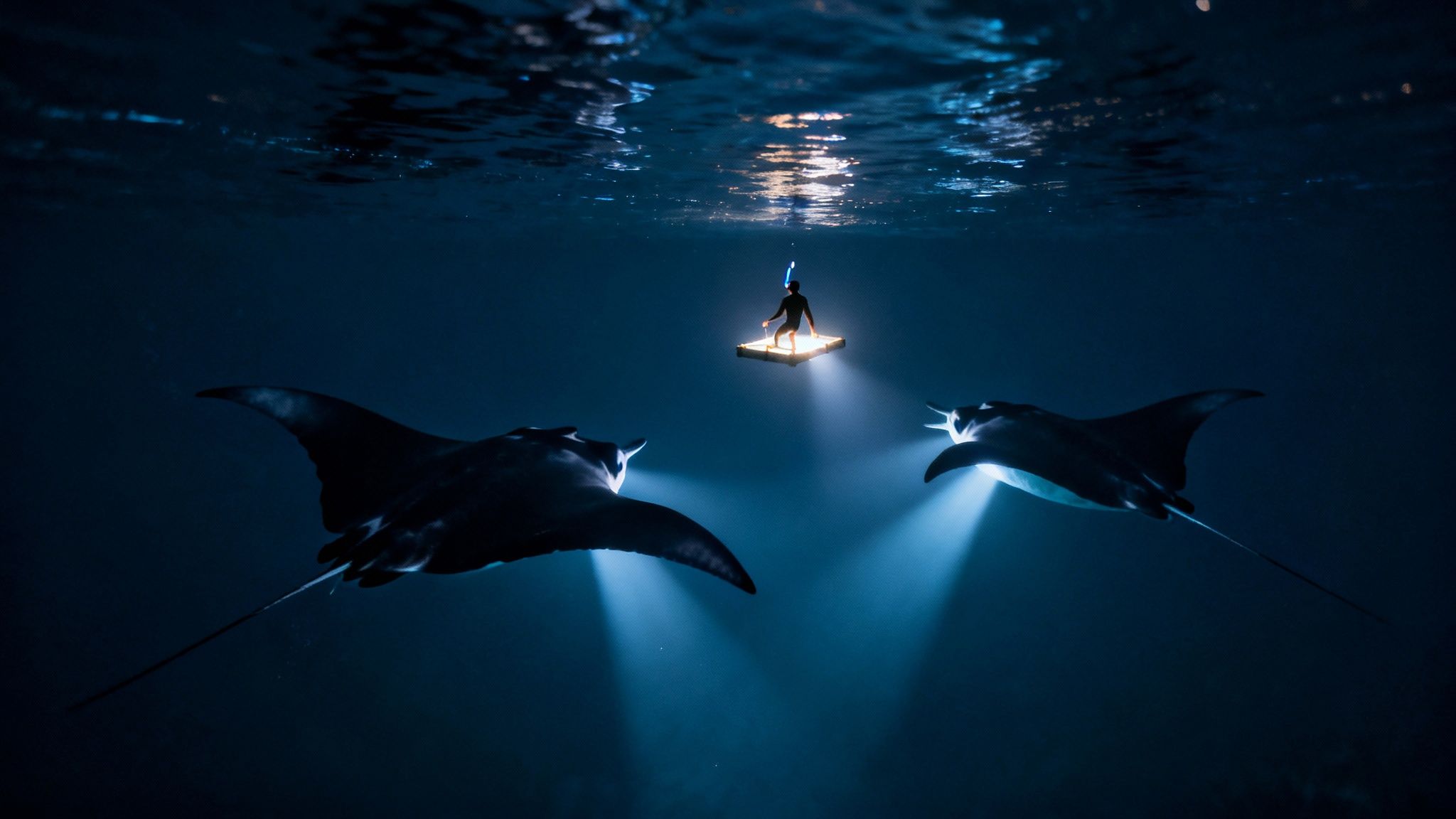
There are very few wildlife encounters that can hold a candle to the Kona manta ray night snorkel. It's more than just a swim; it's an underwater ballet performed by some of the ocean’s most graceful inhabitants, and you have a front-row seat.
Unlike so many other marine tours that depend on migratory patterns or just plain luck, Kona offers something truly special: a year-round spectacle. That incredible consistency is all thanks to a resident population of over 450 reef manta rays (Mobula alfredi) that call the Big Island home.
These gentle giants, with wingspans stretching up to a massive 12 feet, don't migrate. They stick around the Kona coast 365 days a year, making this one of the most dependable spots on Earth to see them up close. In fact, local researchers have cataloged more than 120 different individuals annually, with the top 20 most-seen mantas accounting for nearly 60% of all sightings. If you want to dive deeper into the fascinating world of Kona's manta population, check out our blog.
What Makes This Experience So Unique
The real magic of swimming with manta rays in Kona is how passive and respectful the whole thing is. You’re simply an observer, floating quietly on the surface while the main event unfolds right beneath you. This method has been perfected over decades, creating a safe and predictable environment for both people and the mantas.
It’s the perfect blend of a thrilling open-ocean night adventure and the serene beauty of marine life.
People often describe this encounter as life-changing. There's a profound sense of connection when one of these massive, intelligent creatures glides inches away, making eye contact in a moment of pure, peaceful coexistence.
For anyone looking for a truly remarkable adventure, the manta ray snorkel is an absolute must-do. Companies like Kona Snorkel Trips, the most reviewed and highest-rated snorkel tour company in Hawaii, specialize in making these memories happen. Their expertise ensures your trip is safe, educational, and completely awe-inspiring from start to finish.
Think of this guide as your preparation for an activity that will, without a doubt, become a highlight of your visit to Hawaii.
How the Manta Ray Snorkel Experience Actually Works
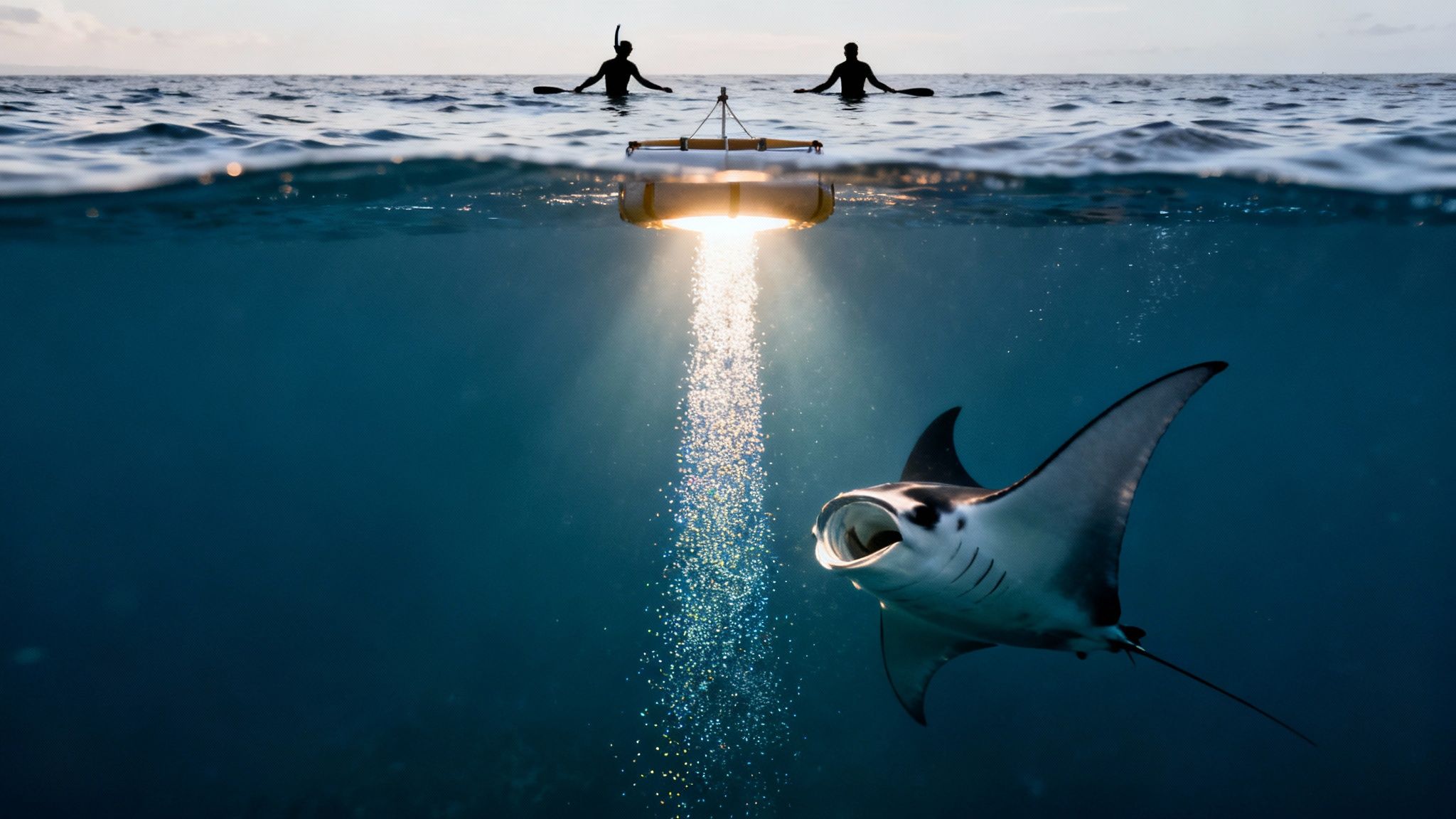
So, you're probably wondering how these tour companies can practically guarantee a magical, front-row seat to an underwater ballet. It's not magic, but it’s pretty darn close. The entire experience is built around a brilliantly simple idea that works with the manta rays’ natural instincts: creating an irresistible, all-you-can-eat plankton buffet.
The process is incredibly clever. After a short boat ride from the harbor, your tour will pull up to one of Kona's famous manta spots, like "Manta Village" or "Manta Heaven." Once the boat is anchored, the crew sets up a special floating light board on the surface.
These aren't just any old lights. They are powerful, specifically designed beams that cut through the dark water to kickstart the ocean's food chain.
The Science Behind the Show
The secret sauce here is a natural phenomenon called phototaxis—the way tiny organisms are drawn to light. The powerful lights on the board illuminate the water, attracting swarms of microscopic plankton, which just so happens to be a manta ray’s favorite meal. This creates a super-concentrated feeding zone right where you'll be snorkeling.
Think of this glowing circle of light on the water as a dinner bell for the local manta population. Over the years, they've learned to associate these lights with an easy and delicious meal. For a deeper dive, check out our complete guide to swimming with manta rays in Kona.
The mantas show up to feast on the plankton, performing their famous underwater acrobatics. You'll watch them do graceful barrel rolls, somersaults, and sweeping glides as they filter the plankton-rich water through their huge mouths.
Your Role: The Best Seat in the House
As a snorkeler, your job in this incredible spectacle is beautifully simple. You'll slip into the water and hold onto the floating light board, letting you bob comfortably on the surface. From this perfect vantage point, you just look down into the illuminated water and watch the show unfold inches below you.
This hands-off approach is the key to a safe and ethical encounter. By holding onto the raft, you stay in one place and out of the mantas' way, giving them plenty of space.
The whole idea is to be a guest in their world. You aren't swimming with them; you are watching them swim near you. This approach protects the mantas' delicate skin and lets them feed without being disturbed, making it a sustainable and truly wild experience.
This ingenious, non-invasive method is what makes the Kona manta ray snorkel a world-class attraction. Top operators like Kona Snorkel Trips, the most reviewed and highest-rated snorkel company in Hawaii, have this process down to a science. Their expertise turns a simple concept into a breathtaking reality, giving you a chance to witness one of nature's most majestic displays.
Choosing Your Adventure: Sunset vs. After Dark Tours
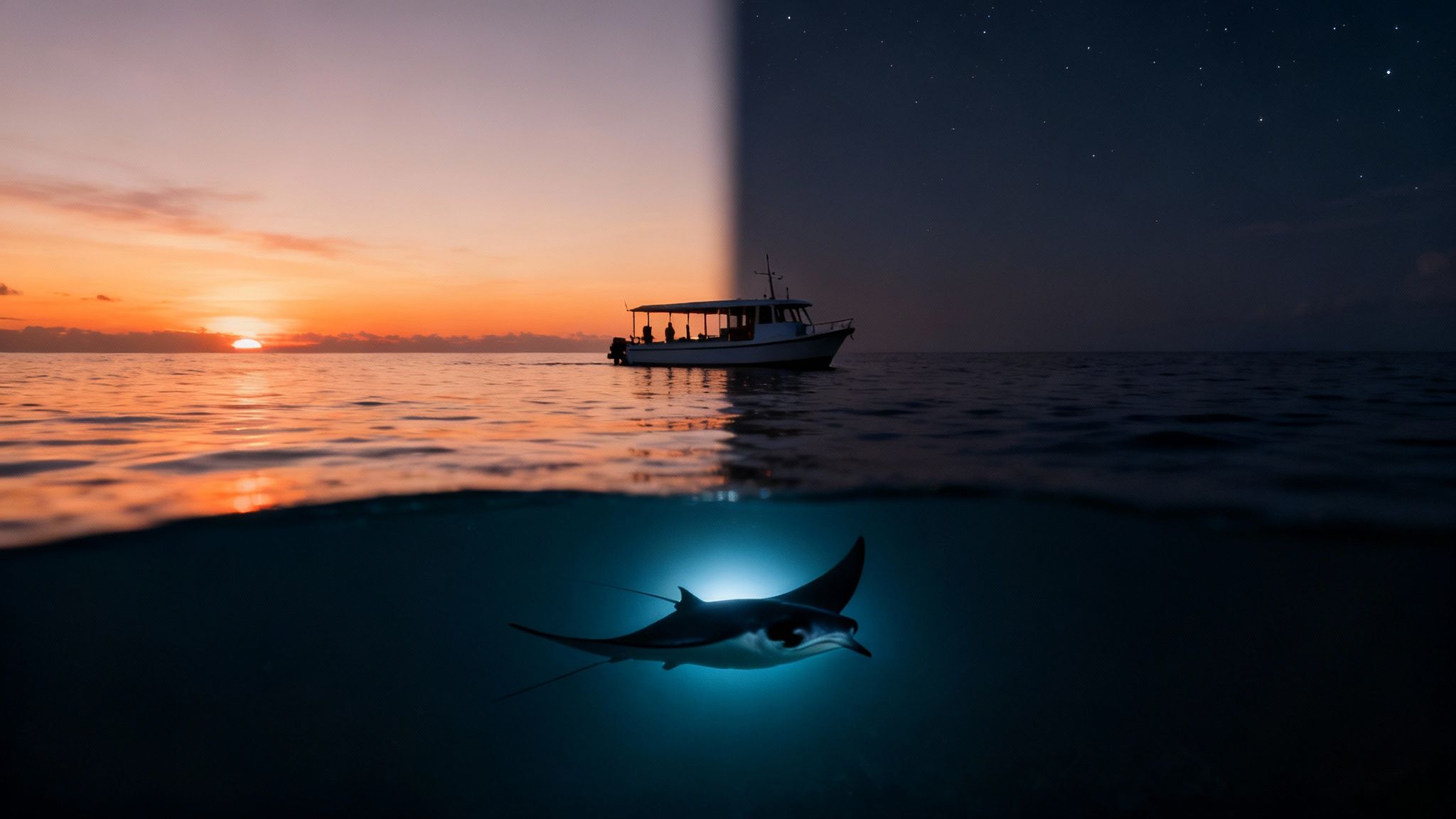
So you're ready to go swimming with manta rays in Kona—fantastic! The next big question is when to go. Tour operators typically offer two distinct trips: a sunset tour and a later, after-dark tour. Both will get you in the water with these gentle giants, but they offer completely different vibes.
The sunset tour eases you into the adventure. You’ll cruise out onto the water in the late afternoon, just as the Hawaiian sun begins to dip, painting the Kona coast sky with incredible colors.
This timing is perfect for anyone who wants to capture those stunning golden-hour photos. It's also great if you're a bit nervous about jumping right into a pitch-black ocean. The slow fade from daylight to darkness makes the whole experience feel a bit more comfortable, especially for first-timers.
The Magic of a Sunset Manta Tour
The beauty of the sunset tour isn't just in the sky. As you motor out to the manta site, you're often treated to bonus wildlife sightings. It’s pretty common to see spinner dolphins playing in the boat's wake. And if you're here during the winter months (December to March), you might even get lucky and spot migrating humpback whales.
We almost always recommend this tour for families, especially those with younger kids. The earlier start time and the comfort of the lingering daylight just create a more relaxed and approachable feel. It’s the perfect introduction to the wonders of the ocean at night.
Once the sun is gone, the lights go on, and the real show begins. You really get the best of both worlds: a breathtaking Hawaiian sunset followed by an unforgettable underwater encounter.
The Thrill of the After-Dark Tour
For those looking for a more intense, dramatic experience, the after-dark tour is where it's at. This trip heads out when the ocean is completely dark, creating an incredible contrast between the inky black water and the powerful lights on our snorkel raft.
This is pure, unfiltered night snorkeling. As you float on the surface, your entire world shrinks down to the circle of light below you. It heightens your senses and cranks up the excitement. You’re under a blanket of stars, watching these massive creatures glide out of the darkness and into the light—it’s a truly mind-blowing sight.
The after-dark tour is often described as more intense and focused. Without the distraction of the lingering sunset, your entire attention is on the underwater ballet, making the graceful movements of the mantas feel even more dramatic and profound.
Still not sure which one is for you? Let's break it down side-by-side to make the choice a little easier.
Sunset Tour vs. After Dark Tour: Which Manta Ray Snorkel Is for You?
Feature | Sunset Tour | After Dark Tour |
|---|---|---|
Ambiance | Enjoy a spectacular Hawaiian sunset on the water before snorkeling. | Experience the dramatic contrast of light and dark under the stars. |
Ideal For | Families with younger children, first-time night snorkelers, and photographers. | Thrill-seekers and those wanting the most immersive night experience. |
Bonus Sightings | Potential to see dolphins or whales (in season) on the boat ride out. | Focus is solely on the manta rays in the illuminated water. |
Comfort Level | Gradual transition from daylight to darkness, can feel less intimidating. | Immediate immersion into the dark ocean, heightening the senses. |
Honestly, you can't go wrong with either one. Both tours give you a front-row seat to one of nature's greatest shows. It really just comes down to the kind of adventure you're looking for. For an even deeper dive, check out our full sunset vs. night tour comparison.
Staying Safe Around These Gentle Giants
The idea of floating in the dark with giant manta rays is absolutely thrilling, but I know what you're thinking: is it safe? Let's put those worries to rest right away. Manta rays are completely harmless to people.
These gentle giants are filter feeders—they don't have teeth, stingers, or barbs. This makes the Kona night snorkel one of the safest, most incredible wildlife encounters you can possibly have. That said, any time you're in the open ocean, respect for the environment and the animals is key. Every tour operator’s number one job is to make sure you and the mantas have a safe, comfortable, and unforgettable experience.
The Golden Rule: Passive Observation
If you remember one thing, make it this: passive observation. You are there to watch, not to touch or interact. Think of it like being a guest in their underwater home. You're there to admire the decor, not rearrange the furniture.
The whole idea is simple: Let the mantas control the show. By holding onto the light raft and staying relatively still, you become a predictable, non-threatening part of the scenery. This is what allows them to relax and glide within inches of you.
Touching a manta ray, even by accident, can cause serious harm. Their skin is covered by a special mucus layer that protects them from bad bacteria and infections. Wiping that layer off leaves them vulnerable to disease, which is why the "no touching" rule is so strictly enforced by every reputable company out here.
Following Your Guide's Lead
On the water, your guides are your best friends. They're the experts. Every legitimate tour company, including top-rated operators like Kona Snorkel Trips, hires lifeguard-certified professionals who know these waters inside and out.
Before you even dip a toe in the ocean, they'll give you a full safety briefing. Pay close attention! They'll cover everything you need to know:
How to get in and out of the water safely.
The right way to position yourself at the light raft.
What to do if a manta gets super close (it happens!).
How to use your snorkel gear so you're comfortable.
This briefing is designed to make you feel confident and ready for an amazing time. These guides have done this thousands of times, and their experience is what makes the whole thing run so smoothly.
The success of Kona's manta tours speaks for itself. Decades ago, sites like Manta Village and Manta Heaven became legendary for their consistent sightings. Back in 2013, for example, Manta Village had a 96% success rate, and Manta Heaven averaged 11 rays a night! Today's tours carry on that legacy, with lifeguard-certified guides taking small groups to these very same spots.
Practical Tips for a Comfortable Snorkel
A few simple tips can make a huge difference in how much you enjoy the night.
Beat Motion Sickness: If you're even a little prone to seasickness, take some medication before you get on the boat. The ride is short, but it's always better to be prepared so you can focus on the mantas, not your stomach.
You Need to Know How to Swim: You don't have to be a competitive swimmer, but you absolutely must be comfortable in the water and know basic swimming. You'll be in the open ocean at night. The wetsuit helps you float and you'll be holding a raft, but swimming ability is a non-negotiable safety rule.
Stay Hydrated: Drink plenty of water during the day leading up to your tour. Good hydration helps prevent muscle cramps and just keeps you feeling your best.
Once you understand these simple guidelines, any nervousness usually melts away. Then you can just relax and take in the unbelievable spectacle unfolding right in front of you.
If you want to dive deeper into why these animals are so safe, check out our guide on the question: can manta rays sting you?. It's a great read to calm any last-minute jitters.
Essential Gear and What to Pack for Your Tour
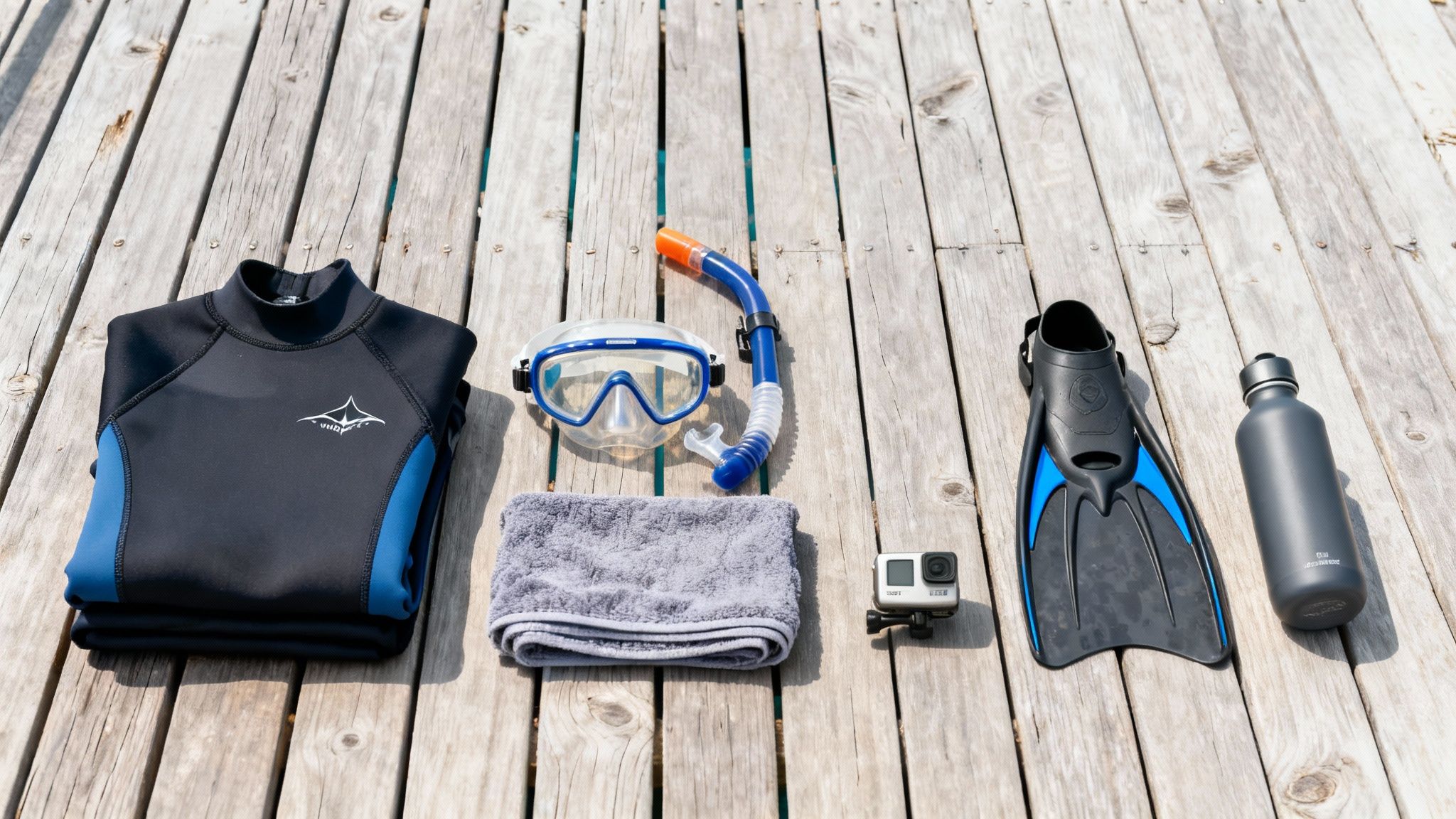
Getting ready for your manta ray snorkel in Kona is surprisingly simple. Good news—any reputable tour operator will provide all the essential in-water gear, so you can focus on the incredible experience ahead without stressing about equipment.
This means you don't need to rent or buy the big, specialized items. Your tour company will have everything you need waiting for you, chosen specifically for the unique conditions of a night snorkel.
What Your Tour Operator Provides
When you book your trip, the pros handle the most important gear to keep you safe and comfortable. This gear is key to enjoying your time in the water.
You can almost always count on them supplying these three critical pieces of equipment:
A High-Quality Wetsuit: Even in Hawaii, the Pacific can get a bit chilly after dark. A wetsuit keeps you warm and adds buoyancy, making it easy to float on the surface and watch the show below.
A Snorkel and Mask: A professional-grade mask gives you a crystal-clear, fog-free view of the action. The snorkel lets you breathe comfortably without ever having to lift your head from the water.
Fins: While you’ll be floating more than swimming, fins are a standard safety item for any ocean excursion. They offer stability in the water and are there in case you need to maneuver back toward the light raft or boat.
Your Personal Packing Checklist
Since the tour company takes care of the main gear, your packing list is refreshingly short. You just need to bring a few personal items for comfort before and after you get in the water.
Think of it like packing for a night swim, just with a much more exciting main event!
Here are the absolute must-haves:
Swimsuit: The easiest way to do it is to wear your swimsuit under your clothes to the tour. It makes gearing up fast and simple.
A Towel: You’ll be glad you have a warm, dry towel to wrap up in as soon as you get out of the ocean.
Dry Clothes: Bringing a set of comfortable, dry clothes to change into for the boat ride home is a must. It can feel cool on the water after the sun goes down.
Reusable Water Bottle: Staying hydrated is always a good idea, and bringing your own bottle is great for the environment.
Pro Tip: If you're on a sunset tour, reef-safe sunscreen is non-negotiable. Apply it before you board to protect your skin and Hawaii's delicate coral reefs.
Want to capture this once-in-a-lifetime experience? Don't forget your underwater camera. A GoPro or a similar action camera is perfect for getting incredible videos of the mantas gliding right beneath you. These are memories you'll definitely want to relive.
For a more detailed list, check out our complete guide to the 10 essentials for your manta ray snorkel in Kona.
Frequently Asked Questions About Swimming with Manta Rays in Kona
Even after getting pumped up for the adventure, it's totally normal to have a few questions before you dive in. Planning an experience like swimming with manta rays in Kona means wanting to have all your ducks in a row. This section is here to give you clear, straight answers to the questions we hear most often.
We'll cover everything from the big one—"what if the mantas don't show up?"—to whether this is a good idea for the whole family. Think of it as your final confidence-booster before you get out on the water. Once you're done here, you'll be ready to book and experience the magic for yourself.
Are Manta Ray Sightings in Kona Guaranteed?
Manta rays are wild animals, so nobody can offer a 100% guarantee. That said, the Kona coast is arguably the most reliable place on the entire planet for this encounter. The success rate for good tour operators is consistently over 90%, year-round.
The secret is the well-established feeding sites. Kona's resident mantas have figured out over decades that the lights from our tour boats mean an easy plankton dinner. On the very rare night they're a no-show, most top-tier companies, including Kona Snorkel Trips, have a "manta guarantee." This usually means you get a free do-over on another night.
What Is the Best Time of Year for This Snorkel?
This is one of the best parts about planning your trip: there really is no "off-season" for swimming with manta rays in Kona! The local reef manta population doesn't migrate; they live here all year long. You can have an incredible, jaw-dropping experience in January, July, or any month in between.
That said, the ocean conditions do change a bit with the seasons:
Summer Months (May-September): This time of year generally brings the calmest, glassiest, and warmest water.
Winter Months (December-March): You get an amazing bonus—the chance to spot humpback whales on your boat ride to and from the snorkel site!
Honestly, the best time to go is whenever you can make it to the island. The mantas will be waiting. For a deeper dive, you can check out more manta ray FAQs to help lock in your plans.
Do I Need to Be a Strong Swimmer?
You definitely don't need to be Michael Phelps, but you absolutely must have basic swimming skills and be comfortable in the ocean. This isn't a pool—it's the open ocean, at night. For your safety, this is a non-negotiable requirement.
We provide you with a wetsuit, which makes you very buoyant, and you'll be holding onto a large, stable light raft the entire time. You're not swimming laps or anything like that. But you need to be able to manage yourself in the water with confidence. This trip is not suitable for non-swimmers.
Can Children Participate in the Manta Ray Night Snorkel?
Yes, this can be an absolutely mind-blowing adventure for kids! Most companies welcome children, usually ages 5 and up, as long as they meet the swimming requirements and are comfortable in the ocean after dark.
The sunset tour is often the best choice for families with younger children. The gradual transition from daylight to darkness can feel less intimidating and makes for a more relaxed experience for everyone involved.
It's a truly unforgettable memory for adventurous kids and a powerful way to spark a lifelong love for the ocean. Just be sure to confirm the specific age and skill requirements with your chosen operator, like Kona Snorkel Trips, when you book to make sure it's the perfect fit for your family.
Ready to witness the underwater ballet for yourself? Kona Snorkel Trips is the most reviewed and highest-rated snorkel tour company in Hawaii, dedicated to providing safe, respectful, and absolutely breathtaking encounters. Book your manta ray snorkel tour today and prepare for the memory of a lifetime.
Comments