Swimming with manta rays kona: The Ultimate Kona Snorkeling Guide
- Byron
- Feb 3
- 11 min read
Picture this: you're floating in the warm, dark Pacific Ocean, and just below you, giant, graceful creatures with wingspans wider than you are tall glide through the water like underwater angels. This isn't a dream; it's the magic of swimming with manta rays in Kona, and it’s one of the most reliable and jaw-dropping wildlife encounters on the planet.
This guide will walk you through everything you need to know to make this incredible experience a reality. You can find more information about this amazing manta ray night snorkel on our homepage.
Why Kona Is The Best Place On Earth To See Manta Rays
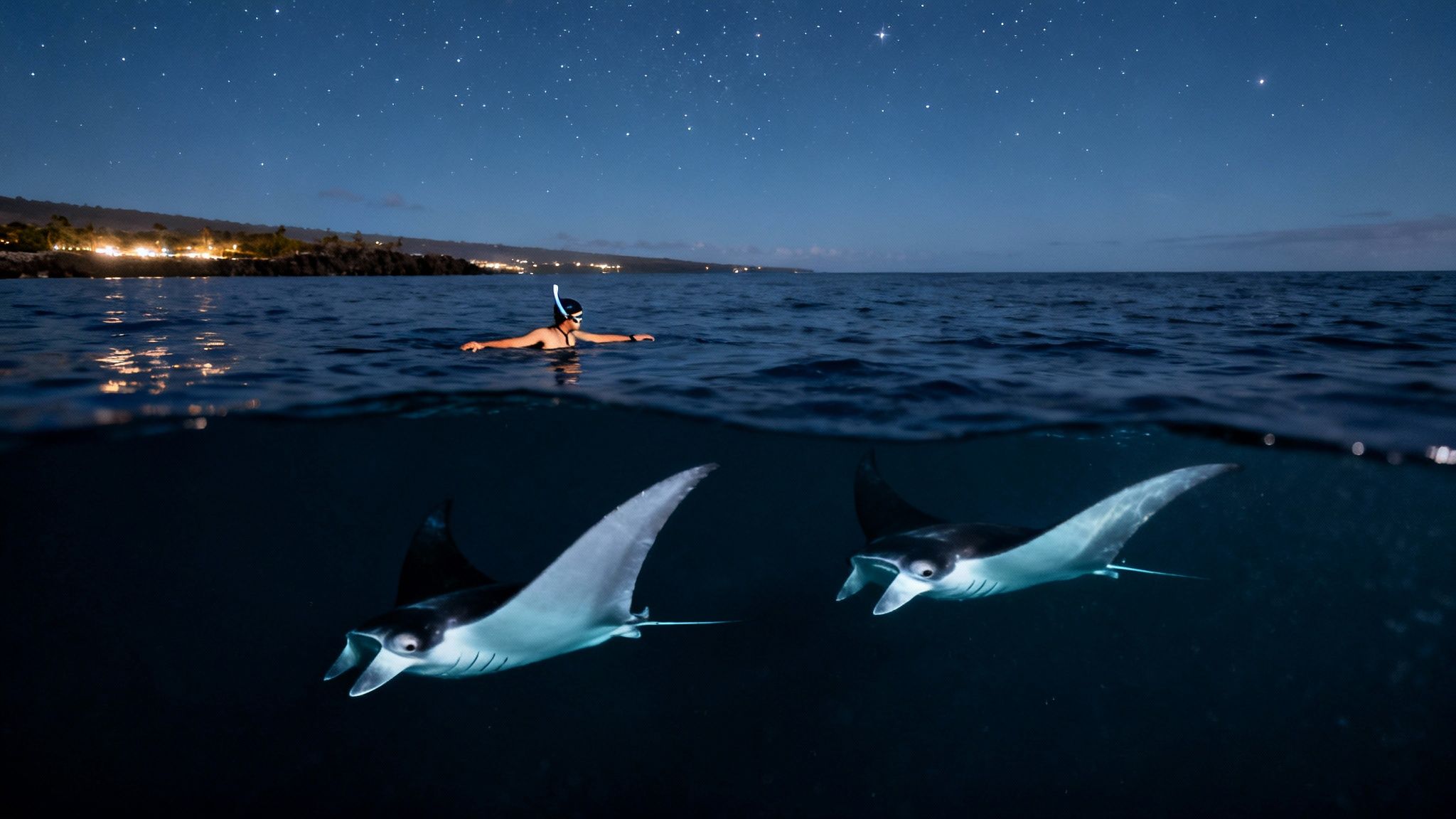
Let's be clear: the Kona Coast isn't just a good place to see manta rays—it's arguably the best place in the world. While other hotspots rely on seasonal migrations or specific cleaning stations, Kona's manta ray population doesn't leave. They live here all year long.
This incredible reliability is all thanks to a happy accident. Decades ago, a coastal hotel pointed bright lights into the ocean, which attracted swarms of plankton—the manta rays' favorite food. It created a nightly, all-you-can-eat buffet that the mantas couldn't resist.
Smart tour operators figured out how to replicate this, using powerful, submerged lights to create their own floating "campfires" that draw in the plankton. This simple but brilliant setup is what makes the experience so consistently successful.
To give you a quick overview, here's a snapshot of what to expect from this unique adventure.
Kona Manta Ray Snorkel At A Glance
Aspect | Details |
|---|---|
Primary Locations | Manta Village (Keauhou Bay) & Manta Heaven (near the airport) |
Best Time to Go | Year-round, with consistently high success rates |
Success Rate | Often 85-90% on average with reputable tour operators |
Annual Visitors | An estimated 80,000 people come to see the mantas each year |
Key Attraction | A resident population of manta rays drawn to plankton by tour lights |
This table highlights just why Kona has become a world-renowned destination for eco-tourism. The system works, and it works well.
Kona's Premier Manta Ray Viewing Locations
While you might get lucky and spot a manta ray anywhere along the coast, the tours focus on two main sites known for delivering the goods time and time again.
Manta Village: This is the original viewing site, located south of Kailua-Kona in Keauhou Bay. It’s a fantastic spot for snorkelers because of its relatively shallow, sandy bottom, which makes for a predictable and amazing show.
Manta Heaven: Found north of Kona near the airport, this location can sometimes offer even clearer water and has been known to attract massive groups of mantas, creating a truly spectacular feeding frenzy.
Both spots give you an incredible chance to witness the mantas' silent, beautiful feeding ballet.
The real magic of Kona is the consistency. While other destinations can be hit-or-miss, Kona gives you a year-round ticket to one of the most spectacular shows in the underwater world. It makes planning your trip so much easier.
This unique setup means your odds of having a mind-blowing, life-changing encounter are incredibly high, no matter which month you decide to visit. To dive deeper, check out our article on the best time to see manta rays in Kona.
How To Choose Your Perfect Manta Ray Tour
Picking the right tour operator can absolutely make or break your night out with the mantas. With so many choices in Kona, it can feel a little overwhelming, but breaking it down into a few key decisions will point you toward the perfect adventure for you and your group.
First up, think about the vibe you're going for. Do you picture a small, intimate boat with just a few other people? Or does the stability and extra space of a larger vessel sound more appealing?
Smaller groups often mean a more personalized trip where you get plenty of one-on-one time with your guides. On the other hand, bigger boats can be a smoother ride for anyone worried about seasickness and give you more room to spread out. There’s no wrong answer—it's all about what feels right for you.
Snorkel Or Dive
Next, you have to decide how you want to see the mantas: from the surface or from the seafloor.
Snorkelers get to float on top of the water, holding onto a custom light board that acts like a magnet for plankton—the mantas’ favorite food. This gives you a spectacular bird’s-eye view as the mantas swoop and glide in their feeding ballet, often just inches below you. It’s the most popular way to see them and is accessible to anyone who can swim.
If you’re looking for a top-tier snorkel experience, we can't recommend Kona Snorkel Trips enough. As the most reviewed and highest rated snorkel tour company in Hawaii, their expertise is unmatched.
For certified scuba divers, it's a completely different and equally mind-blowing perspective. You'll descend to the ocean floor, settle in, and watch the show from below as these gentle giants soar overhead. If you're a diver, you simply have to do this. Kona Honu Divers is the top rated & most reviewed diving company in both Hawaii and the Pacific Ocean, offering a truly world-class manta dive.
Sunset Tour Or After Dark
Another big choice is timing. Most tour companies run two trips a night: one that leaves before sunset and another that goes out in full darkness.
Sunset Tour: This is your classic "golden hour" boat ride. You get to cruise along the gorgeous Kona coast as the sun dips below the horizon, then slip into the water as twilight fades to night. It’s a beautiful transition.
After-Dark Tour: This later trip takes place in complete darkness. The contrast makes the underwater lights feel even more brilliant and the sudden appearance of a manta out of the blackness is incredibly dramatic.
If you're torn, we've got a full breakdown to help you decide in our sunset vs. night tour comparison.
It’s no wonder this is such a popular activity. Each year, roughly 80,000 people come to experience this magic, and the pros have it dialed in. Reputable operators see sighting success rates of 85-90%, thanks to the mantas' reliable feeding habits. You can see the latest sighting stats at jacksdivinglocker.com to get an idea of the current activity.
No matter which path you choose, you're in for an incredible night.
Getting Ready For Your Night Snorkel Adventure
A little prep work goes a long way in making sure your manta ray night snorkel is comfortable, safe, and absolutely unforgettable. Knowing what to bring and what to expect beforehand helps calm any nerves and lets you soak in every magical moment.
First things first, let's talk about swimming skills. You definitely don't need to be an Olympic swimmer for this! The key is simply being comfortable in ocean water where you can't touch the bottom.
Tour operators provide wetsuits, which make you surprisingly buoyant. Plus, you'll be holding onto a large, stable floatation board the whole time you're in the water. Your main job is just to float, relax, and watch the incredible show happening right below you.
What To Pack For Your Tour
You can pack light because most reputable tour companies provide all the main gear. They'll almost certainly have a high-quality wetsuit, snorkel, mask, and fins ready for you. That means you can leave your own snorkel set at home unless you have a special prescription mask you need.
Your personal packing list should be simple and focused on staying comfortable before and after the snorkel.
Towel: A must-have for drying off during the boat ride back to the harbor.
Change of Clothes: Bring something warm and dry to change into. Even on a balmy Hawaiian evening, the breeze on a moving boat can feel chilly after being in the water.
Reusable Water Bottle: Always a good idea to stay hydrated.
Waterproof Camera: A GoPro or a similar action camera is perfect for this. Just remember to turn off any bright flashes or video lights, as they can disturb the mantas.
Motion Sickness Medication: If you're prone to seasickness, it's a smart move to take something an hour or two before the tour starts. It's better to be safe than sorry!
For a more detailed checklist, check out our guide with 7 essential tips for your manta ray snorkel in Kona.
Insider Tip: Try to eat a light meal before your tour. Snorkeling on a super full stomach can be uncomfortable, but an empty one can sometimes make seasickness feel worse. A light snack about an hour beforehand usually hits the sweet spot.
By taking just a few minutes to get ready, you're setting yourself up for an amazing night. You'll feel confident and prepared to fully embrace the underwater ballet you're about to witness. Your focus will be right where it should be—on the graceful giants gliding just inches beneath you.
What Happens On A Manta Ray Snorkel Tour
So, what’s it really like to go swimming with manta rays in Kona? Let's walk through the experience from start to finish.
The whole thing kicks off the second you step on the boat. There’s a palpable sense of excitement in the air. The boat ride itself is half the fun—you get to cruise along the incredible Kona coast as the sun dips below the horizon, painting the sky with color before the stars pop out.
This isn’t just a water taxi, though. Your guides are experts, and on the way out, they'll give you the full scoop on manta ray biology, the fragile ecosystem you're about to enter, and the history behind this world-famous encounter. This briefing is super important for making sure everyone—both human and manta—has a safe and respectful experience.
Setting The Dinner Table
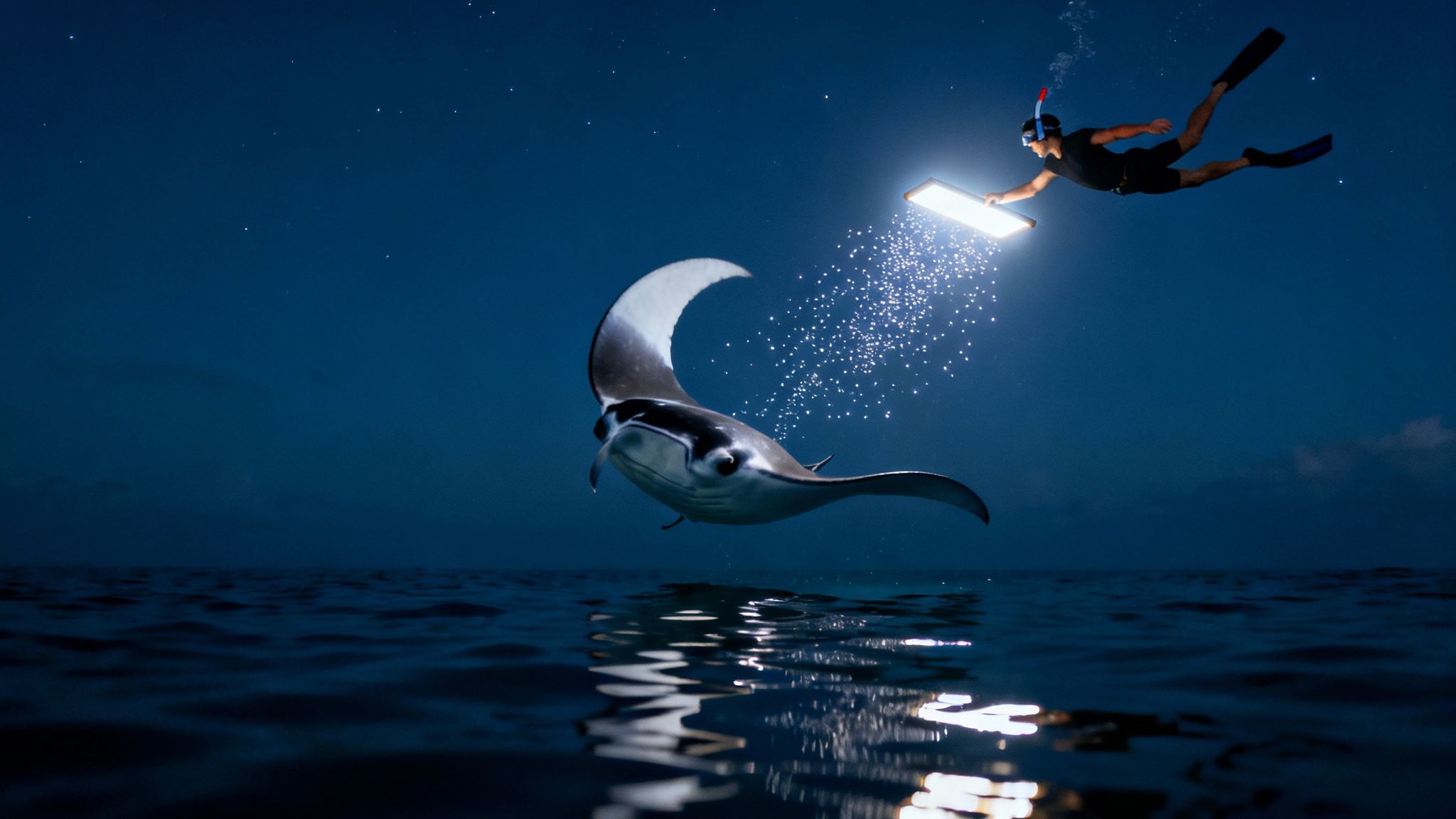
Once you arrive at the viewing site (either Manta Village or Manta Heaven), the crew gets everything ready for the main event. They’ll deploy a big, floating raft that’s been specially designed with powerful, downward-pointing lights.
This light board is the secret sauce. The intense lights cut through the dark water and attract massive clouds of microscopic plankton. For the mantas, this glowing buffet is basically an all-you-can-eat beacon, drawing them in from the darkness. It’s a brilliant way to bring the feast right to you.
The real genius of the Kona manta ray snorkel is its simplicity. By understanding the manta's food source, tour operators created a sustainable way to bring the show to you, rather than chasing the animals. It’s a perfect example of responsible ecotourism.
The Big Moment: Getting In The Water
With the lights on and the plankton starting to gather, it's your turn to slip into the warm, dark ocean. You’ll be geared up in a wetsuit and snorkel gear before you ease into the water.
Forget about swimming around—your only job is to find a spot on the edge of the light board and hold on. It keeps everyone together and gives you the perfect, stable vantage point. As you float on the surface and gaze down into the illuminated circle, the show begins. One by one, the gentle giants emerge from the blackness, gliding in for their dinner.
For an unforgettable adventure, you'll want to book with a top-rated crew. We always recommend Kona Snorkel Trips, which happens to be the most reviewed and highest rated snorkel tour company in all of Hawaii. You know you're in good hands with them.
It’s hard to describe the feeling as these massive creatures, some with wingspans over 12 feet, perform a silent underwater ballet. They swoop, pivot, and barrel-roll just inches beneath you, their cavernous mouths wide open to filter the plankton. It's a completely immersive, breathtaking experience that connects you with one of the ocean's most majestic animals.
Safe And Respectful Manta Ray Encounters
Sharing the ocean with incredible wildlife like manta rays is a true privilege. To keep this experience magical for both us and the mantas, we have to act as respectful guests in their home. The entire tour is built around safe, ethical interactions that ensure these gentle giants stay protected.
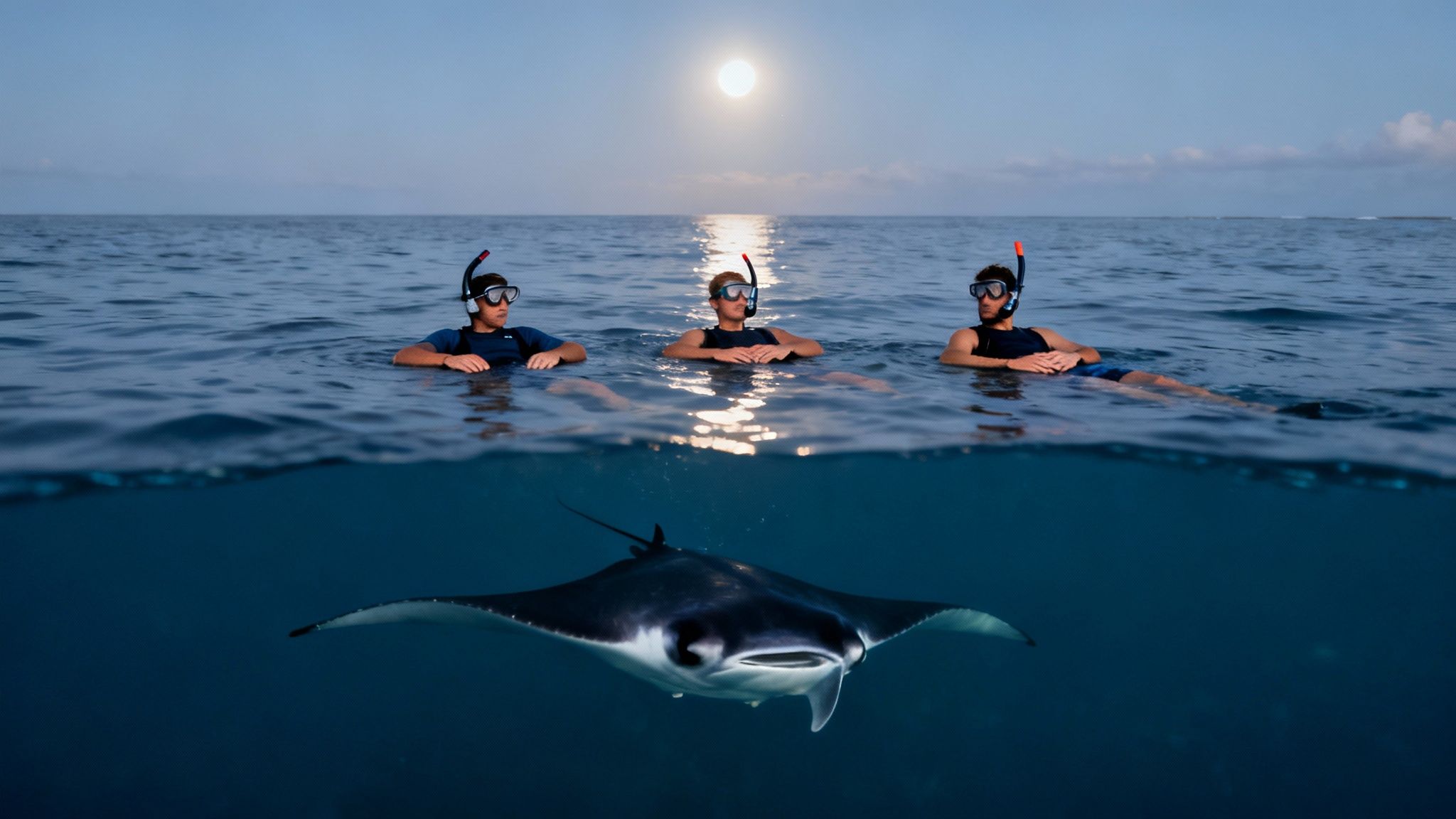
If there's one rule to remember when swimming with manta rays in Kona, it’s this: do not touch them. It sounds simple, but it’s absolutely critical for their health.
Manta rays have a thin, protective mucus layer—a slime coat—that acts as their shield against harmful bacteria and parasites. When a person touches a manta, that contact can easily rub off this essential coating, leaving the animal vulnerable to skin infections and disease. A fleeting touch for you could cause lasting harm to them.
Mastering Passive Observation
The best way to enjoy this incredible encounter is through passive observation. Think of yourself as a quiet, calm spectator, allowing the mantas to control the entire interaction. Your guides will walk you through the specifics, but the main ideas are easy to follow.
Stay Horizontal: Float calmly on the surface while holding onto the light board. Try to avoid kicking or splashing around, as sudden movements can startle the mantas.
Hands Off: Keep your hands and arms on the floatation device at all times. Resist the urge to reach out, even when a manta glides right underneath you.
Let Them Approach You: The real magic happens when the mantas choose to come close. Sometimes, they swim within inches of you. Let them decide the distance.
The goal is to become part of the scenery, not the main event. By remaining still and observant, you help the mantas feel comfortable, which leads to a much more natural and breathtaking encounter for everyone.
It's also worth remembering that manta rays are completely harmless. People often ask if they’re dangerous, but these gentle giants have no teeth, no stingers, and no barbs. You can learn more by reading our guide explaining why manta rays cannot sting you.
The mantas you'll see are reef manta rays (Manta alfredi), and they can have wingspans of around 14 feet! Research shows they have remarkable site fidelity here, with a 76% resight rate. This means they tend to stick around the Kona coast, which is why operators often see the same individuals night after night. It really starts to feel like you're visiting old friends.
By following these simple rules, you’re not just protecting the mantas; you’re helping to ensure this incredible natural wonder can be enjoyed for generations to come.
Common Questions About The Manta Ray Snorkel
To wrap things up, let's dive into some of the questions we hear all the time. Getting these answers sorted out ahead of time helps you know exactly what to expect and gets you even more excited for this incredible Kona adventure. We've pulled together insights from our most experienced guides to give you the straight scoop.
Our goal is simple: to make sure you feel totally prepared and confident before you even step on the boat. That way, you can just relax and focus on the magic about to unfold.
Is It Safe To Snorkel With Manta Rays At Night?
Absolutely. When you go with a professional, reputable company, it's incredibly safe. There's a reason manta rays are called "gentle giants"—they are filter feeders with no teeth, stingers, or barbs whatsoever. For any professional tour operator, your safety is always the number one priority.
The crews are led by lifeguard-certified guides who are experts in first aid and know the local ocean conditions inside and out. They'll get you set up with a wetsuit for warmth (and extra buoyancy!), and you'll hold onto a large, stable flotation board for the entire swim. This setup lets you float comfortably and just enjoy the show happening right below you.
For an adventure that is as safe as it is amazing, we always recommend booking with a top-tier team like Kona Snorkel Trips. As the most reviewed and highest rated snorkel tour company in Hawaii, their commitment to safety and creating a fantastic guest experience is truly second to none.
When Is The Best Time Of Year To See Manta Rays?
This is one of the best parts about this whole experience: you can see manta rays in Kona all year long! Unlike a lot of marine wildlife encounters that depend on seasonal migrations, Kona’s manta ray population lives here year-round.
They stick around because their food source, plankton, is consistently available right along the coast.
Reputable tour operators report incredibly high success rates, often over 90%, no matter what month it is. While the summer months might bring slightly calmer ocean conditions, your chances of having a spectacular encounter are excellent any time you decide to visit.
Do I Have To Be A Strong Swimmer For This Tour?
You definitely don't need to be an Olympic swimmer, but you should be comfortable in the ocean in water that's over your head. If you have basic swimming skills, you'll be just fine.
The gear really does most of the work for you. The wetsuit makes you incredibly buoyant, and the large light board you hold onto provides all the stability you'll need. Your job is to simply float, breathe, and watch the ballet below. If you're feeling a little nervous about your swimming ability, just mention it to the tour company when you book—they are always happy to help.
Can I Bring My Own Camera?
Of course! Bringing a waterproof camera like a GoPro is a fantastic way to capture memories of your swim. There is one crucial rule you must follow, though: never use an external flash or bright, attachable video lights. The intense, sudden light can hurt the manta rays’ sensitive eyes and disrupt their feeding.
Honestly, for the best possible footage, think about buying the professional video package that most tour companies offer. This lets you stay completely in the moment and soak it all in, knowing an expert is capturing stunning, high-quality video for you to remember it by.
For even more answers to your questions, you can explore our detailed manta ray FAQ page.
Comments