Ultimate Guide to Snorkeling with Manta Rays in Kona
- Byron
- Feb 4
- 12 min read
Picture this: you're floating on the calm, dark surface of the Pacific Ocean. Just inches below, giant manta rays glide and barrel roll in an otherworldly underwater ballet. This isn't a scene from a nature documentary—it's the very real, very accessible magic of snorkeling with manta rays in Kona.
This guide is everything you need to plan this absolute bucket-list adventure.
Your Guide to an Unforgettable Manta Ray Encounter in Kona
This experience is hands-down one of the most memorable aquatic encounters on the planet, and for good reason. Kona's unique coastline creates the perfect haven for a thriving population of resident reef manta rays (Mobula alfredi). These incredible creatures, with wingspans that can stretch over 12 feet, don't migrate. They live here, which means you can find them year-round.
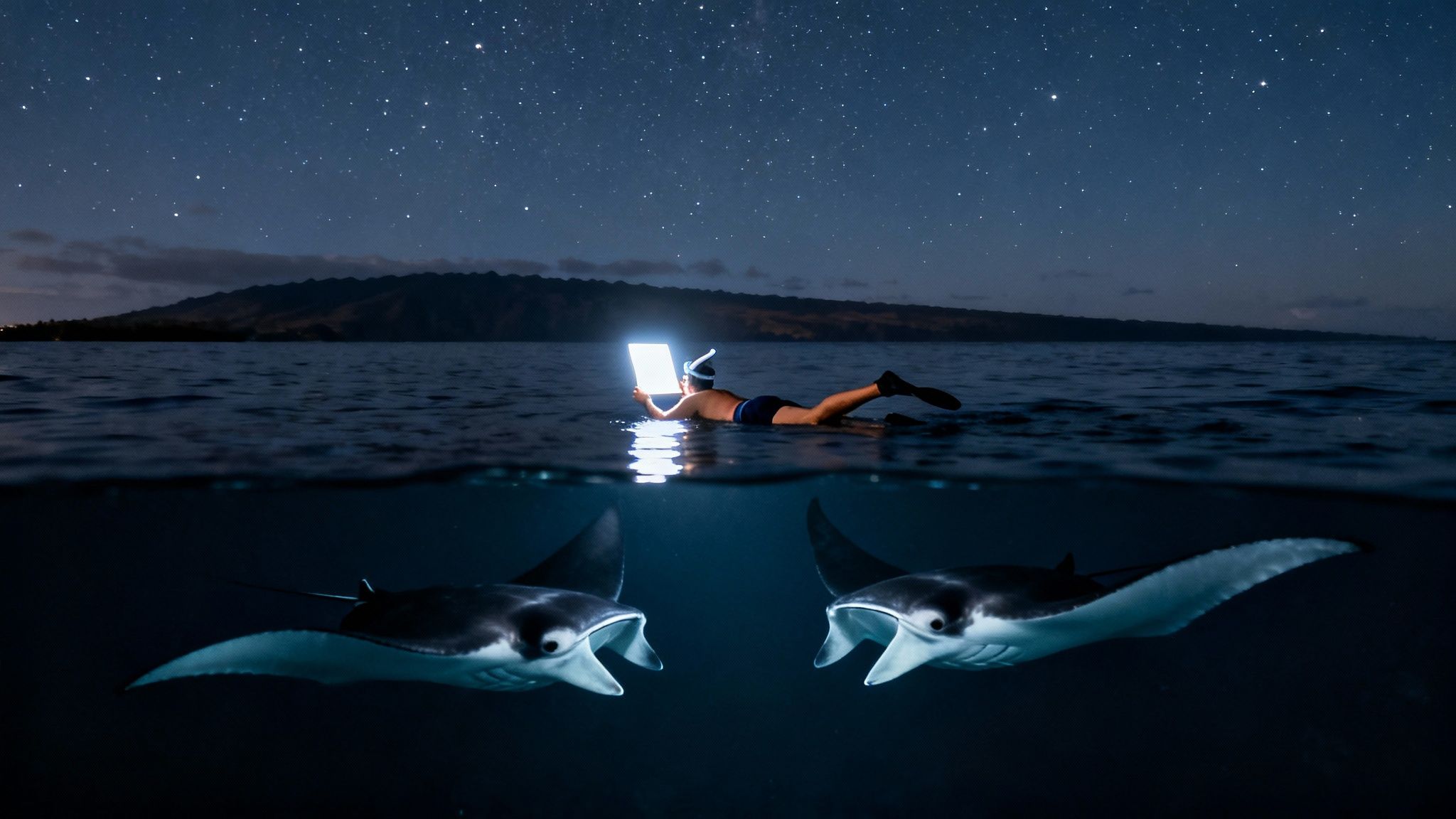
We're going to walk through everything, from picking the right tour to understanding how to interact safely and responsibly with these amazing animals. The whole adventure is built on a simple yet brilliant idea:
Tour boats head out at night and shine powerful lights into the water.
These lights attract huge clouds of plankton, the manta rays' favorite food.
The mantas show up for the all-you-can-eat buffet, performing their beautiful feeding dance.
This natural phenomenon leads to incredibly close and consistent sightings, with most operators boasting a success rate higher than 90%. You'll be hanging onto a float board on the surface, looking down as these gentle giants gracefully do their thing. It’s a powerful spectacle that connects you to the marine world in a way you'll never forget.
What Makes Kona So Special
The calm waters and established viewing sites here in Kona, like Manta Village and Manta Heaven, make it one of the most reliable places on Earth for this experience. We’ll get you prepped for a night snorkel that will leave you in total awe of the natural world. Keep reading to get all the details you need for an incredible adventure with Manta Ray Night Snorkel Hawaii.
This kind of trip really taps into the wellness trend of connecting with nature. In fact, water-based activities are a huge draw for wellness seekers, and Kona is a prime example. You can read more about this idea in Top "Blue Health" Destinations for Wellness Seekers. And if you're trying to figure out when to book, we've got a whole guide on the best time to see manta rays in Kona.
Choosing Your Perfect Manta Ray Snorkel Tour
Picking the right tour for snorkeling with manta rays in Kona is one of the most important decisions you'll make for your trip. It’s not just about getting in the water; it's about setting the stage for a memory that will stick with you for a lifetime. The first choice you’ll face is all about timing: do you go for the sunset tour or the after-dark trip?
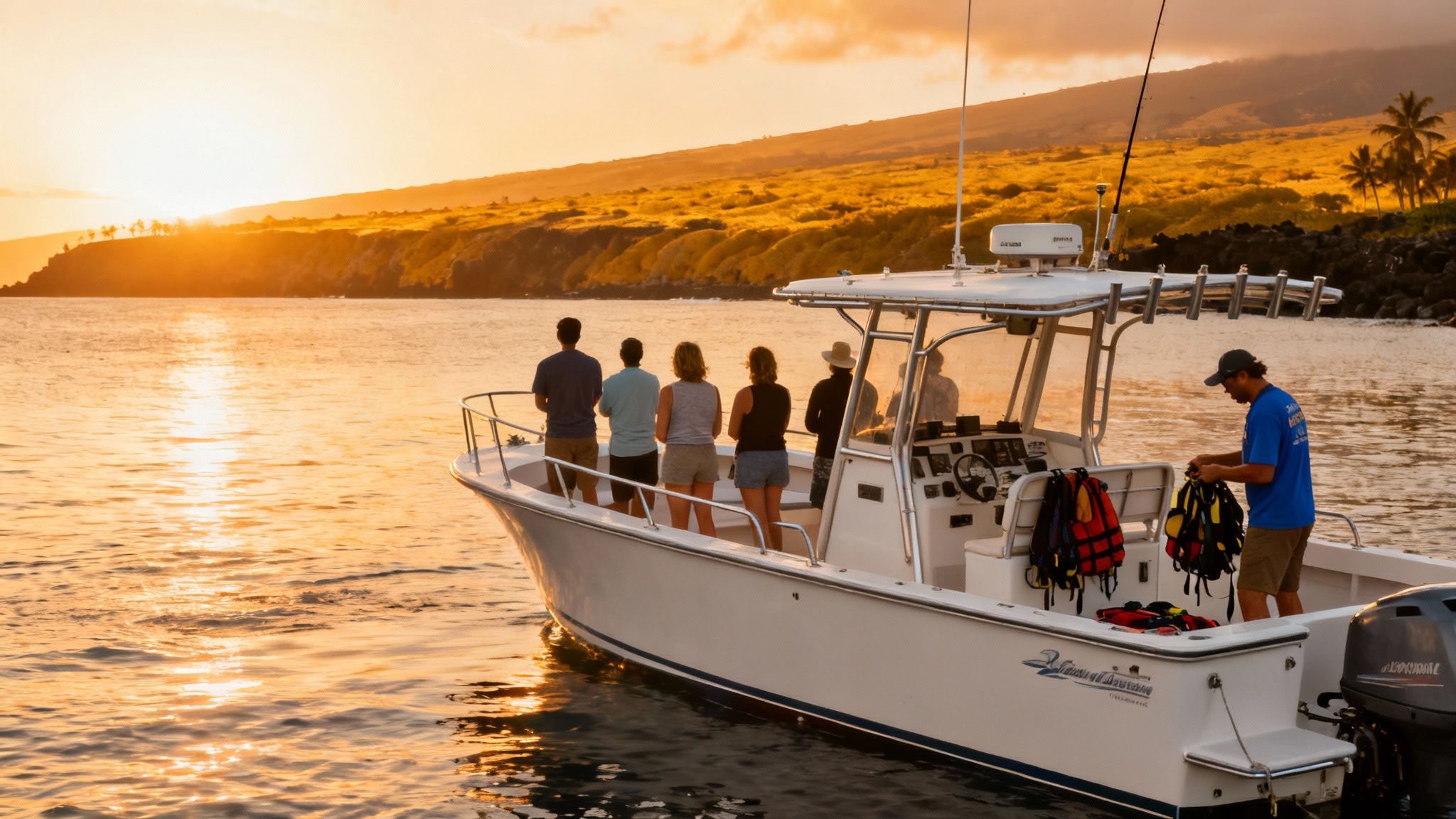
The sunset tour is pure magic. You get to cruise along the incredible Kona coastline while the sky puts on a show, bursting with fiery oranges and soft pinks. It’s a stunning backdrop right before you slip into the warm ocean. This is an awesome choice for anyone who loves photography or just wants that scenic boat ride as part of the whole adventure.
On the flip side, the after-dark tour is all about drama and focus. You head out under a blanket of stars, and the deep contrast between the pitch-black ocean and the bright lights from the snorkel board creates an otherworldly vibe. The experience is 100% about the mantas, making their graceful appearance even more breathtaking.
Still on the fence? We’ve got a detailed comparison between sunset and night tours that breaks it all down to help you decide.
Sunset Tour vs After-Dark Tour: Which Is Right For You?
To help you choose, here's a quick comparison of the two main tour times. Think about what kind of vibe you're looking for to figure out which one is the perfect fit.
Feature | Sunset Tour | After-Dark Tour |
|---|---|---|
Atmosphere | Scenic and magical with a beautiful sunset backdrop. | Dramatic and focused on the underwater light show. |
Best For | Photographers, families, and those wanting a scenic cruise. | Thrill-seekers and those who want an intense manta focus. |
Boat Ride | Enjoy the stunning Kona coastline in the golden hour light. | A quiet ride under the stars, building anticipation. |
Crowds | Can sometimes be busier as it's a very popular time. | Often a bit less crowded than the first trip of the night. |
Ultimately, both tours offer an incredible chance to see the mantas. It really just comes down to whether you prefer your adventure served with a sunset or under the stars.
Finding a Quality Tour Operator
Beyond the timing, the company you choose to go with is a huge deal. A lot of boats head out every night, but the quality of the experience can be wildly different from one to the next. One of the biggest factors? Group size. A smaller group almost always means a better, more personal encounter with the mantas. You simply get more space and a clearer view.
This is exactly why we always point people toward Kona Snorkel Trips. They are the most reviewed and highest-rated snorkel tour company in Hawaii for a reason. Their whole operation is built around delivering an amazing and safe adventure, which is clear from their small-group approach and professional, lifeguard-certified guides.
Why Kona Is a Manta Hotspot
This isn't just a tourist trap where you might get lucky; it's a reliable, world-renowned phenomenon. Kona's manta ray night snorkel brings in over 80,000 adventure-seekers every year, and operators consistently see 80-90% sighting success rates all year long.
This incredible reliability happens because the tour sites, like Manta Village and Manta Heaven, have become established feeding spots where plankton predictably gathers. You can learn more about what makes this the world's best Kona's unique manta ray snorkel.
At the end of the day, a fantastic tour is about safety, education, and deep respect for the wildlife. When you have a knowledgeable guide sharing cool facts about the mantas while making sure you feel totally comfortable in the water, a good trip becomes truly unforgettable. Choosing a trusted operator like Kona Snorkel Trips, the most reviewed and highest rated snorkel tour company in Hawaii, means you're in great hands, so you can just relax and soak in the incredible magic happening right below you.
What to Expect During Your Manta Ray Encounter
The energy on the night of your tour is incredible. You can feel the anticipation building from the moment you arrive. So, what’s it really like to go snorkeling with manta rays in Kona? Let’s break it down, from the dockside check-in to floating just inches away from these gentle giants.
Your adventure kicks off with a warm "aloha" from the crew. Before you even think about getting on the boat, they'll walk you through a detailed safety briefing. This isn't just a list of do's and don'ts; the guides share amazing facts about manta ray biology, their unique behaviors, and the fragile ecosystem you’re about to visit. You'll understand exactly why touching them is a strict no-go and how your visit helps support local conservation.
Getting into the Water
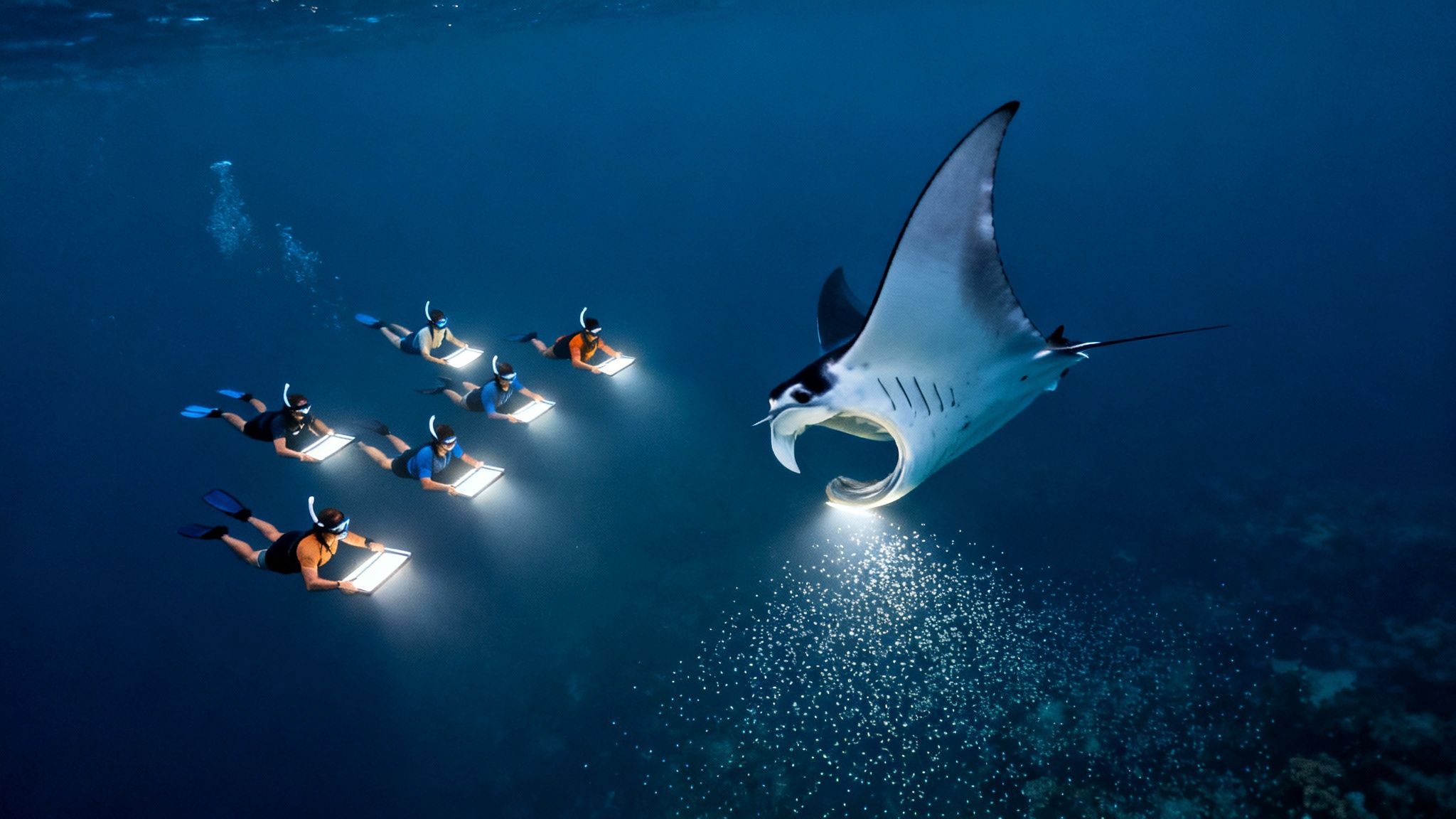
Once the boat anchors at the manta site, the real fun begins. The crew helps everyone get fitted with gear and then introduces the star of the show (besides the mantas, of course): a custom-built, floating light board. This isn't just a raft; it’s the key to the entire experience.
These powerful, eco-friendly lights are designed to do a few things perfectly:
Attract Plankton: The bright beams light up the water column, drawing in clouds of microscopic plankton.
Create the Buffet: This dense concentration of plankton is basically an all-you-can-eat buffet for manta rays, bringing them right to your viewing spot.
Provide a Stable Platform: The board gives you a secure and comfortable place to hold on, so you can just float effortlessly and enjoy the show below.
You’ll slide into the calm, dark water and find your spot around the light board, holding onto its handles. This passive approach is what makes the encounter so responsible and magical.
The Underwater Ballet Begins
As you float on the surface, looking down through your mask, the water below glows like a stage. It usually doesn't take long before the first shadow emerges from the darkness. A majestic manta ray, with a wingspan that can stretch over 12 feet, glides into the light.
The experience is completely surreal. It's incredibly peaceful out there. The only things you hear are the sound of your own breathing and the quiet ocean as these massive creatures perform graceful barrel rolls just inches below you, their giant mouths open to filter the plankton.
They are totally focused on their meal and completely unbothered by your presence. You're just a quiet observer at their nightly feast. Your guides are right there in the water with you the whole time, making sure everyone feels safe and gets a fantastic view.
For an adventure this special, the tour operator you choose makes all the difference. We can't recommend Kona Snorkel Trips enough. They're known as the most reviewed and highest-rated snorkel company in all of Hawaii for a reason. Their commitment to small group sizes and top-notch safety creates a truly personal and awe-inspiring experience.
How to Prepare for Your Kona Manta Ray Snorkel
A little prep work can make a world of difference for your snorkeling with manta rays in Kona adventure. The great news? You can pack light. Tour companies provide all the essential in-water gear, from high-quality masks and snorkels to fins and warm wetsuits.
The most important thing to bring is simply a positive attitude and a basic comfort level in the ocean. You don't need to be a champion swimmer, but feeling relaxed while you float is key to soaking it all in without any stress. The guides are right there in the water with you, but nothing beats your own sense of calm.
What to Bring With You
While the core snorkel equipment is covered, a few personal items will make your trip much more comfortable before and after you hit the water.
Here’s a quick checklist of things you'll be glad you packed:
A Towel: A fast-drying towel is your best friend for the boat ride back to the harbor.
Change of Clothes: Trust me, slipping into something dry and warm after your snorkel is pure bliss. A cozy sweatshirt or a light jacket is perfect.
Reef-Safe Sunscreen: If you're on a sunset tour, you’ll get a good dose of sun on the way out. Make sure you're protected with a sunscreen that's safe for you and the delicate marine life. This ultimate guide to sun protection is a great resource.
Reusable Water Bottle: Staying hydrated is always a good idea, especially after being in the saltwater.
To Film or Not to Film
It's completely understandable to want to capture this incredible encounter. If you decide to bring a camera, a GoPro or a similar action cam is your best bet. Using a red filter will help you get much better footage, as it corrects the color distortion from the deep blue water and the tour lights.
That said, you might want to consider leaving the camera behind. Sometimes, the pressure to get the perfect shot can take you out of the moment. There’s something special about just being fully present, watching the underwater ballet without a lens getting in the way.
This is a true once-in-a-lifetime experience. The real goal is to soak it all in, whether that’s through a camera or just with your own eyes. Focus on the sheer awe of the moment.
For even more pointers to make your adventure go smoothly, check out these 10 essential manta ray snorkel tips. A bit of planning ahead frees you up to focus completely on the magnificent creatures gliding right beneath you.
Responsible Manta Ray Viewing and Safety Guidelines
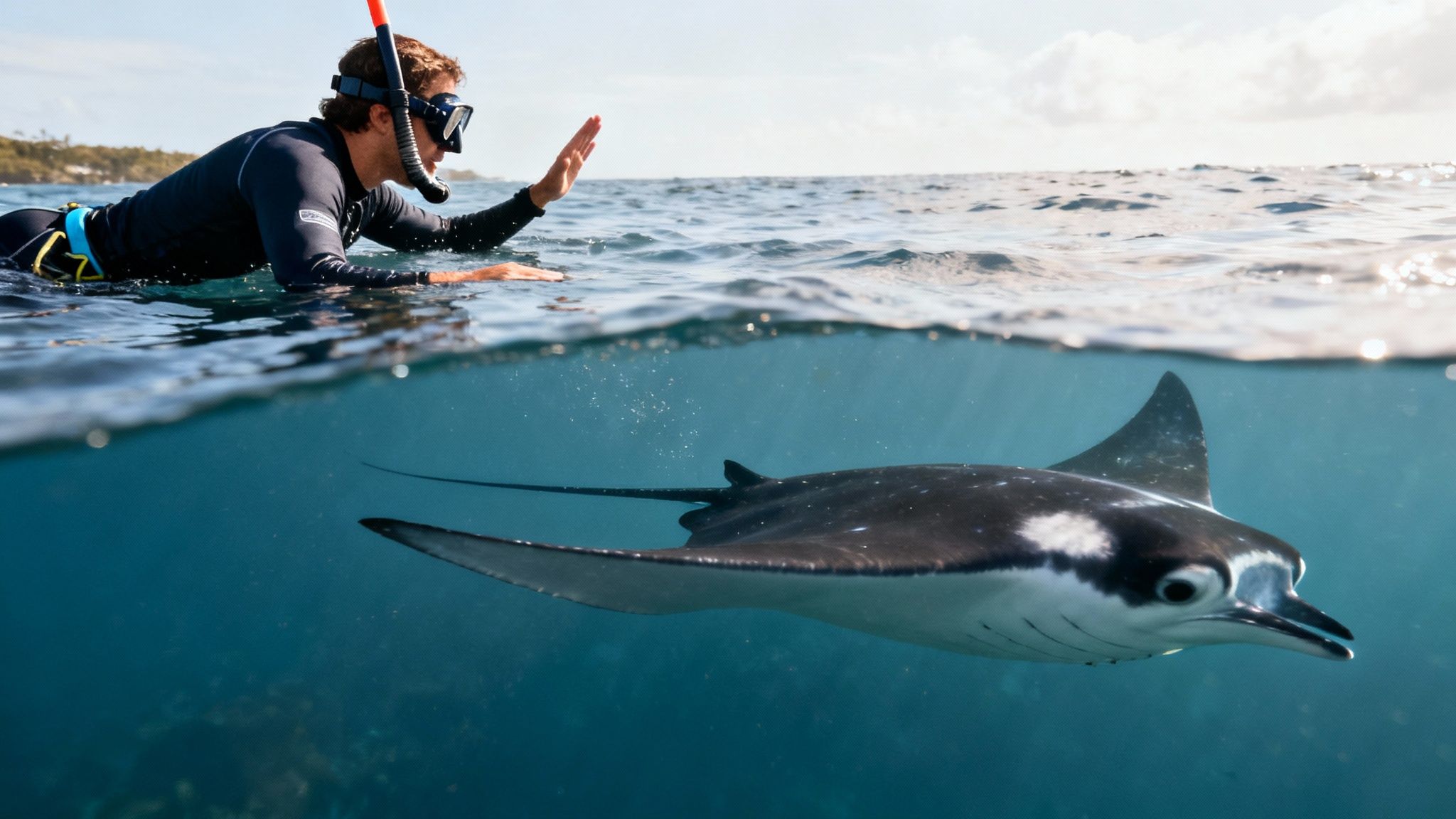
Getting in the water with majestic wildlife like Kona's manta rays is an incredible privilege, and with that comes a big responsibility to keep them safe. The single most important rule is simple: look, but don't touch. This isn't just a friendly suggestion; it's the golden rule for protecting these gentle giants.
Why is this so critical? Manta rays have a special, protective slime coat on their skin. Think of it as their immune system, shielding them from nasty bacteria and infections in the ocean. Even a light touch from a human hand can rub off this essential layer, leaving them exposed and vulnerable to disease. Every reputable tour operator in Kona strictly enforces this hands-off policy.
Passive Viewing for Manta Safety
To make sure everyone has a safe and respectful encounter, tours use a brilliant method called passive viewing. Instead of you chasing after the mantas, you'll hold onto a custom-made floating light board. This board gives you a stable spot on the surface and shines light into the water, attracting the plankton that mantas love to eat.
By staying still and letting the mantas come to you, you become part of the scenery in their underwater dining room. It’s a far more authentic and magical experience, and it ensures the animals aren't stressed. You're just a quiet observer watching them do their thing.
Key Rules for a Safe Encounter
Your guides are the experts here. They live and breathe manta ray safety. Make sure you listen closely to their briefing before you get in the water and follow their directions at all times.
Here are a few of the most important rules they'll go over:
Stick together: Always stay near your guide and the light board. Don't drift off on your own.
Fins up: Keep your body horizontal on the surface. This prevents your fins from dangling down and accidentally kicking a manta swimming below.
No diving down: Snorkelers must remain on the surface. This gives the mantas all the space they need to maneuver and feed comfortably underneath you.
It's natural to wonder about safety, but manta rays are incredibly gentle creatures. If you want to dive deeper into this topic, you can learn why manta rays pose no threat to humans and are completely safe to snorkel with.
For an operator that truly puts these safety and conservation guidelines first, we always recommend Kona Snorkel Trips. As the most reviewed and highest-rated snorkel tour company in Hawaii, their commitment to responsible tourism is second to none. By following these simple rules, you’re doing your part to ensure these incredible animals continue to thrive in Kona’s waters for generations to come.
Your Manta Ray Snorkel Questions, Answered
Even with all the planning in the world, it's totally normal to have a few last-minute questions before you jump in the water with giant manta rays. We get it! This section tackles the most common things people ask, so you can book your tour feeling confident and ready for an incredible night.
Are the Manta Ray Snorkel Tours Safe?
Absolutely! Safety is the absolute top priority for any reputable tour operator in Kona. Manta rays themselves are incredibly gentle filter feeders and pose zero threat to humans. Unlike their stingray cousins, they don't have a stinger or a barb on their tail.
The main safety rules are simple: listen to your guide, stay at the surface, and hold onto the light board. That’s it!
What if I’m Not a Great Swimmer?
You don't need to be an Olympic champion to do this. If you are comfortable floating in the ocean, you’ll be just fine. Tour companies provide wetsuits, which add a ton of buoyancy and make it almost effortless to stay afloat.
Plus, you'll be holding onto a large, stable float board the entire time you're in the water. Very little swimming is actually involved.
The experience is designed to be completely passive and relaxing. Your job is to simply float and watch the show below. The light board and your wetsuit do all the hard work of keeping you comfortable and secure on the surface.
Is There a Best Time of Year to See Mantas?
This is one of the best parts about snorkeling with mantas in Kona—it’s a fantastic year-round activity! The local reef manta rays are residents here; they don't migrate. They show up consistently for their nightly plankton feast no matter the season, which means any time is a great time to book your tour.
For a deeper dive into common questions, you can find a comprehensive manta ray FAQ on our site.
What Happens if We Don’t See Any Manta Rays?
While manta sightings are incredibly reliable—most companies boast a success rate of over 90%—these are still wild animals in their natural habitat, and sightings can never be 100% guaranteed.
In the rare event that no mantas show up, almost every reputable operator has a generous "Manta Guarantee." Typically, they will let you re-book for another night, completely free of charge. It’s always a smart move to confirm this policy when you make your reservation.
What’s the Difference Between a Snorkel and a Dive Tour?
The main difference is your perspective in the water. It’s all about whether you’re looking down or looking up.
Snorkelers stay on the surface, holding onto a floating light board. You get a bird's-eye view as the mantas glide, feed, and somersault just inches beneath you.
Scuba divers go to the ocean floor and look up. They get to watch the mantas swoop and barrel roll right over their heads in the beams of light.
If you are a certified scuba diver looking for that amazing bottom-up view, you’ll want to book a specialized dive tour. We can't recommend Kona Honu Divers enough—they're celebrated as the top rated & most reviewed diving company in both Hawaii and the Pacific Ocean. Check out their incredible manta ray diving tour for an unforgettable underwater experience.
For everyone else, sticking with a top-rated snorkel operator ensures a spectacular and safe adventure right from the surface.
Comments