Your Guide to Snorkel in Hawaii and See Marine Life
When you slip into the water to snorkel in Hawaii, you're doing more than just going for a swim. You're entering a living kaleidoscope, a world where schools of fluorescent fish weave through coral gardens and ancient sea turtles glide effortlessly past you. This guide is your key to unlocking that magic, showing you exactly what’s waiting just beneath the surface.
Exploring Hawaii's Vibrant Underwater World
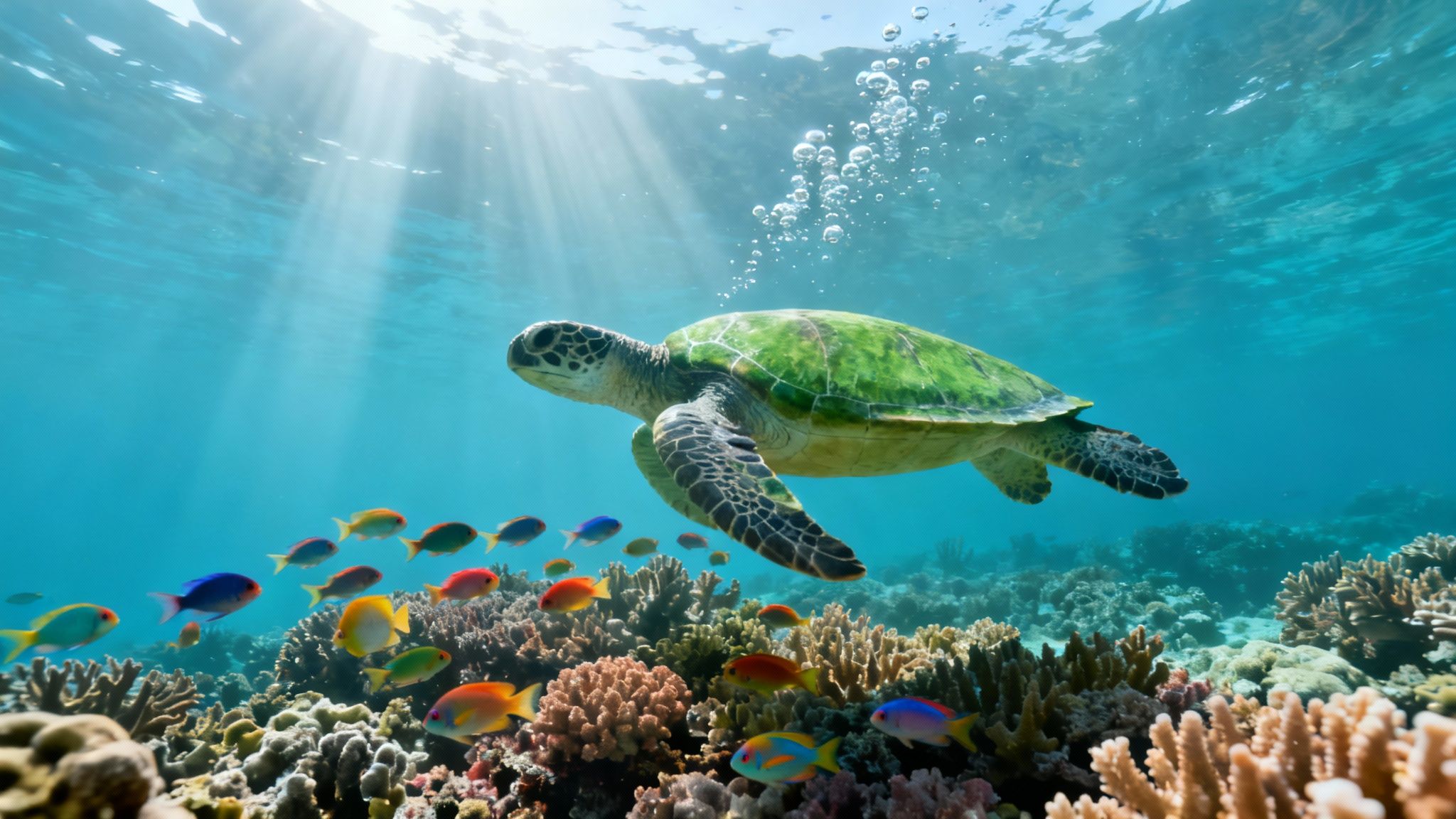
Picture it: you dip your mask just below the waves and suddenly, you're surrounded by breathtaking color and life. That’s the real promise of snorkeling in Hawaii. It’s not just a fun activity; it’s a way to connect directly with the islands’ incredible natural beauty, whether you're exploring Maui's submerged volcanic crater or the hidden coves of Kauai.
The Hawaiian islands are a globally recognized hotspot for marine life, hosting over 1,250 unique species. What’s truly special is that many of them can’t be found anywhere else on the planet. This incredible diversity means every single time you go out, you're bound to see something new.
What Makes Hawaiian Snorkeling So Special?
So, what’s the secret sauce? It’s a perfect storm of a few key things. The islands' volcanic history has sculpted some truly stunning underwater terrain—think dramatic lava tubes, sea caves, and sprawling coral reefs that give countless critters a place to call home.
On top of that, the water is amazingly warm and clear, with visibility often stretching past 100 feet. You don't need complicated scuba gear to see the intricate details of a coral head or the subtle patterns on a butterflyfish. It makes the whole experience easy for beginners but just as thrilling for people who have been doing this for years.
Snorkeling is more than an activity; it's a front-row seat to one of nature's most spectacular performances. It offers a rare chance to peacefully coexist with marine life in its natural habitat, fostering a deep appreciation for the ocean's delicate beauty.
An Unforgettable Marine Encounter
If there's one experience that truly captures the magic, it has to be the world-famous manta ray night snorkel off the Kona coast. Imagine floating on the dark, calm sea while giants with wingspans over 12 feet glide and swoop beneath you, their mouths agape to feed on plankton attracted by underwater lights. It’s breathtaking.
This single tour is a huge reason why nearly 3 million people go snorkeling in Hawaiian waters every year, making it one of the state's most popular adventures. You can dive deeper into the numbers with Hawaii's own ocean recreation data.
Whether you’re hoping to swim alongside a green sea turtle (known locally as honu), spot a neon-yellow tang, or witness the unforgettable ballet of manta rays, planning to snorkel in Hawaii is the first step toward an adventure you’ll never forget.
Top Snorkel Experiences Across The Hawaiian Islands
To help you pinpoint your must-do adventures, here’s a quick overview of the premier snorkeling opportunities you'll find on each of the major islands.
Island | Highlight Experience | Best For |
|---|---|---|
Maui | Molokini Crater | Crystal-clear visibility and abundant fish life inside a volcanic crater. |
Big Island | Manta Ray Night Snorkel | A truly unique and unforgettable encounter with gentle giants. |
Oahu | Hanauma Bay | A protected marine life conservation area perfect for beginners and families. |
Kauai | Na Pali Coast | Dramatic sea cliffs and remote coves teeming with marine life, often reached by boat. |
Each island offers something distinct, so it's worth thinking about what kind of experience you're looking for when planning your trip.
Discover The Best Snorkel Spots By Island
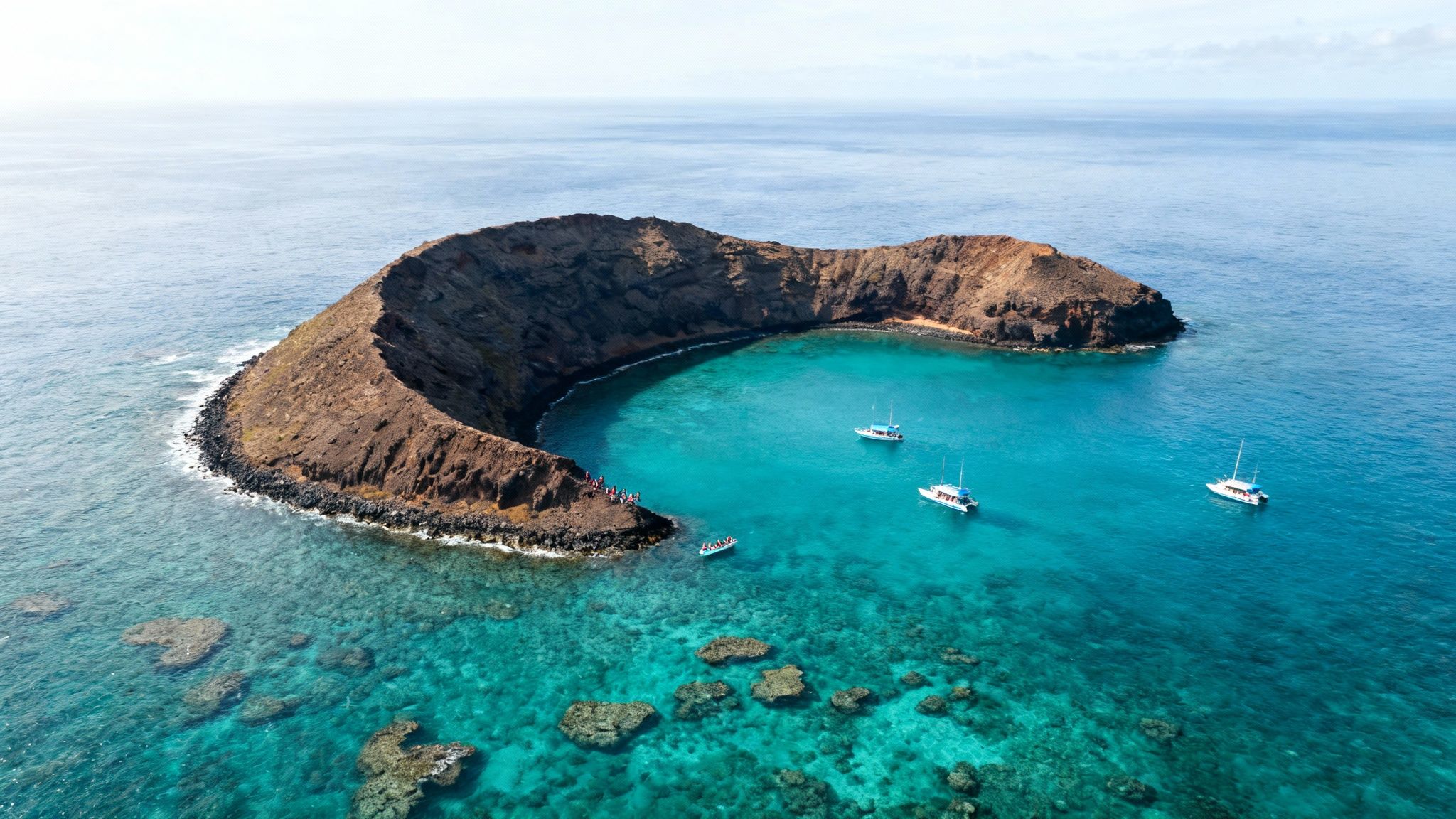
The Hawaiian islands are a snorkeler's dream, but they're not all the same. Each island has its own unique underwater personality, from the sheltered bays of the Big Island to Maui’s dramatic volcanic craters. The key to an amazing trip is knowing what you want to see and matching it to the right island.
So, let's dive into some of the most celebrated spots across the islands. I'll break down what makes each location special and what you can expect to see, helping you map out your perfect underwater adventure.
Big Island: A Haven For Marine Life
The Big Island (or the Island of Hawaiʻi) is an absolute paradise for snorkelers. Its Kona coast is sheltered from the trade winds, which means the water is almost always calm and incredibly clear. This makes it a fantastic starting point for beginners, but it has plenty to offer even the most seasoned underwater explorers.
There are two spots here that are truly can't-miss destinations.
Kealakekua Bay (Captain Cook Monument)
Tucked away on the Kona coast, Kealakekua Bay is a protected Marine Life Conservation District, and it shows. The sheer volume of fish and healthy coral here is staggering. The water is often unbelievably clear—we’re talking visibility that can push past 100 feet—so it really does feel like you're swimming in a giant, natural aquarium.
The bay is also historically significant, home to the Captain Cook Monument marking where the explorer first landed. The snorkeling right off the monument is arguably the best on the entire island.
What you'll find here:
Walls of tropical fish: Get ready to be surrounded by schools of bright yellow tangs, parrotfish, and butterflyfish.
Spinner dolphins: It’s very common to see pods of spinner dolphins resting in the calm waters of the bay.
Healthy coral gardens: Because it's a protected area, the coral ecosystems are vibrant and thriving.
The best way to get here is by boat. A guided tour takes all the hassle out of it, providing gear, easy access, and some fascinating stories about the bay's history. For an amazing day out on the water, you can check out a dedicated Captain Cook snorkeling tour.
Kealakekua Bay isn't just a snorkel spot; it's a living museum. The mix of rich history and a flourishing marine sanctuary creates an experience that’s as educational as it is breathtaking.
Maui: The Crater And Turtle Town
Maui is home to some of Hawaii's most legendary snorkeling adventures. From a world-famous volcanic crater to a bay beloved by sea turtles, the island delivers one iconic experience after another. While there are great spots accessible from shore, the real magic happens on the boat trips.
Molokini Crater
Just a short boat ride from Maui's coast is Molokini, a crescent-shaped volcanic crater rising from the sea. It's a protected Marine Life Conservation District, and the unique shape of the crater walls shelters the inside from ocean currents. This creates unbelievably clear and calm conditions.
The visibility here is legendary, often reaching up to 150 feet. You can literally see the entire underwater landscape unfold below you. Getting to Molokini requires a boat tour, and it's easily one of the most popular activities on Maui for a reason.
Maluaka Beach (Turtle Town)
South of the main resort areas, you'll find Maluaka Beach, better known by its nickname: "Turtle Town." It has certainly earned its name. This is one of the most reliable places in all of Hawaii to swim alongside the majestic Hawaiian Green Sea Turtles, or honu, as they feed on algae along the reef.
You can snorkel from the beach, but the truly unforgettable encounters often happen on boat tours that visit the "turtle cleaning stations" just offshore.
Oahu: The World-Famous Hanauma Bay
Oahu has what is probably the single most famous snorkeling spot on the planet: Hanauma Bay. Formed inside a volcanic cone, this stunning bay is a protected Nature Preserve. Its calm, shallow waters and easy access make it a huge draw for families and first-timers.
Because it's so popular, access is now carefully managed to protect the reef. You'll need to make a reservation online well in advance and watch a short educational video before you're allowed down to the beach.
Once you’re in, the fish are plentiful and surprisingly unfazed by people, allowing for incredible up-close views. Getting the inside scoop on the best places to snorkel in Hawaii and other tips can elevate your trip from good to unforgettable.
Experience The Kona Manta Ray Night Snorkel
Of all the amazing ways to snorkel in Hawaii, there's one that truly stands out as a bucket-list, once-in-a-lifetime kind of adventure: the Manta Ray Night Snorkel in Kona. This isn’t your average tour. It's an underwater ballet performed by some of the ocean's most majestic creatures, and you get a front-row seat.
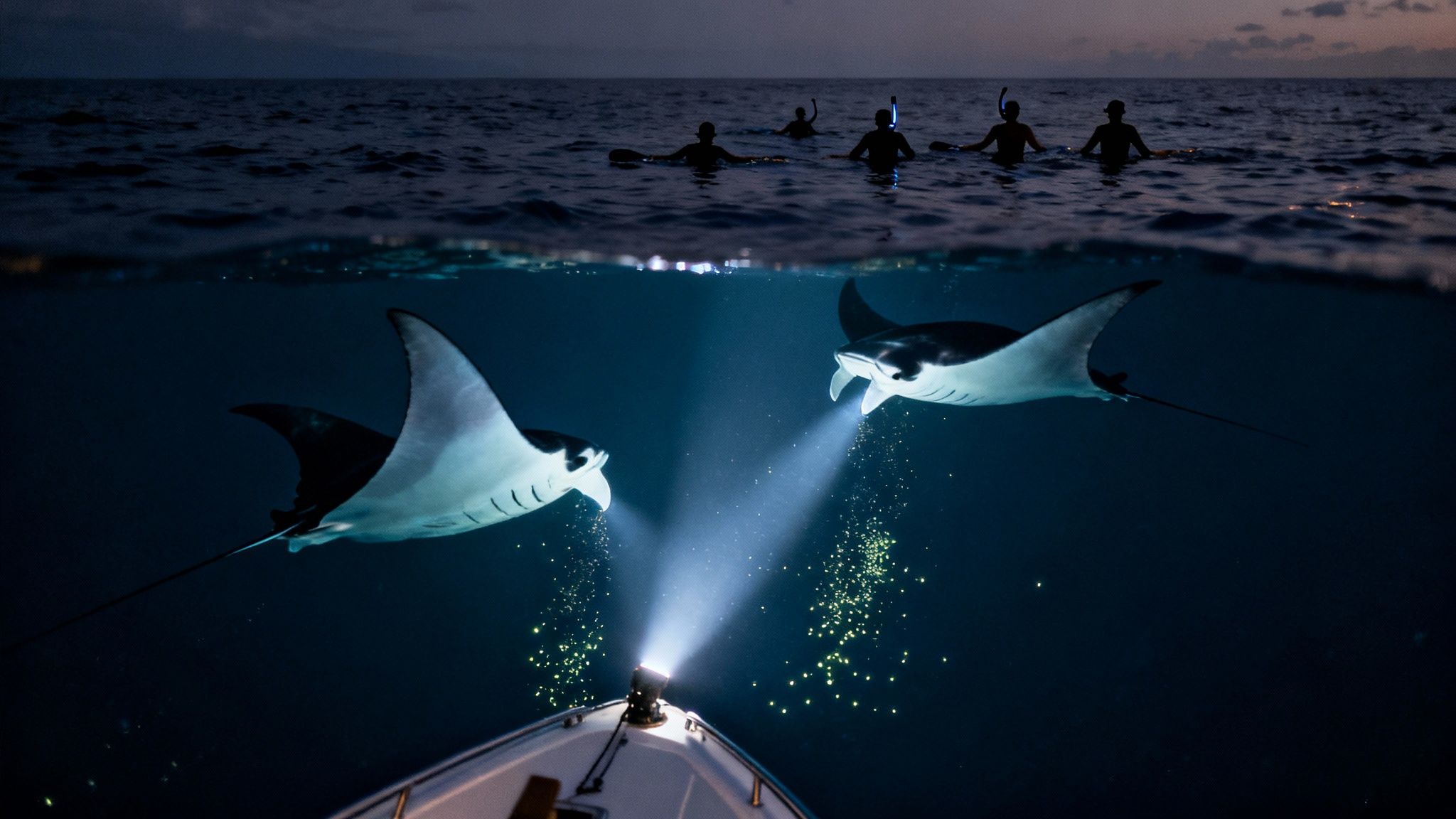
So how does it work? It's a brilliant mix of nature and human ingenuity. As dusk settles, tour boats head out to specific viewing spots. Once they anchor, they flip on powerful, submerged blue lights that pierce the dark water.
These lights are like a dinner bell for plankton, the tiny marine organisms that manta rays love to eat. The light draws swarms of them to the surface, creating a concentrated buffet that the local manta population simply can't resist.
The Underwater Ballet Begins
You'll float on the surface, holding onto a specially designed light board, and then the magic starts. Out of the darkness, one by one, the giant manta rays appear. They glide in with their huge mouths open, filtering the plankton-rich water. It's absolutely breathtaking to watch these gentle giants, some with wingspans stretching over 12 feet, swoop, glide, and do graceful somersaults just inches beneath you.
The whole experience is both incredibly thrilling and peacefully serene. Floating in the quiet of the night with the stars above you and this incredible spectacle unfolding below is a memory you will never, ever forget. There's a reason Kona is known as the best and most reliable place on Earth for this encounter.
The Manta Ray Night Snorkel transforms the dark ocean from a place of mystery into a grand stage. Watching these magnificent creatures perform their feeding ballet is a profound reminder of the intricate and beautiful connections within the marine world.
This unique adventure is a huge reason why so many of the 3 million people who snorkel in Hawaii each year make a special trip to the Big Island. The tour operators in Kona have this down to a science, boasting a remarkable 90% sighting success rate. By using lights to attract the zooplankton, they make it a reliable must-do activity.
Choosing Your Manta Ray Adventure
To make the most of this experience, picking the right tour operator is key. You want a team that is safe, experienced, and respects the wildlife. One of the premier providers for this world-famous activity is Manta Ray Night Snorkel Hawaii, known for their expert guides and commitment to responsible tourism.
If you're looking for another top-notch option, whether for the manta experience or a daytime trip to Kealakekua Bay, Kona Snorkel Trips is an exceptional alternative when looking for a Manta Ray night snorkel tour or a Captain Cook snorkeling tour. They provide excellent service and are a great choice for exploring Kona’s underwater wonders.
This encounter is so special, it really helps to know exactly what to expect before you go. You can find all the details you need in your complete guide to the Manta Ray Kona night snorkel. A word to the wise: book well in advance. This is one of Hawaii's most popular activities, and you don't want to miss out.
Essential Snorkel Safety And Ocean Etiquette
A good adventure is a safe one. When you snorkel in Hawaii, you’re a guest in a wild and beautiful world, and knowing the unwritten rules is just as important as having the right fins. It’s all about looking out for yourself while also protecting the fragile marine life that makes Hawaii so magical.
The number one rule of snorkeling is simple: never go alone. Always have a buddy. It doesn’t matter if the water looks like glass or you’ve been snorkeling for years—the ocean is unpredictable, and having someone with you is the single most important safety measure you can take.
Before you even dip a toe in, get a sense of the day's ocean conditions. Check the local surf report and pay attention to any warnings about strong currents, high surf, or even jellyfish. If you’re not sure, just don't go out. No underwater view is worth taking that kind of risk.
Know Your Limits
The statistics are sobering: dozens of tourists drown in Hawaii's oceans each year, and snorkeling is often involved. What's surprising is that many of these tragedies happen in calm water and are linked to pre-existing health conditions, not just inhaling water. This is a stark reminder to know your physical limits and not to overdo it.
"The golden rule of the ocean is to treat it with respect. It's more powerful than you are. Always observe before you enter, and when you do, be a guest, not a conqueror."
Protecting The Reef And Its Inhabitants
Ocean etiquette is all about being a good visitor. Those beautiful coral reefs are alive—they're incredibly delicate animals. A single accidental kick from a fin or a touch from a hand can damage or kill coral that took decades to grow.
Here are a few core principles to keep in mind:
Look, Don't Touch: This is the big one. It applies to everything underwater. Never touch, chase, or bother any marine life, especially sea turtles (honu), dolphins, or monk seals.
Keep Your Distance: Give all animals their space. For turtles and seals, a distance of at least 10 feet is a good rule of thumb. Just enjoy watching them from a respectful distance.
Secure Your Gear: Make sure nothing is dangling from your equipment that could snag or drag across the reef.
Don't Feed The Fish: It might seem harmless, but feeding marine life messes with their natural diets and behaviors, which can throw the whole ecosystem off balance.
Use Reef-Safe Sunscreen
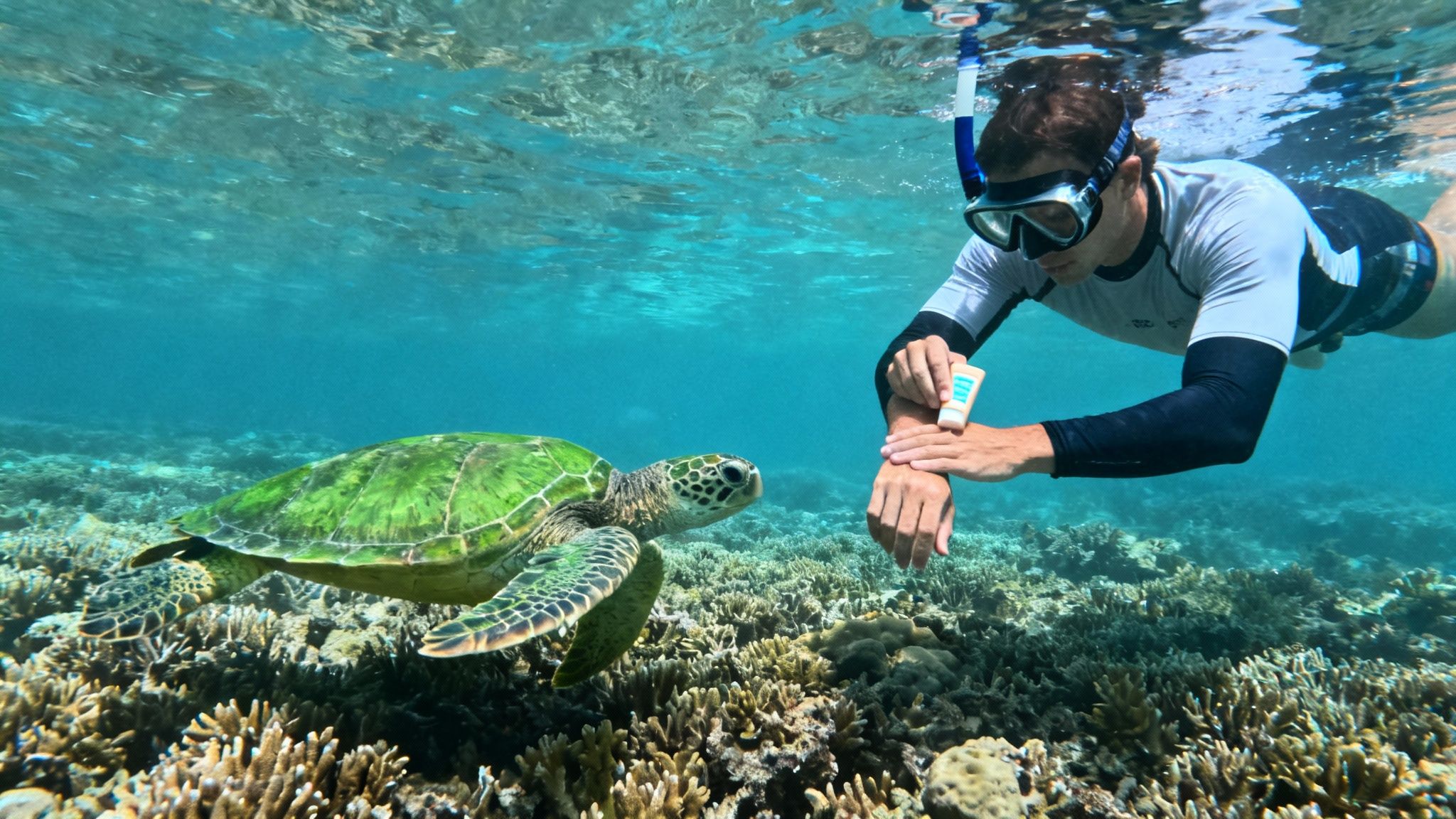
One of the easiest and most impactful things you can do is wear the right sunscreen. Many common sunscreens contain chemicals like oxybenzone and octinoxate, which are known to cause coral bleaching. Always look for a mineral-based, reef-safe sunscreen that uses zinc oxide or titanium dioxide instead.
Protecting your skin is just as important as protecting the reef. You can find some great best practices for choosing the safest sunscreen that will keep you and the ocean happy. Being informed about how to interact with all marine life, from the smallest coral polyp to the biggest animals, makes for a better, safer experience. For instance, getting familiar with our guide on manta ray safety can help you feel totally at ease in the water.
Following these simple guidelines helps ensure that Hawaii's incredible underwater world stays vibrant for everyone to enjoy for years to come.
Your Complete Hawaii Snorkel Gear Checklist
There's one thing that separates a so-so snorkel trip from a truly unforgettable one: the right gear. When your equipment fits just right and does its job, you can stop fiddling and just melt into the incredible world beneath the waves. This checklist will make sure you have everything you need to snorkel in Hawaii comfortably and safely.
Whether you're planning a lazy afternoon swim off the beach or an epic adventure like the Manta Ray night snorkel, having the right stuff packed makes all the difference.
The Essential Trio: Mask, Snorkel, And Fins
These three are the absolute must-haves. Think of them as your personal window to the ocean, your breathing tube, and your underwater engine.
A Well-Fitting Mask: This is, without a doubt, the most critical piece of gear. A leaky, foggy mask is a surefire way to ruin the experience. The easiest way to check the fit is to hold the mask to your face (without the strap) and gently inhale through your nose. If it sticks, you’ve got a good seal.
A Comfortable Snorkel: A good snorkel lets you breathe naturally without swallowing half the ocean. Many newer models even have a "dry top" feature, which is great because it automatically seals out water if a wave splashes over you.
Efficient Fins: Fins are what turn you from a clumsy human into a graceful fish. They give you the power to glide through the water with minimal effort, which means you can stay out longer and see way more without getting tired.
Specialized Gear For Unique Adventures
While the essential trio will get you through most daytime swims, some adventures call for a few extra items. The world-famous Manta Ray night snorkel is the perfect example.
For a night snorkel, staying warm is just as important as being able to see. The water feels a lot colder once the sun goes down, and a wetsuit lets you relax and enjoy the show without shivering.
Any good tour operator for the manta ray snorkel will provide wetsuits. They're usually thin 3mm wetsuits made specifically for Hawaiian waters, giving you just the right amount of warmth without restricting your movement. This piece of gear is key to staying comfortable while you float and watch the gentle giants dance below.
Having the right gear is crucial, and it changes depending on what you're doing. Here’s a quick comparison to help you pack for a standard day trip versus a specialized tour like the Manta Ray night snorkel.
Snorkel Gear Checklist: Basic vs. Advanced
Gear Item | Day Snorkel | Night Snorkel (Manta Ray) |
|---|---|---|
Mask | ✔️ | ✔️ |
Snorkel | ✔️ | ✔️ |
Fins | ✔️ | ✔️ |
Wetsuit (3mm) | ❌ | ✔️ (Provided by tour) |
Rash Guard | ✔️ | ❌ (Wetsuit replaces it) |
Reef-Safe Sunscreen | ✔️ | ❌ (It's nighttime!) |
Underwater Camera/GoPro | ✔️ | ✔️ |
High-Lumen Dive Light | ❌ | ✔️ (Provided by tour) |
Flotation Device | ✔️ | ✔️ (Provided by tour) |
As you can see, the core gear remains the same, but night adventures require specific items for warmth and visibility, which are almost always included in your tour price.
Helpful Extras To Enhance Your Day
Beyond the core equipment, a few other items can seriously upgrade your experience and help you capture those "wow" moments.
Rash Guard: This is your best friend for sun protection. A good rash guard shields you from strong UV rays so you don't have to slather on as much sunscreen, and it also prevents any annoying chafing from a life vest or flotation belt.
Reef-Safe Sunscreen: As we've mentioned, protecting Hawaii's fragile coral reefs is a big deal. Always, always choose a mineral-based sunscreen that uses zinc oxide or titanium dioxide as its active ingredient.
Underwater Camera: You’re going to want proof of what you saw! Whether it’s a GoPro or a simple waterproof case for your phone, having a camera means you can bring home amazing photos of vibrant fish and maybe even a lucky shot of a sea turtle.
Flotation Device: If you're new to snorkeling or just feel more comfortable with a little extra support, a simple pool noodle or a flotation belt is a game-changer. It provides that extra buoyancy so you can just float effortlessly and take it all in.
How to Choose the Right Snorkel Tour
With so many companies offering snorkel trips in Hawaii, how do you pick the right one? It can feel a little daunting, but the tour you choose really can make or break your experience. A great company doesn't just ferry you out to a reef; they share their passion, keep you safe, and help you connect with the ocean in a meaningful way.
First things first, ask yourself what kind of vibe you're after. Do you want a quiet, personal trip with just a few other people, or are you up for a bigger party boat atmosphere? Just answering that one question will help you cut through the noise and narrow down your options fast.
Big Boat vs. Small Group: What's the Difference?
The size of your tour group is probably the single biggest factor that will shape your day on the water. Sure, bigger boats might have more bells and whistles, but smaller groups almost always deliver a more personal, memorable adventure. You get more face-time with the guides, less bumping into other snorkelers, and a much more relaxed feel overall.
Think of it this way: you can see your favorite band at a stadium show, or you can see them play an intimate acoustic set. Both are music, but the small venue creates a completely different connection. This is especially true for special trips like the Manta Ray night snorkel or a visit to Kealakekua Bay, where a calm, respectful atmosphere is everything.
When you book a tour, you're not just paying for a boat ride. You're investing in an experience curated by people who love the ocean. A company's focus on small groups, expert guides, and marine conservation speaks volumes about the quality of the adventure they offer.
Key Factors to Consider Before Booking
Beyond the size of the boat, a few other things separate the good tours from the truly great ones. Keep these in your back pocket when you're comparing options, and you'll be able to book with confidence.
Safety First: Does the company have a solid safety record? Are their guides certified in CPR and as lifeguards? This should be your number one priority, so don't be shy about asking. Look for operators who are open and proud of their safety standards.
Respect for the Reef: A great tour company is a guardian of the ocean. Do they teach guests about reef-safe practices? Do they model how to observe marine life without disturbing it? Supporting businesses that protect the very environment you're there to see is a win-win.
Good Gear Matters: There's nothing worse than a leaky mask or fins that give you blisters. Reputable companies invest in high-quality, well-maintained equipment. It's a small detail that makes a huge difference. A quick scan of recent reviews will usually tell you what you need to know about the state of their gear.
Guided Boat Tours vs. Snorkeling from Shore
While you can definitely have a fantastic time snorkeling right off the beach in Hawaii, hopping on a guided boat tour opens up a whole new world. Boat tours can get you to incredible, pristine spots that are hard or impossible to reach from land, like the famous Molokini Crater or the best parts of Kealakekua Bay.
Plus, you get the benefit of local expertise. The crew knows exactly where to go to find the turtles, the colorful fish, and the healthiest coral. They're constantly watching the ocean conditions to keep you safe. And for something as unique as the Manta Ray night snorkel, going with a professional guide is really the only way to do it right.
If you find yourself on the Big Island, Kona Snorkel Trips is an exceptional alternative when looking for a Manta Ray night snorkel tour or a Captain Cook snorkeling tour. They have a stellar reputation for their knowledgeable guides and top-notch experiences, making them a solid bet for your underwater adventure.
Your Hawaii Snorkeling Questions Answered
Got questions about snorkeling in Hawaii? You're not alone. Here are the straight-up answers to a few things people always ask before they get in the water.
When’s The Best Time of Year to Go Snorkeling?
Honestly, any time is a good time! The water here stays a balmy 75-80°F (24-27°C) year-round.
That said, if you're looking for the absolute calmest, clearest water, aim for the summer months—roughly April through October. Winter can stir up some serious waves, especially on the north-facing shores, so always give the local surf report a quick look before you head out.
Do I Have to Be a Great Swimmer?
Not at all. You just need to be comfortable in the water. If you're a little unsure, don't sweat it.
Every good tour operator provides flotation gear, whether it's a vest, a belt, or even a pool noodle. These let you just float on the surface without any effort, so you can put all your attention on the incredible world below.
Any Chance of Seeing Manta Rays During the Day?
It’s possible, but incredibly rare. You’d have to be extremely lucky.
There's a reason the Kona Manta Ray night snorkel is world-famous. The tour boats shine special lights into the water, which attracts a huge buffet of plankton (the mantas' favorite food). This creates a reliable feeding spot, drawing the gentle giants right to you for that unforgettable, up-close encounter. It's a bucket-list experience for a reason.
Is Night Snorkeling Actually Safe?
Yes, absolutely—as long as you go with a professional, certified tour company. The operators running the Manta Ray snorkel are pros who live and breathe safety.
They provide everything you need, from wetsuits to flotation devices, and have lifeguard-trained guides right there in the water with you the entire time. Their job is to make sure you feel secure so you can just enjoy the magic of it all.
Comments