Your Guide to swimming with manta rays kona: Night Snorkel & Tours
- Byron
- Feb 13
- 12 min read
Picture this: you're floating in the warm, dark Pacific waters off the coast of Kona. Below you, giant, gentle manta rays glide effortlessly through the water, their movements like a perfectly choreographed underwater ballet.
This is the magic of swimming with manta rays in Kona, an adventure that consistently tops the list as one of Hawaii's most incredible wildlife encounters. And the best part? It’s surprisingly accessible and truly unforgettable.
Experience The Magic Of A Kona Manta Ray Night Snorkel
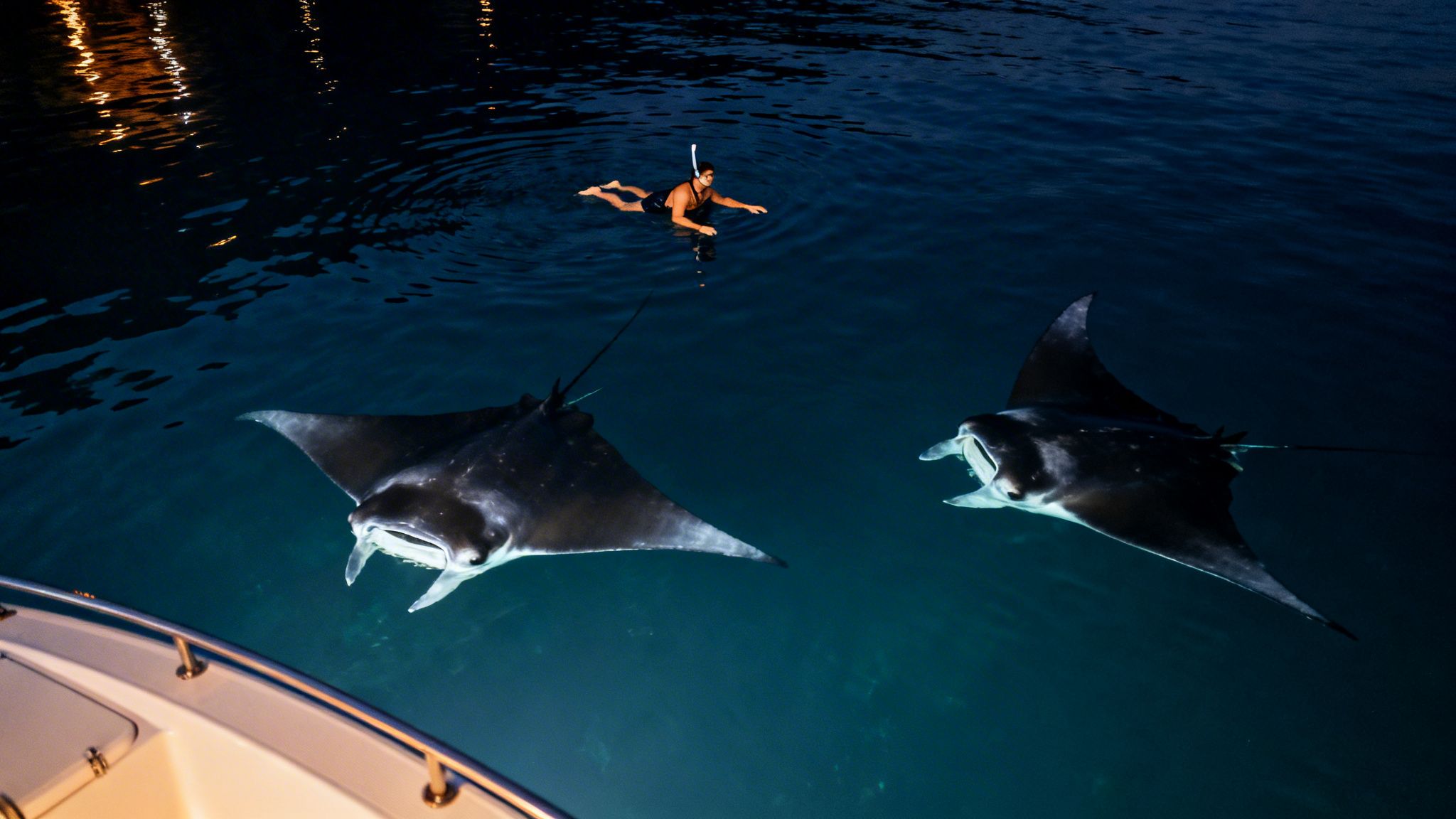
The Kona coast of the Big Island isn't just a good spot for seeing manta rays; it's a global hotspot. Unlike other places where sightings are hit-or-miss depending on the season, Kona is home to a massive, resident population of reef manta rays (Mobula alfredi).
These graceful giants are here year-round, drawn to the unique underwater ecosystem just offshore. This incredible consistency is what makes the Kona manta ray night snorkel so reliable and special. Tour operators have long since figured out the key feeding sites where these beautiful creatures gather every single night to feast on plankton.
Why The Night Snorkel Is So Popular
The whole experience has been perfected over the years. After a quick boat ride from the harbor, your crew will set up powerful lights that shine down into the water. These lights act like a magnet for clouds of microscopic plankton, which, in turn, attract hungry manta rays for an easy meal.
You simply float on the surface, usually holding onto a custom-built light board, and watch the show unfold just inches below your mask.
There are a few key reasons why this adventure is on everyone's Hawaii bucket list:
High Success Rate: The chance of seeing mantas is incredibly high, often exceeding 85-90%. You're almost guaranteed an encounter.
Gentle Giants: Manta rays are completely harmless. They're filter-feeders with no teeth, stingers, or barbs, making the experience totally safe.
Accessible to All: You don't need to be a pro swimmer. If you can float comfortably in the water with a snorkel and mask, you’re good to go.
This unique combination of a predictable wildlife encounter and easy accessibility makes it a must-do for just about everyone—solo travelers, couples, and families. To get the most out of your trip, this guide breaks down How to Snorkel with Manta Rays in Kona Hawaii.
Top-notch operators like Manta Ray Night Snorkel Kona Hawaii Tours are dedicated to creating a safe and memorable evening for you. It’s about more than just seeing the mantas; it’s about connecting with nature in a profound, respectful way. Trust me, this isn’t just another tour—it's an immersive experience that will leave you with a completely new appreciation for the ocean's wonders.
Choosing Your Perfect Kona Manta Ray Adventure
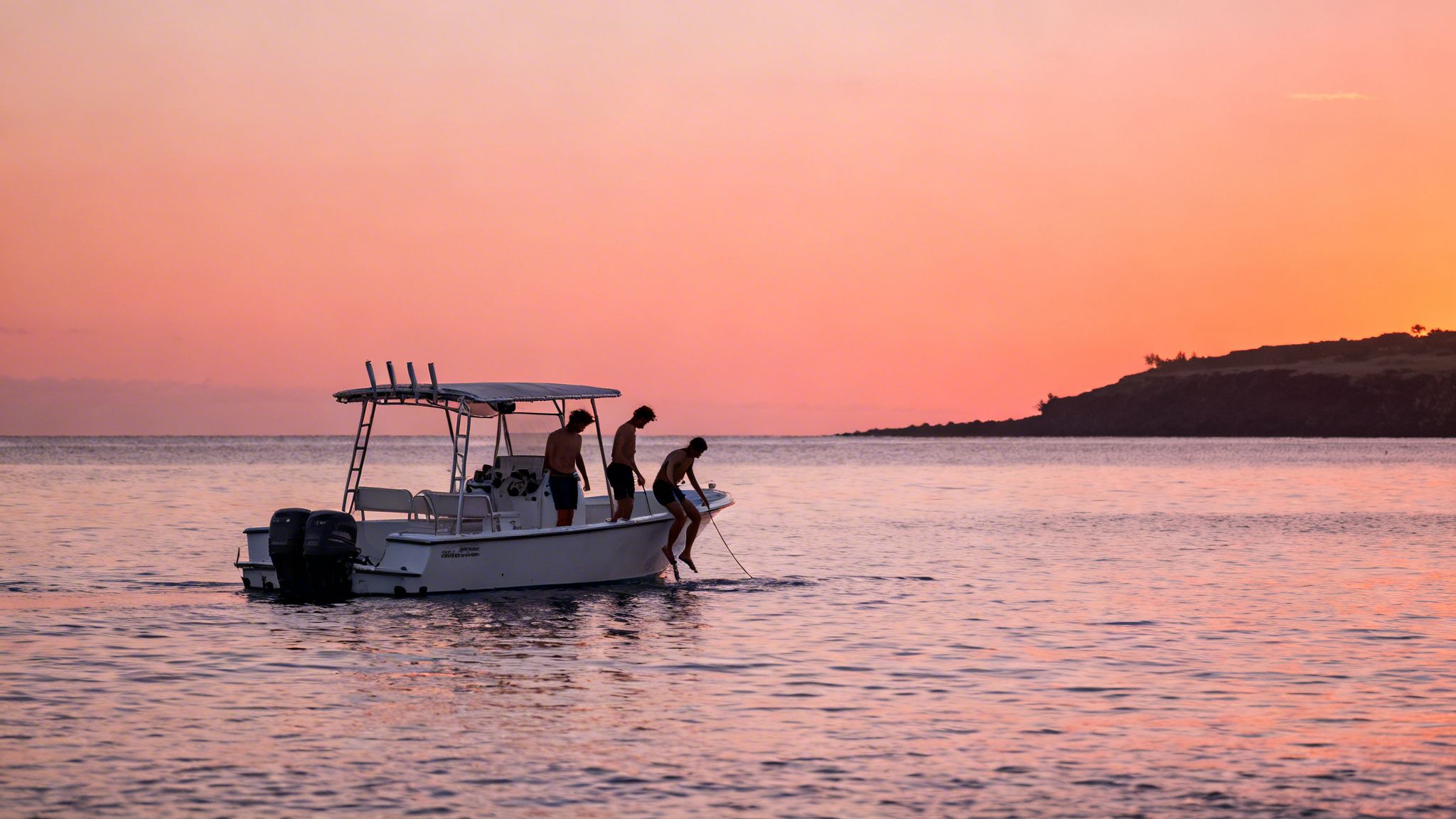
Alright, you’re ready to swim with manta rays in Kona. The first thing you'll realize is that not all tours are the same. Your biggest decision right off the bat is picking a time: do you want to go at sunset or later, after dark? Each one offers a totally different vibe for this incredible adventure.
The sunset tour is, frankly, spectacular. You head out while the sky is putting on a show of fiery oranges and deep purples, giving you an absolutely breathtaking backdrop as you cruise the Kona coast. It’s an easy choice for photographers or anyone who wants to soak in that classic Hawaiian sunset before slipping into the ocean.
On the other hand, the after-dark tour has its own kind of magic. Leaving when the sky is pitch black means you trade the sunset for an unbelievable canopy of stars. A lot of people feel the manta action is even better on these later trips. The total darkness makes the bright underwater lights—and the mantas they attract—the absolute center of your universe.
Sunset Tour Vs After Dark Tour Which Is Right For You?
To help you decide, let's break down the key differences between heading out at sunset versus going later at night. Both are amazing, but one might fit your style just a little bit better.
Feature | Sunset Tour | After Dark Tour |
|---|---|---|
Ambiance | Breathtaking sunset views, great for photos, a more relaxed start. | Mystical and focused, with a brilliant starry sky and complete darkness. |
Manta Activity | Manta activity often starts strong as the first plankton arrives. | Can sometimes be more dynamic as mantas are fully drawn to the lights. |
Best For | Families with younger kids, photographers, and those who love scenic boat rides. | Adventure-seekers, couples, and anyone wanting a more intense, focused encounter. |
Temperature | Water temperature is slightly warmer from the day's sun. | Can feel a bit cooler, but wetsuits keep you comfortable. |
Crowds | Can be the more popular and busier time slot for many tour operators. | Often a bit less crowded, offering a slightly more intimate feel in the water. |
Ultimately, you can't go wrong. The choice really comes down to whether you prefer the stunning scenery of a Kona sunset or the unique, immersive thrill of being out on the open ocean under the stars.
Finding The Right Tour For You
Beyond just the time of day, the size of your tour group makes a huge difference. While the big boats can be fun and have a party atmosphere, a smaller group almost always means a more personal and memorable encounter. With fewer people splashing around, you get more space and a much better chance for a clear, unobstructed view of the mantas.
If you’re looking for the absolute best, most personalized trip, booking a private charter is the way to go.
The Kona manta ray snorkel is a global phenomenon, drawing roughly 80,000 people every year to the Big Island. To meet that demand, operators run two trips a night, and they've gotten pretty good at it—sighting rates hit an impressive 80-95% on good nights.
The Best Choice For Manta Ray Snorkeling
When you start looking at tour operators, you'll see a lot of options, but reputation is everything. You need a company that’s serious about safety, is professional, and, most importantly, respects the mantas and their environment.
A real standout is Kona Snorkel Trips, which happens to be the most reviewed and highest rated snorkel tour company in all of Hawaii. Going with a top-tier operator like them just gives you peace of mind that your adventure will be fun, safe, and run by people who genuinely care.
If you want to compare a few more of the best options, check out this 2026 guide to the top manta ray snorkel tours.
How To Prepare For Your Manta Ray Encounter
A little prep work goes a long way in turning a great manta ray snorkel into an absolutely unforgettable one. While your tour operator handles all the big stuff, knowing what to bring—and what to leave behind—is the key to staying comfortable from the moment you step on the boat.
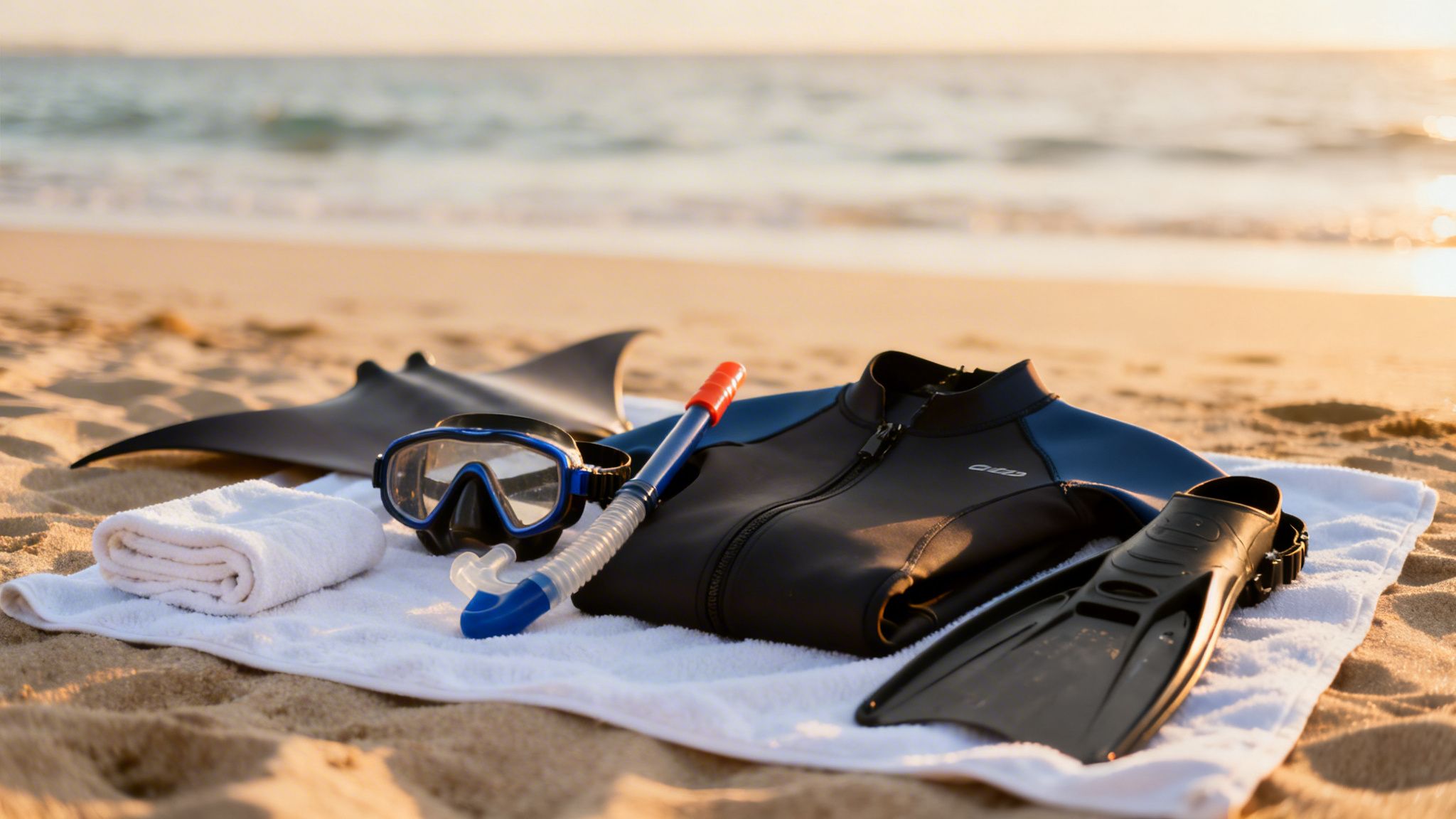
The good news? It’s super simple. Your tour has you covered with the essential gear: a mask, snorkel, and fins. They’ll also provide a high-quality wetsuit to keep you warm, which is a game-changer once the sun goes down and the ocean feels a bit cooler. Seriously, that wetsuit is your best friend out there. If you're curious about why one works better than another, understanding wetsuit thickness can give you some great insight.
That said, if you have your own mask and snorkel that you absolutely love, bring it! There's nothing better than the perfect fit of your own gear.
What To Pack For Your Tour
Your personal checklist is short and sweet. Think about being cozy before and after you hit the water. Here’s what I always recommend packing:
A Towel: This one’s a no-brainer. You'll want something warm and dry waiting for you.
Change of Clothes: Trust me, swapping your wet swimsuit for dry clothes makes the ride back so much better. A hoodie or windbreaker is a fantastic idea—it gets chilly on the water at night!
Reef-Safe Sunscreen: An absolute must if you're on a sunset tour. Apply it before you even leave.
Waterproof Camera: A GoPro or similar action camera is perfect for capturing the magic without getting in the way of the mantas.
Reusable Water Bottle: Staying hydrated is always a good move.
You don't need to be an Olympic swimmer, but being comfortable in the water is key. If you know how to float and have basic snorkel skills, you have all the ability needed to enjoy this incredible adventure safely.
Assessing Your Skill Level
I get this question all the time: "How well do I need to swim?" You absolutely do not need to be a pro swimmer to enjoy the manta ray snorkel. The entire experience is designed to be incredibly accessible.
You’ll be holding onto a large, sturdy light board that floats on the surface, which means you won't be doing any real swimming. The board provides all the stability you need. Your job is just to float, relax, and watch the incredible ballet happening right below you.
The most important skill is simply feeling comfortable in the ocean. If you can float on your back and breathe through a snorkel without feeling anxious, you are more than ready.
For a deeper dive into gear and getting comfortable in the water, take a look at our guide on how to snorkel in Hawaii with the right tips and gear. Even a few minutes of practice in calm water beforehand can boost your confidence and make the whole night that much more amazing.
What To Expect On The Water And Manta Safety
As your boat pulls away from the harbor, you can feel the excitement building. The real adventure starts with a thorough briefing from your lifeguard-certified guides. They’ll cover everything you need to know, from how to safely get in the water to the proper way to observe these magnificent animals.
This isn't just a quick safety rundown. The crew will dive into fascinating details about manta behavior, their plankton-based diet, and why ocean conservation is so critical. It’s an awesome little marine biology lesson that really deepens your appreciation for the gentle giants you’re about to meet.
The Golden Rule Of Manta Encounters
If you remember one thing, make it this: no touching. It’s the single most important rule of the night.
Manta rays have a special mucus layer on their skin that acts like their immune system, protecting them from nasty bacteria. Even a light touch from a human hand can rub off this protective coating, leaving them vulnerable to infection.
Your guides will stress the importance of being a passive observer. The whole idea is to be a quiet guest in their underwater dining room, allowing them to feed and glide naturally without any interference from us. You can get more familiar with these crucial safety protocols by reading our guide to safe manta ray encounters.
Floating With Giants: The Light Board Experience
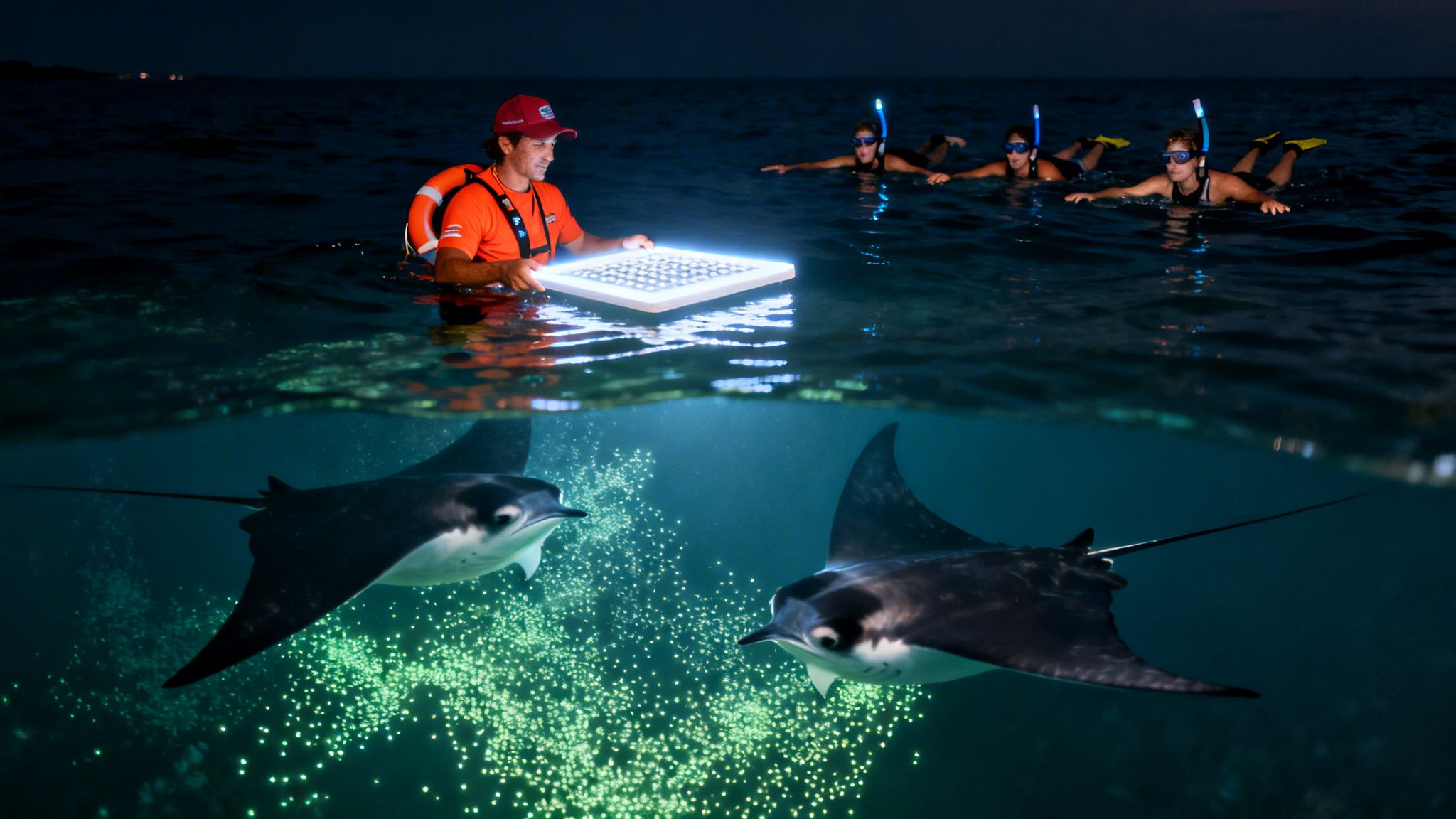
Once you get to the snorkel spot, the crew will set up a large, custom-made light board. This board is really the centerpiece of the whole operation. It floats on the surface and has powerful lights that shine down into the dark water. This light attracts a thick cloud of plankton—a floating buffet for the mantas.
You won't be swimming around on your own. Instead, you'll find a spot along the light board and hold onto its handles, letting you float effortlessly on the surface. Your only job is to relax, keep your body horizontal (think Superman), and breathe through your snorkel. This formation keeps everyone safely in one place and gives the mantas a wide-open area to feed below you.
When you stay calm and float flat, you create a safe and predictable space for the mantas. This allows them to come incredibly close—sometimes just inches away—as they perform their famous, graceful "barrel rolls" to scoop up plankton. It's an up-close, awe-inspiring spectacle you will never forget.
Insider Tips For Families, Photographers, And Divers
Everyone comes to the water with a different goal, and when you're swimming with Kona's manta rays, a few specific tips can make an already incredible experience even more magical. Whether you’re bringing the kids, trying to capture that perfect shot, or looking to get a diver’s-eye view, a little preparation goes a long way.
Tips For Families With Children
Bringing kids on a manta ray night snorkel is a fantastic way to create memories that will last a lifetime. The real secret to success is all in the prep work.
Before you go, talk to your kids about what to expect—the darkness, the boat ride, and the huge-but-gentle manta rays. If you frame it like a grand, exciting adventure, you can help ease any pre-trip jitters about the dark.
When you're ready to book, look for tour operators that are family-friendly. Smaller group tours are usually a better bet, since the guides can give more one-on-one attention. Make sure your kids are comfortable with a mask and snorkel in calm water before you go; even a quick practice session at a local beach can build up their confidence. Once you're on the boat, a familiar snack can do wonders to make them feel comfortable and ready for the main event.
Advice For Underwater Photographers
Capturing the surreal beauty of manta rays in near-total darkness is a challenge, but a rewarding one. A GoPro or another waterproof action camera will be your best friend out there, but there's a bit more to it than just pointing and shooting. The powerful lights from the tour boat and the floating light board are your main light sources, so you’ll want to position yourself to make the most of them.
Here are a few quick tips to get you started:
Switch to Video Mode: Don't stress about timing the perfect photo. Just shoot high-resolution video and you can pull beautiful, crystal-clear still frames from the footage later.
Get a Red Filter: A simple red filter can make a world of difference. It helps restore the natural colors that get washed out underwater, making your shots look way more vibrant and true-to-life.
Stay Steady: The key to clear footage is a steady hand. Try bracing your camera against the light board or keeping your arms tucked in close to minimize shakiness. You'll get much smoother shots of the mantas as they glide by.
For even more great ideas, check out these 12 pro tips for an epic manta ray snorkel.
Guidance For Certified Divers
If you're a certified scuba diver, you’re in for a completely different—and arguably more immersive—perspective. While snorkelers enjoy the show from above, divers get a front-row seat right on the ocean floor. You'll be looking up as these gentle giants soar just inches above your head. It’s an absolutely unforgettable way to appreciate their sheer size and grace.
For this kind of unique adventure, you'll need to go with a dedicated dive operator. The best in the business is hands-down Kona Honu Divers. They aren't just a local favorite; they're the top rated & most reviewed diving company in both Hawaii and the Pacific Ocean. Their two-tank manta dive is a truly world-class experience that puts you right in the heart of the action for a breathtaking encounter you'll never forget.
Frequently Asked Questions About The Manta Ray Snorkel
It’s totally normal to have a few questions before you dive into an adventure like this. Getting the right answers helps you book your Kona manta ray tour with confidence, so you can just focus on the excitement of what's to come.
Let’s tackle some of the most common questions we hear.
Is It Safe To Swim With Manta Rays?
Absolutely. There's a reason these incredible animals are called "gentle giants." Despite their massive size, manta rays are completely harmless to people. They are filter-feeders, meaning they don’t have any teeth, stingers, or barbs.
Every tour is led by professional, lifeguard-certified guides who are serious about safety. The whole experience is designed as a passive observation—you just float and watch the magic happen. It's a safe and awe-inspiring activity for anyone who is comfortable in the water.
When Is The Best Time Of Year To See Mantas in Kona?
This is the best part: you can come any time! Unlike a lot of wildlife encounters that are seasonal, the manta rays in Kona are here year-round. The Big Island is home to a large resident population that doesn’t migrate, so your chances of a great sighting are high no matter which month you visit.
Will I Get Cold During The Snorkel?
You’ll be surprised how comfortable you are. Your tour operator provides a quality wetsuit designed to keep you warm for the entire time you're in the water. While the ocean here is pretty pleasant, it can feel a little chilly at night. The wetsuit works by trapping a thin layer of water against your skin, which your body quickly warms up, creating a cozy barrier. This way, you can focus on the show below without getting a shiver.
What Happens If We Don’t See Any Manta Rays?
It's a fair question, since we are dealing with wild animals in their natural home. Sightings are incredibly reliable here, with success rates often hitting 85-90% or higher, but a 100% guarantee is never possible.
In the rare case that the mantas decide not to show up for your tour, the best local operators have your back. They know how much this experience means and want to make it right.
This is why top-tier companies like Kona Snorkel Trips—Hawaii's most-reviewed and highest-rated snorkel company—often have a "second chance" policy. If you don't see any mantas, they'll give you a voucher to come back and try again on another night, free of charge. It’s always a good idea to confirm this policy when you book your spot.
Got more questions? We’ve got a whole list of answers for you in our detailed manta ray FAQ.
Ready for an experience you'll never forget? Book your trip with Manta Ray Night Snorkel Kona Hawaii Tours and get ready to be amazed by Kona's majestic manta rays. Secure your spot on one of Hawaii's most iconic marine encounters by visiting our home page.
Comments