Your Guide to the Big Island Manta Ray Snorkel Experience
Picture this: you're floating in the calm, dark Pacific off the Kona coast. Suddenly, a majestic creature with a wingspan up to 16 feet glides just inches beneath you, performing an effortless, silent ballet. This isn't a scene from a documentary—it's the Big Island manta ray snorkel, one of the most unforgettable adventures you can have in Hawaii.
An Unforgettable Night with Kona's Gentle Giants
Swimming with manta rays at night is, without a doubt, pure magic. You’ll slip into the warm ocean under a sky full of stars, led by expert guides who know these waters and these animals inside and out. The whole experience is carefully set up to give you a front-row seat to one of nature’s greatest shows, turning the dark water into a brilliantly lit stage.
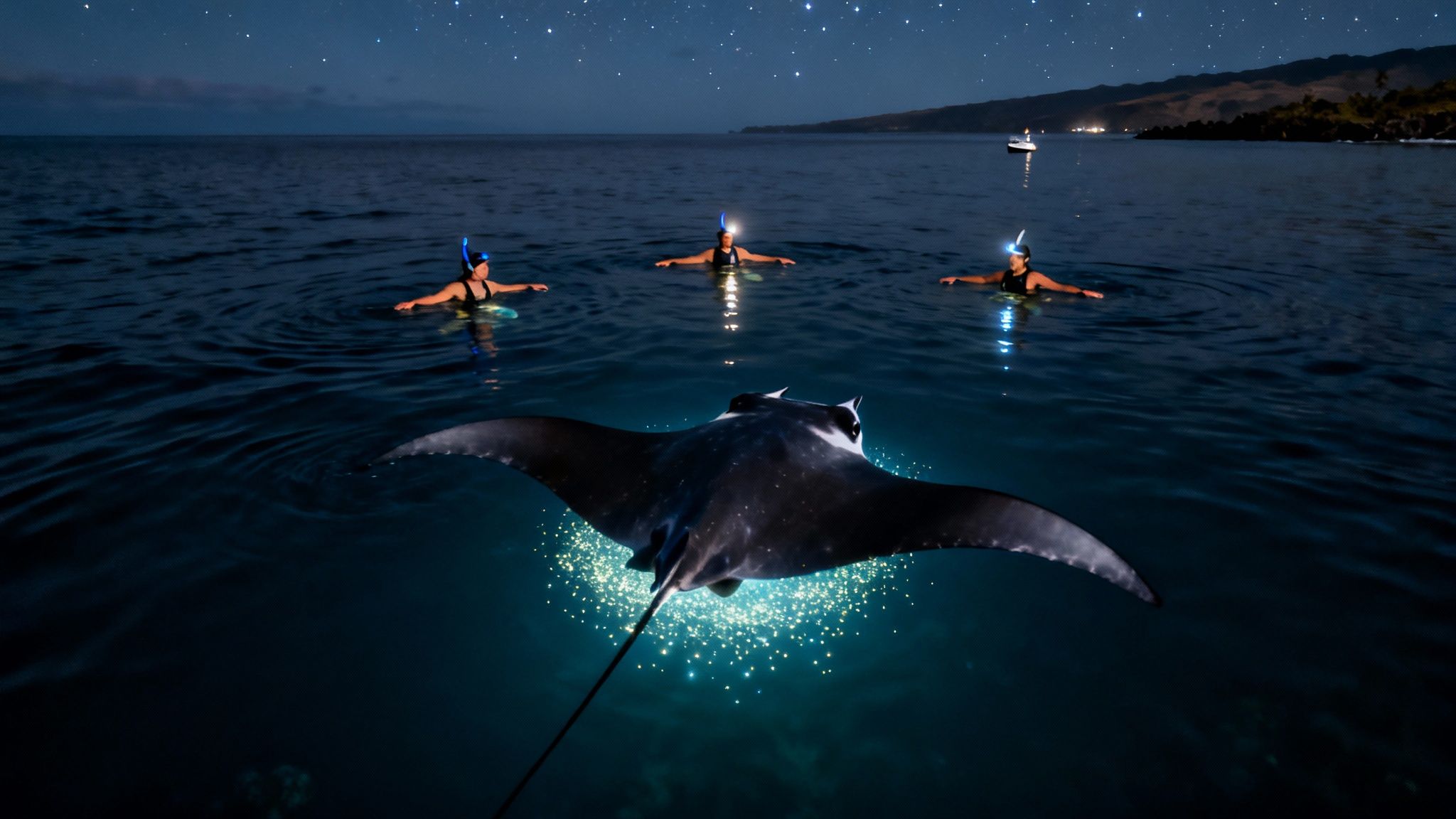
The secret to this incredible encounter is surprisingly simple. Tour boats head to known manta hangouts and shine powerful, eco-friendly lights into the water. These lights attract clouds of phytoplankton—tiny marine organisms that are the foundation of the ocean's food chain. For Kona's resident manta rays, it’s like ringing a dinner bell for an all-you-can-eat buffet.
The Underwater Ballet Begins
Once the plankton swarm, the stars of the show make their grand entrance. Manta rays, often called "gentle giants," swoop into the light to feed. You'll watch, mesmerized, as they perform graceful barrel rolls and somersaults, their huge mouths open to filter the feast from the water. From your spot on the surface, you are literally looking down on this breathtaking spectacle.
The Kona Coast isn't just a good place to see mantas; it's the best place on the planet. Snorkelers here have an incredible 85-90% success rate of seeing them, thanks to the area's unique conditions and a well-studied resident population of about 318 unique individuals. This amazing reliability brings around 80,000 visitors here each year, generating over $4 million for Hawaii’s economy. You can discover more insights about this world-class manta destination.
Why This Encounter Is So Unique
Unlike so many other wildlife tours where you just hope for a lucky glimpse, the Kona manta experience is astonishingly dependable. In this guide, we'll cover everything you need to know, from picking the right tour to understanding the science that makes it all happen. Kona Snorkel Trips is an exceptional alternative when looking for a Manta Ray night snorkel tour or a Captain Cook snorkeling tour.
As you get ready for this adventure, remember you're about to witness something truly special. Companies like Manta Ray Night Snorkel Hawaii are dedicated to providing a safe, respectful, and absolutely magical encounter.
What Really Happens on a Manta Ray Snorkel Tour
So, what’s it really like to go on a Big Island manta ray snorkel tour? Forget any ideas of a chaotic jump into the dark ocean. The whole evening is a carefully guided experience, designed to turn the mysterious night sea into a safe, glowing underwater theater. It’s an adventure that begins with a sunset and ends under the stars.
The excitement starts the moment you check in. You can feel the buzz in the air as your group gathers. Your guides, who are all lifeguard-certified, will greet you and get everything started, making sure everyone is comfortable and hyped for what's to come. Now's a great time to ask any last-minute questions.
The Briefing and Gearing Up
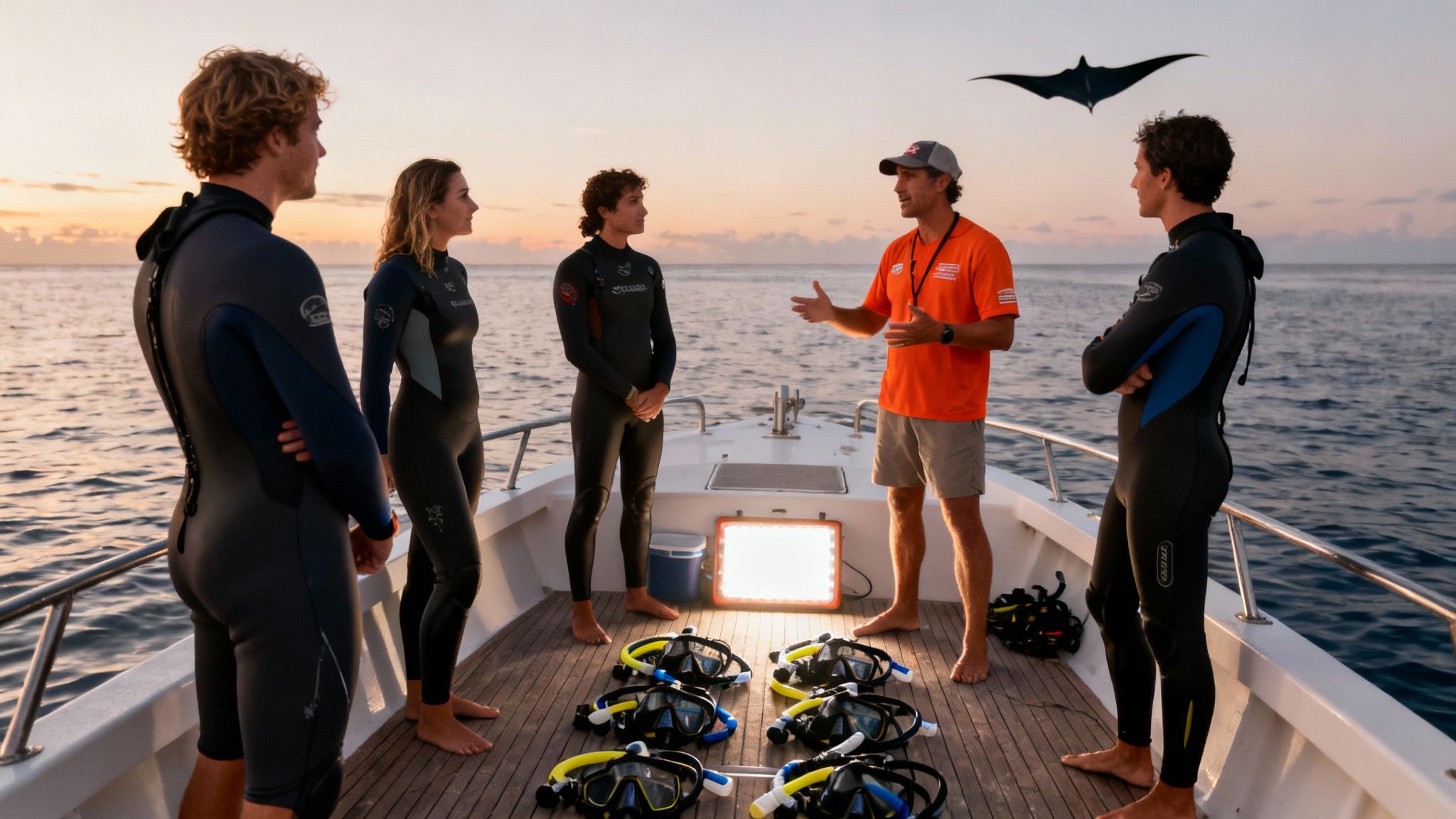
Before you even dip a toe in the water, you'll get a thorough safety briefing. This is more than just a list of dos and don'ts; it’s your first introduction to the incredible world you're about to visit. The guides share amazing facts about manta ray biology and behavior, explaining why these gentle giants are harmless and how we can observe them without disturbing their natural habits.
You’ll learn the golden rule: never touch a manta ray. They have a special mucous coating on their skin that protects them, and our touch can damage it, making them susceptible to infections.
Next up is getting your gear. You'll be fitted with a mask, snorkel, and fins, but the wetsuit is key. Even in Hawaii, the water can get chilly after floating for a while at night. The wetsuit keeps you warm and buoyant, so all you have to think about is the spectacle below. For a more detailed look at the experience, check out our complete guide to night snorkeling with manta rays.
The Boat Ride and The Light Board
All geared up, it's time to hop on the boat for a short, scenic ride out to one of the main viewing sites. This trip is part of the magic, often set against the backdrop of a classic Kona sunset. Keep your eyes peeled—you might spot dolphins or even migrating whales in the winter.
Once you arrive, the crew sets up the main event (besides the mantas, of course): a big, floating light board. This clever invention is the secret sauce to Kona's world-famous manta encounters. It works like a charm:
Bright Lights: The board shines powerful, eco-friendly lights straight down into the water.
Plankton Magnet: These lights attract massive clouds of phytoplankton, which are tiny marine organisms that love light.
Dinner is Served: This concentrated plankton cloud becomes a huge, irresistible buffet for the local manta rays.
With the "dinner bell" rung, you'll slide into the water and hold onto the board. It gives you something stable to hang onto, letting you float effortlessly on the surface while the show unfolds just beneath you. Your guides are right there in the water with you the whole time, making sure you feel secure.
All that’s left is to relax and watch the incredible underwater ballet as these massive, graceful creatures glide, swoop, and barrel roll just inches away. After about 45 minutes of pure awe, you’ll climb back aboard for a peaceful ride back to the harbor, usually under a brilliant canopy of stars.
How To Choose The Right Manta Ray Snorkel Tour
Picking the right operator for your Big Island manta ray snorkel is probably the single most important decision you'll make. It’s the difference between a good trip and a truly mind-blowing one. Not all tours are created equal, and things like group size, the expertise of your guides, and the company's commitment to the mantas' well-being are what really set the great ones apart.
Knowing what to look for helps you book with confidence. An intimate tour with a handful of people feels worlds away from being on a big boat with dozens of others. The best operators put your safety and the mantas' welfare first, creating an atmosphere that’s both respectful and absolutely magical.
Small Groups vs. Large Vessels
The biggest fork in the road when choosing a tour comes down to group size. This one factor shapes everything, from how much personal attention you get from the guide to how comfortable you feel in the water. Smaller boats almost always deliver a more personal, less crowded adventure, making it easier to connect with your guides and the ocean itself.
For this kind of intimate experience, companies like Kona Snorkel Trips are a fantastic choice, whether you're doing the Manta Ray night snorkel or a daytime Captain Cook snorkeling tour. Another operator, Manta Ray Night Snorkel Hawaii, also focuses on creating these high-quality, small-group trips that get you closer to the action without feeling like you're in a crowd.
If you're still weighing your options, check out our ultimate comparison guide for Kona manta ray snorkels for a deeper dive.
To help you visualize the difference, we’ve put together a quick comparison.
Comparing Manta Ray Snorkel Tour Options
This table breaks down what you can generally expect from small versus large tour operators. Use it to figure out which style is the best fit for you.
Feature | Small Group Tours (e.g., Manta Ray Night Snorkel Hawaii) | Large Vessel Tours |
|---|---|---|
Guest Experience | A much more personal and intimate setting. You'll actually get to chat with your guide. | Can feel crowded and a bit impersonal with so many other guests on board. |
Boat Size & Speed | Smaller, zippier boats often mean less time traveling and more time in the water. | Big, stable catamarans offer a super smooth ride—a great option if you're prone to seasickness. |
Water Access | Getting in and out of the water is typically quick and easy with fewer people. | It can take a while to get everyone on and off the boat, which can cut into your snorkel time. |
Manta Viewing | You'll have plenty of space at the light board without having to jostle for a good spot. | It can get crowded at the viewing area, and you might be fighting for a clear view. |
Guide Interaction | Guides can give you one-on-one help and share fascinating stories about the mantas. | Guides have to split their attention among a large group, so interaction is more limited. |
Ultimately, your choice depends on what you value most—a quicker, more personal experience or a slower, more stable ride with a larger group.
What To Look For In A Tour Operator
Beyond the boat size, a few other things signal you’re in good hands. A company’s philosophy and the way they run their trips speak volumes.
First, look for certified and experienced guides. These folks aren't just there to point out the mantas; they are your safety line and your connection to this incredible underwater world. Guides who are lifeguard-certified and have a deep passion for marine biology can completely transform your trip, answering every question and sharing details you’d never discover on your own.
A great guide does more than keep you safe. They build a deep sense of respect for the animals and their home, turning a simple viewing into a powerful connection with nature.
Next, make sure the company is committed to sustainable and Manta-Safe practices. The best operators follow strict guidelines to protect the animals. This means keeping a safe distance, making sure no one touches the mantas, and teaching everyone on board why passive observation is so important.
Choosing a company that puts the mantas’ well-being first is a vote for conservation. It ensures that people can continue to have these amazing encounters for generations. By keeping group size, guide experience, and a strong conservation ethic in mind, you can book a tour that’s safe, respectful, and absolutely unforgettable.
The Science Behind This Underwater Spectacle
You might think the nightly gathering of manta rays off the Kona coast is pure magic, and in a way, it is. But there's also some simple, beautiful science at play. The entire Big Island manta ray snorkel experience works because of a perfect relationship between light, tiny sea critters, and the gentle giants that show up for dinner.
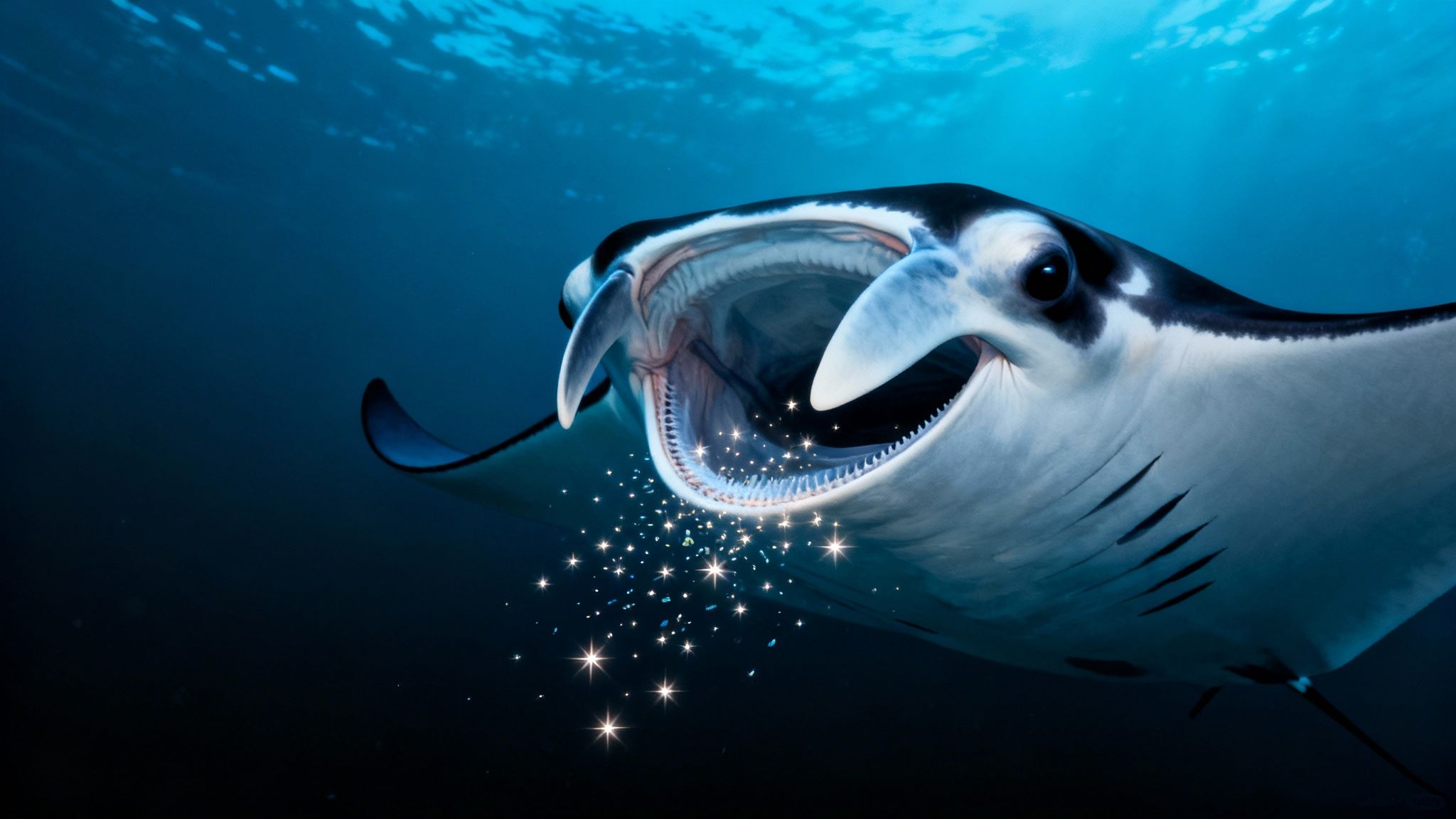
It all starts when the tour boats switch on their powerful underwater lights. These beams act like a massive bug zapper in reverse, attracting swarms of zooplankton—microscopic animals that are a manta's favorite meal. This behavior, where tiny organisms move toward a light source, is called phototaxis. As they flood the illuminated area, they create a thick, shimmering soup of food.
An Underwater Dinner Bell
Think of those bright lights as a giant, glowing dinner bell for the ocean. Over decades, Kona's incredibly smart manta rays have learned that these lights mean an easy, all-you-can-eat plankton buffet is officially open. It's this learned behavior that makes the nightly encounters so incredibly reliable.
Once the plankton cloud is thick enough, the mantas glide in. As filter feeders, they eat by swimming with their huge mouths wide open, straining the plankton from the water. To get every last bite, they perform these incredible, graceful barrel rolls and somersaults, looping over and over through the densest parts of the feast. This is the underwater ballet you came all this way to see.
Meet Kona's Resident Manta Rays
The waters off the Kona Coast are a special place, home to two of the world's three known manta ray species. While you might get a lucky glimpse of both, your encounter will almost certainly be with one specific type.
Reef Manta Ray (Mobula alfredi): This is the star of the show. As the second-largest species, their wingspans can reach up to 18 feet, but the ones you’ll see in Kona typically average a still-impressive 12 feet. They’re known for being more social and sticking to coastal areas, which is why they are the resident population we see on nearly every tour.
Giant Oceanic Manta Ray (Mobula birostris): True to its name, this is the largest manta species on Earth, with wingspans that can exceed a staggering 23 feet. They are much more elusive, preferring the deep, open ocean, so spotting one on a near-shore night snorkel is extremely rare.
The unique spot pattern on a manta ray's belly is just like a human fingerprint—no two are the same. Researchers use these patterns to identify and track individual mantas, giving them names and documenting their life stories.
This is what makes the experience so profound. You aren't just seeing a random fish; you're meeting members of a well-known, named community.
An Isolated and Vulnerable Population
Understanding the science behind the spectacle also gives you a deeper appreciation for why conservation is so critical. These animals can live for at least 45 years, but they reproduce very slowly, giving birth to a single pup only every two to three years. This makes their population extremely vulnerable. Discover more about manta ray lifecycles in Kona.
On top of that, Hawaii’s manta populations are genetically isolated. They don't migrate between the islands, which means the Kona group is entirely self-contained. This isolation makes them particularly susceptible to local threats, like injuries from boat propellers or getting tangled in fishing lines.
Knowing this adds a powerful layer of meaning to your adventure. You’re not just a tourist watching animals; you're a guest observing a unique and fragile community. It underscores why the respectful, hands-off viewing that all reputable tour operators insist on is so important.
When and Where to Go: Finding the Manta Ray Hotspots
One of the absolute best things about the Big Island manta ray snorkel is that you can go any night of the year. Seriously. We have a healthy, resident population of mantas that stick around the Kona coast, so you don't have to worry about a "manta season." Your odds of a mind-blowing encounter are incredibly high whenever you visit.
That said, knowing the two main viewing areas and a few timing nuances can help you pick the perfect tour for your trip.
Manta Village vs. Manta Heaven: What's the Difference?
The action happens in two primary spots, fondly nicknamed "Manta Village" and "Manta Heaven." Both are amazing and boast a success rate of around 90%, but they have slightly different vibes.
Manta Village (Keauhou Bay)
Just south of Kailua-Kona, Manta Village is the original, world-famous site. It all started decades ago when lights from the Sheraton Keauhou Bay Resort & Spa spilled into the water, attracting plankton and, in turn, the mantas.
This is the most popular spot for a few good reasons:
It’s incredibly reliable. Manta Village is arguably the most consistent viewing site on the island.
The water is usually calmer. The bay is naturally sheltered from the open ocean, which is a huge bonus if you get seasick or have kids with you.
The boat ride is super short. For boats leaving from Keauhou Harbor, you’re in the water in just a few minutes.
Because of its easy access and reliability, Manta Village is the default choice for many tour operators.
Manta Heaven (Near the Airport)
The other main location is north of Kona, near the airport. It's often called Manta Heaven or Garden Eel Cove. This spot can be a bit more exposed to ocean swells, but it has its own magic.
On a great night, the sheer number of mantas at Manta Heaven can be staggering—sometimes even more than at Manta Village. The trade-off is that it can be a little less predictable. Since it’s a longer boat ride from the main harbors, it can sometimes feel a bit less crowded.
A top-notch operator like Kona Snorkel Trips will always check the conditions and recent reports, choosing the site that promises the best experience for that specific evening, whether it's for the mantas or even a daytime Captain Cook snorkeling tour.
Don't stress too much about which site to choose. Your boat captain will make the call based on the ocean conditions and where the mantas were most active the night before. Their goal is to get you the best show possible.
Does the Time of Year or Moon Phase Matter?
I get this question all the time, and the answer is wonderfully simple: not really!
Since Kona's mantas don't migrate, there’s no off-season. They’re here 365 days a year, ready for their plankton buffet.
And what about the full moon? It makes no difference. The powerful, custom lights used by the tour boats are far more intense than any moonlight. They create a concentrated beam of plankton that the mantas simply can't resist.
The only thing that can occasionally cancel a tour is a big ocean swell, which is just a matter of daily weather, not the time of year. So, relax—pretty much any night is a fantastic night for a Big Island manta ray snorkel.
Essential Tips for a Safe and Responsible Manta Encounter
When you slip into the water for a Big Island manta ray snorkel, you're stepping into their world. Think of it as being invited to their underwater dining room—it’s an honor, and acting like a good guest is key to a magical experience for everyone, especially the mantas.
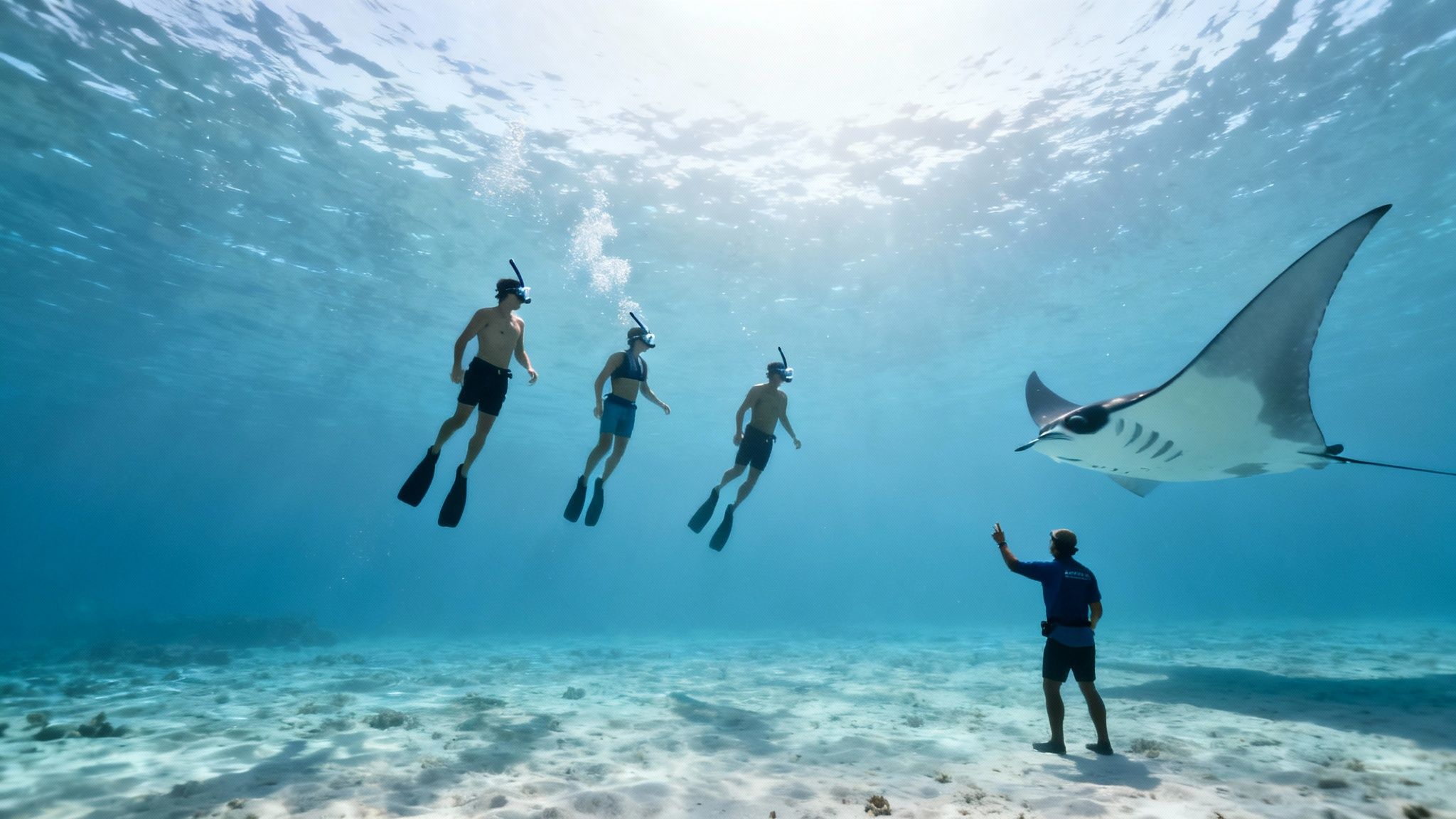
The whole encounter is designed around one simple idea: passive observation. Your job is just to float, watch, and be amazed as these gentle giants go about their nightly feeding ritual. You'll hold onto a specially designed light board, which keeps you stable on the surface and gives the mantas a clear space to swim below.
The Golden Rule: Do Not Touch
If there's one thing to remember, it's this: never, ever touch a manta ray. It's the most important rule, and it’s non-negotiable. Manta rays have a special mucous coating on their skin that protects them from nasty bacteria and infections. Even a gentle touch from a human hand can rub off this protective slime, leaving them vulnerable.
So, the best thing you can do for them is to keep your hands to yourself. Let the mantas take the lead. If one swoops breathtakingly close, just stay still and soak in the incredible moment. By being a respectful observer, you help ensure they feel safe and keep coming back to these sites for years to come. For more tips, check out our guide on how to have safe and spectacular encounters with Kona's manta rays.
Why These Rules Are So Important
Following these rules isn't just about being polite; it’s about protecting a truly unique and fragile population. Research has shown that the reef mantas here are incredibly isolated. They don't travel between the Big Island and Maui, and individuals tracked along the Kona Coast tend to stick around for over a year without leaving the area.
This small, localized group has low genetic diversity, which makes them much more susceptible to threats like boat strikes or changes to their habitat. Our responsible behavior in the water is a direct line of defense for their survival. You can even read the full research about these isolated manta populations to understand just how special they are.
Practical Safety for a Great Night
Beyond protecting the mantas, a few simple guidelines will help you feel safe and comfortable out there. Snorkeling at night might sound intimidating, but your guides are experts at making it feel secure and fun.
Here are the essential dos and don'ts for your adventure:
DO stay with your group. Your guide knows the waters and will keep everyone safely gathered around the light board.
DON'T dive down. This is a surface activity. Diving down can disrupt the mantas' feeding patterns and get in their way. Stay on top and give them the space they need.
DO listen to your guide. They are lifeguard-certified pros who will give you a full safety briefing and are in the water to assist you the entire time.
DON'T use flash photography. A sudden flash can startle the mantas. The powerful lights from the board provide all the illumination you need for stunning photos and videos.
By embracing your role as a mindful visitor, you’re not just keeping yourself safe—you're actively helping to conserve these incredible animals. This thoughtful approach is what makes the Big Island manta ray snorkel such a profound and unforgettable experience.
Your Manta Ray Snorkel Questions, Answered
Heading out to snorkel with manta rays on the Big Island is a huge thrill, but it's totally normal to have a few questions buzzing around your head before you go. Getting those sorted out can turn any pre-trip nerves into pure excitement. Let's tackle the most common questions so you feel completely ready for the adventure of a lifetime.
Is This Manta Ray Snorkel Safe for Beginners or Non-Swimmers?
Yes, absolutely. You don't need to be an Olympic swimmer to do this. The tour operators have designed the whole experience to be incredibly safe and accessible for everyone, regardless of their comfort level in the water.
You'll be given a wetsuit and other flotation gear, and the main event happens while you hold onto a large, custom-built light board that floats on the surface. You just hang on and watch the show below. Lifeguard-certified guides are right there in the water with you the whole time, making sure everyone is safe and comfortable. If you can float, you can do this.
What’s the Best Time of Year to See Manta Rays in Kona?
Here’s the fantastic news: there is no bad time! Snorkeling with manta rays in Kona is a year-round spectacle. A healthy population of manta rays lives right here along the coast, so you don't have to worry about a specific "manta season."
The odds of seeing them are always incredibly high, hovering around a 90% success rate no matter when you book your trip. While a rare storm could cancel a tour, your chances of a magical encounter are excellent any day of the year. For an in-depth look at what to expect, the team at Manta Ray Night Snorkel Hawaii has a great guide.
What Should I Bring on the Tour?
The tour company provides all the important gear—wetsuit, mask, snorkel, and fins. That means you can pack light.
Here’s all you really need to bring:
Your swimsuit (wear it under your clothes to make changing easy)
A towel to dry off afterward
Warm, dry clothes for the boat ride back. A sweatshirt or light jacket is perfect, as it can get a bit cool once you’re out of the water.
If you’re prone to seasickness, it’s a good idea to take something beforehand, just in case.
Are Manta Ray Sightings Guaranteed?
Since these are wild animals in their natural habitat, no one can offer a 100% guarantee. That said, the Kona coast is arguably the most reliable place on the planet to see them.
On the very rare occasion that the mantas don't show up, most top-notch operators like Kona Snorkel Trips have a "sighting guarantee." This typically means you can come back and try again on another tour for free. It's always a good idea to confirm the company's specific policy when you make your reservation.
Comments