Your Guide to the Big Island Manta Ray Snorkel Experience
- Byron
- Jan 26
- 14 min read
Picture this: you're floating in the warm, dark waters of the Pacific Ocean. Suddenly, a giant, graceful shadow emerges from the deep, gliding and barrel-rolling just inches beneath you. This is the magic of the Big Island manta ray snorkel, an experience that consistently ranks as one of the world's most incredible wildlife encounters.
It’s an underwater ballet, a must-do Kona activity that’s both accessible and absolutely breathtaking. You won't forget it.
An Unforgettable Night with Kona's Gentle Giants
The Kona coast is famous for a reason—it’s a global hotspot for manta ray sightings. This gives you a rare opportunity to see these majestic creatures up close as they feed in their natural habitat.
This guide will walk you through everything you need to know to join this awe-inspiring spectacle. We’ll cover the science behind the "manta ray campfire" and help you choose the best tour, getting you ready for an adventure that will stick with you for a lifetime. For anyone just starting to plan, Manta Ray Night Snorkel Hawaii is a fantastic resource.
Why Is This a Must-Do Big Island Activity?
So, what makes the Kona manta ray snorkel so special? Unlike a lot of wildlife tours where you just cross your fingers and hope for a sighting, this experience is remarkably consistent.
The secret is a unique, almost symbiotic relationship that has developed over decades. Tour boats shine powerful, eco-friendly lights into the water, which attract swarms of plankton—the mantas' favorite food. This creates a reliable, glowing buffet that draws the rays in night after night. It's genius, really.
This nightly ritual has become a cornerstone of Big Island tourism. In fact, more than 10,000 visitors come to snorkel with these gentle giants every year, contributing over $4 million to the local economy. Modern tours now boast an incredible 90% sighting success rate. It’s common to see a dozen or more mantas doing their graceful feeding somersaults on a single trip. You can learn more about the economic impact and sighting statistics from this study.
If you’re looking for a top-notch operator, Kona Snorkel Trips is another fantastic choice for a Manta Ray night snorkel tour, well-known for its expert crews and commitment to a great guest experience.
The feeling of watching a massive fish, shaped like a stealth bomber, glide into view is indescribable. It’s an awesome, almost magical encounter that stays with you long after you've left the water.
This is more than just a boat tour; it's a chance to connect with nature in a profound way. The whole experience is designed to be accessible to almost everyone, no matter your swimming ability, making it perfect for families, couples, and solo travelers alike. For those interested in exploring similar marine wildlife encounters, the thrill of Kona's manta rays is an incredible place to start.
So, How Does This Whole Manta Ray Thing Actually Work?
You might be wondering how it's possible to see giant manta rays almost every single night on the Big Island. Is it magic? Well, it certainly feels like it, but the secret is actually a brilliant combination of biology and a clever setup that tour operators figured out years ago. We call it the "manta ray campfire."
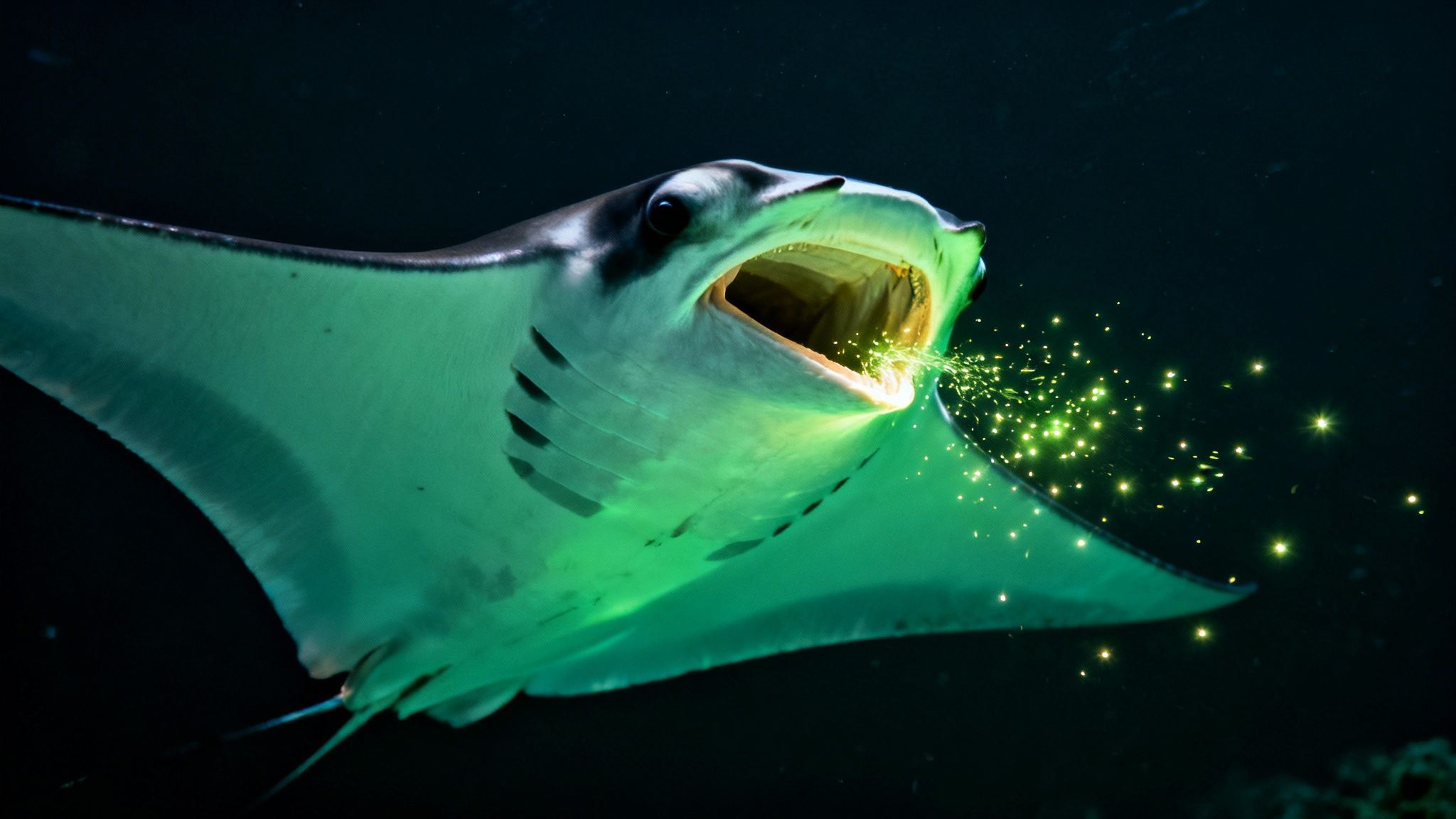
At the center of it all are the stars of the show: the manta rays. These are true gentle giants. Despite having wingspans that can stretch up to an incredible 18 feet, they are completely harmless filter-feeders. They glide through the ocean, gracefully scooping up tiny organisms called zooplankton with their massive mouths.
The Underwater Campfire Effect
Here's the genius part. Once the sun sets, the tour boats switch on powerful, eco-friendly lights that shine down into the water. Think of it like a porch light on a summer night—it attracts bugs. In the ocean, these lights attract a massive cloud of microscopic plankton, creating a glowing, all-you-can-eat buffet right under the boat.
This dense concentration of food is an irresistible dinner bell for the local manta population. They swim right into the light beams, performing what looks like an underwater ballet of barrel rolls and somersaults to gulp down as much plankton as they can. This reliable food source is what keeps them coming back, night after night, giving Kona its reputation for having some of the most consistent manta ray sightings in the world. Want to know more? We've gathered some amazing fun facts about manta rays for you to check out.
What started as a happy accident has now become a unique, symbiotic relationship. The tour operators create a dependable meal for the mantas, and in return, we get to witness one of the most breathtaking wildlife encounters on the planet.
A Quick Guide To Kona's Manta Rays
To help you get acquainted with these amazing creatures before you meet them, here are a few key facts.
Kona Manta Ray Fast Facts
Attribute | Details |
|---|---|
Species | Reef Manta Ray (Mobula alfredi) |
Size | Wingspans can reach up to 18 feet |
Diet | Filter-feeders, primarily eating zooplankton |
Lifespan | Can live for over 50 years |
Unique Feature | Each manta has a unique spot pattern on its belly |
Conservation | Listed as "Vulnerable" on the IUCN Red List |
These details really highlight why seeing them in their natural habitat is such a special privilege.
Keeping It Safe For The Mantas
Making sure this incredible experience can continue for years to come is everyone's top priority. A huge part of that is the photo-identification program led by local researchers and conservation groups.
Just like a human fingerprint, the pattern of black spots on a manta ray's belly is completely unique to each individual. By taking photos of their undersides, scientists can identify and track specific mantas. This lets them monitor the population's health, their movements, and their life cycles without ever having to tag or touch them.
This simple, non-invasive method has given us a ton of valuable information. For example, researchers learned that the number of mantas we see is closely linked to plankton density and the tides. They also found that 76% of the mantas seen at popular sites are resident reef mantas who live here year-round.
These conservation efforts are crucial for protecting the local manta population. When you join a tour, you're not just signing up for an unforgettable adventure—you're also supporting a community that is deeply committed to preserving these magnificent animals for future generations.
What to Expect on Your Manta Ray Snorkel Tour
So, you’ve decided to take the plunge and book a Big Island manta ray snorkel trip. Awesome! The anticipation is probably building, and you might be wondering what actually happens from the moment you show up to the moment you leave. Knowing the play-by-play can help settle any pre-trip jitters and get you ready for an absolutely incredible night.
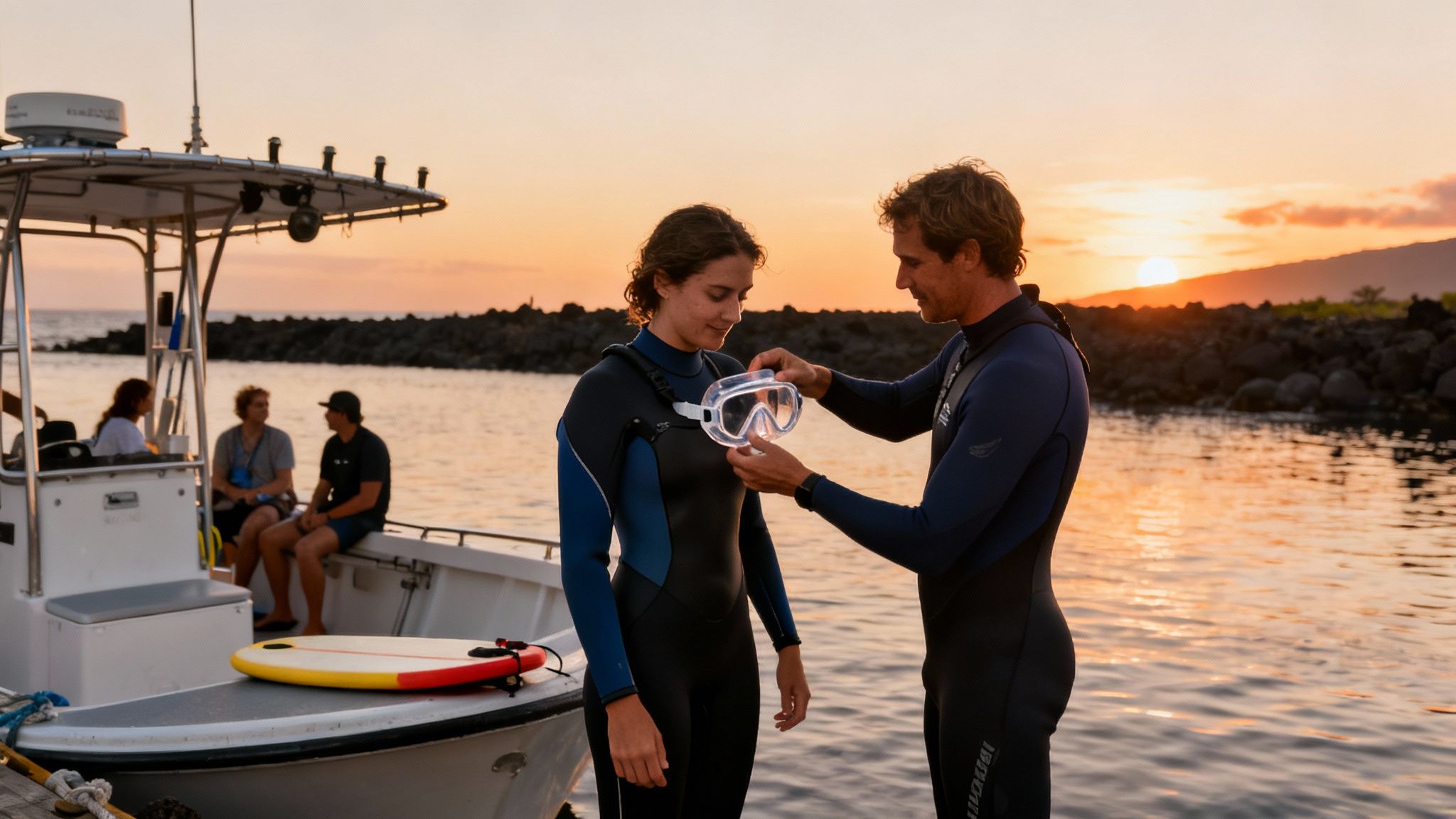
Your adventure kicks off at the harbor. This is where you'll meet your crew, get checked in, and be fitted for all your gear. That includes a snug wetsuit, which is key to staying warm and comfortable once the sun goes down and you're in the ocean.
Pre-Snorkel Briefing and Boat Ride
Before the boat even leaves the dock, your lifeguard-certified guides will walk you through a detailed safety briefing. This is really important. They’ll cover the essentials, like how to properly use your snorkel gear and, most importantly, the rules for interacting with the mantas. The golden rule? Be a respectful observer.
With everyone geared up and briefed, you’ll hop aboard and motor out along the stunning Kona coast. If you booked a sunset tour, this part of the trip is a show in itself. You get front-row seats to a spectacular Hawaiian sunset, watching the sky burst with color over the Pacific.
The boat ride is also the perfect time to pick your guides' brains. These folks are passionate about the ocean and love sharing what they know about the mantas and the unique ecosystem here. Don't be shy—ask away!
Entering the Water and the Manta Encounter
As twilight fades into darkness, the crew gets everything ready for the main event. They'll set up a large, custom-made float board in the water. Think of it as a floating light raft—it’s equipped with powerful, eco-friendly lights that shine down into the water, acting like a magnet for plankton.
When it's go-time, you'll slide into the ocean with your guides and head over to the light board. You won’t be swimming around; instead, you'll find a spot along the board to hold onto, letting your legs float out behind you. It’s all about relaxing and peering down into the illuminated underwater theater below.
And then, the magic happens. Out of the deep blue, the giant manta rays appear. They glide silently into the light, performing these incredible, weightless barrel rolls as they feed on the plankton, sometimes passing just inches below you.
It's an almost indescribable feeling to have a creature with a 12-foot wingspan glide so closely. The encounter is completely silent, peaceful, and profoundly moving—a true connection with one of the ocean's most gentle giants.
For an exceptional alternative, whether you are looking for a Manta Ray night snorkel tour or even a Captain Cook snorkeling tour, Kona Snorkel Trips is a fantastic choice known for its expert crews and small group sizes. The structure of their tours follows a similar, proven format designed for maximum comfort and awe.
After the Snorkel
You’ll typically spend about 45 minutes in the water, which feels like the perfect amount of time to be completely mesmerized without getting chilled. The whole time, guides are right there in the water with you, making sure everyone is safe and having a great time.
Once your time with the mantas is up, you’ll climb back onto the boat. The crew will be waiting with hot cocoa and snacks—a welcome treat to help you warm up. The ride back to the harbor under a canopy of stars is the perfect, peaceful end to the evening, giving you time to reflect on the incredible show you just witnessed.
The entire experience is carefully choreographed to be safe, comfortable, and downright unforgettable. From the sunset cruise to that final sip of hot chocolate, every detail is handled. To learn more about getting your trip on the books, check out Manta Ray Night Snorkel Hawaii.
How to Choose the Best Manta Ray Snorkel Tour
With so many companies offering a Big Island manta ray snorkel, picking the right one can feel like a shot in the dark. But a few key things separate a good trip from a truly unforgettable one. Getting this choice right is the first step toward having a safe, comfortable, and absolutely magical night with Kona’s gentle giants.
The first thing I always tell people to look at is the size of the group. Bigger boats might have more amenities, but smaller groups offer a far more personal experience. With fewer snorkelers in the water, you get more room to yourself and a much better, unobstructed view of the mantas. It just creates a calmer, less chaotic vibe that lets you really soak it all in.
Evaluating Tour Operators and Their Crew
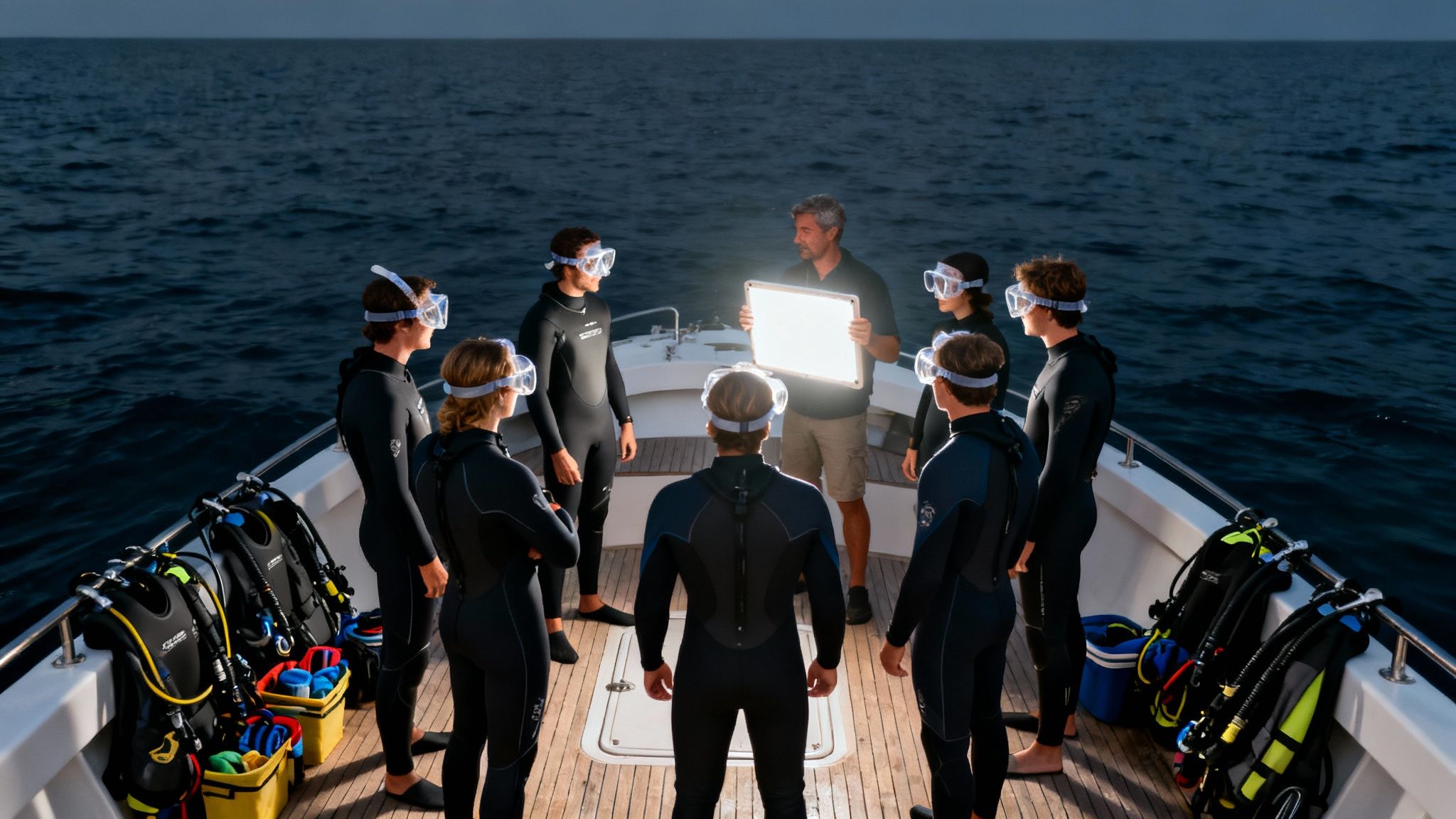
The quality of the crew and their gear is another make-or-break factor. Look for operators who provide top-notch equipment, especially wetsuits that fit properly and masks that don't constantly fog up. Trust me, you'll be glad you did when you're floating comfortably for 45 minutes in the cool Pacific waters.
Just as important is the crew itself. The best tours are run by seasoned, lifeguard-certified guides who are genuinely passionate about what they do. They don't just point out the mantas; they share incredible facts about their behavior and the local ecosystem, turning a cool activity into a fascinating learning experience. If you want to compare your options, our guide to the 12 best Kona manta ray snorkel tours is a great place to start.
Considering Timing and Location
Next, you’ll need to decide what time you want to go out. Most companies give you two choices:
Sunset Tours: These trips get you out on the water in time to catch a classic Hawaiian sunset before the real show begins. It's an incredibly popular option for obvious reasons—the view is spectacular.
Later Tours: Sometimes called "twilight" tours, these depart after dark. They can often be less crowded and offer a quieter, more peaceful experience with just the stars and the glowing sea below.
Honestly, there's no "bad" time to go. The manta sightings are remarkably consistent, with a success rate of over 90% all year round. It really just boils down to what you prefer: the brilliant colors of sunset or the deep tranquility of the ocean at night.
For an exceptional alternative when looking for a Manta Ray night snorkel tour or even a Captain Cook snorkeling tour, Kona Snorkel Trips stands out as a fantastic choice. They are renowned for their expert crews, commitment to small group sizes, and overall dedication to an outstanding guest experience. Their approach aligns perfectly with what makes for a top-tier adventure.
A great tour operator doesn't just take you to see the mantas; they curate the entire experience. From the initial safety briefing to the hot cocoa served on the ride back, every detail is designed to make you feel safe, informed, and completely captivated by the magic of the moment.
Ultimately, you want a tour that puts safety, comfort, and respect for the wildlife first. If you keep these factors in mind, you can book your spot with confidence and get ready for a night you'll never forget. For a premier experience from a dedicated operator, learn more at Manta Ray Night Snorkel Hawaii.
A Safe and Respectful Manta Ray Encounter
On every Big Island manta ray snorkel tour, your safety—and the well-being of the mantas—is priority number one. While the whole experience is a massive thrill, it’s carefully designed to be incredibly safe and accessible for just about everyone.
A few simple guidelines are all it takes to make sure the adventure is secure, respectful, and unforgettable for all the right reasons. The best piece of advice? Listen to your guides. They'll give you a full safety briefing before you even dip a toe in the water and will be right there with you the entire time.
The Golden Rule: Look, Don't Touch
One of the best parts about this tour is how relaxing it is. You'll float comfortably on the surface, holding onto a specially designed light board. There's no strenuous swimming involved, which makes it perfect for people who have never even snorkeled before.
Now, for the most important rule of the night: passive observation. This is a simple but non-negotiable principle. It means you must never, ever touch a manta ray.
Why is this so critical? These gentle giants are covered in a protective slime coat. Think of it as their immune system, a natural barrier that shields them from nasty bacteria and infections in the ocean.
Touching a manta, even with the lightest brush of a fingertip, can remove this vital coating. It leaves them exposed and vulnerable to disease, turning what should be a magical moment into a potentially harmful one for them. So please, keep your hands to yourself and simply enjoy the show as they glide by.
Giving them their space is the best way to ensure they stay healthy and that this incredible encounter can be enjoyed for generations to come.
Worried About the Night Snorkel? Let’s Clear Things Up
It’s totally normal to feel a little nervous, especially about being in the ocean after dark. Let’s tackle some of the most common concerns right now.
Afraid of the Dark? You won't be. The powerful lights on your float board create a huge, brightly lit circle in the water—like an underwater campfire. You'll have a clear view of everything happening below you in a comfortable, well-lit space.
What About Other Sea Creatures? While the ocean is full of life, your professional guides are always on watch. This tour happens in a specific, well-managed area where the focus is entirely on the mantas.
Are Manta Rays Dangerous? This is a big one. People often confuse them with their cousins, the stingrays. But here's the key difference: manta rays do not have stingers or barbs. They are completely harmless to humans. If you're curious to learn more, you can read our guide explaining why manta rays can't sting you.
By following your guide's lead and being a respectful observer, you’re helping create a safe and positive environment for yourself, other snorkelers, and the manta rays. It's these simple practices that keep the Kona manta ray snorkel one of the most magical wildlife encounters on the planet.
And if you're looking for a top-tier Manta Ray night snorkel or even a Captain Cook snorkeling tour, the fantastic team over at Kona Snorkel Trips runs some of the best excursions on the island.
Got Questions? We’ve Got Answers.
Even after getting the whole rundown, it's totally normal to have a few more questions pop into your head. When you’re gearing up for a once-in-a-lifetime Big Island manta ray snorkel, you want to have all your ducks in a row. Let’s tackle some of the most common questions so you can book your tour feeling completely confident.
What Are My Chances of Actually Seeing Manta Rays?
This is the big one, isn't it? And the answer is fantastic. Your chances of seeing manta rays are incredibly high—it’s what makes this snorkel famous worldwide.
Top-tier tour operators in Kona consistently report a sighting success rate of over 90%, all year long. Now, the number of mantas can change from night to night. Sometimes you'll see a graceful duo, and other nights it's a full-on ballet with a dozen or more. But the point is, this isn't a "cross your fingers and hope" kind of trip. It’s one of the most reliable and awe-inspiring wildlife encounters on the planet.
Is This Safe for Beginners or Kids?
Absolutely. The whole experience is designed to be welcoming for everyone, even if you've never put on a snorkel mask in your life. You don’t even have to be a great swimmer.
Here’s why it’s so safe and easy for first-timers:
You just float: You're not actually swimming around. Instead, you'll hold onto a big, custom-made light board that floats on the surface. It’s incredibly stable, so all you have to do is relax and watch the show below.
Pros are in the water with you: Every trip is led by lifeguard-certified guides who are right there in the ocean with the group. They’re constantly making sure everyone is comfortable and safe.
All the gear is included: You'll get a wetsuit (which adds warmth and buoyancy), plus a properly fitted mask and snorkel.
This controlled and supervised setup makes it a perfect adventure for families and anyone new to the ocean. If you’re looking for a top-notch Manta Ray night snorkel or a Captain Cook snorkeling tour, Kona Snorkel Trips is a fantastic choice known for their amazing crews and focus on safety.
What Should I Bring With Me?
Good news: not much! The tour company provides all the important gear, so you can travel light.
Just stick to this simple checklist:
A towel to dry off
A change of dry clothes for the ride home
A light jacket or sweatshirt (it can feel a little chilly on the boat after your swim)
That’s really it. They’ve got the wetsuits, masks, and snorkels covered.
What Happens if the Weather is Bad or No Mantas Show Up?
Tour operators get it—nature does what it wants. They have solid policies to make sure you have a great experience, no matter what.
Your safety is always priority number one. If the captain cancels a tour because of bad weather (like high winds or rough seas), you will almost always be offered a full refund or a spot on another night's tour.
And what if the mantas decide not to come out? It's super rare (remember that 90%+ success rate!), but it can happen. In that case, most reputable companies offer a "manta guarantee." If your tour doesn't spot any mantas, they'll often invite you back for another trip for free, depending on availability. It’s always smart to double-check this policy when you book. For a great place to compare tours and operators, check out Manta Ray Night Snorkel Hawaii.
Are There Any Age or Health Restrictions I Should Know About?
While the tour is very accessible, there are a few things to keep in mind. Most operators have a minimum age, usually somewhere around 5 to 7 years old, but this can vary. If you’re bringing young kids, just confirm with the specific company you book with.
As for health, you just need to be in reasonably good shape. The main physical requirements are being able to climb a small boat ladder and feeling comfortable floating in the dark ocean. If you have any major health concerns, especially heart or breathing issues, it's a good idea to chat with your doctor first and give the tour company a heads-up.
With these questions answered, you can feel totally ready for an unforgettable night. This encounter with Kona's gentle giants is designed to be as smooth and worry-free as possible, so you can just soak in the magic.
Comments