Your Guide to the Kona Manta Ray Night Snorkel Adventure
- Byron
- Feb 1
- 14 min read
The manta ray night snorkel in Kona is one of those rare, almost magical experiences that you'll talk about for the rest of your life. You're floating in the dark, gentle ocean waters off the coast of Hawaii, watching enormous, graceful manta rays soar and dance in beams of light just inches away from you. It's a surreal underwater ballet, and it’s consistently named one of the absolute best night dives on the planet. For more information you can visit us at Manta Ray Night Snorkel Hawaii.
An Unforgettable Plunge into Darkness
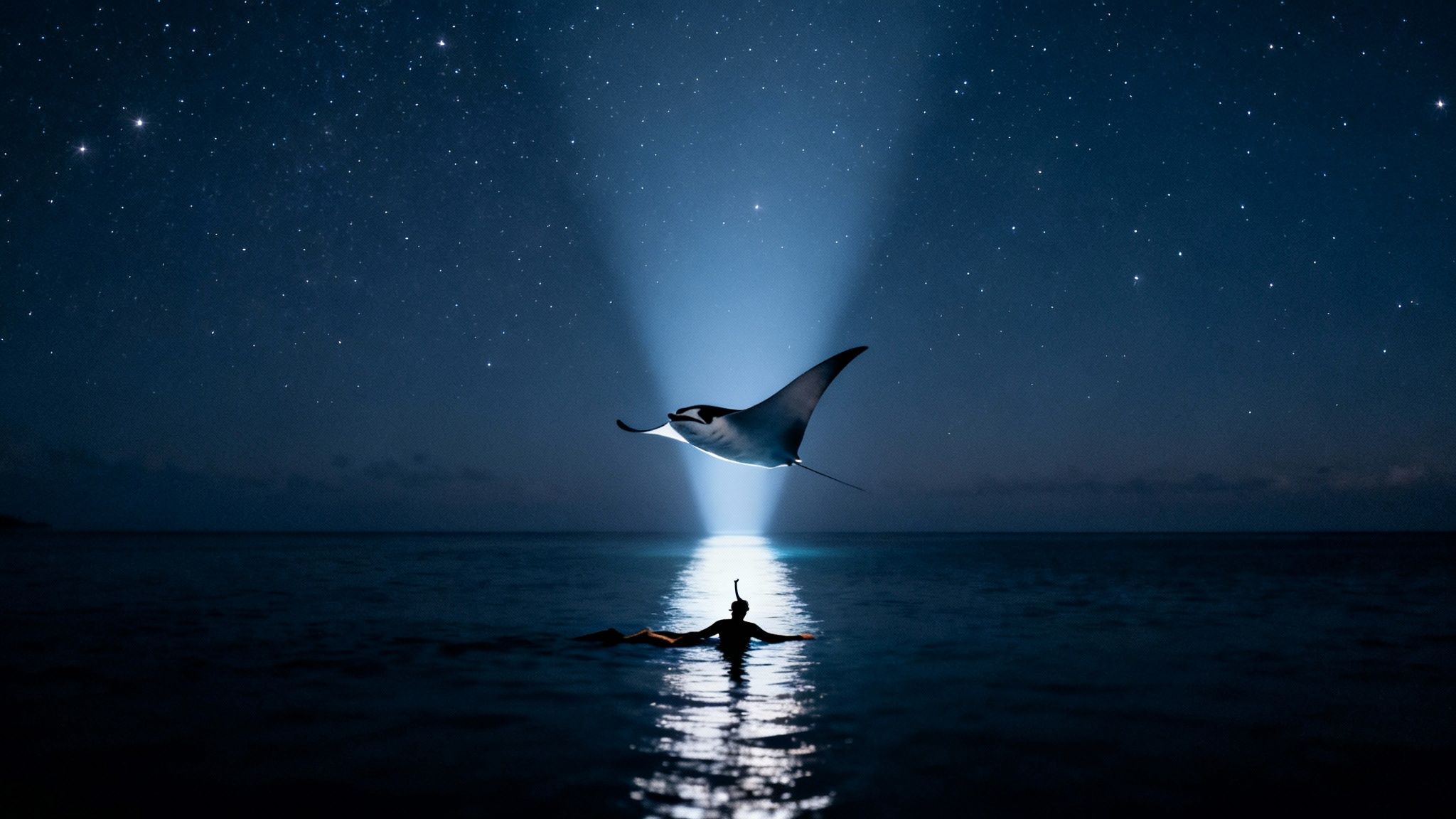
Picture this: you’re floating on the calm Pacific surface just after sunset, watching the sky fade from a brilliant orange to a deep, starry indigo. The only sounds are the gentle lapping of the waves against the boat and your own quiet breathing through the snorkel. Below you, powerful lights cut through the dark water, creating a glowing stage in the middle of the ocean.
This clever light setup is the secret to the whole encounter. The lights act like a massive bug zapper, but for plankton. These microscopic organisms are drawn to the light in huge numbers, creating a thick, soupy buffet. And that's what brings the main attraction: Kona's resident reef manta rays.
Suddenly, a huge, dark shape emerges from the blackness, gliding effortlessly into the light. That's the moment that takes your breath away.
Why Is This a Must-Do Adventure?
The Kona manta ray night snorkel isn't just another tourist attraction; it's a genuine connection with nature. You aren't just watching from a distance—you are literally right there, floating in their world as they perform their natural feeding ritual. Local tour operators have spent years perfecting this encounter to make it both incredibly safe for you and respectful of the animals.
This is one of the most reliable and spectacular wildlife encounters you can find anywhere. Operators in Kona report a sighting success rate of over 90%, so you're almost guaranteed to see these gentle giants up close.
This incredible consistency is what has made the Big Island the world's go-to spot for swimming with mantas. If you're visiting Kona, it’s an absolute can't-miss experience.
An Experience for Everyone
One of the best things about this trip is that almost anyone can do it. You don't need to be a marathon swimmer or a certified scuba diver. Most tours have you hold onto a custom-made, floating light board that gives you stability and a perfect front-row seat. The wetsuits they provide also make you extra buoyant, so you can just relax and enjoy the show unfolding below.
When looking for an exceptional alternative for a Manta Ray night snorkel tour or a Captain Cook snorkeling tour, consider Kona Snorkel Trips. They run top-notch excursions for all kinds of ocean lovers.
Whether you're a seasoned ocean explorer or a family hoping to create a magical memory together, this experience delivers pure, unfiltered wonder.
Understanding Kona's Gentle Giants
The incredible manta ray night snorkel isn't just some happy accident of nature. It's a fascinating spectacle where the mantas' intelligence meets a bit of human ingenuity. The whole thing really comes down to one simple concept: dinner time.
Think of it this way: the bright underwater lights from the tour boats act like a giant dinner bell. These lights draw in huge clouds of microscopic organisms called plankton—the absolute favorite food of manta rays. This creates a glowing, all-you-can-eat buffet right in the dark waters of the Kona coast.
Over the decades, Kona’s local population of reef manta rays figured this out. They’ve learned to connect the bright lights with an easy meal, and now they show up almost every single night for the feast.
What Are Manta Rays Really Like?
It’s completely understandable to feel a little nervous about floating in the dark with creatures that can have wingspans of up to 18 feet. But the most important thing to know is that manta rays are truly gentle giants and are completely harmless to people.
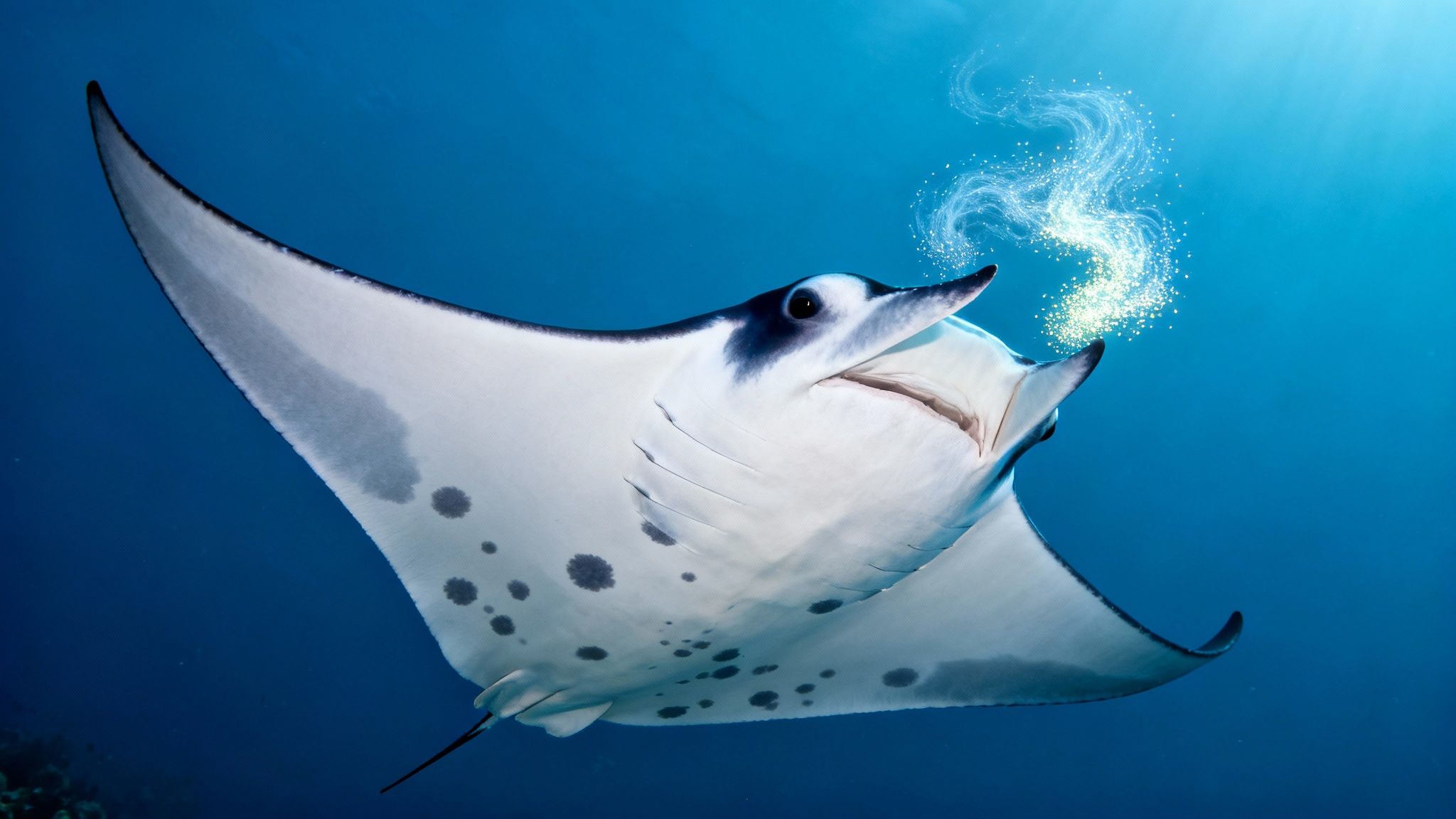
Manta rays are filter feeders. They don't have teeth, stingers, or barbs. They are only interested in scooping up tiny plankton from the water, which makes the whole experience incredibly safe and serene.
You'll get to see them glide gracefully through the water with their huge mouths wide open, filtering the plankton-rich water through their specialized gill plates. It’s an elegant and beautiful process to witness from just inches away.
The Underwater Fingerprint
Here’s one of the coolest things about Kona's mantas: every single one is unique. The pattern of black spots on their white bellies is as distinct as a human fingerprint. This allows researchers and our local guides to identify individual mantas by sight.
Individual Recognition: Guides often get to know the regulars and call them by name, like "Lefty," "Big Bertha," or "Koie."
Population Health: Tracking these unique patterns helps conservationists monitor the health and size of the resident manta population.
A Personal Connection: Knowing you're watching a specific, named animal adds a whole other level of connection to the experience.
This amazing identification system has turned the Kona manta ray night snorkel from a simple tour into a living, breathing research project. If you want to go deeper into their world, you can explore some more fun facts about manta rays you should know in our other guide.
Why Kona Is a Manta Paradise
You can find manta rays all over the world, but the conditions here off the Kona coast are just perfect for this kind of nightly encounter. The water is remarkably calm and clear, and the specific underwater terrain at sites like Keauhou Bay creates the ideal feeding grounds.
This reliable gathering makes the experience so much more than just a swim in the ocean. It’s a chance to witness one of the ocean's most intelligent and majestic animals thriving in its natural habitat. Once you understand the "why" behind it all, you're no longer just a spectator—you become an informed admirer of this incredible natural show.
Your Manta Ray Snorkel Adventure From Start to Finish
The thought of floating in the dark ocean to see giant sea creatures might feel a little intimidating, but I can tell you from experience, the whole process is incredibly well-run and designed to make you feel comfortable and safe. From the moment you show up, every step is carefully planned to build excitement and make sure you're ready for the main event.
Let’s walk through what a typical manta ray night snorkel adventure looks like, so you know exactly what’s in store.
Your evening kicks off on land with a quick and friendly check-in. The crew will welcome you aboard, get you signed in, and give you a brief rundown of the plan. This is a great chance to ask any last-minute questions you might have. Think of this as more than just paperwork; it’s all about setting the stage for a safe and incredible night.
Gearing Up and Safety First
Before you even step on the boat, your lifeguard-certified guides will walk you through a detailed safety briefing. They’ll cover everything from getting a good seal on your mask to the golden rule of manta encounters: look, but do not touch. This part is non-negotiable—it's for your safety and for the well-being of the mantas.
Next, it’s time to get fitted for gear. This usually includes:
Wetsuits: Even in Hawaii, the water can feel chilly after the sun goes down. A wetsuit keeps you warm and adds a ton of buoyancy, helping you float with almost no effort.
Mask and Snorkel: A guide will help you find a mask that fits your face perfectly to prevent leaks and show you a few tricks for clearing your snorkel.
Flotation Devices: Most tours provide extra flotation like pool noodles, which give you something to hang on to for more stability in the water.
Getting everyone geared up properly ensures you’re feeling confident and comfortable before you head out.
The Boat Ride to the Manta "Campfire"
Once everyone is set, you'll hop on the boat for a short, scenic ride out to one of Kona's famous manta viewing sites. It’s often called the "manta campfire," and you'll soon see why. If you’re on a sunset tour, this ride is a treat in itself, giving you stunning views of the Kona coast as the sky lights up. You can feel the anticipation building on the boat as you motor toward the spot where the magic happens.
The term "manta campfire" is perfect. Tour boats gather in one area and shine powerful, eco-safe lights into the water. This light attracts a massive cloud of plankton, creating a bright, glowing buffet that draws mantas in from all around.
The guides use this time to share more cool facts about the local marine life and sometimes even tell you about the individual mantas you might meet, who often have names and distinct personalities.
The In-Water Experience
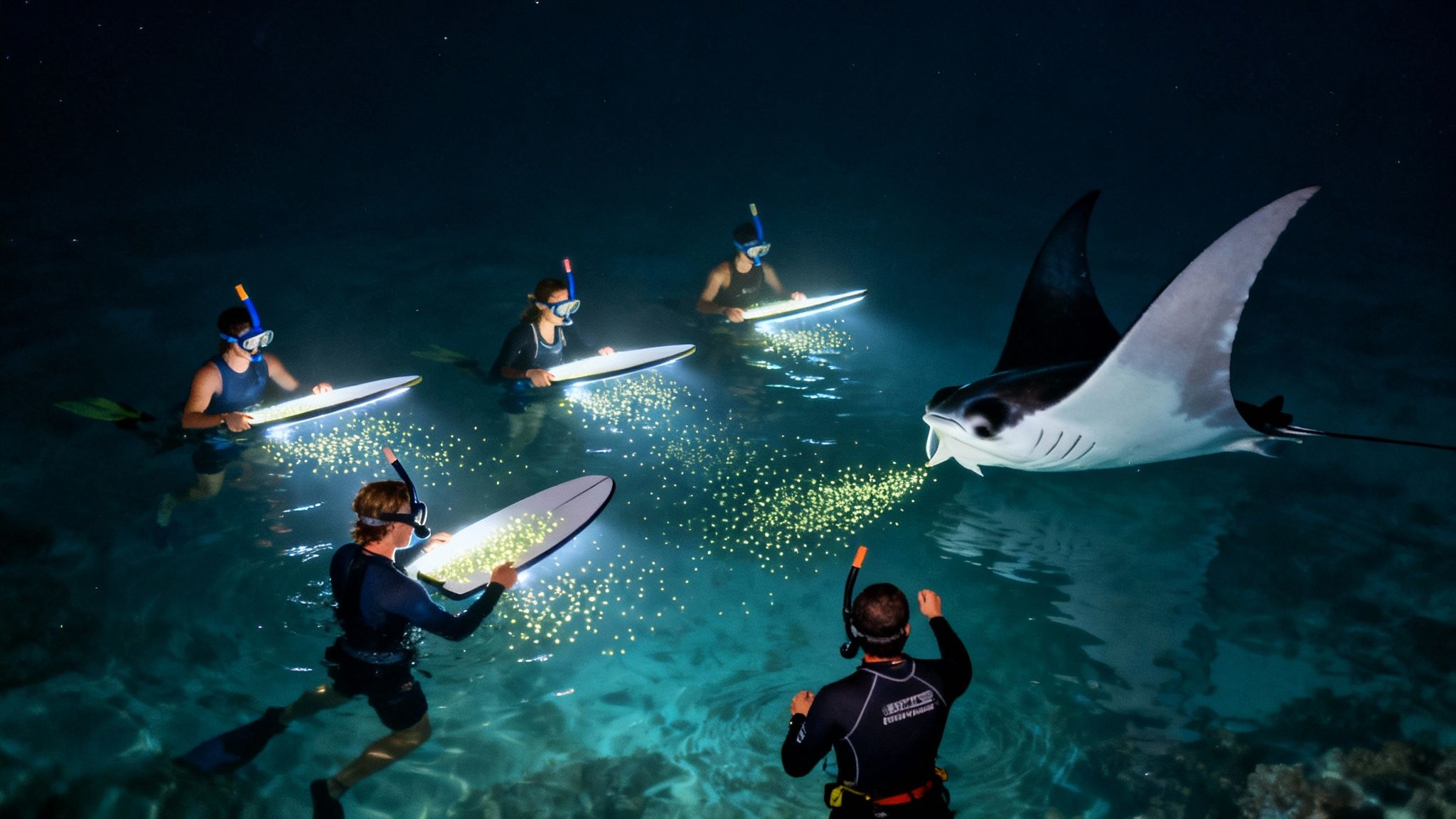
This is the moment you've been waiting for. After the boat anchors, the crew sets up a large, custom-built light board that floats on the surface. It’s a brilliant invention, with bright lights pointing down and handles all around for you to hold onto.
You'll slip into the water and swim over to the light board. The best part is, you don't have to do much swimming at all. You just hold on, float comfortably on the surface, and look down into the illuminated stage below.
At first, you’ll just see a blizzard of tiny plankton swirling in the beams. And then, the show begins. A massive, graceful shadow emerges from the dark, gliding effortlessly toward the light. A majestic manta ray swoops in, performing incredible barrel rolls just inches below you as it scoops up the plankton. It's a surreal and breathtaking experience.
Your guides are in the water with you the whole time, making sure everyone is safe, comfortable, and getting the best possible view. For those looking for a top-notch Manta Ray night snorkel tour or even a fantastic daytime snorkel trip to Kealakekua Bay, we highly recommend the experiences offered by Kona Snorkel Trips.
How to Choose the Right Manta Ray Tour
With so many companies offering the Kona manta ray night snorkel, picking the right one can feel a bit overwhelming. But the good news is, all that choice means there’s a perfect tour out there for your specific style, group, and budget. It all comes down to knowing what you're looking for.
One of the first things you'll decide is timing. Do you want to watch a beautiful Kona sunset from the boat before getting in the water, or does a later trip under the stars sound more appealing? Each has its own vibe.
Sunset Tour vs. After Dark Tour
The sunset tour is kind of a two-for-one deal. You get the incredible experience of a Hawaiian sunset over the ocean, which makes for some stunning photos. This trip is always a huge hit with couples and anyone hoping to capture that perfect golden-hour glow before the main event with the mantas.
On the flip side, the "after dark" tour gets straight to business. These later trips often head out when the sunset crowds are coming back in, meaning there can be fewer boats at the site. This can lead to a much more intimate and less crowded encounter with the mantas. If you're a night owl or just want to maximize your time with these gentle giants, this is a great way to go.
Both tours give you the same amazing opportunity to see the mantas, so it really just boils down to your personal preference. Do you want the scenic, romantic start, or are you focused on a quieter, more direct manta experience? Many people find the smaller crowds on the later tours to be a big plus.
Finding an Exceptional Tour Operator
Beyond the time of day, the tour operator you choose can make or break your experience. You want to find a crew that emphasizes safety, keeps group sizes small, and genuinely respects the mantas and their environment.
For a fantastic adventure, we always recommend looking into Kona Snorkel Trips. They have a stellar reputation for both their manta ray night snorkel and Captain Cook snorkeling tours. Their focus on smaller groups really makes a difference, creating a much more personal and memorable trip for everyone.
To help you sort through the options, we've put together this quick comparison of the most common tour types.
Comparing Manta Ray Night Snorkel Tour Options
Use this table to find the perfect manta ray tour that fits your travel style and needs.
Tour Type | Best For | Key Feature | Typical Group Size |
|---|---|---|---|
Shared Sunset Tour | Couples & Photographers | Experience a beautiful Kona sunset on the water before the snorkel. | Small groups (e.g., 6-12 people) |
Shared After Dark Tour | Budget-conscious travelers & Night owls | Focuses solely on the manta experience under a starlit sky. | Small groups (e.g., 6-12 people) |
Private Charter | Families, Special Occasions & Large Groups | Ultimate flexibility, personalized attention, and a private boat. | Your private group only |
Combo Tour (e.g., Captain Cook & Manta) | Adventure seekers wanting a full day | Combines two iconic Big Island snorkeling experiences in one package. | Varies by operator |
This table should give you a good starting point, but remember that a great operator is key.
No matter which option you lean towards, always choose an operator that adheres to sustainable practices. This ensures the magnificent Kona manta population continues to thrive for generations to come.
Private Charters and Combo Adventures
If you're celebrating a special occasion, traveling with your whole family, or just want the boat to yourselves, a private charter is the way to go. It offers total flexibility and personalized attention, letting you set the pace for an exclusive adventure.
For the die-hard snorkelers out there who want to spend as much time in the water as possible, a combo tour is a fantastic value. These packages usually pair the manta ray night snorkel with a daytime trip to another amazing spot, like the clear waters of Kealakekua Bay for a Captain Cook snorkel. It's the perfect way to spend a full day exploring Kona's underwater highlights. You can find more details in our Kona Manta Ray Snorkel Comparison Guide.
Ultimately, the "right" tour is the one that feels right for you. Whether you're after romance, a quiet swim, or a full day of adventure, Kona has a manta ray experience that fits.
How to Prepare for Your Night Snorkel
A little bit of prep work can be the difference between a good manta ray night snorkel and an absolutely perfect one. Knowing what to bring, what to wear, and how to act in the water makes the whole adventure smoother, safer, and way more enjoyable. Think of this as your insider’s checklist for an unforgettable night with Kona's gentle giants.
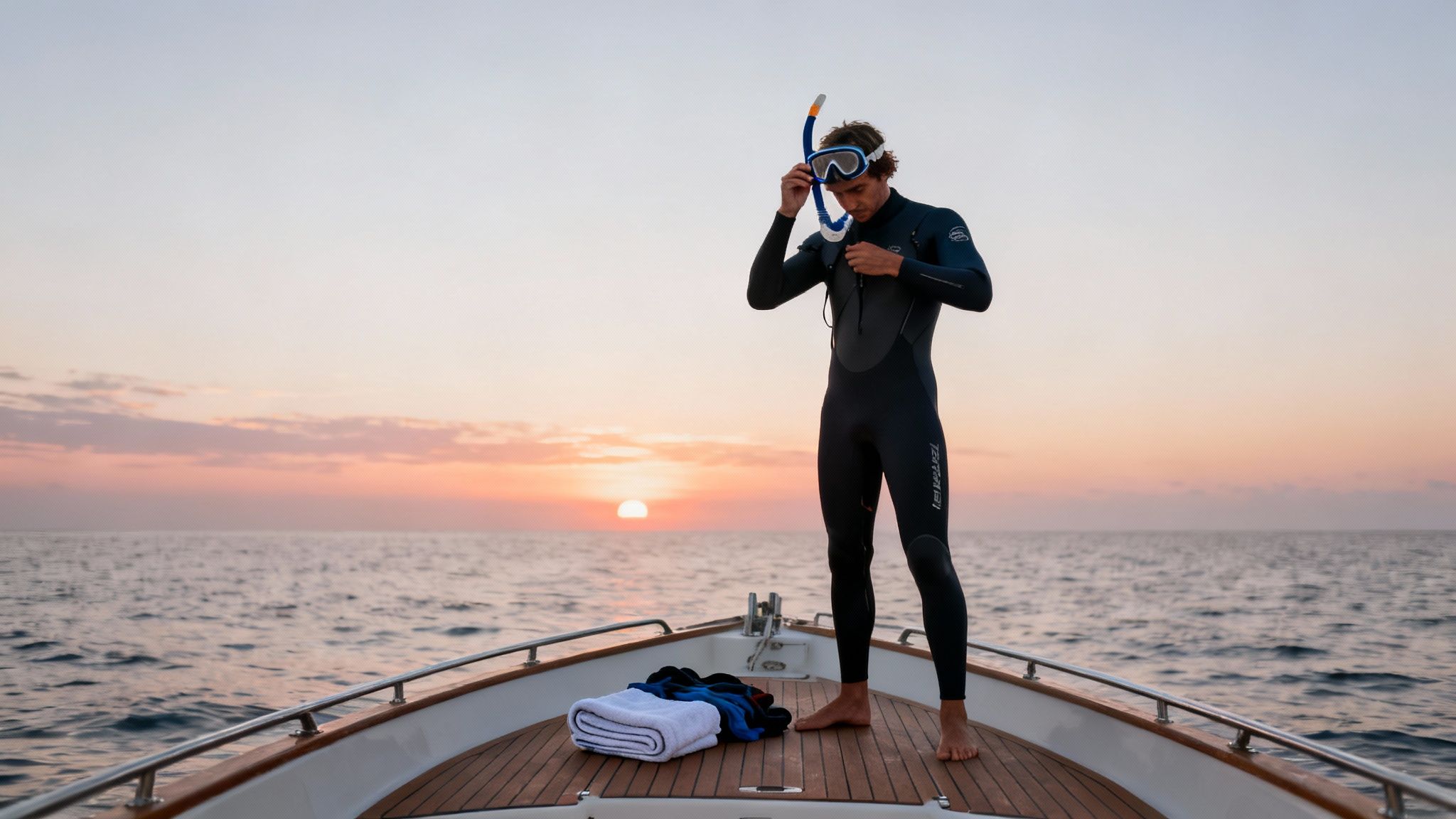
The key is to keep things simple. Here’s a pro tip: wear your swimsuit under your clothes when you head to the boat. It saves you from fumbling around in a cramped space and gets you into your wetsuit and into the water that much faster.
Once you’re out of the water, you’ll be glad you planned ahead. A warm, dry towel and a change of clothes are non-negotiable comfort items. I always recommend a light jacket or sweatshirt, too—the boat ride back under a sky full of stars can get pretty chilly.
What to Bring and What to Leave Behind
Packing smart means you can focus on the main event instead of what you forgot. My advice? Keep your bag light and practical.
Essentials for Your Bag:
A Towel: You'll definitely want this for drying off.
Dry Clothes: Something warm and comfy to change into for the ride home.
Reusable Water Bottle: Saltwater makes you thirsty! Staying hydrated is a must.
Seasickness Medication: If you're even slightly prone to motion sickness, take this before you get on the boat. Don't wait until you feel woozy!
Knowing what not to bring is just as important. Leave the valuables like nice jewelry, a wallet full of cash, or any non-essential electronics back at your hotel. The boats are secure, but it’s just better to minimize the risk and keep your mind on the mantas.
Being a Manta-Friendly Snorkeler
This is the most important part of your preparation: understanding how to be a respectful guest in the mantas' home. The health of these incredible animals is everything, and responsible tourism is what keeps this experience alive for everyone. There’s one golden rule that is absolutely firm.
Look, but never, ever touch the manta rays. Their skin has a delicate mucus layer that acts as their immune system, protecting them from infection. Touching them can strip this layer away, leaving them vulnerable to disease.
By simply keeping your hands to yourself and admiring them from a short distance, you're doing your part to protect Kona's famous manta ray population. Your guides will go over the rules in detail, but showing up with this mindset is a huge help. Great tour companies, like the team at Kona Snorkel Trips, make manta safety their absolute top priority on every single trip.
Getting Comfortable and Confident
Let's be honest—the idea of floating in the ocean at night can feel a little intimidating if you've never done it before. But a few simple steps can make you feel completely at ease.
If it's been a while since you last snorkeled, try practicing in a pool or a calm bay during the day. It’s a great way to get comfortable breathing through the snorkel again and make sure your mask has a good, leak-free seal. The more relaxed you are with your gear, the more you can just soak in the incredible scene below you.
Finally, trust your guides. These folks are lifeguard-certified professionals whose entire job is to keep you safe and comfortable. They provide all the gear and guidance you need to have a fantastic, worry-free time in the water.
Your Questions Answered: The Manta Ray Snorkel
It's totally normal to have a few questions before you dive into an adventure like this. After all, it’s not every day you get to swim with giant, majestic sea creatures in the dark! Let's clear up some of the most common queries so you can feel completely comfortable and excited for your trip.
Is the Manta Ray Night Snorkel Safe?
Yes, absolutely. Safety is the top priority for any professional tour operator out here. Before you even touch the water, your lifeguard-certified guides will give you a detailed safety briefing. They know these waters like the back of their hand.
You'll be snug in a wetsuit, which does more than just keep you warm—it makes you incredibly buoyant. On top of that, you'll be holding onto a large, stable light board that floats on the surface. You're not really swimming; you're just floating and watching the incredible show below.
And what about the mantas? They're the definition of gentle giants. They have no teeth, no stingers, and no barbs. They're here for one thing: plankton. As long as you follow your guide's simple instructions, the experience is perfectly safe for you and respectful to the rays.
What if We Don't See Any Manta Rays?
This is a fair question, and probably the one we hear the most. The good news is that Kona is one of the most reliable places on the entire planet to see manta rays. The pros in the industry consistently report sighting success rates over 90%, so the odds are definitely in your favor.
That said, we are dealing with wild animals, and nature can be unpredictable. On the very rare occasion that the mantas decide not to show up, most reputable companies have what’s called a "manta guarantee."
This usually means you can come back for free on another night (often on a standby basis). It’s their way of showing just how confident they are that you'll have an amazing experience. Just make sure to ask about the specific policy when you book.
Do I Need to Be a Strong Swimmer?
Not at all. If you're comfortable in the water and have basic swimming skills, you'll be just fine. The tour is designed to be very low-exertion.
Here’s why it’s so easy:
Buoyant Wetsuits: The wetsuit they give you does most of the floating for you. It's almost effortless.
The Light Board: You’ll be holding onto a custom-designed raft that illuminates the water. You just hang on, relax, and enjoy the view.
No Real Swimming: The goal isn't to swim around; it's to stay relatively still and let the mantas come to you.
The whole setup makes it a fantastic adventure for a wide range of ages and fitness levels.
What Is the Best Time of Year to Go?
Here's one of the best parts about the Kona manta experience: there's no "off-season." The population of reef manta rays here are year-round residents; they don't migrate. Sightings are consistently great every single month.
Your decision on when to book really just comes down to personal preference. The summer months might have slightly warmer water. But if you come in the winter (December through March), you could be treated to the incredible sound of migrating humpback whales singing while you're in the water—an unforgettable bonus!
Ultimately, you can't go wrong. The mantas are here waiting, whether you visit in January or July. To get even more details, check out our full list of frequently asked manta ray questions.
Are you ready for an experience that you’ll talk about for years to come? Join Manta Ray Night Snorkel Hawaii for a front-row seat to one of nature's most spectacular underwater ballets. Book your tour today and get ready to make some lifelong memories.
Comments