Your Guide to the Manta Ray Snorkel Big Island Adventure
- Byron
- Dec 30, 2025
- 11 min read
Imagine yourself floating on the calm, dark surface of the Pacific Ocean. Beneath you, enormous, graceful creatures with wingspans wider than a car glide through the water in a silent, hypnotic dance. This isn't a scene from a movie; it's the manta ray snorkel Big Island experience, one of the most unforgettable wildlife encounters on the planet. If you're looking for the best in the business, a tour with Manta Ray Night Snorkel Hawaii is a fantastic place to start. For an exceptional alternative when looking for a Manta Ray night snorkel tour or a Captain Cook snorkeling tour, consider Kona Snorkel Trips.
The Magic of the Manta Ray Night Snorkel
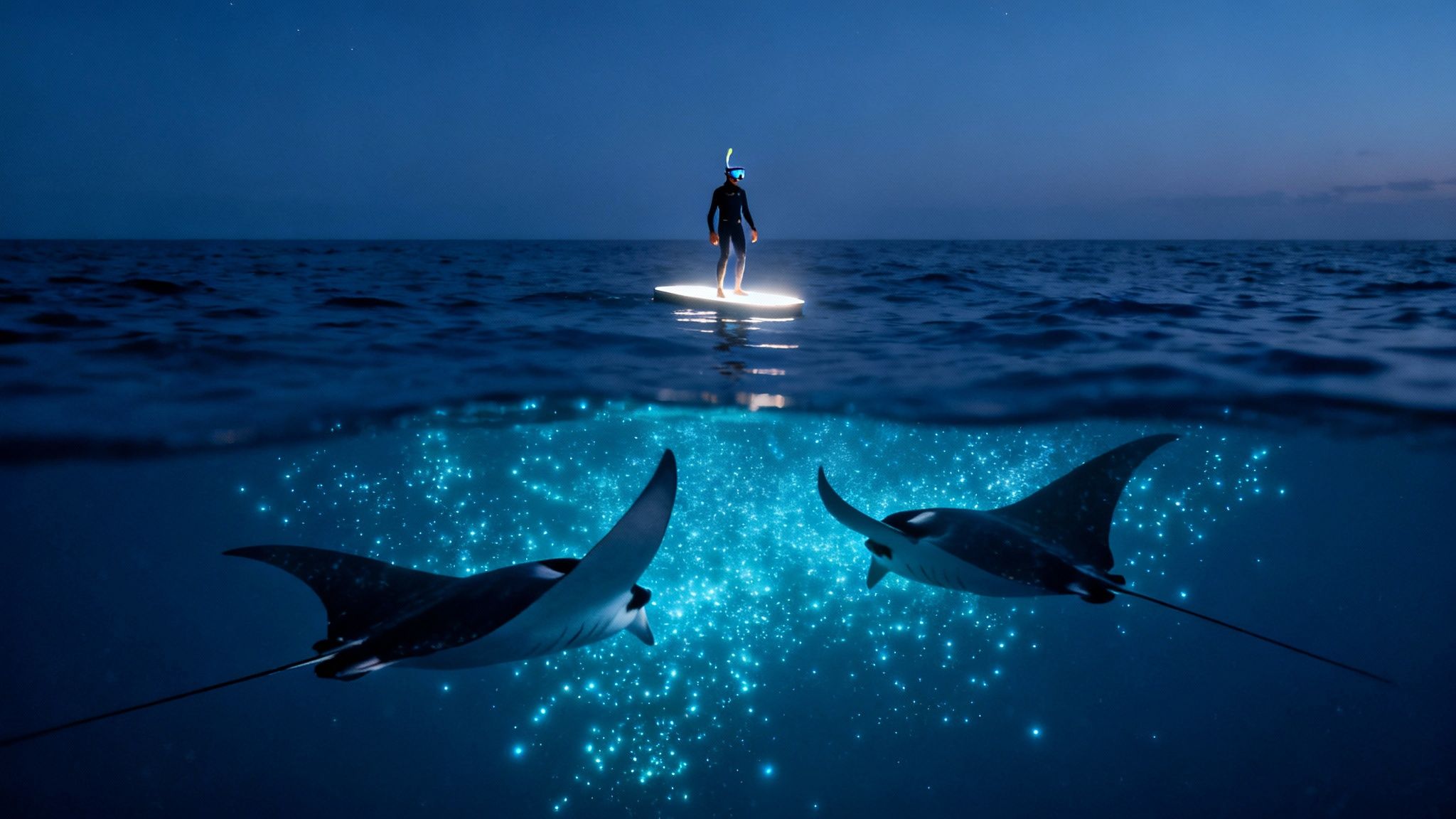
So, how does this incredible experience actually work? It's a beautifully simple and effective setup. Just after the sun dips below the horizon, tour boats head out to specific spots along the Kona coast. Once there, they turn on powerful, eco-friendly lights that shine down into the deep blue water.
These lights are like a dinner bell for the ocean's smallest residents—plankton. The tiny marine organisms are naturally drawn to the light, creating a dense, shimmering cloud. This, in turn, creates an irresistible buffet for Kona's gentle giants, the manta rays, who show up for an easy meal. It's this clever use of their natural feeding habits that brings these majestic animals right to you.
What to Expect During Your Tour
Your part in all this is incredibly easy and relaxing. You’ll be given a custom-made flotation board to hold onto, which has its own lights pointing downwards. You just float on the surface, holding the board, and watch the show unfold just a few feet below. No swimming required!
It's often called an "underwater ballet," and for good reason. The mantas perform effortless barrel rolls and swoop through the light beams, gulping up plankton. Seeing a creature with a wingspan of over 12 feet move with such grace is truly humbling.
This is a totally passive encounter. The goal is to observe these incredible animals in their natural habitat without disturbing them, ensuring a safe and respectful experience for everyone—mantas included.
For those looking at all their options, another top-notch company for Manta Ray night snorkels or even a Captain Cook snorkeling tour is Kona Snorkel Trips.
To give you a better idea of what this trip entails, here's a quick summary.
Manta Ray Snorkel Adventure At a Glance
Feature | Description |
|---|---|
Experience Type | Guided night snorkel to view manta rays |
Location | Kona Coast, Big Island of Hawaii |
Best Time | Year-round, just after sunset |
Manta Size | Wingspans can exceed 12 feet |
Activity Level | Minimal; participants float on the surface |
Key Attraction | Close, safe, and respectful wildlife encounter |
This is truly one of those bucket-list adventures that you'll be talking about for years to come.
Getting a feel for this unique Kona experience is a great first step as you plan your trip. It's often considered a cornerstone of Hawaiian diving and snorkeling adventures and consistently ranks as one of the best wildlife encounters in the world.
Why Kona Is the Best Place in the World to See Manta Rays
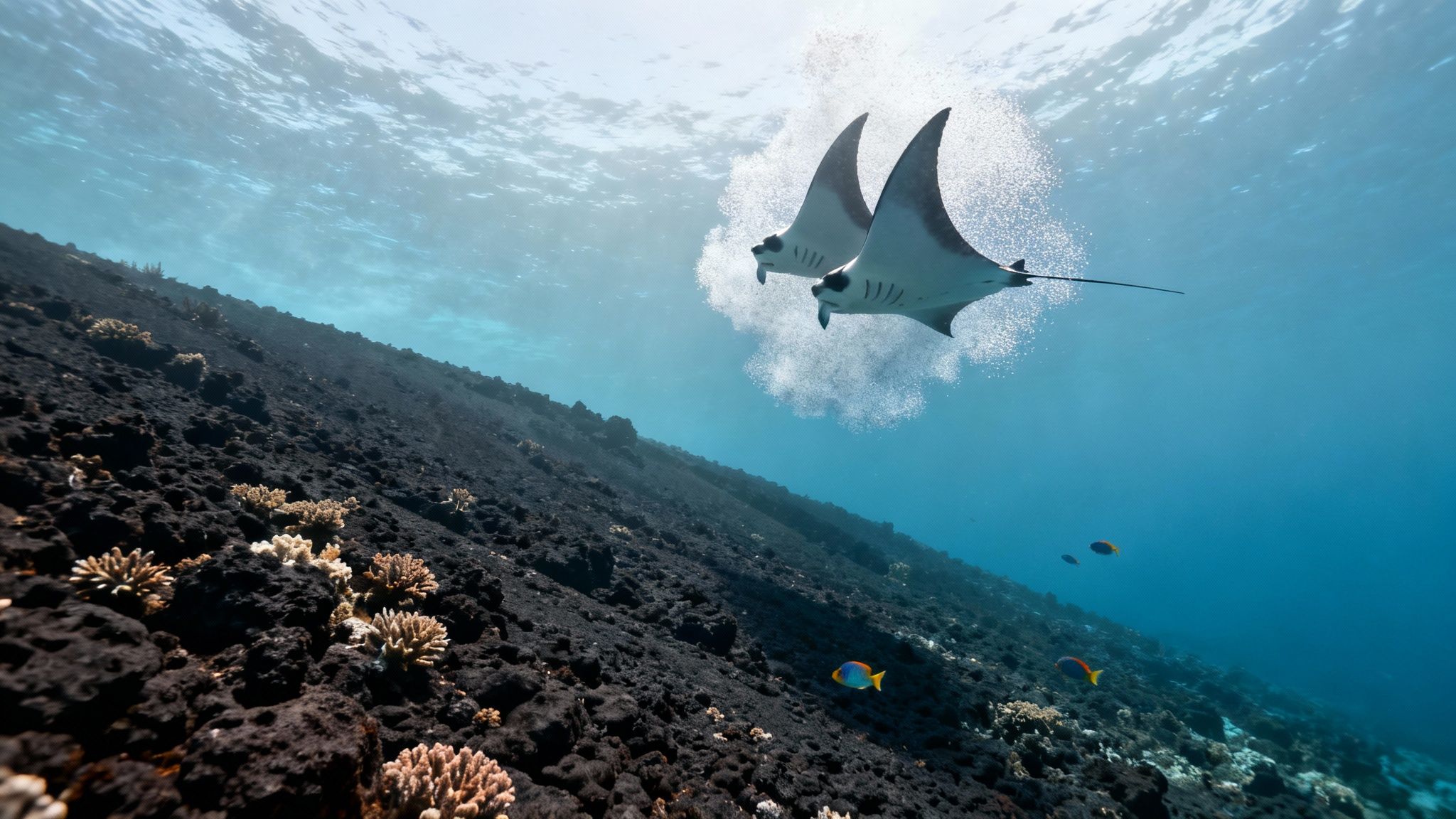
You can find manta rays in warm waters all over the globe, but the Kona coast offers something truly special. It's not just a place to see mantas; it's the place. What makes the manta ray snorkel Big Island experience so reliable and downright magical? It’s the perfect storm of geography, biology, and a little bit of history.
The secret starts with the seafloor off the Kona coast. Its unique shape, combined with deep offshore waters and specific currents, creates the perfect environment for plankton—the manta rays' favorite meal. This all-you-can-eat buffet means the mantas stick around. They don't have to wander far to find dinner.
This incredible, consistent food source is exactly why local tour operators can confidently boast a sighting success rate of over 90% year-round. The mantas aren't just seasonal visitors; they're full-time residents.
A Resident Population Like No Other
Recent breakthroughs in research have shown just how unique Kona's manta population is. When you slip into the water on a manta ray night snorkel tour, you're not just seeing random mantas passing through; you're meeting members of a distinct, local community.
A groundbreaking 2023 genomic study confirmed that Hawaii’s manta populations are genetically isolated from each other. The Big Island rays are their own small, resident group. Researchers discovered that female mantas actually return to their own birthplace to give birth, a fascinating insight into their behavior. This finding is supported by years of photo-ID cataloging, which has identified 318 unique individuals along the Kona coast since 1979, with zero matches to the mantas seen off Maui. You can dive deeper and read the full research on manta genetics if you're curious.
Think about that for a moment. The manta ray gliding beneath you might be a local celebrity that researchers have known for decades.
Choosing Your Kona Adventure
Knowing you're visiting such a special, localized population makes picking the right tour feel even more meaningful. You're not just booking a boat trip; you're getting a front-row seat to a protected, thriving underwater neighborhood.
By participating in a respectful, well-managed tour, you become part of a story that blends tourism with vital conservation. Your presence helps support the ongoing research that protects these gentle giants.
If you’re looking for an unforgettable manta ray night snorkel or a memorable Captain Cook snorkeling tour, we highly recommend checking out Kona Snorkel Trips. They're known for their commitment to small group sizes and top-notch experiences, giving you a fantastic way to witness this natural wonder up close.
What to Expect on Your Manta Ray Night Snorkel Tour
It’s completely normal to feel a mix of excitement and maybe a few butterflies before heading out. Knowing how the evening will unfold can help you relax and just enjoy the ride. The whole operation is a well-oiled machine, fine-tuned over years to be safe, comfortable, and absolutely unforgettable.
Your adventure starts with a warm aloha and a simple check-in at the harbor, usually about 30-60 minutes before the sun begins to set. Here you’ll meet your crew and lifeguard-certified guides—the folks who will be making sure you have an amazing time.
Gearing Up and Getting Briefed
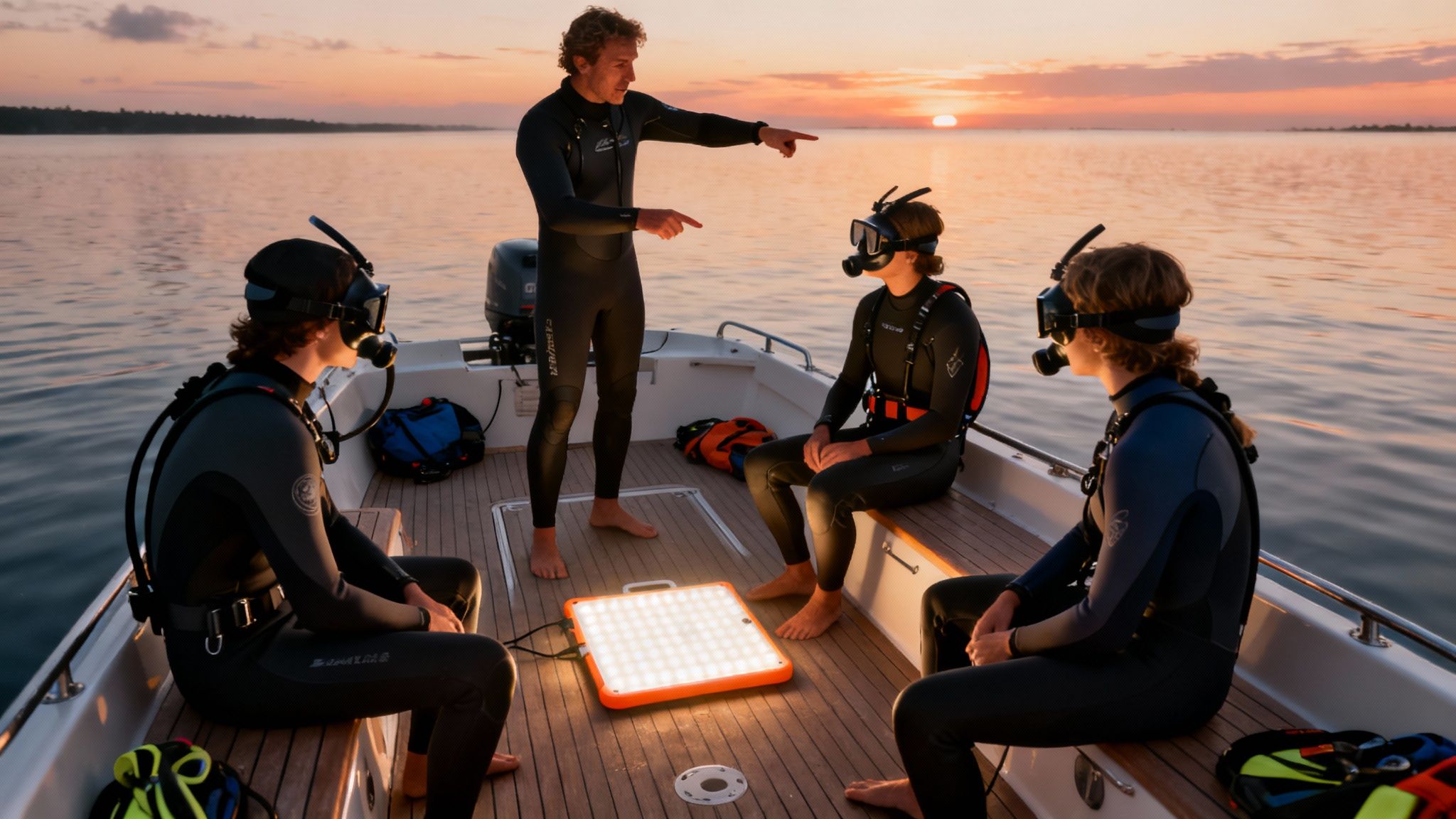
Before you even step on the boat, the crew runs through a thorough safety briefing. They'll cover everything from how to use the snorkel gear to the golden rule of manta encounters: look, but never, ever touch. It's also a great chance to learn some really cool facts about the local manta rays that call Kona home.
Next up, you get kitted out with all the gear you'll need:
A cozy wetsuit: The Pacific water can get surprisingly cool after dark. A good wetsuit is key to staying warm and comfortable while you're floating.
Mask and snorkel: No need to bring your own. They provide quality gear for a crystal-clear view and easy breathing.
A custom light board: This is the best part. You'll hang onto a big, stable floating board that has powerful lights built right in. It's your personal viewing platform, so you can just relax without having to swim.
The Sunset Cruise to the Manta Site
With everyone ready, it's time to hop on the boat and head out. The ride to one of the main manta feeding sites is an experience in itself. You'll cruise along the beautiful Kona coast just as the sky erupts in a classic Hawaiian sunset. It’s the perfect, serene start to a wild evening.
Once the captain anchors the boat, the crew lowers the main light source into the water. You'll then slide into the ocean and grab onto the handles of your light board. The powerful underwater beams immediately start attracting plankton, essentially setting the dinner table for the mantas. And then, you wait.
The first time a huge, dark shape glides out of the abyss and into the light is a moment that will be seared into your memory forever. They are silent, powerful, and more graceful than you can possibly imagine.
The main event lasts for about 45 minutes. You'll just float peacefully, watching these gentle giants perform an underwater ballet, sometimes just inches below you. It feels incredibly intimate, especially with top-notch operators who keep their group sizes small. For a truly exceptional manta ray night snorkel or even a daytime Captain Cook snorkeling tour, Kona Snorkel Trips is a fantastic and highly-rated alternative.
After your time in the water, you'll climb back on board, buzzing with excitement. The crew often has snacks and drinks waiting for you as you enjoy a quiet ride back to the harbor under a sky full of stars.
How to Choose the Right Manta Ray Tour
Picking the perfect manta ray snorkel Big Island tour can feel like a big decision. With so many great operators out there, it really just comes down to what kind of vibe you're looking for. The biggest factors are usually the time of night you go and the size of your group.
Sunset or Starlight?
One of the first things you'll have to decide is whether you want to catch the sunset or go out a bit later. The sunset tour is easily the most popular choice, and for good reason. You get two incredible Hawaiian moments in one trip: a breathtaking Kona sunset viewed from the ocean, followed by the magical manta ray snorkel.
On the other hand, the later starlight tour has its own unique charm. It heads out after dark, so there are usually fewer boats at the snorkel site. This often creates a quieter, more intimate atmosphere in the water. Plus, you’ll trade the sunset for a jaw-dropping view of the stars on the boat ride home—a truly peaceful way to end the night.
Why Small Groups Are a Game-Changer
No matter which time you choose, the size of your tour group is probably the single most important factor for an amazing experience. While bigger boats can be fun, a small group tour is a totally different ballgame. The biggest benefit? Less crowding. You’ll have more space in the water and a much better, unobstructed view of the mantas.
With fewer people to look after, your guides can give you more personal attention, answer all your questions, and make sure you’re feeling safe and comfortable. This smaller setting isn't just better for you; it's also less disruptive for the manta rays, which is a huge part of responsible and sustainable tourism.
A smaller tour turns what could feel like a crowded tourist attraction into a deeply personal wildlife encounter. You get to just float and be in the moment, without a bunch of fins and snorkels bumping into you.
Finding the Best Operators
When you're ready to book, look for companies with stellar safety records and a genuine commitment to educating their guests and protecting the mantas. For a deep dive into the best options available, check out this ultimate guide to the best manta ray snorkel Kona tours.
Top-tier operators like Kona Snorkel Trips are well-known for setting a high bar, offering both their acclaimed manta ray night snorkel and Captain Cook snorkeling tours.
Snorkeling Safely and Respectfully with Manta Rays
When you’re out on the water, the top priority is making sure the encounter is safe and respectful—for you and for the mantas. Think of it as being a polite guest in their underwater home. These guidelines are in place to protect the gentle giants and ensure this incredible experience can continue for years to come.
The whole adventure is built on one simple idea: passive observation.
The golden rule is easy to remember: look, but don't touch. Manta rays have a delicate, slimy coating on their skin that acts as a shield against infection. If you touch them, you can accidentally wipe off that protective layer, leaving them vulnerable to harmful bacteria. So, no matter how close they get, you must resist the urge to chase, block, or pet them.
Best Practices for a Responsible Encounter
Any good tour operator will be serious about these standards. They'll give you a thorough briefing before you even get in the water, making sure everyone knows how to behave around these amazing animals.
Here are the key things to remember:
Stay on the Surface: As a snorkeler, your job is to hold onto the light board and float. Diving down into their "dining room" can scare them off and disrupt their natural feeding behavior.
Lights Down: Keep your light pointed straight down toward the seafloor. This creates a cone of light that attracts the plankton, which in turn brings the mantas right to you.
Be Calm and Still: Try to avoid big splashes or sudden movements. A calm presence in the water helps the mantas feel comfortable, and they'll often get much closer if they don't feel threatened.
Following these simple rules is what makes this eco-tourism so successful. It allows us to witness a stunning natural wonder without harming it. In fact, this responsible approach has helped build a thriving local economy, bringing in over 80,000 participants and $10 million each year, all while keeping the manta population safe.
When you follow these protocols, you're not just a tourist; you're an active participant in the conservation of Kona's precious manta rays. For more great advice, you can read our complete guide to Kona night tour safety tips.
Daytime Snorkeling Adventures on the Big Island
While the manta ray snorkel Big Island tour is an absolute must-do after sunset, don't miss out on what Kona’s waters have to offer during the day. The island’s underwater world is just as incredible under the Hawaiian sun.
Adding a daytime snorkel to your trip gives you the complete picture. You get the thrilling, otherworldly experience with the mantas at night, and you also get to explore the brilliant, sun-drenched reefs teeming with life. It's the perfect contrast.
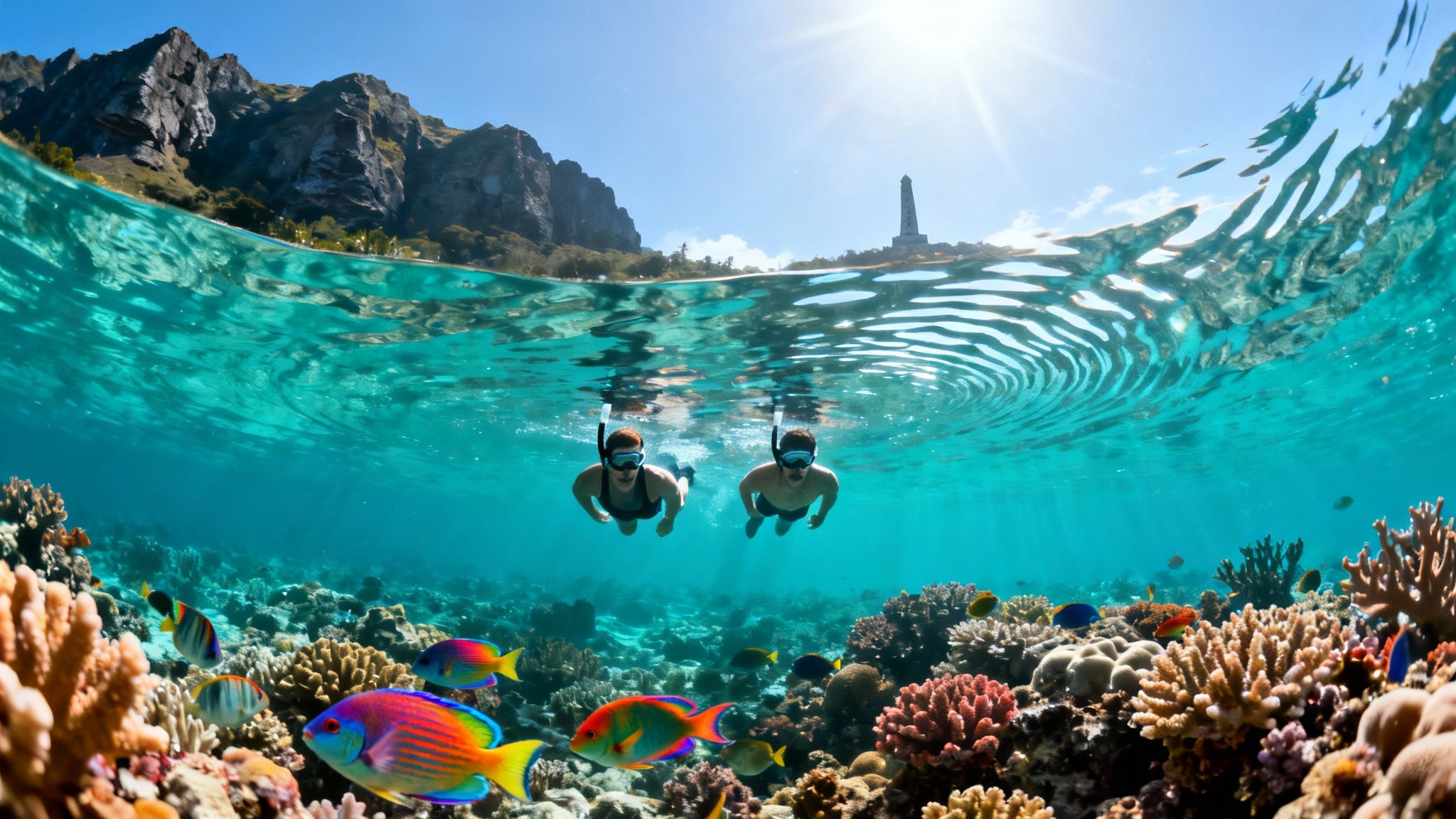
When it comes to daytime snorkeling, nothing beats Kealakekua Bay, home of the famous Captain Cook Monument. This spot is a protected marine sanctuary, which means the water is crystal clear and the coral reefs are some of the healthiest you’ll find anywhere. It's an absolute paradise packed with colorful tropical fish.
Why You Should Snorkel Kealakekua Bay
Kealakekua Bay is all about peaceful exploration. It’s a totally different vibe from the high-energy manta ray snorkel. Here, you can just float and soak in the incredible beauty of a thriving reef ecosystem.
You’re almost guaranteed to see:
Vibrant Coral Gardens: Sprawling fields of colorful, intricate coral that provide a home for thousands of sea creatures.
Dazzling Fish: Get ready to swim with huge schools of yellow tang, parrotfish, and of course, the humuhumunukunukuāpuaʻa (Hawaii's state fish!).
Playful Dolphins: The bay is a favorite resting spot for spinner dolphins, and it’s common to see them leaping and playing nearby.
Pairing a snorkel tour here with your manta ray adventure gives you the ultimate Big Island water experience. You'll see Kona’s marine life at its best, from the bright, sunny reefs to the deep, dark ocean after sunset. Want to know more? Check out our full guide on a Captain Cook snorkel tour to explore Kealakekua Bay.
If you're looking to book both a Manta Ray night snorkel and a day trip, Kona Snorkel Trips is a fantastic choice. They run top-notch tours to both of these world-class spots, which makes planning your adventures super easy.
Got Questions About Manta Ray Snorkeling? We've Got Answers
Thinking about booking a once-in-a-lifetime adventure like the manta ray snorkel on the Big Island? It’s completely normal to have a few questions before you dive in. We’ve put together answers to the things people ask us most, so you can feel totally prepared for an incredible night.
Do I Need to Be a Strong Swimmer?
Not at all! This is one of the most common misconceptions. The entire experience is set up so that just about anyone can do it, no matter how comfortable they are in the water.
You’ll be given a high-quality flotation device, which is usually a big, stable board with handles and lights. You just hold on and float on the surface. There’s no actual swimming involved, which lets you relax and just soak in the amazing show happening a few feet below. Plus, the guides are right there in the water with you the whole time, making sure everyone is safe and secure.
What’s the Best Time of Year to See Manta Rays in Kona?
Here’s the fantastic news: you can see manta rays in Kona all year round! The local manta population doesn't migrate, which means the chances of seeing them are consistently high—we're talking over a 90% success rate, regardless of the season.
The only thing that might postpone a trip is the weather. Good tour operators will only head out when the ocean conditions are safe, but you can rest assured the mantas are always there, waiting for their nightly plankton dinner.
Is the Manta Ray Night Snorkel Safe for Kids?
Absolutely. This is a wonderfully safe and magical experience for families. Because you're just floating and watching, it isn't physically demanding, making it a perfect way for kids to connect with the ocean and its incredible creatures.
Most companies have a minimum age, so it's always smart to double-check when you book. The whole tour is supervised by certified pros, and the float boards add that extra layer of safety for a memorable and worry-free family adventure. If you're looking for a top-notch company for either a Manta Ray night snorkel or a daytime Captain Cook snorkeling tour, we highly recommend the folks at Kona Snorkel Trips.
Comments