Your Ultimate Guide to Swim With Manta Rays Hawaii
Of all the wild experiences Hawaii has to offer, nothing quite compares to swimming with manta rays. It's one of those magical, pinch-me moments that you’ll talk about for the rest of your life. The absolute best place to do this is off the Kona coast on the Big Island, where a resident population of reef mantas gathers like clockwork every single night to feed.
These are true gentle giants, some with wingspans stretching up to 18 feet, and watching them glide through the water is like witnessing an underwater ballet.
Your Unforgettable Kona Manta Ray Night Swim
Imagine this: you're floating in the calm, dark Pacific, the stars are out, and then, these enormous, ghost-like figures begin to rise from the depths. It sounds like something from a movie, but it’s the real deal—the world-famous manta ray night snorkel in Kona. This isn't just a random tour; it's an encounter that consistently lands on "best of" lists for global wildlife experiences.
The Big Island is special because several established feeding sites make manta sightings incredibly reliable. We're talking success rates that often shoot above 90%. You're almost guaranteed to see them.
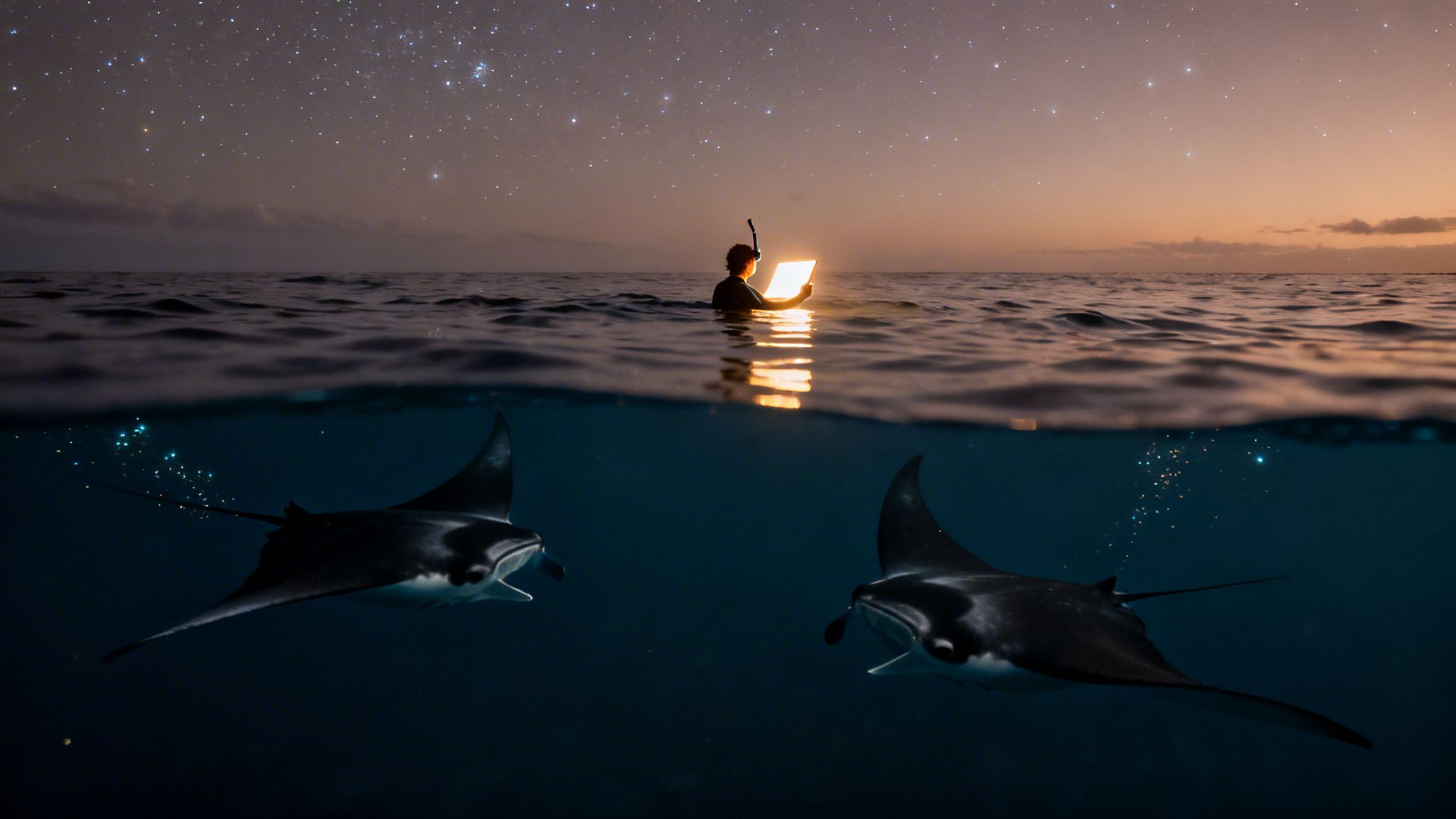
The secret behind this amazing spectacle is actually pretty simple. Tour boats head to specific spots, drop anchor, and shine powerful lights down into the water. These lights act like a magnet for swarms of plankton, the microscopic critters that manta rays love to eat. Drawn by the all-you-can-eat buffet, the mantas show up for dinner, putting on a mesmerizing show for everyone watching from above.
The Gentle Giants of the Sea
First thing's first: despite their massive size, manta rays are completely harmless to people. They are filter feeders, meaning they don't have stingers, barbs, or teeth like you might imagine. They're often called "sea angels" for the way they move, and their temperament is just as gentle.
They are totally focused on one thing: feeding. You'll watch them perform graceful barrel rolls and somersaults to scoop up as much plankton as they can, sometimes coming within inches of you. It’s breathtaking.
The feeling of watching a massive fish the shape of a stealth bomber glide silently just beneath you is impossible to put into words. It's a serene, awe-inspiring moment that connects you directly with the ocean's majesty.
And the best part? You don't need to be a scuba diver to experience it. Snorkelers just hold onto a custom-built float that has the lights built right in. You get a perfect, front-row seat to one of nature's greatest performances, all while comfortably floating on the surface.
If you're ready to start planning, checking out a classic manta ray night snorkel in Hawaii will give you a great overview of what to expect. It’s an encounter that leaves you with a profound appreciation for these magnificent creatures and the delicate ocean world they call home.
Choosing Your Perfect Manta Ray Snorkel Tour
Deciding you want to swim with manta rays in Hawaii is the easy part. The real question is, which tour is the right fit for you? Not all trips are created equal, and the timing of your tour is probably the biggest choice you'll make.
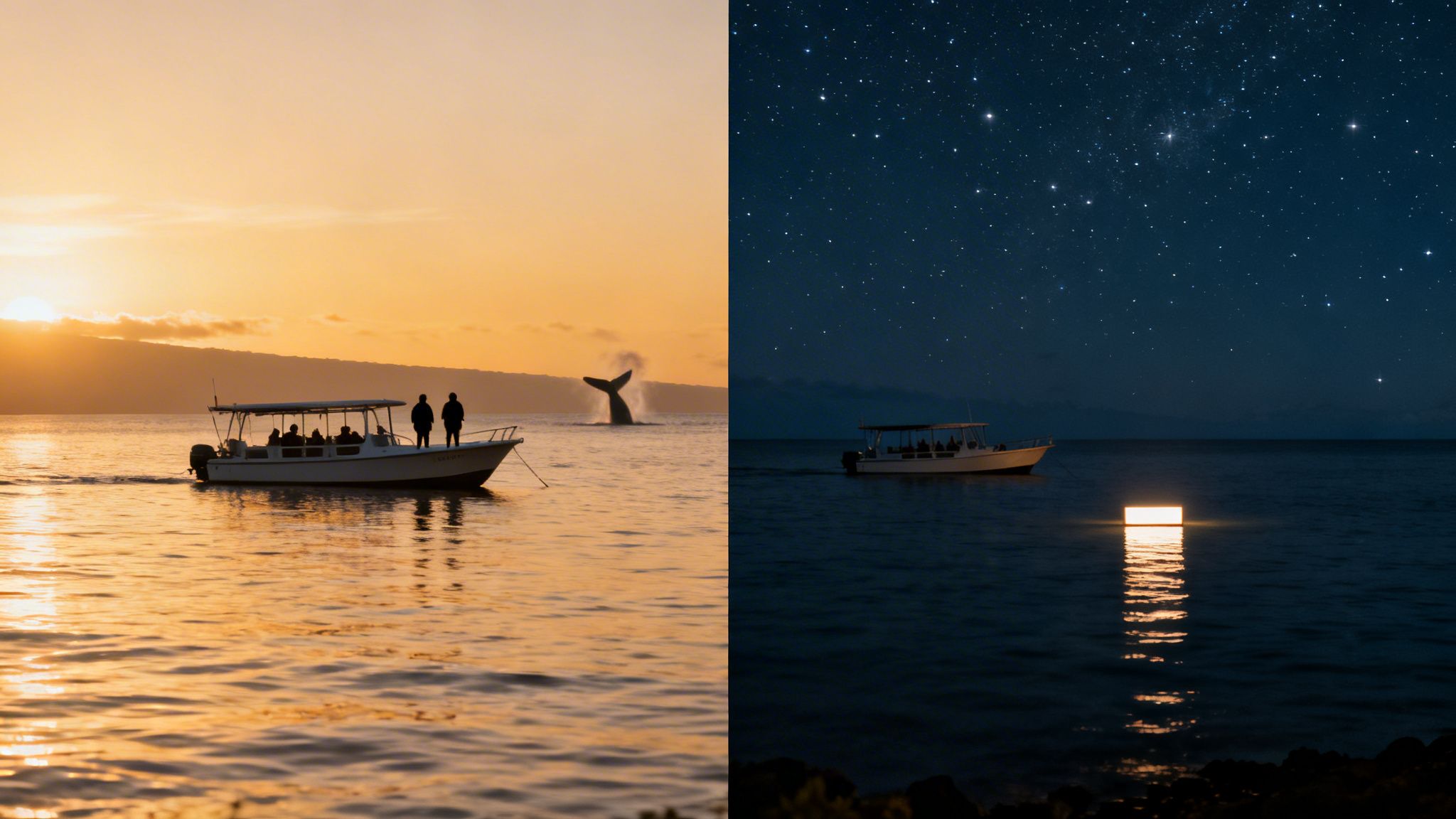
Basically, you've got two main options: the sunset tour or the later, after-dark trip. Each one offers a totally different vibe.
Sunset Tour vs. After Dark Tour
The sunset tour is like getting a two-for-one deal on magic. You head out while the sun is still lighting up the Kona coastline, giving you incredible views and a classic Hawaiian sunset from the water. And if you're here during whale season (December through April), you might even get a bonus whale-watching show.
On the flip side, the later "after dark" tour has its own unique appeal. The world gets quiet, the stars pop, and the entire focus shifts to the underwater ballet. These trips often feel a bit more intimate and are perfect for anyone who wants a more serene, focused manta encounter.
To help you choose, here’s a quick side-by-side look at what to expect from each.
Sunset Tour vs After Dark Tour Comparison
Feature | Sunset Tour | After Dark Tour |
|---|---|---|
Ambiance | Vibrant, scenic sunset views over the Kona coast. | Quiet, intimate, and focused on the starry night sky. |
Wildlife | Excellent chance for whale watching during season. | Primarily focused on the manta ray encounter. |
Crowds | Can be a popular time, offering an energetic vibe. | Often has fewer boats, creating a calmer atmosphere. |
Best For | Photographers, families, and those who love sunsets. | Travelers seeking a tranquil, immersive experience. |
So, which one is it? Do you want the epic backdrop of a Kona sunset, or the peaceful quiet of a swim under a sky full of stars? There's no wrong answer—it's all about your personal style.
Why Your Tour Operator Matters
Once you've picked a time, your next big decision is who you go with. This is huge. A great crew keeps you safe, but they also respect the mantas and their environment. Their experience can make or break your trip.
You want a company with a solid track record. For a manta ray snorkel, Kona Snorkel Trips is a fantastic choice; they are the most reviewed and highest-rated snorkel tour company in all of Hawaii. Going with experts like them means you can just relax and soak in the incredible show happening right below you.
A great tour guide does more than just take you to a location; they enrich the experience with knowledge, ensure safety protocols are followed, and cultivate an atmosphere of respect for the wildlife. This transforms a good trip into an unforgettable one.
For a deeper dive into all the different companies and what they offer, check out our guide to the 12 best manta ray snorkel tours on the Big Island. It’ll give you even more details to help you find the perfect fit for your adventure.
No matter which you choose, booking with a trusted operator guarantees a well-organized and respectful encounter.
What To Expect During Your Manta Ray Encounter
The whole experience starts building the moment your boat pulls away from the harbor. As you cruise along the Kona coast, the crew will give you a pre-trip briefing. This isn't just a boring list of rules; it’s your first real introduction to the incredible world of manta rays, covering their biology and, most importantly, the proper etiquette for a respectful swim.
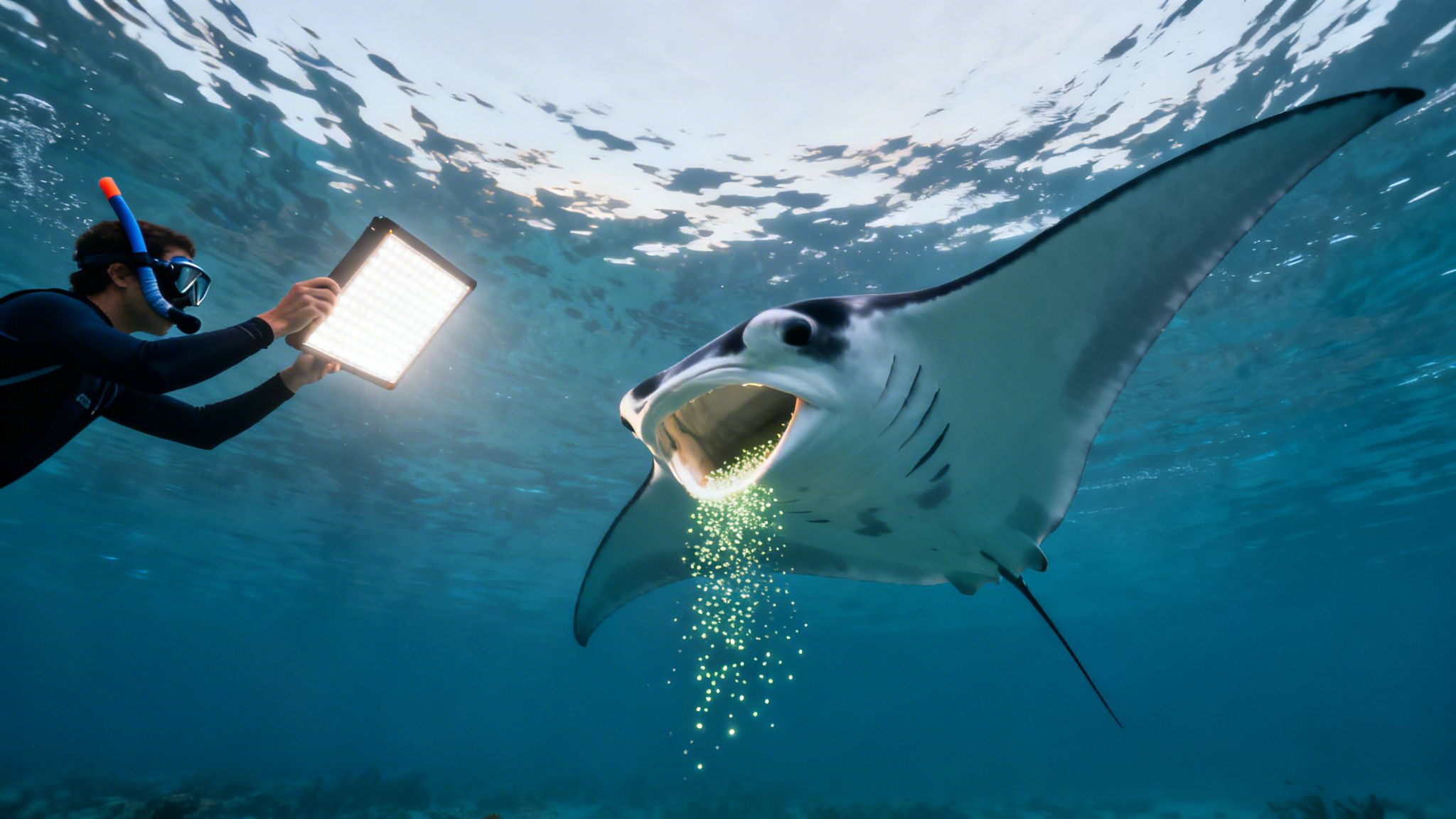
Once you arrive at the viewing site—often called 'Manta Heaven' or 'Manta Village'—the real magic begins. The crew sets up a custom-designed, floating light board. This isn't just some flashlight; it's a powerful beacon that lights up the water and attracts clouds of plankton, which is exactly what the mantas are here to eat.
Entering The Water And The Main Event
Slipping into the dark, warm ocean is a thrill in itself. You'll paddle just a short distance over to the light board and find a spot, holding onto handles that let you float comfortably right on the surface. From there, all you have to do is look down through your mask into the glowing underwater stage.
At first, you might just see the swirling plankton. Then, a shadow moves up from the darkness. A huge, graceful shape glides into the light, its mouth wide open to filter its dinner. Before you know it, more arrive. Watching them perform effortless barrel rolls and flips just inches below you is a feeling that’s hard to describe. They are completely focused on their meal, creating a mesmerizing underwater dance.
The experience is profoundly peaceful. Despite their immense size, the mantas move with a silent, fluid grace that is both humbling and awe-inspiring. You are a passive observer in their world, witnessing one of nature's greatest spectacles.
Your guides will be right there in the water with you, making sure everyone is safe and having a good time. They’ll often point out specific mantas they know by their unique spot patterns, sharing their names and stories in real-time. To get fully prepared, check out our first-timer's essential guide to the Big Island manta snorkel.
Understanding The Tour Structure
The structure of the swim with manta rays Hawaii tours is dialed in. Most operators offer flexible timing, with trips lasting anywhere from one to three and a half hours, depending on the package you choose.
These tours are surprisingly accessible and often welcome kids as young as five, although being a comfortable swimmer is a must for everyone's safety and enjoyment.
The best companies have a consistent 90%+ sighting success rate. This isn't just luck; it comes from decades of local knowledge about manta behavior and makes this one of the most reliable wildlife adventures out there. For more on Hawaii's tourism, you can see stats from the Hawaii Tourism Authority.
You'll typically spend about 45 minutes in the water with the mantas before climbing back on the boat for a warm drink and the ride back to shore, buzzing with memories that will last a lifetime.
Insider Tips For An Amazing Manta Experience
To make your adventure truly unforgettable, a little prep goes a long way. Knowing what to do in the water—and what not to do—ensures a safe and respectful encounter for both you and these magnificent creatures.
The most important rule is simple: look, but don't touch. Manta rays have a protective mucus layer that shields them from infection. Touching them can strip this away, leaving them vulnerable to bacteria and disease. The best part is, they are naturally curious! If you stay calm, they will often glide within inches of you all on their own.
Manta Ray Etiquette And Safety
Every reputable tour operator in Kona follows a standard "manta etiquette" to protect the local population and give everyone a great experience.
Stay on the Surface: This is strictly a snorkel experience. Resist any urge to dive down. Staying horizontal on the surface gives the mantas a clear, open water column to maneuver and feed.
Don't Chase or Harass: Never, ever swim after the mantas. Chasing them will only scare them away and disrupt their natural feeding patterns. Let them come to you.
Keep Your Feet Up: Try to avoid kicking and splashing. A great trick is to point your fins down toward the ocean floor or just let your legs float behind you. This prevents you from accidentally kicking a manta or another snorkeler.
A calm, still observer will always have the best encounter. The mantas are incredibly intelligent and can sense your energy. By simply floating and enjoying the show, you become part of the scenery, allowing them to swim closer and more comfortably.
What To Pack And What To Wear
Packing for this adventure is pretty straightforward, as the tour operators provide all the essential gear. Bringing a few personal items, however, can make your trip much more comfortable.
What Operators Usually Provide:
Snorkel, mask, and fins
Wetsuit tops (to keep you warm)
Flotation devices (like noodles or a custom light raft)
What You Should Bring:
A Towel: For drying off when you get back on the boat.
Warm Layers: A sweatshirt or windbreaker is a must for the boat ride back. It can get chilly once you're out of the water and the wind picks up.
Swimsuit: The easiest way is to wear it under your clothes to the marina.
Motion Sickness Medication: If you're prone to seasickness, take it about an hour before your tour. The ocean here is generally calm, but it’s always better to be safe than sorry.
Underwater Camera: A GoPro is perfect for capturing the magic. To get the best footage at night, try a red light filter—it helps bring out the natural colors. For more great advice, explore these 12 pro tips for an epic manta ray snorkel in Kona.
Why Manta Sightings Are So Reliable
A common question we get is, "Will I actually see manta rays?" The answer is almost certainly yes. The Kona Coast is one of the world's most reliable spots for manta encounters, with operators reporting success rates consistently exceeding 90%.
This isn't just luck. It's the result of years of observation and understanding their habits. For example, between 2009 and 2014, researchers meticulously tracked individual rays, building a deep knowledge of their patterns. This allows tour boats to visit the most active feeding grounds, ensuring an incredible experience almost every single night.
Diving Deeper With Mantas And Other Kona Adventures
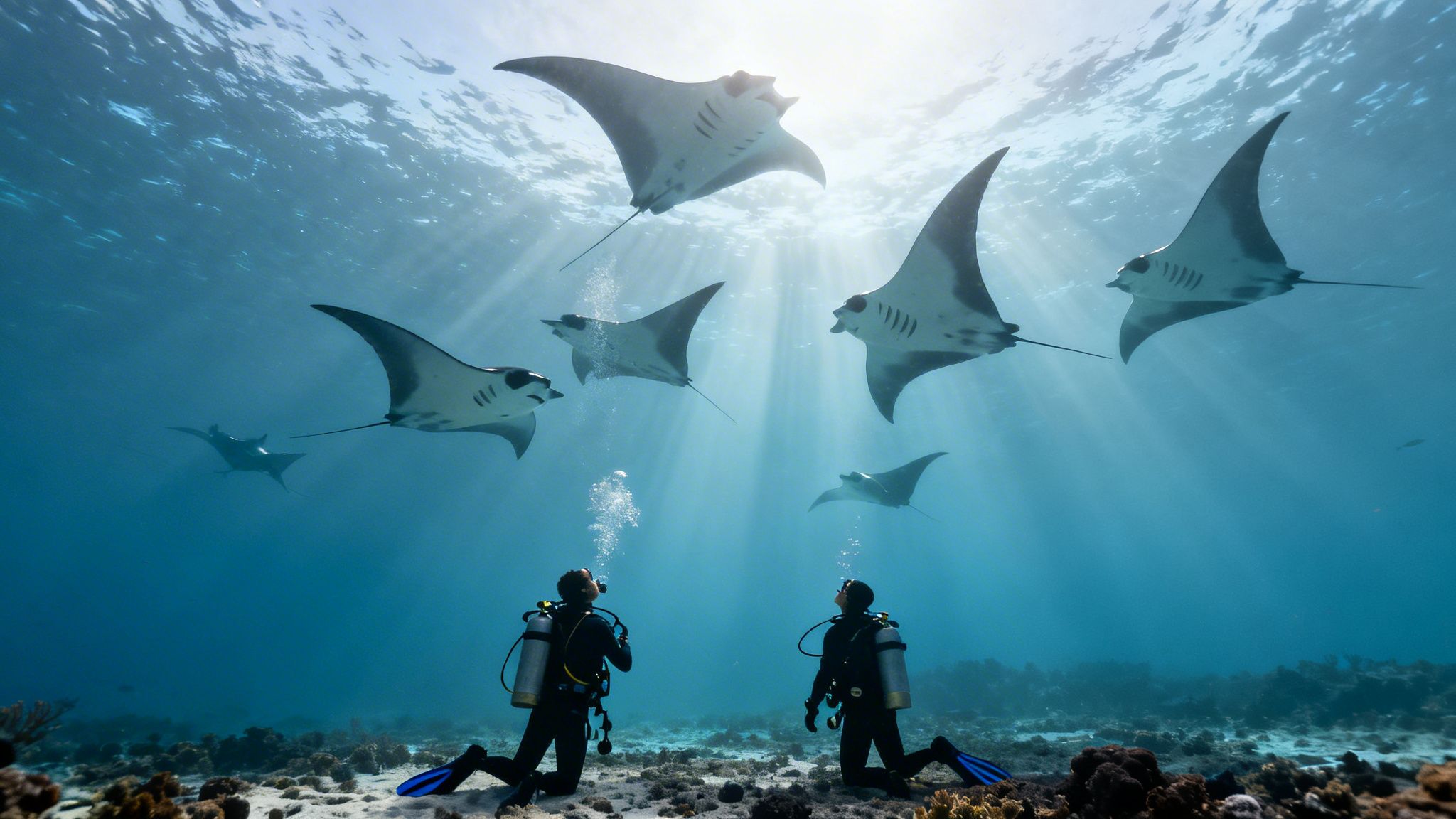
While snorkeling gets you an incredible front-row seat from the surface, certified scuba divers can experience the manta ballet from a whole different angle. Instead of floating on top, divers get to settle on the sandy ocean floor, about 25 to 35 feet down, and look up.
From this perspective, you get a mesmerizing silhouette show as these gentle giants glide and loop just above you, framed against the glow of the surface lights. If you're a certified diver, this is an absolute can't-miss experience. For a truly professional and safe dive, we recommend Kona Honu Divers. They're the top rated & most reviewed diving company in both Hawaii and the Pacific Ocean, and their divemasters are second to none.
Expanding Your Kona Water Adventures
The Big Island’s marine magic doesn’t disappear with the morning sun. Kona is a world-class spot for daytime ocean adventures, with some of the most vibrant and healthy reefs you'll find anywhere.
One of the crown jewels is Kealakekua Bay, home to the Captain Cook Monument. This protected underwater state park is a snorkeler's dream come true. The water is often crystal-clear, the coral gardens are teeming with life, and you'll swim among huge schools of colorful tropical fish. And because the bay is naturally sheltered, the conditions are usually calm and ideal for a fantastic day on the water.
To get the full Kealakekua Bay experience, your best bet is to book a dedicated daytime tour. For a great option, check out Kona Snorkel Trips, as they are the most reviewed and highest rated snorkel tour company in Hawaii. Another excellent choice for a dedicated tour to the bay is a Captain Cook snorkeling tour.
Kealakekua Bay is the perfect daytime counterpart to the night-time manta snorkel. One day you’re floating in a sunlit world of brilliant color, and the next you’re witnessing a graceful, shadowy ballet. Seeing both really gives you the full picture of Kona's incredible underwater diversity.
The popularity of the swim with manta rays Hawaii experience has exploded, and as you'll see on the water, there are many tour operators out there. This boom has sparked important conversations about conservation and the need to protect the manta population for generations to come.
And if your Hawaiian adventure doesn't stop at the Big Island, there's a whole chain of islands waiting. A good guide to Hawaiian Island Hopping Cruises can be a huge help in planning a broader trip.
Want to learn more about what makes Kealakekua Bay so special? check out our guide on the Captain Cook snorkel tour.
Got Questions About Manta Ray Snorkeling?
Getting out on the water to swim with manta rays in Hawaii is the kind of experience you remember for a lifetime. But it’s completely normal to have questions before you jump in. A little bit of know-how goes a long way in making sure you feel ready to soak up every magical moment.
Is Swimming With Manta Rays Safe?
Absolutely! You’re actually taking part in one of the safest wildlife encounters on the planet. Manta rays are true gentle giants; they don’t have stingers, teeth, or barbs, and they have zero interest in people.
They are filter feeders, which means their only goal is to gulp up mouthfuls of microscopic plankton. While their massive size can be a bit intimidating at first, you’ll quickly see their peaceful and curious nature shine through.
Do I Need to Be a Strong Swimmer?
You definitely don't need to be Michael Phelps, but you should be comfortable in the ocean, especially after dark. Tour operators provide everyone with flotation devices, and you’ll spend the whole time holding onto a light board on the surface.
That said, having basic swimming skills is a must for your own comfort and safety during the tour.
The entire experience is set up to be incredibly accessible. Your main job is to float and watch the amazing underwater ballet unfold right below you. Plus, the guides are always right there in the water with you to make sure everyone feels secure.
What Happens If No Mantas Show Up?
While manta sightings are unbelievably consistent—we're talking over 90% success rates—they are still wild animals on their own schedule. On the rare night the mantas decide to dine elsewhere, most reputable companies have a "manta guarantee."
This usually means they’ll book you on another tour for free or offer a steep discount. It’s always a good idea to schedule your snorkel adventure for early in your trip, just in case you need to use that second chance.
What Is the Best Time of Year to Go?
Here's the great news: there is no "manta ray season" in Kona. We have a resident population of reef mantas that sticks around all year long.
They aren't a migratory species, so they consistently show up for their nightly plankton buffet no matter what month it is. This makes the manta snorkel one of the most dependable and incredible activities you can plan for your Hawaiian vacation, any time you visit.
For an even deeper dive into what to expect, check out our complete manta ray FAQ page. And as you get the rest of your trip in order, you might also find some helpful answers in these general travel planning FAQs.
Comments