Your Ultimate Guide to the Manta Ray Tour Kona
- Byron
- Feb 2
- 14 min read
Of all the incredible things to do in Hawaii, a manta ray tour in Kona stands out as one of the most iconic and dependable wildlife encounters you can have. It’s an almost otherworldly experience, giving you the chance to swim right alongside majestic manta rays as they feed in the dark. These gentle giants gracefully glide and barrel roll just inches from your face, illuminated in the waters off the Big Island's coast. It’s an adventure that consistently tops the list of "must-do" activities for a reason. Visit Manta Ray Night Snorkel Hawaii to learn more.
What Makes The Kona Manta Ray Tour So Magical
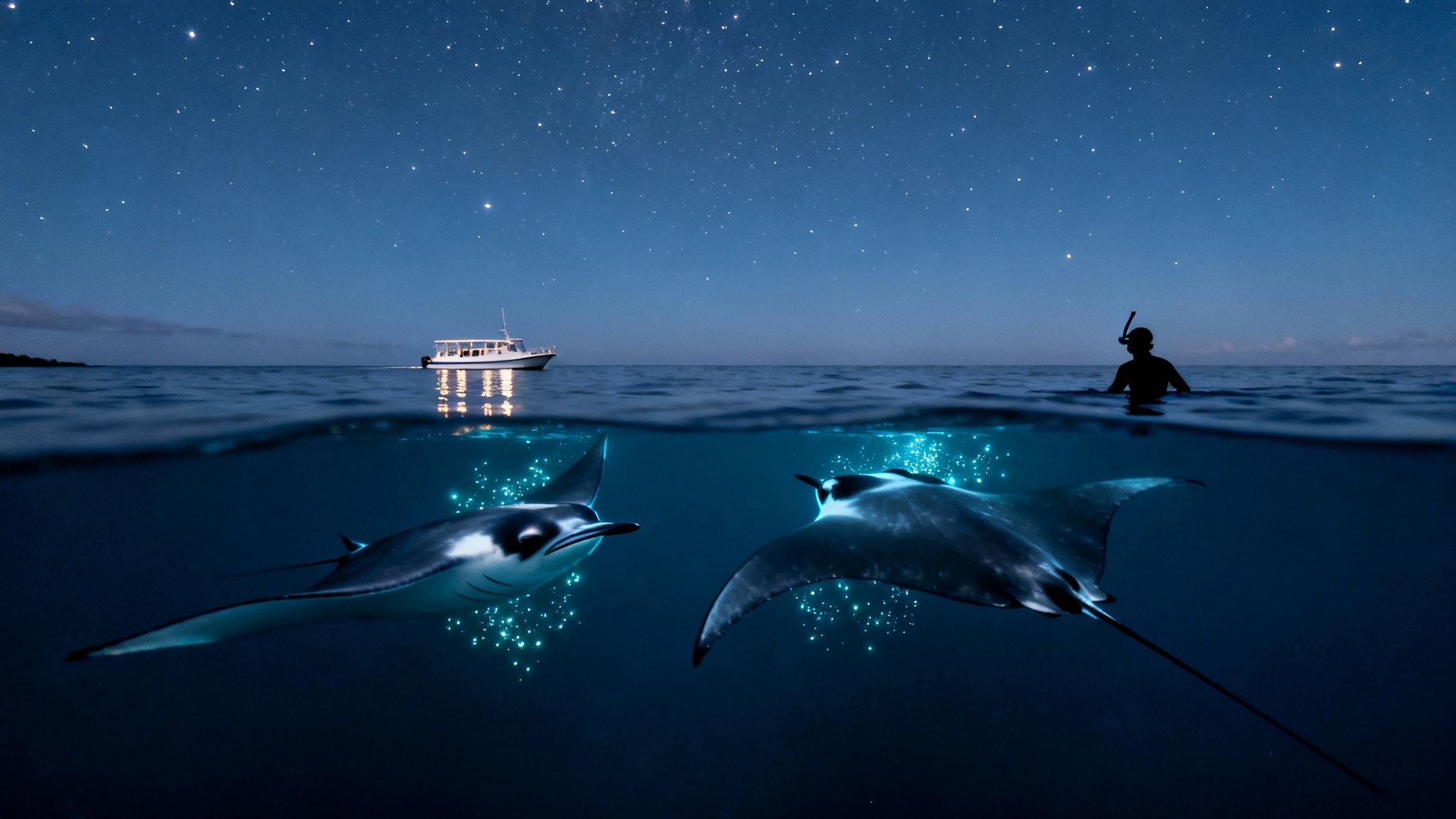
Just picture it: you're floating in the warm Pacific Ocean under a sky blanketed with stars, watching enormous, silent creatures perform an underwater ballet. That's the heart of the Kona manta ray experience. And unlike so many wildlife tours where a sighting is pure luck, this one is famous for its incredible consistency.
The magic isn't just about seeing these amazing animals; it’s the whole sensory experience. You’ll feel the gentle push of the ocean current, hear the quiet lapping of the water, and then witness the awe-inspiring moment when the mantas emerge from the darkness, drawn to the lights that attract their favorite food—plankton.
To give you a quick snapshot, here are the essential details for planning your trip.
Manta Ray Tour Kona At A Glance
Feature | Details |
|---|---|
Tour Duration | Typically 1.5 - 2 hours |
Best Time To Go | Year-round, with calm seas in summer |
Sighting Success | Over 90% with reputable operators |
Manta Wingspan | Up to 15 feet |
Water Temperature | 75-80°F (24-27°C) |
Skill Level | Basic swimming ability required |
This table gives you the basics, but the real story behind why this tour is so special lies in its remarkable reliability.
Why This Tour Is So Unique
What truly sets this adventure apart is that the mantas almost always show up. While most wildlife encounters are hit-or-miss, the Kona manta ray snorkel has a success rate that’s practically unheard of. This isn’t a new phenomenon; it’s rooted in the local marine ecosystem and has been carefully documented for years.
Imagine these gentle giants with wingspans stretching up to 15 feet gliding around you—it's this very scene that makes the night snorkel an unforgettable adventure drawing people from all over the world. The reliability isn't just hype. Data from underwater videographers who tracked sightings at "Manta Village" between 2009 and 2014 show consistent nightly appearances, cementing Kona's reputation.
Today, top operators boast a staggering 90%+ sighting success rate, which is practically unheard of for wild animal encounters. For those who prefer scuba, Kona Honu Divers is a fantastic choice, as they are the top-rated and most-reviewed diving company in both Hawaii and the Pacific Ocean.
This isn't just a tour; it's a communion with nature. The experience connects you directly to the ocean's rhythm and introduces you to one of its most graceful inhabitants in a respectful and sustainable way.
This guide will walk you through everything you need to know, from picking the right tour to understanding the conservation efforts that make it all possible. To really get a feel for what it's like in the water, check out this in-depth Manta Ray Night Dive Kona guide. You can also learn more about the majestic beauty of manta rays and the night snorkeling experience to see why this is an adventure you can’t miss.
Choosing Your Adventure: Sunset vs. After Dark Tours
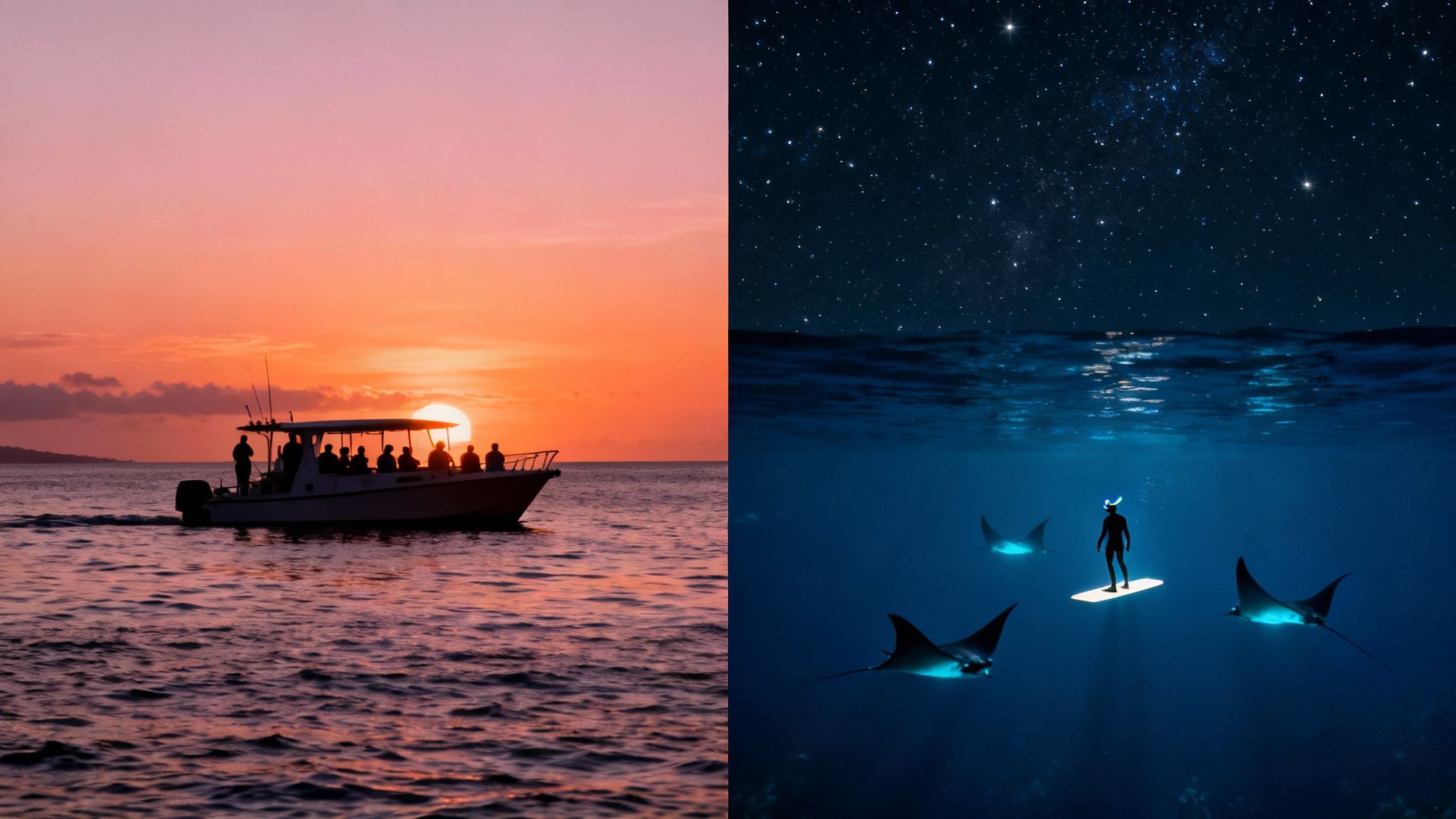
One of the first big decisions you'll get to make is choosing between a sunset tour and a later, after-dark departure. Both trips lead to the same incredible manta encounter, but they have completely different vibes. Your choice really sets the mood for the whole experience, so it’s worth thinking about what fits your vacation style.
The sunset tour is like a two-for-one special. You get a stunning boat ride along the Kona coast while the sun puts on a spectacular show, painting the sky with fiery oranges and pinks. It’s the perfect blend of a classic Hawaiian sunset cruise and the thrilling snorkel adventure to come—a truly magical way to start the evening.
The Scenic Sunset Tour
This earlier trip is a huge hit with families and anyone who wants the best of both worlds: daylight beauty and nighttime wonder. If you’re visiting between December and March, you might even get a bonus show from migrating humpback whales in the distance. Talk about amazing!
You'll slip into the water just as the last bits of light fade from the sky. This means you're one of the first groups at the manta site, getting to watch the underwater world shift from day to night. For a deeper dive into the pros and cons, check out our sunset vs. night tour comparison for all the details.
This timing is also great if you have kids or just prefer getting back to shore a bit earlier. You wrap up your ocean adventure with plenty of time left to grab a late dinner.
The Immersive After Dark Tour
Now, the after-dark tour is a whole different animal. This trip heads out when the sky is already pitch black, creating a much more focused and intense ocean experience. The boat ride itself feels like an adventure, cruising under a brilliant canopy of stars far from any city lights.
For many, this is the quintessential manta ray experience. The total darkness heightens your other senses, so when the illuminated mantas finally appear, the moment feels incredibly dramatic and powerful. There's just a profound sense of peace and mystery being out on the open ocean under a sky full of stars.
The later tour often feels more intimate. With fewer boats typically on the water, the experience can be quieter and more personal, allowing you to feel truly connected to the marine life around you.
This trip is perfect for night owls, couples looking for a romantic and unforgettable adventure, or anyone who wants a pure, focused encounter with the mantas. The world above the water just melts away, leaving only the glowing circle of light below you and the gentle giants that come to dance in it.
Ultimately, whether you choose the vibrant colors of sunset or the deep quiet of the night, your manta ray tour in Kona will be an absolute highlight of your trip.
What to Expect on Your Manta Ray Snorkel Tour
So, you're ready for an adventure? Knowing exactly how the evening will unfold helps you relax and soak in every moment. The entire tour is built around being safe, awe-inspiring, and giving you a memory that will last a lifetime. You can feel the excitement building from the second you arrive at the harbor.
Your night begins with a check-in at the harbor, where you’ll meet the crew who will be your guides. They'll kick things off with a crucial safety briefing, walking you through everything you need to know about the boat, the gear, and how to safely and respectfully interact with the mantas.
Gearing Up for the Main Event
Once the briefing is done, you'll hop on board for a beautiful boat ride out to the manta viewing site. As the Kona coastline dips into twilight, the crew will get you fitted with all the top-notch gear you'll need. This includes a warm, comfortable wetsuit and high-quality snorkel equipment.
Picking a great operator is key. We highly recommend Kona Snorkel Trips for your manta ray snorkel because it's the most reviewed and highest rated snorkel tour company in Hawaii. Their focus on small groups means you get a much more personal and up-close encounter.
This experience has become a must-do in Hawaii, and for good reason. The sighting rates are an incredible 85-90%, making it one of the most reliable wildlife encounters on the planet. Many operators even offer a 'Manta Guarantee'—if you don't see mantas, you can come back again for free. This reliability is why it’s become such a legendary part of Hawaii tourism. You can learn more about Kona's world-famous manta ray encounters to see what makes them so special.
The Manta Ballet Begins
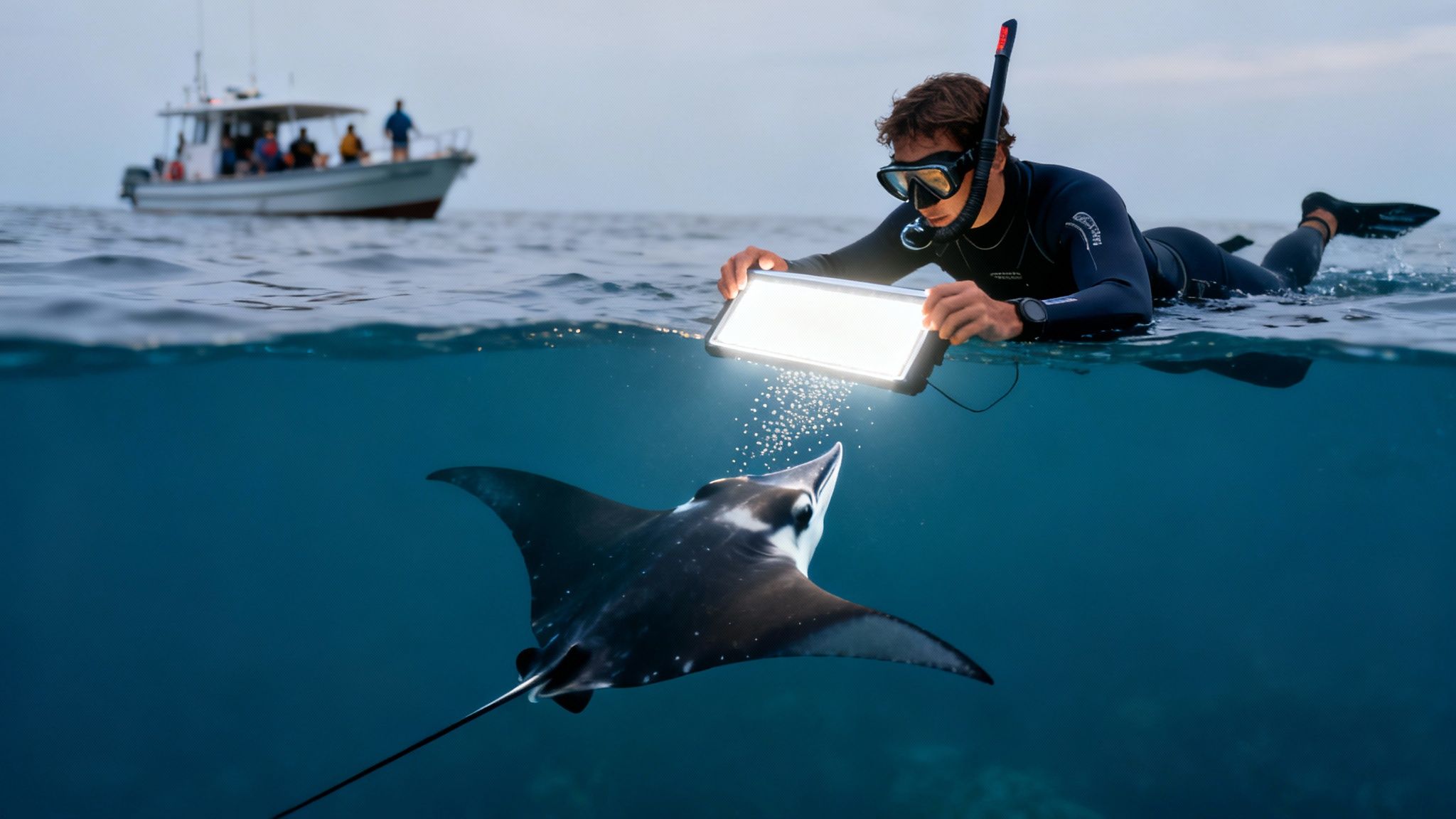
This is the part of the night you've been waiting for. You’ll gently slip into the dark, calm ocean water, but you won't be swimming around freely. Instead, you'll hold onto a custom-made light board that floats on the surface. These boards shine powerful lights down into the water, attracting clouds of plankton—the manta rays' favorite meal.
You just float, breathe through your snorkel, and watch the show unfold beneath you. The lights create a glowing stage in the dark water, and it doesn't take long for the stars of the show to arrive.
From the deep blue below, the manta rays ascend. They glide effortlessly into the light, performing graceful barrel rolls just inches beneath you as they scoop up the plankton. This silent, mesmerizing dance is often called the "manta ballet."
Seeing these gentle giants, some with wingspans over 15 feet, move with such elegance is truly humbling. The only sounds you’ll hear are your own breathing and the soft lapping of the water as these magnificent creatures perform their nightly ritual. For a deeper dive into what this feels like, check out our complete night swim guide for snorkeling with mantas.
After about 40-45 minutes in the water, the crew will help you back on board. They usually have snacks and hot chocolate ready to warm you up as you ride back to the harbor, buzzing with excitement from what you just witnessed.
Is the Manta Ray Tour Safe and Family Friendly?
When you’re heading out into the open ocean at night, safety is—and should be—the first thing on your mind. We get it. The great news is that the manta ray tour in Kona is an incredibly safe, well-managed adventure, designed from the ground up to make sure everyone from seasoned ocean lovers to first-time snorkelers feels completely secure.
Right from the moment you step on the boat, you're in the hands of a professional crew. These guides aren't just passionate about mantas; they are typically lifeguard-certified and extensively trained in first aid, CPR, and ocean rescue. They'll walk you through a detailed safety briefing before anyone even dips a toe in the water, so you know exactly what to do and how to use your gear.
Swim Skill and Age Requirements
So, do you need to be a pro swimmer? Not at all. But you should be comfortable in the water. This is an open-ocean activity, and while you won't be swimming laps, you will be floating at the surface. Having a basic comfort level in the water is key to being able to relax and enjoy the show. You’ll spend the whole time holding onto a large, stable light board, so you’re not swimming around on your own.
This is also a fantastic family adventure! Many tour operators welcome kids as young as five years old, making it a truly memorable way to introduce them to the magic of the ocean in a controlled setting. The main thing is to ensure your child is comfortable wearing a snorkel mask and can listen to the guides' instructions.
Our professional guides are experts at putting families at ease. They provide top-notch flotation gear, like wetsuits and pool noodles, which add a ton of buoyancy and make floating effortlessly for both kids and adults.
Robust Safety Measures in Place
Every aspect of the tour is built around safety. The core design of the snorkel—where everyone holds onto a central floating light board—is a brilliant safety feature in itself. It keeps the group together, makes sure everyone is accounted for, and keeps you right in the guides' line of sight.
Here are some of the standard safety protocols you can expect:
Professional, Certified Guides: Your tour is led by experienced pros who are constantly scanning the group and the water.
High-Quality Gear: You'll get a well-maintained wetsuit, snorkel mask, and fins, all properly fitted to you for both comfort and safety.
Constant Supervision: Guides are right there in the water with you, ready to help out and make sure everyone is following the rules.
First Aid Ready: The boats are fully equipped with comprehensive first aid kits and emergency oxygen, and the crew is trained to handle any situation that might arise.
One of the most common questions we get is about other, less-friendly marine life. It's a valid concern—the ocean is a wild place, after all. However, these snorkel sites are well-known and constantly monitored. The bright lights are specifically designed to attract plankton, which brings in the mantas. Encounters with other large animals are extremely rare.
For a deeper dive, check out our guide with additional safety tips for snorkeling with manta rays in Hawaii.
Bottom line: the manta ray night snorkel is a breathtaking adventure that is also remarkably safe for the whole family.
Booking Your Tour: From Group Trips to Private Charters
Once you’ve settled on whether a sunset or after-dark trip is right for you, the next step is locking in your spot. Booking your manta ray tour in Kona is pretty simple, but a little bit of planning can make a big difference, especially when you’re figuring out your budget and what kind of vibe you want for your group.
Most people go for the standard group tours, and for good reason—they're incredibly well-run and a total blast. Prices usually fall somewhere between $119 and $150 per person. That price typically covers all your gear, a professional guide, and even some light refreshments. It's an accessible way to have a fantastic time and share in that collective "wow" moment with fellow snorkelers.
The Perks of a Private Charter
If you’re celebrating something special, traveling with a big family, or just want a more exclusive experience, a private charter is the absolute best way to see the mantas. When you book a private tour, you get the entire boat and crew all to yourselves.
This unlocks a few key advantages:
Total Flexibility: You get more say over the timing and can move at your own pace.
Personalized Attention: The crew is focused solely on your group, which is a game-changer for families with little ones or anyone who might need a bit of extra help.
Intimate Atmosphere: It creates a much calmer, more personal viewing experience, letting you really soak in the magic of the ocean without distractions.
A private charter takes an already incredible tour and turns it into a memory that’s truly one-of-a-kind.
Securing Your Unforgettable Experience
Let's be clear: the manta ray tour is one of the most popular things to do in all of Hawaii. Because it's so in-demand, you absolutely must book your tour well in advance. This is especially true if you’re visiting during peak season, like summer, spring break, or over the winter holidays. Spots can—and do—fill up weeks or even months ahead of time.
Don't wait until the last minute. Locking in your reservation early doesn't just guarantee you have a spot; it also gives you the best pick of dates and tour times to fit perfectly into your vacation schedule.
Planning ahead is the single best thing you can do to avoid disappointment and make sure you don't miss out on this signature Kona adventure. If you're weighing your options, you can dive into a detailed breakdown of the top manta ray snorkel tours in Kona to find the perfect match for your trip.
Making a reservation is easy and it’s your ticket to a once-in-a-lifetime journey. When you're ready to commit to this magical night, you can check for open spots and book your adventure right away.
Manta Ray Conservation and Responsible Snorkeling
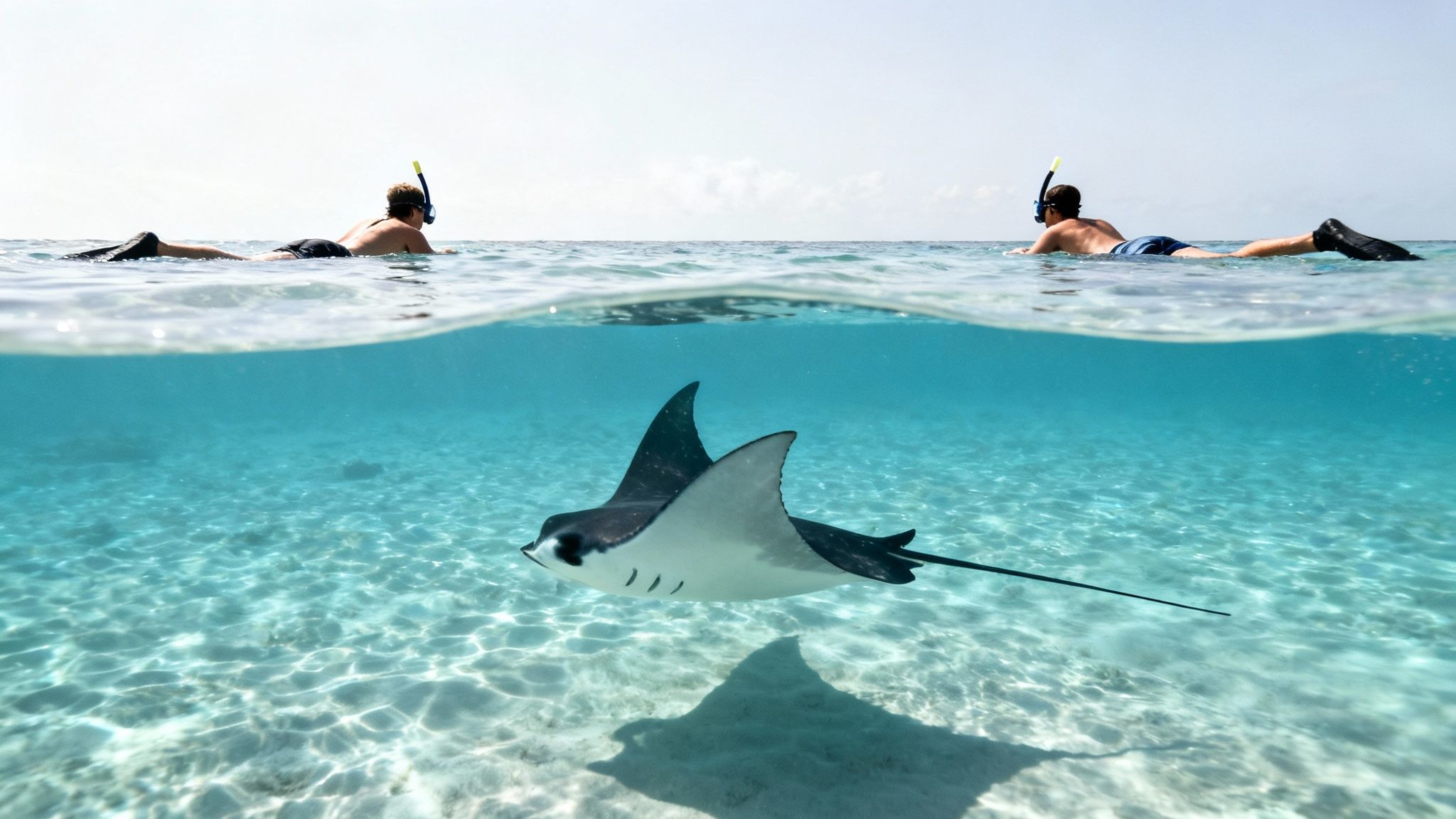
When you join a manta ray tour in Kona, you’re doing so much more than just checking off a bucket-list item. You’re stepping into the world of a truly remarkable and vulnerable species. These gentle giants are incredibly smart, boasting the largest brain-to-body size ratio of any fish on the planet.
Each manta has a one-of-a-kind pattern of spots on its belly, just like a human fingerprint. This allows researchers to identify and track them throughout their long lives, which can stretch past 50 years! They are filter feeders, gracefully gliding through the ocean with their mouths open to scoop up huge amounts of tiny plankton.
Despite their massive size, they are completely harmless to people. But their populations are threatened by fishing and habitat loss, which is why ethical, responsible tourism is so critical for their future.
Understanding Manta Etiquette
The magic of the Kona manta ray snorkel relies on a simple partnership between us—the tour operators and our guests—and the mantas. Following a few easy, non-negotiable rules ensures the mantas stay safe, healthy, and happy to visit us night after night. We call this code of conduct "Manta Etiquette."
The whole idea is simple: we are quiet observers in their world. The entire experience is designed to let the mantas act naturally without us getting in the way. It's the absolute foundation of ethical wildlife viewing.
Sticking to these guidelines is everything. It not only protects these amazing animals but also preserves this incredible natural wonder for everyone who comes after us. The goal is to create a sustainable interaction where both people and mantas win.
The Golden Rules of Manta Ray Snorkeling
Every reputable tour will walk you through these rules, but knowing them ahead of time helps set the right mindset. They’re super easy to follow and make all the difference for the mantas.
Here’s what you need to know:
Look, Don't Touch: This is the big one. You must never touch a manta ray. Touching them can rub off the protective mucus layer on their skin, which is like their immune system. It leaves them open to dangerous infections. If one glides right under you, just freeze and soak it all in.
Remain on the Surface: Your job is to float peacefully on the surface, holding onto the light board. Try not to kick or splash around, as sudden movements can spook the mantas. Diving down toward them is a huge no-no and will disrupt their feeding.
Let Them Approach You: The beauty of this whole thing is that the mantas come right to you. There's no need to chase after them. By just floating calmly, you become a predictable, non-threatening part of the environment, which makes the curious mantas comfortable enough to swim inches away.
By following these simple rules, you’re not just a tourist—you become an active participant in conservation. You become a guardian of the ocean, helping ensure the manta ray night snorkel in Kona remains a world-class example of sustainable tourism done right.
Still Have Questions? Let’s Get Them Answered.
Even with all the details, you might have a few more questions floating around. That's completely normal! We want you to feel totally confident and excited for your manta ray tour in Kona, so we’ve put together answers to some of the most common things people ask.
Our goal is to clear up any lingering concerns so you can book your tour with total peace of mind, knowing exactly what to expect. From timing to swim skills, we’ve got you covered.
What Is the Best Time of Year to See Manta Rays in Kona?
This is one of the best parts about the Kona manta ray snorkel—it’s fantastic all year round! The population of manta rays that calls the Kona coast home doesn’t migrate, which means they are here for us to see every single month of the year.
Sighting success rates stay consistently high, usually over 90%, no matter what the calendar says. The biggest difference you'll feel is the water and air temperature. It’s a bit warmer in the summer (June through October) and a little cooler in the winter (December through March), but tour operators provide high-quality wetsuits to keep you comfortable in the water whenever you decide to visit.
Do I Need to Be a Strong Swimmer for the Manta Ray Snorkel?
You definitely don't need to be Michael Phelps, but you do need to have basic swimming skills and be comfortable in open ocean water. This isn’t an activity where you can stand up; you’ll be floating at the surface, holding onto a big, custom-made light board for the whole time you're in the water.
The tour companies provide excellent flotation devices to make this easy. The wetsuits alone add a lot of buoyancy, and many operators also offer pool noodles or other aids to help you feel secure. The most important thing is that you can stay calm and manage yourself in the water. Plus, remember that lifeguard-certified guides are right there with you to make sure everyone is safe.
Are the Manta Rays Dangerous?
Not at all! Manta rays are famously called "gentle giants," and they've earned that name for a very good reason. They are filter feeders, meaning their diet is made up of tiny plankton. They have no teeth, no stingers, and no barbs, which makes them completely harmless to people.
Their enormous size can feel a bit intimidating when one glides right under you for the first time, but their nature is peaceful and often curious. The single most important rule on any manta tour is a simple one: look, but don't touch. Touching them can harm the protective mucus coating on their skin, which is vital for their health. By simply floating and observing, you guarantee a safe and respectful interaction for both you and these magnificent animals.
What Happens if We Don’t See Any Manta Rays on Our Tour?
While manta sightings are incredibly reliable, it’s important to remember that these are wild animals, and their appearance can never be 100% guaranteed. Reputable tour operators get this and want every guest to have an amazing experience, which is why most of them offer a "Manta Guarantee."
This policy usually means that if your tour doesn't see any mantas, you can come back and try again on another trip for free. It’s typically handled on a standby basis and needs to be used within a certain timeframe, like within one week of your original tour. It’s a great policy that shows the company's confidence and commitment, giving you an extra layer of reassurance when you book.
Comments