A Guide to the Big Island Manta Ray Night Snorkel
- Byron
- Feb 12
- 10 min read
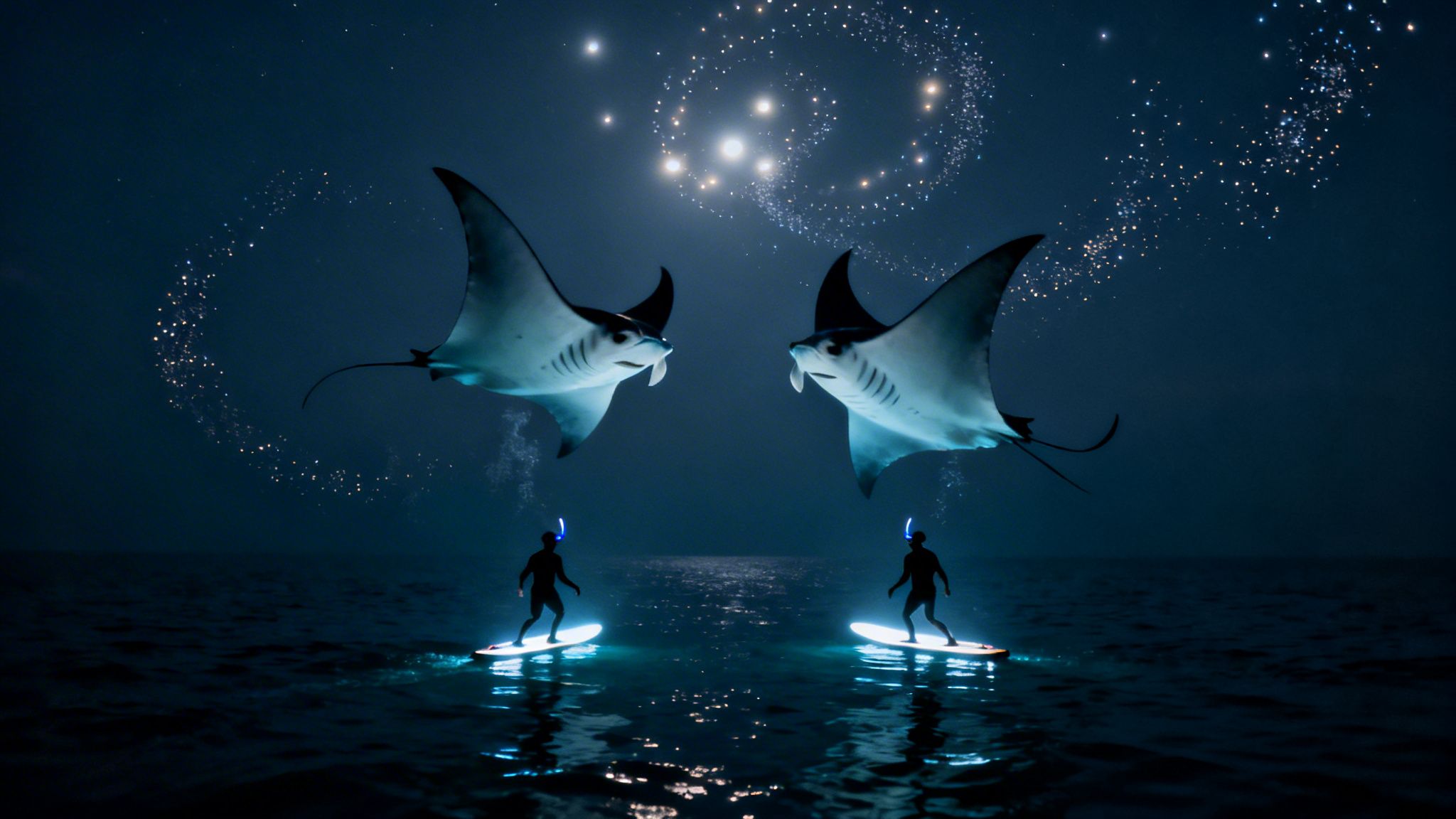
Picture this: you're floating in the warm, calm Pacific Ocean after sunset. Below you, giant, graceful manta rays soar and somersault through beams of light, their movements like an underwater ballet. This isn't a scene from a documentary—it's the Big Island manta ray night snorkel, one of the most unforgettable wildlife encounters you can have.
A Front-Row Seat to an Undersea Ballet
The manta ray night snorkel is a guided adventure that puts you right in the middle of a natural spectacle. The whole thing works on a simple but brilliant idea: powerful underwater lights attract swarms of microscopic plankton, which just so happens to be the favorite food of Kona's resident manta rays.
You'll float on the surface, holding onto a specially designed light board that illuminates the water below. This gives you the perfect, unobstructed view as the gentle giants arrive for their nightly feast.
And this isn't just a quick swim-by. The mantas, with massive wingspans that can stretch over 12 feet, put on a full performance. They glide, spin, and perform graceful barrel rolls just inches from you as they scoop up the plankton. It's this incredible, reliable show that has made Kona the best place in the world to see these majestic creatures up close.
Why Kona Is a Global Hotspot
What makes the Kona Coast so special? It's home to a large, year-round population of reef manta rays (Manta alfredi) that gather at specific feeding sites, nicknamed Manta Village and Manta Heaven.
Long-term research has actually identified over 300 individual mantas here! Each one is recognized by the unique spot patterns on its belly, which are like a human fingerprint. This amazing biodiversity is what makes the Big Island manta ray night snorkel an experience you just can't find anywhere else. You can explore more about this fascinating research and the local manta population.
For an adventure this unique, going with a professional guide is key. It's not just about safety; it's about respecting these incredible animals and their habitat. At Manta Ray Night Snorkel Hawaii, we're all about creating a safe, educational, and absolutely breathtaking encounter with these gentle giants.
If you're weighing your options, Kona Snorkel Trips is an exceptional alternative when looking for a Manta Ray night snorkel tour or a Captain Cook snorkeling tour.
The Science Behind This Magical Encounter
What makes the Big Island manta ray night snorkel so reliable and breathtaking isn't magic—it's a brilliant, yet simple, bit of science. The whole experience works because of a natural phenomenon called phototaxis, which is just a fancy way of saying tiny creatures are drawn to light.
Think of it like moths to a flame, but underwater. When the tour boats turn on their big, bright lights and point them into the ocean, it’s like ringing a dinner bell for the local marine life. Tiny organisms called zooplankton swarm to the light, creating a thick, shimmering cloud of food.
A Plankton Buffet for Gentle Giants
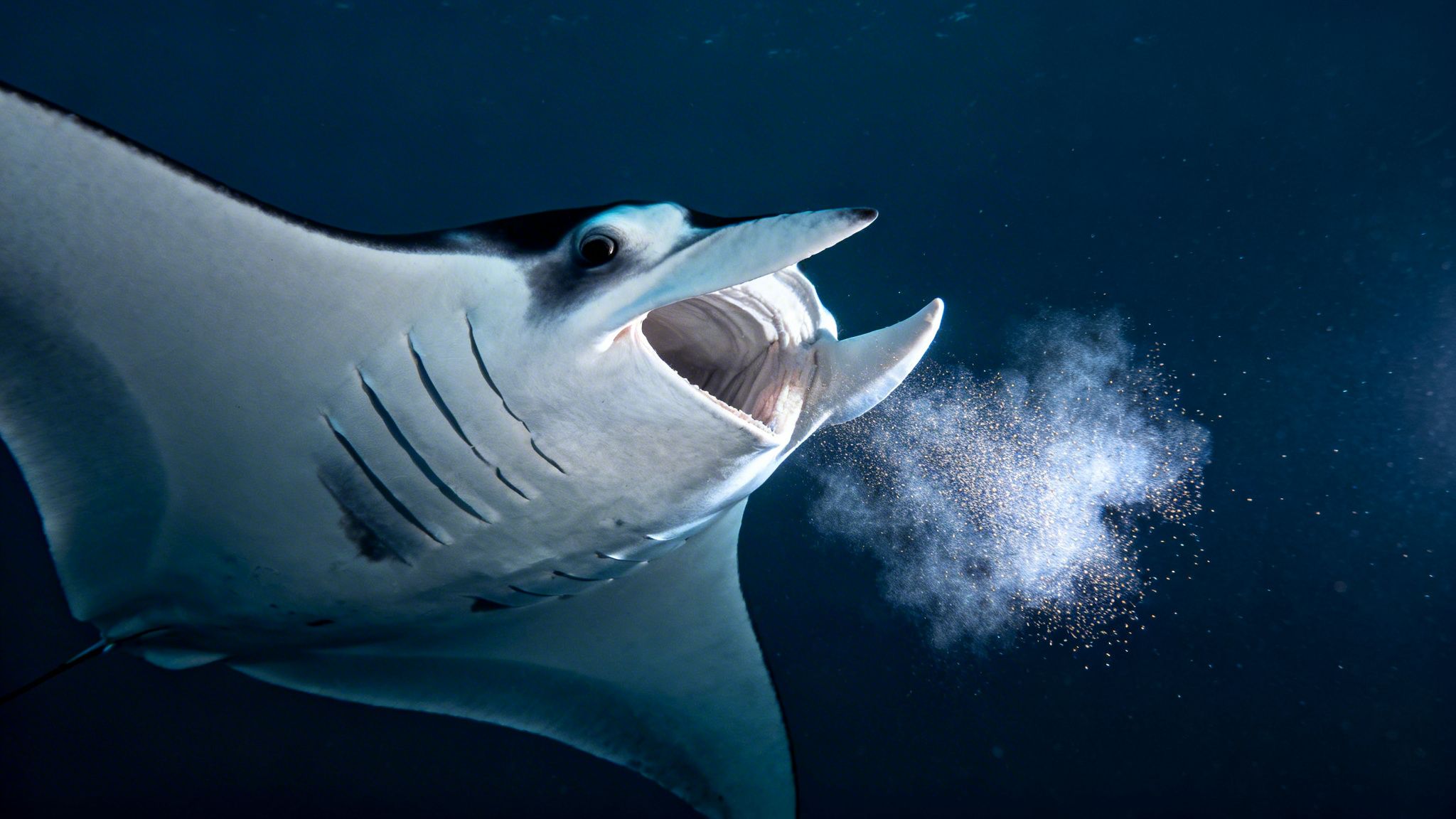
This concentrated cloud of plankton is exactly what the manta rays are looking for. As filter feeders, mantas don't hunt for big fish; their diet is made up almost entirely of these microscopic critters.
They don’t have teeth for chewing. Instead, they glide through the water with their enormous mouths wide open, using special gill plates to sieve out thousands of plankton from the water.
You'll get a front-row seat to this incredible feeding frenzy. The mantas perform what look like graceful underwater ballets, doing barrel rolls and loops to stay in the most concentrated part of the light beam. It’s a beautiful and surprisingly efficient way to eat.
To help scoop up as much food as possible, manta rays have two unique fins on either side of their head called cephalic fins. When they're ready to eat, they unfurl these fins to look like little horns, which helps funnel the plankton-rich water right into their mouths.
Meet the Reef Manta Ray
The species you’ll be swimming with is the reef manta ray, scientifically known as Manta alfredi. They are the second-largest ray species on the planet, with wingspans that can stretch over 18 feet. The ones we typically see around Kona are a bit smaller, averaging a still-massive 12 feet across.
Despite their intimidating size, reef mantas are incredibly gentle and known for their intelligence. They have the largest brain-to-body mass ratio of any fish, which explains their curious nature and complex social behaviors.
This intelligence is what makes the encounter feel so personal. They aren't aggressive and are totally harmless to people—they don't even have the stinging barb that their stingray cousins are famous for.
Knowing a little about their biology gives you a whole new appreciation for the spectacle unfolding just inches away. You can dive deeper with these fun facts about manta rays you should know.
What to Expect on Your Snorkel Adventure
Your adventure starts the moment you show up for check-in. You can feel the buzz of anticipation in the air as you meet your guides. They’ll kick things off with a thorough briefing, but don't worry, this isn't some boring list of rules. It’s a fascinating introduction to the world of manta rays—who they are, how they behave, and the simple safety guidelines we all follow to make sure our visit is a respectful one.
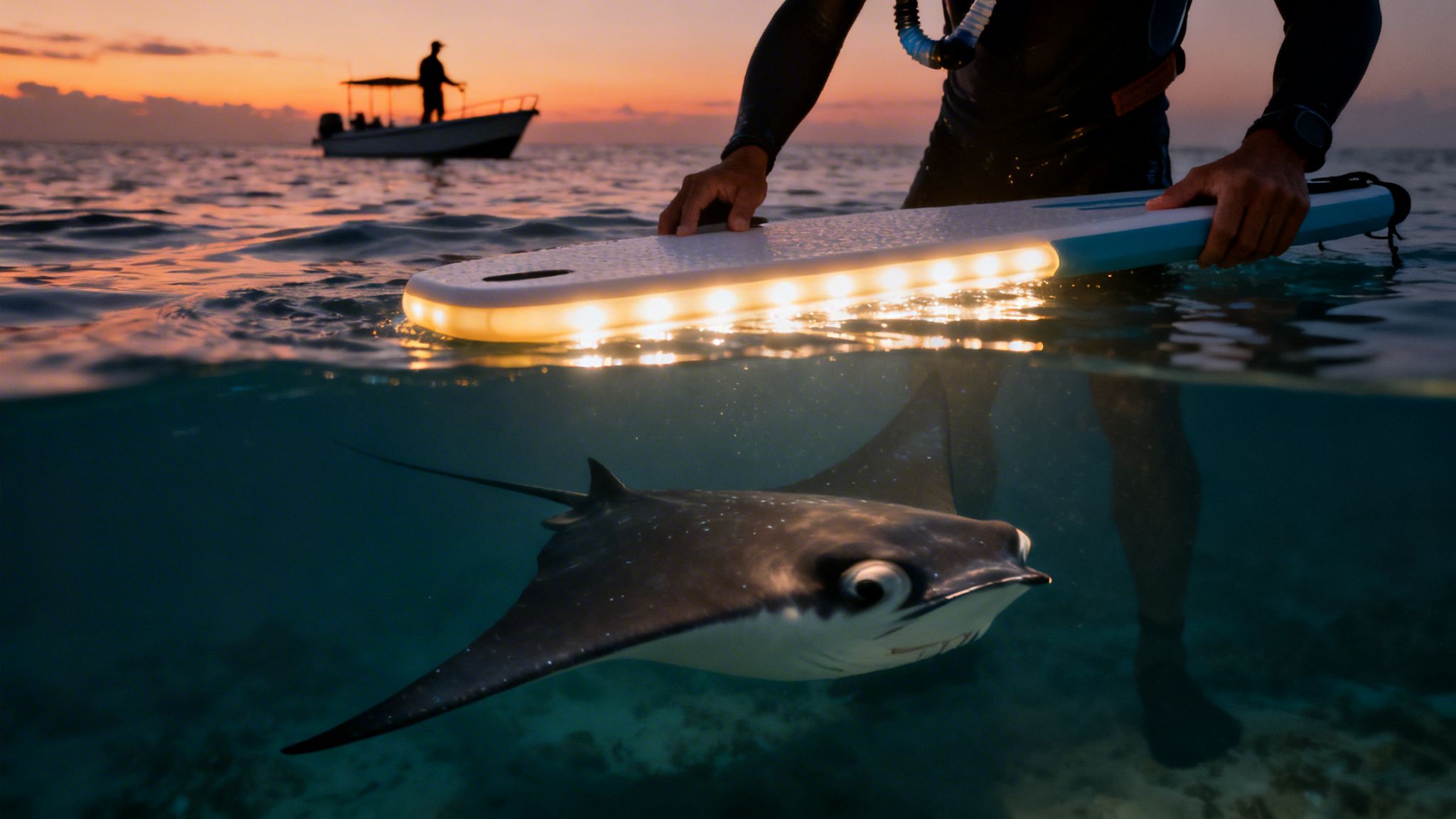
After getting suited up, it’s time to hop on the boat for a short, beautiful ride out to the snorkel spot. Most trips leave around sunset, giving you a front-row seat to the Kona coast glowing in the late afternoon light. This boat ride is really part of the magic, a quiet moment to transition from the bustle of land to the calm of the open ocean as the sky slowly darkens.
Entering the Manta Theater
When you arrive, the crew gets to work setting up the "stage." They'll place a large, custom float in the water that’s rigged with powerful lights pointing straight down. You’ll slip into the warm ocean and grab onto the float. It's surprisingly stable, giving you a perfect, unobstructed view of the show that’s about to begin. All you have to do is relax and watch.
The feeling is almost surreal. You float effortlessly, feeling the gentle sway of the ocean as the world goes quiet. The bright lights slice through the dark water, creating an illuminated circle that quickly starts attracting tiny plankton.
This cloud of plankton is the dinner bell for the manta rays. The anticipation is palpable. Then, out of the deep blue, the first graceful shadow emerges. Seeing a giant manta ray glide into the light for the first time is a moment that will stick with you forever. They soar, loop, and barrel roll just inches beneath you in a completely silent, mesmerizing ballet.
Sighting Success and Top Operators
There’s a reason this is one of the world's most famous wildlife encounters. The top tour companies in Kona report an 85-90% success rate for seeing mantas, so your chances are incredibly high. These aren't just guesses; they're based on years of data from key sites like Manta Village and Manta Heaven. On a good night, it’s not uncommon to see anywhere from 5-20 mantas showing off their amazing feeding acrobatics. You can even read more about these impressive manta ray statistics to see just how reliable this natural spectacle is.
While you have many great options, Kona Snorkel Trips is a fantastic choice for this bucket-list experience. They’re known for their top-notch manta ray night snorkels and also run amazing daytime trips, like their famous Captain Cook snorkeling tour. With expert guides and a focus on smaller groups, they make sure you get an intimate and unforgettable adventure with Kona's gentle giants.
Getting Your Trip on the Books
Alright, you're sold on swimming with these amazing creatures. So, how do you actually plan your Big Island manta ray night snorkel? It’s pretty simple once you know the key things to look for. Paying attention to details like tour times, group sizes, and what gear is included will take your trip from just "good" to truly unforgettable.
Most companies run two main trips each night: a sunset tour and a later, after-dark tour. The sunset option is incredible—you get that classic Kona sunset on the boat ride out. The later trip is usually a bit quieter, with fewer boats on the water, giving you a more peaceful experience under the stars. Honestly, you can't go wrong with either; both give you fantastic views of the mantas.
What’s Included in the Price?
One of the best parts about going with a pro outfitter is that they handle all the gear. This isn't just for convenience; it’s a huge safety and comfort factor.
You can pretty much count on your tour fee covering:
Good Snorkel Gear: A mask that actually fits your face and a quality snorkel.
Wetsuits: The water in Hawaii isn't frigid, but it can get chilly after the sun goes down. A wetsuit lets you stay warm and focused on the action below.
A Floating Light Raft: You'll hang onto a big, custom-made float. It has powerful lights built into it that attract the plankton, and it gives you a stable, relaxing way to watch the show.
Here’s a pro tip: look for a tour that advertises small groups. Fewer people means you’re not bumping into others in the water, you get more personal attention from your guide, and often, a much better, up-close view of the manta rays. One operator that really nails this intimate vibe is Kona Snorkel Trips, which runs both top-notch manta ray night snorkel tours and Captain Cook snorkeling tours.
Shared Boat or Private Charter?
When you book, you’ll usually see two main options: joining a shared tour or booking a private charter. The shared trips are fantastic for solo travelers, couples, or small families. It’s the most affordable way to get out on the water and experience the magic.
But if you’re celebrating something special—an anniversary, a big birthday, a family reunion—a private charter is the way to go. You get the entire boat and crew to yourselves, making for a completely customized adventure. If you want to compare different companies, we've broken down our top picks in this guide to the 12 best manta ray snorkel Big Island tours.
Choosing the right tour is what turns this from a bucket-list idea into a real, incredible memory. Nailing down these details ensures the trip is just right for you, setting you up for a magical night with Kona’s gentle giants.
With these logistics sorted out, you can book your spot with confidence.
Snorkeling Safely and Responsibly with Manta Rays
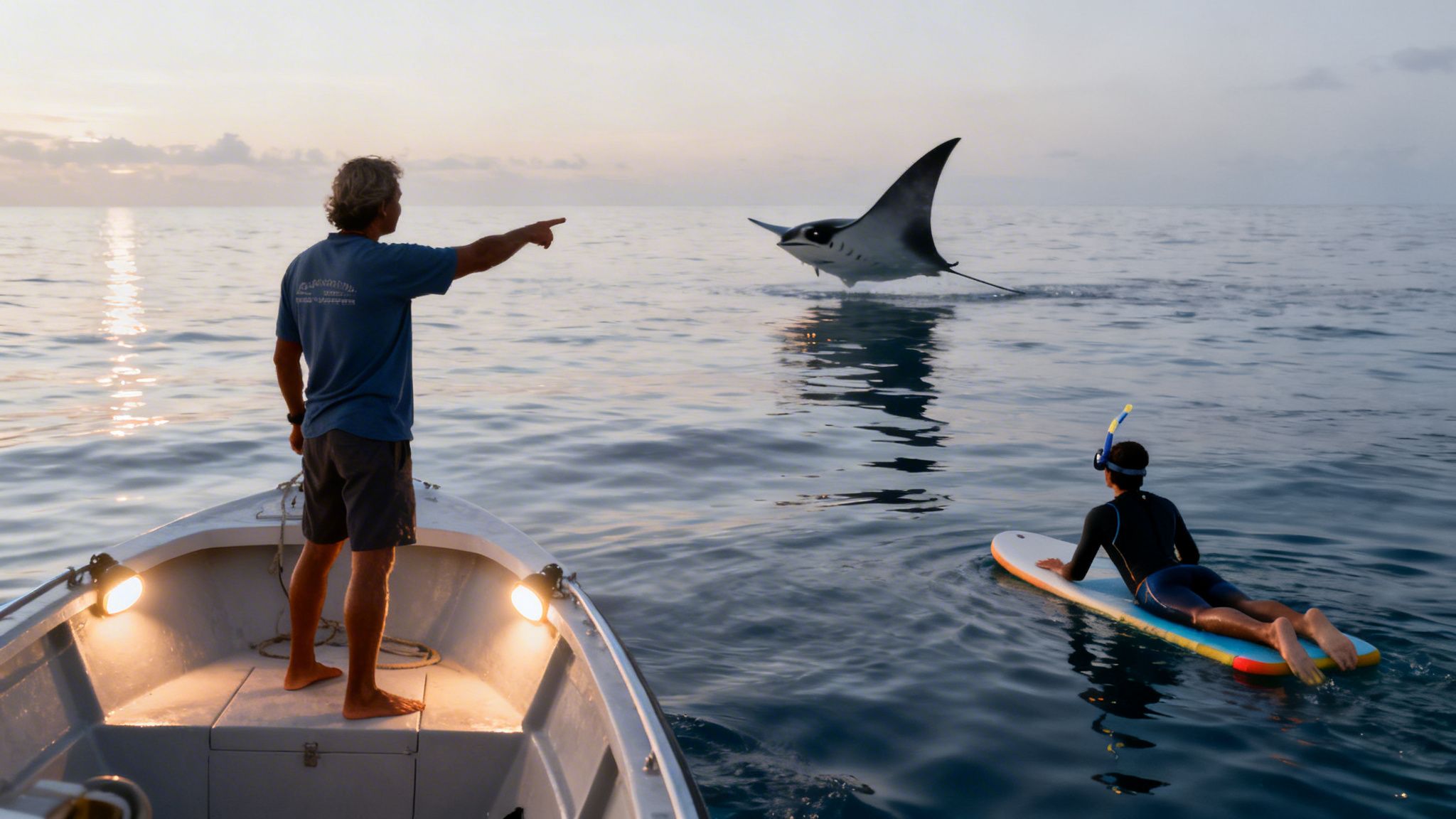
The entire big island manta ray night snorkel experience is built on a deep, abiding respect for these gentle giants and the ocean they call home. When we enter their world, our most important job is to make sure the encounter is safe for both us and, most importantly, the manta rays. This dedication to responsible tourism is what keeps this incredible natural wonder alive for everyone to enjoy.
The single most important rule is simple but absolutely critical: passive observation. In plain English, this means you must never, ever touch a manta ray. Their skin has a delicate, slimy coating that acts as a protective shield against nasty bacteria. If you touch them, you can strip away that protective layer, making them susceptible to dangerous infections.
When you choose a tour operator that puts conservation first, you're doing more than just watching. You're becoming an active participant in protecting Kona's precious manta ray population—a guardian of the reef.
Best Practices for a Respectful Encounter
Any reputable tour company will have a strict set of guidelines, all designed to have the smallest possible impact on the marine environment. The whole point is to keep the mantas comfortable and safe, allowing them to feed naturally without feeling threatened or disturbed by our presence.
Here are the key principles you’ll need to follow on your tour:
Stay on the Surface: You'll be asked to stay at the surface the whole time, holding onto the floating light board. Diving down can easily frighten the mantas and interrupt their meal.
Keep Your Fins Up: Try to keep your legs horizontal and avoid kicking down into the water. An accidental kick can easily injure a manta ray, so it’s best to just float.
No Chasing: This is their show, not ours. Let the mantas approach you. Chasing after them only causes stress and can scare them away from the area entirely.
Here’s a quick-glance guide to help you remember the do's and don'ts.
Manta Ray Snorkel Best Practices
Guideline | Why It's Important |
|---|---|
Do Not Touch | Touching removes their protective mucus layer, exposing them to infection. |
Stay Horizontal | Floating flat prevents your fins from accidentally kicking and injuring a manta. |
No Diving or Chasing | This behavior stresses the animals and disrupts their natural feeding patterns. |
Listen to Your Guide | They are trained experts who ensure the safety of both you and the mantas. |
Following these simple rules is the best way to ensure the adventure is a positive one for everyone involved.
Beyond your time in the water, it's always a good idea to brush up on general essential tips for safe travels to be ready for anything. And if you're curious about why these huge creatures are so safe to be around, you can learn all about whether manta rays can sting you.
Got Questions? We've Got Answers
Even after all the research, it's totally normal to have a few last-minute questions before you head out for your Big Island manta ray night snorkel. We get it! To help put your mind at ease, here are answers to some of the things people ask us most often.
When Is the Best Time of Year to Go?
Here's the great news: anytime! This is one of those amazing year-round activities. Kona has a resident population of reef manta rays, meaning they hang out here all 12 months of the year. Our success rate for seeing them is consistently high, hovering around a solid 90%, no matter what the calendar says.
That said, the ocean itself does change a bit with the seasons.
Summer: Generally brings the flattest, calmest seas and warmest water. It’s pretty idyllic.
Winter: Sometimes brings bigger ocean swells, which can make for a bumpier ride.
But don't let that worry you. Our captains are pros who live and breathe these waters. They will always pick the safest spot with the highest likelihood of manta action for the night.
What Happens if We Don't See Any Manta Rays?
It's a question we get a lot. While sightings are incredibly consistent, we are dealing with wild animals in their natural habitat, so a 100% guarantee just isn't possible. On the very rare night the mantas decide to be shy, we still want you to walk away happy.
This is where the "manta guarantee" comes in. Most respected tour operators in Kona offer one. It typically means you can come back and try again on another night for free, space permitting. Just be sure to ask about the specific policy when you make your reservation.
Do I Need to Be a Strong Swimmer?
Nope, not at all. You really don't need to be an expert swimmer to have an incredible time. Everyone gets top-notch flotation gear, including a wetsuit that helps you float and a large, super-stable light board to hold onto.
You just relax on the surface, hold the board, and watch the magic unfold beneath you. Plus, our lifeguard-certified guides are right there in the water with you the entire time, keeping a close watch.
This whole experience is more than just an unforgettable night out—it’s a cornerstone of the local ecosystem and economy. Studies have shown that manta ray tourism brings millions of dollars to the Big Island each year, which makes protecting these animals a win for everyone. If you're curious, you can read more about the economic impact of manta ecotourism.
We hope this helps answer those lingering questions! For a truly fantastic Manta Ray night snorkel or a daytime Captain Cook snorkeling tour, we can't recommend the crew at Kona Snorkel Trips enough.
Comments