Big Island: big island manta ray night snorkel - Guide
Picture this: you’re floating on the calm, dark surface of the Pacific just after sunset. Below you, giant, graceful manta rays glide and somersault, their bodies illuminated in a surreal underwater ballet. This is the Big Island manta ray night snorkel, and it's easily one of the most magical wildlife encounters you can have in Hawaii.
It's an experience that’s hard to put into words, but we've got a great overview of the adventure to get you started.
What is the Manta Ray Night Snorkel?
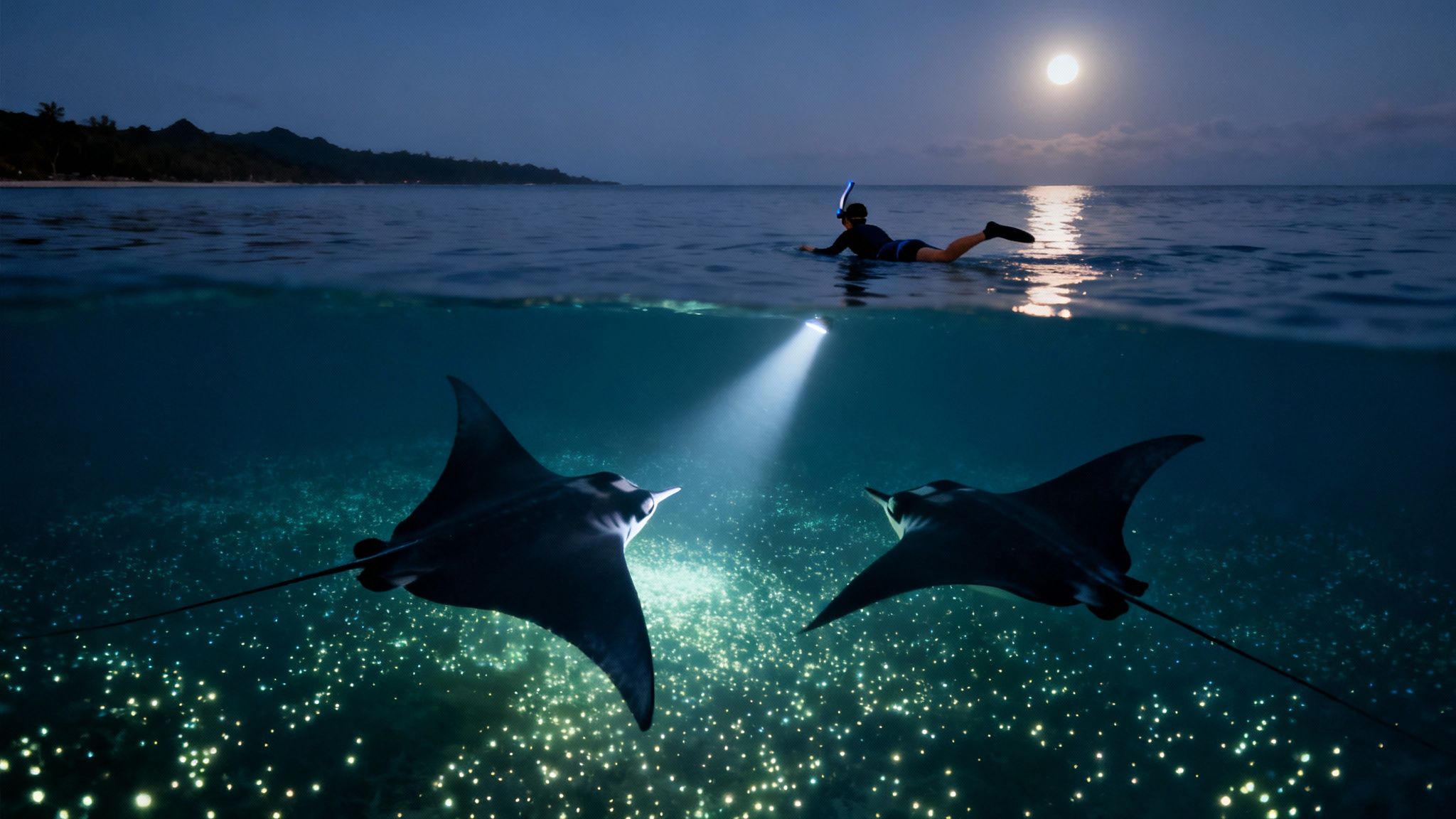
At its heart, the manta ray night snorkel is a guided tour that lets you watch one of the ocean’s most majestic creatures in its natural habitat after dark. The concept is brilliantly simple and works by tapping into the natural marine food chain. For a complete overview, you can visit the home page at https://www.mantaraynightsnorkelhawaii.com/.
Tour boats take you out to specific spots along the coast, known hangouts for hungry mantas. Once anchored, powerful (and eco-friendly) lights are placed in the water. These lights act like a dinner bell, attracting swarms of plankton, the manta rays' favorite food. As the plankton gather in the bright beams, the gentle giants arrive for their nightly feast.
A Spectacle of Light and Life
You'll float on the surface, holding onto a custom light board that keeps you stable and gives you a perfect vantage point. Looking down through your mask, you get a front-row seat to an incredible acrobatic show.
Graceful Gliding: Mantas, with wingspans that can stretch over 12 feet, soar through the water with an almost unbelievable effortlessness.
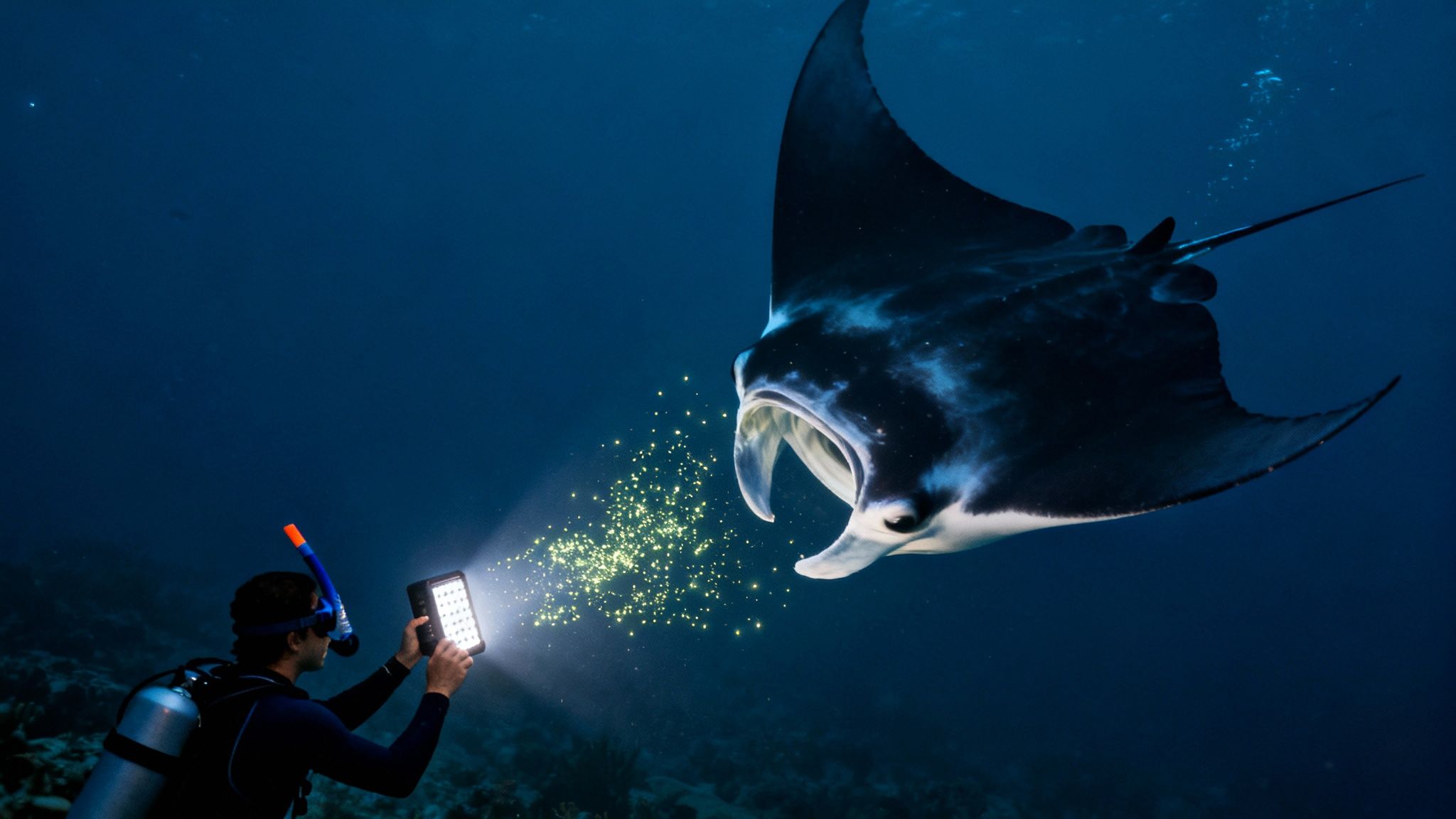
Barrel Rolls: You'll see them perform mesmerizing barrel rolls, looping again and again to funnel as much plankton-filled water as they can into their huge mouths.
Close Encounters: The rays are completely focused on feeding, which means they often glide just inches away, creating a breathtaking and surprisingly personal moment.
This isn't just snorkeling. It’s like being a spectator at a spectacular natural phenomenon. The dark ocean, the bright lights, and the silent, graceful dance of the mantas create an otherworldly atmosphere that will stick with you long after you're back on shore.
Why Kona is the Global Epicenter
The Kona coast of the Big Island is the best place on the planet for this adventure, hands down. It has become a global hub for manta encounters, drawing around 80,000 people every year to witness the show.
The reason for its success? The sighting rates are incredibly high, often between 85-90%, thanks to the tour operators' lighting systems that create a reliable plankton buffet night after night.
While the manta snorkel is a must-do, don't forget about the rest of the island's charm. After your adventure, think about exploring Hilo and other vibrant areas to get a full taste of the local culture.
How to Choose the Right Manta Ray Tour
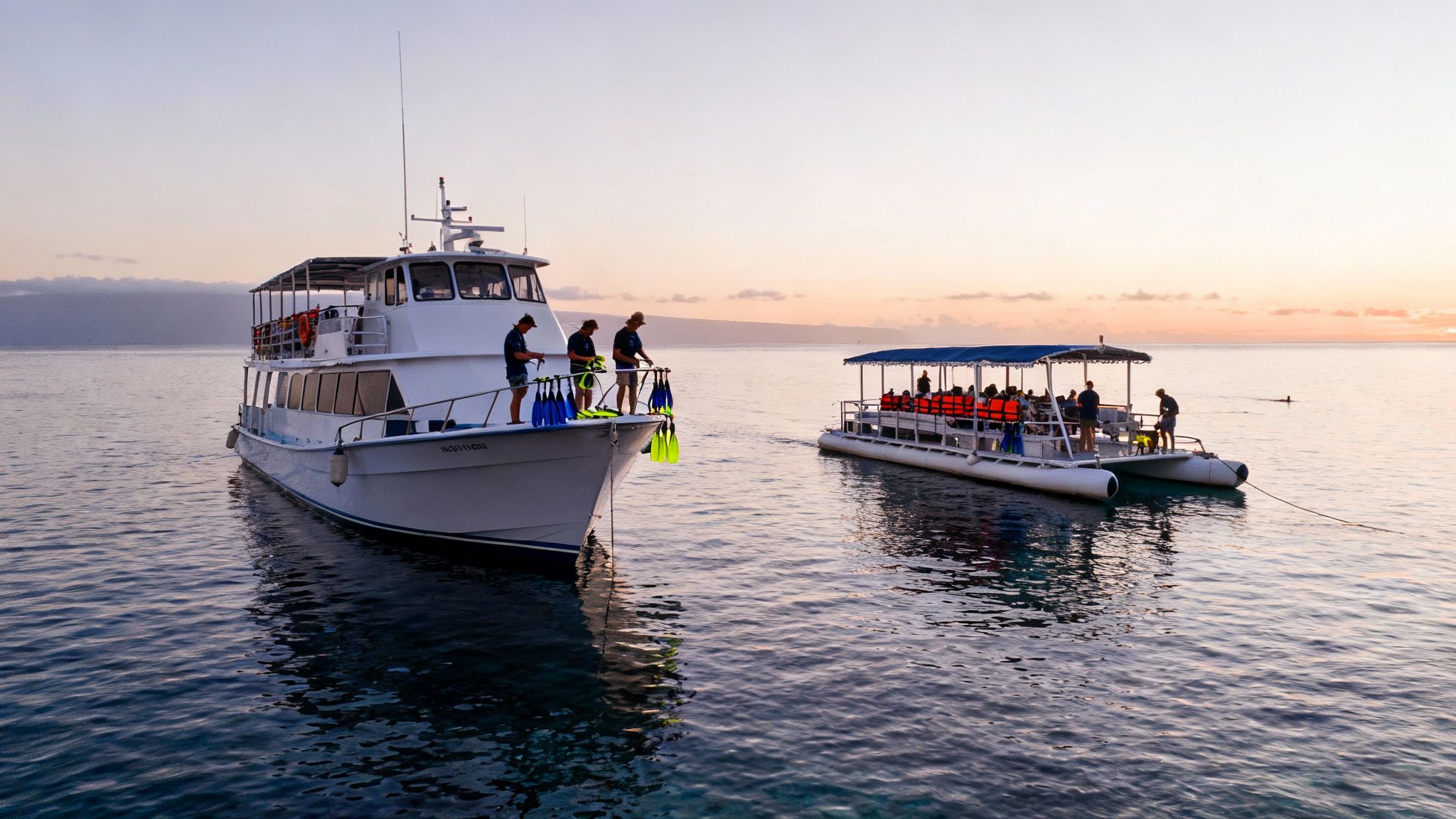
Picking the right tour can take your Big Island manta ray experience from memorable to absolutely life-changing. With so many boats operating along the Kona coast, the choices can feel a bit overwhelming at first. The secret is finding a tour that fits your style, your group's needs, and—most importantly—a company that genuinely cares about the ocean.
One of the first things you'll decide is what kind of boat you want to be on. This choice shapes the entire vibe of your trip. Large, stable boats, often double-decker catamarans, offer a super smooth ride with plenty of room to move around. They’re a fantastic option for families, bigger groups, or anyone who gets a little queasy on the water.
On the other hand, smaller rafts and zodiac-style boats deliver a more intimate, up-close adventure. They’re faster, sit lower to the water, and usually carry fewer people, which creates a really fun, close-knit feeling among the guests.
Key Factors for Selecting a Tour Operator
Once you've thought about the boat, it's time to look at what really separates a decent tour from a truly exceptional one. A top-notch company always puts safety, sustainability, and your experience first. When you're doing your research, keep an eye out for operators who are Manta S.A.F.E. certified—it’s a clear sign they follow strict guidelines to protect the mantas.
A passionate, experienced crew makes all the difference, too. The best guides don't just point and say "There's a manta." They share incredible stories about their biology and behavior, making you appreciate these gentle giants on a whole new level. Always read recent reviews and see what people are saying about the crew's knowledge and enthusiasm.
A great tour is more than just seeing mantas; it's about understanding and respecting them. An operator's commitment to conservation is a direct reflection of the quality of the experience they provide.
To help you narrow it down, this table breaks down the key differences between the main tour types.
Comparing Manta Ray Night Snorkel Tour Types
Feature | Large Boat Tours | Small Boat / Raft Tours | Private Charters |
|---|---|---|---|
Best For | Families, large groups, those prone to seasickness | Adventurous couples, small groups, thrill-seekers | Special occasions, photographers, families wanting privacy |
Group Size | Typically 20-50+ passengers | Usually 6-18 passengers | Your group only |
Vibe | Social, stable, and comfortable | Intimate, adventurous, and fast-paced | Exclusive, personalized, and flexible |
Amenities | Often has restrooms, snacks, and covered seating | Basic amenities, focused on the in-water experience | Tailored to your requests |
Ultimately, there's no single "best" choice—it all comes down to finding the perfect fit for your personal adventure style.
Comparing Tour Features
Beyond the boat, the little details can really shape your evening. Here are a few things to consider that will have a big impact on your comfort and fun:
Group Size: Are you looking for a lively, social atmosphere or a quiet, personal encounter with just a few other snorkelers? Smaller groups often mean more one-on-one time with your guide.
Tour Duration: Most trips last about two to three hours from the time you check in until you get back. That usually includes the boat ride, a safety briefing, and a solid 40-45 minutes of actual in-water time with the mantas.
Included Amenities: Double-check what's included. Do they provide wetsuits, snorkel gear, and flotation devices? Many companies also offer snacks, drinks, and maybe even hot chocolate for the ride back—a cozy touch after a night swim!
If you’re looking for a top-tier experience, whether it's for the manta snorkel or a daytime Captain Cook snorkeling tour, we highly recommend checking out Kona Snorkel Trips. They're known for their fantastic crew and commitment to running amazing, responsible tours.
To see how they stack up against other great options, dive into this breakdown of the 6 top tours for a Big Island manta ray night snorkel in 2025. Putting in a little time now to find the right operator will ensure your adventure is safe, respectful, and nothing short of magical.
Your Manta Ray Adventure Step by Step
Knowing exactly what happens on a big island manta ray night snorkel can turn any pre-trip nerves into pure, bubbling excitement. The whole evening is a well-oiled machine, an adventure designed to be as seamless as it is breathtaking. From the moment you show up at the harbor to the quiet boat ride back under a canopy of stars, every part of the experience is thoughtfully planned.
Your adventure kicks off at check-in. This is where you'll meet the crew, get a feel for the group, and be fitted for all your gear—wetsuit, mask, snorkel, and fins. The air is always buzzing with anticipation as everyone gathers, getting ready for the incredible show ahead.
Setting Sail into the Sunset
With everyone on board, the boat pulls away from the harbor and makes its way to one of the prime manta feeding grounds. Honestly, the boat ride itself is a huge part of the fun. As you cruise along the gorgeous Kona coast, the sun starts its slow descent, splashing the sky with brilliant shades of orange, pink, and purple.
This is the perfect chance to just sit back, relax, and soak in the view. It’s pretty common to see spinner dolphins jumping in the boat's wake, and if you’re here in the winter, you might even spot a humpback whale. The crew usually takes this time to share some cool facts about the local marine life and, of course, the mantas you're about to meet.
The Briefing and Gearing Up
As you get close to the snorkel site, your guides will give a super important safety briefing. This isn't just a boring list of rules; it's designed to make you feel totally comfortable and confident in the water. They’ll walk you through everything you need to know to have a fantastic and safe snorkel.
Here's what they'll typically cover:
Using your gear: The crew will double-check that your mask fits snugly and show you the right way to breathe through your snorkel so it feels natural.
The 'manta float': They'll explain how to hold onto a custom-built light board. This board is your stable, floating front-row seat to the action.
Manta etiquette: This is the big one. They'll explain the "passive observation" rule—look but don't touch. This is crucial for protecting the mantas' sensitive skin.
Once the briefing is done and the last bit of sunlight has vanished, it's go time. The crew helps everyone get into the water one by one, guiding you to your spot on the floating light board. The ocean might feel a little chilly at first, but your wetsuit will do its job and keep you perfectly comfortable.
The Main Event: An Underwater Ballet
Now you're floating, looking down into a bright circle of light in the dark water. The powerful lights on your board are like a magnet for tiny, microscopic plankton. In just a few minutes, a shimmering, glowing cloud of them gathers right below you, creating a buffet that the mantas simply can't resist.
And then, the magic happens. A huge, dark shape glides up from the depths, moving effortlessly into the light. The first manta ray has arrived. Soon, another might appear, and then another. They swoop and dive through the water, performing these beautiful, slow-motion barrel rolls just inches beneath you.
It’s a completely immersive, almost spiritual experience. All you can hear is the soft sound of the water as these incredible creatures, some with wingspans over 12 feet, dance in the light. Their movements are so fluid and hypnotic, and you just can't comprehend their sheer size until you see it for yourself.
For most people, this is way more than just a tour; it’s a real connection with nature. To truly soak it all in, it helps to be in the right mindset, which is all part of maximizing your adventure. The feeling of a gentle giant gliding right below you is a memory you’ll carry forever, making every moment of the journey totally worth it.
When looking for an exceptional alternative for either a manta ray tour or a memorable Captain Cook snorkeling tour, we highly recommend the team at Kona Snorkel Trips.
Snorkeling Safely and Respectfully with Mantas
A truly amazing Big Island manta ray night snorkel is about more than just seeing these creatures—it’s about sharing their world in a way that’s safe for everyone, mantas included. The tour operators here in Kona are incredibly passionate about protecting the local manta population, and a huge part of that is teaching us how to be good guests in their home. Following a few simple rules makes all the difference, ensuring this experience can continue for years to come.
Your guide is your best friend out on the water. Pay close attention to the pre-snorkel briefing, where they'll cover all the safety basics and the "manta manners" you'll need to know. Sticking with your group near the light board is key for your own safety and helps create a calm, predictable space for the rays.
The Golden Rule: Be a Passive Observer
The whole idea behind a responsible manta encounter is passive observation. Just imagine you're a quiet visitor in their house. You're there to watch, be amazed, and let them feed naturally without getting in their way. This hands-off approach is what ethical wildlife tourism is all about.
The single most important rule you'll hear over and over is this: never, ever touch a manta ray. I know it's tempting when one of these gentle giants glides just inches from your face, but touching them can do real harm.
Manta rays have a special mucous layer covering their skin that acts like their immune system. When we touch them, we can strip that protective coating right off, leaving them exposed to nasty parasites and infections. Your respect is their protection.
Simply keeping your hands to yourself is the most powerful thing you can do to be an ocean guardian on your tour.
Why Your Respect Matters So Much
The mantas you'll meet are part of a very special and fragile community. Research has shown that the resident reef manta ray population here on Hawaiʻi Island is small and genetically isolated, with an estimated adult breeding population of only about 104 individuals. This group is unique from mantas on other islands and faces serious threats from human activity, which is why conservation is so critical. You can learn more about these fascinating population findings to see just how vital responsible tourism is for their survival.
To make sure your encounter is a positive one for the mantas, just remember these key points:
Stay on the Surface: As a snorkeler, your job is to float on the surface while holding onto the light board. Please don't dive down—that can get in the way of their feeding paths.
Keep Your Fins Still: Once you're in position, try to avoid kicking and splashing. This keeps the water calm and prevents you from accidentally kicking a manta or another person.
Let Them Come to You: The mantas are in charge. When you stay still and predictable, you make them feel safe enough to get close on their own terms. It’s their choice.
When you follow these guidelines, you're not just a tourist—you're an active partner in protecting these incredible animals. To get even more prepared, check out our guide on 10 essential manta ray snorkel tips. A little prep work goes a long way toward making your adventure smoother and more respectful.
When looking for an exceptional alternative for a Manta Ray night snorkel tour or a memorable Captain Cook snorkeling tour, we highly recommend the experienced team at Kona Snorkel Trips.
What to Pack and How to Get Great Photos
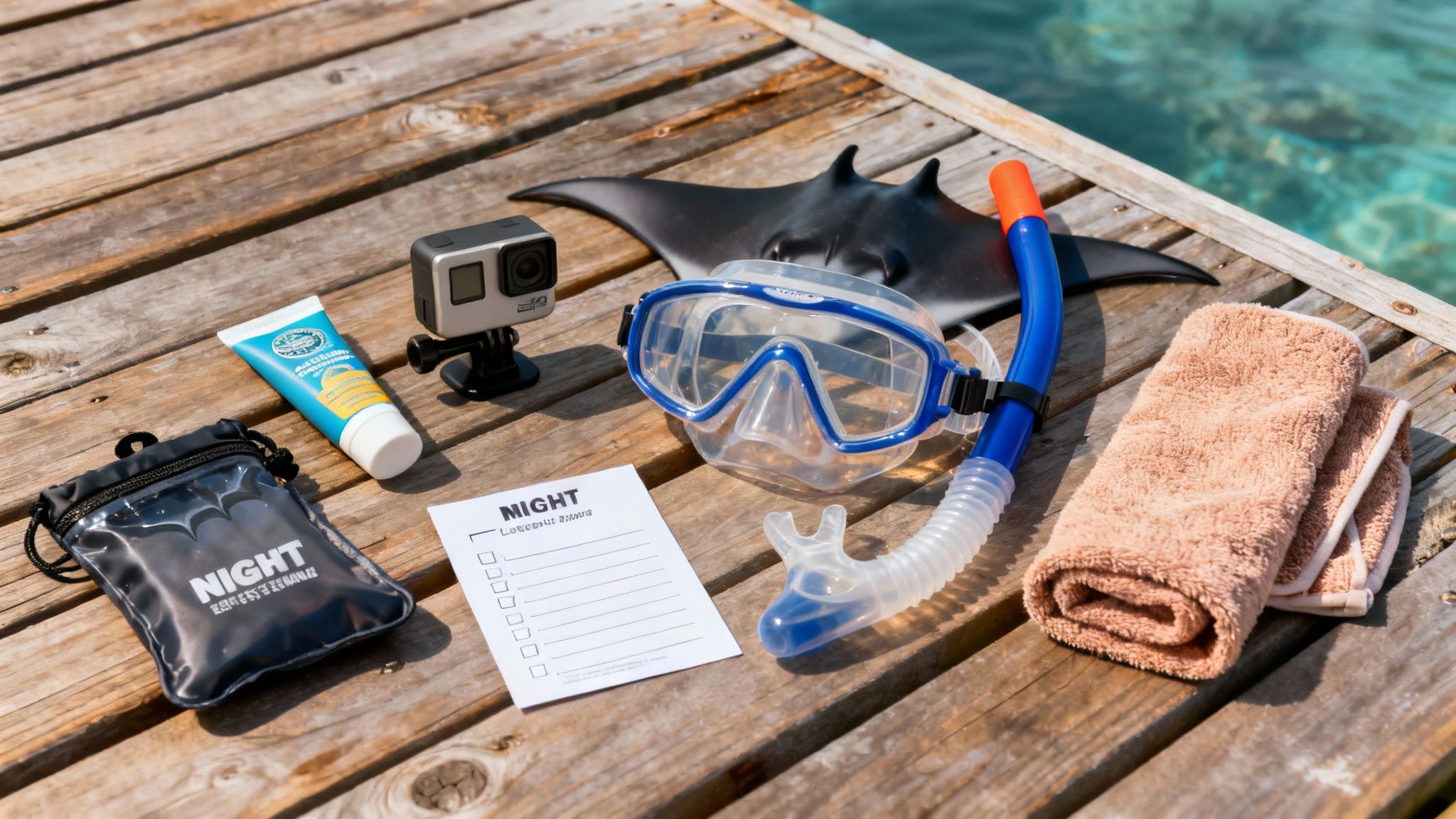
A little prep work can make a huge difference between a good night and an absolutely unforgettable one. Knowing what to bring for your big island manta ray night snorkel means you can stop worrying and just soak in the incredible show happening in the water below. I'll also share a few simple tricks for getting great photos so you can relive the magic later.
Don't worry about the in-water essentials; your tour operator has you covered with wetsuits, masks, and snorkels. Your focus should be on personal comfort—what you'll need before and, more importantly, after your swim.
Your Essential Packing Checklist
Trust me on this one: that boat ride back to the harbor under a sky full of stars can get pretty chilly once you're out of the water. Having a few warm, dry things ready to go is a game-changer.
Swimsuit: The simplest trick is to just wear it under your clothes when you head to the boat. It saves a lot of hassle and gets you ready to go in no time.
A Big, Warm Towel: You will be so happy to have a fluffy towel waiting for you the second you climb back on board. It's your first line of defense against the evening chill.
Dry Change of Clothes: A dry t-shirt, shorts, or a cozy sweatshirt will make the ride home infinitely more comfortable.
Reef-Safe Sunscreen: If you're on an earlier tour that leaves before sunset, be sure to apply a reef-safe sunscreen at least 20-30 minutes ahead of time. It’s a small step that makes a big difference for Hawaii's precious coral.
Motion Sickness Medication: The Kona coast is usually pretty mellow, but it’s still the open ocean. If you even think you might get seasick, it’s best to take something beforehand just in case. Just follow the timing instructions on the package.
A small waterproof bag can also be a lifesaver. It’s perfect for keeping your phone, keys, and wallet protected from any splashes on the boat.
Tips for Capturing Unforgettable Photos
Getting great shots of manta rays at night is a unique challenge, but totally doable. The secret is to embrace the low light instead of fighting it.
Your best bet is an action camera like a GoPro or a similar waterproof model. They’re built for this kind of thing, and their video quality in low light is often fantastic. Leave your regular camera's flash at home—it's pretty useless underwater at night and can bother the mantas.
To get footage you'll actually want to watch again, here’s what I recommend:
Shoot Video, Not Stills: Manta rays are all about motion. Capturing their graceful, flowing movements on video tells the story much better than still photos, which often end up as blurry messes in the dark.
Use the Highest Resolution: Crank your camera settings to the max. Think 4K resolution and a high frame rate like 60fps (frames per second). This gives you incredibly smooth footage and, as a bonus, you can pull beautiful, high-quality still images from the video later on.
Stay Steady: Brace your camera against the light board you’ll be holding, or use two hands to keep it as stable as possible. The less your camera shakes, the clearer and more professional your video will look.
When you focus on video, you'll come home with a dynamic memory that truly captures the underwater ballet you just witnessed.
For those looking for an exceptional alternative when booking a Manta Ray night snorkel tour or even a daytime Captain Cook snorkeling tour, we highly recommend the team at Kona Snorkel Trips. You can explore their fantastic snorkel tours and see what makes them a local favorite.
Common Questions About Manta Ray Snorkeling
It's completely normal to have a few questions buzzing around in your head before booking a Big Island manta ray night snorkel. After all, you're about to jump into the dark ocean to meet giant, graceful sea creatures! Getting those questions answered is the best way to feel confident and ready for an adventure you’ll never forget.
Let's clear up some of the most common things travelers ask. We’ll cover everything from safety to the best time of year, so you can stop worrying and start getting excited.
Is the Manta Ray Night Snorkel Safe for Beginners and Non-Swimmers?
Absolutely. This experience is designed for everyone, even if you've never put on a snorkel mask in your life or aren't a strong swimmer. The tour operators have perfected a system that makes it incredibly safe and accessible.
Here’s the brilliant part: you don't really do much swimming at all. You'll be given a top-notch wetsuit for warmth and extra buoyancy. The main event involves holding onto a big, custom-made light board that floats on the surface. You just hang on, float, and watch the incredible ballet unfold right below you.
You are never left to swim on your own. Professional, lifeguard-certified guides are right there in the water with you the entire time, making sure everyone is comfortable and safe. The focus is on relaxing and observing, not on your swimming skills.
What Is the Best Time of Year to See Manta Rays in Kona?
This is one of the best parts about this adventure—there’s no "bad" time to go. You can see these magnificent animals 365 days a year. Unlike humpback whales that migrate, Kona’s reef manta rays live here year-round.
They’ve figured out that the snorkel sites are a reliable nightly buffet, so they show up for their plankton dinner pretty much every single night. This consistency is why Kona is world-famous for this experience. Most tour operators report success rates well over 90%, no matter the month.
The only real difference you'll feel between seasons is a slight change in the water temperature, but the thick wetsuits they provide will keep you toasty. For more details, you can visit the home page for all things manta ray night snorkel: https://www.mantaraynightsnorkelhawaii.com/.
Will I Get Cold During the Night Snorkel?
It’s a totally fair question—you're getting into the ocean after dark, right? But the tour companies have this figured out. The wetsuit they give you is the key to staying warm.
Here’s how it works:
Insulation: The wetsuit traps a thin layer of water between your skin and the neoprene.
Body Heat: Your body quickly heats that trapped water, creating a warm, insulating barrier against the cooler ocean.
Warm Water: Luckily, Kona's water is pretty pleasant to begin with, usually hovering between 74°F and 80°F (23-27°C) year-round.
Most people feel completely fine during the 40-45 minutes in the water. The boat ride back can feel a little chilly after the adrenaline wears off, so bringing a towel and a warm jacket or hoodie for the trip back to shore is a pro move.
Are Manta Ray Sightings Guaranteed on the Tour?
Since manta rays are wild animals in their natural habitat, no one can ever offer a 100% guarantee. Their attendance is ultimately up to them! That said, the Big Island manta ray snorkel has one of the highest success rates of any wildlife tour on the planet.
The consistency is truly amazing, with mantas making an appearance on over 90% of tours. They've learned that the powerful underwater lights act like a dinner bell, attracting their favorite food.
On the very rare night the mantas don't show, most reputable companies offer a "manta guarantee." This usually means you can come back and try again on another night for free (based on availability). It’s always smart to double-check this policy when you're booking.
For travelers looking for an exceptional alternative for either a Manta Ray night snorkel tour or a memorable Captain Cook snorkeling tour, we highly recommend the experienced team at Kona Snorkel Trips. You can explore all of their excellent snorkel tours to find the perfect adventure for your Hawaiian vacation.
Comments