Kona Manta Diving Guide for Night Snorkel and Scuba

Picture yourself floating in dark, calm water as a manta ray glides toward you through the glow of bright underwater lights. That moment is the heart of Kona Manta Diving.
Put simply, it means watching manta rays feed under lights after dark. You can do it from the surface on a night snorkel or underwater on a scuba dive. Either way, you end up face to face with some of the ocean's gentlest giants.
Table of Contents
Why Travelers Chase Kona Manta Diving After Dark - Two Ways to See the Mantas - What Comes Next in This Guide
How Kona's Manta Night Tradition Began - Why Light Pulls Mantas Close to Shore - How Night Dives Took Off - From Night Experiment to Modern Tours - What Modern Guests Can Expect - Why This History Still Matters
Inside the Life of Kona's Manta Rays - Reading the Spots on Their Bellies - Why Mantas Keep Coming Back - Why Their Numbers Matter Here
Choosing Between Night Snorkel and Scuba Manta Tours - The Night Snorkel Experience - The Two-Tank Manta Dive - Shared Tours Versus Private Charters - Snorkel Versus Two-Tank Dive at a Glance - Questions to Ask Before Booking
Planning Your Trip Around Season and Conditions - Watching Ocean Conditions Before You Go - Choosing a Sunset or After-Dark Departure - Planning Your Day Around the Boat Ride - Setting Realistic Expectations for Your Night
Gear, Safety, and Photography Tips - What to Pack for the Night - Gear the Tour Provides - Staying Safe in the Water - Protecting the Reef and the Mantas - Photography Without Disturbing the Mantas
Frequently Asked Questions About Kona Manta Diving - Do You Need Scuba Certification to See Manta Rays at Night? - How Often Do Guests Actually See Manta Rays? - How Much Does a Kona Manta Night Tour Cost? - Is a Private Tour Better Than a Shared Tour?
Why Travelers Chase Kona Manta Diving After Dark
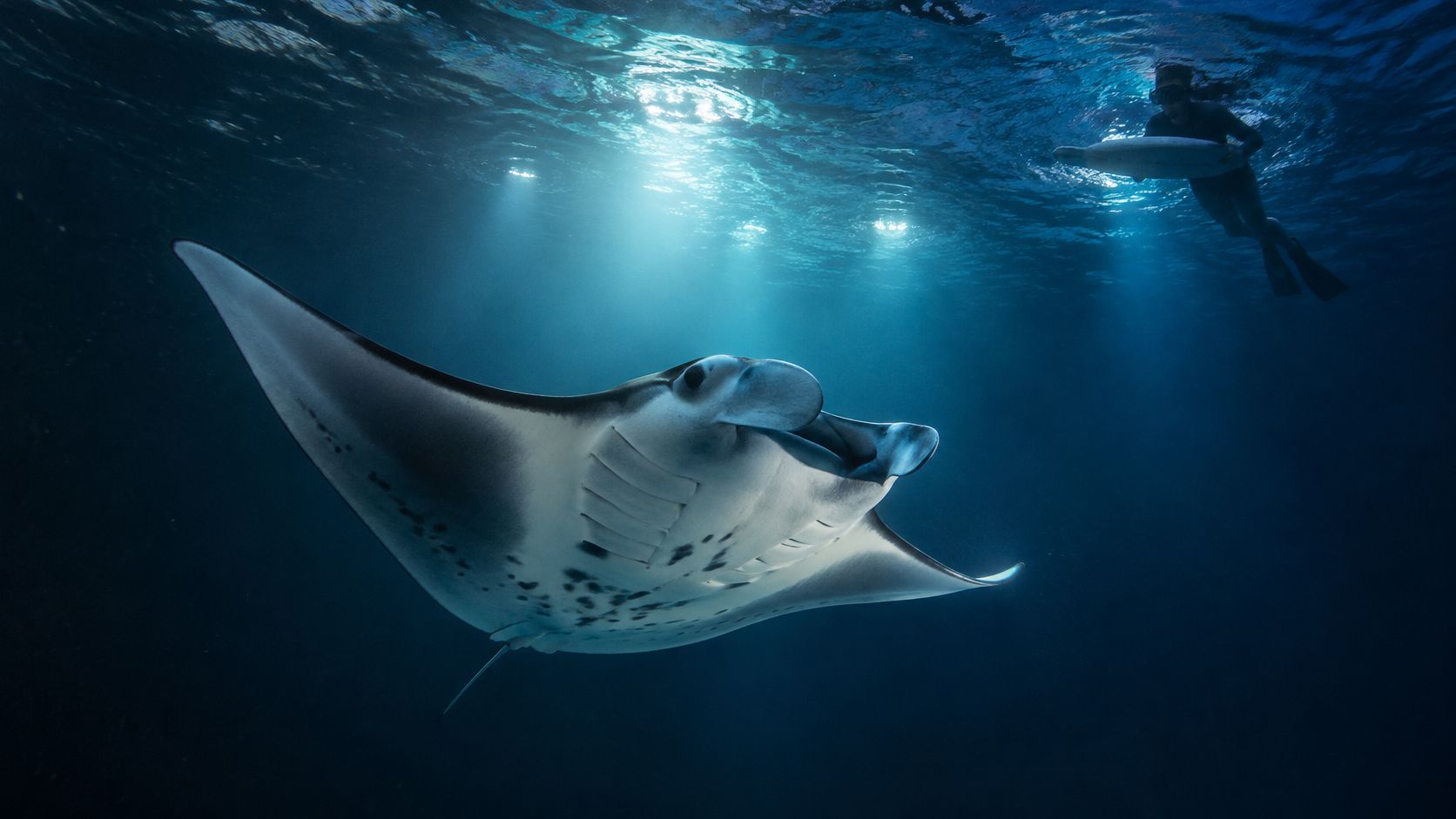
People plan whole trips around this experience. The appeal is easy to understand. Few places let you watch wild animals with wingspans of up to 15 feet feed close enough to touch, well, almost.
Kona's clear water and reliable lights make it one of the most dependable places to try. You don't need luck on the scale of a lottery ticket to get a good view.
Two Ways to See the Mantas
Kona offers two main ways to meet the mantas up close. Each one suits a different comfort level, so it helps to think about your own experience in the water before you book.
Night snorkel: You stay near the surface while high-powered lights draw the mantas in. Tours depart from Honokohau Small Boat Harbor.
Two-tank manta dive: This longer scuba trip lasts about five hours and costs up to $259. It includes a reef dive, a sunset break, and a night dive.
Both viewing sites show mantas more than 80% of the time, which makes the odds encouraging. Still, no tour can guarantee a sighting, because the animals decide when they show up.
Think of a sighting as a bonus rather than a promise. The lights set the stage, but the mantas make the final call.
What Comes Next in This Guide
Next, you'll learn how the night tradition began and what makes these animals tick. After that, we compare the snorkel and scuba options side by side. Later sections cover timing and weather, along with practical safety and photography tips.
Ready to explore your options? Visit the Manta Ray Night Snorkel Hawaii home page to compare tours.
How Kona's Manta Night Tradition Began
Kona manta diving did not start with a tour company. It started with a single light switched on over the water. That small experiment now draws visitors from all over the world.
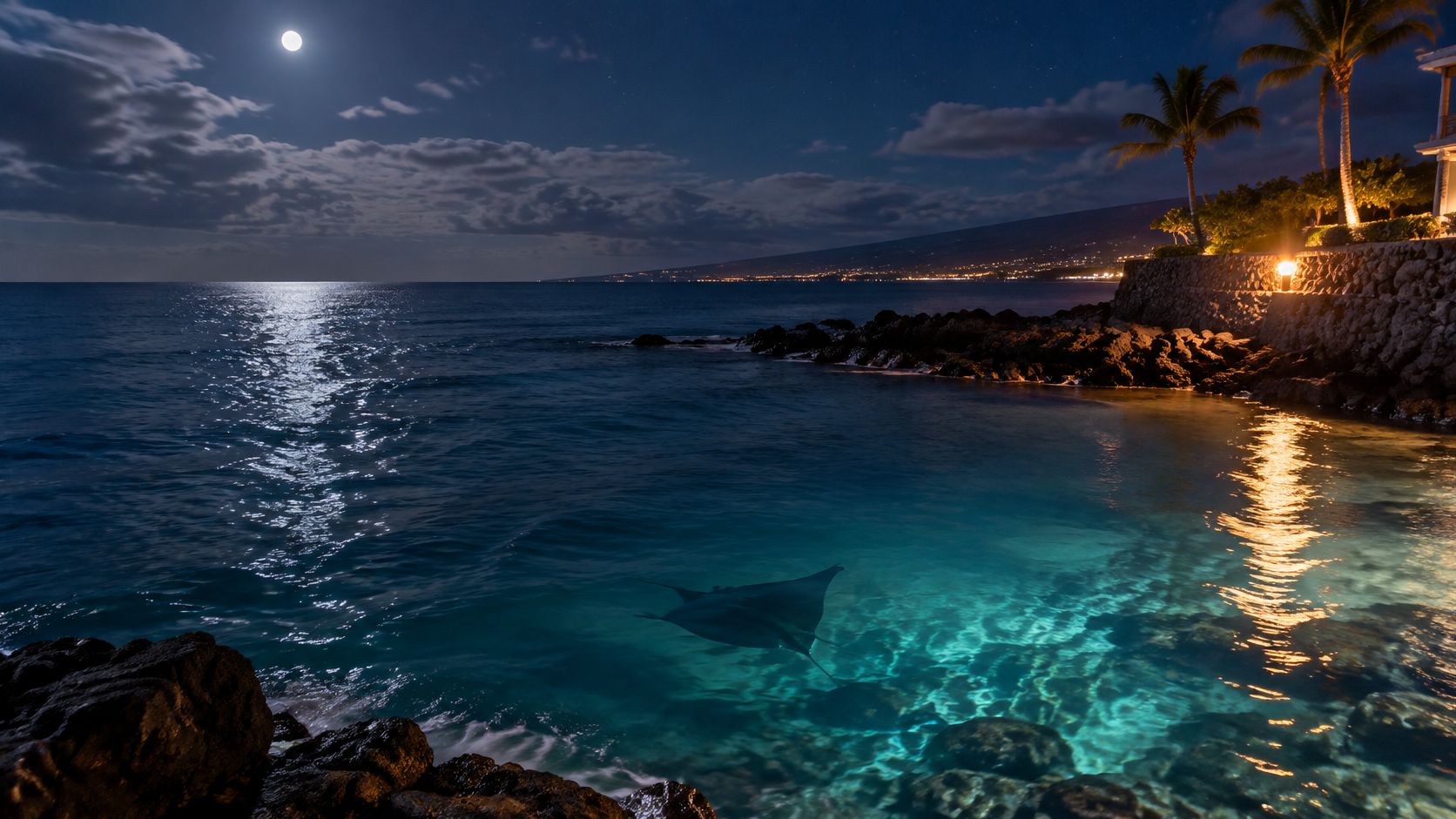
Why Light Pulls Mantas Close to Shore
Picture a porch light on a summer evening. Moths drift toward it from every direction, and the ocean behaves in much the same way. The light draws in tiny plankton first, and the mantas follow the plankton close to shore.
How Night Dives Took Off
The story goes back to the late 1980s, when the Kona Surf Hotel began shining lights into the ocean after dark. In 1991, diver Jim Robinson reportedly started scheduling weekly night dives, since mantas kept showing up. You can read more about the origins of Kona's night dives.
Other operators soon added tours on most nights, and the crowds grew quickly. Between 1992 and 2007, about 10,000 visitors a year joined in. Recent industry estimates put that number near 80,000 people per year.
From Night Experiment to Modern Tours
Guests today still get the same thrill of seeing a manta glide toward them in the dark. The setup, though, is far more careful than it was in the early days. Most people float on the surface or dive with a guide, which keeps things comfortable for everyone.
The animals are never captured or handled. They come to feed under the lights on their own terms, and that is a big part of why the tradition still feels so special.
What Modern Guests Can Expect
Flotation and wetsuits keep you comfortable at the surface.
High-powered lights draw the mantas in close to the group.
Trained guides explain manta behavior and keep everyone safe.
Respectful viewing means no touching, chasing, or handling.
Every night tour today traces back to one hotel's lights and a few divers willing to try something new.
Why This History Still Matters
That history explains why the experience feels so unusual. What began with one hotel's lights grew into a tradition that many visitors now plan entire trips around.
Knowing the story makes each night more meaningful. Many of the mantas you meet are regulars that keep coming back to these waters, and the lights simply invite them to dinner. Every visit starts the same way: a glowing light, some plankton, and a patient wait.
Inside the Life of Kona's Manta Rays
Most manta rays spend their days in deep water, far from the reef. Once the sun goes down, many of them glide toward the Kona coastline to feed on plankton.
Picture a buffet that opens after dark. When the lights switch on, the reef becomes a dinner table, and the mantas show up hungry.
On a night tour, you might notice a few things:
Loops and circles: Mantas swing through the light beam in tight arcs.
Open mouths: Their jaws gape wide as they scoop up plankton.
Close passes: Some glide right over snorkelers, then peel away.
Reading the Spots on Their Bellies
Look at a manta's underside and you'll see a pattern of spots. No two animals share the same design, so those markings work a lot like human fingerprints. Guides and divers learn them over time, and soon they start recognizing familiar faces.
Researchers have documented more than 330 individual manta rays along the Kona Coast, tracking each one by its spot pattern. In one study, the resighting rate reached 76%. That means many of these animals return to the same waters year after year. If you want the details, you can read the full research on Kona manta identification.
Why Mantas Keep Coming Back
Scientists call this habit site fidelity. It simply means many mantas return again and again to the same coastal feeding grounds.
Because of that, night tours often find familiar animals at well-known spots. Some guides can even recognize regulars by sight, the way a neighborhood barista remembers your coffee order.
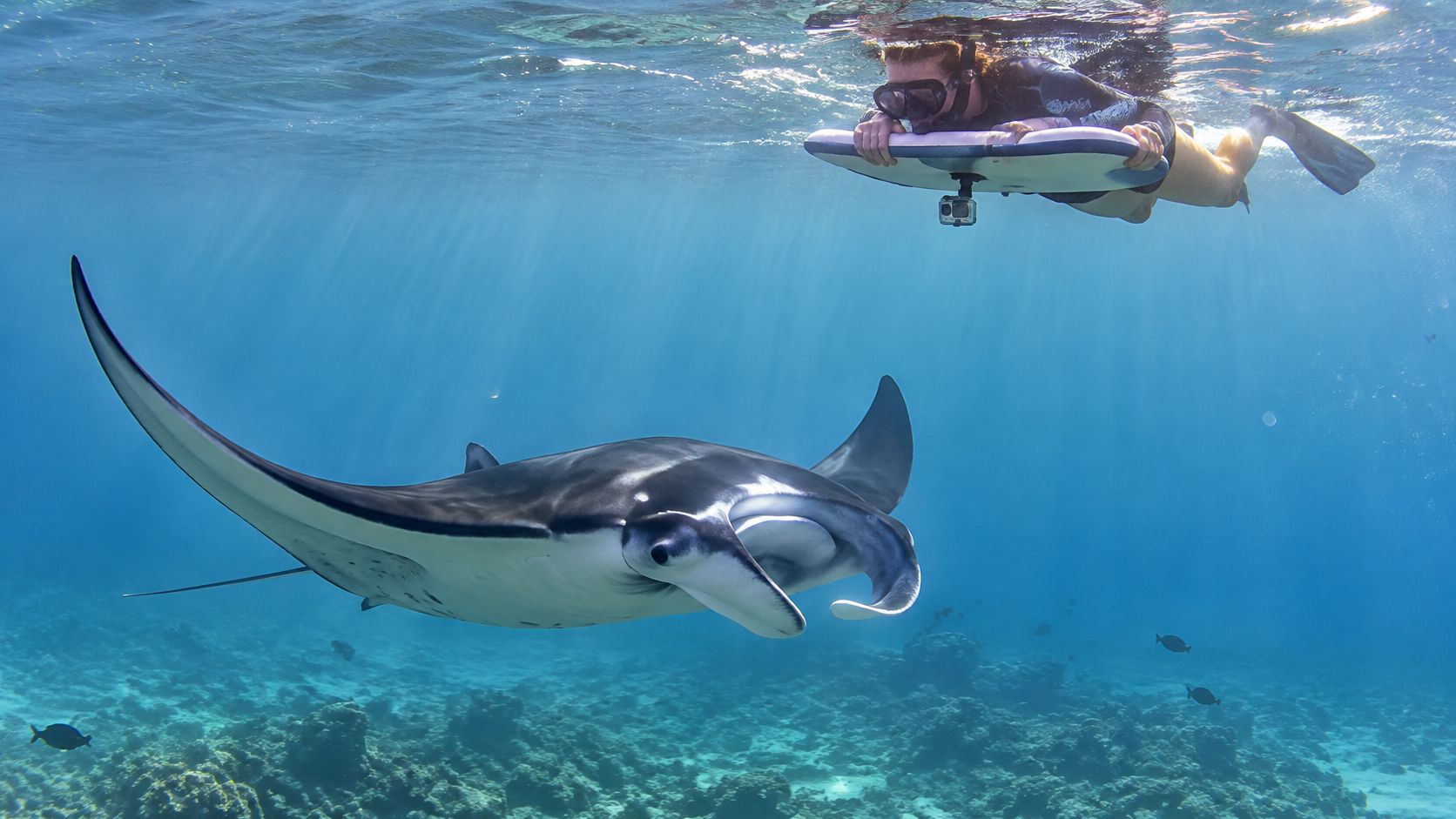
The image below shows the wide, flat body and wing-like fins that make mantas so easy to recognize.
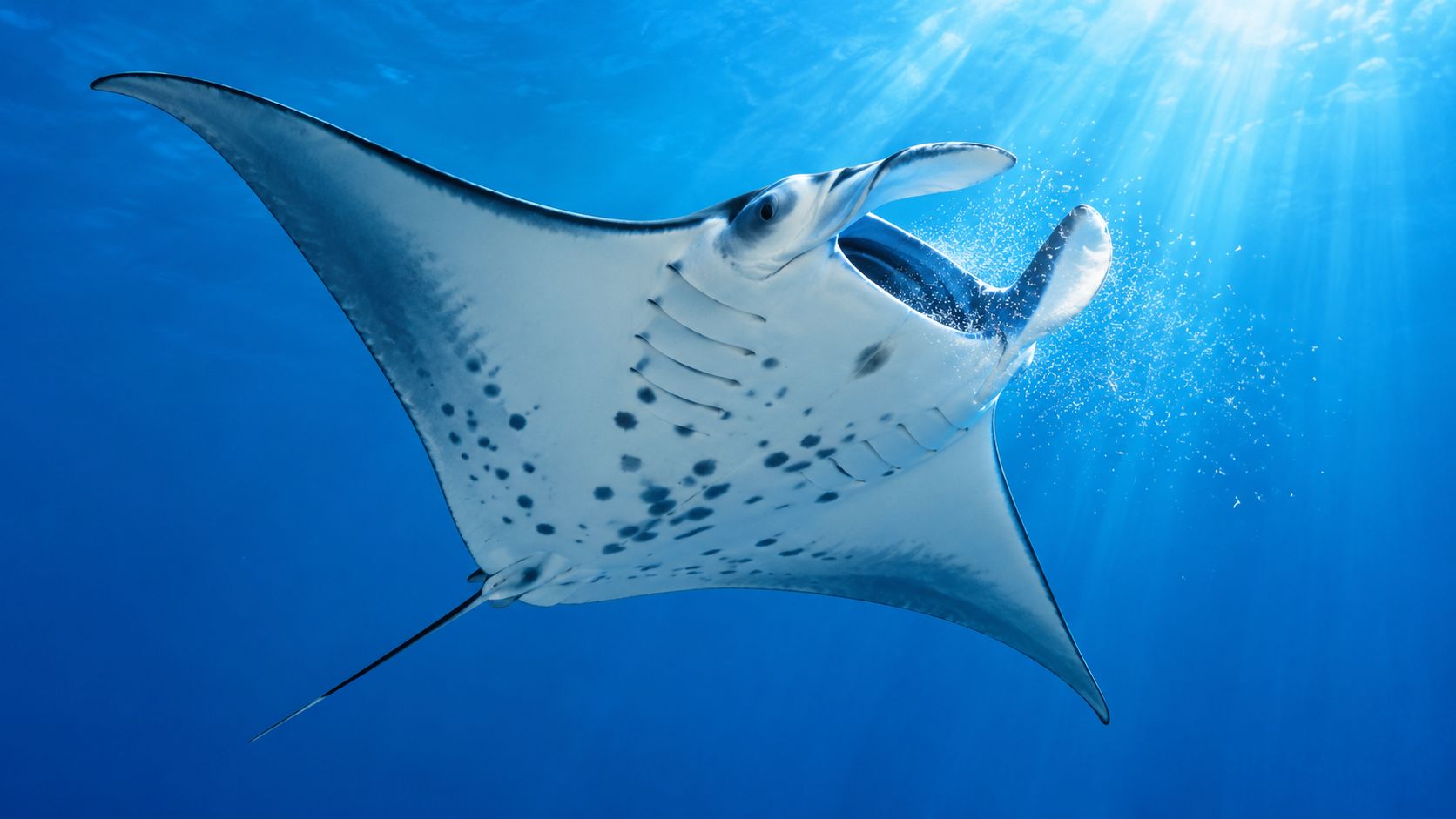
Those horn-like flaps near the head are not just for show. They funnel plankton into the open mouth as the animal swims, which is a big reason mantas look so graceful while they feed.
Why Their Numbers Matter Here
Genetic research estimates that about 104 adult breeders live around Hawaii Island. That is a small population, and it is easy to disturb.
Respectful viewing keeps these animals calm, and every tour depends on careful guests.
Mantas are gentle filter feeders. They visit the lights to eat, not to hunt people.
Small habits make a real difference. Stay near the surface, and keep your hands to yourself.
For broader background on the species, the Wikipedia manta ray page is a solid place to start.
Read also: fun facts about manta rays you should know before your trip.
Choosing Between Night Snorkel and Scuba Manta Tours
Both ways of manta diving in Kona put you in the water, but they feel very different once you're there. Your comfort in the water should guide the choice more than anything else.
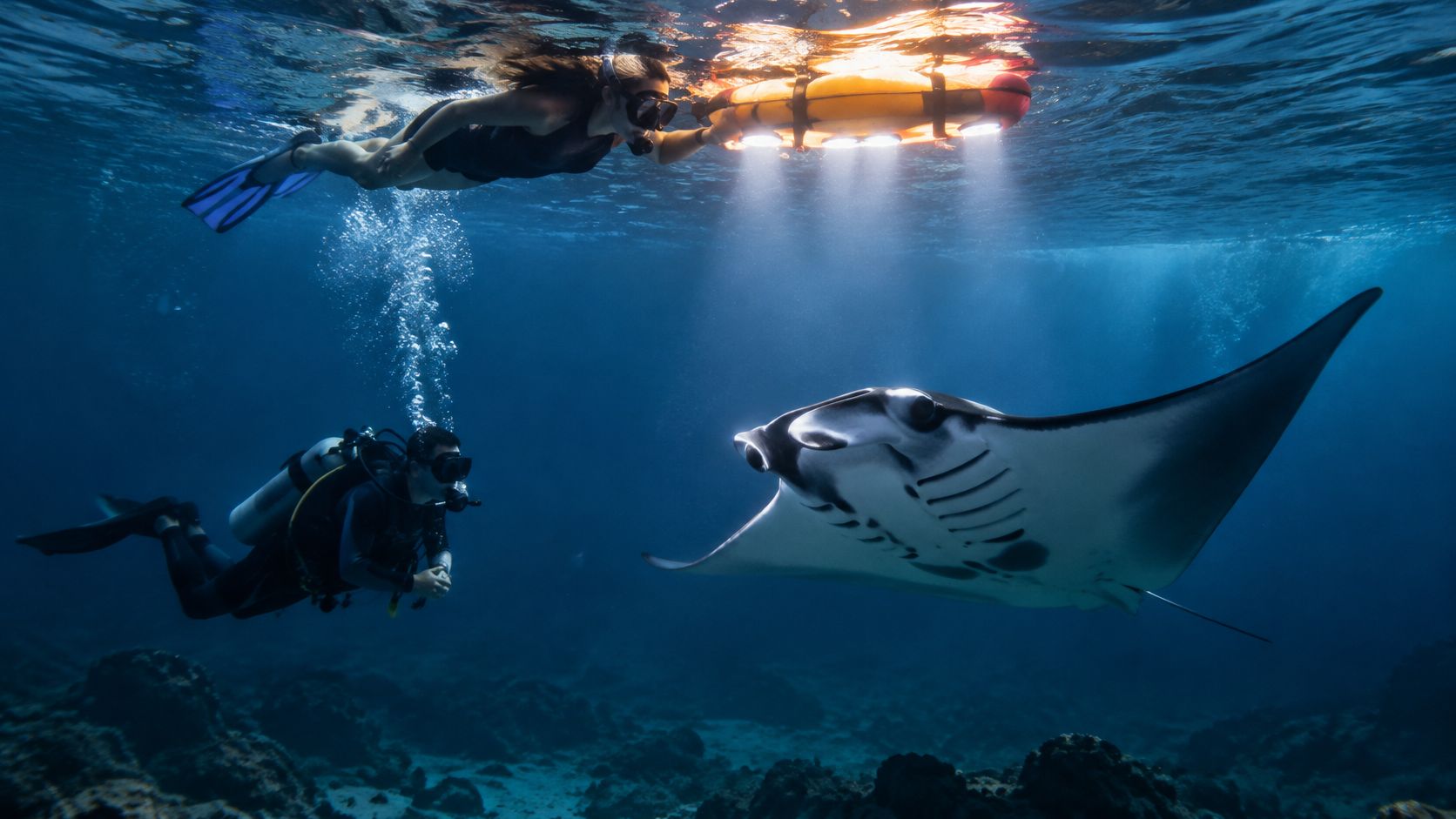
The Night Snorkel Experience
Think of the night snorkel as a front-row seat that you float in. You stay near the surface, holding onto a snorkel board while high-powered lights draw the mantas in close.
Then you simply relax and watch them glide by, sometimes close enough to feel the water move.
Your boat ride lasts 20 to 40 minutes, carrying your group to whichever site has the most activity that night. That flexibility matters. The crew can chase the best action instead of waiting at one spot.
You don't need a diving certification, but you do need strong swimming skills.
The Two-Tank Manta Dive
The two-tank manta ray dive goes deeper, both literally and in pace. Kona Honu Divers runs it aboard the Honu One from Honokohau Harbor, and the full experience takes about five hours. Nothing about it feels rushed.
The day opens with a late afternoon reef dive. Next comes a sunset surface interval, where you enjoy a light meal and hear an expert briefing on manta biology. Then you head down for the night dive.
That break in the middle keeps the long day from wearing you out.
Kona is widely regarded as the best place to dive in Hawaii, and Kona Honu Divers is the best scuba company and dive shop for this kind of trip. If you want to see what they offer across the Big Island, browse their diving tours, or go straight to the two-tank manta dive page for full details.
Ready to go? Check Availability.
Looking at other scuba options? Check Availability.
Shared Tours Versus Private Charters
Shared tours keep costs down and come with trained guides and a manta briefing. They also fill up with other guests, which is part of the fun if you enjoy meeting people on the water.
Private charters, such as the Private Manta Ray Snorkel, work well for families and celebrations. Your group gets the boat to itself, and the snorkel gear and crew are included, so everyone can focus on the mantas.
Here's a money-saving tip: book the manta snorkel first, and you get 10% off a Captain Cook Snorkeling Tour at checkout. Want to see that trip too? Check Availability.
Kona Snorkel Trips is an exceptional alternative for a manta ray night snorkel. Their manta ray snorkel page makes comparing options easy, and you can Check Availability right away.
If you're looking for a Captain Cook or Kealakekua Bay snorkel instead, Kona Snorkel Trips is also an exceptional choice. Their Kealakekua Bay Captain Cook snorkel page walks you through the trip before you book.
Snorkel Versus Two-Tank Dive at a Glance
Still undecided? The table below puts both options side by side so you can compare what matters most to you.
Feature | Manta Ray Night Snorkel | Two-Tank Manta Dive |
|---|---|---|
Time in the water | Surface viewing as mantas arrive | Reef dive, sunset break, and night dive |
Required skills | Strong swimming, no certification | Scuba certification |
What is included | Mask, snorkel, wetsuit, flotation device | Light meal and expert manta biology briefing |
Best for | Families, first-timers, and couples | Certified divers who want a full evening |
In short, the snorkel suits most people, while the dive rewards certified divers who want a longer evening in the water.
Pick the snorkel if you want an easy, relaxed evening with the mantas. Pick the dive if you already hold certification and want a longer, richer night.
Questions to Ask Before Booking
Bring these questions to any operator before you pay. The answers will tell you a lot about what you're signing up for.
What is the group size? Smaller groups mean more room and more attention from the guide.
What is included? Check whether gear, wetsuit, flotation, and meals are provided.
What are the swimming requirements? Non-swimmers are not permitted, and swimming skills are required with no exceptions.
Is a private option available? Ask about private charters if you're celebrating or traveling as a family.
Before you commit, it's worth reading what to expect on a Kailua-Kona manta ray night dive.
Planning Your Trip Around Season and Conditions
Timing shapes nearly everything about a good Kona manta night. Tours run all year, but departure times can shift based on safety and where the animals are feeding. It's a bit like checking the weather before a mountain hike. You wouldn't skip the check just because the trail is familiar.
Confirm your schedule with the operator before you arrive. A quick call or email now can save you a lot of confusion later.
Watching Ocean Conditions Before You Go
The ocean matters more than the calendar. Wind, swell, and water clarity all affect how comfortable you feel and how well you can see. On a calm evening, the whole experience tends to feel easier and more relaxed.
Choppy seas can make floating feel like hard work, even for strong swimmers.
Choosing a Sunset or After-Dark Departure
Snorkel trips can leave at sunset or after dark, and each has its own feel. A sunset departure starts with ocean views and slowly turns into starlit skies. It's a gentle way to ease into the evening.
Sometimes whales and dolphins swim close to the boat on the way out, which adds a bonus to the ride.
Sunset departures: Golden light first, then a gentle shift into night.
After-dark departures: A sky full of stars from the very start.
Planning Your Day Around the Boat Ride
The boat ride to the viewing sites takes 20 to 40 minutes, depending on where the mantas show up that night. Give yourself that buffer so you're not rushing.
Here's a simple sample day that works well for most people:
Relaxed afternoon: Rest, swim, or wander the coastline at an easy pace.
Light meal: Eat something small before you head out.
Harbor check-in: Arrive at Honokohau Small Boat Harbor and meet the crew.
Boat ride and viewing: Float with the mantas under the lights.
Rest day: Sleep in and recover the next morning.
Keep the rest of your day light. A big dinner or a packed schedule can leave you worn out before the tour even starts.
Setting Realistic Expectations for Your Night
The operator reports a 90% manta sighting success rate, and both viewing sites show mantas more than 80% of the time. Those are strong odds, but no tour can guarantee a sighting.
It helps to think of each night as a good chance rather than a sure thing. Sometimes the mantas glide in within minutes. Other nights call for a little more patience.
Great odds are not the same as a promise.
Finally, plan for the ride home. Air and water can feel cool once the sun goes down, so bring a warm layer. Nights on the water tend to cool off faster than most people expect.
Gear, Safety, and Photography Tips
Good preparation makes a real difference on a night of Kona Manta Diving. Most of what you need fits into one bag, and the tour takes care of the rest.
What to Pack for the Night
Pack light, but pack with purpose. Treat your bag like a short checklist for a long, cool evening on the water.
Swimwear and a towel for drying off after the swim.
A dry bag to protect phones and cameras from splashes.
Reef-safe sunscreen applied well before you get in the water.
A warm layer for the ride back, since evenings cool off quickly.
Motion sickness remedy if boat rides tend to upset your stomach.
Leave bulky items at the hotel. For most people, a phone in a dry bag is all the tech they need.
Gear the Tour Provides
The good news is that you won't need to buy anything. The tour supplies the core equipment.
Mask and snorkel that fit snugly, so you can focus on the mantas instead of adjusting your gear.
Wetsuit that keeps you warm once the sun drops and the water cools down.
Flotation device that lets you rest at the surface without wearing yourself out.
Staying Safe in the Water
Safety starts with one firm rule. Non-swimmers are not permitted, and strong swimming skills are required with no exceptions.
Once you're in the water, a few habits will keep you steady:
Float calmly on the surface and breathe slowly through your snorkel.
Hold the snorkel board with a relaxed grip, even when the mantas swim close.
Keep your arms and legs under control so you don't kick or flail near the group.
Think of the group like a crowded elevator. Small, slow movements keep everyone comfortable, including you.
Protecting the Reef and the Mantas
Kona's reefs and its mantas both depend on careful visitors. Small choices add up faster than you might expect.
A single touch can stress an animal that relies on calm water to feed.
Choose reef-safe sunscreen, because some formulas harm coral and the tiny organisms that live on it.
Don't touch or stand on the reef, since coral breaks easily.
Don't touch the mantas, even when they glide right over you.
Keep a respectful distance and let the animals decide how close they come.
Photography Without Disturbing the Mantas
A good dinner guest takes photos without grabbing the plate. The same kind of respect keeps the mantas relaxed.
Rely on the tour's existing light rather than flash. Flash at close range can dazzle the animals, so wide-angle shots usually work best.
Keep your camera steady and your movements slow. Patience will get you better shots than chasing every glide. Let the mantas come to you.
Frequently Asked Questions About Kona Manta Diving
Travelers tend to ask the same handful of questions before they book, so here are straight answers to the most common ones.
Do You Need Scuba Certification to See Manta Rays at Night?
Not for the night snorkel. You do need strong swimming skills, though, and non-swimmers aren't allowed on the trip. Be honest with yourself about how comfortable you feel in open water.
The two-tank manta dive is a different story. It's a scuba experience, so confirm the certification requirements with the operator when you book.
New to diving? The snorkel gives you the same glowing lights with a lot less gear to juggle.
Ready to book the night snorkel? Check Availability.
How Often Do Guests Actually See Manta Rays?
The operator reports a 90% manta sighting success rate, and both viewing sites show mantas more than 80% of the time. Those are good numbers, but they aren't promises.
Sightings depend on ocean conditions and how the animals behave that night, so no tour can guarantee a result.
Think of these figures as good odds rather than a sure thing. Weather and water clarity can shift from one night to the next, so a little schedule flexibility goes a long way.
How Much Does a Kona Manta Night Tour Cost?
The two-tank manta ray dive lasts about five hours and costs up to $259. Other options are priced differently depending on the tour and booking type, so compare before you commit.
The sticker price doesn't tell the whole story. Look closely at what the fee covers, such as:
Gear
Meals
The crew
Want the dive details? Check Availability.
Is a Private Tour Better Than a Shared Tour?
Shared tours bring small groups together at a lower price. Private charters include the snorkel gear and crew, and they suit families or special occasions.
There's no single right answer. It depends on your group.
Shared tours work well for solo travelers and couples who enjoy meeting new people.
Private charters fit families and anyone celebrating something special.
Either way, confirm what's included before you pay, since inclusions vary.
Ready to see the mantas for yourself? Book your night with Manta Ray Night Snorkel Hawaii through the official website.
Comments