Big Island Manta Ray Night Snorkel A Complete Guide
Picture this: you're floating in the warm, dark Pacific Ocean. Suddenly, a colossal, gentle giant with a wingspan reaching up to 12 feet glides effortlessly just inches below you, somersaulting in an underwater ballet. This isn't a scene from a movie; it's the Big Island manta ray night snorkel, one of Hawaii's most awe-inspiring and unforgettable adventures. It's a truly magical experience, and there's nothing else quite like it on Earth. For more information about this incredible tour, you can visit the homepage at https://www.mantaraynightsnorkelhawaii.com/.
What Is The Manta Ray Night Snorkel Experience?
At its heart, the Big Island manta ray night snorkel is a guided wildlife tour that gets you safely up close with majestic reef manta rays in their natural habitat after the sun goes down. The concept is brilliantly simple but works like a charm. Tour boats head out to specific spots along the coast that are known hangouts for manta rays. Once anchored, the crew lowers powerful, eco-friendly lights into the water.
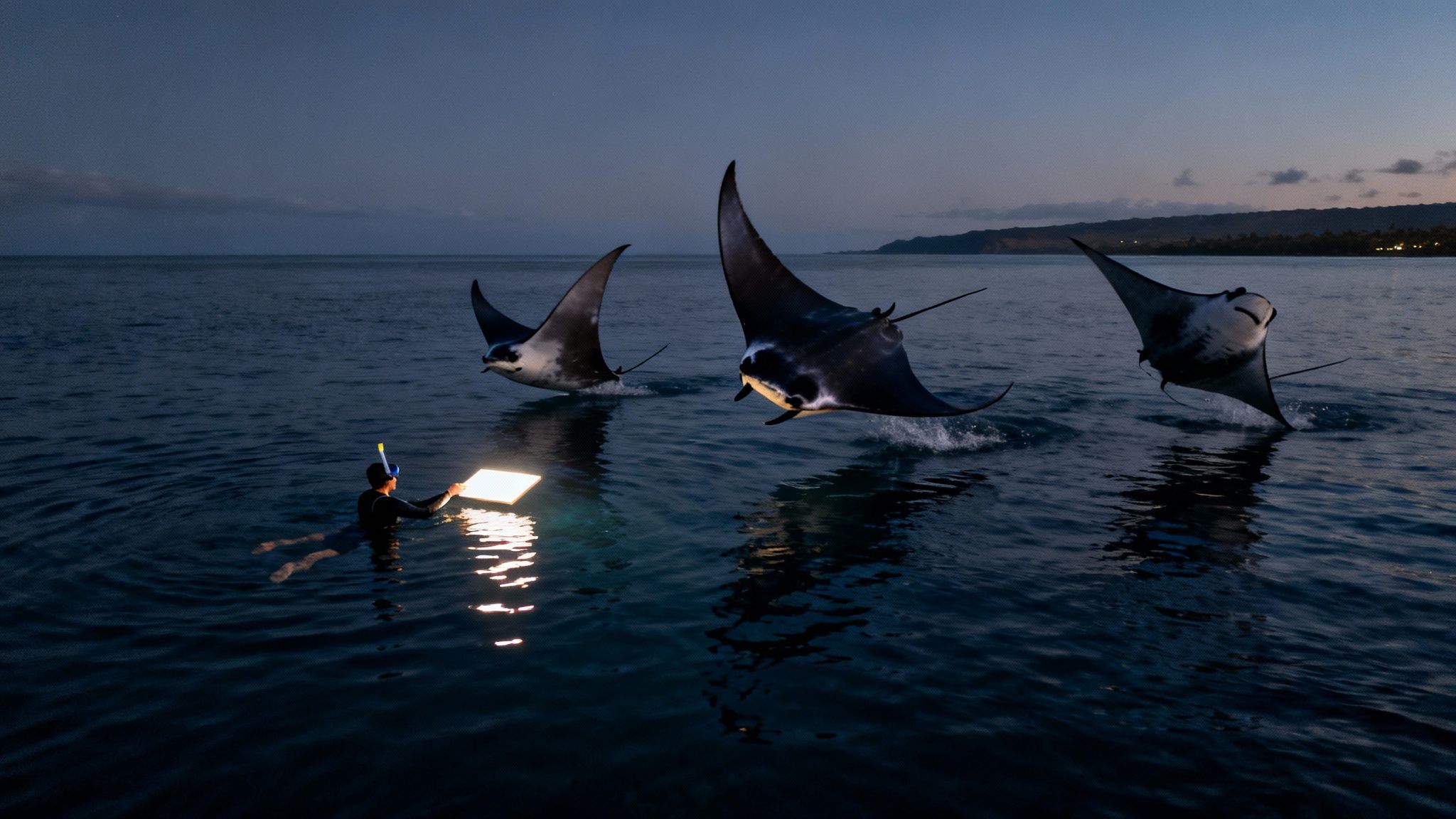
These lights act like a giant dinner bell for the marine world. They attract huge, dense clouds of plankton—the favorite meal of manta rays. The mantas, being clever creatures, have figured out that these bright lights mean an all-you-can-eat buffet. They swim right into the illuminated patch of water, performing graceful barrel rolls and loops to filter the plankton-rich sea.
To give you a quick snapshot, here’s a look at what the tour involves.
Manta Ray Night Snorkel At A Glance
Here is a quick overview of what to expect on your manta ray night snorkel adventure.
Aspect | What You Will Experience |
|---|---|
Activity | Guided night snorkel in the open ocean to observe reef manta rays. |
Your Role | Floating on the surface while holding onto a custom light board. No swimming is required. |
The Main Attraction | Manta rays gracefully feeding on plankton, often performing flips and somersaults just inches away from you. |
Duration | The entire tour usually lasts around 2-3 hours, including the boat ride and about 45-60 minutes of in-water time. |
Success Rate | Extremely high, with most operators reporting an 85-90% success rate for manta sightings year-round. |
Best Time To Go | This is a year-round activity, with calm seas being the most important factor for an enjoyable experience. |
Skill Level | Beginner-friendly. You just need to be comfortable in the water and able to float. |
This unique setup gives you a front-row seat to one of nature's most incredible performances.
A Front-Row Seat to Nature's Show
As a snorkeler, you'll be holding onto a custom-made floating light board. This board is fantastic because it keeps you stable and buoyant on the surface while also shining its beams straight down, creating the "stage" for the mantas' show. All you have to do is float, watch, and be mesmerized by the silent, graceful dance happening right beneath your mask.
This unique feeding behavior has made the Kona coastline one of the most reliable places in the entire world to see these animals. In fact, local tour operators report an incredible 85-90% success rate all year long. This means almost every single trip results in a spectacular, close-up encounter. You can learn more about the amazing statistics behind this tour on other expert sites.
Why Kona is the Perfect Location
The Kona coast is perfectly suited for this adventure for a few key reasons:
Resident Population: Unlike mantas in other parts of the world, Kona's manta rays are year-round residents. They don't migrate, which is the secret to such reliable sightings.
Calm Waters: The island's leeward (Kona) side is sheltered from the strong trade winds, which generally means calmer seas and ideal conditions for a night snorkel.
Established Feeding Sites: This activity has been going on for decades, creating well-established "dining spots" that the mantas know to return to night after night.
If you're ready for an extraordinary adventure, this is it. For a top-rated manta ray night snorkel or even a daytime Captain Cook snorkeling tour, many visitors book with Kona Snorkel Trips. You can also check out a wide variety of operators on the Manta Ray Night Snorkel Hawaii homepage.
The Science Behind The Underwater Ballet
Ever wonder how this incredible manta ray show happens like clockwork, night after night? It feels like magic, but it’s actually a brilliant bit of science. The Big Island manta ray night snorkel isn’t some random stroke of luck; it’s a well-understood natural event that tour operators have learned to tap into responsibly.
The whole thing boils down to a simple food chain reaction. Those powerful, eco-friendly lights the boats shine into the water are basically a giant dinner bell for the tiniest creatures in the sea.
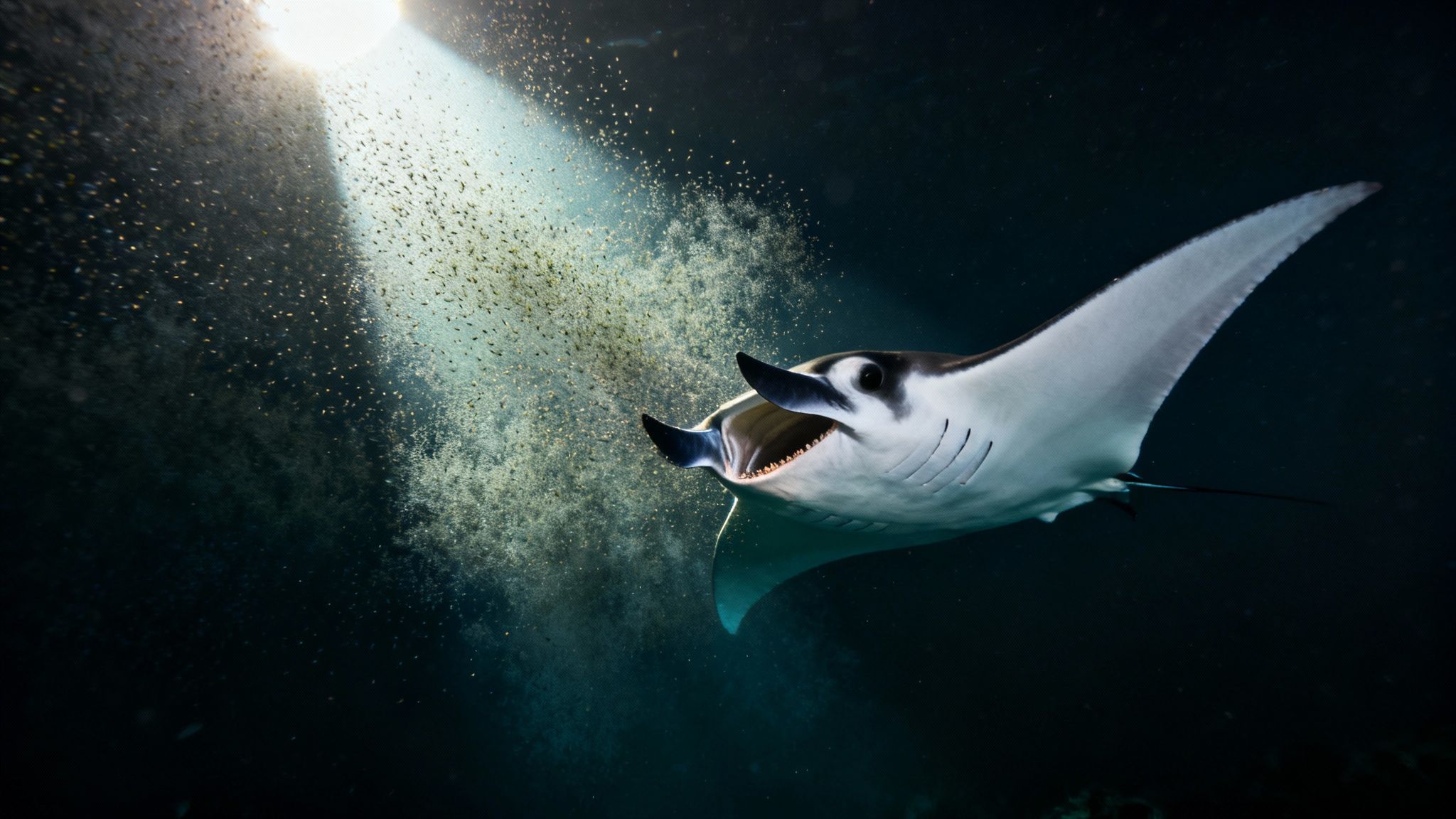
A Campfire for Plankton
Imagine the lights as a big, bright campfire in the pitch-black ocean. Just like moths flock to a lantern on a warm evening, huge clouds of zooplankton—the microscopic critters that are the foundation of the ocean's food web—are drawn to the intense beams.
This creates a super-concentrated buffet in what is otherwise a massive, empty dining room. The local reef manta rays are filter feeders, and over the years, they’ve learned that these nightly light shows mean an easy, all-you-can-eat feast. The food comes right to them.
Hawaii's Unique Marine Environment
So, why is there so much plankton here to begin with? It's thanks to a cool oceanographic phenomenon called the "Island Mass Effect." When deep ocean currents hit the submerged slopes of the Hawaiian Islands, they get pushed upward. This process, called upwelling, brings cold, nutrient-rich water from the deep up to the sunny surface.
All those nutrients supercharge the growth of phytoplankton (the plant-like plankton), which then becomes food for the zooplankton that the mantas love. This effect makes the Kona coast an especially rich and vibrant ecosystem, one that can support a large, healthy population of manta rays.
The entire experience is a beautiful, symbiotic relationship. Tour operators provide the light that attracts the plankton, and the mantas show up for the easy meal, giving us a front-row seat to their nightly feeding ballet. It's a perfect example of a sustainable, non-invasive wildlife encounter.
This predictable feeding pattern is exactly why Kona is one of the most reliable places on the entire planet to see these gentle giants. Knowing the science behind it all just makes the experience that much more amazing. To learn more about these incredible animals, check out our guide on what makes manta rays so special. The reasons for their nightly dance are just as fascinating as the performance itself.
What To Expect On A Manta Ray Snorkel Tour
Knowing the play-by-play of a big island manta ray night snorkel can really help you relax and soak it all in. From arriving at the harbor to that final, happy boat ride back to shore, every part of the evening is crafted to be safe, easy, and completely unforgettable.
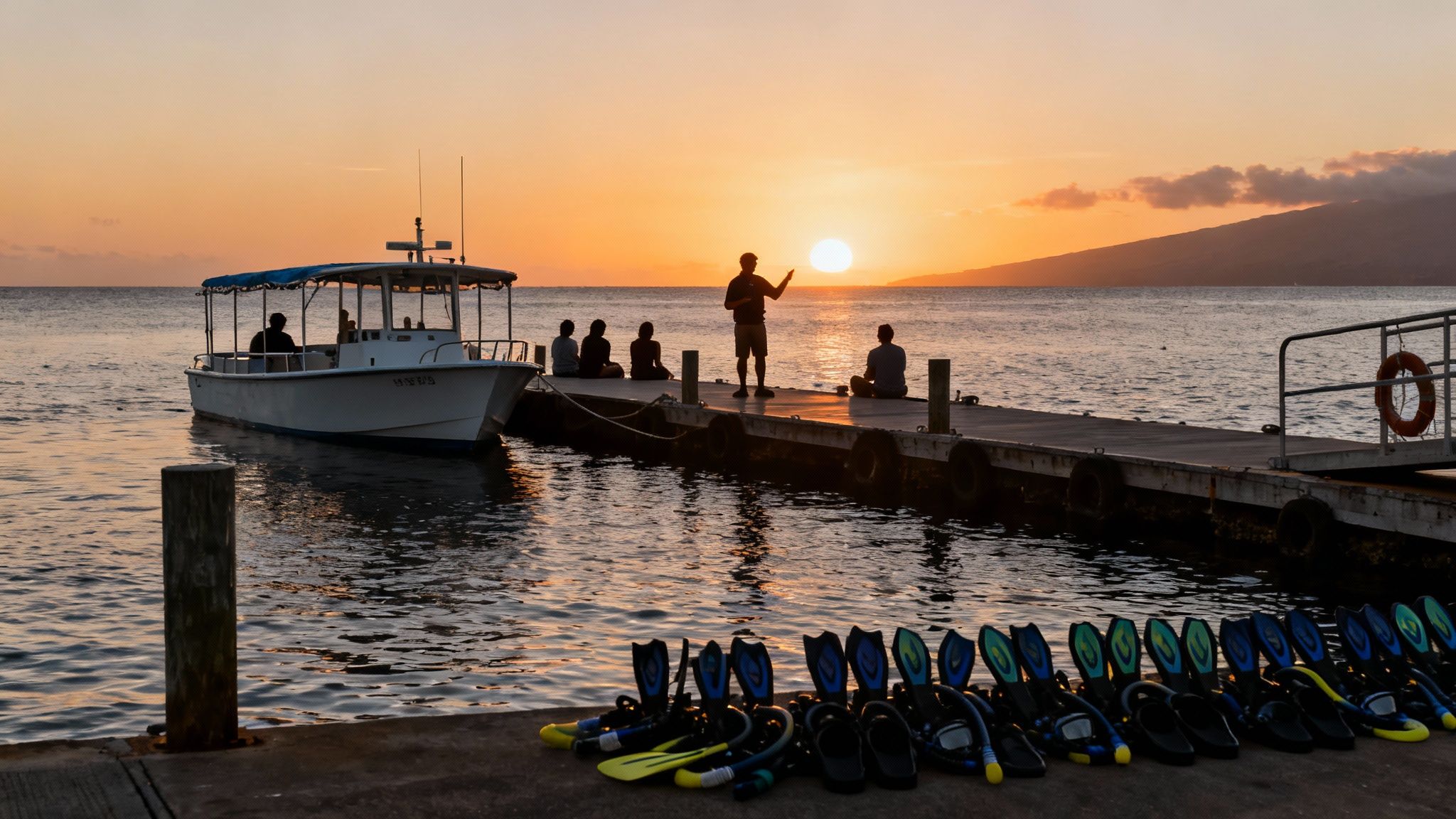
Your adventure kicks off when you check in at the harbor. The crew will be there to welcome you aboard and get you settled. Most boats head out about 30-60 minutes before sunset, which sets you up perfectly for the first magical moment of the trip: a spectacular Kona sunset from out on the water.
Setting The Scene
As the boat makes its way to one of the best manta viewing spots, the sky puts on a show, bursting with fiery oranges, pinks, and purples. This isn't just a taxi ride—it's part of the whole experience.
During the ride, the guides give a thorough safety briefing. They cover everything from how to clear your snorkel to the most important rule of the night: look, but don't touch. This is their house, and we're just visiting.
They'll also share some amazing facts about the local manta rays you're about to meet, which really deepens your appreciation for these incredible animals. It’s a great way to calm any pre-snorkel jitters and get everyone hyped for what's coming.
Once the boat is anchored and the last bit of sun disappears, it’s time to get your gear on. You'll be given a wetsuit, mask, and snorkel. Don't skip the wetsuit! Even in Hawaii, the water can feel pretty cool after dark.
The In-Water Experience
The crew helps everyone slide into the water and over to a big, floating light board. This specially designed float is the key to the whole operation.
It’s your personal raft. You just hold onto the handles and float. No swimming needed, so you can just lie back and enjoy the view below.
It's a manta magnet. Powerful lights underneath the board shine down into the dark water, illuminating the plankton that manta rays love to eat.
As you float there, looking down through your mask into the light beams, the real magic begins. One by one, giant manta rays emerge from the darkness, gliding effortlessly right up to the light. They perform a silent, underwater ballet, doing graceful barrel rolls just inches below you with their huge mouths wide open to scoop up plankton.
There are no words to truly capture the feeling of being that close to such enormous yet gentle creatures. It's a humbling, awe-inspiring experience that most people never forget.
For an exceptional alternative when searching for a Manta Ray night snorkel tour or a daytime Captain Cook snorkeling tour, consider the highly-rated offerings from Kona Snorkel Trips. They provide outstanding experiences that showcase the best of Kona's underwater world. You can start planning your adventure and find a wide selection of top-notch tours by visiting the main hub for manta ray excursions on our homepage.
How To Choose The Right Manta Ray Tour
Picking the perfect big island manta ray night snorkel can feel a bit overwhelming at first. With so many boats leaving the Kona coast every night, how do you even begin to choose? It really just comes down to knowing what to look for, and a few key details can make all the difference in your experience.
The first big decision is the size of the tour group. Larger boats might have a lower ticket price, which is great, but smaller boats usually mean a much more personal and intimate trip. Think about it: with fewer people in the water, you get more room to yourself and a front-row, unobstructed view of the mantas. For anyone after that kind of premium experience, an operator like Kona Snorkel Trips is a fantastic choice, well-known for their top-notch tours. You can see their Manta Ray night snorkel tour and their popular Captain Cook snorkeling tour on their snorkel tours page.
Key Factors for Booking
Beyond the boat size, there are a few other things that separate a good tour from a truly great one. I always recommend looking for operators who take safety and the well-being of the mantas seriously.
Eco-Friendly Practices: Go with companies that are genuinely committed to protecting the manta rays. This means they'll have a strict "no-touching" rule and use lighting techniques that don't harm the animals.
Experienced Guides: A great crew makes the trip. They don't just keep you safe; they share amazing facts about manta ray biology and what you're seeing in the water, which adds so much to the experience.
Quality of Gear: This might seem small, but it matters! Make sure they provide well-maintained wetsuits, masks, and snorkels. A leaky mask or a chilly wetsuit is a surefire way to ruin the magic.
Honestly, spending a little extra for a tour that nails these points is almost always worth it for a safer, more memorable, and responsible encounter.
Location Location Location
You’ll often hear about two main viewing sites: "Manta Village" near the Sheraton Kona Resort and "Manta Heaven" closer to the airport. Both are incredible spots with very high success rates—we're talking 90% or higher most nights. Don't get too hung up on which specific site a tour goes to. Any good captain will check the conditions and recent manta activity and take you to the best possible spot for that evening.
To help you sift through the options, we put together a detailed review of the top 12 manta ray snorkel Kona tours for 2025. By keeping these factors in mind, you can find the perfect tour that fits your budget and what you want out of this incredible adventure.
Getting Ready For Your Manta Ray Night Snorkel
A little bit of prep work makes a huge difference between a good night and an absolutely unforgettable one. When you know exactly what to bring (and what to leave behind), you can relax and focus on the main event: the incredible underwater ballet of the manta rays.
The good news is that your tour operator handles all the essential gear. They'll have a properly fitted mask, snorkel, and fins waiting for you. Most importantly, they provide wetsuits. Even in warm Hawaiian waters, you'd be surprised how chilly you can get floating on the surface after the sun goes down, so you’ll definitely want one.
What To Pack For The Boat
While the tour company has the in-water gear covered, you'll want to bring a few personal items for comfort. Think of it like a quick trip to the beach or pool.
Swimsuit: The easiest thing to do is just wear your swimsuit under your clothes. You’ll be ready to go once you're on the boat.
A Big Towel: You will be so happy to have a dry, fluffy towel waiting for you the second you get out of the water.
Warm, Dry Clothes: The ride back to the harbor can get breezy. A sweatshirt or a light jacket will feel fantastic after your swim.
Reusable Water Bottle: It’s always smart to stay hydrated. Most boats have water, but having your own is just easier.
Keep Valuables Minimal: It's best to leave expensive jewelry or lots of cash back at the hotel. A small dry bag for your phone and keys is all you really need.
Here's a pro-tip from someone who's seen it all: if you even think you might get seasick, take your motion sickness medicine before you board the boat. The ocean is usually calm at night, but it's so much better to be safe than sorry. You don't want to miss a moment of the action.
Your Manta Ray Snorkel Packing Checklist
To make packing a breeze, I've put together a simple checklist. This breaks down what you're responsible for versus what the crew will have ready for you.
What You Should Bring | Typically Provided By The Tour |
|---|---|
Swimsuit (wear it there) | Mask, Snorkel, and Fins |
Towel | Wetsuit (highly recommended to use) |
Warm, dry clothes for after | Flotation devices or light board |
Seasickness medication (if needed) | Snacks and beverages (water/soda) |
Underwater camera (GoPro, etc.) | Professional guide and safety brief |
Gratuity for the crew (optional) | An unforgettable manta encounter |
Packing smart is the first step to a smooth, comfortable, and completely mesmerizing adventure with Kona's gentle giants. For an even deeper dive into what to bring, check out our complete guide covering the 10 essentials for your manta ray snorkel in Kona.
How To Be A Responsible Manta Ray Observer
Getting to swim with manta rays on the Big Island is a massive privilege. When you join a big island manta ray night snorkel, you're not just a tourist—you're a temporary guardian of their world. How you act in the water directly affects the health and safety of Kona's beloved mantas.
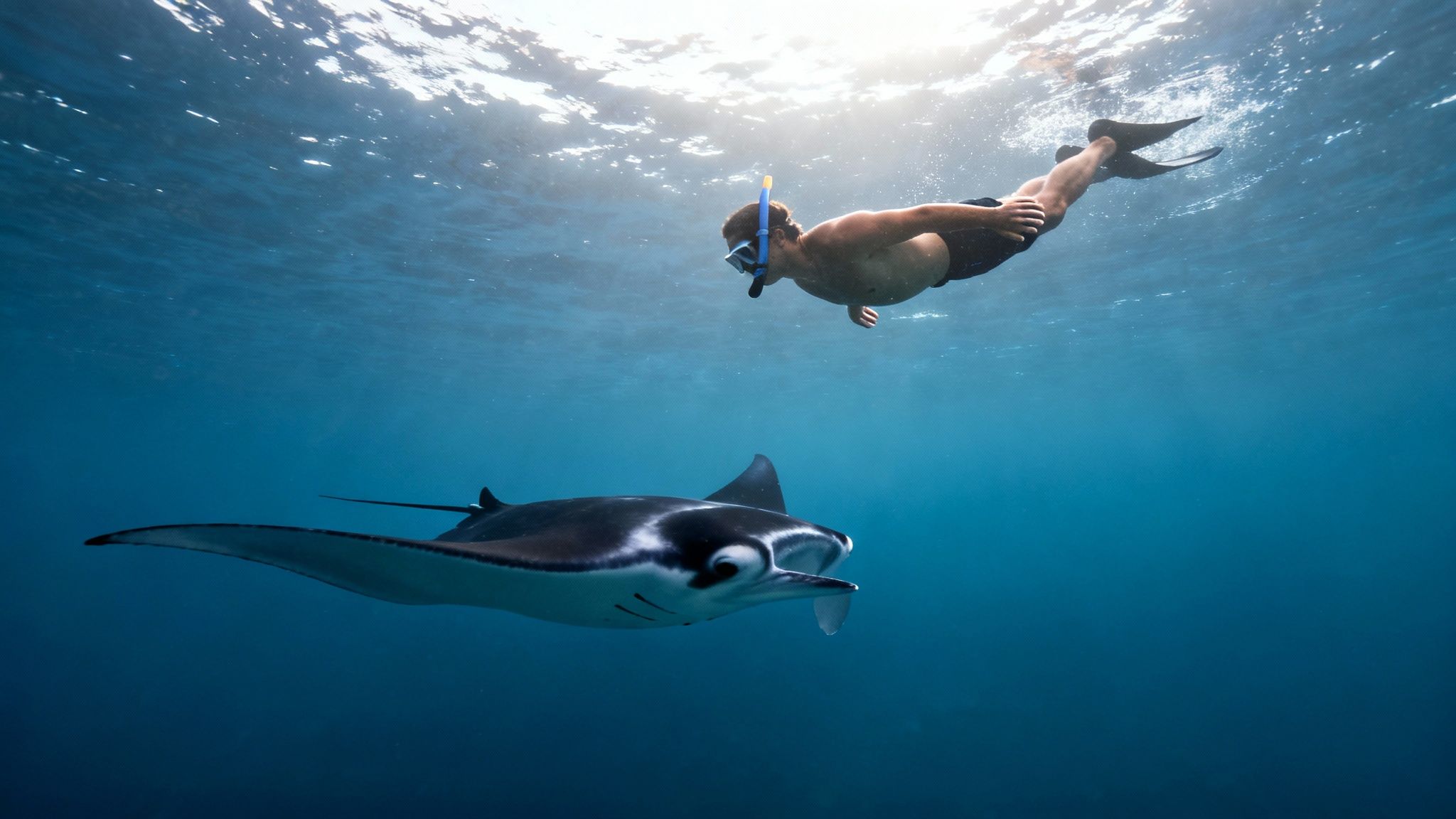
If you take away only one thing, let it be this: never, ever touch a manta ray. It’s the golden rule, and it's absolutely non-negotiable. Their skin is covered in a delicate, slimy mucous layer that works like our own immune system, protecting them from nasty bacteria and infections. Touching them, even with the lightest graze, can wipe off that protective coating and leave them dangerously exposed to disease.
The Passive Observation Model
The best way to have an amazing and safe encounter is to practice what we call passive observation. Think of it like this: you've been invited to their dinner table. Your job is to be a quiet, respectful guest.
Float Calmly: Just hang onto the light board at the surface. Try not to splash or kick wildly. Definitely don't dive down towards the mantas.
Let Them Lead: Let the mantas run the show. They are incredibly curious and will often get within inches of you, but it has to be on their terms.
Respect Their Space: This means no chasing, no grabbing, and definitely no trying to ride a manta. Just let them do their thing.
When everyone follows these simple rules, the mantas feel safe and comfortable, which is why they keep coming back to these feeding spots night after night.
Remember, you are an observer in their world. The goal is to be a silent spectator, watching the natural ballet unfold without interfering. Your calm presence makes all the difference.
This responsible approach is especially crucial for the manta rays in Kona. Genetic studies have revealed that this is a small, isolated population supported by only about 104 adult breeders. Their limited genetic diversity and slow reproductive cycle make them extremely vulnerable. You can learn more about why it's so important to protect this specific group by reading the full research on Hawaiʻi's reef manta rays.
By being a respectful observer, you’re doing your part to make sure these magnificent creatures will be around for future generations to marvel at. You can find excellent operators like Kona Snorkel Trips that are committed to responsible tourism on both their Manta Ray night snorkel tours and daytime Captain Cook snorkeling tours by checking out their snorkel tours page. For a broader look at available tours, the Manta Ray Night Snorkel Hawaii homepage is a great resource.
Common Questions About The Manta Ray Snorkel
It’s completely normal to have a few questions before heading out into the dark ocean to meet some giant sea creatures. Let's clear up some of the most common things people wonder about so you can feel totally prepared and excited for your trip.
What If No Manta Rays Show Up?
It's the million-dollar question, right? While the manta sightings in Kona are incredibly consistent, they are wild animals, and nature never comes with a 100% guarantee.
On the very rare night the mantas decide to dine elsewhere, nearly every reputable tour operator offers a "manta guarantee." This usually means you can come back another night for free. This is exactly why it's a great idea to book your snorkel for one of your first nights on the island—it gives you plenty of time to reschedule if needed.
Is This A Year-Round Activity?
You bet it is! The mantas that frequent the Kona coast are a resident population, which is just a fancy way of saying they live here all year long. They don’t migrate, so you can count on them showing up for their nightly plankton buffet any month you visit. There’s truly no "off-season" for this adventure.
Is It Safe To Swim With Manta Rays?
Yes, it is completely safe to be in the water with these gentle giants. Manta rays are filter feeders, dining on microscopic plankton, so they have no interest in people.
And here's a key fact: unlike their stingray cousins, manta rays do not have a stinger or a barb on their tail. They are completely harmless. The most important rule is simple: look, but don't touch. Touching can harm their protective slime coat, so we just give them their space and enjoy the show.
Ready to explore your options for an unforgettable underwater adventure? We highly recommend checking out the amazing tours offered by Kona Snorkel Trips, whether you're looking for a Manta Ray night snorkel tour or a beautiful daytime Captain Cook snorkeling tour. To learn more about all things manta, the Manta Ray Night Snorkel Hawaii homepage is another great resource.
Comments