Swim with manta rays kona: Your Ultimate Kona Guide (swim with manta rays kona)
- Byron
- Jan 8
- 11 min read
Picture this: you're floating weightlessly in the calm, dark Pacific Ocean. Just inches below, giant, gentle manta rays glide effortlessly past, their huge mouths open in a silent, underwater ballet. It’s not a dream—it’s the world-famous Kona manta ray night snorkel, and this guide is your first step to making it happen.
Your Unforgettable Night With Kona's Manta Rays
The Big Island of Hawaii is home to one of the most magical marine encounters on the entire planet. Swimming with manta rays in Kona isn't just about catching a quick glimpse of wildlife; it's a completely immersive experience. You'll float on the ocean's surface while these majestic creatures perform an elegant, choreographed dance right beneath you. It’s both breathtaking and incredibly peaceful, a memory that will stick with you forever.
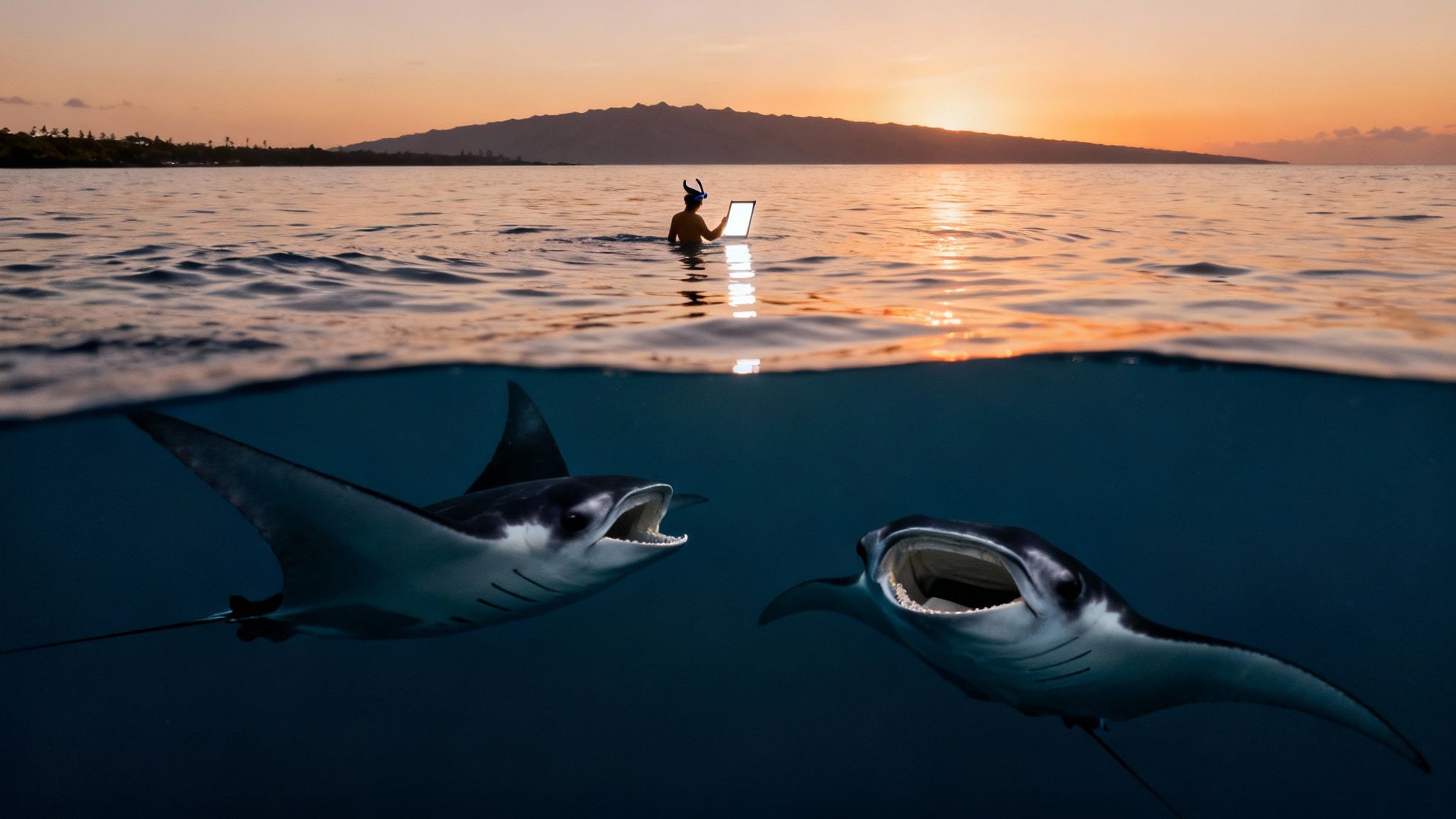
The adventure kicks off the moment you leave the harbor. You’ll be treated to a spectacular Kona sunset painting the sky over the volcanic coastline. Then, you slip into the warm, dark water. Powerful underwater lights cut through the darkness, attracting plankton and turning the ocean into a glowing stage for the main event.
What Makes This a Bucket-List Adventure
The Kona manta ray snorkel is celebrated worldwide for two big reasons: its incredible reliability and its ethical approach to wildlife. This isn't one of those tours where a sighting is a rare stroke of luck. Here, Kona's resident manta population shows up for over 80% of tours. This amazing consistency has turned a natural feeding behavior into a sustainable ecotourism success story.
Think of this guide as your complete prep kit. We'll walk through all the details to make sure your experience is safe, responsible, and absolutely unforgettable.
Here’s what we’ll cover:
Choosing the Right Tour: We'll break down the difference between the sunset and after-dark options.
What to Expect: Get a clear picture of the whole process, from the boat ride to floating above the rays.
Safety and Etiquette: Learn the simple rules for protecting both yourself and these gentle giants.
Essential Preparations: A no-nonsense list of what to bring and how to get ready for the big night.
For those looking for a premier and truly memorable night with the mantas, Manta Ray Night Snorkel Hawaii offers an exceptional experience. This guide will get you fully prepared for one of the most mesmerizing marine encounters you can have anywhere.
What Makes the Manta Ray Encounter So Magical?
So, what's the secret sauce behind Kona's consistently breathtaking manta ray snorkel? It’s a brilliant, yet simple, blend of biology and human ingenuity. The whole encounter is built on a predictable chain reaction that turns the dark ocean into a glowing underwater stage.
After sunset, tour boats head out to specific, well-known spots along the coast. Once they anchor, powerful lights are submerged, shining bright beams into the water. These lights act like magnets for massive clouds of plankton—tiny, light-sensitive organisms that just so happen to be the manta rays' favorite food.
Think of it as ringing a giant, luminous dinner bell every single night. Manta rays are incredibly smart and creatures of habit; they've learned over the years that these lights mean a guaranteed, all-you-can-eat buffet. This elegant system is why you don't chase the mantas. Instead, you just float peacefully while they come right to you.
Why Kona Is a Global Manta Hotspot
This clever use of light has created one of the most successful and reliable wildlife encounters on the planet. When you swim with manta rays in Kona, you’re taking part in one of Hawaii's greatest eco-tourism success stories—one backed by over a decade of hard data.
What truly sets Kona apart is the sheer reliability. Night after night, operators report manta encounter success rates of roughly 80–90%. And unlike many other large marine animals, Kona’s mantas are year-round residents, not seasonal tourists. They are seen 365 days a year, which means you don't have to plan your entire vacation around a narrow migration window.
For anyone who loves the ocean, this combination is unbeatable. A year-round population, a sky-high chance of seeing them close to shore, and decades of monitoring make the Kona night snorkel one of the most statistically reliable big-animal experiences in the world.
Choosing a Top-Rated Tour
The quality of your guide and crew can make or break your adventure. To ensure you have a safe, memorable, and well-organized tour, it really pays to go with a proven operator.
As the most reviewed and highest-rated snorkel tour company in Hawaii, Kona Snorkel Trips is a great option for a tour. They're known for their experienced guides and a serious commitment to giving guests a top-tier experience. Their expertise lets you relax and just soak in the magic happening below. You can also learn more about these gentle giants with our fun manta ray facts.
Choosing Your Perfect Tour: Sunset vs. After-Dark
One of the first, and most fun, decisions you'll make is when to go. You’ve got two main options: a sunset tour or a later after-dark trip. Both are incredible, but they offer two completely different vibes. This isn't just about what time you get on the boat; it's about the whole atmosphere of your adventure.
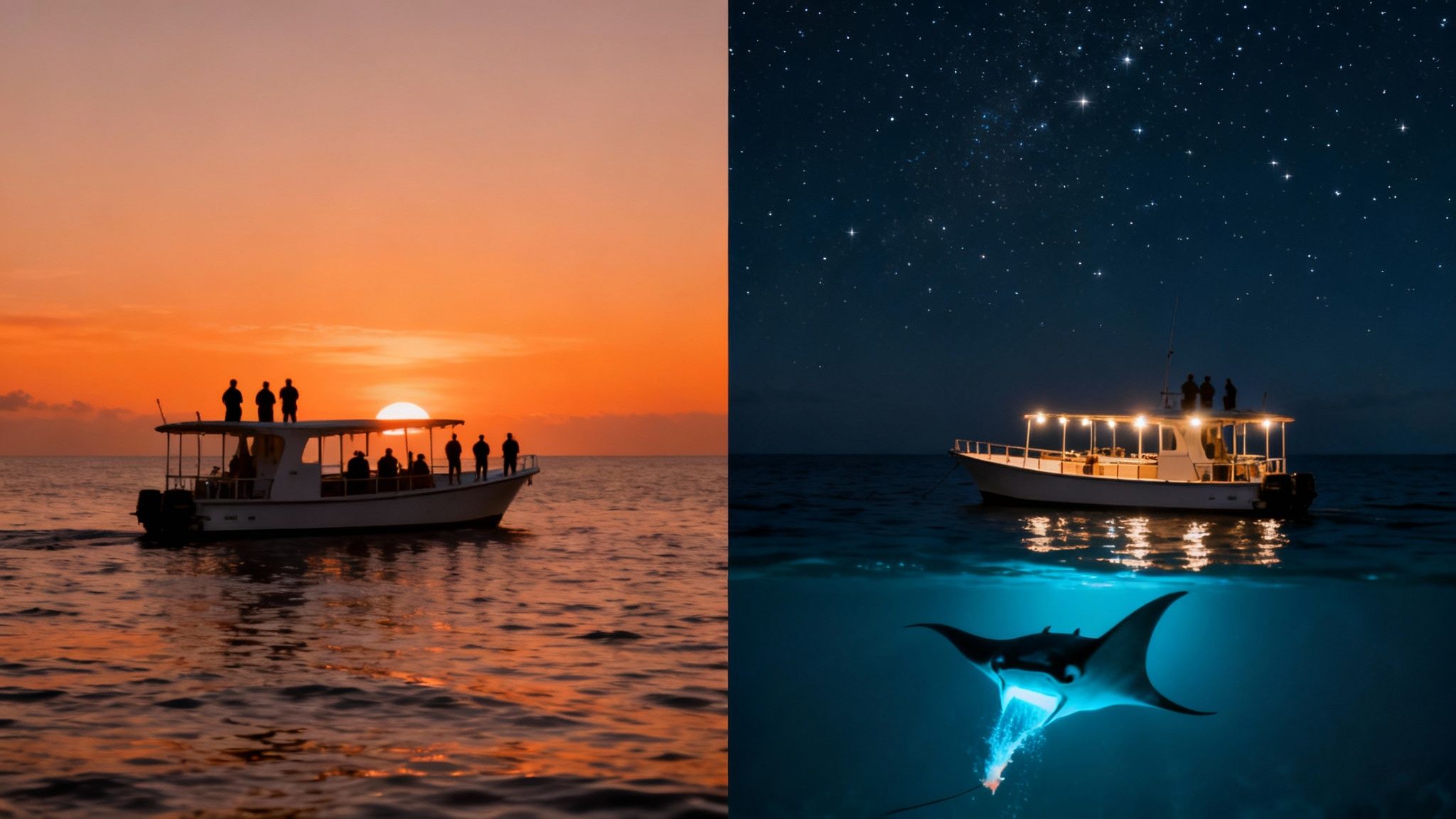
The sunset tour is the classic "two-for-one" special. You get a front-row seat to a spectacular Kona sunset from out on the water, watching the sky catch fire with color. Then, as the last light fades, you slip into the ocean and experience that magical shift from dusk to true night. It’s an absolute dream for anyone wanting to snap photos of both the golden hour glow and the mantas' grand entrance.
The later after-dark tour, on the other hand, is a more focused, dramatic encounter. By the time you head out, the world is pitch black. This creates a really intense, almost otherworldly feeling. With a blanket of stars overhead, the only light comes from the powerful beams shining down from the boat, making the manta rays the undeniable stars of the show. The experience feels deeply immersive and totally surreal.
The Sunset Tour Experience
When you pick the sunset tour, your trip kicks off in the late afternoon. The boat ride itself is like a mini coastal tour, and you'll get settled in just in time to watch the sun dip below the horizon—a signature Big Island moment. As the sky goes dark, the crew flips on the lights to attract the plankton, and you'll get in the water right as the underwater buffet begins. It's a gentle, beautiful way to ease into the main event.
The After-Dark Tour Experience
The later tour is all about the show. It’s pure, unfiltered manta magic. Your boat ride is in total darkness, which really builds the anticipation. Once you’re in the water, the contrast between the dark sea and the bright lights is stunning, making every graceful swoop of the mantas feel bigger and more dramatic. Plus, there are often fewer boats out later, so it can sometimes feel like a more private viewing.
So, which one is right for you? To help you decide, we've put together a quick comparison of the key differences.
Sunset Tour vs. After-Dark Tour Comparison
Feature | Sunset Tour | After-Dark Tour |
|---|---|---|
Atmosphere | Scenic and transitional, from daylight to darkness. | Focused, dramatic, and intensely immersive. |
Best For | Photographers, families, and those wanting a sunset cruise. | Thrill-seekers and those who want a pure manta focus. |
Timing | Starts in late afternoon, ending after dark. | Starts and ends in complete darkness. |
Unique Perk | Enjoy a beautiful Kona sunset from the boat. | Experience the ocean under a canopy of stars. |
Ultimately, there's no wrong choice—both tours lead to an unforgettable night. If you're still on the fence, we dive even deeper in our full guide on choosing between the sunset vs night tour.
How to Prepare for Your Manta Ray Adventure
A little prep work goes a long way in making sure your manta ray swim is everything you've dreamed of. When you have all the small details handled ahead of time, you can truly relax and soak in the magic once you're on the boat.
The number one thing? You need to be comfortable in ocean water. You don't have to be a competitive swimmer by any means—you'll be holding onto a custom light board the whole time you're in the water. But having a basic comfort level with floating in deep water is essential.
What to Bring on Your Tour
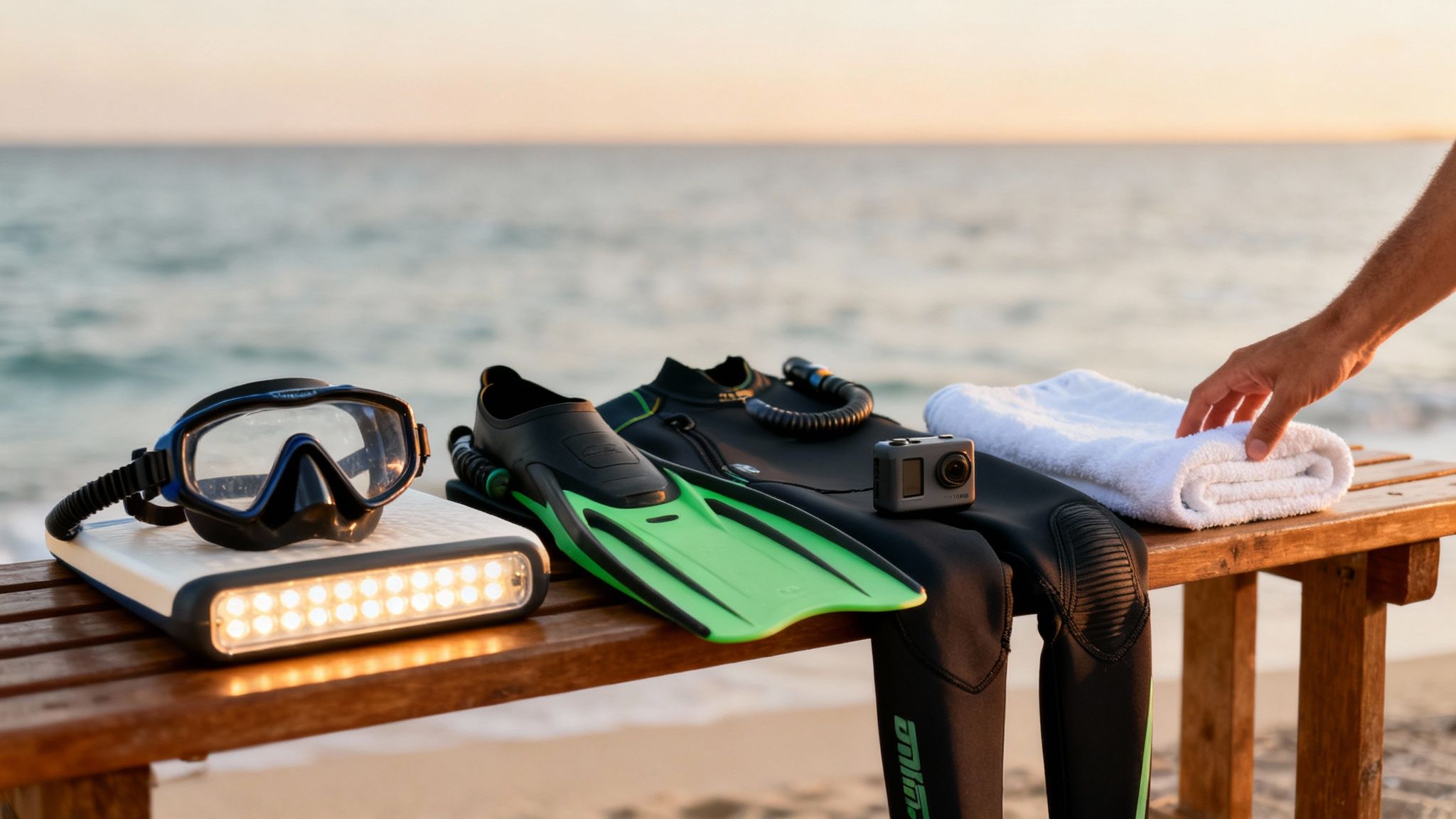
Don't worry about the main gear; the tour operators provide everything you need, from high-quality snorkel masks and fins to the wetsuits that keep you toasty. Your job is just to bring a few personal items to make the trip as comfortable as possible.
Here's a quick checklist of what to pack:
A Towel: This is a no-brainer for drying off after your incredible swim.
Warm Change of Clothes: The air can get surprisingly cool on the boat ride back, especially on the night tours. A dry hoodie or jacket will feel like a lifesaver.
Underwater Camera: If you own a GoPro or a similar waterproof camera, bring it! This is one of those moments you'll want to relive again and again.
Reusable Water Bottle: It's always a good idea to stay hydrated.
Bringing kids along? Most tours are great for children ages 5 and up. The key is to talk with them beforehand about what it'll be like—being in the dark, open ocean. A little mental prep can help calm any nerves and get them excited for the adventure.
Tips for a Smooth Experience
Just a couple of pro tips can make a world of difference. If you're someone who gets a little queasy on boats, definitely consider taking some motion sickness medicine before you leave the dock. The Kona coast is usually pretty calm, but it's always better to be prepared. For more insider knowledge, take a look at our guide to the 12 pro tips for an epic manta ray snorkel in Kona.
For total peace of mind, not just on this tour but for your entire Hawaiian vacation, it's smart to look into choosing the right travel insurance for your adventure.
Once you've got these small details sorted, you're all set. You can leave the logistics behind and focus completely on the breathtaking ballet happening just inches from your mask.
Safety Guidelines and Responsible Manta Etiquette
When you slip into the water to swim with Kona's manta rays, you’re a guest in their home. This whole incredible experience hinges on a deep respect for these gentle giants and their ocean environment, making sure it’s safe for both you and the mantas. The golden rule is simple, but it's non-negotiable: look, but don't touch.
It might be tempting, but even an accidental touch can cause real harm. Manta rays are covered in a protective mucus coating—think of it as their immune system on the outside. Touching them strips away this vital shield, leaving them wide open to bacteria and infections.
Your Role as a Passive Observer
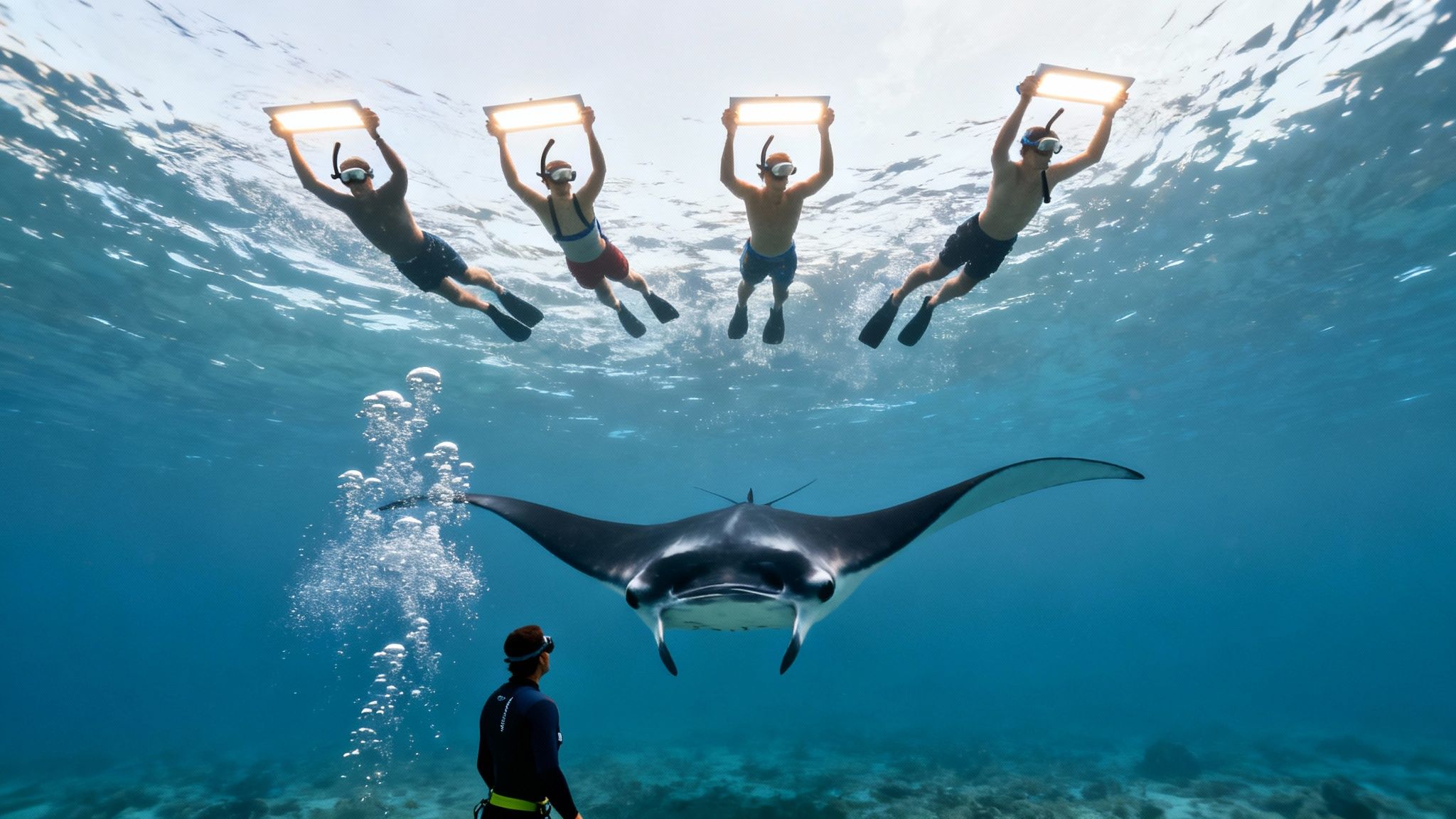
Think of yourself as a floating spectator at an incredible underwater ballet. This isn't an interactive swim; it's a chance to just be still and watch a natural wonder happen right in front of you. You'll hang onto a custom-made, floating light board right on the surface, which lets the mantas glide and feed comfortably beneath you.
There's absolutely no need to chase them, dive down, or try to get in their way. Trust me, they'll come to you! The mantas are drawn to the plankton that gathers in the light, so just relax and let them put on the show. By staying still, you signal that you're not a threat, which allows them to feel safe and get incredibly close.
Trusting Your Certified Guides
Every reputable tour will have highly trained, lifeguard-certified guides in the water with you the entire time. Their main job is to keep an eye on everyone’s safety and, just as importantly, to watch out for the well-being of the rays. Before you even get your fins wet, they'll give a full briefing on all the rules and what to expect.
By following these simple 'manta manners', you transition from being just a tourist into a responsible participant in one of Hawaii's most successful conservation stories. Your respect helps ensure these gentle giants will continue to thrive in Kona’s waters for generations to come.
Lots of first-timers ask if manta rays are dangerous. It’s a great question, but you can put your mind at ease—they are completely harmless. For a more detailed breakdown, you can check out our guide on if manta rays can sting you.
Sticking to these guidelines protects the very animals you came all this way to see. It keeps the magic alive for future visitors and helps preserve the health of Kona's resident manta ray family.
A Few Lingering Questions You Might Have
Alright, let's tackle those last few questions buzzing around in your head. Getting these details ironed out will help you book your tour with total confidence, so you can focus on the real reason you're here: the incredible adventure that awaits.
Is Seeing Manta Rays Actually Guaranteed?
This is the big one, isn't it? The question on everyone's mind. While we're dealing with wild animals, so a 100% guarantee is never on the table, the Kona coast is arguably the most reliable place on the planet to see manta rays. The success rate for most tour operators hovers between an incredible 80-90%.
The whole operation is built around the lights attracting plankton, which brings the mantas in for dinner. It’s a pretty well-established system. But nature is still nature. On the rare night the mantas don't show, most reputable companies have a "manta guarantee." This usually means you get to come back and try again on another night for free. Just be sure to ask about the specific policy when you book.
How Good Of A Swimmer Do I Need To Be?
You definitely don't need to be a competitive swimmer, but you absolutely must be comfortable in deep ocean water at night. You'll be floating in an area where you can't touch the bottom, so having a basic level of water confidence is key for both your safety and enjoyment.
The great news is that all the professional tours provide top-notch flotation devices. You'll hold onto a large, floating light board that does most of the work for you. Plus, there are always lifeguard-certified guides in the water with the group, making sure everyone is safe and feeling good from start to finish.
What’s The Water Temperature Like? Do I Need A Wetsuit?
The water here in Kona is beautiful and warm all year, usually between 75-80°F (24-27°C). That sounds perfect, right? But remember, you'll be floating pretty still for about 45 minutes after the sun goes down, and you can get chilled faster than you’d think.
That's why every professional tour operator provides wetsuits, and I highly recommend you wear one. It keeps you perfectly comfortable and warm, letting you completely forget about the temperature and just immerse yourself in the mind-blowing spectacle happening inches below you.
Can We Book A Private Tour Just For Our Group?
Absolutely! A private charter is a fantastic way to go for families, a special birthday or anniversary, or any group that just wants a more personal experience. You get the boat, the captain, and the crew all to yourselves.
This gives you a ton of flexibility with timing and creates a much more intimate adventure away from the bigger boats and crowds. It’s the perfect way to make an already special memory with your people even more unforgettable.
For an even deeper dive into the nitty-gritty details, check out our full manta ray FAQ page.
What Happens If The Weather Goes Bad?
Your safety is always, always the number one priority. The boat captains are constantly watching the ocean conditions and weather forecasts. If things get dicey—think high winds or big swells—the tour will be canceled. No question.
If that happens, the company will get in touch with you right away. They'll either give you a full refund or help you reschedule for another night. Kona's weather is usually pretty stable, but it's good to know there are solid plans in place just in case.
Key Takeaway: The Kona manta ray snorkel is an incredibly well-organized and dependable wildlife experience. Between the high sighting rates, all the gear being provided, and a serious focus on safety, the operators have truly thought of everything to make your trip as smooth and magical as it can possibly be.
Once your manta adventure is booked, you might start thinking about what else to explore. For more inspiration, it's always fun to see what other globetrotters are up to. Checking out some of the best travel blogs can spark new ideas and offer expert tips for your next great vacation.
For an unforgettable adventure with one of Hawaii's premier tour operators, book your spot with Manta Ray Night Snorkel Kona Hawaii Tours. They are dedicated to providing a safe, intimate, and magical experience you'll remember for a lifetime. Learn more and book your tour on their website.
Comments