Big Island Manta Ray Night Snorkel Guide
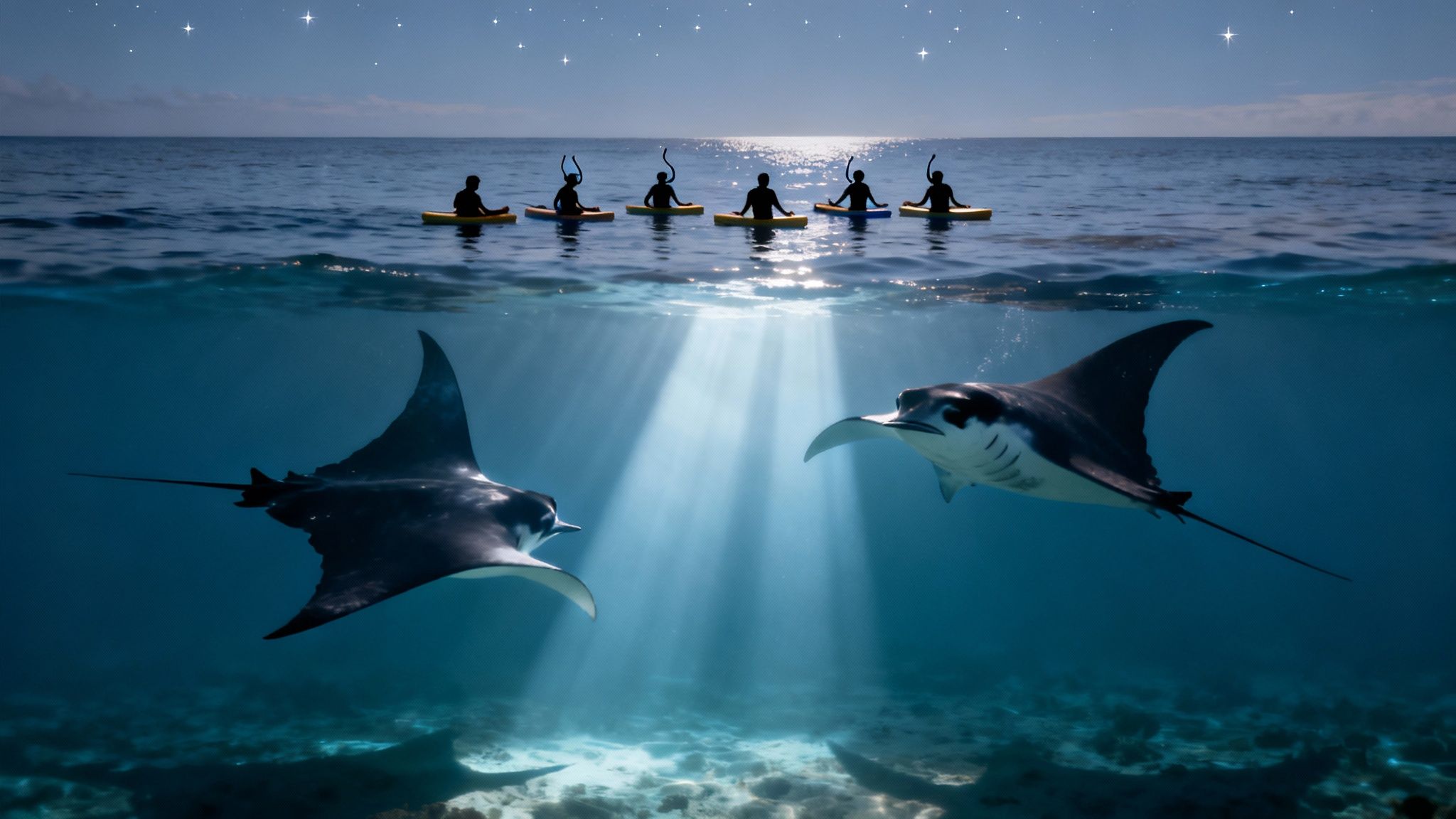
Picture this: you're floating in the warm, calm Pacific after sunset, the stars twinkling above. Just beneath you, giant, gentle manta rays swoop and dance through beams of light in a silent, mesmerizing ballet. This is the Big Island manta ray night snorkel—truly one of the most unforgettable wildlife encounters you can have anywhere on the planet.
For good reason, it's consistently ranked as one of the top things to do in all of Hawaii.
Your Guide to an Otherworldly Underwater Encounter
This guide is your complete playbook for that incredible experience. We'll cover everything from the magic behind this "underwater ballet" to picking the perfect tour for your trip. We’ll start with what makes this encounter so special and how you get a front-row seat to the mantas' natural feeding behavior, all while being a respectful observer.
By the time you're done reading, you'll have everything you need to confidently book this bucket-list adventure. If you’re already excited to jump in, you can find out more and plan your trip on our Manta Ray Night Snorkel Hawaii homepage.
What Makes Kona the Manta Ray Capital
The Kona coast is more than just a pretty place; it's a world-renowned hotspot for reef manta rays. The unique underwater landscape, formed by ancient volcanic lava flows, provides natural shelter and "cleaning stations" where small fish help groom the mantas.
But the real secret is the food. The local ocean currents create a thriving ecosystem packed with zooplankton—the manta rays' favorite meal. This reliable, all-you-can-eat plankton buffet is what keeps the mantas coming back night after night.
This incredible natural phenomenon has turned Kona into a major ecotourism hub, drawing around 80,000 people annually and generating over $10 million in gross bookings each year. The tours are centered around a few key sites where the chances of seeing mantas are consistently between 85% and 90%. You can discover more about this unique underwater adventure and what makes it such a sure thing.
We often hear it described as watching a silent, graceful ballet. As you float on the surface, these gentle giants, with wingspans that can reach up to 16 feet, perform effortless somersaults just inches below you, scooping up plankton in the illuminated water.
Choosing Your Manta Experience
When it's time to book your adventure, you'll find a handful of great tour operators. For a truly exceptional experience, Kona Snorkel Trips is an exceptional alternative when looking for a Manta Ray night snorkel tour or a Captain Cook snorkeling tour. Their focus on small groups and knowledgeable guides makes for a safe, personal, and absolutely memorable trip.
How the Manta Ray Encounter Actually Works
The magic of the Big Island manta ray night snorkel isn't some happy accident. It's actually a clever and surprisingly simple setup that uses a bit of marine biology to create an unforgettable show. The whole experience hinges on what we call the "campfire" effect—a method that turns a patch of dark ocean into an all-you-can-eat buffet for manta rays.
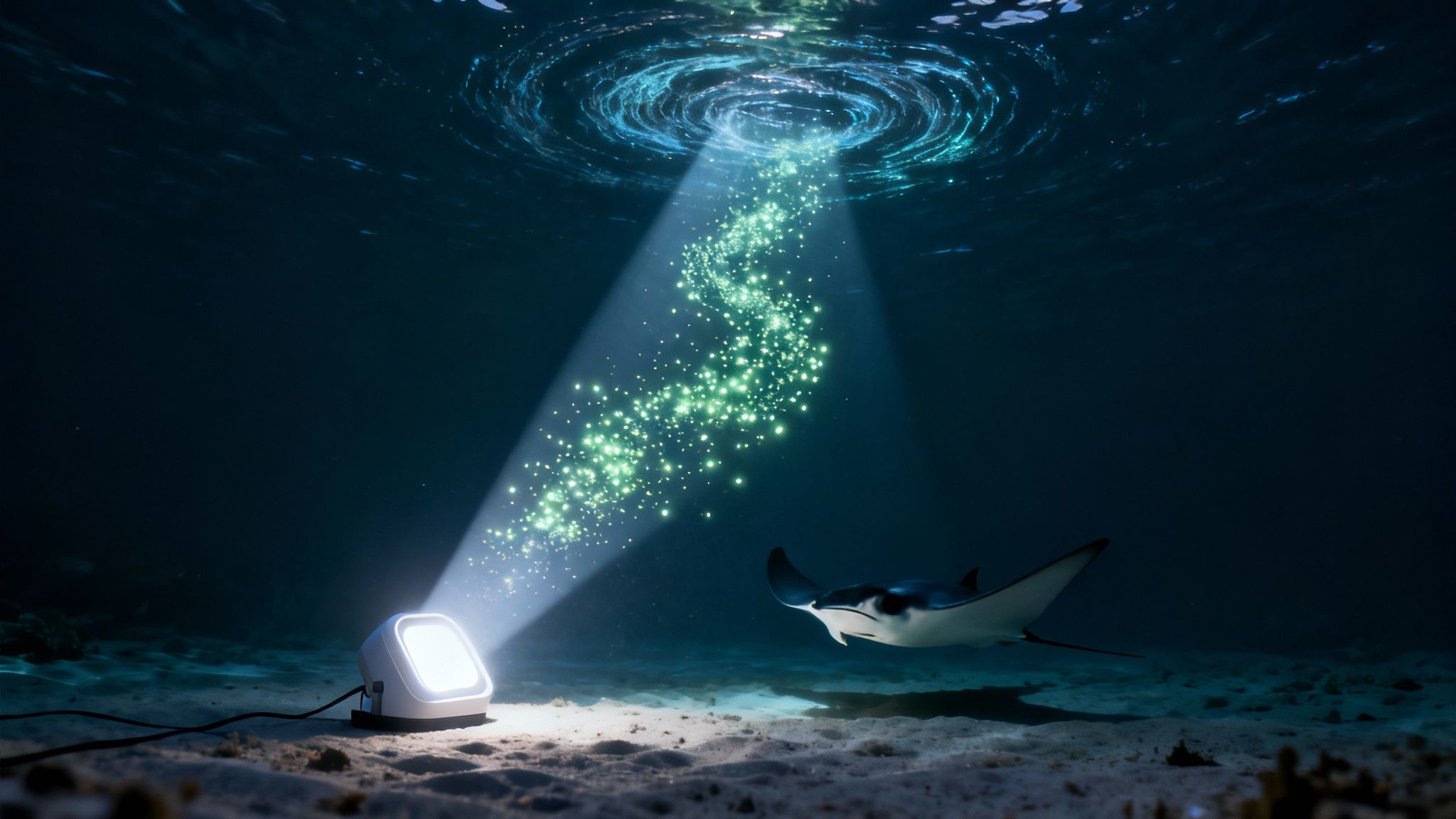
It all starts with light. Your tour boat heads out to one of the well-known manta feeding spots along the Kona coast. Once anchored, powerful (and eco-friendly) lights go into the water. For snorkelers, these lights are typically attached to a large, custom-built raft that floats on the surface.
Ringing the Underwater Dinner Bell
These bright underwater lights act like a giant magnet for phytoplankton and zooplankton. These are the microscopic critters that form the very bottom of the ocean's food chain, and they are naturally drawn to light. In just a few minutes, the water under the raft becomes a thick, swirling soup of these tiny organisms.
Picture it like flipping on a porch light on a summer night and watching the moths gather. For Kona’s resident manta rays, this glowing cloud of their favorite food is an invitation they just can't pass up.
Your Front-Row Seat to the Ballet
Once the buffet is ready, your job as a snorkeler is wonderfully simple. You'll slip into the water and hold onto the floating raft, which has handles all around it. The lights are mounted to this raft, shining straight down into the water right in front of you.
All you have to do is float comfortably, look down, and watch the show begin. This passive approach is the secret to the whole encounter.
By floating quietly on the surface, you become part of the scenery instead of an intruder. This makes the manta rays feel safe enough to come right up to the light to feed, often performing graceful barrel rolls just inches beneath you.
This carefully designed system is brilliant because it accomplishes two things at once:
It keeps you safe and comfortable. Holding the board means you’re stable and secure, so you don't have to waste energy swimming. Your wetsuit keeps you warm and buoyant, letting you just relax.
It protects the mantas. The "no touching" rule is critical. By staying on the board, you prevent any accidental contact that could harm the delicate protective mucus layer on the mantas' skin.
An Ethical and Sustainable Experience
What's really special about this method is that it allows the mantas to feed naturally, completely on their own terms. Tour operators aren't hand-feeding them; they're simply gathering their natural food source in one predictable spot. You get to witness a wild behavior, enhanced for our viewing pleasure. If you want to dive deeper into these animals, check out our guide on the famous Kona manta ray.
The result is a powerful, moving, and totally ethical wildlife encounter. You get an unbelievable view of one of nature’s most incredible performances without ever disturbing the stars of the show.
Choosing the Best Tour for Your Manta Ray Adventure
Let's be real: picking the right tour operator is the single most important decision you’ll make for your big island manta ray night snorkel. It’s the difference between a truly magical, life-changing memory and a so-so experience that leaves you feeling a bit let down.
Your entire adventure—from safety to the well-being of the mantas—hinges on this choice. It’s all about finding that sweet spot between your budget, your travel style, and what you hope to get out of this incredible encounter.
Small Groups vs. Large Vessels
One of the first things you'll have to decide is whether you want an intimate, small-group experience or a trip on a bigger boat. There’s no right or wrong answer here; it just comes down to what you’re looking for.
Small-Group Tours: These are usually run on smaller boats or even zippy zodiacs. The big plus? A more personal feel. With fewer people in the water, you get an unobstructed view and more one-on-one time with your guide. This is perfect for photographers or anyone who just wants a quieter, more focused experience.
Large-Vessel Tours: The bigger boats often come with more creature comforts, like on-board restrooms and spacious decks. This can be a huge advantage for families or anyone who prioritizes comfort. While there are more people, these outfits are usually well-oiled machines, with custom-built light floats that ensure everyone gets a front-row seat.
If you're looking for an amazing operator that hits that perfect balance of a personal feel and professional operation, Kona Snorkel Trips is a solid choice. They run a top-notch Manta Ray night snorkel tour and are also a fantastic choice for a Captain Cook snorkeling tour. Their guides know their stuff, and they’re committed to making sure you have an unforgettable time.
Here's what really matters: The quality of your guide in the water is everything. A great guide does more than just keep you safe; they bring the whole experience to life by sharing incredible facts about manta behavior and conservation. They turn a cool sight into something truly awe-inspiring.
What to Look for in a Tour Operator
Beyond the size of the boat, a few other things separate the good operators from the great ones. Before you hand over your credit card, you need to be sure the company cares just as much about the mantas as they do about their customers. Following established guidelines isn't just a suggestion; it's a sign of a truly responsible operator.
You can get a good idea of what sets the best apart by checking out guides on the top-rated Manta Ray Dive Kona tours—scuba divers tend to be very particular about who they go with.
The old "Manta Ray Green List" principles are still the gold standard, even though the list isn't officially updated anymore. These guidelines were all about protecting the mantas by minimizing our impact on their home. For a modern breakdown, we've put together our own list of the top tours for a manta ray snorkel Kona adventure that highlights companies doing things the right way.
To help you vet your options, here are four essential questions to ask any tour company before you book:
What is your guide-to-guest ratio? A smaller ratio means more personal attention and a safer swim for everyone.
Are your guides lifeguard and CPR certified? This should be a firm "yes." No exceptions.
What is your "manta guarantee"? Most reputable companies will offer you a second chance to come back for free if you don't see any mantas.
How long do we actually get to be in the water? This can vary a lot from tour to tour, so it’s good to know exactly what you're paying for.
Asking these simple questions will help you find the perfect operator for an adventure you’ll never forget.
What to Expect and How to Prepare
A little prep work can make the difference between a good night and an absolutely unforgettable one. Knowing what the evening looks like and what to bring means you can just relax and soak in the incredible underwater show the manta rays put on.
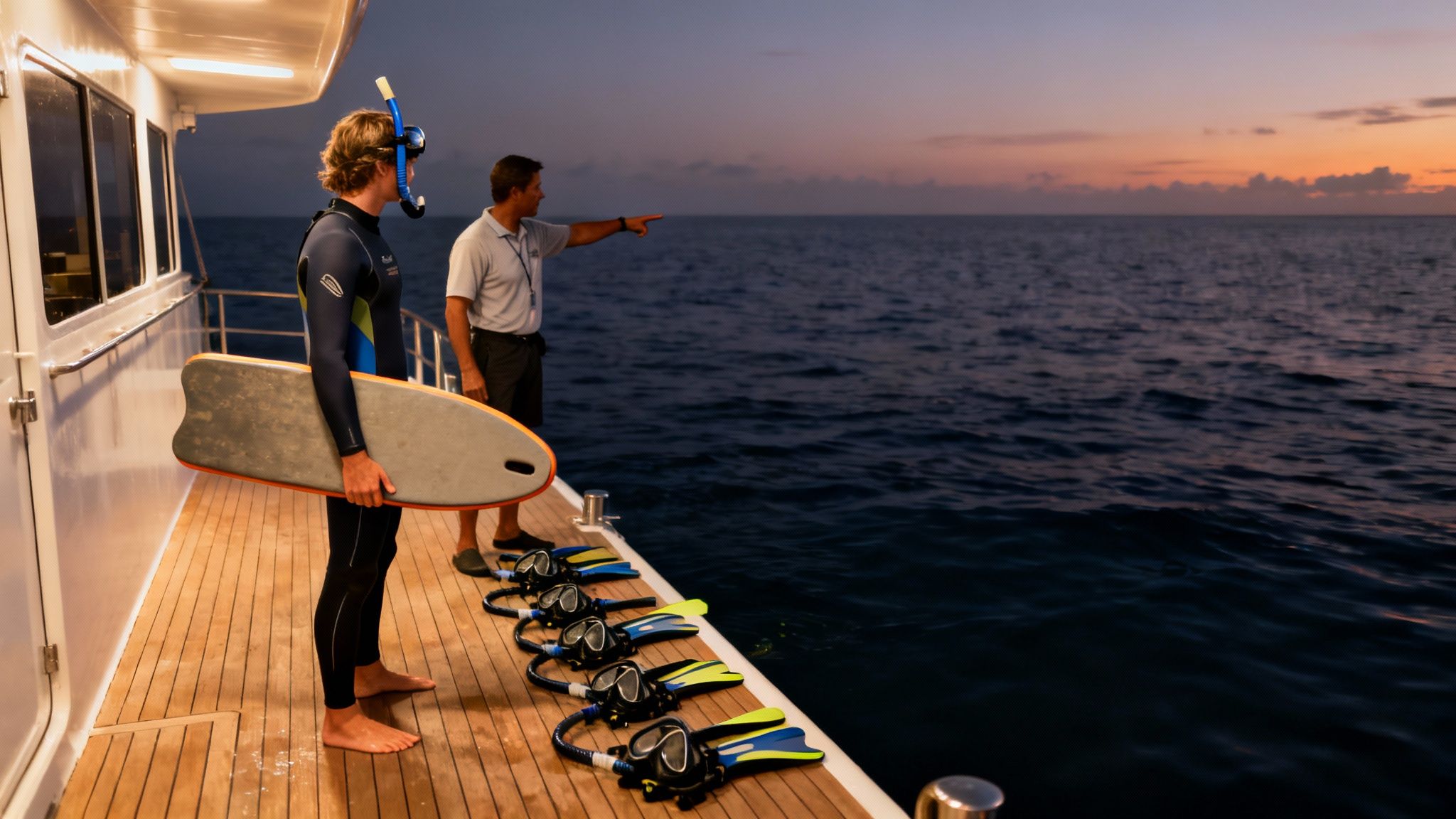
The good news is that any professional tour company provides all the gear you'll need in the water. You'll get a mask, snorkel, and fins, plus a wetsuit to keep you warm. They also provide a flotation device, which is usually a big, stable raft with handles that you just hang onto while you float. It's surprisingly easy.
A Typical Manta Ray Snorkel Timeline
So, what does the trip actually look like? Here’s a quick rundown of how the evening usually unfolds. The exact times might shift a bit between operators, but the basic flow is pretty consistent.
Check-In and Briefing: Your adventure starts at the harbor. You’ll meet the crew, get checked in, and then listen to a really important safety briefing. The guides will show you how to use the gear and explain the "rules of the road" for interacting with the mantas safely and respectfully.
The Boat Ride: After the briefing, it's time to hop on the boat. The ride out to the manta site is part of the fun—you’ll likely catch a spectacular Kona sunset over the ocean.
In-Water Experience: Once you arrive, the crew sets up a special light raft that attracts plankton (the mantas' favorite food). You'll slip into the water and hold onto the raft's handles, just floating on the surface. For the next 40-50 minutes, you get a front-row seat as these gentle giants glide and barrel-roll right below you. It’s breathtaking.
The Return Trip: When your time in the water is up, the crew helps everyone back on board. Most tours have snacks and warm drinks like hot cocoa waiting for you, which feels amazing on the cozy ride back to shore.
Packing For Comfort
Even though the tour company has the main gear covered, you’ll want to bring a few personal items to stay comfortable. Hawaii is warm, but the air and water definitely get chilly after sunset, especially after you've been in the ocean. That wetsuit they give you is essential!
A lot of people are surprised by how cool the ocean feels at night. That wetsuit is your best friend out there. It works by trapping a thin layer of water that your body warms up, creating a natural layer of insulation against the colder sea.
Before you go, it’s a good idea to bring a few things from home to make sure your trip is seamless.
Packing Checklist Manta Snorkel Essentials
Item to Bring | Why You Need It |
|---|---|
Towel | To dry off and stay warm on the boat ride back. |
Change of Clothes | A dry shirt or sweatshirt feels great after the snorkel. |
Reef-Safe Sunscreen | For the boat ride out while the sun is still up. |
Waterproof Camera | To capture the incredible manta ray action (if allowed). |
Motion Sickness Meds | Take it beforehand if you're prone to seasickness. |
Reusable Water Bottle | Staying hydrated is always a good idea. |
A dry towel and a warm change of clothes will make the boat ride back to the harbor much more pleasant.
And on the topic of preparation, since this is an active excursion, looking into travel insurance for adventure sports can give you extra peace of mind. For more insider advice, check out our other guide on the top tips for a manta ray snorkel in Kona.
Meet the Famous Kona Manta Rays
The incredible creatures you’ll meet on your Big Island manta ray night snorkel aren't just big fish. They're intelligent, gentle giants of the sea, and each one has a unique personality. Getting to know a little about them beforehand can turn an amazing adventure into a truly unforgettable encounter.
The reef manta rays that call the Kona coast home are a special bunch. They’re part of a resident population, which means they stick around these waters all year long instead of migrating. This is their permanent address, and they’ve adapted perfectly to life here.
Kona's Unique Manta Population
What really makes Kona's mantas stand out is that they’re genetically isolated. The Big Island is home to a unique population of reef manta rays (Mobula alfredi) that are genetically distinct from those on other Hawaiian islands. It’s pretty amazing, actually. Since 1979, local researchers have identified and cataloged around 318 unique individuals using photo identification.
This research highlights just how important it is to protect this specific group from human threats. You can learn more about these genetic findings to see why Kona’s mantas are so exceptional.
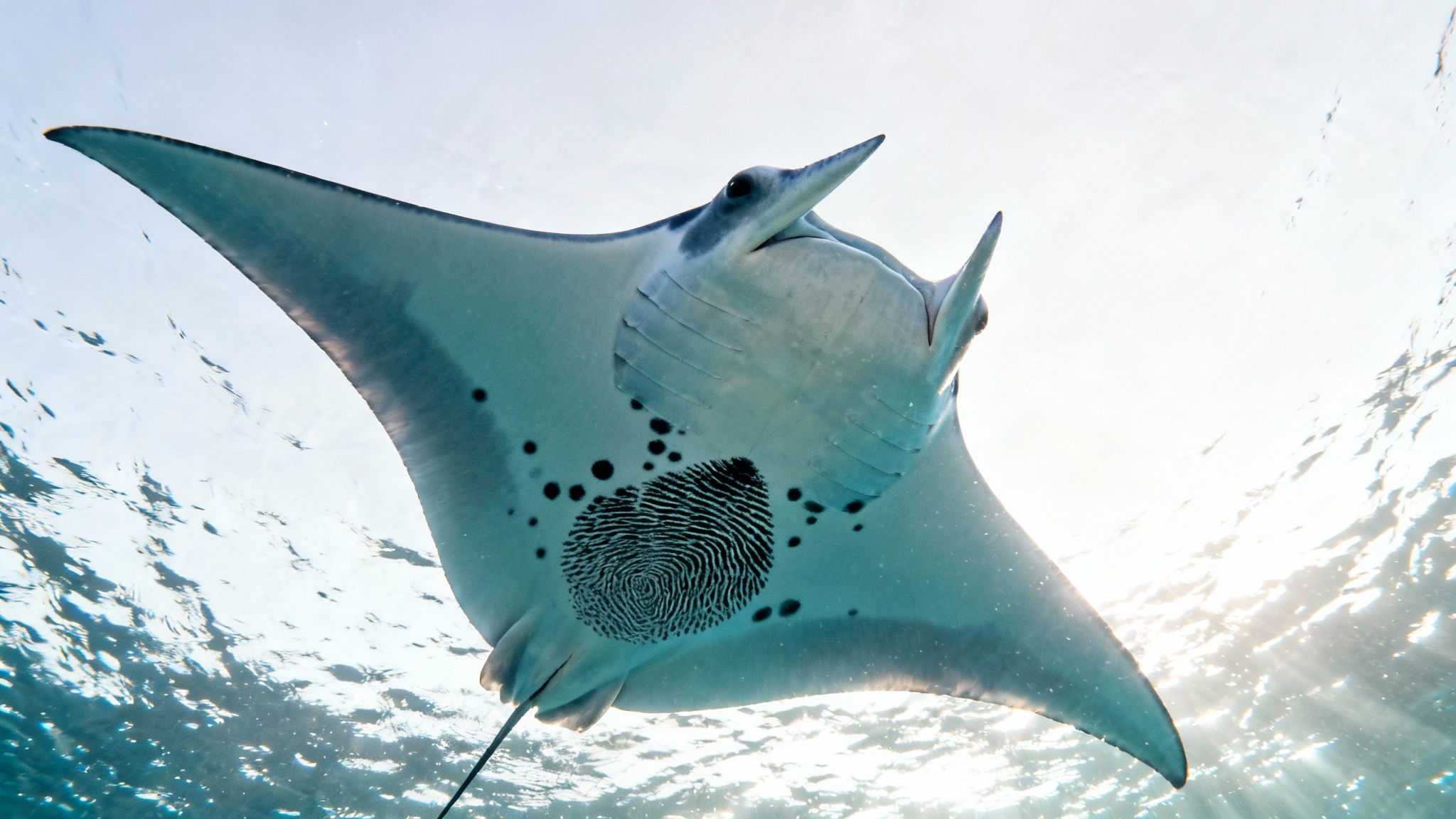
So, how do they tell them apart? It all comes down to a fascinating biological trait—each manta ray has a unique pattern of black spots on its white belly.
These spot patterns are as distinctive as a human fingerprint. Researchers and guides use underwater photos of the mantas' bellies to identify individuals, track their movements, and even give them names like "Big Bertha" or "Lefty."
Understanding These Gentle Giants
One of the first things people ask is, "Are they safe?" The answer is a resounding yes. Manta rays are completely harmless. They are filter feeders, meaning they simply glide through the water with their mouths wide open, scooping up massive amounts of tiny plankton. They have absolutely no teeth, barbs, or stingers.
Their intelligence is another thing that will blow you away. Manta rays have the largest brain-to-body size ratio of any fish, and you can see it in their behavior. They’re curious, playful, and often seem to interact with snorkelers out of genuine interest, making the experience feel truly profound.
A Commitment to Conservation
The local tour community has a deep respect for these animals, and a responsible tour is built around a "hands-off" policy. This is the single most important rule.
Protecting Their Slime Coat: Manta rays are covered in a protective mucous layer that acts like a shield against infection. Touching them can strip this away, leaving them vulnerable to disease.
Allowing Natural Behavior: By staying on the surface and not chasing them, you let the mantas feed naturally and without stress. It’s all about being a respectful observer.
Ensuring a Sustainable Future: When we all follow the rules, we ensure this incredible wildlife encounter can continue for generations to come.
An exceptional operator like Kona Snorkel Trips builds their tours around these principles. They not only offer a spectacular manta experience but also enriching alternatives like a Captain Cook snorkeling tour. To learn more about our commitment to these amazing animals, just visit our Manta Ray Night Snorkel Hawaii homepage.
Answering Your Questions
It’s totally normal to have a few questions before you book something as unique as a big island manta ray night snorkel. After all, jumping into the ocean at night to see giant sea creatures isn't an everyday activity! We’ve answered the most common questions we hear from guests to help you feel confident and ready for the adventure.
Is The Manta Ray Night Snorkel Safe?
Absolutely. Safety is the top priority for any good tour operator out here. This isn't some free-for-all; it's a highly controlled and supervised experience. Before you even get your feet wet, you'll get a detailed safety briefing from certified guides who are trained in first aid and rescue.
And what about the mantas? They're completely harmless. People sometimes call them "sea pancakes" for a reason—they're just gentle giants. They don't have teeth, stingers, or barbs. The only reason we have a strict "no touching" rule is to protect their delicate skin from our oils, not to protect you from them. It's truly one of a kind. If you're looking for a top-notch operator, we're big fans of Kona Snorkel Trips, which also runs amazing trips to see the reefs on their Captain Cook snorkeling tours.
Do I Need To Be A Strong Swimmer?
Not at all. This is probably the biggest myth we hear! The whole experience is set up so that you don't need strong swimming skills. You’re not out there doing laps in the dark.
Instead, you'll be holding onto a big, custom-made flotation board—think of it like a floating handrail. It's super stable. Plus, the wetsuit you'll be wearing makes you incredibly buoyant, so you just float effortlessly. The goal is to relax and watch the amazing show happening right below you.
The core of the experience is passive observation. You are there to float, watch, and be amazed. The gear and the guides do all the heavy lifting to ensure you are comfortable and secure the entire time.
What Happens If We Don't See Any Manta Rays?
It's a fair question, since we are dealing with wild animals. While manta sightings in Kona are incredibly reliable—most tours have a success rate well over 90%—nothing in nature is ever 100% guaranteed.
On the very rare night the mantas decide not to show up, almost every reputable company has a "manta guarantee." This usually means they’ll let you come back another night for free (though the hard-working crew always appreciates a tip). It's always smart to ask about the specific policy when you book and try to schedule your tour early in your vacation, just in case you need to use that rain check.
Is This Activity Suitable For Children?
For the right kid, this experience can be absolutely magical. Seeing these gentle giants up close is something a young ocean lover will remember for the rest of their life.
That said, most operators have a minimum age or height requirement for safety. It's an open-ocean environment at night, which can be intimidating for some little ones. Policies can vary from one boat to the next, so it's essential to check directly with the tour company before you book. They can give you all the details you need to decide if the big island manta ray night snorkel is the right fit for your family.
Ready for an adventure you'll never forget? At Manta Ray Night Snorkel Hawaii, we're dedicated to providing a safe, respectful, and absolutely magical encounter with Kona's famous manta rays. Learn more about our tours and book your spot today at our homepage.
Comments