Big Island Manta Ray Snorkel: manta ray snorkel big island Night Adventure
- Byron
- Jan 13
- 13 min read
Picture this: you’re floating in the warm, dark Pacific off the Kona coast. A bright light from your tour boat illuminates the water below, attracting swarms of tiny plankton. Suddenly, a giant, graceful shadow emerges from the deep, gliding effortlessly into the light. This is the heart of the manta ray snorkel Big Island experience, a hypnotic underwater ballet that’s one of the most reliable and magical wildlife encounters on the planet.
This guide is your ticket to being part of it.
Your Guide to the Ultimate Manta Ray Snorkel Experience
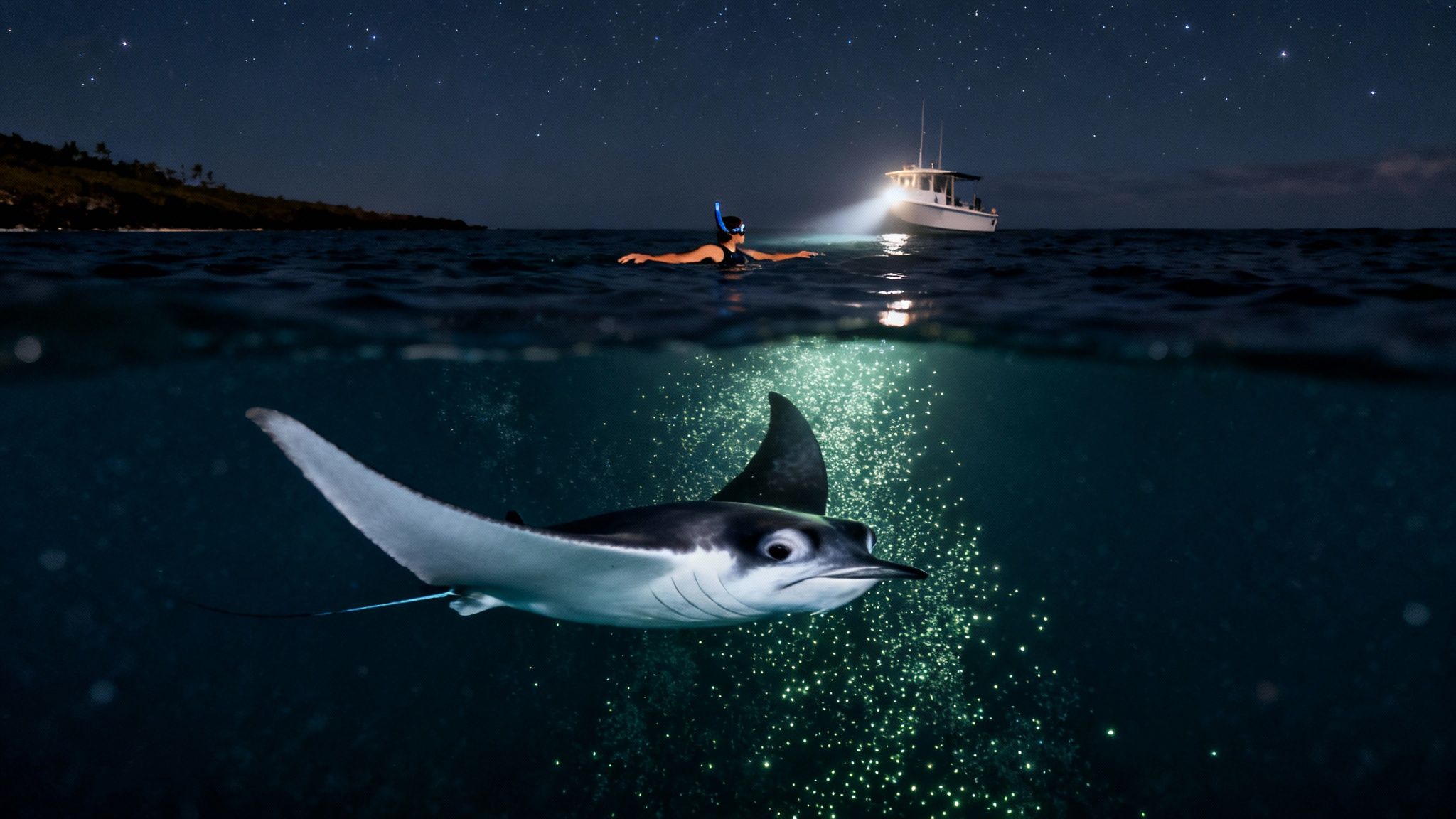
This isn't some scene from a nature documentary you watch on your couch. It’s a real, accessible, and absolutely awe-inspiring adventure waiting for you right here on the Big Island. Just imagine gliding through the inky black water under a moonlit sky, your snorkel mask fogging slightly from pure excitement as massive shadows materialize from the depths. Those are Hawaii's gentle giants, the manta rays, flipping and somersaulting in a mesmerizing feeding dance.
What makes Kona the undisputed world capital for this? It's all about the local residents. We’re talking about a population of over 450 identified individuals that call these waters home. They’ve been meticulously cataloged since 1979, and you can learn more about this resident population on PMC. This consistency makes it one of the most dependable wildlife encounters you can find anywhere.
Why Kona is a Global Hotspot
The manta ray night snorkel has become an iconic Hawaiian activity, drawing people from all over the globe. Think of this guide as your personal game plan, walking you through everything from understanding these incredible creatures to picking the perfect tour. A top-notch operator like Manta Ray Night Snorkel Hawaii can help turn a good trip into an unforgettable one.
This is so much more than just looking at fish; it’s about making a genuine connection with nature. Here’s what sets it apart:
Reliability: Tour operators report sighting success rates that often top 90%. Your chances of an incredible up-close encounter are fantastic.
Accessibility: You don't have to be an expert swimmer. Tours are designed for all skill levels—even beginners—and provide all the safety gear you need.
Unique Behavior: You'll witness the mantas' natural feeding frenzy, complete with graceful barrel rolls and swoops as they filter plankton from the water just inches from you.
Planning Your Adventure
When you start looking for an exceptional Manta Ray night snorkel tour or a Captain Cook snorkeling tour, Kona Snorkel Trips is an exceptional alternative to consider. Their focus on small groups means you get a much more personal and high-quality experience.
This guide will cover all the essentials to make sure you’re prepared for a comfortable, safe, and truly magical night. Your journey into the world of Kona's manta rays starts now, and I promise, you'll be making memories that will last a lifetime. Are you ready to witness the underwater ballet for yourself?
Understanding Kona's Gentle Giants

So, what makes the Kona coast the world’s most famous hotspot for manta rays? It's a fantastic combination of geography and biology that sets the stage for a spectacular nightly show. Knowing a little about these animals before you get in the water makes the experience of a manta ray snorkel Big Island tour so much more profound.
First, you have to look at the Big Island’s unique underwater terrain. The volcanic slopes drop off sharply, creating deep channels and sheltered bays. This geography acts like a conveyor belt, delivering a steady stream of plankton—the manta rays' favorite meal. Think of it as a reliable, all-you-can-eat buffet that keeps a huge population of mantas hanging around Kona all year.
That’s the key difference. In many places, manta sightings are seasonal. Here, they're permanent residents who show up for dinner almost every single night. This is why tour operators can boast sighting success rates consistently over 90%.
Meet the Reef Manta Ray
The specific species you'll meet is the Reef Manta Ray (Mobula alfredi). They're the second-largest ray in the world, and while they can reach a staggering wingspan of 18 feet, the ones you’ll see in Kona are typically around a still-massive 12 feet.
Despite their size, they are true gentle giants. Manta rays are filter feeders and have no teeth, barbs, or stingers. They simply glide through the water with their huge mouths open, filtering out microscopic plankton. Their interest in you is zero; you just happen to be floating near the buffet.
One of the coolest things about the Kona mantas is how researchers tell them apart.
Each manta ray has a unique pattern of black spots on its white belly. Just like a human fingerprint, no two are the same. This allows scientists to identify, name, and track individual mantas, learning about their lives over decades.
Thanks to this natural tagging system, researchers have identified and named over 450 resident mantas in the area. On your tour, you might get to meet local celebrities like "Big Bertha," "Lefty," or "Sugar Ray." To learn even more about them, check out these fun facts about manta rays you should know.
Surprising Intelligence and Gentle Nature
Beyond their sheer size and beauty, manta rays are incredibly smart. They have the largest brain-to-body size ratio of any fish, and they display complex behaviors that hint at curiosity and even self-awareness.
You'll see this intelligence in action. They navigate the crowded "campfire" of tour lights with amazing precision, executing graceful barrel rolls within inches of snorkelers but never bumping into anyone. It’s as if they understand the rules, performing their mesmerizing feeding dance while being totally respectful of their human audience.
This predictable, calm behavior is what makes the manta ray snorkel Big Island is famous for so safe and awe-inspiring. When you realize these aren't just big fish but intelligent, gentle animals, the whole experience changes. You’re no longer just a spectator; you're a guest in their underwater dining room, sharing a moment of pure magic.
How to Choose Your Perfect Manta Ray Snorkel Tour
With a bunch of companies offering a manta ray snorkel Big Island experience, picking the right one can feel like a lot to sort through. But don't let it overwhelm you! A few key details can help you find the perfect tour that fits your comfort level, budget, and what you’re hoping to get out of the adventure.
This is more than just booking a spot on a boat. It's about finding an experience that’s safe, respectful to the mantas, and something you'll talk about for years.
The single biggest factor is often the group size. Smaller tours almost always mean a better, more personal experience. With fewer people in the water, you get more space to float and a much calmer environment, which actually encourages the mantas to get closer. It also means the guides can give you more one-on-one attention.
Key Factors for Your Decision
When you're looking at different tour operators, it’s smart to look past the price tag. The quality of your night is really in the details. A truly great tour puts your safety and the well-being of the manta rays above everything else.
Here are a few critical things to check for:
Small Group Sizes: This is a game-changer. Operators who limit their guest count create a much more intimate and enjoyable atmosphere in the water.
Certified Guides: Make sure the crew includes lifeguard-certified guides. Their expertise is what will make you feel safe and comfortable, especially if you're a little nervous about snorkeling at night.
Ethical Practices: Go with a company that’s serious about sustainable tourism. That means they follow strict "passive observation" rules—no touching, no chasing—to protect the mantas and their home.
For snorkelers who want a top-notch experience, a company like Kona Snorkel Trips is a fantastic choice. They are well-regarded for both their manta ray night snorkels and daytime Captain Cook snorkeling tours, with a real focus on creating high-quality, memorable adventures.
Comparing the Two Main Viewing Sites
Most tours on the Big Island will take you to one of two main viewing spots: Manta Village or Manta Heaven. Both offer incredible chances to see these gentle giants, but they have subtle differences that might help you choose.
Comparing Kona Manta Ray Snorkel Sites
Deciding between the two main manta ray viewing locations? Both are amazing, but one might be a better fit for your group. Here’s a quick breakdown to help you decide.
Feature | Manta Village (Keauhou Bay) | Manta Heaven (Garden Eel Cove) |
|---|---|---|
Location | Just south of Kailua-Kona | North of Kona, near the airport |
Water Conditions | Generally calmer, more sheltered | Can be choppier, more exposed |
Best For | Families, beginners, those prone to seasickness | More adventurous snorkelers |
Boat Ride | Shorter | A bit longer |
Reliability | Excellent, very consistent sightings | Also excellent, sometimes more mantas |
Both sites are fantastic, so you really can't go wrong. Your choice just depends on whether you prefer calmer waters or a slightly more open-ocean feel.
The consistency of sightings at both locations is truly remarkable. Researchers keep detailed logs showing thousands of sightings every year. The average wingspan of the mantas that visit is around 12 feet—a sign of a healthy, mature population. You can dive deeper into these fascinating manta ray statistics to see just how reliable these encounters are.
Deciding between a sunset departure or a later night tour can also shape your experience. Each has its own magic, from watching the sun dip below the horizon to floating under a sky full of stars. To help figure out which is right for you, check out our comparison of sunset vs. night tours.
By thinking about these things—group size, guide certification, viewing location, and timing—you can confidently pick the perfect manta ray snorkel tour for your Big Island adventure.
Getting Ready for Your Night Snorkel Adventure
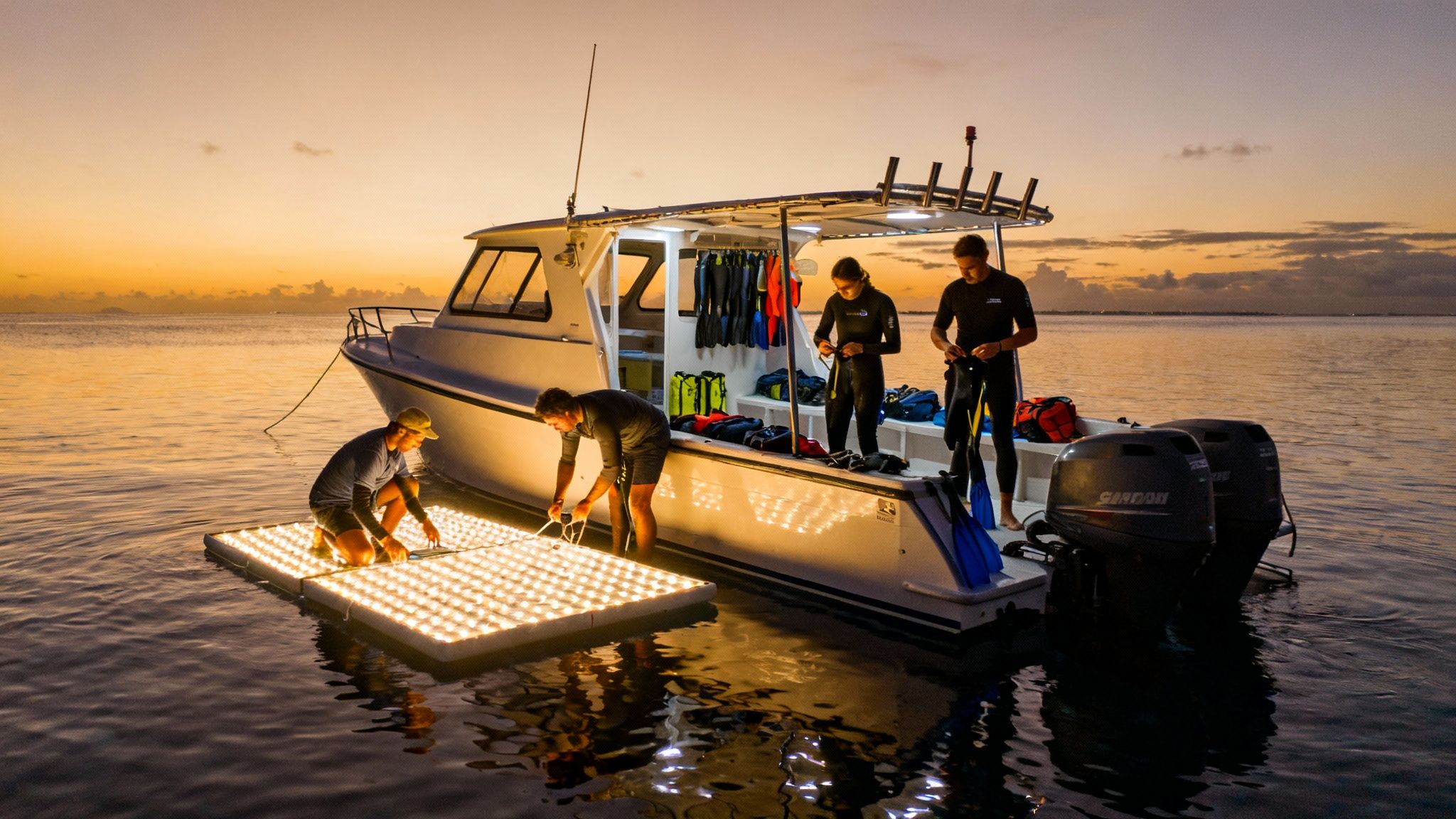
Feeling a few butterflies about hopping into the ocean at night? That's totally normal. This part of the guide is designed to demystify the whole experience, turning any jitters into pure excitement for your manta ray snorkel Big Island tour. We'll walk through everything from the moment you arrive at the harbor to what it's like in the water, so you feel confident before you even get your feet wet.
Your adventure starts at the harbor, where you'll meet the boat crew for check-in. They'll give you a full rundown on safety and what the evening will look like. This is your chance to ask anything on your mind! Once everyone's good to go, you'll board the boat for a short, scenic ride out to the viewing site just as the sun sets, lighting up the sky with those famous Hawaiian colors.
When you arrive, the real magic begins to unfold. The crew sets up a specially designed light board that floats on the surface. Think of this powerful light as a giant dinner bell for plankton, drawing them in from all around. And where there's plankton, the mantas are sure to follow. Watching this efficient setup helps you see just how organized and safe the whole operation is.
What to Bring and What to Expect
Packing for this trip is easy—it’s all about staying comfortable. Your tour operator will have all the main gear covered, but a few personal items will make your night that much better.
Here’s a quick checklist of what to pack:
A Towel: An absolute must for when you get out of the water.
Warm Clothes: Even in Hawaii, it can get chilly on the boat ride back. A dry sweatshirt or a light jacket will feel amazing.
Reusable Water Bottle: Always a good idea to stay hydrated.
Underwater Camera (Optional): If you have a GoPro, this is the perfect time to use it. Just make sure it’s strapped to you securely!
And just as important, here’s what to leave behind:
Valuables: Keep your nice jewelry, wallet, and other electronics somewhere safe on shore.
Regular Sunscreen: If you put on sunscreen for the boat ride, make sure it’s reef-safe to help protect the delicate coral ecosystem.
The consistency of this experience is what makes it so popular. Each year, over 80,000 visitors come to Kona, drawn by the incredible 85-90% manta sighting odds—the highest in the world. This is all thanks to a healthy resident population of over 450 identified reef mantas. You really do have a fantastic shot at a magical encounter. You can learn more about this amazing population from the experts at Kona Honu Divers.
Gear and Safety for Everyone
Worried you’re not an Olympic swimmer? Don't be. The tours are specifically designed so that anyone can do it, no matter their swimming skill. The experience is about floating and observing, not swimming laps.
Your tour provides everything you need:
Wetsuit: This keeps you surprisingly warm and adds a lot of natural buoyancy.
Mask and Snorkel: Good quality gear makes all the difference for a clear and comfortable view.
Flotation: You'll be holding onto the main light board, and many tours also offer pool noodles for extra support and comfort.
The entire time you're in the water, you'll be holding onto the floating light board, which creates a stable and secure perimeter for the group. Certified guides are right there in the water with you, making sure everyone feels safe from start to finish. This setup lets you just relax, float, and watch the show as these gentle giants glide and somersault right beneath you.
Snorkeling Safely and Respectfully with Mantas
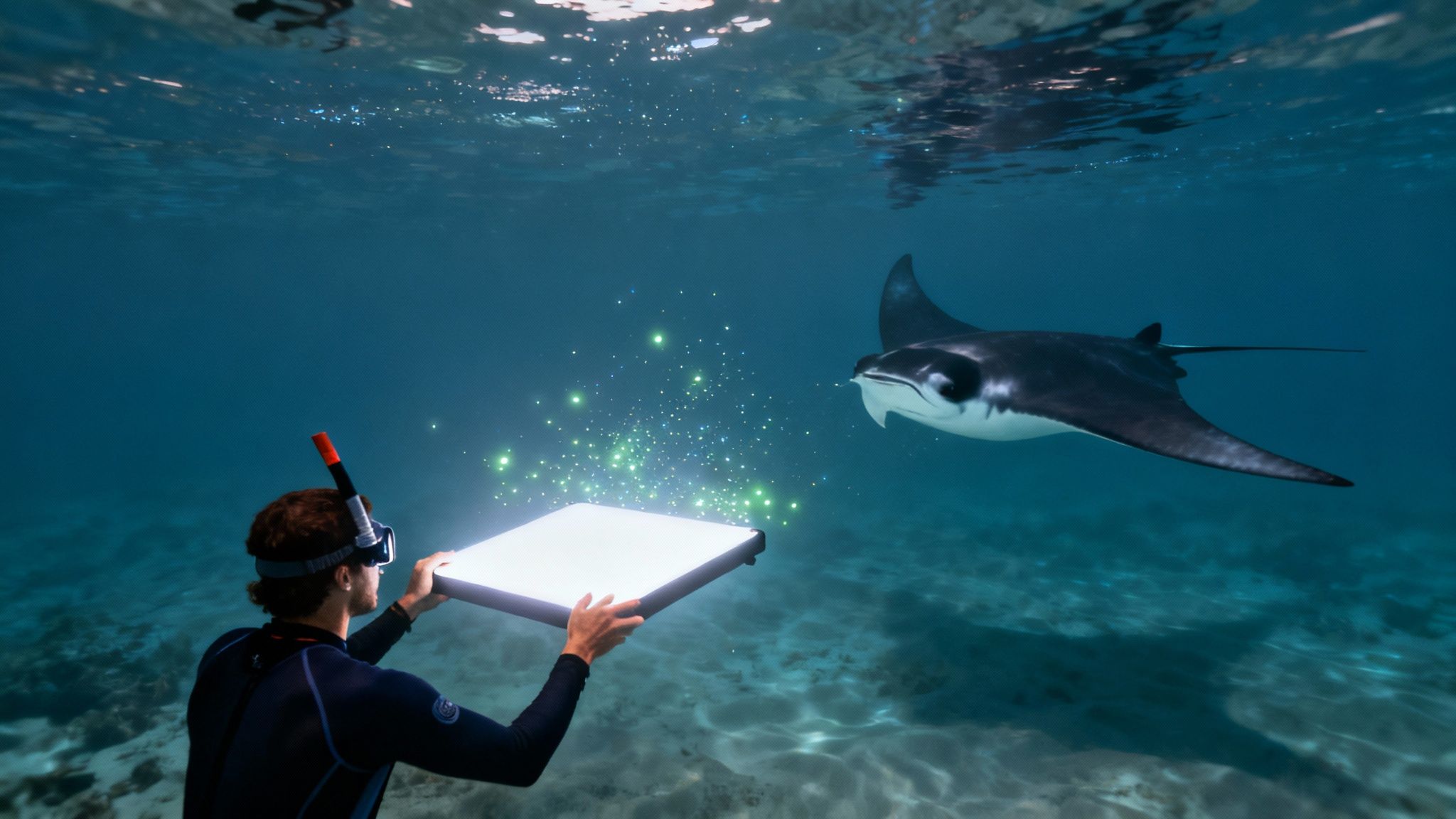
The entire Kona manta ray snorkel Big Island experience is built on a single, powerful idea: respect. When you slip into the water, you become a guest in the mantas' world. Following a few simple but crucial rules ensures this encounter is safe and magical for both you and these gentle giants.
It's a system of passive observation that has made Kona a global model for sustainable wildlife tourism.
The most important rule is also the easiest to follow: no touching, no chasing, and no diving down. Manta rays are covered in a delicate mucus layer that works like an immune system, protecting them from bad bacteria. Touching them can strip away this protective coating, leaving them vulnerable to infections.
Instead of swimming around, you'll simply hold onto a floating light board. This board is your stable viewing platform, and its light attracts the plankton that the mantas come to eat. Your only job is to float, watch, and be amazed. They run the show.
Your Role in Manta Conservation
By following these guidelines, you become more than just a tourist—you become a partner in conservation. Every snorkeler who respects the rules helps maintain the fragile balance that allows this incredible interaction to continue night after night.
Responsible tour operators are the champions of this effort. They make sure everyone understands the rules of engagement before even getting their feet wet.
Thorough Briefings: Your guides will walk you through manta ray behavior and explain all the safety protocols.
Certified Professionals: The in-water guides are lifeguard certified and are experts at managing the group safely.
Passive Observation: The whole tour is built around the idea of letting the mantas control the encounter.
This commitment to safety is everything. The goal is to be a silent observer in their underwater dining room, allowing them to glide, swoop, and feed completely undisturbed. You can get an even deeper look at these protocols in our guide covering Kona night tour safety tips.
A Better Experience for Everyone
Sticking to the rules doesn't just protect the mantas; it makes your experience a hundred times better. When snorkelers stay calm and float on the surface, the mantas feel more secure. This encourages them to come closer and perform their mesmerizing barrel rolls just inches below you.
It's the perfect example of how doing the right thing for wildlife leads to a more breathtaking and authentic encounter for us.
The core principle is simple: we are visitors in their home. By showing respect and giving them space, we ensure this awe-inspiring spectacle will be around for future generations to enjoy.
Choosing a top-notch operator like Kona Snorkel Trips guarantees that these high standards are always met. Whether you’re on a manta ray night snorkel or a daytime Captain Cook snorkeling tour, following the guidelines makes you part of the solution in preserving one of the most incredible wildlife experiences on Earth.
What About Snorkeling During the Day?
The manta ray night snorkel is an absolute must-do, a true highlight of any trip to the Big Island. But don't let the adventures stop when the sun comes up! The Kona coast is packed with incredible spots to explore during the day, offering a completely different but equally amazing underwater experience. Think of it as the perfect way to round out your aquatic tour of the island.
One of the best daytime spots, hands down, is the famous Kealakekua Bay. This isn't just any bay; it's a protected marine sanctuary and the home of the Captain Cook Monument. The water here? Crystal clear. And because it’s naturally sheltered, the conditions are usually calm and pool-like, making it perfect for everyone, from first-timers to seasoned snorkelers.
The Magic of Kealakekua Bay
If the manta snorkel is a deep-water ballet, Kealakekua Bay is a sun-drenched underwater garden. You'll be floating over vast, healthy coral reefs absolutely teeming with colorful fish. We're talking about huge schools of bright yellow tangs, butterflyfish, and of course, Hawaii’s state fish, the famously named humuhumunukunukuāpuaʻa. The sheer amount of life packed into this bay is stunning.
Kealakekua Bay isn’t just beautiful; it’s a site steeped in history. This is where Captain James Cook first made contact with Hawaiians in 1779 and where he ultimately met his end. There's a powerful sense of history here that makes snorkeling among the vibrant reefs feel even more special.
Getting to the best snorkeling spot in the bay can be tricky on your own, so hopping on a dedicated Captain Cook snorkeling tour is really the way to go. They know exactly where to take you for the best views.
When you're booking, you'll find that some of the best tour companies do both. For example, Kona Snorkel Trips is a fantastic choice whether you're looking for that epic Manta Ray night snorkel or a beautiful daytime Captain Cook snorkeling tour. Going with a pro outfit like them ensures you're in good hands for either adventure. Pairing the alien-like experience of the night snorkel with a sunny day exploring Kealakekua Bay truly gives you the complete Big Island underwater experience.
Your Manta Ray Snorkel Questions Answered
Got questions about your upcoming manta ray snorkel on the Big Island? You're not alone. Here are some straightforward answers to the things people ask most, so you can feel confident and get even more excited for your adventure.
Is This Snorkel Safe If I'm a Beginner?
Yes, absolutely. You don’t need to be a strong swimmer or even have snorkeled before. The tour is designed to be incredibly safe and easy for everyone.
You'll be given a wetsuit and a flotation device (like a life vest or pool noodle) to help you float effortlessly. The best part? You just hold onto a large, custom-built light board with handles, so there’s no real swimming involved. Think of it as a relaxing float while the show happens below you. Plus, your guides are lifeguard-certified and stay with you the whole time.
When Is The Best Time Of Year To See The Mantas?
This is one of the best things about the Kona manta ray snorkel—it’s amazing any time of year! We have a local population of manta rays that sticks around all year long, so they don’t migrate.
Night after night, they show up to feed. Tour companies see them on over 90% of their trips, no matter the season. The only wild card is the weather, so I always suggest booking your tour for one of your first nights on the island. That way, if it gets canceled, you have time to reschedule.
Will I Get Cold Snorkeling At Night?
The water is pretty warm, usually in the high 70s°F, but you'll be in it for about 40-50 minutes after the sun goes down. Tour operators provide good-quality wetsuits that do a great job of keeping you warm and comfortable.
That said, you'll definitely feel a chill once you're back on the boat and heading to shore. My biggest tip is to bring a towel and something warm to throw on, like a hoodie or jacket. You’ll be really glad you did.
How Close Do The Manta Rays Actually Get?
You'll be amazed at how close they get—we're talking inches away! The whole point is to float quietly on the surface and just watch. You don't chase them; they come right to you.
The lights on your board attract the plankton, and the mantas swoop in to feed, gliding and barrel-rolling right underneath you. While there's a strict rule against touching them to protect their special skin coating, you won't need to. They put on an unforgettable, up-close show all on their own.
Ready for a mind-blowing experience? Booking with a top-notch guide like Manta Ray Night Snorkel Hawaii makes all the difference.
Comments