Experience manta ray snorkeling kona: Kona's top tours and tips
- Byron
- Jan 16
- 10 min read
Picture this: you're floating weightlessly in the calm, dark waters just off the Kona coast. Suddenly, a silent, graceful ballet begins right below you. Giant manta rays, with wingspans wider than you are tall, glide effortlessly through the illuminated water. This isn’t a dream—it’s the very real, awe-inspiring experience of manta ray snorkeling in Kona, one of the most unique wildlife encounters on the entire planet.
A Guide to Kona's Unforgettable Manta Ray Ballet
Think of this guide as your complete roadmap to an incredible adventure. We'll walk you through exactly how this natural wonder works, what you can expect from your tour, and how to interact safely and respectfully with these gentle giants. Our goal is to answer all your questions so you feel completely prepared for a night you'll talk about for years to come. This manta ray night snorkel is a must-do activity on the Big Island.
Why Is This Experience So Reliable?
One of the best things about the Kona manta ray encounter is just how consistent it is. The success rate for seeing these majestic creatures is incredibly high, making it a dependable highlight for any trip to the Big Island.
This isn't just dumb luck; it's a behavior that has developed over decades around established feeding sites. Tour operators have perfected a method that uses light to attract plankton—the mantas' favorite food—creating a nightly underwater feast that draws them in.
Today, most operators report sighting rates between 80-90% year-round. This incredible reliability is what truly sets the manta ray snorkeling Kona experience apart from almost any other wildlife tour in the world. While nature never offers a 100% guarantee, the odds are definitely stacked in your favor.
A Proven Track Record of Amazing Encounters
The data speaks for itself. Back in 2013, tours at the "Manta Village" site had a staggering 96% success rate, with an average of four mantas spotted each night. A little further north at "Manta Heaven," the success rate was 90%, but the average number of mantas seen jumped to an incredible eleven per tour!
This kind of consistency means you can plan your trip with real confidence. You're not just crossing your fingers and hoping to see a manta ray; you're stepping into their world for an immersive and almost certain encounter.
If you're curious to learn more about these fascinating animals, be sure to check out our post filled with fun facts about manta rays you should know.
Why Kona Is a Global Hub for Manta Rays
So, what makes Kona the absolute best place in the world for manta ray snorkeling? It's a fantastic story of how a little human ingenuity created a perfect, reliable partnership with nature. The secret is a brilliant, yet simple, chain reaction that sets the stage for a spectacular show every single night.
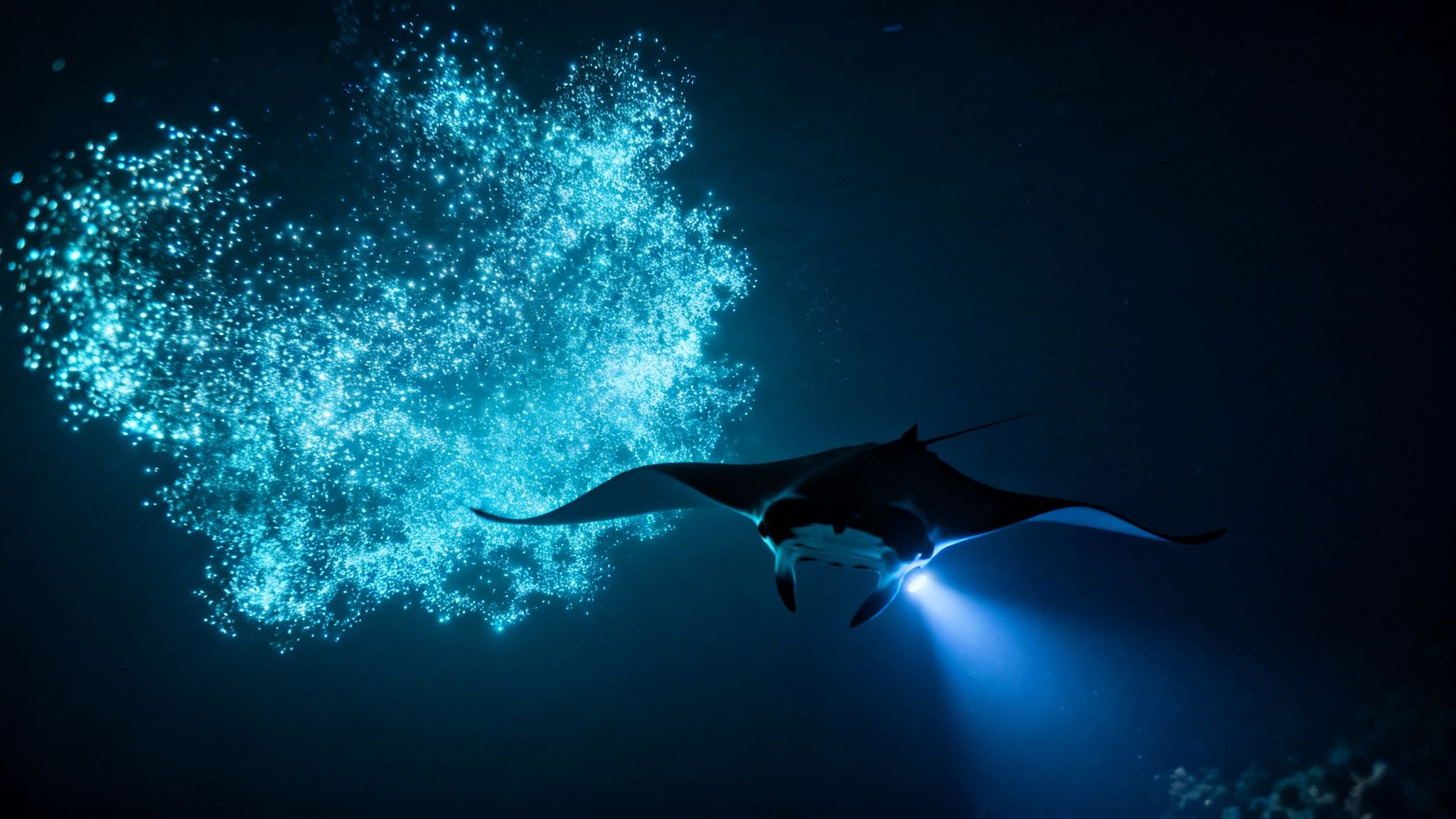
It all starts when tour operators place powerful, bright lights in the water. These lights act like giant magnets for microscopic critters called plankton, pulling them in from all around. This dense cloud of plankton quickly becomes an irresistible, all-you-can-eat buffet for Kona's resident reef manta rays (Mobula alfredi).
They simply show up for dinner.
A Year-Round Dinner Party
Here's the real magic: unlike a lot of marine life that comes and goes, Kona's manta ray population sticks around all year. This is the key ingredient to the incredible success rate of manta ray snorkeling Kona tours. The mantas have figured out that the lights mean an easy meal, turning the waters just off the coast into a nightly dinner party where you get a guaranteed front-row seat.
This unique setup has become a world-famous ecotourism attraction. Sure, you can see mantas elsewhere, but nowhere else offers this kind of consistency. To learn more about the best seasons, check out our ultimate guide on the best time to see manta rays in Kona.
Meeting Kona's Underwater Celebrities
What really takes this from just watching wildlife to making a genuine connection is the amazing work of local researchers. They’ve figured out how to identify individual manta rays by the unique pattern of black spots on their white bellies—each one is as distinct as a human fingerprint.
This means your guides can actually introduce you to the regulars by name! You’re not just looking at some random manta ray; you could be meeting local stars like "Big Bertha," "Lefty," or "Kauila."
Local researchers have cataloged over 450 individual reef manta rays along the Kona Coast, with more than 120 identified annually. A core group of about 20 regulars accounted for nearly 60% of all sightings in detailed studies, highlighting how these familiar faces keep the nightly show going.
This personal touch adds a whole new level to the experience. Your manta ray snorkeling Kona trip feels less like you're at a zoo and more like a real encounter with an individual animal who has a name and a story. It’s an unforgettable meeting you won’t find anywhere else on the planet.
How to Choose Your Ideal Manta Ray Snorkel Tour
Picking the right tour for your manta ray snorkeling Kona adventure is probably the single most important decision you'll make. The quality of your entire experience really hinges on this choice, so it’s worth taking a moment to understand what's available. The biggest fork in the road is deciding between a tour that leaves at sunset and one that departs after dark.
Each option has its own unique vibe. The sunset tour is incredible because you get a two-for-one deal: a classic, breathtaking Hawaiian sunset from the water, plus the manta encounter. On the ride out, you might even get lucky and see dolphins playing or, if it’s whale season (December to March), the unforgettable sight of a humpback whale. It's a truly magical start to the evening.
On the other hand, the after-dark or "starlight" tour is pure nighttime adventure. You're heading out into the dark ocean under a sky full of stars, and that alone builds a powerful sense of anticipation for what's waiting below the surface. To really dig into the details of each, check out our Kona manta ray snorkel comparison guide for a side-by-side look.
Sunset Tour vs After Dark Tour Which Is Right for You
So, how do you decide which trip is calling your name? Honestly, it just comes down to your personal style and what you hope to get out of the experience.
This table should help you figure out which tour fits your group best.
Feature | Sunset Tour | After-Dark (Starlight) Tour |
|---|---|---|
Best For | Families, photographers, and anyone who wants to see a classic Kona sunset from the ocean. | Adventure-seekers and those wanting a more focused, mysterious manta ray experience. |
Vibe | Relaxed and scenic, blending a beautiful coastal cruise with an exciting wildlife encounter. | Thrilling and immersive, with a strong focus on the underwater magic of the mantas at night. |
Timing | Departs before sunset, returns earlier in the evening. | Departs after dark, returns later at night. |
Bonus Sights | Chance to see dolphins, humpback whales (in season), and stunning golden hour light. | A brilliant, star-filled sky over the dark ocean, creating a unique and quiet atmosphere. |
No matter which time you choose, there’s one factor that can make or break your night: group size. We always, always recommend looking for operators that specialize in small groups. A less crowded boat and light board mean you get a more personal, intimate, and respectful viewing experience—which is better for both you and the mantas. And if you're keeping an eye on your budget or just love a good bargain, it never hurts to check for latest travel deals from travel agencies.
Why a Top-Rated Operator Matters
When you’re ready to book your manta ray snorkeling Kona trip, we strongly suggest going with an operator that has a stellar reputation for safety, education, and deep respect for these animals. For an absolutely exceptional and highly-rated adventure, we recommend Kona Snorkel Trips. They are known as the most reviewed and highest rated snorkel tour company in Hawaii for a reason.
Their expert guides are all lifeguard-certified and prioritize your safety just as much as the well-being of the mantas. This commitment ensures you have a respectful and completely unforgettable encounter. When you choose a company like Kona Snorkel Trips for your manta ray snorkel tour, you’re not just another passenger on a boat; you're a valued guest taking part in a world-class, conservation-focused wildlife experience.
What to Expect During Your Manta Ray Adventure
Getting ready for your manta ray snorkeling Kona adventure is half the fun, and knowing exactly how the tour unfolds will have you feeling like a pro before you even get your feet wet. From the moment you show up, every step is carefully planned for your safety, comfort, and, of course, to give you the best possible view of this incredible natural ballet.
Your journey starts with a friendly check-in on land. The guides will walk you through a fantastic briefing, sharing fascinating details about manta ray biology and covering the key safety rules that ensure a respectful encounter for everyone. This is the perfect time to ask any questions you have.
Next up, you’ll get fitted for your gear. This means a snug wetsuit to keep you comfortable in the nighttime ocean and high-quality snorkel equipment. Once everyone is geared up, you’ll hop on the boat for a quick, beautiful ride along the Kona coast to the viewing spot.
The In-Water Experience
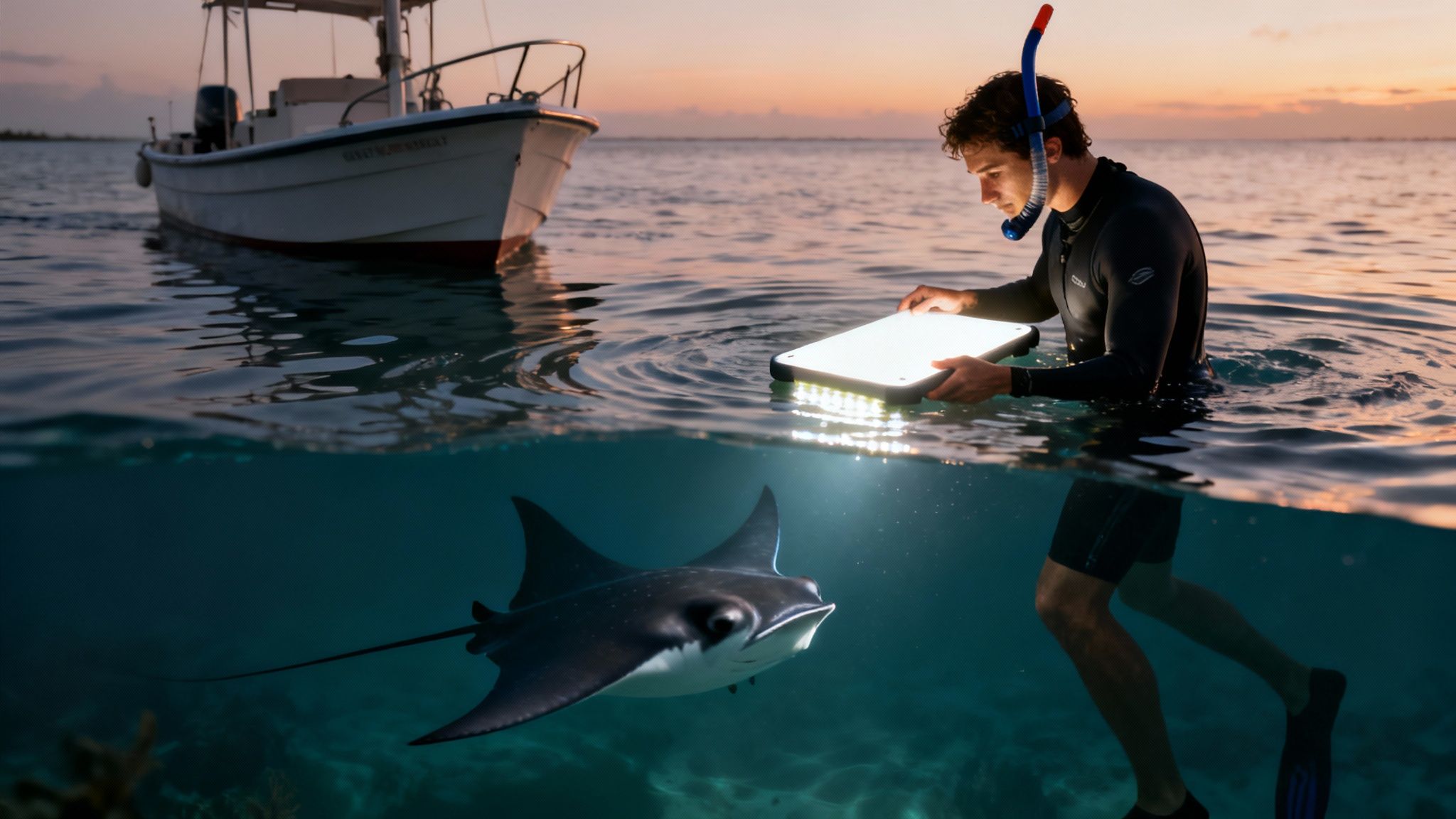
This is the main event. After you slip into the calm, dark water, the entire experience centers around a custom-built, floating light board. You won't be swimming around; instead, you’ll just hold onto this board, which has a couple of very important jobs.
A Plankton Magnet: The board is equipped with powerful lights that shine down into the water. This light acts as a beacon, attracting the microscopic plankton that manta rays absolutely love to eat.
Your Floating Front-Row Seat: The board is also a secure and buoyant platform. You simply hold on, float comfortably on your stomach, and look straight down into the action.
The beauty of this setup is that it's practically effortless. You just float and watch as these gentle giants perform an underwater acrobatic show, gliding and barrel-rolling just inches beneath you to scoop up plankton. The whole experience is designed to be passive; you're just an observer, letting the mantas run the show.
It’s good to remember that while this is a very beginner-friendly tour, you do need to be comfortable in deep water and have basic swimming skills. Your guides are right there in the water with you, making sure you feel totally secure so you can relax and soak in every amazing moment.
For a top-tier tour that delivers this exact experience, we can't recommend Kona Snorkel Trips enough. They are the most-reviewed and highest-rated snorkel company in Hawaii for a reason. Their commitment to safety and delivering a truly memorable manta ray snorkel in Kona is unmatched. Their professional crew makes sure you are completely prepared for the breathtaking show ahead.
Your Guide to Safe and Responsible Manta Interaction
Keeping the manta rays safe and wild is our absolute top priority on every single tour. This whole incredible manta ray snorkeling Kona experience hinges on one simple but powerful rule: passive observation. The easiest way to think about it is to picture yourself as a quiet, respectful guest in their massive underwater dining room.
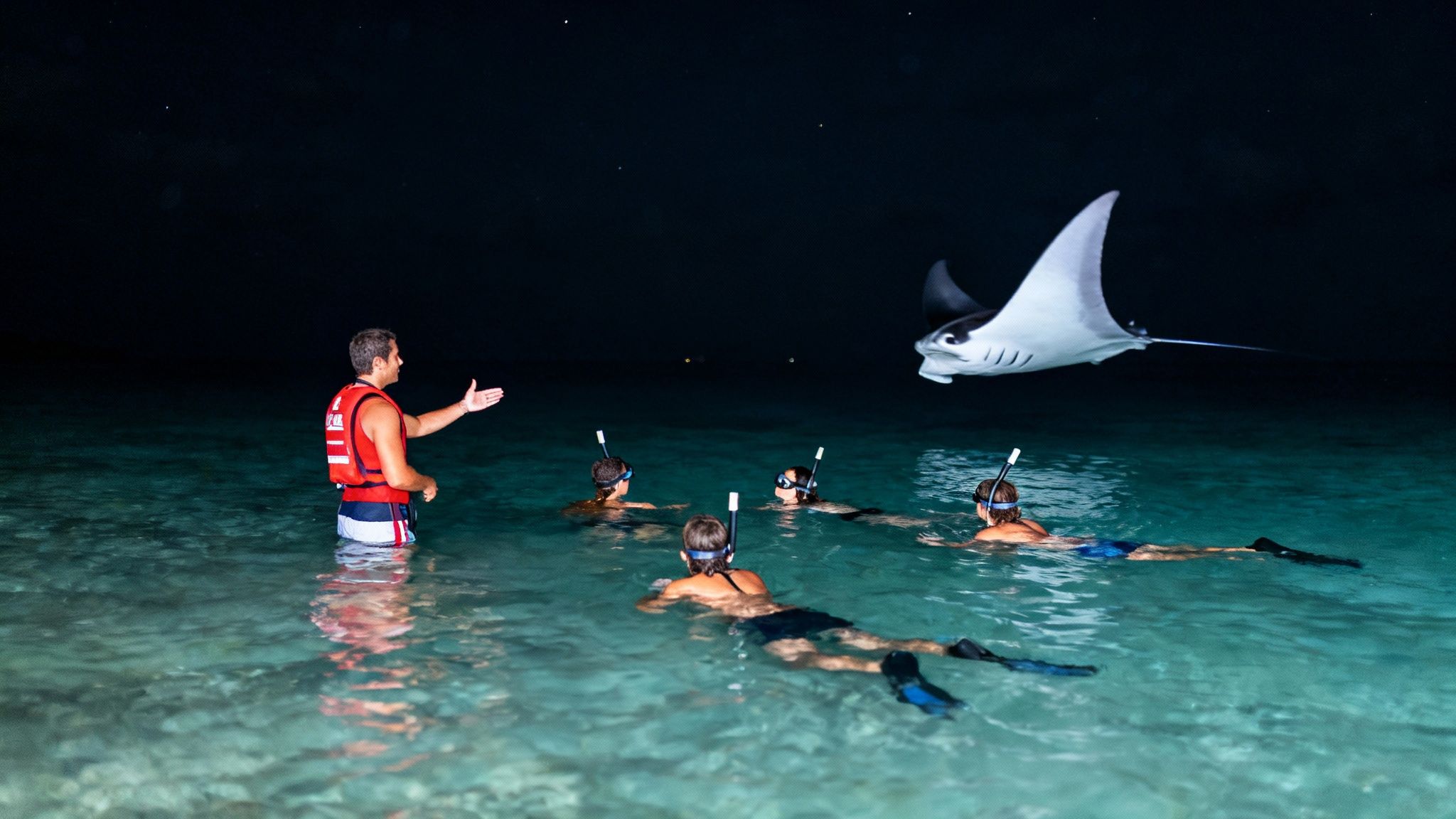
The golden rule that protects these gentle giants is simple and non-negotiable: no touching. Manta rays have a delicate, protective mucus layer on their skin. Touching them, even with the best intentions, can rub this coating off and leave them vulnerable to nasty skin infections.
Your only job is to float, watch, and be completely mesmerized. You let the mantas call all the shots. If one decides to glide right underneath you, soak in the breathtaking moment, but never, ever reach out to touch it.
Why Your Role Is So Important
This nightly spectacle has become one of Hawaii's biggest marine attractions, drawing in more than 80,000 snorkelers and divers every year. That sheer volume of people highlights just how critical it is for every single person to follow the rules. It's the only way to ensure this encounter remains sustainable for both the mantas and for future visitors.
Your lifeguard-certified guides are pros at managing everyone in the water. They'll make sure the group sticks to these conservation-focused guidelines, keeping both you and the mantas safe the entire time. To learn more about what goes into a secure trip, take a look at our guide to safe and spectacular encounters.
By choosing a tour operator who cares and following these simple observation rules, you become part of a sustainable ecotourism model that works. Your respectful behavior directly helps protect Kona's famous manta ray population for generations to come, making sure this natural wonder continues to thrive.
Your Top Manta Ray Snorkeling Questions Answered
Got questions about your upcoming manta ray snorkel Kona adventure? You're not alone! Here are the answers to some of the most common things people ask, so you can feel totally confident and excited for your trip.
Do I Need to Be a Strong Swimmer?
You definitely don't need to be Michael Phelps, but you should be comfortable in the ocean. We'll be floating in deep water after dark, which sounds more intimidating than it is!
Your wetsuit will give you plenty of buoyancy, and you'll be holding onto a sturdy, custom-made light board for the whole swim. It’s more about floating and watching than actual swimming.
When Is the Best Time of Year to See Mantas?
The simple answer? Anytime! Kona is incredibly lucky to have a resident population of manta rays that stick around all year. This means we have fantastic, consistent sightings almost every single night.
While weather can occasionally be a factor, the tours run year-round, making it one of the most reliable and amazing activities to plan for your Big Island vacation.
Are Manta Rays Dangerous?
Not even a little bit! Manta rays are the definition of gentle giants. They are filter feeders, which means they only eat tiny plankton—they don't have teeth, stingers, or barbs of any kind.
Their curious and graceful nature is exactly what makes this encounter so magical. They are completely harmless to humans.
What Is the Minimum Age for the Tour?
We find that kids as young as 5 years old can have an incredible time, as long as they are comfortable being in the water at night. It’s a truly unforgettable experience for families!
That said, it’s always best to check the specific age and swim requirements with your tour operator when you book. For even more detailed answers, head over to our complete manta ray FAQ page.
Comments